Posts Tagged ‘Experimental’

Wonkystuff

What do Neuschlafen do? The York / Leeds collective which features member of myriad other bands and projects seem to exist more in the ether and in theory than as a tangible entity, despite the existence of a handful of recordings, most of which capture live improvisations in collaboration with other artists.

It’s been some time since the trio, comprising John Tuffen (guitar, synthesiser, vocals), Ash Sagar (bass, percussion, synthesiser, vocals) and Jason Wilson (drums, percussion, synthesiser) combined forces to release anything ‘proper’, although What We Do – a rehearsal room recording committee to (virtual) tape on a Tascam DR07-mkII (with no overdubs) at House Of Mook, Leeds on March 24th, 2019 adheres to their improvised, zero-budget, DIY ethos to the letter. Some of the sound is a little muffled and muddy, and the balance isn’t quite what studio ix would aim for, but it does capture the band’s essence and approach a vast expanse, before

With the exception of the twenty-five second ‘Breath #1’ the eight pieces here are all long-form explorations that sit toward the ten-minute mark. The first, ‘The Set-Up’ could be a literal rendition of its title and is more f a soundcheck than a song, with a wild crash and slash of cymbal mayhem and frenetic jazz percussion over a gloopy, strolling bass.

‘A Slow Hand’, with its wandering, repetitive motifs, has echoes of latter-day Earth and conjures a spaced-out-desert rock / folk hybrid played under sedation. It meanders along, before the playing becomes quieter, and it finally sort of peters out. And yet it doesn’t feel remotely disappointing, because it sounds somehow intentional.

The tracks tend to follow a similar flow in fundamental terms: the drums plod along with frequent and explosive, unpredictable fills punctuating the rhythmic line while the bass wanders around casually while returning to its root motif by way of an anchor just when things start to look like the structure is losing shape and the guitar lays down layers of abstraction and textured atmospherics rather than affecting any semblance of melody or tune.

The title track is a definite standout: landing at around the albums mid-point, it steps up the tempo and goes straight into a chunky jazz-tinged krautrock groove. It’s the rhythm section that dominates, while synths waft and ripple and heavily echoed guitar rings out crisp and clean but at a distance. And whereas the other pieces tend to drift, ‘What We Do’ drives and maintain a linear, forward-facing trajectory as it builds through successive slow-burning crescendos.

It’s the percussion that comes to the fore on the closing tryptic, with the 15-minute ‘Divisions’ constructed around a relentless rhythm around which pulsating synths grind and drone in way that calls to mind Suicide’s debut. Somewhere, maybe about halfway through, when the drums have hit an optimal thump and the cymbals are crashing all over, the bass boosts into an approximation of Joy Division’s ‘Isolation’, while monotone vocals, the words inaudible, drone away in the background as the instrumentation stretches out into a vast expanse, before the final cut, ‘to the end’ breaks loose with a thunderous clatter of freeform percussion and sprightly bass that bounds around freely and fluidly to conclude a set that’s simultaneously tense and mellow, an amalgamation of so many disparate elements that renders it difficult to place. And that’s all the more reason to rate this effort, that broadly sits in the brackets of avant-garde, experimental, jazz, and even post-rock and math-rock, albeit at their most minimal and most deconstructed. And that is what they do.

AA

Neuschlafen – What we do

Love Love Records – 26th April 2019 – LOVLP03

Christopher Nsnibor

However you remember Sly and the Family Drone, whatever your past experience, and whatever you may expect, the reality of each new entry in their catalogue brings something slightly different.

My first encounter with them was in a live setting, and I was left reeling with images of a bloke in boxer shorts pummelling drums and getting half the audience to join in. I remember noise, rhythms and chaos. Various YouTube footage confirms this is pretty much representative.

All of those elements are present on their studio recordings, but in different measures. It works: it’s a different medium. And moreover, each release reflects an evolution, usually a subtle but nevertheless key shift. And so it is on Gentle Persuaders, the collective who describe themselves as a ‘neo-noise-jazz outfit’ (one suspects that as apt as the description is, there’s an element of tongue-in-cheek here, just as their absurdist track titles aren’t entirely straight-faced) ‘vomit forth a smooth serving of curious and clattering noise not devoid of fun’.

Smooth is perhaps one thing it isn’t, and for that we should all try and be grateful. Challenging, angular, tonally and structurally abrasive, Gentle Persuaders finds Matt Cargill and co. playing to their ever-growing strengths.

The album opens in suitably uncompromising style, with the longest of the four compositions, the fourteen-minute ‘Heaven’s Gate Dog Agility’. It takes its time to get going, and with minimal instrumentation save for elongated sax drones, it has something of a sparse, free jazz feel. The percussion is restrained, distant, muted, and the emphasis seems to be on atmosphere, and – so it would seem at this stage – musicianship. But by the mid-point the drums are full-blooded, and the sax is battling amidst a barrelling wall of extraneous noise. The closing minutes find the rare emergence of an overt structure, a form, with repetition and a coalescence of sound that could almost be mistaken for a tune.

Crashing, head-blasting industrial beats worthy of Test Dept or perhaps reminiscent of Revolting Cocks’ ‘Beers, Steers & Queers’ shatter the air on ‘New Free Spirits Falconry & Horsemanship’. And they continue to pound away for the duration, while the sax screeching becomes ever more strangled and frenzied.

‘Votive Offerings’ ventures into murky, dark ambient territory, and reveals glimmering flickers of light shifting amidst the shadows of sombre drones and unsettling incidentals. It’s a mosaic of fragments: forms start to emerge, solid rhythms kick in, only to halt after a few bars, and if it’s jazz with noise, it’s jazz with noise penned as a soundtrack to the fragmented hallucinatory anti-narrative of Naked Lunch.

It’s this change of mood that renders the finale all the more impactful: beginning stark, sparse, eerie, with single notes ringing out into a sea of black echo and swampy low undercurrents, the spectacularly punny (and so very typical) ‘Jehovah’s Wetness’, a low-end bass grind begins to build the foundations of a swirling sludge-trudge climax. It’s not gentle, but it’s extremely persuasive.

AA

Gentle Persuaders

Efrim Manuel Menuck (Godspeed You! Black Emperor, Thee Silver Mt. Zion) and Kevin Doria (Growing, Total Life) have joined forces on the new LP are SING SINCK, SING, out via Constellation on 10th May. As a first offering, the duo have shared the track ‘We Will’, which layers oscillating waves of melancholy drone with plaintive, reverb-cloaked vocals, before eventually coalescing into a determined and hopeful refrain. You can hear it here:

AA

As the title suggests, this is also an interstitial album of sorts, an identity-bridge that leads away from Menuck as ‘solo’ artist and towards SING, SINCK SING which will be the new band name for future work by the duo.

Efrim Manuel Menuck & Kevin Doria Live Dates:
09 May – Montréal, QC @ Ritz PDB
10 May – Toronto, ON @ The Burdock
11 May – Hamilton, ON @ Christ Church Cathedral
16 May – Brooklyn, NY @ Murmrr
25 May – Biarritz, FR @ Festival Usopop
27 May – Limoges, FR @ Le Phare
31 May – Zottegem, BE @ Dunk Festival
01 June – Amsterdam, NL @ Best Kept Secret Festival
02 June – Barcelona, ES @ Primavera Festival
03 June – Poznan, PL @ LAS
04 June – Berlin, DE @ Arkaoda
06 June – Brussels, BE @ Botanique Rotonde
07 June – Diksmuiden, BE @ 4AD
09 June – Paris, FR @ Villette Sonique

AA

SSS

gk rec – 18th February 2019

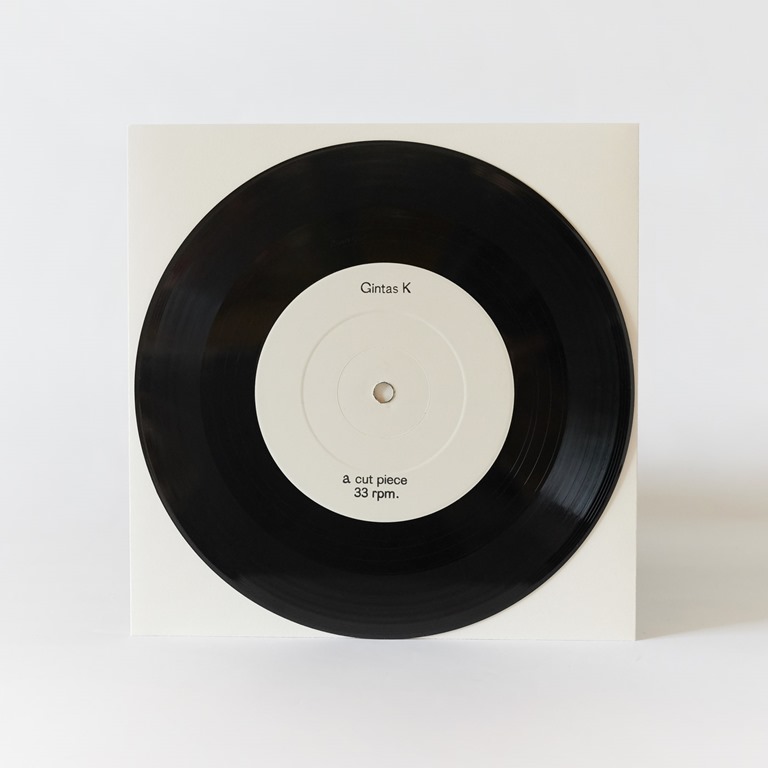
Gintas K’s catalogue continues to expand at a remarkable rate, and yet again, he demonstrates his deep interest in the production of theory-driven experimentation. However, the theory behind M isn’t necessarily as it may appear, as the text on his Bandcamp page for the release indicates:

Ralph Hopper: Is ‘Mimicry’ a re-imagining of the earlier ‘M’? It appears that ‘M’ is computer music and that ‘Mimicry’ is also computer music but in a live performance if I have that right and thus I’m thinking that your are ‘mimicking’ the earlier release. Maybe not?

Gintas K: well, when you said so it looks quite logical. Music inside is a bit similar. But in fact it is not. It is made using a different vst plugins. M is made from live played files, but later from them is made a collage. Mimicry is made just from real time made files, without any overdub.

In effect, M and Mimicry – released here together under the single monograph banner of M – are the product of a process played forward and then in reverse: first, the live performance collaged and generally fucked with, and second fucked-with sounds played as a live performance.

As a consequence of its modes of production, M is very much an album of two halves, a call-and response, an expostulation and reply, a working as a reworking. Comprising two album-length suites of compositions, ‘M’ and ‘Mimicry’, M was originally ‘played, composed & mastered by gintas k by computer in 2012. M (2012)’, while ‘Mimicry’ was ‘played live / real time & mastered by gintas k by computer’ some five years later in 2017.

‘M’ consists of six compositions, numbered in sequence, with the longest being the first, ‘1m’ which clocks in with just shy of 18 minutes of gurgling digital distortion, hissing static, whistles of feedback and fucked-up overloading, glitching gnarliness that sits comfortably in the bracket of extreme electronica. It’s not the frequencies which hurt: it’s the relentlessly stuttering, juddering, fracturing of sound, the jolting, the jarring the cutting out, the intermittency. By nature, the mind works to fill in gaps, and so the subconscious work required to smooth the tremolo effect of the stammering noise mess is mentally exhausting.

‘3m’ and ‘4m’ are substantial pieces, over seven minutes in duration, while the remaining three are snippety fragments of drone and hum, although they all congeal into a morass of brain-pulping pops and whizzes which crackle and creak and skitter and sizzle in erratic tides of discomfiting discord. And yet there’s something oddly compelling about this sonic sup that bubbles and froths and tugs at the nerve-endings without pity.

My synapses are fried and firing in all directions by the time I’m halfway through ‘3m’, a grinding, grating mess of clipped signals with all dials in the red which resembles ‘A Cunt Like You’ by Whitehouse, minus the ranting vocals. And then on ‘4m’… what is that? Some kind of subliminal vocal? Or is my mind just messing with me as it struggles to find orientation and points of familiarity in the stream of inhuman sound. It’s disorientating and difficult – and these are the positive attributes.

The ten ‘Mimicry’ pieces are perhaps re overtly playful – bleeps and whirs, crackles and pops, all cut back and forth so fast as to induce whiplash – not necessarily in the neck, but in the brain stem as the organ shifts into meltdown as it attempts to process the bewildering back-and-forth transmission of sonic data. Tones bounce and ripple at pace in confined spaces, and much of the sound seems to be in reverse, which adds to the dizzyingly fractured, disorientating sensation. There are dark moments, which hum and throb and drill and yammer and chew at the guts, but overall, the ‘Mimicry’ suite is less dense, less brutal, less painful.

The two sections would have worked as standalone albums, but to hear them side-by-side as contrasting and complimentary works is, ultimately, a more fulfilling experience, despite also being something of an endurance test. Its clear that as much as M challenges the listener, Gintas K is an artist intent on constantly challenging himself. And in an era when trigger warnings, entertainment and safe conformity have infiltrated and now dictate every corner of the arts, Gintas Kraptavičius’ unswerving commitment to pursuing his own interests and ends stands out more than ever.

AA

gintas k - M

After sharing the track ‘Dysfunctional Helper’ in late January, Joni Void – the avant-garde electronic project of Montréal-based composer Jean Cousin – is unveiling a second song entitled ‘Abusers’ from his forthcoming album Mise En Abyme. ‘Abusers’ highlights Cousin’s ability to craft gorgeously layered sonic collages, dextrously incorporating minimal percussive elements and melodic tones sampled from Ai Aso’s ‘Most Children Do’ with vocal contributions from fellow Montréal artist Sarah Pagé. Minute snippets of sound fit together in tight sequence, eventually giving way to stretched vocal arcs that remind us of the organic, deeply human instincts that root Cousin’s digital explorations.

Listen to ‘Abusers’ here:

AA

Joni Void

Karlrecords – KR064 – 15th March 2019

Christopher Nosnibor

This is one of those made-for-vinyl releases comprising two longform tracks, and comes with a title that has heavy hints of JG Ballard. But then, doesn’t so much nowadays. Perhaps it’s my personal intertextual radar, but it does very much seem that the prescience and influence of Ballard’s work which was often spoken and written of in his lifetime has only become truly apparent in its extent in the last decade. It’s perhaps fitting that while Terminal Desert carries connotations of his more stilted, genre-driven works of the 1960s in its title, its sound calls to mind some of Ballard’s more wayward peers, not least of all William Burroughs and the Tangiers Beat collective.

The accompanying text refers to ‘Jajouka Pipe Dream’ as ‘a clear reference to the Master Musicians of Joujouka, with lots of flutes and percussion’, and describes it as ‘a very rhythmical, ritualistic track.’ And it is. Slow, undulating, dominated by polytonal, polyrhythmic percussion, it marks a thematic revisiting of some of Barakat’s previous work, albeit in a less confrontational and more ambient-orientated setting.

But then, this collaboration marks both a departure and a continuum for each of the contributors. German-Palestinian artist Ghazi Barakat, after playing in rock bands including The Golden Showers and Boy From Brazil, developed the alias Pharoah Chromium, a vehicle for the creation of what he calls “meta-music for meta-people in a meta-world”. Meanwhile, Paul LaBrecque, of vast collective Sunburned Hand of the Man and who usually records as a solo artist as Head of Wantastiquet, contributes guitar and synthesizer to the two tracks.

Less cut-up and less mashed than some of his other stuff, it’s still certainly not rock. It chanks and thumps and conjures an air of obscure eastern mysticism as haunting notes echo through a sonic heat-haze.

‘Planet R-101’ is altogether mellower, less edgy and agitated, rippling out over seventeen minutes of soft synth oscillations that brings together ambience and Krautrock to forge a mellow, immersive sonic expanse, a drifting sea of soft tones and Then, from amidst the wibbly, woozy, spacey ripples emerge some word music / new age pipe drones which echo out into eternity. And then, soaring guitars that are pure prog emerge as if rm nowhere and take the composition to another genre plain.

What to make of it all? Terminal Desert is best absorbed without too much contemplation. That isn’t because it lacks conceptual depth or consideration, but because it’s an album that needs to be given room to breathe without close analysis, for the atmosphere to be fully absorbed.

AA

Terminal Desert

Neurot Recordings – 15th March 2019

James Wells

They probably started off with perfect hearing, but a couple of sessions rehearsing this cacophonous melange at infinite decibels would soon put paid to that. Monastic chorals meet Sunn O))) with the wordless vocal drones that build sinister spirituals that echo into eternity on ‘Vox Dei’, the opening piece on the colossal noise fest that is Metaprogramação by Brazilian act Deafkids. And then all hell breaks loose: ‘Alucinações de Comando’ is a blizzard of lasers, manic percussion, and messed-up vocals echoed to infinity. The overall result comes on like listening to Whitehouse duetting with Dr Mix from across the street.

Metaprogramação is an insane work. Seriously: where are their heads at? Thrumming bass bounces around on the dubby, experimental electro-ish ‘Pacto de Màscaras’, while ‘Mente Bicamerel’ packs a dirty, amped-up groove as it pounds away at a single riff motif – albeit with the occasional chord omission – for what feels like a very long time, but is actually only four and a half minutes. This isn’t to say it’s arduous, but recognises the rewards of repetition.

All of the aforementioned come together on ‘Templo de Caos’, a frenetically drum-driven riot of echoed vocals, grating bottom-end and stun guitars, while ‘Raíz Negativa (Não-Vontade)’ is a mess of murk, with everything as muddy as hell, and even more oppressive as they crank out a repetitive cyclical chord sequence on bass and guitar, while the vocals are more or less lost in the fog. Then again, ‘Vírus da Imagem do Ser’ goes full-on thrash, a hypercharges blur of crusty grind.

Ending in a short, sharp blast of white noise, there isn’t a moment to breathe here. I’ve no idea what the fuck it’s about, but it’s a sonic blitzkrieg that’s nothing like anything else going.

AA

Deafkids – Metaprogramação

Rocket Recordings – 22nd February 2019

Christopher Nosnibor

Evolution – that’s perhaps the only word when considering Teeth Of The Sea. Their career is defined by it.

Their BandCamp biography gives some sense of context: ‘Since their formation in 2006, London-based Teeth Of The Sea have metamorphosized into the most adventurous psychedelic rock outfit in the UK. Taking on board influences like Morricone, Eno, Delia Derbyshire, Goblin, and the Butthole Surfers, they’ve arrived at an incendiary sound that marries the aural enlightenment of an avant-garde sensibility with the reckless abandon of trashy rock & roll.’

It was with Your Mercury that I joined the trip, sold instantly by ‘The Ambassador’ with its overloading noise intro, spiralling into a slow-paced desert rock weird out.

Each release has been different again, and so there’s nothing of that ilk to be found on Wraith, an album that’s slanted more toward the electronic end of the spectrum, although the guitars, while far from prominent, are very much integral to the texture and depth. But this being Teeth of the Sea, it’s a bit of everything all at once, and this is apparent from the very first track: ‘I’d Rather, Jack’ brings a sonorous bass and droning synth together over a thumping industrial disco beat with crashing snare that stutters and glitches all over, before jazz trumpet and a space-rock guitar fire off on different trajectories. It’s rare for such a maelstrom of ideas and forms to whip together into anything other than a horrible mess, but Teeth of the Sea manage to blend the ingredients into something far greater than the sum of the parts, the atmosphere shifting from oppressive to uplifting.

There’s some of the old Ennio Morricone vibe about the spaghetti western sunset guitar twang of ‘Hiraeth’, before snaking drums and twisted allusions to Asian musical motifs was in and out of expansive layers of brass on ‘Burn of the Shieling’.

There are hints of Tangerine Dream and expansive synthy electronica about compositions like the buoyant, spacey, retro-futurist ‘VISITOR’ and ‘Gladiators Ready’, which combines the tweeky, bleepy Roland sound that echoes Josh Wink’s remixed ‘Higher State of Consciousness’ with some gritty guitar noise off in the background. Equally, the forms belong equally to post-rock, and whereas peers Vessels have gone all-out techno and ditched any vestiges of their origins, TOTS succeed in creating the most dazzling hybrid, discarding nothing and instead assimilating an ever-widening range of elements into their work. There’s so much detail in every bar, from blurred, muttering voices buried in the mix to synth incidentals and shifting reverbs that it’s impossible to take it all in, and oftentimes, Wraith is an overwhelming experience.

The centrepiece of ‘Her Wraith’ and brief counterpart ‘Wraiths in the Wall’ explore more minimalist approaches, the forms vague and vaporous, as echoing piano notes hang in the air over mournful trumpet. Pulling back on the prominent beats and instead allowing ponderous strolling basslines to wander to the fore, they’re as intangible as the album’s title suggests.

An album this eclectic and uncategorizable rarely feels cohesive, but Wraith feels more like a psychotic mind-journey than an album. And it’s nothing short of epic.

AA

Teeth of the Sea - Wraith

Panurus Productions – 22nd February 2019

Christopher Nosnibor

It promises ‘a voyeuristic excursion through the concrete labyrinth of Greater Manchester. A collage of the constantly evolving sensory barrage of the big city and it’s accompanying paranoia. The infinite possibilities of an adopted home and the entangled memories of the intrepid listener.’ It’s also pitched as a ‘prequel’ to Absolution – by which I’m assuming that the August – December 2017 recording of Burden predates that of Absolution, released in March last year.

It matters little. Chronology is a construct. While an individual’s actions may follow a simple chronology, events overall do not: things happen simultaneously, and in different locations. Those lines of time and location are distorted by real-time communication by such means as telephone and television, which can temporarily connect different time-zones and countries, even bridging periods of history. Letters, on the other hand, have an effective time delay. The idea that events can be charted by means of a simple chronological timeline is further discredited when thoughts and recollections, as well as dreams, can occur completely at random and in a fragmentary manner.

Supposedly combining ‘snippets of conversation and field recordings [filtered] through Kepier Widow’s digital ear’ and combined ‘with droning synth and bubbling glitches’, the two messy, disorientating, half-hour sound-collages (corresponding with the two sides of a C60 cassette) pay no heed to chronology or sequentiality. This, of course, is the beauty of the medium, in that it is non-linear, articulating instead the simultaneity of experience. And while it’s impossible to extract any semblance of narrative or even cohesion from the jumble of chatter, birdsong, car engines, grinding synths and wispy mists of ambient abstraction, often overlapping into one another, and occasionally all at once, Burden replicates – in a warped but intensely immersive way – the experience of traversing a large city. It’s loud, a collision of sound, uncoordinated, discordant, disorientating.

Some of the electronic intrusions penetrate with some pretty harsh noise. There are unsettling, hums and drones, and glitchy ruptures kink the flow of any attempts to create smoother, more linear flows. Sonorous, undulating ripples of sound weave in and out. There is no structure. There doesn’t need to be – nor should there be. Everything simply ‘happens’. And this is life.

cover

Protagoniste

I love unusual instrumentation, and am often amused and entertained by the repurposing of non-musical items and objects for music-making purposes. The stranger and more overtly non-musical, the better, of course. But do we really believe the credits on Ilex, which sees Xavier Charles and Jacques Di Donato (whose 12 Clarinets in a Fridge I covered somewhere at the time of release) reunited for a follow-up to 1995’s Du slavon glagol listed as playing ‘clarinet, helicopter’ and ‘clarinet, lawn mower’ respectively? I wouldn’t like to completely rule it out: although there are no obliterative motorised walls of noise blasting away the speakers at any point on Ilex, there’s a lot of distant drones, hums and extraneous noise in the background on a number of the album’s fourteen pieces.

Born out of improvisation and subsequently evolved, each piece is different, if not entirely distinct, as the pieces often bleed together or are otherwise tightly packed. The lengths of the pieces vary considerably, too, from fragmentary, sub-two-minute interludes to complex, expansive compositions more than three times that. Collectively, they form a body of work which his often evasive in its ever-shifting form. In terms of mood or style, Ilex is neither one thing or another: it’s not even categorizable as experimental, really, slipping as it does from abstract to ambient to parping free jazz – although thankfully, there’s not of much of the latter.

From hesitant, clattering percussive sounds, resembling tabla or similar small hand drums to sighing drones, it’s often difficult to relate the sounds to the clarinet, or, in some instances, any instrument at all.

Ilex is, however, without question, abrim with clarinets. It pours, oozes and froths with a wash of clarinets. Clarinets that alternately trill and toots like The Clangers on a veritable cocktail of drugs, zipping from wired hyperactivity to opiate-slowed torpor. Often resembling strings rather than woodwind, elongated, woozy hums and drones abound, ominous hovering notes and scrapes and shards, whistles and tweets of feedback-like treble grate against one another, the resonances creating a subtle tension.

On Ilex, the performers push not only the parameters of their instrument of choice, but also their playing, combining a mix of conventional and innovative techniques to create something that balances the familiar and the strange. It’s this juxtaposition that ultimately renders Ilex not only a most interesting work, but an artistic success.

AA

Ilex