VALBORG have unveiled a visualiser for the first single ‘Sehnsucht nach Unendlichkeit’ ("Longing for Infinity") that is taken from the German sludge monster’s forthcoming album Der Alte ("The Old One"), which has been slated for release on September 9.
Watch the video here:
VALBORG comment: "The working title for ‘Sehnsucht nach Unendlichkeit’ was ‘Techno’ due to our use of a steady kick drum", vocalist and bass player Jan Buckard explains. "The tune originates from the idea of writing a super simple song regarding its structure, but with rather complex and deep harmonics. In this respect, ‘Sehnsucht nach Unendlichkeit’ can be regarded as an experimental piece from our end, which turned out to be worthy to be picked as the first single. The title is actually derived from the name of a spaceship in one of Alastair Reynolds’ hard science fiction novels."
Experimental metal group Imperial Triumphant release their new song and music video for ‘Merkurius Gilded’ (ft. Kenny G and Max Gorelick) via Century Media Records.
Yes, you read that right: Kenny G. I shit you not.
‘Merkurius Gilded’ follows the release of the band’s debut track, ‘Maximalist Scream (feat. Snake/Voivod)’, taken from Imperial Triumphant’s forthcoming full-length album Spirit of Ecstasy out on July 22nd. The album will be released as Ltd. CD Edition (Mini-Gatefold), Gatefold 2LP & LP-Booklet and on all digital platforms.
Spirit of Ecstasy follows the band’s previous LPs 2020’s Alphaville, 2018’s Vile Luxury and most recently their 2021 live record, An Evening With Imperial Triumphant, which was recorded at the infamous Slipper Room in New York City. Just like its predecessors, the album features a handful of special guests including Kenny G on soprano saxophone, Max Gorelick on lead guitar, Snake on vocals, Alex Skolnick on lead guitar, Trey Spruance on lead guitar, Andromeda Anarchia with choirs, Sarai Woods with choirs, Yoshiko Ohara on vocals, J. Walter Hawkes on the trombone, Ben Hankle on the trumpet, Percy Jones on bass, SEVEN)SUNS on strings, Colin Marston on Simmons drums and Youtube, and Jonas Rolef on vocals.
Watch ‘Merkurius Gilded’ here:
AA
IMPERIAL TRIUMPHANT ON TOUR:
w/Nero Di Marte:
June 14 – Zagreb, Croatia – Klub Mocvara
June 15 – Ljubljana, Slovenia – Klub Gromka
June 16 – Vienna, Austria – Viper Room Vienna
U.S. Headline Shows:
July 29 – Baltimore, MD – Ottobar
July 30 – Youngstown, OH – Into the Darkness Fest
July 31 – Rochester, NY – Montage Music Hall
European Headline Dates/Festivals:
August 10 – Jaroměř, Czechia – Brutal Assault
August 12 – Oxfordshire, England – SUPERNORMAL FEST
August 13 – Manchester, England – The White Hotel
August 14 – Glasgow, Scotland – Stereo
August 15 – Belfast, England – Voodoo
August 16 – Dublin, Ireland – The Grand Social
August 18 – Somerset, England – ArcTanGent Festival
French experimental punk / hardcore trio, Birds In Row have been at the forefront of their genre for a decade. Their lauded 2012 debut You, Me & the Violence released on Deathwish Inc. rocketed them from Laval-based unknowns to the world’s stage. Their exceptional 2018 follow up We Already Lost the World was an unyielding inferno of brazen ideas. It screamed for mutual respect in a world of increasingly extreme political divides, and used the vehicles of punk, post-hardcore and post-metal to carry its cries.
Sonically, they’re fearless. Lyrically, they’re as poetic as they are recusant. And live, they’re a ruthless force, matching the power of their music with boundless, must-see energy.
Today they return with an immediate and genre-bending epic, ‘Water Wings’. Its scraping guitar strums a ticking clock, counting down to the inevitable barrage of hardcore to follow. Of the single, Birds In Row tell, “The dreams that are imposed on us – of social success, accomplishment or, even, the vision of what happiness is – does not consider who we are or where we’re from. Those dreams aren’t ours, but are inherently ours. Being ourselves means struggling against these dreams that have been forced onto us.”
Check the visualiser vid here:
“Water Wings” comes alongside the news that the band have signed with Red Creek Recordings (founded by Johannes Persson of Cult of Luna and Alexis Sevenier from ORA Management) to release their third studio album later this Fall. Birds In Row have also announced a full October/November European tour. See below for a full list of dates. For more info go here… stay tuned for more.
Birds In Row Live Dates:
* w/ Cult of Luna
Sep 30 – Vitry-sur-Seine (FR) – Festi’Val de Marne
The connotations of jazz are myriad and varied, and it’s also perhaps – not coincidentally – one of the most divisive genres, even after all this time in existence. It’s also one of the hardest to really pin down, largely because it spans such an expanse. On the topic over a pint a few nights back, a friend of mine was telling me how he had become quite partial to jazz, which he was best able to describe as (I paraphrase) ‘random notes that don’t join up… but work’. He’s right and he’s wrong, of course: there’s avant—jazz and freeform jazz that very much is in this vein, but then there’s that kind of slick, smooth jazz, and the kind of jazz you used to get either mega-late at night or on a Sunday evening in a smoky basement bar – the kind of jazz there’s likely a proper term for, but which I refer to as ‘background’ jazz, played in the kind of setting where it’s actually Ok to chat while the music’s playing.
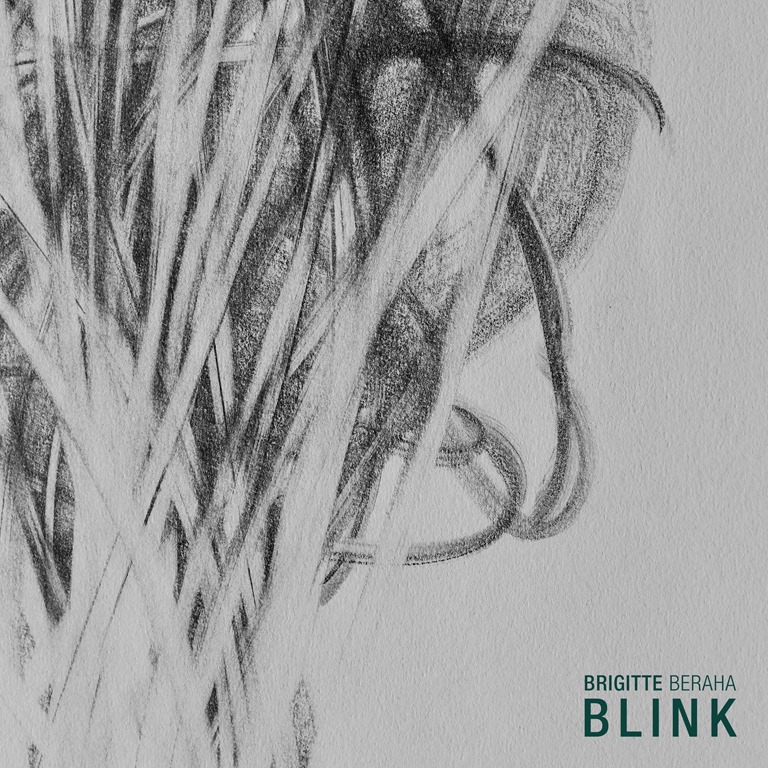
Brigitte Beraha straddles a number of these fields, and Blink is kinda smooth, kinda background, and kinda cool – not in an overtly slick, smooth, nauseatingly muso way, but very much laid back and sultry nevertheless. Her vocal is breathy and intimate at the start of the title track, which sashays between a stop start rhythm and something altogether smoother, and the sound swells and rolls through a succession of passages over its seven and a half minutes that carry you along and make you forget yourself as you’re carried beyond the confines of conventional song structures.
“I love Doors… Everything about them. Well, almost everything,” Beraha reveals on ‘Doors’, seconds before a cascade of calamitous percussion rains down onto ringing chimes. “Light… heavy… ones that resist pressure…very well-oiled ones…” Ah yes, Doors. Not The Doors. I didn’t used to like The Doors, but came to appreciate them in my mid-teens, before realising that no, they were as crap as I had originally thought. I much prefer the wooden slabs these days, particularly over veneered chipboard or MDF: they may or may not be “fascinating pieces of history,” but they tend to be functional in the main, and while they can be frustrating if they don’t close properly or keep blowing shut, they’re not self-indulgent toss.
There are other unexpected insights to be found over the course of Blink, although most are musical rather than lyrical, and tend to be fleeting flickers whereby the listener gets to peer in between the wavy lines that drift effortlessly as a piano tinkles behind quavering woodwind, and see snippets of another world.
The thirteen-minute ‘Modulo 7’ is breezy, and skips along lightly for the most part, starting sparse and strange, and through twists and turns the layers build over and across one another, a serpentine melange of parts that spread and circle in different directions, landing in precisely the terrain that people find difficult to navigate, particularly as it’s both busy and smooth at the same time – and then, abruptly, it halts, and we’re plunged into darkness, and a deep throb murmurs ominously. The pace quickens and the tension rises: the last thing you’d be expecting is pulsating dark ambience with an industrial edge in the middle of this album. The oscillating waves and echoic brass that drifts from the darkness is compelling, and in places calls to mind some of Throbbing Gristle’s exploratory works.
That it’s hard to really summarise or even reasonably convey an album that carries such contrasts with the sparse-tone challenging ‘Too Far to Hear My Singing’ skipping and swooning between moods in a moment, and it’s perhaps futile to even contemplate doing so while wrestling with the idea that some note sequences simply shouldn’t exist, while other still don’t sound like they’re possible or within the realms of music. But they do, and they are, and they’re here, woven into the complexities of an album that’s intricate yet sounds deceptively simple, leaving plenty to ponder.
Within Reach of Eventuality is the debut album by Swedish duo David Bennet & Vilhelm Bromander. Their notes on the album state that ‘Following a semi-open score, the duo is treating elements such as complex textures, non-pitched sounds, microtonality, beatings and intense pauses in an improvisatory and careful manner’.
I’m not entirely sure what that means, and I’m not certain of the meaning of the album’s title, either. It feels like it almost carries a sense of significant import, but then is equally so vague as to be almost abstract. And in a way, it’s representative of the four pieces on the album. There’s a grainy scratching flicker of extraneous noise running along in the background during ‘Part I’, like a waterfall in the distance, while in the foreground, elongated drones – atonal strings or wavering feedback – hover around the pitch of nails down a blackboard. Occasionally, more conventionally ‘orchestral’ sounds – emerge fleetingly – gentle, soberly-paced percussion, string strikes and soft woodwind, and it comes together to create a somewhat ominous atmosphere.
It’s a hushed, minimal ambience that fades out towards more sonorous drones that ebb and flow across ‘Part II’, and as the album progresses, the interplay between the tones – and indeed, atones – becomes more pronounced, and also more dissonant and consequently more challenging, as long, quivering, quavering drones rub against one another.
The structures – such as they are – become increasingly fragmented, stopping and starting, weaving and pausing. There is a sense of a certain musical intuition between the players, the rests coming at distances that have a sense of co-ordination, if only as much to confound expectation as to sit comfortably within it. In other words, Within Reach of Eventuality feels like a semi-organised chaos, and as it slowly slides towards the conclusion of the sixteen-minute fourth part, the sound thickens, the volume increases, and the atmosphere intensifies, become more uncomfortable in the process. And in this time, the meaning becomes clearer when it comes to understanding their approaching the sonic elements in a ‘careful manner’. There’s nothing remotely rushed about Within Reach of Eventuality. The notes are given space and separation, room to breathe. It all feels very considered, very restrained: it’s no improv free-for-all, there are no frenzied climaxes or blasting crescendos. Instead, they demonstrate a sharp focus on a fairly limited range of sounds and spaces, and the result is an album that has a strong cohesion.
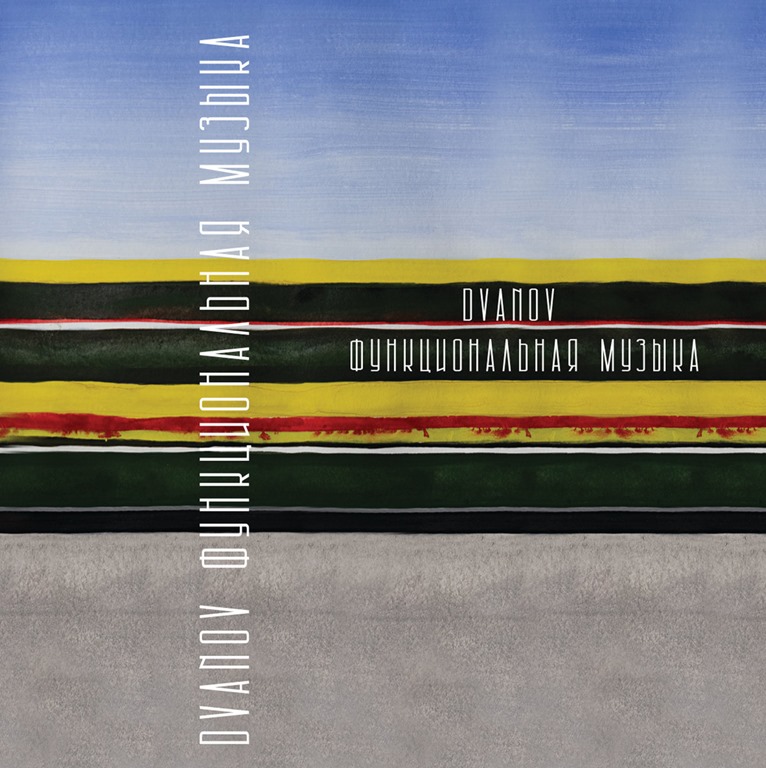
Prefacing the deluxe edition of their most recent album, Functional Music, expanded to include tracks from the Hyper-Suburb EP, Russian new wave experimentalists Dvanov have offered up aa video single for ‘Уварово (Uvarovo)’.
The St Petersberg-base band started out as Voda-i-Ryba back in 2013, before changing their name.
And what a time to be a Ukrainian—supporting, anti-war band in Russia, and what a time for Dvanov: ‘Уварово (Uvarovo)’ is the last release with vocalist Vlad Kilin and marks what they call ‘the beginning of a new stage in the Dvanov’s life,’ adding ‘In these songs, the cultural memory of revolutions and childhood memories of anxious summer nights collide with the ghosts of modern capitalism. There are the evening and the ringing of endless fields behind the walls of supermarket, cicadas crackle and there’s nowhere to go. We are releasing this at a tragic time when our country has waged an imperialist war. No war! ‘
‘Уварово (Uvarovo)’ is a crazed, beat-driven frenzy of oddness, a bit noisy, a bit industrial, a bit electro, a lot wtf.
Oh, and all proceeds from the sale of Functional Music are going to a Ukraine crisis support charity – which makes it extra-functional.
We love mental shit, and this is some mental shit.
Avant group Hifiklub has shared a new track, ‘Weird Five,’ featuring the legendary Iggor Cavalera (MixHell, Cavalera Conspiracy, Pet Brick, co-founder of Sepultura). The song is a part of the French trio’s audio-visual collaboration, ScorpKlub I & II Original Soundtracks, with the Montreal animator James Kerr (Scorpion Dagger). The double-sided record — which features Alain Johannes (Queens of the Stone Age, Them Crooked Vultures, Eleven) in addition to Iggor Cavalera —will be out digitally as well as on different colored vinyl on 27 May 2022 via Electric Valley Records.
Hifiklub bassist Régis Laugier on ‘Weird Five’: “1 Day as A Lion, 2Pac, Spacemen 3, Gang of 4, Electric 6, L7… Something was missing. What about the “Weird 5”? Let us know what’s your favorite band with numbers in their names. In the meantime, here is the first track of Hifiklub’s collaboration with Iggor Cavalera, from ScorpKlub I & II. 18 more videos to come!”
Having seen various videos of Gintas K’s improvisations, involving a keyboard and a dusty old Lenovo ThinkPad running some custom software, it’s apparent that his approach to composition is nothing if not unusual, and it’s matched by the results.
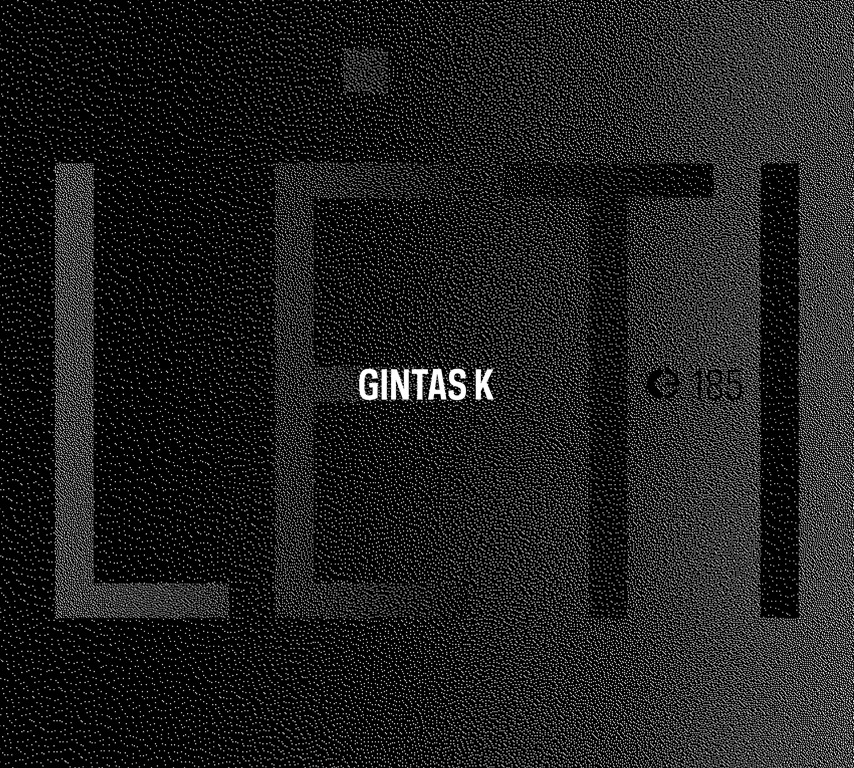
His Crónica debut, Lengvai / 60 x one minute audio colours of 2kHz sound was sixteen years ago, and his return to the label is a very different offering, although as has been a common factor throughout his career, Lėti – Lithuanian for slow – consists of comparatively short pieces – and here, the majority are four minutes long or less. Less is more, and what’s more, Gintas K invariably manages to pack more into a couple of minutes than many artists do in half an hour. Here, we have a set of eleven short pieces ‘created from recording and improvising in studio followed by extensive mixing and editing using software.’ There’s no more detail than that: some artists accompany their releases with essays explaining the creative process and the algorithms of the software and so on, but Gintas K simply leaves the music for the listener to engage with and to ponder.
Where Lėti is something of a departure is in the emphasis on the editing and mixing of the material and the fact that, as the title suggests, the arrangements are a little more sedate. The signature crackles and pops, chines and static are all present and correct, but there’s a sense of deliberation as we’re led through ethereal planes of delicate chimes and tinkling tones that resonate and hang in the air, drifting in open expanses, with time and space to reverberate and slowly decay. With this more measured feel, melodies become more apparent, with simple motifs, repeated, giving ‘Hallucination’ a sense of structure and, I suppose you might actually say ‘tune’.
It isn’t that Gintas’ works lack tunefulness as such, but that any tune is surrounded by froth and extranea, and so much is going on it’s often hard to miss. Listening to Lėti is a fairly calm, even soothing experience, at least for the most part, conjuring a mood of reflection, of contemplation. The album’s longest piece, the seven-minute ‘Various’ brings a dense wave of sound that surges and swells slowly like a turning tide. There’s almost a stately grandeur to it, but then, there’s a rattling kind of a buzz that’s something of a distraction, and a glitch that nags away and seems to accelerate. These little headfucks are quintessential Gintas K, and Lėtiisn’t all soft and sweet: ‘Savage’ brings thick, fuzzing distortion and discomfort.
The flurries of sound, the babble of bubbling bleeps and bloops that are his standard fare are slowed to sparse, irregular drips in a cave on ‘Variation’, and the application of reverb is impressively nuanced, to the point that the reverbs almost become music in their own right. ‘Atmosphere’ and ‘Ambient’ are appropriately titled, while ‘Nice Pomp’ would comfortably serve as a soundtrack to a slow-motion film of a moon landing or somesuch, and again none of the pieces are without depth or detail, as the layers and slivers of sound that intersect create so much more than mere surface.
Lėti is a genuinely pleasant and pleasurable listening experience, but is most certainly isn’t straightforward or simple in what it delivers. There are many sonic nuggets to unearth, and so many tones and textures along the way, that what is, superficially ‘less’ is, in actual fact, a whole lot more.
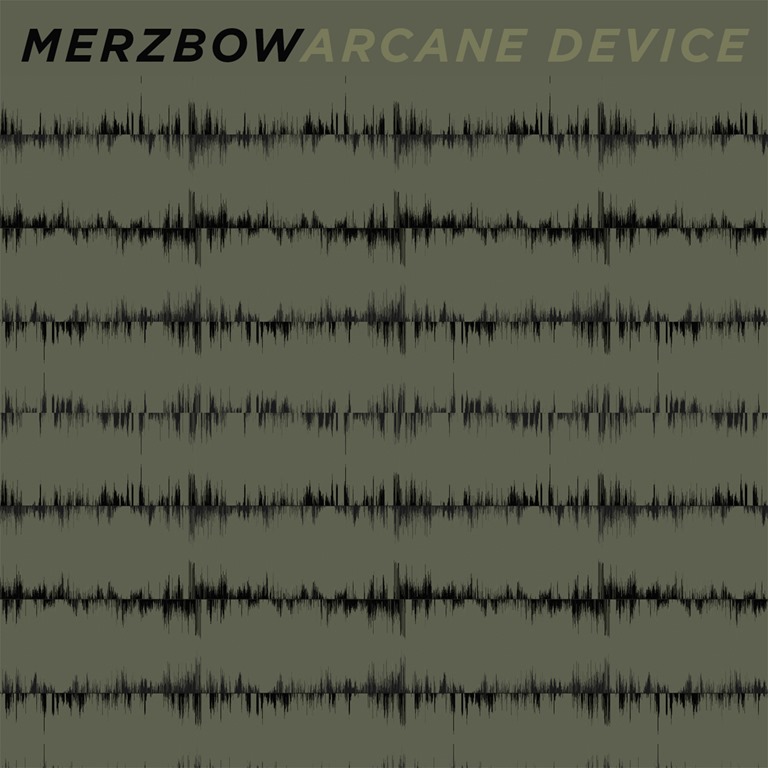
Merzbow releases are rather like proverbial busses, with this collaborative release with Arcane Device being releases simultaneously with a 20th anniversary reissue of his Merzbeat album and a CD reissue of his 1983 album Material Action, all on Important Records. The difference between Merzbow and busses is that you never have to wait long for a Merzbow album.
Merzbow & Arcane Device is a coming together of two very old hands at this experimental / noise stuff. David Lee Myers aka Arcane Device has been building electronics and creating feedback based electronic music since the late 70’s. Merzbow’s career also began at the tail end of the 70s, and the last forty-odd years has witnessed the release of a truly staggering body of work, with as many as twenty or more albums being released in a single year. It’s a daunting, overwhelming output, and the same is true of the music itself. Perhaps more than any other artist, Merzbow has pushed the boundaries of music – and even the boundaries of noise – to the absolute limits, and then continued to push beyond.
The premise of Merzbow & Arcane Device as a split LP is straightforward: each takes a piece by the other and remixes it, each presenting a longform piece correspondent with a side of vinyl.
The two pieces here are very slow, low, and drony, with the EQ geared toward the mid-ranges and lower, rather than harsh walls of treble. ‘Arcane Device Remixes Merzbow’ is particularly dense, murky, and unhurried in pace. Bubbles and pops blister the crinkled surface of churning sods. There are brief, momentary stalls to the crunching earthworks, filled with swarming hornet buzzes and wippling ripples of analogue synth sounds and skimming laser blasts. A Geiger counter crackle is pitched down and slowed to register around the gut and occasional trills of feedback break through the swampy soup. But for the most part, it’s half an hour of thick, wind-blown drone.
Merzbow’s treatment of Arcane Device’s sound is similarly given to bleeps and drones, but at a higher pitch and faster tempo; the laser bleeps are machinegun rounds by the barrage, and there are wailing siren cries of elongated feedback notes. As the drones drill deeper, the washes of static grow louder and harsher, and as the layers build, so does the volume and the tension. By the eight-minute mark, the tonal separation has become most pronounced, with barelling low-end underpinning a veil of squalling pink noise. Perhaps uncommonly for Merzbow, there are lulls, and they’re most welcome – but when the noise swells once more, the impact is amplified.
In the scheme of harsh noise, Merzbow & Arcane Device is not particularly harsh, but it’s tonally varied and its comparative subtlety is effective, as it gives the album a more considered feel, and it in no way diminishes its impact. The fact the two tracks are different – perhaps not so much for the casual listener, but to a noise enthusiast – the variations on a theme hold the attention, and draw the listener into the details of texture. These works are restrained, respectful, even, but not reverently so, and in offering two sides of a melted, battered, and pulverised coin, Merzbow & Arcane Device makes for a tough yet immersive listen.
With a CV that lists near-multitudinous membership and participation in bands (notably his regular gigs with Snack Family and World Sanguine report, but also contributing to Sly ands the Family Drone and countless others), renowned experimentally-minded jazz drummer and percussionist Will Glaser has taken some time out to continue his solo album sequence with the fourth instalment of Climbing in Circles.
Over the course of three previous releases, Glaser has explored jazz, folk, and beyond, through an experimental prism and with a methodology that’s very much about improvisation. This outing features long-time collaborator, Matthew Herd, on saxophones and piano, alongside trumpeter, electronic artist and producer, Alex Bonney, and was assembled over the course of five day. While the album is loosely constructed around two overarching ‘acts’, they consist of eleven separate and distinct pieces, and bookended by ‘Beginnings’ and ‘Endings’, there’s a narrative arc of sorts, here.
It begins with crawing birds and a gentle piano playing what one could readily describe as a charming melody with a quite conventional structure, and ends with a genuinely pleasant lilting piano tune – and yes, I mean tune in that it has all the conventional features of one.
In between, there is slow decay and infinite space. Rumbling, echoes, notes reverberate off one another at distance. Sax and trumpet trill and drone, sometimes at one, at others as if duelling. The percussion rolls and crashes, but more often than not, at distance, and creating texture and atmosphere and colouring the pieces with expression rather than maintaining rhythm.
The combination of instruments is relatively conventional in jazz, and, similarly, there’s nothing particularly radical about the way they’re played and interact on here. But there’s considerable joy to be had in simply listening to the musicianship and the way the musicians themselves interplay on the pieces. ‘Spiral Dance’ is a hypnotic serpentine spin, while ‘Bad Dream Machines’ is a drifting mass of fragmentation, dissonant, discordant, and above all, a work that exists in the spaces between the notes and in the reverb and echoes as in the notes themselves.
There will be some – perhaps many – who are deterred by the very mention of jazz, and there is a perception of there being a certain elitism about jazz – the idea that random notes and borderline unlistenable chaos is somehow a superior art form, and anyone who doesn’t ‘get’ it is clearly a philistine. But Glaser is a remarkably positive showcase for jazz, with a focus on the listener rather than purely the musicianship. Climbing in Circles Pt 4 is about atmosphere, about vibe, rather than indulgent wanking: this is jazz you don’t need to be an aficionado to appreciate. It’s listenable, and it’s varied, too.
On ‘Dead Fly Disco’, he and his collaborators play completely straight, a song with structure and swing, something you could even dance to, or at least nod a long to its toe-tapping groove in a basement bar late at night. ‘Ballad in the Jazz Style’ almost feels like they’re playing with and working within the tropes as an example of discipline, and it’s highly restrained and wonderfully moody in that sad, smoky jazz melancholy way.
There’s plenty going on, and enough to maintain interest, but not so much as to be chaotic or to lose the listener. Whether these things make it a good access point to jazz, it’s hard to say, but what it does mean is that Climbing In Circles pt.4 is a jazz album that’s accessible and enjoyable simply as a musical work.




 Aural Aggravation