Posts Tagged ‘Electropop’

Arriving more than three decades after his first solo album and almost 20 years since his groundbreaking group Telex delivered their final message, Belgian electro-pop musician Michel Moers is finally making a comeback with As Is, his brand new album. To celebrate its imminent release, the synth man has invited iconic vocalist Claudia Brücken from the similarly revitalised Propaganda (now xPropaganda) to guest on its first single, ‘Microwaves’. A 50% electro-pop, 50% new wave anthem, it will delight fans of Ladytron as well as Telex classics such as ‘Moskow Discow’.

“Claudia has a great voice that you recognise from the very first note,” says Moers. “I was thrilled to get the opportunity to work with her and was determined to place her vocal upfront in this song.”

Check ‘Microwaves’ here:

AA

Michel Moers will release As Is in mid-April. Coming 33 years after his solo debut, Fishing Le Kiss, the long-awaited record features ten tracks that showcase Moers’ wisdom and artistic reflection as he offers a blend of thoughtful, electronic music infused with surrealism in his own unique style. It includes contributions from xPropaganda singer Claudia Brücken, who adds her distinctive Teutonic touch to ‘Microwaves’, plus Moers’ compatriot DAAN (Daan Stuyven), whose deep, expressive voice is utilised to full effect on ‘Back To Then’.

Containing songs that have been developed over several years, the album has an intimate, diary-like quality, reminiscent in part of the compositions of Erik Satie. With highlights that include the stridently uptempo ‘Potentially (Love-Hate)’ and ‘Pixels’, plus the lyrically unsettling ‘New Friend’, the album actually opens with an updated version of ‘Les Gens Sont Affligeants’ (People Are Disappointing) from Moers’ debut. It resonates more than ever in today’s individualistic society.

As Is represents a triumphant return for Moers, blending past influences with contemporary sounds and themes, and stands as a testament to his enduring creativity and adaptability in a continually evolving music landscape.

Moers has spent the last three decades working as an architect and photographer while continuing to make music. Involved in the remastering of the Telex back catalogue that was reissued to great acclaim on Mute Records in 2023, this also served to reinvigorate his skills and contributed to the creation of As Is. Belgium’s first electronic band, Telex were influential pioneers, appearing on Top Of The Pops in 1979 and representing their nation at the Eurovision Song Contest in 1980.


ff3a0909a1752b34921296440990af1eb6900c49

1st December 2023

Christopher Nosnibor

I may have mentioned before that I’m a sucker for the sound of vintage drum machines – partly by association with so many of the innovative acts which emerged in the late 70s and early 80s, which used them in a host of different contexts, exploring the near-infinite avenues these little bits of kit afforded. For a start – and perhaps most significantly – it was possible to make solid percussion without the need for a drummer or drum kit, meaning furthermore, thanks also to the advent of the portastudio, there was no need for a proper rehearsal space or studio to rehearse and record music. In fact, with relatively cheap synths, you could record as a band without even having a band. The other thing was that, if amped up right, these things could be immensely powerful. And so it was that we saw the emergence of acts as diverse as The Sisters of Mercy and Metal Urbain, Young Marble Giants, and The Human League.

Poly Ghost are a German synthpop trio, and ‘Ananas Ring’ is a quirky, fairly minimal tune that brings together the primitive sound of the aforementioned Young Marble Giants with the retro-chic of Stereolab, delivered with a humourous twist that could only come from a German act. Anyone who says the Germans lack humour is simply missing it. Absurdist wordplay might not be everyone’s bag, but from Die Toten Hosen to the deliberately clunky lyrics on St Michael Front’s first album, there’s no denying that there’s a thread of quirky amusement that’s uniquely German.

And so we arrive at Poly Ghost’s ‘Ananas Ring’, and while the twisted punning of the band’s name is one thing, the inter-language incongruity of ‘ananas’ – French for pineapple – with the English ‘ring’ (the French word for ‘ring’ is ‘bague’) from a German band takes messing around with language to another level. Despite the lyrics seemingly being in English, I have absolutely no idea what the song is actually about. But, I do have functional ears, which are totally sold on this quirky sound. The accompanying video is daft, and ‘Ananas Ring’ is a nifty tune that brings all the analogue, and the squeaky, inflected vocals just make it all the more wonderous.

AA

su80615-AnanasRing-Thumb01m

Christopher Nosnibor

It’s a common issue for artists, even those with labels, that a release simply fails to gain traction. There are myriad reasons and multiple factors, and it’s often a combination of them which contrive to leave a release sunk like a stone, dead in the water. It’s rarely a question of quality. Even A-Ha’s ‘Take On Me’ and ‘West End Girls’ by the pet Shop Boys took more than one attempt to break through, despite major label backing at a time when labels would plough absolutely hods of cash into new artists.

Sometimes it’s simply a question of timing: some weeks and months there’s a glut of major releases or releases that otherwise grab the attention that mean some great records slip through the cracks. This month is a classic example, and it seems there are at least half a dozen truly killer releases all landing on the 10th. I can’t even listen to them all, let alone write about them.

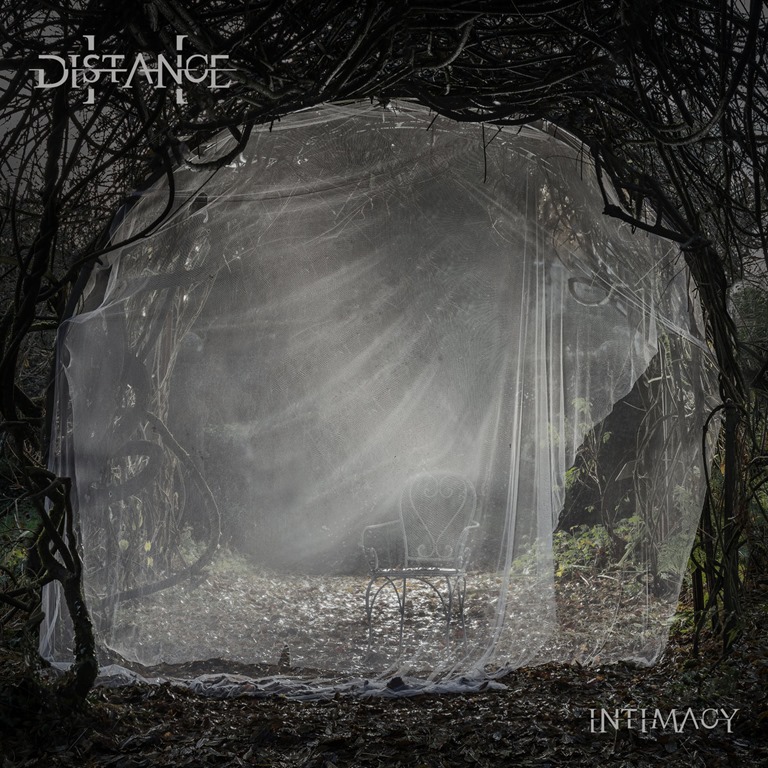
And so it seems to have been the case when Distance H dropped debut EP Intimacy a few months ago. The single cuts released in advance of this EP grabbed my attention, not least the first, ‘Bitch 16’, featuring Ophelia from Saigon Blue Rain. In fact, there wasn’t a weak selection among the three singles: ‘Waters of Woe’ by Distance H feat. Marita Volodina was – and remains, as I described it at the time – ‘vintage goth with a contemporary spin’ and ‘a cracking tune’.

But having failed to make a splash, Intimacy is getting a PR reboot, and it’s a good thing, because the tracks which didn’t get single releases a year ago or whenever, are just as strong, and this makes for a full and founded EP. Casting an eye back to the 80s and 90s when big bucks were doing the rounds, it was often the case that albums would depend on a strong single or two, and that those singles would stand as beacons in set of mediocre slop, or, as was often the case, indulgent turd. It’s rather harder to get away with that ‘lead single’ marketing approach now people can stream the album or hear to by other means in advance without needing to go and check out a listening booth or blag it off your mate.

But Intimacy is truly all killer. ‘Twilight’ is a big, sweeping slab of majestic melancholy, balancing cool synths and chiming guitars that lean on Disintegration era Cure and sits nicely alongside The Twilight Sad circa Nobody Wants to Be Here and Nobody Wants to Leave. It’s a song with a sadness that aches, but at the same time, there’s an ethereal majesty about it, due in no small part to the sweeping, soaring vocals. The epically multi-faceted ‘Waters of Woe’ we’ve already raved about here, but hearing it afresh in the context of the EP, it seems to gain power. The same if true of ‘Reasons to Rush’ which features Liset Alea, combining heavy goth vibes with the electric rush of 90s alternative acts like Curve.

The final track, the epic six-minute ‘Leaden Sky’ now selected to lead the reboot, again features Ophelia on vocals. It’s another gothy epic, clocking in at over six minutes, with a bulbous bass and a wash of echo-soaked guitars weaving a richly textured backdrop cut through with programmed drums which punch out a rolling rhythm. In the context of the EP, it rounds off a big journey ending as it begins, while stepping through some memorable terrain. For these collaborative cuts, Manu H has made some truly immaculate selections. Each of the vocalists brings a subtle but essential twist to the sound, and while tied tightly to the templates of his stated influences (The Cure, Joy Division, Siouxsie And The Banshees, Cocteau Twins, The Sisters of Mercy or The Chameleons), Intimacy sees Distance H emerge victorious by capturing the atmospheric aspects of his forebears without falling to cliché, and the quality of the songs seals it.

AA

a1691727151_10

Negative Gain Productions – 8th September 2023

Christopher Nosnibor

It likely seems strange to anyone born in the last thirty years that electronic music as we know it simply wasn’t a thing at one point. If the Seventies saw a slow emergence of new technology in music, it wasn’t until the early 80s that that technology became accessible – that is to say, affordable and more widely available in commercial terms. This was truly revolutionary, and to hear bands like The Human League, Soft Cell, Depeche Mode, all coming through in the charts felt like, well, the dawning of a new era. Which is precisely what it was, and this would evolve in darker directions – as well as dancier, poppier ones – as the decade progressed, and through the 90s, by which time the sense of revolution had become fully assimilated. No-one bealed about the lack of instruments involved in the making of the Utah Saints’ album.

You can see why your traditionalists hated it, of course, and the Musicians Union, too, and this friction did continue into the 90s: as they saw it, drum machines threatened to make drummers obsolete, and if you had a synthesiser which could do bass and lead, both bassists and guitarists would be out of work! It was of course pure knee-jerk, and one wonders to what extent the same is true of the outcry over AI, but on that score only time will tell. As it stands, history had proven that home taping didn’t kill music – no, that would come later with the advent of streaming, and not illegal streaming via Napster and subsequent P2P platforms like Gnutella and Soulseek.

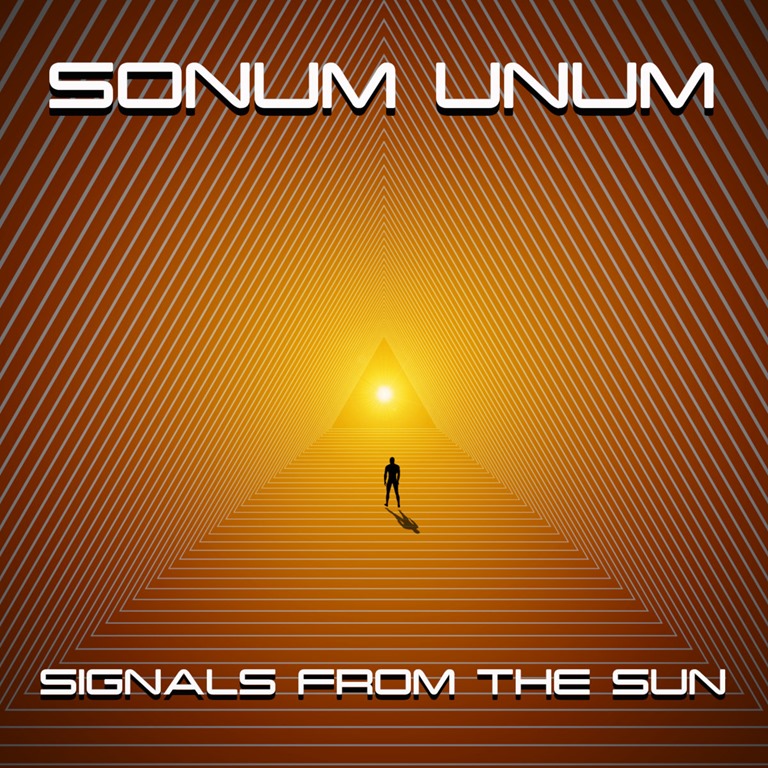
This s the backdrop for the debut album for electronic rock duo, Sonum Unum. Signals From The Sun is, according to their bio, ‘heavily inspired by 80s and 90s eras electronic and synth-pop music. Dark and ominous tones, ambient textures and thumping beats abound while lush, layered vocals soar to epic and cinematic tiers.’

It’s tempting to slide into the easy commentary which maintains the narrative of this being an album with a retro vibe, primarily because it’s true: it’s an amalgamation of two decades of electropop slickly delivered to draw in elements from specific acts, but the entire oeuvre of the timespan, from bolder darker grooves of gothier European dark electro, but also incorporating elements of the emerging case sound, with the quickfire drum builds that pace the way for expansive choruses.

There are times where it feels as if their approach to appropriation – essentially pulping and compressing the very essence of the forms into smooth perfection – results in songs that are simply too generic to have a real sense of character or identity. But then, plough through myriad releases from that time span from acts who either bubbled under or who only had a hit or two, and you’ll find the same is true of the rest of the album tracks. Moreover, to return to the question of sounding ‘retro’ – it feels like an increasingly obsolete concept. More or less everything draws on something precursive, and most of what is starting to be a recycling of a recycling. It’s no longer a case of a seventies or eighties or nineties revival: all of these things now exist in perpetuity. Retro is the new contemporary, and I can’t decide of the seeping sadness I experience listening to it is because of the emotive quality of the songs – which are tightly crafted more than gripping, to the point that they slip past without for a second taking hold – or if it’s because of the way they evoke so much that entirely removed from the songs themselves.

Signals From The Sun is Mr Mister to Depeche Mode via Eurythmics and A-Ha and Nine Inch Nails and Bastille. Slick, anthemic, it seeps nostalgia and has immense commercial appeal if it finds its way to the right channels and outlets.

AA

a3576946630_10

Operating in the same dark and subversive corners where Fever Ray, Jenny Hval or Bjork may find solace, ‘Flesh it Out’ is a track that arrives shrouded in a mystique all its own, with a strident confidence to defy conventions.

Written while gazing into the flickering flames of an open fire in her current base of Nashville, Proteins of Magic found herself caught in the daze of a flashback in which she had seen a young couple openly having sex during the day on the beach in Aotearoa / New Zealand. As Kelly Steven AKA Proteins of Magic remembers:

“The hope and the idealism, the youthful sheen on their skin, being unaware of what life lies ahead for them. That is what triggered the start of the lyrical process. I think the song lays out an emotionally treacherous life for them, a day in the life spanning 10 years and 2min52 seconds.”

Surrounding surrealistic lyrics with hex-like incantations, tribal rhythms, sinister synthesiser trills, and haunting woodwind sections, PoM creates an unsettling ambience and intimidating presence to send shivers. “If I give you a smile will you resuscitate me?” she coos through gritted teeth. Building to a hypnotic climax, ‘Flesh It Out’ couples brooding instrumentals with a litany of foreboding vocal textures, each representing a disjointed voice of differing lost souls. Foreshadowing a bleak future, these spectres emerge to erode the wide eyed innocence of youth and replace it with existential questions and hollow false promises.

As its title may suggest, ‘Flesh It Out’ was born from within a jam to evoke a spirit that is discernibly raw and immediate, before being layered and moulded repeatedly to find its current recorded form. The finished song spawns, regenerates and severs over its three-minute course, summoning a sense of self determination out of the chaos.

Directed by Ranger Garrett, ‘Flesh It Out’ arrives with an art-house style official video intended to capture a ‘day in the life’ in Nashville. Showing another side of the fluorescent glitz and glamour of the music city, it was shot around various alternative landmarks using a vintage Sony PMW-F3 and Sony Handycam DCR-SX45, including footage of the Dragon Park that was featured in Harmony Korine’s Gummo.

“I liked the idea of it being lo-fi and raw, and I wanted the filming to be like the recording process,” says Kelly of the video. “Less formulated. The cameras were actually literally held together with tape and things were falling apart. I wanted it to be a ‘day in the life’ in Nashville, in a manic, irregular, fractured way.”

Watch the video here:

AA

POM

Credit: Chris Cuffaro

Irish indie favorites Soda Blonde are delighted to reveal the music video for their latest single ‘Bad Machine’, the first from the band’s upcoming Dream Big album, due for release on September 8th.

‘Bad Machine’ fuses warm vocals with fuzzy synths, bringing a sense of sonic pleasure with its self-acceptance message. Indie pop and vibrant electronica combine to create a song with vigour and excitement.

When discussing the single’s new music video, guitarist Adam O’Regan writes: “For this video we wanted to explore the idea of ‘malfunction’. In an age of increasing automation, artificial intelligence etc, it’s easy to imagine the many ways things could go awry. But also, we just wanted to break stuff! Our talented & hardworking production designers built the set in 2 days, and we destroyed it in 10 mins of 16mm film.”

Soda Blonde has grown tremendously in the years since their debut, and it shows. Whereas 2021’s Small Talk was an anxiety-fuelled coming-of-age record about navigating our twenties, Dream Big is a mature awakening to the world at large; one that dives deeper and hits harder than its predecessor.

Dream Big is as much a product of self-reflective reckoning as it is one of submission, and both of these experiences are borne out in its songs. Soda Blonde begins Dream Big by asking what they’re willing to sacrifice in order to achieve their dreams, and as the album continues, they wrestle with the sheer weight of that question.

Watch the video for ‘Bad Machine’ here:

Tour dates below:

image003

23rd June 2023

Christopher Nosnibor

Talk about moving fast: as their bio details, ‘The Bleak Assembly was formed in July, 2022. Two weeks after its inception, the first EP, We Become Strangers was unveiled. The Bleak Assembly’s meaning takes inspiration from Charles Dickens’s Bleak House – the ‘Bleak Assembly’ being the chain of people in the story whose lives are destroyed by the promise of wealth.” This seems a fitting parable for modern times, and show how we never, ever learn from history.

Comprising Michael Smith (all Instruments) and Kimberly (from Bow Ever Down), they continues to create at pace (ugh – I hang my head at having written such a corporate phrase in a review… but, phraseology notwithstanding, it’s true), and followed up their debut EP with the ‘Alibi’ single in February of 2023, and now they present Strangers Among Strangers. The goal of this EP, says Michael Smith was to “try a different sound. Bands seem to fall into a certain sound after a while, so if that should happen to us. I wanted to open it up to a more electronic sound to give us more room in the future.”

They have pedigree and experience, having between them shared stages with the likes of Assemblage 23, Razed in Black & Switchblade Symphony with their own individual projects, and it’s unusual to see them declare up-front that The Bleak Assembly will likely remain strictly a studio project. But why not? Sometimes the creative process evolves organically and feels like it needs to have that live outlet, while at other times, recordings simply don’t lend themselves to being replicated live. And then there are logistics, not to mention economics. The latter is a very real factor in determining how artists operate now. Funny (not) how the cost of everything has gone up apart from wages and the fees paid to artists.

But this sounds like a studio project, also. And that’s no criticism, and no bad thing. Oftentimes you’ll find bands striving – and failing – to capture the energy of their live performances in the studio. It’s often the case that they developed out of playing live and that’s the platform on which they’re familiar and on which they thrive. And fair play to them: but other acts evolved in the studio and are detrimented by distance, while others simply don’t feel comfortable as live entities and feel they simply cannot replicate their studio works in a live setting. Whatever the case with The Bleak Assembly, they’ve clearly found a method which works for them, facilitating a rapid stream of material.

With Strangers Among Strangers, The Bleak Assembly, who clearly have something of a fixation on strangers and the unheimlich have crafted a crisply-manufactured piece of electropop, and while it’s got some strong gothy / darkwave elements, there’s a lot of Midge Ure era Ultravox and Violator-era Depeche Mode in the mix here, as is immediately apparent on ‘A Night Like This’ (which isn’t a Cure cover).

Strangers Among Strangers is solidly electro-based and packs some real energy. It’s synthy and it’s dark – and nevermore dark than on ‘Ready to Die’, where Kimberley faces straight out into the abyss and confronts the ageing process and, ultimately, the end, against a backdrop of swirling chorus-soaked guitar that’s pure 1985. ‘Remains’ is similarly bleak on the lyrical front, and these songs channel a lot of anguish. It may well be that they’re common tropes in the field of goth and darkwave, but the delivery is gripping, as well as keenly melodic. There’s something of a shift on the EP’s second half, moving to a more guitar-driven sound, but the throbbing synth bass and cracking vintage drum machine snare keep everything coherent and push the songs along with a tight, punchy feel. There’s much to like.

AA

a0917300862_10

It is with great honour that we inform you that Glasgow-based duo HANGING FREUD join hands with the Belgian label Spleen+ (division of Alfa Matrix) for the release of their 7th studio album Worship!

‘Falling Tooth’ is the first song from the album, and evokes the band’s influences ranging from post punk, ethereal, synthgaze, cold wave, ambient pop or yet experimental electronica.

Paula’s vocals are dark, haunting, almost glacial, her enunciation is both plaintive and full of echoing fragile grace. While the cinematic music warps them all in a melancholic ethereal cocoon made of mechanical funeral melodies, icy minimal sequences and suffocating synth atmospheres.

Listen here:

AA

a0231191648_10

German synthpop artist, Meersein has introduced their new single, ‘Haunting’;  a hauntingly beautiful song with a ghostly melody that lingers in the atmosphere.
Meersein sings about the memories of a love that is impossible to forget. The chorus is an earworm that will stick with you long after the song is over, capturing the feeling of being trapped in a love that taunts and lures you in, with nowhere to hide.

‘Haunting’ is a must-listen for anyone who has ever been haunted by a love that just won’t let go.

Watch the video here:

AA

The nostalgic sound of the 80s returns with a modern twist. The solo artist Meersein presents a Depeche Mode aesthetic with unique, contemporary elements. His debut single "Speechless" was released in June 2022, but he has been establishing himself on the darkwave scene since October 2021.

With his own radio show and new music reviews, he has established his channel as the ultimate darkwave resource.

This multidimensional artist is not only an experienced musician and dynamic live performer, but also a passionate new wave enthusiast. His infectious passion for multiple aspects of music is evident in his releases. 

321409

James Wells

We’re a little late to the party with this one, but we’re glad to be here now. Well, I say ‘glad’… This is like arriving late to the party and everyone is already half cut and you wonder if you should have actually come at all. Something feels dark, it feels as if something’s brewing, something menacing. If you ever feel on edge and like you’re often casting a glance over your shoulder for reasons unknown, this is not going to help.

Unfamiliar as I am with Tigercide – which probably something I need to address, and as swiftly as possible, this immediately feels familiar, and also uncanny – that is to say, familiar but not quite. Tigercide trade in dark electro, with subtle trip-hop infusions interwoven through their atmospheric tunes.

Having released their ‘Remedy’ EP in 2019, the remix EP is set for release this autumn. Following a couple of standalone singles, they’ve started sliding out tasters for the new EP, and John Bechdel’s take on ‘Remedy’ is magnificent.

It’s not overtly witchy or creepy, but has a real skin-crawling ominousness that sets you on edge, and if Shexist’s vocals on the original were haunting atop the low-end throb and reverb-soaked snare clatter, Bechdel has spun everything onto a dark, misty industrial-tinged anxiety dream. It sets you on edge, it’s tense, and it’s special.

AA

Tigercide_RemedyRemix_CoverDigital