Posts Tagged ‘electronica’

Petroglyph Music – 25th August 2024

Christopher Nisnibor

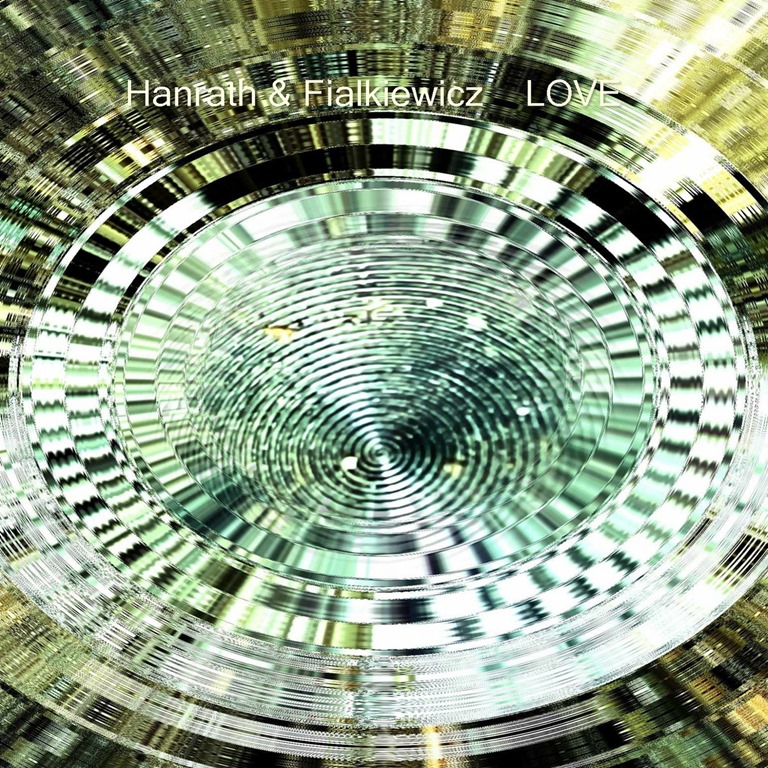
Deborah Fialkiewicz, who I first encountered performing as one half of her noisy dark ambient duo SPORE, is one busy and highly prolific creator, who not only manages to whip musical work spanning contemporary classical to ambience from out of the air at a remarkable pace, but clearly thrives on collaboration. This latest one, with German sound sculptor Wilfried Hanrath, is a further example of the way in which the coming together of artists with slightly different background and musical bents can make for unexpected – and brilliant – results.

As the accompanying notes explain, ‘the album starts with Deborah’s wonderful piece ‘Love’ and ends with Wilfried’s interpretation of it – ‘Love in other words’… The eight tracks in-between are based on noisy, dark ambient drones Deborah provided. Wilfried, inspired by a short trip to the sea, added to these by playing his synthesizer in the beautiful seaside resort. The result is a melange that combines the influences that both bring into this project to something larger than its components.’

Having recently returned from a week by the sea – on the Cornish coast – I can certainly vouch for the replenishing, refreshing, and inspirational qualities of the sea. Living inland and in climes which are perpetually humid and polluted, one immediately notices the difference in air quality when in the presence of a sea breeze.

As collaborations go, this is a particularly interesting one, not only musically as of and in itself, but it’s difficult to separate out what each of the contributors has brought here.

Fialkiewicz’ opening composition is gentle, combining tweaks, tweets, and twitters over the picked strings of a chamber orchestra of sorts, and a billowing wind which fills the background. It’s simultaneously sedate and mournful, and ends feeling unresolved.

Fialkiewicz’ capacity for conjuring dark drones is well-documented, primarily with her work as one half of Spore, but just how much manipulation they’ve been subjected to at the hand of Hanrath – which should really be an album title for a future collaborative / remix work of his – is impossible to determine. This is how collaborations should be, really: the aim should be to achieve a blend, to, and to conjure something which is neither one party nor the other. LOVE fits this criteria: it’s not about who does what, specifically, but the overall listening experience being something different, which is neither one artist or the other, but what they create in combination.

Following ‘Love’, ‘Oneness’ marks a complete shift in every way: it’s a bubbling quickfire electro piece that pretty much brings Kraftwerk together with Gershon Kingsley’s ‘Popcorn’. This numerical sequence of pieces, which runs from ‘Oneness’ to ‘Eigthness’ is an evolutionary, exploratory series, the majority of which are an expansive seven or eight minutes in duration and really mine a deep seam of bubbling, squelchy electronica which becomes increasingly engrossed in the quite granular details of the interplay and interaction between tone and texture, but without venturing fully into the dots-in-front-of-the-eyes details of the truly microtonal.

Slow winds and wide washes define the soundscapes offered here, and I suspect these are the foundations Fialkiewicz provided before Hanrath began to add his spin to them, with stabbing strikes and all kinds of digressions and generally unpredictable incidents which change both the course and the mood of the pieces.

‘Threeness’ is a particularly layered piece, ominous and brooding at first and subsequently, but interrupted by wibbling bleeps, a hint of an R2D2 seeking escape from the haunting confines of the track’s opening. Nothing is quite as it seems, and nothing feels quite right here.

‘Fourness’ is a torturous mess of oscillating drones and groans pitched against a mangled sampled vocal loop, and as one of the album’s darkest and most uncomfortable pieces, it’s very much in the vein of Throbbing Gristle. But suddenly, emerging from the frothing tempest of noise emerges a piano which brings tranquillity to provide balance. And this is where LOVE exceeds. There is a lot going on, and it’s an album which really revels in its contrasts and its manifold depths. This means that overall, and in context, LOVE is a standout work which conforms to no set parameters, doesn’t really sit anywhere, not least of all within the realms of expectation.

AA

a0291842123_10

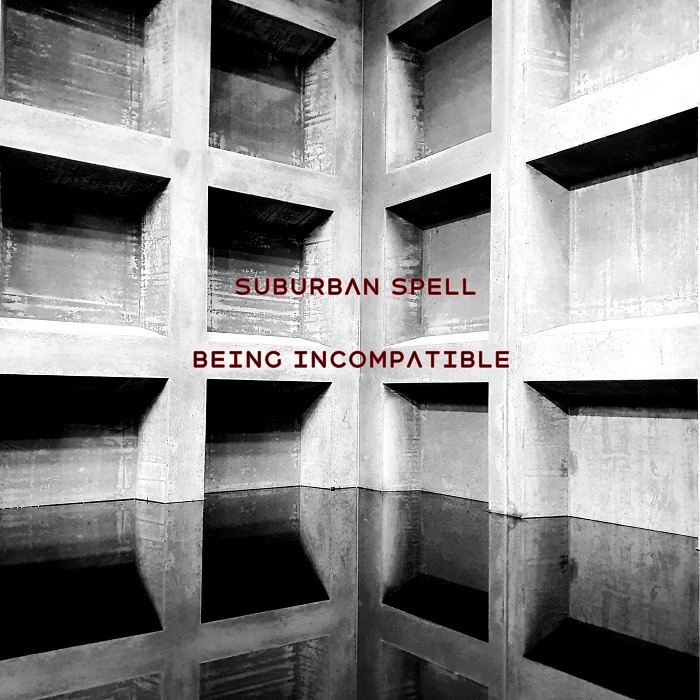
Dark electronic artist, SUBURBAN SPELL has revealed the first single from their forthcoming album, Incompatible.

‘Being Incompatible’ is a driving, dark synthpop song about a relationship that has been built on mutual concessions and arriving at a point where one realizes they need to make a choice about its future.

Says SUBURBAN SPELL founder, Peter Endall, “I wanted to make a statement that continual compromising in a relationship can also have detrimental effects that can have far reaching consequences that can shape your entire personality, sometimes not always for the better.”

Society generally says relationships are about compromise, Be mindful not to lose yourself along the way. ‘Being Incompatible’ builds on a soundscape that echoes 80’s icons such as Devo and Depeche Mode.

Check it here:

AA

fce08e48-6abb-7ff7-4488-c2f67f1c7180

For Malcolm Pardon, there’s beauty in our universal, inescapable demise. Like the romantic notion of the orchestra on board the Titanic playing their repertoire as the ship went down, on his second solo album Pardon looks past the bleak or macabre to observe death as a multi-layered, lifelong acquaintance.

“It’s not meant to be threatening or horrific in any way,” says Pardon of The Abyss. “There’s this constant dialogue we have with ourselves about how we’re going to die at some point. It’s like a constant companion, so you might as well get to know it, and befriend it.”

As one half of Roll The Dice, Pardon worked alongside fellow Stockholm resident Peder Mannerfelt on brooding fusions of electronica and classical composition. By contrast, his 2021 solo debut Hello Death saw him take a much more stripped-down approach, placing the emphasis on plaintive piano composition with only the subtlest of sonic treatments in the space around the notes. Without intentionally setting out to record a conceptual follow up, as he developed the sketches which would become The Abyss, Pardon found himself contemplating unknown futures and the artists’ quest into unexplored territory.

“For me, on a musical level The Abyss represents exploring your own capabilities,” he says, “Starting from an empty canvas, then slowly finding the way forward by connecting the right notes. It’s almost a subconscious experience. I sit down by the piano, and if I’m lucky I find something that takes me down the vortex.”

The lilting romanticism of ‘Enter The Void’ serves as a perfect distillation of Pardon’s approach, balancing a delicate piano refrain with a low, rumbling blast of noise before being carried aloft by swooning strings that echo down a distant hall. There’s beauty and hope shot through with foreboding in the particular treatment of each sound, the harmonic interplay between the musical elements and the gentle rise and fall of the arrangement.

Hear the track and watch the video here:

The album is out on 20 September.

ENTER_THE_VOID_MAIN_STILL

May 2024 / July 2024

Christopher Nosnibor

Gintas K is possibly one of the most-featured artists here at Aural Aggravation, and I’ve written about his work elsewhere, prior to establishing this site. I’ve often commented – sometimes flippantly, sometimes in sheer awe – at his rate of output, but it seems appropriate to make the observation once again, since a little while ago I found myself simply swamped and a shade overwhelmed by the volume of submissions I was receiving. Electroacoustic Space Drumming landed in my inbox and I failed to so much as open it, let alone download it. Then, Outsider’s appeared, reminding me I was behind on things, only to discover that a split tape release with Jacob Audrey Taves had come out in between the two.

The first of the releases, Electroacoustic Space Drumming, comes courtesy of London label Anticipating Nowhere Records, as a download and limited cassette (in an edition of 20, more than half of which have gone already).

The titles are incomprehensible to me, but I very much doubt this will make any difference to my appreciation of this jangling, bleeping glitchfest. The six tracks do very much sound like a circuit meltdown, the digital xylophonic cadences interrupted by sudden jolts or sound and stuttering microbeats like an Action Man marching band trapped inside a jam jar half-full of water. Creaks, groans, and splashes abound and contrive to create a complex and layered work.

It’s difficult – if not impossible – to unpick everything that’s going on, and consequently, you simply sit back and let it wash over you. But that doesn’t mean it’s comfortable, or easy to do so.

And then there is Outsider’s, with its questionably-placed apostrophe in the title. Outsider’s what, precisely? And with twenty-three tracks, released digitally and as a colossal five disc CD work, it’s an absolute beast.

The five CDs make sense in a way which is less apparent on the digital release, as there are essentially five segments or suites, with the tracks belonging to each names with a suitable prefix: jazz, crunchy, noise, drones, and piano stuff. Each contains between three and six pieces, effectively an EP’s worth apiece.

In truth, the track titling isn’t especially helpful: the six tracks of the first set, ‘jazz’, and entitled ‘jazz good’, ‘jazz also good, jazz prolongation’, ‘jazz’, ‘jazz’, and ‘jazz.’ Spoiler alert: there’s nothing especially jazzy about the ‘jazz’ cuts, but there’s electronic percussion that cuts through foamy bubbling washes and a disarray of oddness that sounds like machine gun fire, and glitches aside, it almost feels co-ordinated. And no-one needs a jazz prolongation, although this decidedly unjazz cut, we can forgive.

The four ‘crunchy’ cuts are riots of bleeps and squips, a riot of sound that’s no more vigorous than on the first, ‘crunchy.geras greit.’ The two pieces simply entitled ‘crunchy’ combine haunting, hovering tones, and collapsing circuits and lurching synaptic stutters, like exposed wires sparking as they swing, and things become increasingly scratchy, scrapy, a frenzied buzz of fractured, fizzing, fucked electronics.

The three ‘noise’ pieces build in their noisiness, but at heart aren’t all that dissimilar from the ‘crunchy’ pieces, although perhaps quieter and less overwhelming, and overwhelming it is. Then again, the ‘drone’ pieces aren’t especially droney, and more represent explosions of frothing discord, and the final suite, ‘piano stuff’ is a cacophonous conglomeration of bubbling noise down a drain.

These recordings remind me of my early days of reviewing, back in 2018 or so as my introduction to truly avant-garde, experimental electronic works, and Gintas K – perhaps one of the first acts I discovered as an exponent of dripping, bleeping, weppling, weirdness. All this time later. he’s still proving to be a rare master of electronica. Come 2024, and Gintas K is still right there at the forefront.

a1621189998_10a2101315344_10

London-based musician/composer Ian Williams has released a new single entitled ‘Chronopolis’ today. Taking its title from a J.G. Ballard short story, it is an edited version of a track from his current album, Slow-Motion Apocalypse.

An accompanying video was shot in Canary Wharf in London. It highlights the clock-watching and surveillance of the workforce (facial recognition, keystroke logging and anything else they can think of) that makes the vast multinational corporations located in this financial heart of the beast untaxed billions, leaving crumbs that the average worker is supposed to feel grateful for.

The epic soundtrack to this scenario perfectly encapsulates the colossal architecture and human hive of activity, with hyperactive sequencer lines agitating under soaring lead synths as towering piano chords and immense drumbeats propel the whole machine along.

Ian Williams began his music career in Edinburgh in the mid 1980s as a founder of Beautiful Pea Green Boat, whose ethereal, atmospheric sound pre-dated the vogue for dream pop by at least twenty years. Several collaborations with Lebanese choreographer Joumana Mourad and her contemporary dance company Ijad saw him fuse Arabic/classical/techno/ambient styles, following which he changed tack to work with singer Claudia Barton as Gamine, releasing two albums of dark, piano-led torch songs and lullabies.

Williams’ own releases include THE DREAM EXTORTIONISTS (2019), a debut solo album of dark piano and electronics; LES BLESSURES INVISIBLES (2019), an eclectic electronic soundtrack to a documentary film by French director Eric Michel, and ALL BECOMES DESERT (2021), an album of minimalist ambiences and warm analogue soundscapes.

Williams has also composed the soundtrack to Michel’s new WW2 spy documentary, LE MYSTÈRE LUCIE (Code Name Lucy), which will be released in July. Further details will follow in due course.

Watch ‘Chronopolis’   here:

AA

ec73bf5906ba2863ed94ad6bddc0377869b6acb9

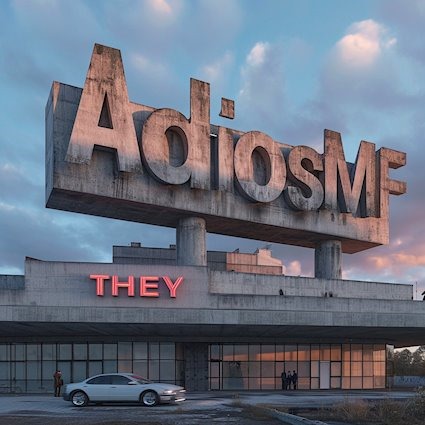
Adios MF is a musical collective spearheaded by Nathan Keeble carving fresh dark wave and electronica sound the underground of Sheffield. Their latest single, ‘They,’ was recorded between Brooklyn and Brixton, serves as a sonic manifesto of what’s to come. Their music defies categorisation, blending elements of post-punk, electronica, and avant-garde into a sonic tapestry that’s uniquely their own.

With sleek production by Nathan Saoudi and Richard Wilson yet coursing with enough detail and character to set it apart, with this impish 80s beat, sinewy guitars, metallic dapping keyboards, and sample loops, it forges a uniquely futuristic sound that’s at once both familiar and yet mirrors the churn of the cityscape.

With a sound that hints at the influence of acts like Human League, Depeche Mode, Kraftwerk and Molly Nilsson, the vocals are addictive and almost mechanical, driven with hooky melodic ticks that sink their nails into and won’t let go, and yet the lyrics reside with a disquiet at the creeping gentrification of urban redevelopment “They built a Starbucks on my street” and reference to shadowy figures who might take you away. It hints at a dark underbelly and Sci-fi dystopia where your every action is being watched.

ADIOS MF say “’They’ is a Kitsch byproduct of existence amid the constant churn of urban development and the persistent buzz of drilling. It was written as a tonic to the realisation that resistance is futile; you must simply acquiesce to the world of urbanism and let it carry you along on its unpredictable journey, set to a naughty 80s beat.”

We dig it here at Aural Aggro, and you can get your lugs round it here…

Partisan – 17th May 2024

Christopher Nosnibor

It feels like no time at all since I was reviewing the cassette release of Lip Critic II, and that their ascent from self-released EPs and cassette-only albums on microlabels has been astoundingly rapid, but time has a way of playing tricks when it comes to perception: Lip Critic II was, in fact, released almost four years ago. And now, signed to Partisan and having gained significant traction playing SXSW, with the NME claiming bragging rights for giving them a cover feature a few months ago, as well as a five-star review last November, they’re certainly breaking through. There’s no question that it’s entirely deserved, either: despite being overtly weird and clearly non-mainstream, they’re a quintessential cult alternative band, the likes of which gain substantial hardcore followings and are revered long after their passing.

With a lineup consisting of two drummers and two synths, Lip Critic are no ordinary band, and they produce no ordinary music, and Hex Dealer is a schizophrenic sonic riot. It’s a bit cleaner, the production rather more polished, but fundamentally, it’s the same deranged percussion-heavy cacophony that Lip Critic have always given us, and it’s still true that most of their songs are short and snappy – around two-and-a-half minutes. Consequently, Hex Dealer is aa succession of short, sharp shocks, like poking a socket with a wet finger. The whole thing is a spasm and a twitch.

‘It’s the Magic’ brings together a smooth croon that has hints of Marc Almond and some shouty rap mashed together with some Nine Inch Nails industrial noise and some woozy hip-hop beats and some aggressive drum ‘n’ bass, all in under four and a half minutes.

Lead single ‘The Heart’ is a standout, for is frenetic, kinetic energy, and its hookiness, but it’s a question of context: it’s a blissed-out pop tune in comparison to the blistering percussive onslaught and distorted dark hip-hop blast of ‘Pork Belly’, a cut that takes me right back to the early 90s, specifically the Judgement Night soundtrack. Single ‘In The Wawa (Convinced I Am God)’ is entirely representative of the album as a whole, compressing all of its warped elements into a noisy, spasmodic, hi-NRG two minutes and nineteen seconds. Crazed, hyperactive, it’s explosive and it’s unique.

It’s a rock album with rap trappings. It’s a rap album with rock trappings. It’s a mess and shouldn’t, doesn’t, work. Only, it does. And with ‘My Wife and the Goblin’, they introduce some gnarly noise which isn’t metal by any stretch, but it certainly gets dark near the end. I say ‘near the end’, but it’s only a minute and forty-one and it’s a real brain-melting mess of noise.

If the beats to grow a little samey over the duration of the album, the counterargument is that the thrashing percussive attacks give the set a vital coherence. Packing twelve tracks into just over thirty minutes, and more ideas per minute than any brain can reasonably be expected to process, Hex Dealer feels like Lip Critic’s definitive statement.

AA

a4093774739_10

5th April 2024

Christopher Nosnibor

It’s been almost four years since I encountered Alaxander Stordiau, when I covered the single release by The Original Magnetic Light Parade, a collaboration between Stordiau and Edinburgh man, Harold Nono, on perennially oddball label Bearsuit Records.

With minimal info about that release – and not much more about this one, I’m mostly left to grapple with the music as it presents itself, with minimal content. This is good: and so is this EP.

A brief Internet delve uncovers that the material on this this EP was initially released a year ago, as part of an album-length work bearing the same title, slipped out on Soundcloud. Now, there are plenty of albums I think would have made decent EPs – or 7” singles – but there’s no reason to believe Stordiau has whittled this set down due to any issues with quality, and it does seem that it’s often easier to pitch an EP than an LP in our attention-deprived times. If I were to go all-out on a personal obsession, I’d make a greater deal of the fact that this four-track cut has aa running time of twenty-three minutes. There’s nothing to suggest Stordiau is a fan of William S. Burroughs or otherwise beholden to the ‘23 Mythos’, but the fact it does have a playing time of twenty-three minutes was of note to me, simply because. The twenty-threes just keep on coming.

And so to the music itself. ‘Fear Merges Easily’ is something of a teaser, an introduction, an atmosphere-builder, with wavering synth undulations creating a nice, even flow over a shuffling beat that sits off in the background. It’s got groove, but it’s subtle, and overall, it’s pretty mellow. It doesn’t ‘do’ much: one gets the impression it’s not supposed to, and nor is it necessary for it to do more. It’s vaguely background, it has some classic eighties electro and krautrock elements to it, and enough texture to keep it engaging.

‘Hearing the House Breathing’, stretching out to almost eleven minutes is the centrepiece and defining track here, and what’s interesting is how it’s centred around a core motif and built upon a solid spine of subdued beats, pulsating bass, and nagging synth shapes, but shifts and moves through a succession of segments. It’s dancey, but at the same time, it isn’t. and there are gasping, whispering vocals wheezing beneath the waves of undulating analogue ripples. Around the mid-point, it breaks into a more energetic mood, the bubbling synths bouncing over a lively robotic electro beat dominated by the whip-cracking snap of a vintage drum machine snare sound. Everything gets quite busy, and a shade hazy around this point, there’s a lot going on, and not all of it synchronous. I can’t be alone in finding this kind of busyness induces not a trance-like state, but one of feeling dizzy and vaguely overwhelmed, an experience not dissimilar to sitting in a busy pub or coffee shop and being unable to focus on reading or the conversation in front of my face for the distraction of all the babbling noise filling the air all around.

Things take a turn for the eerie, the proggy, the spacey, on the trilling title track, where a creeping dark chord sequence sits beneath altogether more vibrant tones, before giving way to a sloshing ebb and flow overlayed with some barbed organ, and there are moments here that remind me of Gift by The Sisterhood, Andrew Eldritch’s project between phases of The Sisters of Mercy: specifically, the notation the chilly closer ‘Rain From Heaven’. Closing off, ‘The Sting of the Lie’ is a relentless, cyclical composition over which blasts of wavering, quavering keyboards wander and spin.

Skin Of Salt brings together a range of elements, and not always comfortably. But why should music be comfortable, why should it always be easy, accessible? What’s wrong with discord and dissonance, lumpiness, discomfort? Why, nothing, is the answer. Life is brimming with discord and dissonance, lumpiness, discomfort. And without these elements, this would just be a bland hybrid of dance and ambient. Thankfully, it is so much more. Skin Of Salt isn’t mere mental chewing gum, but something which requires some proper chewing and a slow digestion.

AA

artwork-album_Skin-Of-Salt

Janka Industries – 3rd May 2024

Christopher Nosnibor

Once again, I find myself tussling with a jazz album and in a quandary as to quite what to make of it. For many, many years, I was absolutely certain I detested jazz. Until, that is, having been introduced in my line of work to acts like The Necks, I came to learn I’d simply been exposed to the wrong kinds of jazz. The weirdy, noisy, cacophonous kinds of jazz made sense in context of my appreciation of mathy noise rock, and wasn’t such an immense leap from Shellac to be incomprehensible. Like any genre, or even tea or coffee, it’s all about finding a point of entry, a flavour that suits your palette. I used to hate both tea and coffee, having been given the former with full-fat milk and sugar and the latter in the form of a fairly weak blend with milk but no sugar, and they only really clicked when I ditched the sugar and discovered Earl Grey, and that you could have really dark-roast coffee with no milk and a shovel-load of sugar. So, you know, you find your thing.

And then along comes Lutebulb, by Blueblut.

The blurb isn’t wrong in describing Blueblut’s lineup as ‘highly unusual, bringing together ‘three musicians acclaimed for exceptional contributions to their respective spheres in experimental jazz, electronica and rock.’ It’s a jazz-centred fusion, for sure, but it’s not jazz fusion as one tends to think of it, and certainly not as I’ve come to understand it. So what is it? As we learn, ‘Lutebulb is the fabulous culmination of ten years of intensive touring, with the Vienna based trio of Pamelia Stickney (theremin, vocals), Chris Janka (guitar, loops, samples) and Mark Holub (drums, vocals, percussion) socking it to global audiences with an international polystylistic musical language which takes in improv, jazz, avant-rock, ska, folk and Krautrock among other elements.’

There’s certainly a lot going on: initially, it comes on a bit laid back, not so much loungey as a smug muso pop collision of jazz and Latin dance, and I suppose the title, ‘Cocktail’ is something of a giveaway as to its swinging party vibes, but then shit happens – particularly some pretty crazy guitar work, and the percussion goes big and suddenly the party’s been crashed by a towering riot of sonic chaos, before suddenly, the entertainers seemingly remember themselves, pull their ties straight again and try to pull together some semblance of a funtime groove.

This sets the album’s template, really. Tracks tend to begin a bit kinda loose, a bit kinda boppable, a bit pool party fun times, albeit with some weirdness in the way the rhythms and the notes don’t quite chime in the conventional ways, and you wonder if it’s maybe the punch or the heat, but the tempo drifts a bit, first one way, then the other, and then maybe something doesn’t quite feel right, and it certainly doesn’t sound right and… what is going on? The room’s spinning and there are all sorts of random noises and you can’t tell if it’s people losing the plot or if some chickens have escaped and the sky’s falling in.

‘Aumba’ starts rather differently, a gentle piece led by acoustic guitar that brings a more reflective atmosphere, but it takes a hard swerve, the pace picks up, there are choral chanting vocals and then a handbrake turn into buoyant math-rock territory before some truly frantic fretwork. And because more surprises are needed, from nowhere, we get a crooning lyrical ballad in the last couple of minutes.

There’s unpredictable, and then there’s Lutebulb, which emerges with a fourteen-minute centrepiece of oddball experimental jazz that mashes absolutely everything together: one minute, I’m reminded of America’s ‘Horse With No Name’, the next, it’s Paul Simon’s Graceland and a Joolz Holland world music extravaganza. Then, somewhere in the midst of it all, we get the jazz breakdown with erratic percussion and space, dogs barking, and then, something else again. Led Zep riffage. Noise. More dogs barking. Every time I leave the house, the streets and parks and fields are like bloody Crufts, and the headfucking noise that’s emanating from my speakers – mostly a horrible conglomeration of barking and a strolling bass is making me angry and tense. And then the last piece, ‘Kaktusgetränk’, incorporates a familiar and popular jazz piece I can’t place or be bothered to research because by now I can’t decide if I need a lie-down or a massive gin.

With Lutebulb, Blueblut have created one of the most wildly varied – and in places, difficult, irritating, random – albums I’ve heard in a long time. I neither like nor dislike it: it has some truly great moments, and it has some not great moments. But when you throw this much into the blender, it’s to be expected, and I’d like to think that this kind of reaction isn’t entirely unexpected. The musicianship is outstanding, and their capacity to switch style, tempo, form, is something else, and the results are enough to leave anyone punchdrunk.

Blueblut – Lutebulb cover 1240px

‘Ride Or Die’ is the first single release in nearly two years by Swedish post-punk/goth icons Then Comes Silence. It is also an opening statement of intent from their stunning new album, Trickery, which is out on 5th April, with vocalist Alex Svenson stating: “Friendship is love. It is important and worth fighting for. It’s ride or die."

Indeed, much of Trickery celebrates friendship, unity and the feeling of belonging to a tribe, with TCS explaining that “being a part of the post-punk and goth scene is a great privilege. After being on the road for so many years, we have experienced caring and welcoming audiences, both old and young, some with a similar background and some just for the love of the music and the culture that comes with the lifestyle. Uniting and harmonising with other people, we feel an incredible community together and it is a feeling that is both priceless and a blessing."

Trickery is also the audio definition of triumph over adversity. Backtracking to 2022, on the eve of their first-ever US tour and eager to promote their just released ‘Hunger’ album and its 2020 predecessor ’Machine’, TCS were suddenly and unexpectedly reduced to a three-piece. Would their famed darkwave wall-of-sound still work in a trio format? Fortunately, the answer was resoundingly positive, so much so that they resolved to continue with this slimmed-down line-up on a permanent basis, a period that has already included further US and European tours, followed by their return to the studio to make Trickery.

The inadvertent metamorphosis of the band has also led to a different way of creating new music. In order to capture the heart and essence of the trio’s live prowess, Trickery was recorded in just three days in Kapsylen Studio in Stockholm. With Jonas Fransson (a band member since 2015) laying down an energetic punk backbeat and sleaze punk fan Hugo Zombie (a 2018 recruit) providing inventive and rhythmic guitar lines, the main focus remains on singer and bassist Svenson, the sole surviving founder member from the band’s 2012 debut album. His velvety croon and solid bass lines are enhanced on ‘Trickery’ by retro synth sounds reminiscent of his recent solo futurist wave project, Neonpocalypse. "The electronic elements are essential to ‘Trickery’," he adds, "but are also a salute to punk music, the cradle of Then Comes Silence and the cradle of post-punk.”

Founded by Svenson in 2012 and touring frequently to promote three albums released in quick succession, TCS soon found a large audience in Germany. Signing to Nuclear Blast in 2016 for the release of Blood, their fanbase widened as they shared stages with artists such as A Place To Bury Strangers, Chameleons and Fields Of The Nephilim and performed at festivals all over mainland Europe. Firmly in the vanguard of the new generation of post-punk, darkwave and goth artists releasing high quality new material, they work hard to promote it and are recognised as a leading live act in their genre. They have also built a significant UK following and 2024 has already seen them play a sold out London show at the 229 venue.

TCS recently signed to Metropolis Records for the worldwide release of Trickery.

Check ‘Ride Or Die’ here:

AA

f92b31c72652a59790319d3c3fe0b4c85d445aa7