Posts Tagged ‘electronica’

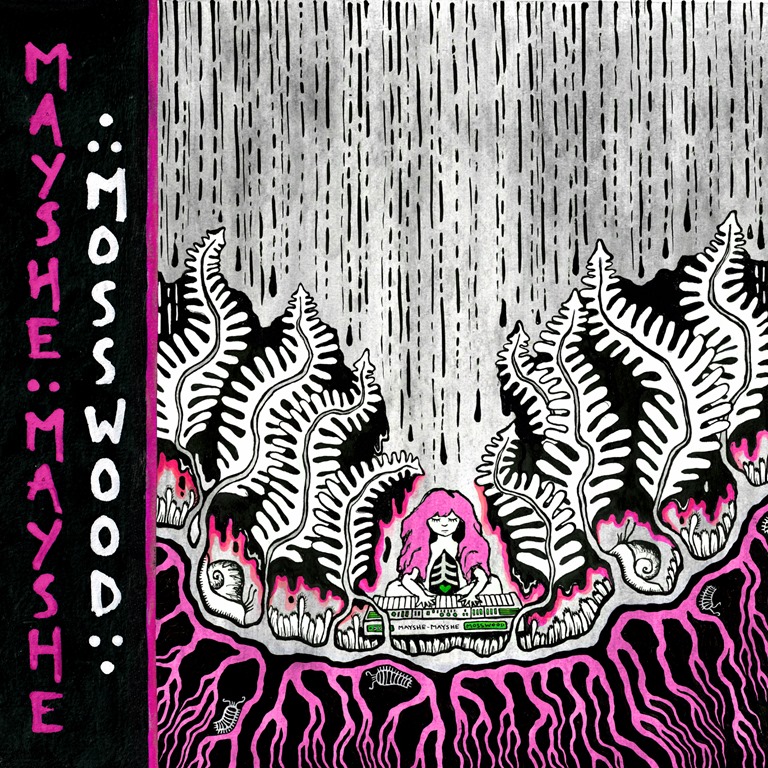
Ahead of the release of her forthcoming self-released, crowdfunded album, Mosswood – which we absolutely love – minimal electronic pop artist Mayshe-Mayshe has released a third single by way of a taster.

‘Little Yeah Whatever’ encapsulates the spirit of Mayshe-Mayshe perfectly – subtle, understated, shy-sounding, but with an unexpected strength at the core.

AA

a3517779526_10

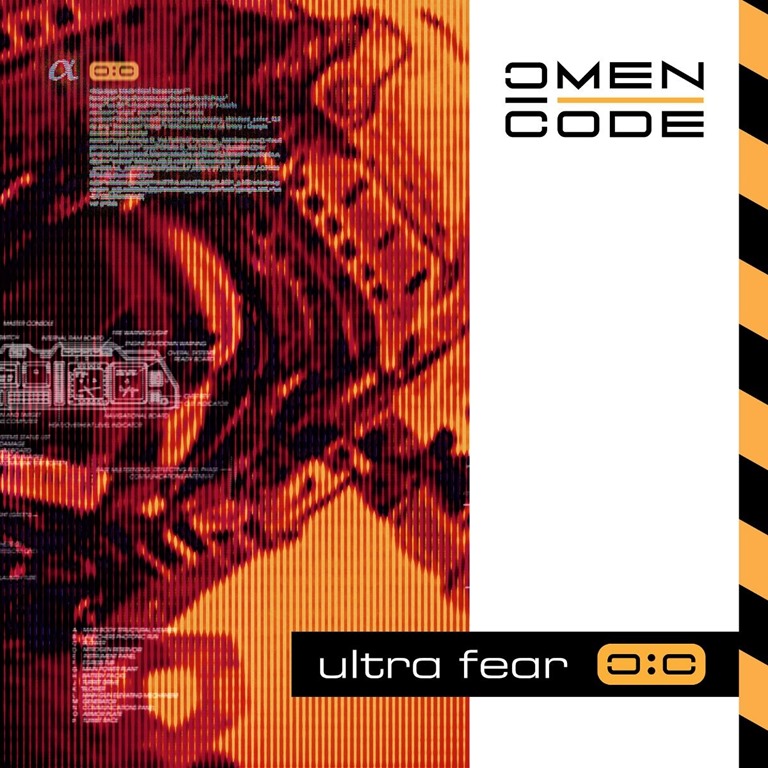
OMEN CODE unveil the new track ‘Ultra Fear’ as the next single lifted from their forthcoming debut album Alpha State, which has been scheduled for release on December 5, 2025.

AA

OMEN CODE comment: “I had orginally planned to use ‘Ultra Fear’ for my previous music project”, mastermind Kevin Gould reveals. “The pace is quite low key again, but the sequence layers fill it out nicely. The lyrics have an abstract but also quasi religious feel. Back then, I had put some angry, shouted vocals over the track. Then Agi came along and did his ‘new vocalist’ thing. He basically rescued the track. We wanted the chorus to have a distant and alien tone so used a lot of treatments and vocoder. There is nothing like a machine telling you that ‘God is near’.”

AA

Ultra Fear

16th October 2025

Christopher Nosnibor

Does the constant flood of bile on social media, the relentless flow of horrible, horrible news, and the general shitness of both people and society make you want to run away, hide, live in the woods? It seems that during the lull that was lockdown – a weird period which threw so many people into a spin of confusion that we really need to accept that there have been long-lasting repercussions from what amounted to a collective trauma – something changed, as if the world shifted on its axis. Some of us were more traumatised than others, it’s true, and that’s for wide-ranging reasons.

Alice Rowan – aka Mayshe-Mayshe – has documented her own post-lockdown issues with long Covid via her social media, and how it’s impacted her ability to maintain her work-rate. But here she is, finally bringing her third studio album, Mosswood to the world, and it’s the perfect antidote to all the stress and strain of modern life.

She describes it as ‘a dreamy art-pop exploration of mossy woodland and Tove Jansson’s final two Moomin novels… Her music blends dreamy art-pop and electronica with rich storytelling and infectious melodies, with organic elements woven into all aspects of her music.’ You may ask why – why would an adult be so invested in a fantasy world which has such strong connotations of childhood? A reasonable response would be ‘why not?’ In the face of the horrors which surround us everyday, retreating to the comforts of those peaceful, simpler times is the ultimate escapism. And what’s more, there is a strong connection with all things natural here, evoking the woods so many of us yearn to escape to.

Mosswood is introspective and personal, but also a passage to perfect escapism, and Mayshe-Mayshe balances breeziness and an air of naivete with anxiety and inner turmoil. And the result is so, so magnificent, magical, a balm to all of the noise. It’s the twitter of birds, the scratching of bugs, the tinkle of streams. Incorporating field recordings for the first time, on Mosswood Mayshe-Mayshe really brings nature in. Single release ‘Mycelium’ is exemplary: the percussion is more like the footsteps of overgrown insects – I’m reminded of Roald Dahl’s James and the Giant Peach in soe ways. But songs like ‘Tiny Disasters’ push to the fore the tensions and the darker aspects of the creative psyche, and reminds us that sometimes, life is simply difficult to process. ‘I’ll be afraid again…’ she repeats, twitchily, capturing perfectly exactly what it’s like to fret, chew and churn., against a glitchy, flickering beat and buzzing sound backing.

In the main, Mosswood is the sound of dappled shade, of gentility and deep breaths – and the big reverb which surrounds Alice’s voice is less like a cloak and more like a comfort blanket as the listener is led into a soft, gentle soundspace, which evokes snuffling and scuffling, and, more importantly, pure escape. On ‘The Little Things’, she sings in breathy, introspective tones of worries – but the immersive waves wash those worries away.

What Mosswood really tells us is that happy, skippy tunes do not instantly equate to effusions of joy, or endless happiness. That said, Mosswood is the sound of freedom, of connecting with nature, feeling the textures of grass, of bark, of moss. Utilising an array of instrumentation, Mosswood is understated and so, so uplifting. There are so many layers, there is so much detail to absorb. But ultimately, Mosswood reminds us that nature is there, all around, and it’s beautiful and our lives are richer if we engage with it. Look at the trees. Touch the bark. Breathe the air. This is life. Live it. Celebrate it.

AA

Mosswood cover art for digital v2Mayshe promo bug - credit Isobel Naylor

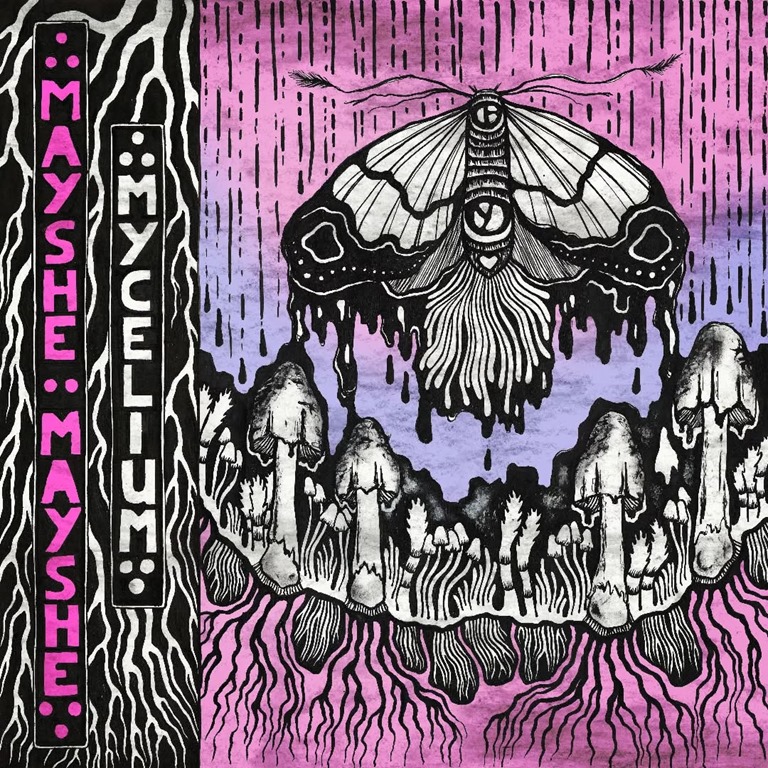
Mayshe-Mayshe has released new single ‘Mycelium’, and an accompanying video.

This is a song is about autumn and decay, rainy woodland walks, lonely adventures, and setting off on a journey at nightfall. (Snufkin setting off on a journey to be specific.)

It’s mellow, and we rather like it…

AA

557431197_18290754487284424_3036890452061560759_n

Editions Mego – 10th October 2025

Christopher Nosnibor

This is a monster. A monster that’s been roaring and raging for twenty-three years now. The appropriately-titled noise classic, Sheer Hellish Miasmah, was first released in 2002. It remains a pinnacle of abrasive noise after all this time. To say that Kevin Drumm has released a lot of albums would be an understatement: as is the case with many experimental / noise artists, the likes of Merzbow, and myriad lesser known underground noise acts he’s cranked out multiple albums per year, and the question of quality versus quantity becomes an obvious point of debate, or even potential friction. But when it comes to Sheer Hellish Miasmah, there’s no real debate: the consensus is that it’s a classic in its field.

I step back for a moment to present the summary offered in the press release: The history of Drumm’s Sheer Hellish Miasma is one of resilience to the twists of underground trends that have come and gone since its initial release. Using guitar, tape manipulation, microphones, pedals, analog synthesizers, and subtle computer processing, Sheer Hellish Miasma is an overwhelming experience: a sonic onslaught of storming feedback, fractured textures and an unrelenting energy. At once brutal and meticulously composed, the album offers a singular vision at the outermost edges of sound art.

And here it is, reissued on four sides of vinyl. I assume it’s nice and black and heavy and shiny, because I’m working from an MP3 download, as is the way these days. Does vinyl sound better? It depends on your kit. And your ears.

A lot of extreme noise albums are mercifully brief, presenting a short, sharp shock. Not so Sheer Hellish Miasma, which presents a sustained and truly brutal assault, with five tracks stretching out for well over an hour, some sixty-six torturous minutes. The track sequencing has been altered, with the two longest tracks first, and ‘The Inferno’ is split over sides B and C.

The first, ‘Hitting the Pavement’ is a twenty-minute blast of oscillating, pan-heavy drone and distortion. As grating sinewy nose and distortion riven with feedback hard enough to annihilate even the toughest eardrum, the discomfort levels are high. Sunn O))) may be hailed as pioneers of heavy drone, but Drumm’s activity is contemporaneous, taking electronica to the same extremes and over the same epic durations. The first couple of minutes of ‘The Inferno’ are gnarly, overloading crackle and pop, stutter and static that give you cause to wonder if your speakers are fucked or there’s something wrong with either the recording or your equipment (something I genuinely experienced when I first heard Whitehouse – having downloaded a couple of tracks via Napster back in the day, I deleted the files and searched elsewhere as I assumed the files were corrupted). But no, it’s supposed to sound this fucked-up, and it burrows into your skull in the most intense and uncomfortable way. Over the course of twenty-four minutes, he gives the listener’s ears a proper kicking, and more, seemingly conjuring new frequencies and discovering infinite new angles from which to deliver a truly brutal sonic assault.

At times, it’s like having a road drill applied directly to the head. Full-on doesn’t even come close. It’s not just the frequencies, either: it’s the jagged, abrasive textures that graze hard enough to draw blood. And there is absolutely no respite. Glitching laser bleeps shoot across grinding earthworks. It’s the sound of total annihilation. The album’s title provides the perfect summary of its content: it is absolutely, mercilessly, hellish.

If ‘Cloudy’ offers a momentary pause to breathe and feel the tinnitus, the sawing oscillations of ‘Impotent Hummer’ hit with all the more impact, a persistent buzz that grates away at every sense. The effect is cumulative, and the reaction is physical. The track’s thirteen minutes is a test of endurance. ‘Turning Point’, which now closes the album, leaves the listener with an obliterative thrum, which, while comparatively mild in terms of its attack, is insistent, and again feels like a considered, targeted sensory assault.

Sheer Hellish Miasma is a hard listen – but it’s not hard to understand how it’s come to be considered an outstanding noise album. It’s not for the feint of heart.

AA

eMego053V front

Mortality Tables – 25th September 2025

Bryan Alka’s brief post on Facebook sharing the news of his new release, is revelatory: ‘Today we release my 5th full length on Mortality Tables. After a series of breakdowns… The Magnitude Weighs Heavy.’

The Magnitude Weighs Heavy is the third and final instalment of a of dark and brooding albums, the first two parts of which – The Colour Of Terrible Crystal and Regarding The Auguries – were released by Vince Clarke’s VeryRecords. Alka, and particularly Bryan Michael, has no small back story: ‘a Philadelphia-area artist who has collaborated with Vince Clarke (Depeche Mode / Erasure / Yazoo), Roger O’Donnell (The Cure), Christian Savill (Slowdive / Monster Movie) and Michael Textbeak (Cleopatra Records). alka was formed around 2000 as a return to his bedroom producing days, and as a cleansing of his disappointing experience within the Philadelphia indie rock scene.’

This thirteen-track album is epic, grand, expansive. It’s also an exercise is taut electropop with a decidedly early 80s bent. Because what goes around comes around, the whipcrack snare and noodly electronic drift which defines many of the tracks, despite being pure 1989, have a contemporary feel, too.

‘Soliloquiy’ drifts into dreamy electro shoegaze, mellow and atmospheric, rippling, and soaked with a certain sadness, however sturdy the beats remain. Elsewhere, as on ‘Creeps; its clearly an attempt to lock things down with pinging robotic beats

This feels like quite departure for Mortality Tables, given their learning toward abstraction an ambience, but they’ve always leaned toward the different, and this is a work which is unashamedly different. ‘Unravel’ is exemplary here: it’s got groove, and is ostensibly a bopping dance cut, and a far cry from the implications of the album title. But everyone deals with trauma, grief, and distress differently, and we all articulate our internal strifes by different means. ‘enchanté’ locks into a hypnotic groove, the likes of which I haven’t been so immersed in since I discovered The Dancing Wu Li Masters by 25 Men back in 2008.

For all that, there are large, ambient expanses, passages of stuttering electro which draw together elements of industrial alongside the layered dance beats. The ten-minute ‘an attempt to conjure quiet’ feels like it’s quite willing to delve deeper into noise, the very opposite of the quiet it claims to seek, and the duration of this album feels like a teetering on edge. I’m reminded of how my late wife would hassle an and harangue over details, over chores, and the tense, jittery tone which leads n this album at times tales me there. But if the dark mutter of ‘thee individual visions ov jhonn’ is dark with resonating melancholia, The Magnitude Weighs Heavy brings things back to the light. ‘Whatever Will Become’ is a hybrid of pop and bubbling electronica, busy but mesmerising in its concentric circles of sound, its abrupt ending jolting the listener back to the moment.

The magnitude may weigh heavy, but this album has a remarkable lightness, delivered with a deftness of touch.

AA

a2561728450_10

Nocturnal Rainbow Recordings – 5th September 2025

Christopher Nosnibor

One significant downside to digital music formats is that is reduces the dimensions of the experience. With a record, and even a CD, there is a physicality which is in many ways integral to the experience. I’m not here to sell the whole multi-sensory experience and tactility of vinyl line: yes, I grew up with vinyl, and in the 90s, a new LP was maybe £7.50 while a CD was £11, so I would often buy vinyl simply because I could get more music for my money. And records do scratch, sleeves get bent, and generally, vinyl requires more care than a CD, so I’m as much a fan of 5” silver discs as I am 12” black ones. And now, vinyl has become something of a fetishised luxury item: as much as there’s still pleasure to be had from sliding a thick chunk of wax cast in whatever hues from a glossy, heavy card sleeve, there’s sometimes a sense that they’re all trying too hard, and the £30 price tag takes some of the shine off the experience. There are a few exceptions – recent Swans releases have been works of art in every sense, and the physical formats have added essential dimensions to music which is something more than just some songs, recorded.

Had Ran Slavin’s latest offering been given a vinyl release, it would have been a triple LP, containing as it does thirty tracks, with a running time of almost two hours. It would have been epic. But despite having released previous albums on esteemed labels including Mille Plateaux, Cronica, and Sub Rosa, it’s unlikely that Ran Slavin has the kind of fan base that could justify, from a label perspective, a triple-vinyl release. But what Nocturnal Rainbow Recordings have done here is interesting, and utilises the digital format in a novel way, by offering alternative artwork in recognition of the album’s multi-faceted nature. Yes, it’s been done by major artists who’ve released physical albums with variant covers, with a view to enticing hardcore fans to buy multiple copies and thus increase sales and enhance the chart position (The Rolling Stones’ Hackney Diamonds probably wins the award for the pinnacle of pisstake on this score), but the idea of buying an alternative digital cover for a nominal price isn’t something I’ve seen before.

As the notes on the Bandcamp page explain, ‘Just as the music migrates across genres, the visuals migrate across states of being, extending the album into a network of parallel identities. Together, they construct a fragmented yet coherent cosmos, where each image is both an entrance and a deviation, multiplying the ways Neon Swans can be seen, heard, and inhabited.’

Appropriately, Neon Swan doesn’t quite sound like anything I’ve heard before, either. To unpack that, it contains many elements which are common and familiar. There’s sparse techno, minimal dance cuts with sped-up vocals and swathes of space between low-key beats and glitchy grooves, as represented by single release and album opener ‘tell///me///now’ – one of many titles which reflect the sense of fragmentation and juxtaposition which define the album (‘s4dert1ac’ and ‘d3xr3rity’ provide other examples, but then there are the likes of which also disrupt the conventions of language in the same way Slavin disrupts the language of genre tropes).

‘audio ease my pain’ plunges into darker territory, while introducing rap vocals atop heavy hip-hop beats (although there’s an instrumental version as well further on, which offers a different perspective again on the same material). Elsewhere, ‘c-r-i-m-s-o-n-schema’ brings spacey, spaced-out bleeps, heavy percussion that has a late 90s feel, a blend of The Judgement Night soundtrack’s melding of rap and rock, and the Wu-Tang Clan.

For all of the space, the reverb, the minimalism, something about tracks like ‘searching_heart’ is quite claustrophobic: the intense repetition and synthetic feel, paired with crackling fizz, brain-melting glitches and some grinding bass tones. It may be constructed using the fundamental elements of dance music, but this is not dance music. Electronic music to induce uncontrolled spasms and twitches isn’t a genre, but if it was, Ran Slavin would be a leading exponent.

It’s a long album, with a lot to digest, and as it thumps and wobbles and glitches away, snippets and fragments collaged across one another, there are times it all feels a but much, a bit bewildering. At times it’s draining, exhausting, at times you simply zone out, and often, I find myself questioning the wisdom of persisting with it. The vibe is that of the kind of underground clubs I never got on with in the 90s and early 00s, and I’m particularly reminded of the time Whitehouse played an Optimo night in Glasgow in 2003: I was there for Whitehouse, who played for forty minutes starting around midnight, and the music being played was rather in the vein of the more groove-centric cuts on here. The people there for the DJs weren’t happy for the low-key electro pulsations to be paused for the noise and antics of Bennett and Best, but for my part, I struggled to get into the low-key electro pulsations. But the other reason I recount this experience, challenging in its incongruousness, is that in places, Neon Swans feels incongruous with itself, an album riven with unreconciled contradictions.

The execution of Neon Swans is hard to fault, and it does cover considerable ground, with range, over its expansive duration. But it is sprawling in its scope, its focus is variable, and it is very long. And it’s maybe better with drugs.

AA

NRR38 art 1

Analogue Trash – 15th August 2025

Christopher Nosnibor

It’s been a busy spell for The Royal Ritual. You might say that David Lawrie is making up for lost time. With real-world activity off the cards during the pandemic, he assembled The Royal Ritual’s debut album, Martyrs, and followed up swiftly with the more sophisticated Pleasure Hides Your Needs last year, as well as an EP and some proper touring, which saw that sophistication taken to the stage in such a way that created a spellbinding live show and immense sound. Despite there only being two bodies on stage, two live guitars, a combination of programmed and live drumming, looped, not to mention ambitious visuals makes for a compelling performance. There’s no question that this this was a show that would be perfectly suited to a bigger stage, and landing a slot at Infest provided the opportunity for the band to truly come into their own. The live footage they’ve shared online confirms this, and the quality of the performance very much justifies this live album’s release, capturing as it does the full set with first-rate fidelity.

AA

It’s a masterfully structured set, which draws equally on the two albums, and begins with atmospheric organ leading into the slow-building ‘Vantage Point’, slow, brooding synths and a pulsating kick drum giving way to a barrage of beats and crunching, metallic industrial guitar. There’s no dead space between the songs: a tapering drone and snippets of samples maintain the atmosphere before ‘(nothing) On the Other Side’ thunders in on a thunderous percussive assault, and things only turn darker, heavier, more intense and more percussion-led on the claustrophobically intense ‘Pews in the Pandemic’. Lawrie gives it some guts in the vocal department, switching between menacing and wracked with anguish, and peaking at epic, emotive.

The processed-sounding guitars and synths have that KMFDM / Pig vibe and would be perfectly at home on a Wax Trax! release from the early 90s, but the colossal drumming sets it quite some way apart. Moreover, where The Royal Ritual really succeed here is in the way they preserve the sound – and the detail, and, importantly, the mechanical tightness – of the studio recordings, while the use of so many live instruments and, for wont of a better term, ‘moving parts’ means that this has the full energy and dynamics of the live setting, that edge, that bite. Naturally, this is felt more strongly when you’re actually in the room, in the moment, with the electricity of the proximity to the band, and in a room full of people, but this does a top-notch job of capturing it all through the medium of sound alone.

‘Martys’ is a full-blooded industrial-strength dark glam-tinged stomper, and ‘Modes of Violence’ takes things up a notch, combining solid hooks and gritty, hard-as-nails industrial guitars. It’s fitting, then, that ‘Coma’ closes the set with a more reflective feel, with expansive almost trance-like passages intersecting with electronic-led progressive segments. Lawrie’s soaring vocals are rich with emotion that’s almost spiritual as they ascend to the skies, before the set concludes with a glitching stutter, somewhere between a Morse Code SOS and teetering on a flatline, amidst a mutter of sampled dialogue and siren wails. It’s a bleak, almost apocalyptic, Bladerunner-esque finish. There is high theatre here, but there is also real human spirit, and an emotional range not always found in the sphere of electronic / industrial music, which can, at times, feel cold, clinical, detached.

The quality of the songs was already evident in their studio releases, but Live at Infest demonstrates that not only do the songs have further dimensions which only become apparent in a live setting, but that The Royal Ritual are a killer live act.

AA

The Royal Ritual - Live at Infest (Digital Cover)

Dimple Discs – 22nd August 2025

Christopher Nosnibor

Weird shit is welcome here at Aural Aggravation. It was a part of the ethos of my starting this site back in 2015. Yes, it’s been that long since I decided that I wanted to strike out alone with a view to creating a platform devoted essentially to stuff that appealed to me and exploring them with more long-form, discursive essay-type writing. This of course completely went against the grain of where most media, in particular music media, is at now, and this has only become more pronounced over the last decade, in which time attention spans have largely been reduced to circa 120 characters or simply .GIFs and memes. But – presumably because my focus is on rather niche music which doesn’t always receive a wealth of coverage, rather than because of my propensity for divergence into the personal or the political – Aural Aggravation now attracts a respectable readership. I don’t feel any desire to celebrate 10 years of doing this: to do so would really be to celebrate a decade in a lifetime of stubbornness, a compulsion to write, and a musical obsession which I choose to inflict upon the world, but I do suppose, on reflection, that the rarity of the format, occasionally touching on theory, but – hopefully –without too much hypotactic wankery.

And so we arrive at XiX by Kev Hopper, who despite fourteen solo albums, and despite co-founding electronic act Ticklish in the late ‘90s, and was composer/bassist with Prescott in the 2010s, and working as a visual artist by the medium of painting for a good number of years, is still probably best known for being the bassist in Stump between 1983 and 1988. Despite only releasing one album proper, their output of singles and EPs was solid, they were all over the music press at the time, and they were championed by John Peel. This potted history throws into sharp relief just how times – and the face of the music industry, particularly outside the mainstream – have changed.

Hopper’s second album on Dimple Discs is a collection of quirky, whimsical electronic experiments. Skittery, light, and lively, there’s a playfulness which defines the pieces, even when sliding into low-end notes and minor chords. ‘Vector Prodder’ plunks and plonks, twangs and reverberates, and slides into spooky but fun territory, and in some respects it’s got 1960s Addams Family vibes. ‘Gruntian Forbes’ twists and spins strangeness into a sunny calypso groove, and this, in many ways, encapsulates Hoppers’ approach to composition on the twelve tracks on offer here – namely taking a comfortable form, and rendering it uncomfortable by warping, twisting, and distorting it in some way or another, tossing in some ethereal haze and a bucketload of l’aissez-faire oddball elements. And why not?

XiX fully embraces the spirit of experimentalism – the idea of simply trying things out and seeing what happens, and not even being hugely concerned if it’s only half-successful. That isn’t to say there are any semi-successes or borderline failures on XiX: what I’m driving at is the spirit of creative freedom which pervades. When cut free of the constraints of commercial concerns, when liberated from self-censorship, and simply creating for the sake of creating, for the joy that experimentation and making sound can bring, a work takes on a level of buoyancy. XiX is the sound of creative freedom. ‘Devils’ may be dolorous, with hints of Tom Waits, but ‘Lance The Prawn’ is an exercise in gurling synth and ridiculously OTT vocal processing (half-burying absurd couplets like ‘lance the prawn / on the lawn’) amidst bleeps and wiffles and space-age throbs and pulsations.

It’s sci-fi in its influences, but it’s Douglas Adams on the serious scale. While I’m no fan of Adams myself – I find the humour simply too cheesy, but worse than that, I find the fans of his works, who insist on referencing him relentlessly beyond irritating, I would like to think that this scaling works in context. The album’s material is not irritating or nerdy, but it is, at times, overtly strange, and nowhere more so than on ‘Brand Street Psychodrama’. It may be but a brief interlude, but it’s all the disorientation. ‘Window Seat’ brings all the chimes and gentle brass, evoking that mythological bygone age crossed with intimations of ‘made in China’, in the brittle 80s plastic sense.

Having just written about Eamon the Destroyer’s new release, it seems that this belongs in the same field, but represents an altogether different face of the experimental dice.

And this is a good thing, in that we are able to wander through very different corridors while stroking our chins and pondering the work emerging from the field of ‘experimental music’. Towards the end, there’s an urgency that builds to XiX. Or perhaps it’s just my anxiety rising as midnight draws closer.

Either way, this is a supple work, which ventures across a range of styles and forms, with the chiming, tinkling nine-minute closer, ‘The Cucurella Problem’, with its whimsical , warping lead lines and tentative, wandering bass being truly exemplary. It bends the brain, but slowly, gently, softly, and it’s kinda nice.

AA

a0361012740_10

Bearsuit Records – 5th September 2025

Christopher Nosnibor

The thing with Eamon the Destroyer is that you never know what you’re going to get. The Maker’s Quit is different again from We’ll Be Piranhas, which in turn was quite unlike Small Blue Car (which remains a personal favourite, even if it does make me feel impossibly heavy on the inside). If We’ll be Piranhas marked a step forward in terms of experimentalism and optimism, The Maker’s Quit sees a greater emphasis on songwriting and structure – but don’t for a second think it’s in any way straightforward, and that the experimentalism has taken a back seat – it’s still very much a copilot here, and with the accent on the mentalism.

Here, the title track commences what is an incredibly varied set with a song that has the theatricality of Alex Harvey crossed with 1990s Leonard Cohen, before ‘Silverback’ confounds all expectation by bringing some shuffling funk-infused jazziness. In contrast to the fairly minimal arrangements common to previous ETD releases, this is pretty busy, then is settles into a mellow groove that’s almost loungey – bar the mid-section, which is rent with a protracted burst of extraneous sound. It’s almost as if he purposefully weaves around the line between genius and self-sabotage simply to tests us as listeners. There are some nice, light, poppy moments on here, and – albeit fleetingly – some captivating grooves. But it wouldn’t be Eamon the Destroyer without a huge helping of straight-up weird shit mashups, and The Maker’s Quit brings the lot, from frenzied jazz and post-grunge, wonky vaudeville waltzes and whistling, via electropop and slices of pan-culturally inspired melody.

More often than not, the verses and choruses are so contrasting as to seem to have been spliced from different songs – that’s when there are verses and choruses. ‘Three Wheels’ is a veritable patchwork, which compresses segments of what sounds like half a dozen songs into five minutes as it spins from grandiose heavy country dirgery by way of an intro, which even hints vaguely at recent Swans, before swerving into Europop with a hint of Sparks, through a off-kilter but gentle soundscaping that slides into laid-back salsa before winding up with a segment of jaunty indie rock. But rather than feel like an identity crisis, the effect is more that of a multi-faceted artist showing all his facets simultaneously. It’s hard to keep up, but one can only imagine what it must be like to live in his head.

The lyrics are equally fragmented, between stream of conscious and cut-ups, producing a Burroughsian, dream-like quality. This snippet from ‘The Maker’s Quit’ exemplary: ‘Saturn kid – spins and reels – in a city / Little Feet – lost in a wave – out to sea / A grandmother – nods – to a space in the crowd / Cap gun assassin – emerges – from a conjurers cloud…’ Beyond oceans and waves, it’s impossible to pin down any notion of themes or meanings. The images float up and fade out instantaneously.

‘The Ocean’ begins dramatically, a swelling, surging drone that halts abruptly, yielding to one of the most typically Eamon the Destroyer passages – lo-fi folktronica with a low croon reminiscent of Mark Lanegan, which slowly tilts its face upwards from scuffed boot-tips towards the sun…. and then all mayhem happens in a brief but explosive interlude, and your head’s suddenly spinning because wherethehellhasthiscomefrom? It’s this wild unpredictability and unapologetic perversity which is – strange to say – a substantial part of the appeal of Eamon the Destroyer.

When Eamon the Destroyer goes downtempo, as on the mournful, string-soaked introductory segment of ‘Captive’, you can actually feel your heart growing heavier by the bar, but then it twists onto some semi-ambient avant-jazz, and the sensation transitions to bewilderment.

The final track, ‘The Buffalo Sings’, is a twelve-minute behemoth is s slow, surging lo-fi electronic exploration. Face the strange? It embraces it, hard, then absorbs it by ghostly osmosis. If ever a song was less country, less ‘Buffalo’… maybe some of the western themed electrogoth songs by James Ray and the Performance are on a par on that score, but this wanders into a sonic desert without even a hat for protection from the punishing sun, and slowly, everything melts in the heat. Circuits bend and warp, and the weirdness rises like a heat haze… and it’s wonderful to be immersed in a work which celebrates creative freedom with no sense of constraint or obligation.

On reflection, with Eamon the Destroyer, you know exactly what you’re going to get: visionary hybridity, moments of aching sadness and fractured beauty, shards of melancholic memory , unbridled inventiveness and fevered creativity, and music like nothing anyone else is making. In a world where meaning seems to have all but evaporated and it’s increasingly difficult to make sense of any of it, The Maker’s Quit feels like a fitting soundtrack. It exists purely in its own space, and it’s the perfect space to escape to in these most dismal of times.

AA

Eamon-TD-3_Cover