Posts Tagged ‘electro’

Bearsuit Records – 12th November 2021

Christopher Nosnibor

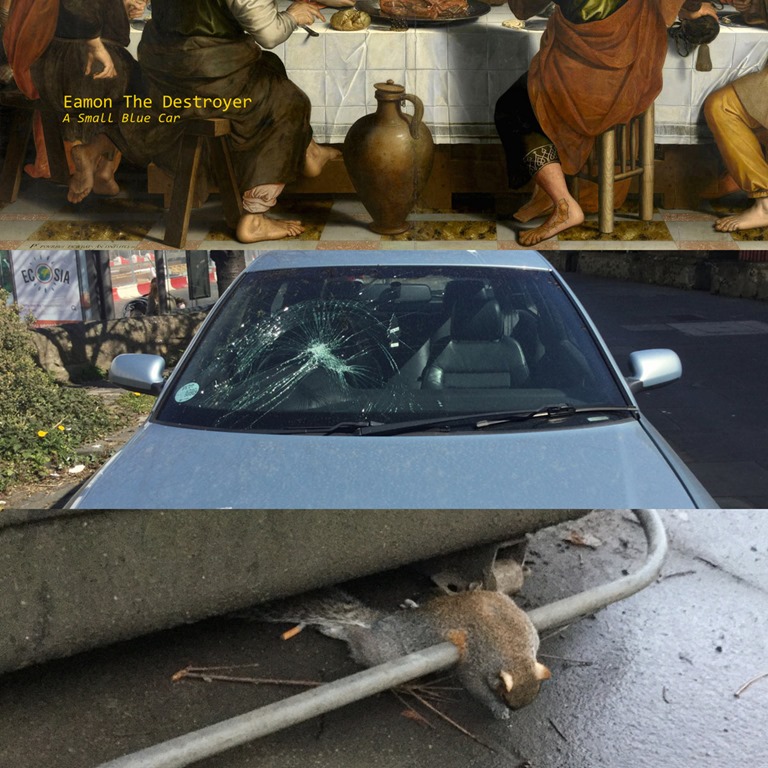
It’s unusual to open an album with a B-side from the lead single, but there’s nothing usual about Eamon the Destroyer or Bearsuit Records, and the scratchy soporific drone and distorted / filtered vocals of ‘Silver Shadow’ – which reference the ‘small blue car’ to which the album owes its name – makes for a worthy introduction by means of introverted minimalism. It’s largely representative of an album that’s slow sparse, minimal and somewhat lugubrious.

I take the nom de guerre Eamon the Destroyer ironically. That may be wrong, it may be some unpleasant prejudice, and if so, I do apologise. This isn’t a PC matter or issue. But names come with certain associations, and the connotations of Eamon aren’t particularly warlord, at least to my mind. No diss to any Eamons, but the name is about as warlord as Gavin, Kevin, or Craig. No doubt there are some brutal twats by the name of Kevin, but, well, y’know, it doesn’t evince fear. The concept of ‘the destroyer’ is one of something harsh, brutal, obliterative, too, but that also isn’t the case here. Consider Ah Puch the Destroyer, Mayan god of death and disaster whose coming would mark the end of days. There is nothing explosive or devastating about A Small Blue Car – it is not a violent sonic blast of earth-shattering, annihilative proportions, yet it does, strangely, evoke a sense of near-finality. There is an all-pervading sadness that hangs over the album’s entirety, a sadness that’s slow-creeping and heavy, like a weight that pulls you down, bending your back with the effort

‘Humanity is Coming’ is downbeat, gloomy, and things get particularly dark and dense on the short instrumental ‘The Conjuring Stops’, with a heavily phased synth yielding a pulsating throb in the style of Suicide. ‘The Avalanche’ also brings some weight, with lots of granular sounds and bolds bursts of sweeping synths in the choruses that contrast with the woozy drone and is perhaps how Leonard Cohen might have sounded in the early years of his career if he’s chosen Moods instead of an acoustic guitar. The end result, musically, is like Stereolab on Ketamine.

The slow rasp of single cut ‘My Drive’, with its whistle of feedback and detuned radio in the distance while the picked guitar – spacious and delicate – curls like smoke into the darkness, and it piles on the melancholy.

‘Uledaro’ follows, a dolorous jumble of discord. ‘Nothing Like Anything’ is conspicuous by its near-cheeriness ‘wake up / the sun is out / we’re almost home’, Eamon intones in a rare glimmer of optimism. There’s whistling and levity, and it’s almost, almost a pop song. But of course, it’s not. And perhaps it’s more me feeling autumnal, but the happiness only accentuates the sadness, as if the jollity is a mask to sorrow so inexplicably deep that it has to be covered up. The nights are dark, the world feels a very long way off and a long time ago. It’s time to hibernate, with A Small Blue Car for company.

AA

a2830016479_10

Christopher Nosnibor

That there is a shortage of grass-roots venues is a widely-reported fact, and the last year and a half has only exacerbated what is, put bluntly, a crisis in the music industry. At the heart of it all, the problem is is that we exist under capitalism. Art and capitalism simply aren’t compatible. We therefore have a model whereby venues need to book acts who will bring punters who will pay for tickets and spend money over the bar. But how do acts who simply don’t have an established audience, or are unlikely to ever attain that kind of audience reach whatever audience they may have? How do acts who need the exposure get the exposure in the first place? The system is flawed. However, recent years have seen the emergence of a different kind of venue, with rehearsal rooms doubling as gig spaces. They maybe small, but that’s for the better – gigs with an audience of maybe 20 people don’t need a lot of space. Unlicensed, BYOB means no overheads or costs there, and because these spaces make their money by other means, any takings from gigs are simply a bonus. They also tend to benefit from being on industrial estates, meaning there’s less risk of neighbours complaining about noise, meaning the only downside is that they’re not so often in prime city centre locations. But how many small venues are these days?

Places like CHUNK and Mabgate Bleach in Leeds and Hatch in Sheffield have led the way, and now Tower Studios in Stone, a little way out of Stoke-on-Trent, presents a ‘proper’ gig following one shot for online streaming as part of the last FEAST event (with FEAST being very much something born out of lockdown with a series of streaming events).

For a place a bit off the beaten track, it’s stunning. Scratch that: by any standards, it’s stunning. A rehearsal space with a stage and meticulously maintained, it’s something else. The PA speakers are halfway down the room in the main room and face the stage, doubling as monitors, meaning the band get to hear the ‘out front’ mix instead of the monitor mix. There is a second, smaller room, but we’re in the main room tonight for a lineup of noise and experimentalism, and if the audience isn’t huge, at least they’re receptive.

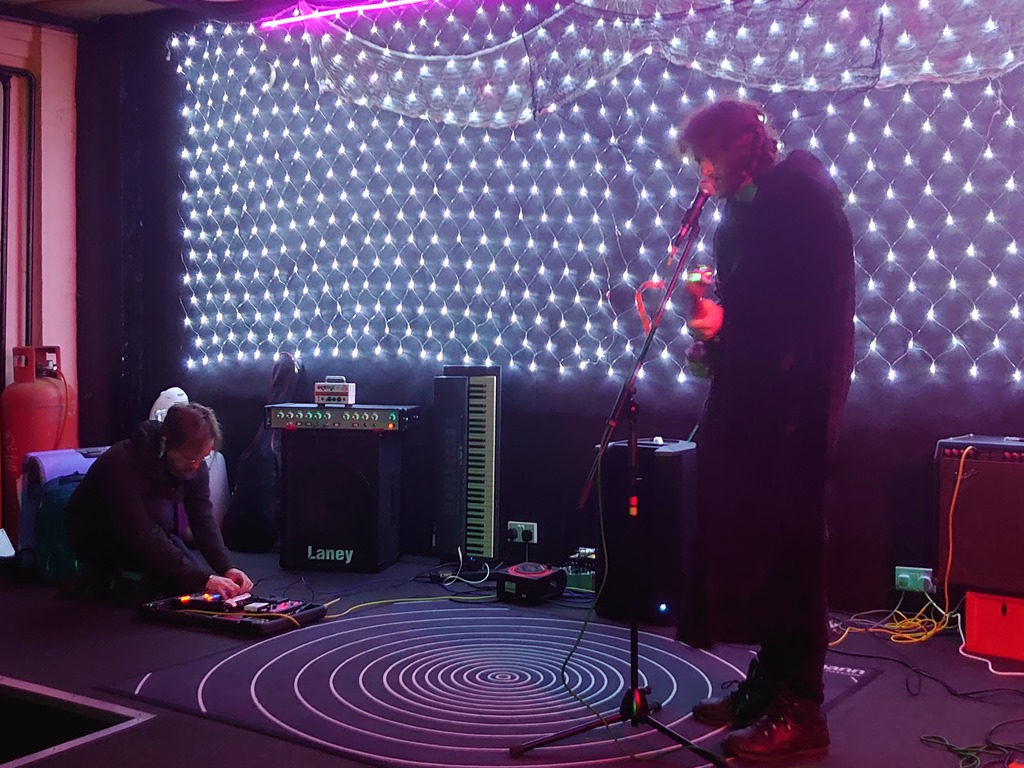
Omnibael open with an ear-bleeding blast of space rock feedback with industrial percussion worthy of Godflesh. Jase plays pedalboard predominantly. Brief moments swerve into black metal, but it’s mostly just a relentless barrage of noise. The third track goes a bit Sunn O))), with big hefty power chords paving the way for more raging metal noise. The duo’s experimental explorations may yet to have found a firm stylistic footing but this outing is perhaps their most focussed and most intense live workout yet as they continue to evolve.

DSC_0831

OMNIBAEL

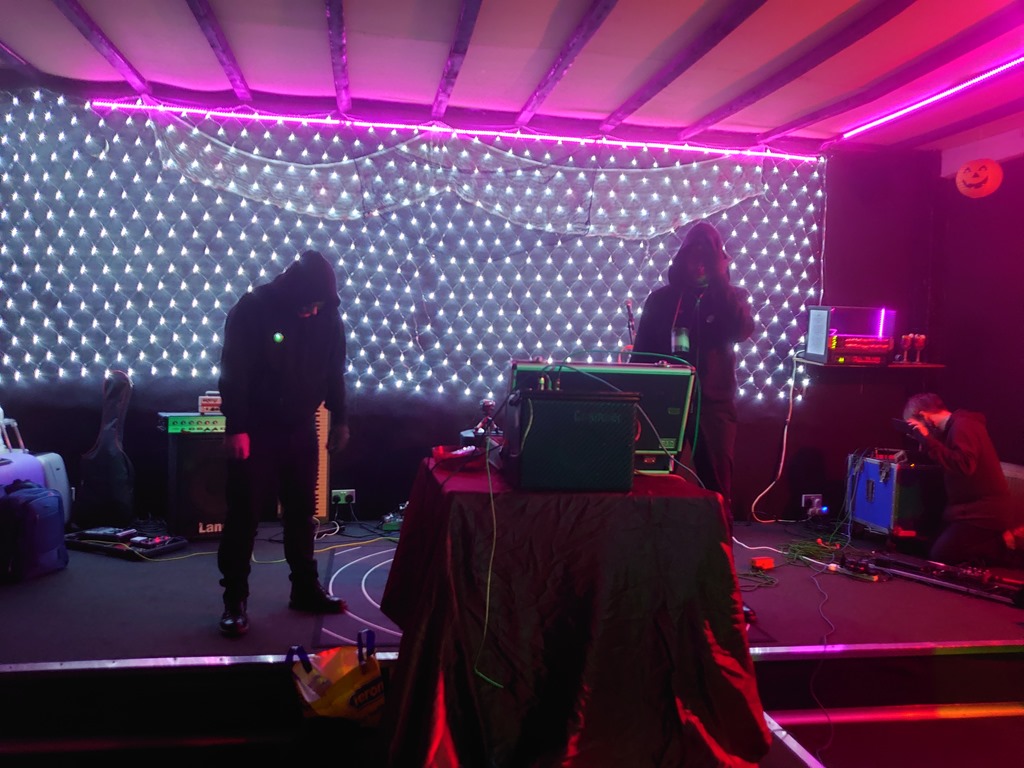
The second act, Vile Plumage, make like performance art, but struggle to keep straight faces, like they know this is audacious and preposterous. The gloved hands over faces cover grins disguised as menacing smirks. Stop start blasts of noise judder and thud. A rattling bean tin. We got given pebbles to toss into a bowl, and it was all quite bizarre and confusing, but entertaining in a strange and ritualistic way.

DSC_0832

Vile Plumage

I must have zoned out or blanked out for the next twenty minutes. Something about some guy cranking out electronic noise reminiscent of early Whitehouse while shouting torrents of vitriol and profanity through squalls of feedback, I don’t know much and I can’t comment on whether or not it was any good. But I think it happened.

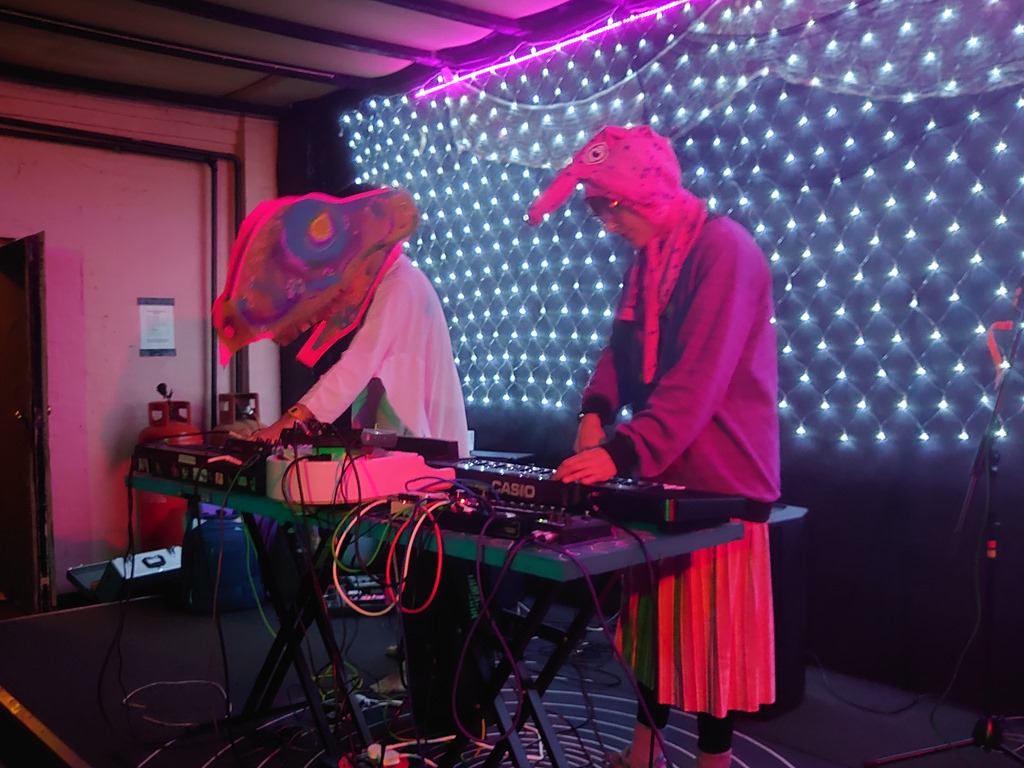
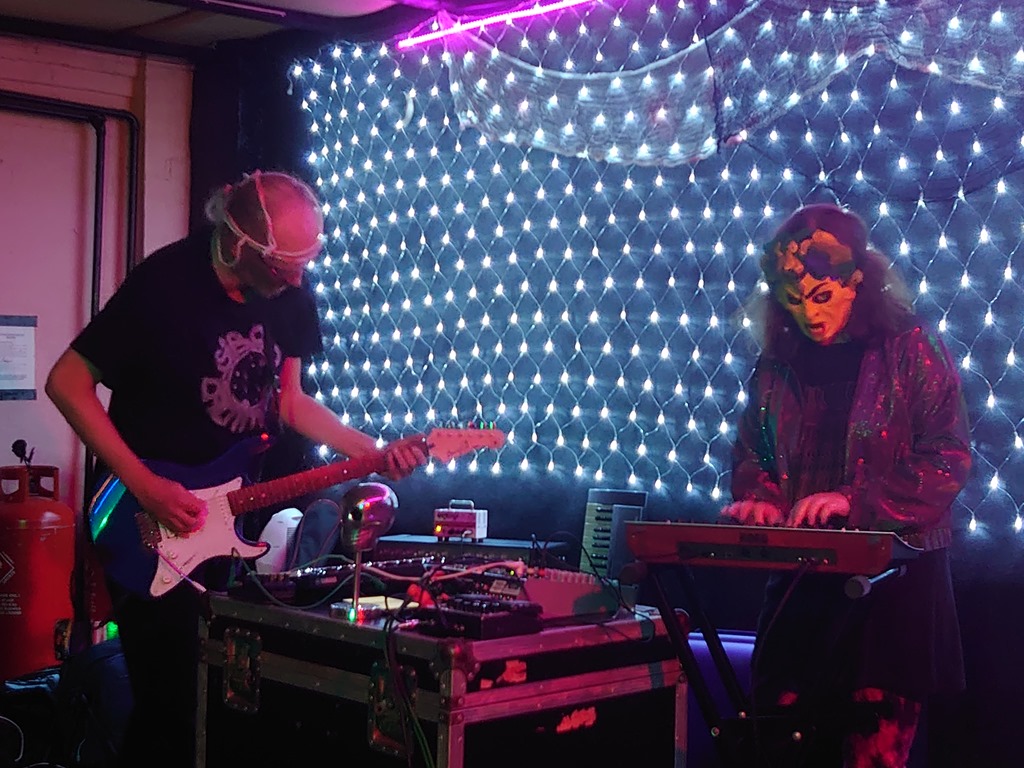
Garbage Pail Kids is an experimental duo which features Theo Gowans, aka Territorial Gobbing – meaning that anyone familiar with the scene will have an idea what to expect –namely anything as long as its experimental, noisy, and improvised – and Basic Switches, the experimental side project of Leeds indie act Cowtown. Weirdy drones and feedback strongly reminiscent of Throbbing Gristle dominate the set. There’s echoed vocal oddness and endless pulsations with phasers set to warp and stun. Crazy headgear is of course a signature, and the headgear is particularly crazy here. The ‘anything goes’ oddity is nonstop, and at one point we find Theo playing keyboard barefoot while ululating wildly. It’s a complete headfuck, but a brilliant one.

DSC_0836

Garbage Pail Kids

Final act Ashtray Navigations are far easier on the ear. Predominantly dominated by dark, ambient sounds and gentle ripplings, although these are ruptured by dense synth bass and crushing beats. They venture deep into prog and space rock with vintage drum machine sounds: the snare is pure Roland 606. The set builds with some bumping bass that’s more akin to Chris & Cosey’s Trance era works. After a guitar string change that does slow the momentum just a little, the last piece combines the throb of Suicide with extravagant prog guitaring. It works primarily because of the blistering volume that’s utterly gut-trembling.

DSC_0847

Ashtray Navigations

It makes for a great end to a great night, offering a selection of sounds that have enough in common to be complimentary, but different enough so as to snag the attention. With any luck, this will become the blueprint for nights to come.

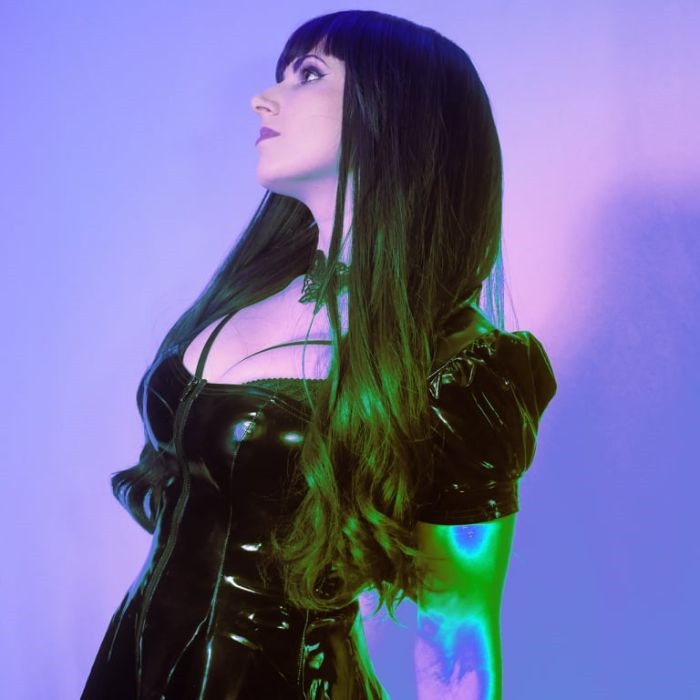
Electro-pop artist EVA X has just unveiled the new video for her single, "Machine."  The video was directed, shot and edited by Erik Gustafson (GRENDEL / ADORATION DESTROYED).

About the song: "Machine" is the first look at EVA X’s upcoming album, I Dream Of A Reality. EVA X has the following to say about the song and its story: "I have a complicated relationship with my body. I do love it, but sometimes I wish it was different. I wrote "Machine" in a vulnerable spot, when I’d have given anything to feel beautiful like other women on social media. Chasing that aesthetic with injections and makeup was powerful, but also scary – I could create the face and body I wanted, but what would happen when it wore off? I took all of these tangled feelings and poured them into "Machine". When I brought the demo to my co-producers, Shane and Adam immediately jumped on it, bringing it to life with a frenetic energy that captured perfectly how alluring and isolating that illusion can be. In the music video, I wanted to explore what being beautiful in the alternative community looks and feels like, and how far we go for aesthetics. I taught myself choreography to capture the movement I wanted. Erik and I designed a video that captured both the sexiness I wanted and the reality of cutting and injecting ourselves for it."

Watch the video here:

AA

d984cc4c-767f-5710-ea98-c4ecc0379655

12th June 2021

Christopher Nosnibor

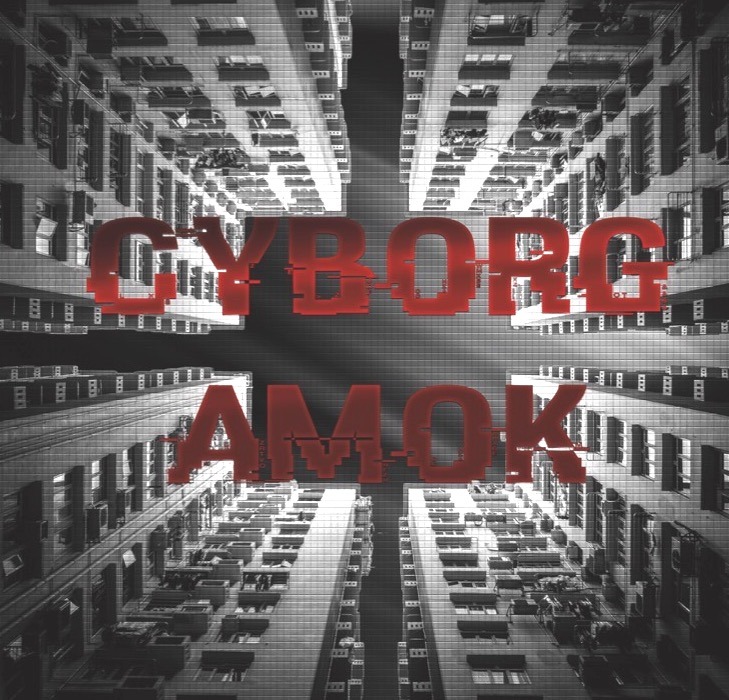
I wasn’t entirely sure what to expect from Cyborg Amok’s eponymous debut. Sure, there’s the press release, and no, it’s not lazy journalism to take cribs and pointers from press releases. This one forewarns that Cyborg Amok ‘resides somewhere between the brilliance of twilight and the apocalyptic darkness. Their gothic infused synth-rock sound delivers the listener to a panorama of synthetic waves, twisted organic tones and a slightly pop crust … the language angels speak in the darkness.’

I don’t entirely compute the implications of this, can’t even really unravel them, not least of all because I can’t always grasp what passes for ‘gothic’ these days having lost the thread some time in the mid to late 90s with the emergence of cybergoth, which sounded just like so much bad techno to me, and a million miles from the post-punk origins of the genre, and the subsequent ‘waves’ of goth which coincided with myriad hybrid mutant strains. Perhaps I am something of a pursuit in my personal tastes, but as a critic, I try to be more accommodating. But sometimes, you just have to accept that music is music and it’s either good or bad, because your audience are unlikely to share your prejudicial quirks.

Cyborg Amok is Greg Bullock (formerly the keyboardist with RealEyes and Shamen) and drummer Brydon Bullock (no relation as far as is obvious), and their debut album is in fact bringing together their first two (now deleted) EPs, so, if I’m being picky it’s not really a debut album but a compilation (which is also true of The March Violets’ Natural History among others. Not that it detracts from the force of these seven songs pulled together in one place. Oh no. Cyborg Amok kicks.

‘Burden Away’ brings bulldozing bass and stuttering mechanised drums. The rhythm guitar trudges and grinds, while Greg’s brooding baritone vocals registers in the ribcage – but while it’s so much industrial grind, the lead guitars are warped country, and there’s a twangy inflection in the vocals to match. It’s solid, but if you’re looking for a pigeonhole, you’re going to struggle. Things get even more complicated with ‘Still Too Far Out’, which straddles Nightbreed-flavoured second/third wave goth with its organ synth sounds evoking sepulchral gloom against guitars that fizz in a swathe of chorus and flange… and then there’s a fuck-off keyboard solo that’s B-Movie and Ultravox and it may be incongruous by 2020s standards, but perfectly in place in context of those precursors.

With its space-themed title and snarling, bulbous, electronics, ‘Dancing on the Floor of the Sea of Tranquillity’ provides more of the vibes the moniker and title perhaps evoke, and if it suggests extravagant prog enormity, it’s no criticism to say that after its dark, stark intro, it slips towards 80s electropop in the vein of A-Ha.

There are some Cure-esque moments scattered about the album, too, but then this is an album, that assimilated huge swathes of 80s that’s not exactly band-specific, but the zeitgeist.

There’s some overblown prog guitar that’s Yngwie Malmsteen overdone, but once they’re done with the moments of indulgence (‘Choice Not Taken’ is perhaps the greatest showcase of guilt), they deliver some impressive musical moments, where the ambition is equalled by the ability.

They’re at their best when they keep it minimal, sparse, nailed down: last track ‘Another Turn’ bears solid – and favourable – comparisons to Red Lorry Yellow Lorry, with its steely beats and grey, steely guitars backing a gruff, ragged vocal delivery. It’s a style that works well, and while this compilation must provide a point at which to assess the trajectory of their career, the evidence here is that they’re doing everything right and need to forge ahead and capitalise on their work so far, because this is a strong dark album.

AA

240381

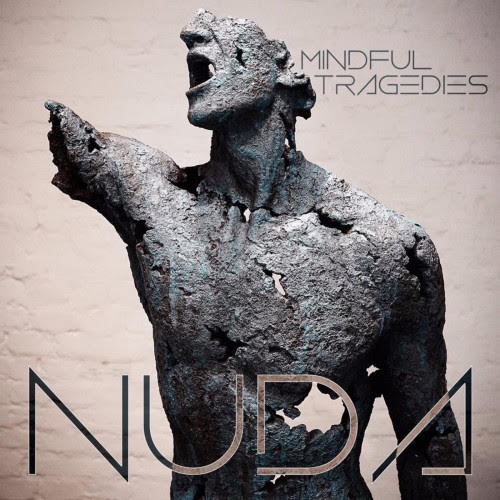
Gothic/Industrial artist, Nuda has just unveiled her new video for the track, ‘What Did You Want To Happen?’ The track appears on her latest album, Mindful Tragedies.  It deals with the struggle with mental health that Nuda has had for years.

Nuda was diagnosed with Bipolar Disorder in 2017. There were some extremely dark moments for her and when they were shared, her therapist said something that stuck in her mind. She said, “Say if you went through with it, and you went away; what did you want to happen?”

That moment was eye opening and helped Nuda be present to seeing the overall message: that there is more support and love than you may not see when you’re buried in the darkness. You can get through this, you aren’t alone, and people dearly care about you…

Possessed Tranquility typically held lyrics that spoke to mental health struggles. When bandmember Anthony shared his version, it was a moment where Nuda realized, this song can’t go out there without these vocals.

Watch ‘What Did You Want to Happen?’ here:

AA

520fc33f-93ce-fa1e-820b-dedecbc36eb0

16th July 2021

Christopher Nosnibor

Initially intended as a straight follow up to their 2019 debut, Digital Scars, Chemical Violence evolved as a more technoindustrial work, with less primacy given to the guitars. But having said that, the band explain that they were keen to present a range of elements across the album: ‘We don’t want to be pigeonholed into one sub-genre so all the songs have their own flavor. Retro and post style, Electronic, driven guitar, grinding Noisecore and Aggrotech elements, Synth bass, Drum dominant. We don’t want to be pigeonholed into one sub-genre so all the songs have their own flavor. Retro and post style, Electronic, driven guitar, grinding Noisecore and Aggrotech elements, Synth bass, Drum dominant.’

The album slams straight in with the shuddering synths and thumping beats with the hard-edged stomp of ‘Prototype’. The vocals are gnarly, mangled, snarling, robotic – yes, derivative of Twitch era Ministry and a million Wax Trax! releases from 86-89, but that’s entirely the idea.

It was The Wedding Present who turned a negative music review into a T-Shirt bearing the slogan ‘all the songs sound the same’ and while it served to turn the criticism back on itself, it raises the very fair question of ‘what’s the problem?’ Certain genres particularly require a significant level of sameness.

Dance music is necessarily constructed around a narrow range of tempos, and this strain of electro-centric industrial is in many respects, an aggressive rendition of dance music (no, I’m not going to call it fucking EDM. Or EBM, either. Because there is just so much tribal wankery around genres, and rebranding shit doesn’t make it new shit, it just makes it the same shit rebranded. I never blame bands for this: it’s a press and marketing thing.

Chemical Violence most definitely isn’t shit – it’s an astute work that sees the band really exploit the genre forms to their optimum reach, and the point is that the further you delve into a genre, the more important the details become. Malice Machine know this, and this album is the evidence. ‘Dead Circuit’ presents the grinding sleaze of PIG, while ‘Machine Hate’ is pure insistent groove that’s overtly dance – most definitely drum dominant – but clearly has its grimy roots in that Chicago c86 sound. Flipping that, ‘Techno Pagan’ goes full raging Ministry industrial metal in the vein of ‘Thieves’. It wraps up with a killer rendition of Tubeway Army’s ‘Down in the Park’ that’s quite a shift, being both organic and robotic at the same time, and very much captures the stark spirit of the original. Covered by so many, from Marilyn Manson to Foo Fighters, and it’s become a synth-goth classic. Malice Machine seem to take some cues from the Christian Death version, but brings something unique to the party as well.

Where Malice Machine succeed with Chemical Violence clearly isn’t in its innovation, but its execution, and they don’t put a foot wrong, making for an album that really is all killer.

large explosion

Swedish/American dark electro/industrial band, Normoria has unveiled their new video, ‘Land Of The Rich’ from their latest EP, Voyage.

The band say: ‘Land Of The Rich’ is the new music video taken from our latest EP, VOYAGE, and it highlights how incredibly divided the US currently is. While the rich keep getting richer, and most Americans are struggling to get by in a country in distress. Booming vocals, punkish guitars and intense bass are part of what makes this track one of this dark electro Industrial band most energetic and in your face songs!

Watch the video here:

Normoria is an American/Swedish band whose seductive sound is a fusion of many elements: primarily dark electro and rock-Industrial. The music is a big blend of dark styles, amplified by Johan’s rumbling bass and Gustav’s enigmatic guitar, as well as their charismatic frontwoman Angel Moonshine’s versatile vocals, and dramatic aesthetics. Expressive power, hauntingly catchy melodies, and a combination of obscure energized sounds, are signature features of the band that combined make Normoria distinct and outside of the traditional.

64329b38-b244-de41-ec07-2e083c06a104

Cleopatra Records – 23rd April 2021

James Wells

Ahead of their debut album, set for release on longstanding industrial / goth-leaning label Cleopatra Records – who will forever be a favourite with me for their releasing Rozz Williams-fronted Christian Death albums in the early 90s, although their catalogue is impressive in its depth and breadth – Handsome Abominations deliver their debut single, ‘Slave’.

The band are pitched as purveyors of ‘sleaze industrial’ – but then, isn’t that so much industrial? Leading exponents of technoindustrial, like Revolting Cocks, KMFDM, and PIG are aaaaaall the sleaze, and NIN – probably the biggest name in the field – are hardly clean and family friendly (‘Closer’, anyone?). This kind of grind has long associations with dingy nightclubs, latex, and S&M, and Handsome Abominations are all about that scene here.

As Baron VonSchnell says, “When I heard the strong, primeval beat that Tufty Hacka had programmed, I instantly knew that we had to write a writhing, sleazy anthem that would suite a fetish club.” And that’s precisely that we have here: ‘Slave’ is grimy, sweaty, slippy, heaving with all the wrong desires, and it’s clearly pitched at a specific audience.

There’s a whole lot happening, and a whole lot to unpack and discuss. ‘Slave’ is, without doubt a quintessential industrial disco cut that combines that low-down groove and blends it with some less than subtle lyrics that are all the sleaze. Of course it does. Nor would the blurb be justified in promising a song where ‘a sleazy, groovy musical orgy breaks out’ if it didn’t.

But at what point does the world of S&M fantasy stray into something that’s uncomfortable? I’m no advocate of trigger warnings, especially having run into trouble over an absence of them when referencing suicidal thoughts at a spoken word night a couple of years ago, but sometimes it’s possible to wander over lines in the name of ‘provocativeness’. So when Mistress Misha moans ‘Tie me down and rape me’, it sends a prickle. What is the message there? I suppose the question may ultimately come down to an understanding of the scene, in that rape fantasy is an entirely separate thing from the reality of rape, and the rape culture under discussion in the media right now, although it’s likely difficult to understand the distinctions and nuances of the scene for a straight. It isn’t the job of Handsome Abominations to explain this, and nor should art have to justify itself: it’s just difficult to draw distinctions in the current climate. But one thing is without contention, and that’s that ‘Slave’ is a cracking tune.

AA

a2204832655_16

Christopher Nosnibor

13x is less of musical project and more of an experience. As such, the katt13x website, the platform of the proudly transgender antiscene artist is a brain-melting labyrinth of sound and image that has a William Gibson-esque retro-futurist vibe that screams cyberpunk while searing your retinas with wildly oversaturated images that often render what’s being presented barely distinguishable.

The EPK video is, without doubt, a perfect summary of everything, as raw, bleeding primary tones melt and glow radioactively through a selection of appropriated snippets and other spliced scenes that takes Burroughs’ cut-up technique to the height of early noughties simplism to create something disorientating, disturbing.

Remember when the Internet was considered scary, because it contained the worst and more terrifying shit, from images from murder scenes and people being hit by trains (the original traingirl video was a blur, but a sickening one)? Pages like gruesome.com seemed extreme, and the porn explosion that was so concerning to many consisted of just so-many thumbnails and low-res .JPEGS of barely 50K because dialling up on 14K modems at a penny a minute, that kind of prurience was actually a fucking luxury. 13x takes us back to a time before YouTube, when eBay and Amazon were in their nascency, and we had Yahoo! Auctions and most people accessed the Internet and email having installed AOL with a free 3.5” floppy disc passed on to them by a friend who’d bought a magazine from WHS.

I’m reminded of Stewart Home’s original Spacebunny-designed website, which was a primitive-looking affair, neon-green text on a black background, and every word was an internal hyperlink. Not because 13x looks like it, but because it’s a reminder of when the Internet was inventive, was crazy, because there were no riles and there was no corporate involvement. No-one really policed the Internet, but then, kids were safe because the fact was, no-one even had Internet. But it was then future, and those who were present were pulsating to race headlong into cyberspace, whatever that was. And this takes us back to the time when we were on the cusp, and is accompanied with a period soundtrack, of sorts.

That soundtrack is an array of glitching, overdriven technoindustrial noise propelled by harsh, smashing snare crashes and squelching, wet fabric thwacking deadened bass beats define the abrasive, disorientating sound. Abrasive soundclashes, with squalls of noise and shards of feedback flare and blare over woozy undulating basslines and retro blippy 16-bit game mzk.

The sound and visuals in combination are an extreme and intense experience, where everything goes off in your face all at once, and it’s magnificent: dizzying, overwhelming, uncompromising, and one that doesn’t just touch, but assaults the sense from all sides at once.

PNKSLM – 2nd April 2021

Christopher Nosnibor

Following the single release of ‘Not Fit For This’, GHLOW unleash Slash and Burn, the album which spawned it – and brimming with dark energy, it does not disappoint. While clearly operating within a genre field, and a comparatively limited instrumental format, it has range. It also packs so much tension and an emotional force that it’s an instant grab. As what you’d likely describe as an old goth (although nowhere near as old as some), I have a predisposition towards this kind of stuff, but by the same token, I’m immensely picky, in that anything overtly cliché I simply can’t muster any enthusiasm for – but GHLOW have got it all: the songs, the style, and the production. In combination, this is a work that resonates on a level that isn’t necessarily easy to articulate: it’s not simply nostalgia – and drawing on the dense electro shoegaze of Curve as much as early 80s post-punk and its lineal descendants. Anyway., it’s hard to feel nostalgic for a time before your own, and even if some of the aforementioned bands soundtracked my teens it’s not a pining pang for that which I feel on hearing this. No, GHLOW tap into something else altogether with their explosive blend of jagged guitars and simple sequencing plat places power to the fore over musical dexterity.

It’s ‘Not Fit for This’ that slams in by way of an opener, a gloriously spiky hybrid of Siouxsie, X-Mal, Garbage, and Savages, a thunderous bass and stuttering beat hammering away beneath a toppy blasty of guitars that provide the tense, fiery backdrop to Emille de Blanche’s commanding vocal performance. It grabs you by the throat and drags you into the seething morass of darkness that follows. There’s texture and depth, for sure, but this is one of those albums that’s best experienced end-to-end in order to appreciate the highs and lows integral to its sequencing. It’s also big on mood and big on dynamics, and the duo ratchet up the atmosphere to create a work of rare intensity.

The slower ‘Sleep’ is a song that drives right through the gut: the primitive drum machine sound stutters and jolts, the kick sound beating like a palpating heart, the snare a whipcrack that slices through the murk – and alongside is a grating bass sound that churns and growls malevolently. Over it all, Emille gives a powerful, full-lunged vocal performance. The title track is a mid-tempo motoric chugger that hammers away somehow unfurls as it progresses, and the repetition, paired with the soaring vocals and some howling lead guitar, becomes more than the sum of its parts, while ‘Hold It’ is a heavy, repetitive droner that’s claustrophobic in its dark intensity.

There’s something magnificently unpolished about GHLOW’s sound and for all its electronics, it’s The March Violets that their dirty, immediate sound calls to mind most, although ‘Hollow’ goes all out on the attack, and with the brittle guitar riding wildly over a furious beat, they sound more like Big Black fronted by Jehnny Beth or Anne-Marie Hurst. Slash and Burn has attack, it has edge, as well as repetition and hooks, and really hits the spot.

AA

ghlow-slash-and-burn-artwork-1500