Posts Tagged ‘electro’

Cruel Nature – 24th May 2024

Christopher Nosnibor

It seems as if every album of the year has been released on this date, May 24th – and by every album of the year, I mean all of the releases have landed at the same time, but also that this album and the other ‘best album’ contenders have all landed simultaneously, too. It’s meant that I’ve been absolutely swamped, and struggling to listen to everything, let alone formulate thoughts and render them coherent – something I fear I struggle with at the best of times.

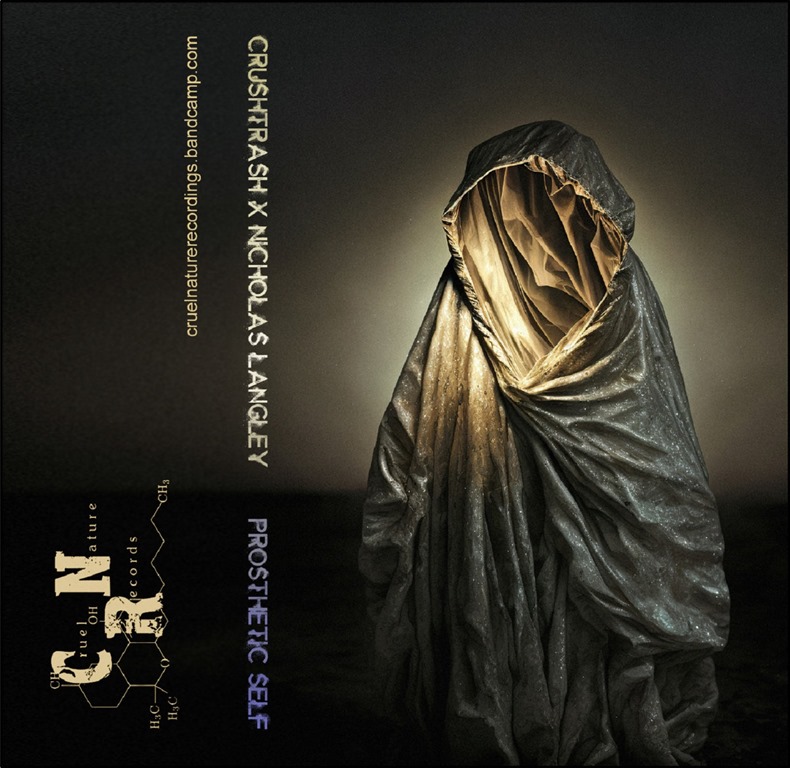
Surveying this release, I learned that ‘Prosthetic Self is a collaboration between CRUSHTRASH & NICHOLAS LANGLEY that seamlessly blends the energy of early ‘80s dark industrial synth pop with the mesmerising allure of ’90s electronica. Drawing inspiration from iconic acts like Coil, The Associates, Depeche Mode, Björk, and Portishead, this album is a sonic journey that transcends time and genre boundaries.’

It does feel as if every electronic act with a dark leaning wants to be Depeche Mode, and every electro-based Industrial act is essentially wanting to be Pretty Hate Machine – era Nine Inch Nails – who in turn sounded a fair bit like Depeche Mode if truth be told. That’s no real criticism, as much as an observation of the extent to which those two acts broke ground and created new templates in the 80s. However, the industrial elements of Prosthetic Self hark back to a time before Nine Inch Nails, and presents a more experimental form.

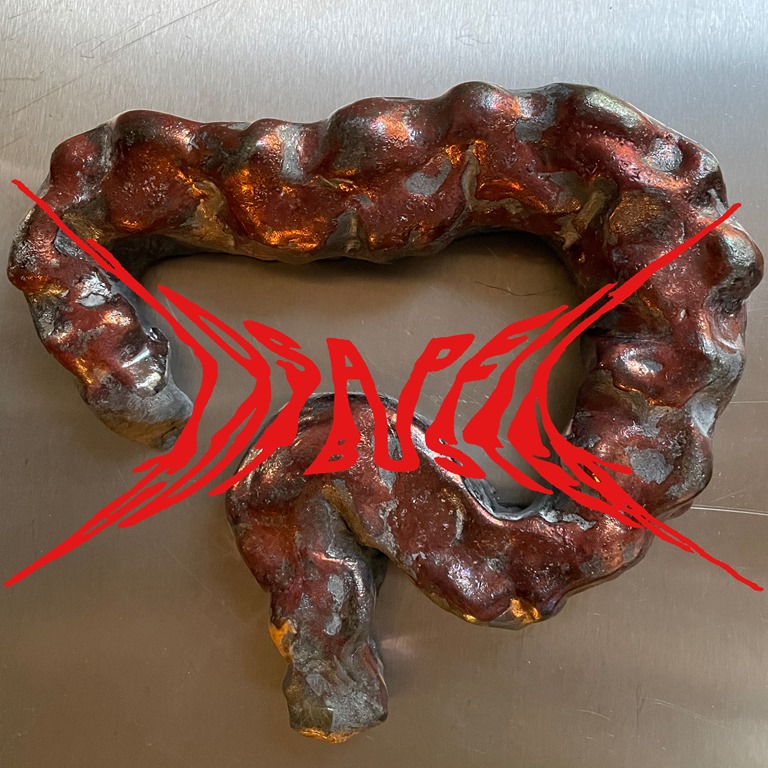
The tile, Prosthetic Self Connotes a sense of falseness, the fake exterior we apply to ourselves in order to deal with people and society. Workplaces – particularly offices – tell us to ‘be ourselves’ at work, while at the same time telling us we need to leave our problems and personal baggage at the door, but at the same time seem incapable of dealing with non-conformity. Well, come on then: what do you want: individuals or clones? Prosthetic Self is an exploratory work which presents a multitude of facets, and it’s a fascinating journey which leads one to the question as to what is real and what is construct, artifice. The cloak, on the cover, with its empty hood feels like a representation, not necessarily for this collaborative project, but the album’s themes, searching for what lies beneath the prosthetic self: is there, indeed, anything at all? Then again, how much here is style, and how much is substance?

There’s certainly a lot of well-studied style on display. ‘Bring Some Change’ is dark but also soulful, and their referencing The Associates hints at the almost operatic stylings of the vocals at times, and against some stark backings prone to some unexpected sonic ruptures and moments of heightened tension and drama, I’m also reminded of Scott Walker.

‘Claustrophobia’ is appropriately-titled. ‘In my dream, something’s wrong, caving in…’ Crushtrash croons with hints of Dave Gahan in his delivery against a slow-moving murky throb. But there’s a really attacking percussive loop that knocks on the top of your skull which makes it tense rather than soothing, and before long, panicked breathing gasps in the darkness, and you’re drawn into the nightmare.

Elsewhere, glitching, knocking beats shuffle and click, and the production really brings these to life in a way that makes you clench your jaw and tense your shoulders. ‘Selective Memory’ has something of a collage structure about the way the sounds are brought together and overlaid, with sampled snippets woven in alongside the bubbling vintage synth sounds.

In places, the kind of retro vibes which permeated 90s trip-hop seep into the shadowy atmospherics, and ‘Subtle Fetish’ comes on like Marc Almond in collaboration with Tricky, spinning lascivious wordplay along the way.

Prosthetic Self creates a lot of atmosphere with minimal arrangements, and they work because of the close attention to detail, the multiple layers of percussion which pulse and snake through spartan synths, more often than not with a simple, repetitive bass overlaid with subtle details, in a fashion which adeptly recreates the sound of the early 80s. In doing so, it recalls a time when so much was new, innovative. Coming at a time when there is so much sameness, and production and mixing has come to be all about the loudness, to hear a set of songs which really concentrate on dynamics and detail, it seems unexpectedly different.

AA
a1438080285_10

The thing about Argonaut is that they’re continually evolving, continually pushing themselves, striving to do something different, and to create something new, constantly. No sooner had they completed their track-a-month ‘open-ended album’ project, Songs from the Black Hat, which saw them try out a range of styles, than they’re back to banging out new tunes at a remarkable rate.

Having deadlines or other set parameters doesn’t work for a lot of artists, but Argonaut seem to thrive on targets and goals, and ‘I’ll be your doctor’ is testament to that.

They describe it as ‘A song for the companions and for everyone courted and wooed with promises of excitement and adventure. A reminder to those making such vows to continuously reinvent, strive for greatness and never grow complacent. Musical nods to Depeche Mode, Nine inch Nails and Pink Floyd, lyrically inspired by Dr Who and the Velvet Underground. Delivering on our promise.’

It certainly incorporates an array of elements in its four and a half minutes, with some dark, stark post-punk electro vibes paired with some driving chords and some exploratory guitar work, all brought together with, of course, a strong hook.

Listen here:

AA

a3388278580_10

Post-Punk duo, SUPERNOVA 1006 recently unveiled their latest single, ‘How I Need You’ via Negative Gain Productions.

‘How I Need You’ is a semantic continuation of SUPERNOVA 1006’s Chains album. It was planned to release it as a bonus initially. However, it looked isolated and self-sufficient. Therefore, it was decided to make the song an independent work. Its distinctive feature was a return to the old sound, characterized by the “stringiness” and buoyancy of a cold sound.

‘How I Need You’ gives the feeling of being immersed in a big cold black lake in which no one lives with the silence and comfort of a lonely existence. It is a sonic journey through a cyberpunk landscape, filled with pulsating rhythms and melancholic melodies.

The single release also features remixes from artists such as Casket Cassette, Giirls, CULTTASTIC & Blind Seagull.

Listen here:

AA

03849f6a-c1e1-ca9c-4fa0-e405ddfd98ec

Fire Records – 26 April 2024

Christopher Nosnibor

Another day, another artist I’m discovering and wondering if I’m increasingly poor at keeping up or of there really is just more music in the world than I could ever keep abreast of even if I devoted every waking minute to trawling every corner of the Internet for news and playlists. Maybe it’s a bit of both. There is, perhaps, something of an expectation that someone who writes about music should have a deep and wide-ranging knowledge of the subject. The trouble is, the more music you’re exposed to, the more avenues it opens up, and suddenly there’s this and this and this… and how is there time for all of it?

If you’re obsessive about a given genre, you may be an expert in your field, but you’re missing out on all of the other fields. Explore the other fields far and wide, and you’re missing something elsewhere. I see people on social media who seem to spend their entire days playing – usually streaming – new albums, and they’ve heard pretty much everything on release, five, six, seven albums a day. I’m rarely able to listen to music while working my dayjob, and when reviewing, I can’t really manage more than an album a night to hear, digest, process, formulate an opinion and sentences to articulate it.

In daily life, I rarely suffer from FOMO, but when it comes to music, I feel – increasingly -that I’m unable to keep up. I’ve not listened to the latest Taylor Swift album, for example. Or any of her albums for that matter. Am I missing out? My daughter would insist that I am. But as much as I listen to music for pleasure – at least when I can – I also listen with a view to providing coverage to artists who aren’t Taylor Swift, who you won’t find covered in every other publication. And so we come to Yosa Peit, who I clearly can’t claim to have discovered at the dawn of her career, but who, while having gained a following and a contract with Fire records, clearly isn’t a household name either.

The pitch for ‘The free-ranging sound of Yosa Peit’ is that her work ‘recalls the intense arrangements of a cyber-era Prince with the surrealist tones of Arthur Russell and the vulnerability of Arca circa 2017.’

I’m a little uncomfortable with Prince. By that I mean, likely somewhat controversially, I think he’s massively overrated, and moreover, I’m not really a fan of anything funk.

Perhaps it’s my relatively superficial knowledge of Prince that’s the reason that Prince is by no means my first point of reference on hearing Gut Buster, an album which is positively brimming exploding with ideas. There are elements of crisp pop and some bust-up, fucked about bluesiness to be found in the mix in this extravaganza of inventiveness, which also sculpts dark electropop shapes with some heavy bass and ethereal synths. At times, skitters and ripples rush by faster than the mind can compute, and there are some pretty slick grooves, even hints of what one might broadly refer to as ‘urban’ shades – as exemplified on ‘Tower Shower’, which also brings some dubby bass and blasting beats.

Gut Buster has soul – bit tosses it in a liquidizer and pulses it to a pulp with skittery bits and pieces of synth and hyper-processed vocals, 80s AOR melted into soporific trip-hop and hyperactive techno tropes. The chipmunk vocals area bit irksome at times, but there’s so much else that’s good that you can forgive it. The minimal gloop of ‘Call Me’ is a slow bump and scrape, and showcases the way in which Peit’s compositions are riven with intricate and fascinating detail.

Gut Buster is odd, quirky, in places dark and in others, less so. Unashamedly other and oddball, there is much to unravel here.

AA

383430

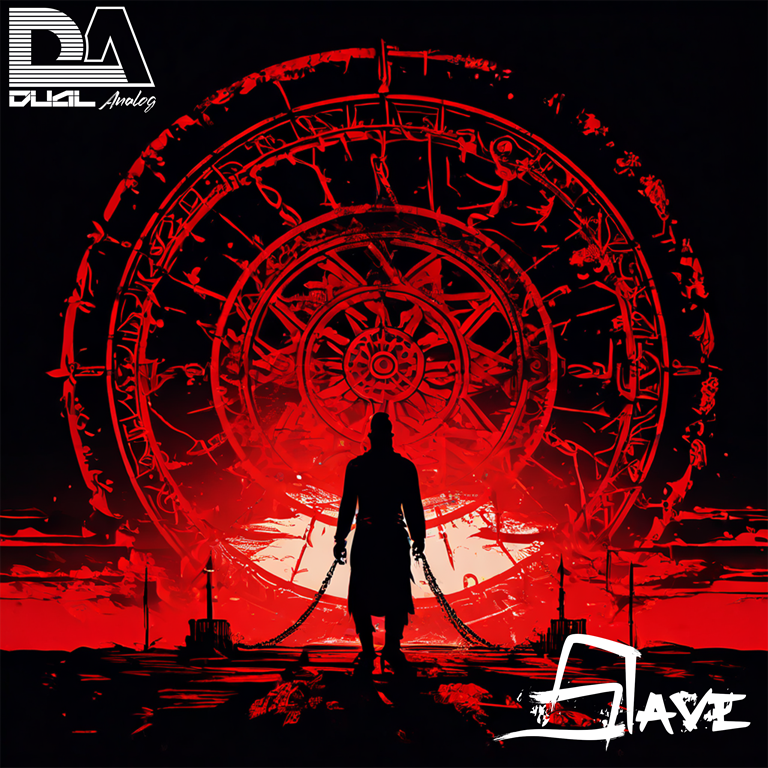
Seattle’s ‘turbowave’ pioneers, DUAL ANALOG just unveiled their new single, ‘Slave’. The song challenges perceptions and takes listeners on a journey through the complexities of desire and intimacy.

At first glance, "Slave" may seem to explore themes of S&M, but as with all things DUAL ANALOG, there’s more than meets the eye. The lyrics, cloaked in provocative imagery, actually delve into the realm of dissatisfaction and disappointment in sexual encounters, turning the traditional narrative on its head.

“We wanted to play with perceptions of sex and challenge our audience to think beyond the surface,” says vocalist Chip Roberts. “The S&M angle is like a lure, drawing listeners in, but once they dive deeper, they’ll discover the true essence of the song.”

With its pulsating beats, hypnotic melodies, and raw, emotive vocals, ‘Slave’ captures the essence of frustration and longing, painting a vivid picture of the complexities of human relationships. As with their previous releases, DUAL ANALOG delivers a sonic experience that transcends genres, blending elements of post-industrial, Neue Deutsche Härte, and aggrotech to create a sound that is uniquely their own.

Listen to ‘Slave’ here:

AA

4e444430-0e97-7c89-5b3a-601b1c017128

ant-zen – 12th February 2024

Christopher Nosnibor

First – the format! So much is being made of the vinyl renaissance right now, and much as I love vinyl, it’s hard to be entirely comfortable with this comeback, in this form. Back in the 90s, when CDs were in the ascendence, I often bought vinyl because it was cheaper: I could pick up an LP for £7.50 when a new-release CD was £11. I still have the receipts in my vinyl copies of PJ Harvey’s Rid of Me and Pandemonium by Killing Joke, among other treasures. Now, vinyl is a luxury item. Even a standard LP is around £25, and many are pressed on two pieces of heavyweight vinyl and cost closer to £40, or more if released on Record Store Day. This isn’t right. It’s not honouring the format, it’s another example of exploitation.

But this is rather different, and altogether cooler on so many levels: ant-zen have brought us this release by Kojoohar & Frank Ursus in the form of a 7” EP, with two tracks on each side. You can’t blame them for the price tag given production costs, but the unique hand-printed inlays, etc., at least make each copy unique and make this release a million miles removed from the capitalist conveyor belt.

The thing that matters here is that this release is completely suited to this retro format: a 10” or LP release would have been extravagant, indulgent, and frankly, ill-keeping.

It’s worth quoting the liner note for the back-story here, too: ‘The spark that ignited this collaboration came from a conversation between KOJOOHAR and FRANK URSUS – aka Te/DIS – about the kojoohar album that has just been released at the time and about angst pop and its position in the music scene. talking about new tracks kojoohar was working on, the decision was made to start a collaboration.’

And so we’re presented with Frost Drought, which they describe as ‘a 4-track ep that offers edgy angst pop with analog, gripping synthesizer sounds, metallic rhythms and enigmatic melodies, complementing by frank ursus’ vocals… music and lyrics of FROST DROUGHT describe a world of isolation, mistrust, alienation and the individual’s distance from itself. left alone in the dark…’

Entering the ‘debris field’, we’re presented with dark synths, groaning, whining, whistling, and a slow-tempo-echo-heavy beat. If the baritone vocal is distinctly from the gothier end of post-punk, the instrumentation is equal parts post-punk and ultra-stark, bleak hip-hop. ‘never compromise’ pushes into stark, dark, electro territory, in the realm of mid-80s Depeche Mode. Ursus’ vocals are commanding, but so dark, and the music is so claustrophobic as to be suffocating. ‘never compromise’ sounds like a manifesto, and whipping snares sounds crack and reverberate in an alienating fog of synth, and with hints of Depeche Mode’s ‘Little 15’, it’s as bleak as hell, too. ‘threshold’ is dark and boldly theatrical, like Bauhaus battling it out in the studio with Gary Numan.

There’s no light here: this is dark and it feels like a dragging weight on your chest, on your heart. Drawing on early 80s electro but adding the clinicality of contemporary production – and a dash of Nine Inch Nails – Frost Drought is a challenging work, thick, dense, and intense, it’s a heavy listen, and one that’s incredibly intense.

AA

a3285530151_10

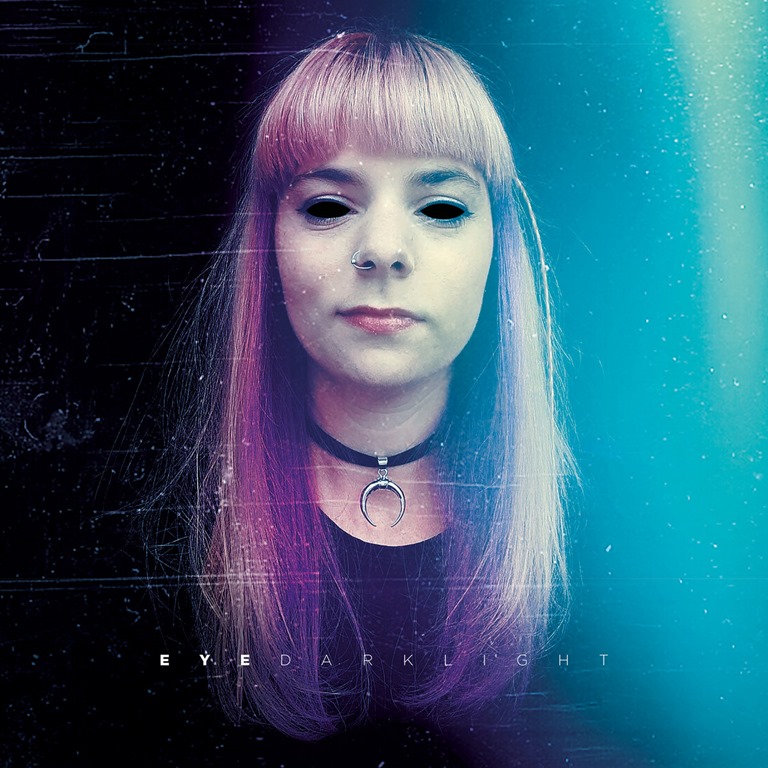
EYE – the new band from Mammoth Weed Wizard Bastard (MWWB) singer-songwriter/musician Jessica Ball – has announced the arrival of their eagerly awaited debut album, ‘Dark Light’ set for release on 26th April via New Heavy Sounds (Shooting Daggers, MWWB, Blacklab)

"These songs have been many years in the making… Some of these ideas were crafted before MWWB, this is something I’ve always wanted to do. Over the last couple of years, I’ve spent some time on finishing and crafting these ideas and pieces of music into songs. Some were snippets of lyrics from my early twenties which reflect on what seems like a different person. I think it’s quite poetic how it’s all come together now.

I was also encouraged after finding musicians who understood the vision and style I was trying to achieve, and of course my experience of being in MWWB. I’m a guitarist above all, and I loved reconnecting with guitar again. It feels like all my influences and favourite styles have come together in this album. Shoegaze, doom, folk, dream pop… It’s a real mix bag but as a whole, it represents many different stages of my life and tells a story. 

The album ultimately is quite introspective yet lyrically loose enough to be open to interpretation – I’ve always been a fan of songs that seem to perfectly slot into the situation I’m experiencing and not too specific to one person’s experience… I think that comes across in this album.”

Jessica relocated from Wrexham to join her new partner, veteran Welsh musician Gid Goundrey (Gulp, Ghostlawns, Martin Carr), in Cardiff just as the pandemic era dawned. Confined to their small Grangetown flat, they quite naturally began making music together.

Having earned acclaim and a fervent fan following for her role in MWWB, Ball took the opportunity to compose songs that were all her own – nuanced, lyrical, and hypnotically distinctive.

Triggered in part by the existential dread looming outside as well as the sudden ill health of her dear friend, MWWB guitarist Paul “Dave” Davies, then fighting for life after a Covid-related stroke.

With Goundrey on drums (for the first time in his musical career) and joined by keyboardist Johnny TK, Eye experimented with sounds to match Ball’s melodic songs, traversing a diverse spectrum of dark folk, dreampop, IDM and psychedelic doom, to create sometimes heavy and foreboding drones, alongside spare but still richly textured sonics.

The result is their debut album ‘Dark Light’. An intensely atmospheric fusion of emotionally charged songcraft and inspired sonic energy. The clue is in the album’s paradoxical title. Chilling and even bleak melodies with arrangements daringly and deliberately stripped down and minimal. Revealing a kinship with sonic bed-fellows Mazzy Star, Chelsea Wolfe or even Portishead, which can be heard on first single ‘In Your Night’. Jessica comments,

"Our first release ‘In Your Night’ represents Eye musically, conceptually and lyrically and I’m proud for this to be the first song that everyone hears from us… Light and dark, night and day, quiet and loud is the running theme throughout this song and album as a whole. Whether you’re up close to a song, or listening to the album as a whole, these themes will be ever present throughout. We’re playing around with these two extremes sonically and what these represent emotionally and mentally. I feel that nothing takes you on a journey more effectively than a good build up, or something happening unexpectedly, much like real life. We are just the eye that witnesses it all."

Listen to ‘In Your Night’ here:

AA

a2171614993_10

NYC-based electronic punk band LIP CRITIC have detailed their anticipated debut album – Hex Dealer – out 17th May via Partisan Records. To coincide with the announcement, the band has shared the album’s lead single and accompanying music video: ‘Milky Max’.

‘Milky Max’ is a pulverising slab of electronic hardcore. The song’s shapeshifting groove anchors a sound that’s theatrical, captivatingly irreverent, and completely outside so much of modern experimental music. Meanwhile Bret Kaser’s vocal delivery feels like it’s being delivered by a cult leader who has occupied the announcer’s booth at a football stadium and refuses to come out (“All my life I just wanted to live / Now I gotta die just because of what I did”).

The official video for ‘Milky Max’ showcases a fully playable video game inspired by the song and designed by Jesse Natter (brother of Lip Critic drummer Ilan Natter). Direct link to play the video game HERE.

Check the video here:

‘Milky Max’ follows previous singles ‘It’s The Magic’ and ‘The Heart,’ which earned early critical acclaim from NME (“on their way to becoming the next great NYC band”), Paste (“an apocalyptic wasteland of NYC’s best underground punk”), Rolling Stone (‘Songs You Need to Know’), Mary Anne Hobbs on BBC 6 Music, and Matt Wilkinson (“totally essential”).

Produced in collaboration by vocalist Bret Kaser and Connor Kleitz, ‘Hex Dealer’ represents an evolution of the eclectic style that the group began cultivating on earlier projects. Drummers Danny Eberle and Ilan Natter combine breakbeats and pingy snares with heavy cymbal and tom work, creating a singular mixture of classic punk/hardcore and electronic styles. The end result is 12 frantic tracks of postmodern pop for the genreless future. A project of wide-reaching sonic and thematic curiosity, above all ‘Hex Dealer’ is an inquisition into the state of spiritual marketplace and the isolating results of consumption.

Audiences have also already been captured by the sheer energy and undeniable chemistry as they toured the US, sharing stages with IDLES, Screaming Females, and Geese, and made their way across the UK / EU including a stop at the Pitchfork Festival in Paris. Lip Critic will tour extensively behind ‘Hex Dealer’, including stops at SXSW, End Of The Road and further UK dates. UK dates are listed below.

LIP CRITIC – UK TOUR DATES:
13 May – The Louisiana – Bristol, UK
14 May – The Deaf Institute (The Lodge) – Manchester, UK
15 May – The Windmill – London, UK
29 Aug – 01 Sep – End of the Road – UK

AA

zhQHEycQ

13th February 2024

Christopher Nosnibor

Another day, the organic evolution of another obscure splinter-genre or a genre cooked up by the music press, or, indeed a band themselves. Given the ever-expanding void in the space where the music press used to exist, that particular scenario is increasingly unlikely, meaning genre demarcations tend to now originate by word of mouth among fans, or from bands. And much as there’s a heavy cringe element to the way in which the music press historically created genres, from goth to shoegaze and Britpop, alongside a whole bunch which failed to ignite, like Romo and The New Wave of New Wave. Sometimes, trying to build a pigeonhole slips into the domain of trying too hard, and more often than not, genre labels simply serve as shortcuts which bypass the requirement to engage in meaningful dialogue as to what an act is actually doing, what they really sound like,

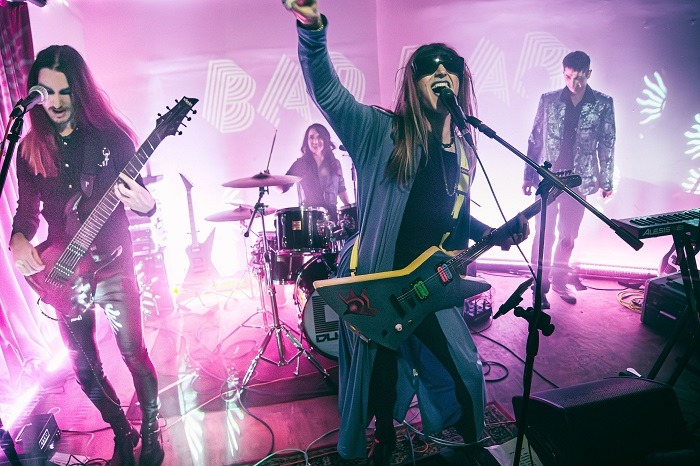
And so the arrival of ‘Long Divide’ by ‘Seattle-based ‘turbowave’ pioneers, Dual Analog serves as an educational piece. They pitch themselves as ‘combining New Wave and Heavy Metal into a brand new genre.’

There’s nothing wrong with ‘Long Divide’, but it doesn’t sound especially metal or new wave, carrying most of the trappings of 80s electropop – although image-wise, there’s a whole heap of 80s hair-rock influence going on, with bandanas and studs all in the mix. And hair. Lots and lots of hair.

‘Long Divide’ isn’t really the sound of bandanas and studs and hair, and is more Depeche Mode circa Songs of Faith and Devotion with some guitars played lowed but mixed low, meaning the synths dominate the sound. The vocals register in that same baritone region of Dave Gahan and a whole host of post punk / goth bands, but there’s something about the delivery – level, tone, pitch, I’m not sure – which hovers on the cusp of uncomfortable… but as the song progresses, it seems to slot together rather better. And then they whip out a big old guitar solo near the end and boom, you’ve got you hair rock fix.

Time was I’d have wrapped up a review with a pithy summation., but this feels increasingly forced and corny, and at the same time, presenting a verdict feels little different to casting oneself into the mould of a star-rating – it’s arbitrary and lazy in equal measure. As much as ascribing a genre is a short-cut, so is declaring an album a 7/10; it’s a box-ticking exercise that appeases the lowest common denominator. A hedge-betting 6 or 7 out of 10 is the coward’s way of saying you’re being polite and sitting on the fence. Whereas I’m ok with saying this is… ok, so-so, middling to me but likely to find a solid fanbase.

AA

1438c134-109d-11a4-a071-a18bf622a4f3

Negative Gain Productions – 9th February 2024

Christopher Nosnibor

Pitched as ‘a battle cry against the facade of perfection that suffocates an authentic connection’ and a song that’s ‘about the dark, often unseen journey of seeking forgiveness and finding solace in the unexpected kindness of strangers’ ‘Necessity Meal’ is perhaps the ultimate hybrid of everything that’s gothy and on the darker side of electro/synth pop.

I’d wager it’s pretty much impossible to write about ‘Necessity Meal’ without recourse to Depeche Mode. That isn’t to say it’s just some rip-off, so much as an indication of just how deep and broad their influence is felt at the darker end of the electro spectrum.

‘Necessity Meal’ is built around a rolling drum beat with a harsh snare, and some brittle, trilling synths pave an intro that gives way to some guitars that are by turns cutty and deliver strains of feedback. The verses are a bit rappy / spoken and I can’t help but think of it being like a gothy take on grebo and it sort of works but sort of doesn’t – in the way that The Sugarcubes worked but didn’t: you know, you either dug – or more likely tolerated – the Einar bits, or outright hated them as rubbish intrusions into some great songs, but ultimately, it worked because the Björk bits and the overall thing was more than worth the clash. This feels confused and confusing, a bit messy. But then, as front man Mychael says of the song, “In the end of it all, life can be rather messy, and I can sing if I want to, at my own pity-party!” In the mix there’s a bunch of noise that casts a nod to Nine Inch Nail, and…

…And so it is that from all of this sonic jostling emerges a magnificent refrain: the vocals suddenly come on like David Bowie, and with a heavy sarcasm, deliver the line, ‘Thank you, thank you for the guilt’. It’s unexpectedly, and almost inexplicably, affecting, but somehow, in this moment, the whole song, and everything around it makes some sort of sense.

AA

a0341299273_10