Posts Tagged ‘electro’

HAUJOBB reveal the new video single ‘Opposition’, which is featuring guest vocals by the outstanding Emese Árvai-Illés from the Hungarian pop noire duo BLACK NAIL CABARET. The track is taken from the Electro-Industrial act’s forthcoming new album The Machine in the Ghost. The German duo’s tenth full-length has been slated for release on September 20, 2024.

HAUJOBB comment: “Adding guest vocals towards the end of the song was basically the idea of a Saturday afternoon”, programmer Dejan Samardzic explains on behalf of the duo. “Emese is such a reliable artist, she delivered her impressive vocals within 24 hours. Maybe she sensed the urgency this had for me. I could hardly wait to add that new element to the arrangement as it brought a strong organic feel to it.”

Emese Árvai-Illés adds: “Dejan had some wordless singing in mind, like the side vocals of the Eurythmics’ classic ‘Sweet Dreams’, and he asked me to just improvise”, the Hungarian singer reveals. “I recorded a couple of takes and did some random Adlibs at the end. That gave me somewhat of a Massive Attack ‘Unfinished Sympathy’ feel, but in a more industrial way.”

Watch the video here:

AA

ebbc9731-d7a0-5959-8077-6263beb0d048

Metropolis Records – 7th June 2024

Christopher Nosnibor

Oi, Nosnibor? Call yourself a goff? Well, yes… and no. Y’see, much as many people scoff at Andrew Eldritch insisting The Sisters of Mercy aren’t goth despite displaying so many of the trappings of goth, he does have a point, and one I’m willing to defend when it comes to my own musical preferences.

The Sisters, The Cure, Siouxsie, Bauhaus, bands I came to quite early in the formation of my musical tastes in my teens, are all largely considered exponents of ‘goth’, but were well-established long before the label existed. Tony Wilson said in an interview that there was something ‘gothic’ about Joy Division, and while they were contemporaries, and similarly dark, and – like the aforementioned acts – emerged from the post-punk scene, along with the likes of Alien Sex Fiend, The March Violets, The Danse Society, but somehow manage to avoid the goth tag. Ultimately, the whole thing was a media construct based largely on a false perception of a bunch of disparate acts who shared a fanbase. Just how much bollocks this was is evidenced by the fact the likes of All About Eve, New Model Army, and Fields of the Nephilim – again, bands who shared nothing but a fanbase, in real terms – came to be lobbed into the ‘goth’ bracket.

But then bands started to identify as ‘goth’ themselves, most likely as a way of pitching themselves in press releases, and things started to head south rapidly thereafter.

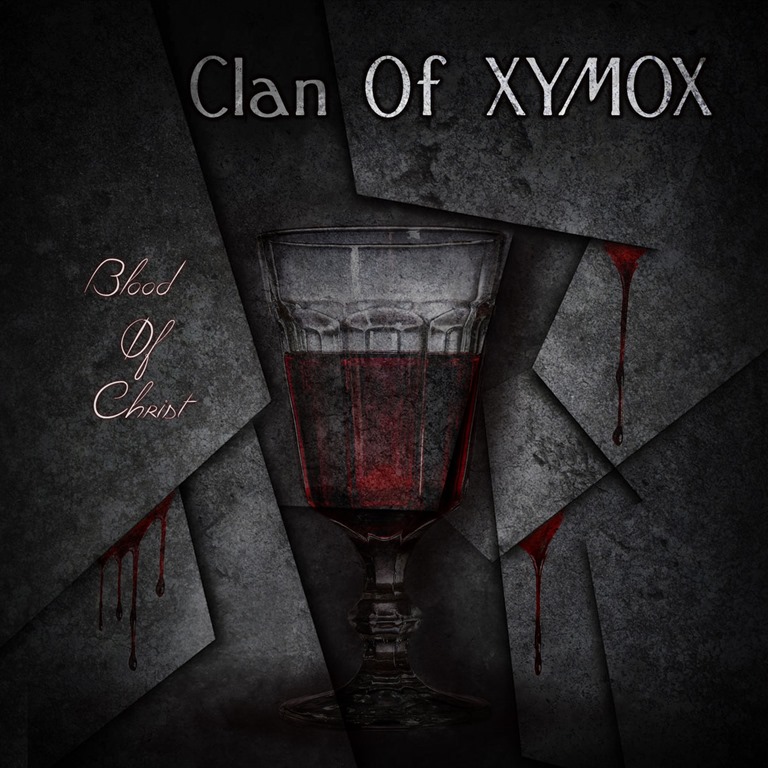
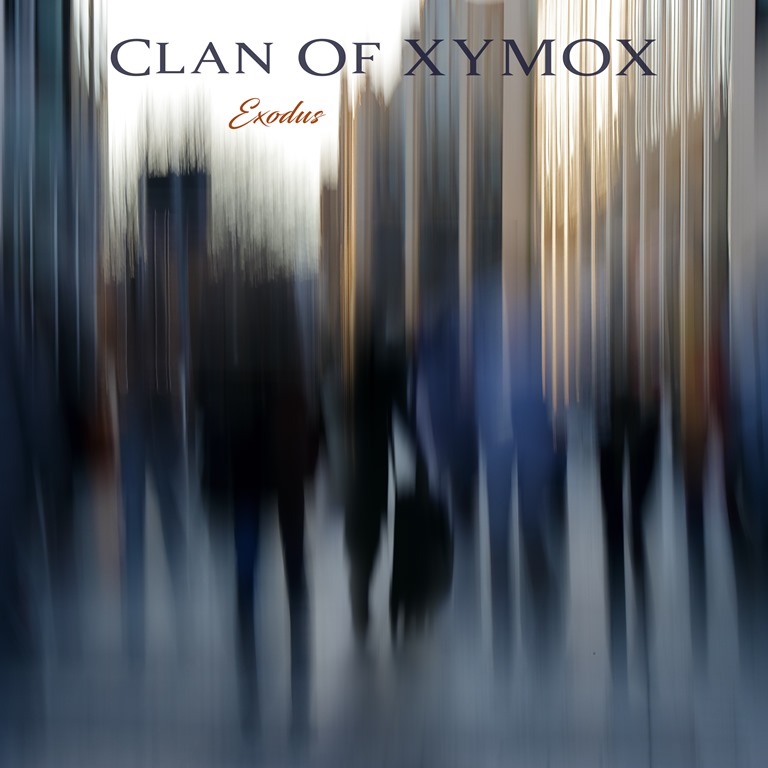
Having formed in 1981 and being signed to 4AD, home of The Cocteau Twins, and releasing their debut album in 1985 – the same year The Sisters released their seminal debut First and Last and Always – Clan of Xymox belong to the initial wave of proto-goth, in the same way X-Mal Deutschland do. Yet for some reason, they’ve bypassed me. Seventeen albums in, I’m perhaps a bit late to the party, and while I can’t claim to be fashionably late, it’s better late than never, right?

This does mean that I’m approaching Exodus with no benchmark in terms of their previous albums, and with the weight of recently-jettisoned preconceptions and prejudices. Perhaps not a strong standpoint for objectivity, but it’s worth getting these issues out of the way first.

It’s amusing to read how retrospective reviews of their debut criticised the fact it sounded cliché and dated, not least of all because of the synth sounds which dominate. What goes around comes around and vintage synths and drum machines, however tinny, fuzzy, basic, are all the rage once more, with people willing to pay crackers prices for the precise purpose of recreating those sounds.

Exodus sounds like an early-to-mid-eighties dark electro album, showcasing all of the elements of goth before it solidified, before the cliches became cliches. The drum machine programming is quintessentially mid-80s, a relentless disco stomp with a crisp snare cracking hard and high in the mix.

They slow things swiftly, with the brooding, moody ‘Fear for a World at War’ – a timely reflection on the state of humanity – landing as the second track. It’s moving, haunting, but drags the pace and mood down fast, samples and twinkling synths hovering and scrapping over a hesitant beat and reflective vocals.

‘The Afterglow’ combines chilly synths and fractal guitar chimes to forge a cinematic song. It’s unquestionably anthemic, and has the big feel of an album closer. Where can they possibly go from here? Well, by pressing on with more of the same… Much of Exodus is reflective, darkly dreamy, vaguely shoegazy, very Cocteau Twins – at least sonically, being altogether less whimsical in content. It’s undeniably a solid album, and one steeped in the kind of sadness and melancholy that’s quintessential brooding gothness. ‘X-Odus’ hits a driving techno goth sound that borders on industrial, but equally owes as much to The Sisterhood’s Gift, which is really the point at which ‘goth’ intersected with dark disco.

Eighteen albums in Exodus sounds predominantly like the work of a contemporary dreamwave / goth act plundering the old-school with some heavy dashes of late eighties Cure, and while many fans will be hard into it, to my ears, it’s good – really good – but much of its appeal is nostalgia and familiarity, and objectively, it’s just a shade predictable and template.

AA
064556

Magic Wands is a dream pop duo originally formed in Nashville by guitarists / vocalists Chris and Dexy Valentine. Now based in Los Angeles, the group is known for its shimmering and dreamy sound, which incorporates elements of shoegaze, post-punk and goth.

Characterised by heavily-textured guitars, synth drones and ethereal vocals, these elements in combination produce music with an otherworldly atmosphere that has been widely praised for its euphoric quality, especially evident in live performances.

Dedicated to creating music that is both imaginative and emotionally engaging, Magic Wands have issued five studio albums to date, the most recent of which is Switch (2023). Its songs were also remixed by guest artists and released as Switched later in the year.

‘Hide’ is a brand new song. Check it here:

AA

cf5b206ab133b4c5b5318964a0c270ff5a7c8b7e

Industrial band, CLOCKWORK ECHO has just unleashed their highly-anticipated new single, ‘Hallowed Be Thy Pain’.

Laden with raw emotion and haunting revelations, ‘Hallowed Be Thy Pain’ delves deep into the themes of deceit, faith, and the far-reaching consequences of a single lie. The song’s lyrics are poignant and introspective, unravelling a story that intertwines personal guilt with collective delusion.  The song offers a powerful critique of faith, deception, and the human condition. It challenges listeners to question the narratives they have been fed and to seek the truth behind the comforting lies.

In a world where belief often triumphs over evidence, ‘Hallowed Be Thy Pain’ critiques the exploration of faith and the ease with which people are swayed by spiritual narratives, often lacking concrete evidence. Phrases such as ‘shadows in their eyes’ evoke a sense of collective blindness, a willingness to be deceived in exchange for spiritual comfort.

‘Hallowed Be Thy Pain’ serves as a haunting reminder of the fragile line between truth and fiction. As we navigate through the shadows of our own lives, may we find the courage to confront the lies we tell ourselves and others, and seek a path illuminated by truth and understanding.

Listen to this blasting stomper here:

AA

ab1a4016-f502-e421-4960-d414cbdb59eb

Seattle-based "turbowave" pioneers, DUAL ANALOG are set to make waves with their latest single & video, ‘Reborn.’

‘Reborn’ is a visceral journey through the dark corridors of human emotion and the haunting echoes of regret. As the band reflects on their struggles following their debut album’s release, "Reborn" emerges as a poignant anthem for anyone who has faced adversity and felt trapped in a cycle of obscurity.

With ‘Reborn,’ DUAL ANALOG steps into the visual realm of a story-driven narrative for the first time, signaling a new chapter in their artistic evolution.  The accompanying music video, directed by Skye Warden (Nuda, DK-Zero, Abney Park) adds a visual dimension to this gripping tale of self-inflicted torment and redemption. This collaboration adds depth and dimension to their music, offering fans a multi-sensory experience that transcends traditional boundaries. Through a mix of their own haunting melodies, existential lyricism, and nihilistic outlook, DUAL ANALOG paints a vivid, yet inspiring portrait of a man consumed by his own ambition unlocking his true potential at the expense of his family.

Listen to ‘Reborn’ here:

AA

e72da907-3634-43aa-00c8-9c4512087b1e

Cruel Nature – 24th May 2024

Christopher Nosnibor

It seems as if every album of the year has been released on this date, May 24th – and by every album of the year, I mean all of the releases have landed at the same time, but also that this album and the other ‘best album’ contenders have all landed simultaneously, too. It’s meant that I’ve been absolutely swamped, and struggling to listen to everything, let alone formulate thoughts and render them coherent – something I fear I struggle with at the best of times.

Surveying this release, I learned that ‘Prosthetic Self is a collaboration between CRUSHTRASH & NICHOLAS LANGLEY that seamlessly blends the energy of early ‘80s dark industrial synth pop with the mesmerising allure of ’90s electronica. Drawing inspiration from iconic acts like Coil, The Associates, Depeche Mode, Björk, and Portishead, this album is a sonic journey that transcends time and genre boundaries.’

It does feel as if every electronic act with a dark leaning wants to be Depeche Mode, and every electro-based Industrial act is essentially wanting to be Pretty Hate Machine – era Nine Inch Nails – who in turn sounded a fair bit like Depeche Mode if truth be told. That’s no real criticism, as much as an observation of the extent to which those two acts broke ground and created new templates in the 80s. However, the industrial elements of Prosthetic Self hark back to a time before Nine Inch Nails, and presents a more experimental form.

The tile, Prosthetic Self Connotes a sense of falseness, the fake exterior we apply to ourselves in order to deal with people and society. Workplaces – particularly offices – tell us to ‘be ourselves’ at work, while at the same time telling us we need to leave our problems and personal baggage at the door, but at the same time seem incapable of dealing with non-conformity. Well, come on then: what do you want: individuals or clones? Prosthetic Self is an exploratory work which presents a multitude of facets, and it’s a fascinating journey which leads one to the question as to what is real and what is construct, artifice. The cloak, on the cover, with its empty hood feels like a representation, not necessarily for this collaborative project, but the album’s themes, searching for what lies beneath the prosthetic self: is there, indeed, anything at all? Then again, how much here is style, and how much is substance?

There’s certainly a lot of well-studied style on display. ‘Bring Some Change’ is dark but also soulful, and their referencing The Associates hints at the almost operatic stylings of the vocals at times, and against some stark backings prone to some unexpected sonic ruptures and moments of heightened tension and drama, I’m also reminded of Scott Walker.

‘Claustrophobia’ is appropriately-titled. ‘In my dream, something’s wrong, caving in…’ Crushtrash croons with hints of Dave Gahan in his delivery against a slow-moving murky throb. But there’s a really attacking percussive loop that knocks on the top of your skull which makes it tense rather than soothing, and before long, panicked breathing gasps in the darkness, and you’re drawn into the nightmare.

Elsewhere, glitching, knocking beats shuffle and click, and the production really brings these to life in a way that makes you clench your jaw and tense your shoulders. ‘Selective Memory’ has something of a collage structure about the way the sounds are brought together and overlaid, with sampled snippets woven in alongside the bubbling vintage synth sounds.

In places, the kind of retro vibes which permeated 90s trip-hop seep into the shadowy atmospherics, and ‘Subtle Fetish’ comes on like Marc Almond in collaboration with Tricky, spinning lascivious wordplay along the way.

Prosthetic Self creates a lot of atmosphere with minimal arrangements, and they work because of the close attention to detail, the multiple layers of percussion which pulse and snake through spartan synths, more often than not with a simple, repetitive bass overlaid with subtle details, in a fashion which adeptly recreates the sound of the early 80s. In doing so, it recalls a time when so much was new, innovative. Coming at a time when there is so much sameness, and production and mixing has come to be all about the loudness, to hear a set of songs which really concentrate on dynamics and detail, it seems unexpectedly different.

AA

a1438080285_10

The thing about Argonaut is that they’re continually evolving, continually pushing themselves, striving to do something different, and to create something new, constantly. No sooner had they completed their track-a-month ‘open-ended album’ project, Songs from the Black Hat, which saw them try out a range of styles, than they’re back to banging out new tunes at a remarkable rate.

Having deadlines or other set parameters doesn’t work for a lot of artists, but Argonaut seem to thrive on targets and goals, and ‘I’ll be your doctor’ is testament to that.

They describe it as ‘A song for the companions and for everyone courted and wooed with promises of excitement and adventure. A reminder to those making such vows to continuously reinvent, strive for greatness and never grow complacent. Musical nods to Depeche Mode, Nine inch Nails and Pink Floyd, lyrically inspired by Dr Who and the Velvet Underground. Delivering on our promise.’

It certainly incorporates an array of elements in its four and a half minutes, with some dark, stark post-punk electro vibes paired with some driving chords and some exploratory guitar work, all brought together with, of course, a strong hook.

Listen here:

AA

a3388278580_10

Post-Punk duo, SUPERNOVA 1006 recently unveiled their latest single, ‘How I Need You’ via Negative Gain Productions.

‘How I Need You’ is a semantic continuation of SUPERNOVA 1006’s Chains album. It was planned to release it as a bonus initially. However, it looked isolated and self-sufficient. Therefore, it was decided to make the song an independent work. Its distinctive feature was a return to the old sound, characterized by the “stringiness” and buoyancy of a cold sound.

‘How I Need You’ gives the feeling of being immersed in a big cold black lake in which no one lives with the silence and comfort of a lonely existence. It is a sonic journey through a cyberpunk landscape, filled with pulsating rhythms and melancholic melodies.

The single release also features remixes from artists such as Casket Cassette, Giirls, CULTTASTIC & Blind Seagull.

Listen here:

AA

03849f6a-c1e1-ca9c-4fa0-e405ddfd98ec

Fire Records – 26 April 2024

Christopher Nosnibor

Another day, another artist I’m discovering and wondering if I’m increasingly poor at keeping up or of there really is just more music in the world than I could ever keep abreast of even if I devoted every waking minute to trawling every corner of the Internet for news and playlists. Maybe it’s a bit of both. There is, perhaps, something of an expectation that someone who writes about music should have a deep and wide-ranging knowledge of the subject. The trouble is, the more music you’re exposed to, the more avenues it opens up, and suddenly there’s this and this and this… and how is there time for all of it?

If you’re obsessive about a given genre, you may be an expert in your field, but you’re missing out on all of the other fields. Explore the other fields far and wide, and you’re missing something elsewhere. I see people on social media who seem to spend their entire days playing – usually streaming – new albums, and they’ve heard pretty much everything on release, five, six, seven albums a day. I’m rarely able to listen to music while working my dayjob, and when reviewing, I can’t really manage more than an album a night to hear, digest, process, formulate an opinion and sentences to articulate it.

In daily life, I rarely suffer from FOMO, but when it comes to music, I feel – increasingly -that I’m unable to keep up. I’ve not listened to the latest Taylor Swift album, for example. Or any of her albums for that matter. Am I missing out? My daughter would insist that I am. But as much as I listen to music for pleasure – at least when I can – I also listen with a view to providing coverage to artists who aren’t Taylor Swift, who you won’t find covered in every other publication. And so we come to Yosa Peit, who I clearly can’t claim to have discovered at the dawn of her career, but who, while having gained a following and a contract with Fire records, clearly isn’t a household name either.

The pitch for ‘The free-ranging sound of Yosa Peit’ is that her work ‘recalls the intense arrangements of a cyber-era Prince with the surrealist tones of Arthur Russell and the vulnerability of Arca circa 2017.’

I’m a little uncomfortable with Prince. By that I mean, likely somewhat controversially, I think he’s massively overrated, and moreover, I’m not really a fan of anything funk.

Perhaps it’s my relatively superficial knowledge of Prince that’s the reason that Prince is by no means my first point of reference on hearing Gut Buster, an album which is positively brimming exploding with ideas. There are elements of crisp pop and some bust-up, fucked about bluesiness to be found in the mix in this extravaganza of inventiveness, which also sculpts dark electropop shapes with some heavy bass and ethereal synths. At times, skitters and ripples rush by faster than the mind can compute, and there are some pretty slick grooves, even hints of what one might broadly refer to as ‘urban’ shades – as exemplified on ‘Tower Shower’, which also brings some dubby bass and blasting beats.

Gut Buster has soul – bit tosses it in a liquidizer and pulses it to a pulp with skittery bits and pieces of synth and hyper-processed vocals, 80s AOR melted into soporific trip-hop and hyperactive techno tropes. The chipmunk vocals area bit irksome at times, but there’s so much else that’s good that you can forgive it. The minimal gloop of ‘Call Me’ is a slow bump and scrape, and showcases the way in which Peit’s compositions are riven with intricate and fascinating detail.

Gut Buster is odd, quirky, in places dark and in others, less so. Unashamedly other and oddball, there is much to unravel here.

AA

383430

Seattle’s ‘turbowave’ pioneers, DUAL ANALOG just unveiled their new single, ‘Slave’. The song challenges perceptions and takes listeners on a journey through the complexities of desire and intimacy.

At first glance, "Slave" may seem to explore themes of S&M, but as with all things DUAL ANALOG, there’s more than meets the eye. The lyrics, cloaked in provocative imagery, actually delve into the realm of dissatisfaction and disappointment in sexual encounters, turning the traditional narrative on its head.

“We wanted to play with perceptions of sex and challenge our audience to think beyond the surface,” says vocalist Chip Roberts. “The S&M angle is like a lure, drawing listeners in, but once they dive deeper, they’ll discover the true essence of the song.”

With its pulsating beats, hypnotic melodies, and raw, emotive vocals, ‘Slave’ captures the essence of frustration and longing, painting a vivid picture of the complexities of human relationships. As with their previous releases, DUAL ANALOG delivers a sonic experience that transcends genres, blending elements of post-industrial, Neue Deutsche Härte, and aggrotech to create a sound that is uniquely their own.

Listen to ‘Slave’ here:

AA

4e444430-0e97-7c89-5b3a-601b1c017128