Posts Tagged ‘dark’

Touch TO:104 – 25th May 2018

The Revenant Diary feels like a long time ago now: perhaps because it was. Six years is long time (although Mark Van Hoen has released two albums as The Locust in between). And yet, it continues to haunt me in some way. Returning with Invisible Threads, Mark Van Hoen continues to explore ominous, shadowy territories.

This is a dark, immersive work. I’d had a tough – and very strange – day at work. Oftentimes, when weary, stressed, dazed, I will select an instrumental work as my review project for the evening, as I find I can simultaneously write and relax, allowing the sound to wash over me. It transpires that this may have been precisely the album – or not, depending on perspective – for the occasion. I say, staring blankly. Not really listening, not really engaged, and certainly not typing. Not thinking, and not doing anything else. I don’t know exactly how long I remained like this, to all intents and purposes, immobile, in a sort of fugue state.

On returning, and attempting to remain focused, I find Van Hoen’s dark, churning sonic nebulae every bit as arresting and distracting.

The album’s inspiration stems from multiple sources, not least of all Edgar Allen Poe’s short story The Conversation of Eiros and Charmion which he re-read while on tour. The album is in some respect designed as a soundtrack to this, but equally, the Invisible Threads refers to the intangible connection between all of the musical and personal influences that brought the record into being.

In truth, the context and background have only limited effect on the reception. The reception is pure: a direct engagement between sonic output and listener.

Low, humming, hovering tones undulate across the album’s seven subtle compositions. Creeping, interweaving, fragmentations of light dance across these cold, bleak expanses which often bleed together. Even the silence between seems to provide an integral part of the listening experience and contributes to the shape of the overall arc of the album.

It’s distinctly background but in a way that fulfils that criteria of ambience that affects and colours the mood rather than being sonic wallpaper, disappearing into the background unnoticed. Repeated listens to Invisible Threads have not lifted my mood: instead, I feel claustrophobic, tense, weighted by an indefinable oppression. I give up: my critical vocabulary is as exhausted as my mental state when faced with this album at this time. I take a shower. Reflect. Accept that perhaps this work is so immersive that I am, temporarily, drowned.

AA
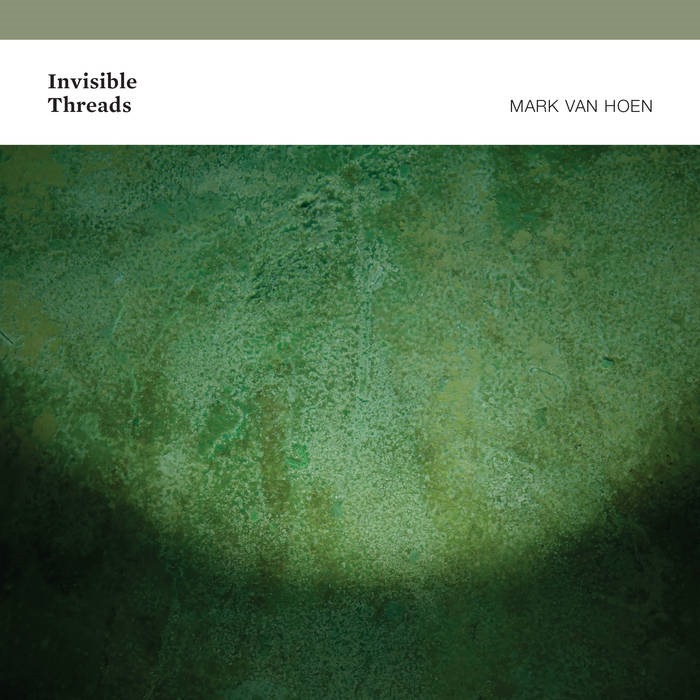
Mark Van Hoen - Invisible Threads

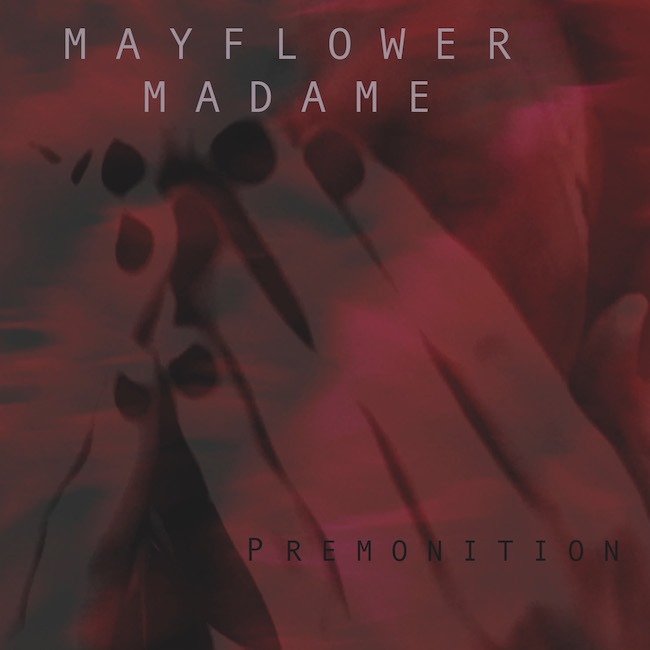
Having released one of our favourite albums of 2016 in the form of Observed in a Dream, Norwegian band Mayflower Madame return with their new Premonition EP on 18th May.

Through four tracks of psych-theatrical ingenuity, shady shoegaze and 1980s dark romanticism, the EP conveys the wintry feeling of their home country – icy and gloomy, haunting and majestic.

Title track ‘Premonition’ is an apocalyptic love song where dark psychedelic post-punk combine with haunting vocals to create a feeling of impending doom.

Stream ‘Premonition’ here:

AA

MayflowerMadamePremonitionEPcoverart650

New Heavy Sounds – 4th May 2018

Christopher Nosnibor

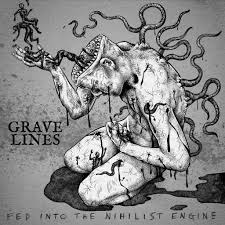
Grave Lines’ second album is… heavy.

From a personal perspective, they impressed me no end when I caught them supporting Black Moth when their tour for Anatomical Venus landed in their hometown of Leeds. Mostly, because their set was brutal in its weight, the howling vocals sitting in the mid-range and low in the mix against a tempest of low-end guitar noise.

Fed Into the Nihlist Engine doesn’t disappoint, and captures the essence of the live sound. It also opens in the most daring fashion, with a fifteen-minute epic that blends ferocity and dirginess to form a perfect balance: at first coming on like Amenra in their haunting, atmospheric passages, before erupting into a full-blown assault of rage. Its crawling pace and sinewy lead guitar parts, paired with dense, chugging rhythm with major emphasis on the bottom end make for a punishing experience. However, over the course of the album’s nine tracks, Grave Lines demonstrate a remarkable range and a deep-seated sense of atmosphere and texture. It’s heavy – seriously heavy, in fact – but it’s also light: ‘Shame Retreat’ is a delicate acoustic song, simple and completive, and elsewhere, there are some beautifully melodic passages.

In fact, much of the weight of Fed Into the Nihilist Engine isn’t about crushing guitars, overdriven and overloaded and labouring amp-blowing riffs – not that there isn’t an abundance of these. No, Grave Lines explore the brooding a the shadowy, the quietly intense, the darkness of the gothic. ‘Self Mutilation by Fire and Stone’ sees Harding adopt an almost crooning goth baritone in places. ‘Loss Betrayal’ – at least for the first minute or so – sounds more like early iLiKETRAiNS with its chiming post-rock guitar and reflective stance. And then it all piles in, while on ‘Silent Salt’, the guitars grind and churn relentlessly from the start. ‘Loathe Displace’ is similarly disarming, stripped back, a wheezing, undulating organ drone providing the instrumental backdrop to Jake Harding’s surprisingly sensitive and tuneful vocals.

But when they do hit the overdrive pedals, they really go in hard and heavy. The one thing they don’t do is uptempo. These are slow, deliberate slabs of sound that bludgeon the senses. This is the sound of anger. This is punishment. There’s a lot of grind and churn going down on Fed Into the Nihilist Engine: ‘The Greae’ has that early Melvins vibe about it, only shoutier, and it grinds on well past the seven-minute mark.

Fed Into the Nihilist Engine really works the contrasts and dynamics, but not in the way, say, Neurosis do – which I suppose is my way of saying not in a way that’s formulaic or predictable.

Ultimately, Fed Into the Nihilist Engine is a dark album. And yet, it’s a dark album that’s haunting, moving and achingly beautiful in its articulation of despondency and disquiet.

AA

Grave Lines - Nihilist Engine

This is it Forever – 12th March 2018

Christopher Nosnibor

Ok, I’m biased. Thomas Ragsdale’s work as one half of worriedaboutsatan and Ghosting Season has enthused me for over a decade now, and his solo work, too, has consistently mesmerised and enthralled me. This isn’t just journo gush: his work is rich and immersive and simply never disappoints. His latest offering, the three-track ‘Under Dwellers’ EP is no exception.

The BandCamp blurb describes it as ‘Three pieces of music paying tribute to the world beneath our own’, and goes on to describe how ‘Acid lines are fed through tape echo and back into a reel to reel machine… Randomised synth arps clatter around unpredictably inside a distortion unit… Crumbling piano melodies faintly cry out over the hiss and hum of modern circuits… Sounds made by a human, but with no control. Music for beneath the grit and surface of our modern world’.

Ragsdale translates all of these things into something more than pitch, more than process jargon, and presents a set of atmospheric, semi-ambient compositions, rich in tone and texture, and which utterly envelop the listener.

There is little point in detailing either the structure or sound of the individual pieces, or much else for that matter. Dark clouds drift and scrape, twist and turn and swell to fill the air. Yet There is depth, and above all a certain intangible grip and pull here. One listens. One reacts. One feels it, somehow, subliminally, a head-tingling, gut-pulling soundwork.

AA

Thomas Ragsdale - Under Dwellers

Ici d’ailleurs – IDA119 – 30th March 2018

Christopher Nosnibor

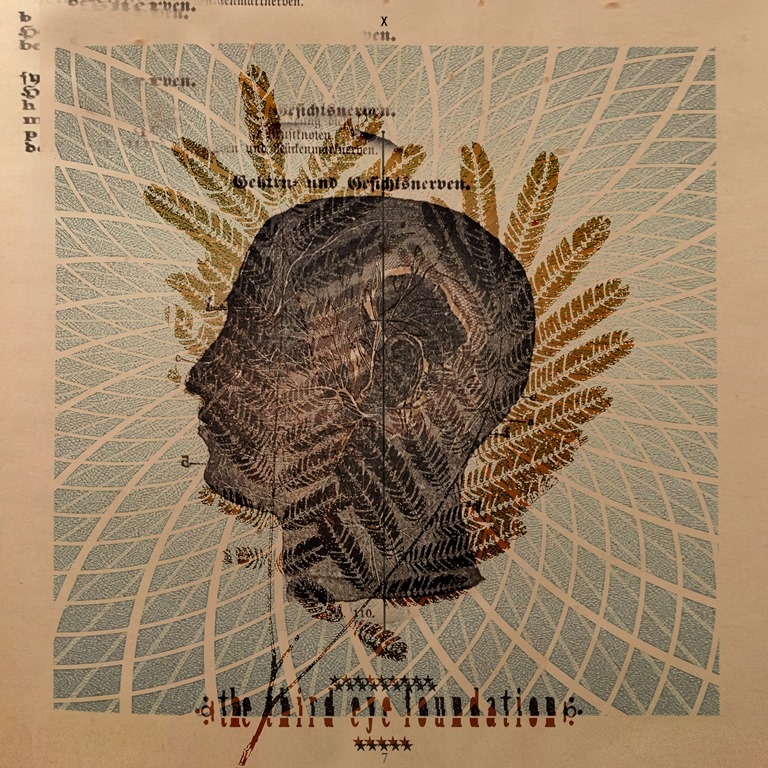
The lengthy blurb which accompanies the latest release from Matt Elliott’s Third Eye Foundation, active since 1996, covers a lot of ground. A lot has happened since Semtex, the expanded reissue of which I ruminated on a couple of years ago. And yet. Wake the Dead may not match the violence, but still packs a restrained intensity.

‘Words have no place here except to confuse matters a little further. And the 40 minutes of throbbing, hypersensitive dubstep that make up the record are not aimed at sending a message to the mind. The intention is to make souls dance, to unite them and to remind us that, despite our choices and individual convictions, we are all components of the same whole and whether living or dead, we are connected forever.’

Increasingly I find myself returning to my own reactions and responses to music, and the separation between the objective and the subjective. Any engagement with music must necessarily be subjective. Dismissing chart music because it’s vapid crap is still a subjective opinion, given that objectively, it serves a social (and economic) function and is invariably extremely well-executed and produced in technical terms, and to complain about a lack of emotional depth or lyrical complexity may on the surface appear to be an objective criticism, but a listener’s lack of connection with it is subjective. Flimsy radio-friendly fodder is entertainment: it’s music that strives to achieve different ends which is art.

Wake the Dead, while pitched as having the purpose of ‘making souls dance’, is very much art in that it exists to evoke a deeper emotional response than ‘it’s got a good beat.’ Not that the beats aren’t good, but the slow, deliberate rhythms are more of the variety one nods to rather than getting down to.

The title track sets the scene and the tone, with majestic, sweeping tones and soaring choral voices which rise towards the heavens above a slow, hypnotic semi-tribal beat has a rich resonance. The smooth, soothing cello is countered by occasional trills of feedback, creating a subtle but essential dissonance which alters the mood considerably. Gradually, over the course of the track’s thirteen-minute span, low-churning bass frequencies begin to throb and beats become stronger but also more fractured as looping echoes collide against one another disorientatingly.

‘The Blasted Tower’ combines gliding strings with stuttering, rapidfire fills, a balanced juxtaposition of soporifically soothing and twitchy tension, before ‘Controlled Demolition’ slides into murkier and rather heavier territory. With the structures less defined and a cacophonous collaging of sound pitched against warping bass tones, it makes for a cerebrally-challenging passage that culminates in a collision of brooding strings and extraneous noise.

The album’s only words are to be found on the shortest track, ‘That’s Why’, with a sampled shout of ‘Fucking pigs! I hate the fucking pigs!’ looped and mangled and fucked to fade. It feels a little incongruous, but provides a well-placed change in both tone and tempo ahead of the final cut, which takes the form of an elongated, wheezing drone graced with wordless female vocals which echo an abstract spiritual transcendence.

The six compositions segue into one another to form a continuous forty-minute suite. The atmosphere is dark, but more the darkness of twilight and shadows than pitch black small hours. There are moments where it feels a shade bleak, but these are contrasted by moments of uplifting beauty; the overarching sensation is one of a haunting feeling. As the sound fades to silence, the feeling of immersion hangs for a time. There’s no way to place that sensation in an objective context: this is about how the abstract language of sound touches the subconscious.

AA

IDA119_front

Kranky – 23rd February 2018

Christopher Nosnibor

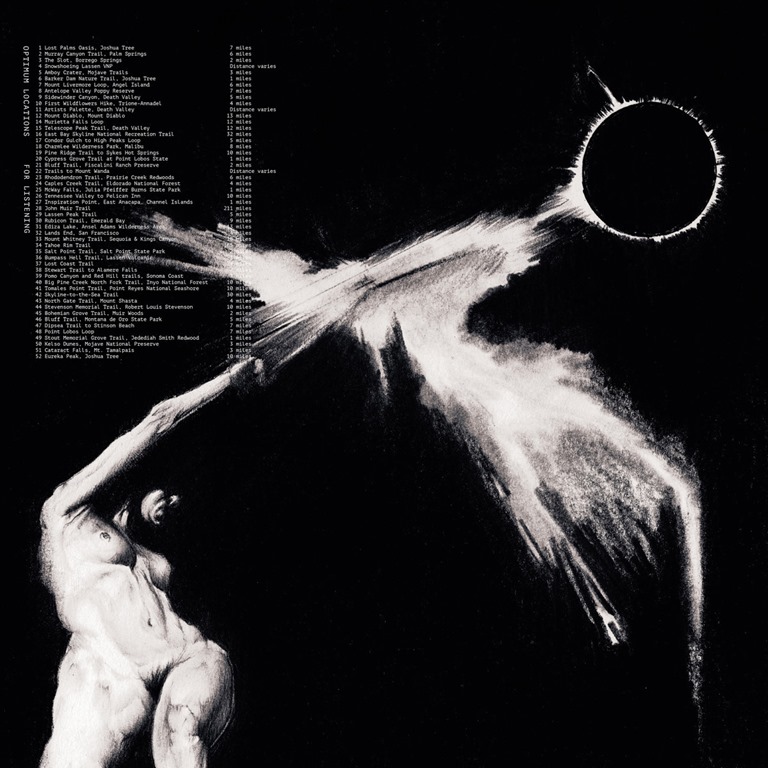
Tahoe is the second album from Northern California producer Fred Welton Warmsley III in his solo guise as Dedekind Cut. It’s named after the mountain lake town where he now resides, and it’s fitting that an album of such grandeur should relate to a vast expanse of natural beauty. For all the ruination mankind has inflicted on nature, however badly we as a species have damaged and decimated resources and scarred the landscape, hunted species to extinction and generally fucked everything up, the fact remains that nature will always win.

Over millennia, ice ages haves come and gone, mountains have emerged and heatwaves have created new deserts. We may have all the television, cars, space stations and satellites, but nothing man-made can protect against a volcanic eruption, flooding, landslides, mudslides, avalanches, blizzards, wild fires, earthquakes and tsunamis.

The eight compositions on Tahoe are centred round drifting, wafting drones and soft-edged, vaporous tones. It’s as ambient as the breeze, as the rippling of water in a slow-moving river. It’s the sound of drifting clouds, of tranquillity. Tahoe is an album of space, of distance, of earth and air.

It’s on the album’s three longer tracks, each of which extend beyond ten minutes that Tahoe reveals the full extent of Warmsley’s attention to detail and nous for texture ad layering. The second of these, ‘MMXIX’ picks up the pace and accentuates the dramatic tension, and it’s surge and swell arrives quite unexpectedly after the mellowness that is the title track. It’s overtly beaty – shuddering, juddering, thuds hammering dense and muddy through a bassy cyclone and booming low-end notes that hover into the abyss dominate – and the piece is just more up-front overall. Contrasts abound and the textures become more prominent as the track progresses, with skittering melodies and twittering notes flitting in all directions. The third, ‘Hollow Earth’ stretches our dark rumbles over turning air and a sense of foreboding over twelve and a half minutes, with interweaving lattices of aural contrails providing the core tone of the piece.

For all of its space, the exploratory sonic expanses conjured by soft, sweeping tones, and for its cinematic softness, Tahoe is not an ambient album. It is not background or wallpaper. It’s an engaging, detailed and in places gripping piece of work. It’s really quite something else.

AA

Dedekind Cut – Tahoe

Crónica 138 – 6th February 2018

Christopher Nosnibor

Mark E Smith has died. It shouldn’t come as a surprise. In fact, the surprise should be that he didn’t die sooner. But I can’t help but be shaken by the news. It doesn’t feel appropriate to post any music reviews: my social media streams are aclog with tributes to Smith, and it feels wrong even to add to the noise. Part of me feels I should revisit a slew of the old favourites, but they’re so engrained in my mind, I don’t really need to hear them, especially not now.

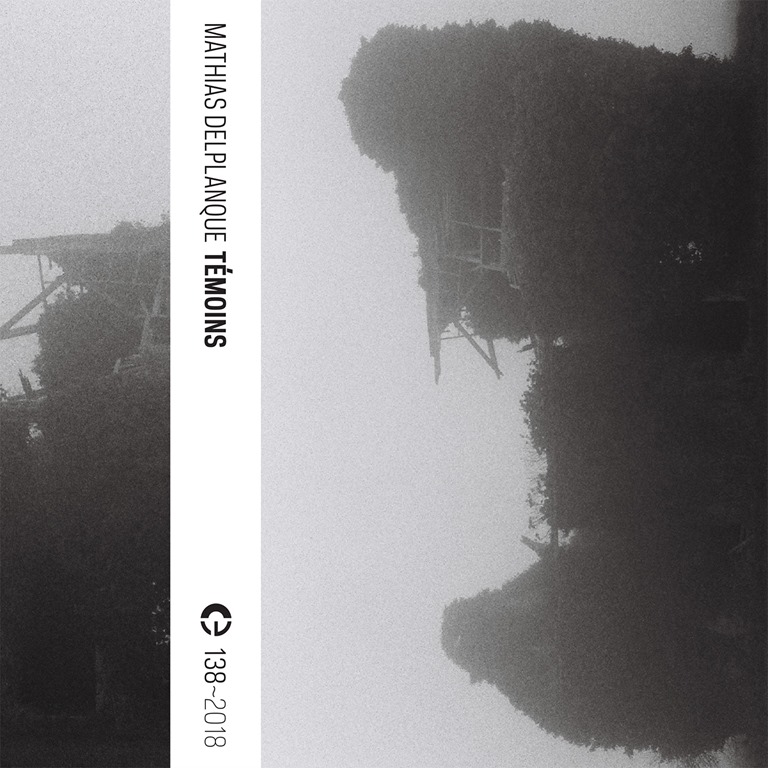
And so I immerse myself in Témoins, the latest offering from Mathias Delplanque, whose work I’ve previously enjoyed. The three sections of Témoins (including the digital bonus track ‘TU)’ are a world away from the ramshackle three-chord stomps and lyrical derangements of The Fall: these instrumental works – sound collages laid over difficult hums and drones – present a very different kind of abstraction. And it reminds me, vitally, that life goes on. Music goes on.

The sparse arrangements – often, they barely feel like arrangements – are as much about space and silence as sound. The sounds – the whirrs, the drones, he hums, the hisses – are interrupted, disrupted, broken – by seemingly random elements. Birdsong, lowing cattle, slamming doors, clatters and bangs, thumps and crackles. These are amidst the irregular extranea which form the fabric of the material of Témoins.

The atmosphere shifts and moods emerge most unexpectedly from seemingly innocuous sound pairings and juxtapositions. Late in the second piece, ‘Bruz’, thin, tentative notes hover long in the air, needling the senses while unexpected bumps and knocks at close proximity are enough to make you jump. Muffled conversation carries on all around. Here, Delplanque expertly recreates the conditions and sensations of the anxiety of agoraphobia. It grows chill, and it’s difficult to not feel tense are wary. On ‘TU’ – by far the shortest piece running for less than ten minutes – a ghostly piano drifts into the damp air while scraping footfalls combine to create an unsettling, spine-tingling atmosphere.

With Témoins, Mathias Delplanque delivers an hour of understated yet quietly compelling ambient dissonance.

AA

Crónica138_front

Unknown Pleasures Records – 14th February 2018

Christopher Nosnibor

Given the band’s name and that of the label they’re signed to, it’s only fitting that they’re exponents of bleak synth-driven post-punk. Sure enough, as the Italian five-piece’s biography notes, Stefano Bellerba (vocals, guitar), Leonardo Mori (synth), Matteo Luciani (bass), Saverio Paiella (guitar), and Daniele Cruccolini (drums) formed in 2010, and united over their love of Joy Division, The Cure, Nine Inch Nails, and Depeche Mode. The bio adds that ‘their music is also strongly influenced by Bauhaus, Siouxsie and the Banshees, Yeah Yeah Yeahs, Japan, The Damned, Interpol, Suicide, CSI, CCCP, and Massimo Volume.’

One of my favourite poems of all time is Philip Larkin’s ‘This be the Verse’, and the fact they put it to music for single release in the summer of 2017 -and made a decent job of it – got me on-side ahead of the new album.

The album in question, Santa Sangre is a lot more guitar-orientated and edgier: while the synths are still very much in the mix, the sound is dominated by brittle, metallic-edged guitars drenched in reverb and flanged hard. It’s the sound of 1982-1985. I’d be hesitant to use the term ‘gothic’ or any variant, despite the snaking atmospherics of tracks like ‘Rejoice’, with its strolling bassline and vocals all but lost in an ocean of echo, which allude to the likes of The Danse Society and acts of similar vintage.

I make no apologies for being an old goth (although I’m not nearly old enough to be a proper old goth, having been born in 1975 and only discovered alternative music in any form in 1986/7). Similarly, I make no apologies for not being a purist, or for my knowledge of second-wave and beyond bands being limited. There’s so much else out there in the musical sphere. Yet, at the tail end of the year, feeling weary and wintery and withdrawn, I find myself here – as I did late last year, and the year before – with a crop of albums which betray gothier leanings which leap out as among the strongest and most compelling releases I’ve received all year.

Lead single, ‘Circle’ was a blast of buzzing bass and squalling guitars, with elements of The Jesus and Mary Chain and A Place to Bury Strangers, pitched with chilly synths and vocals with a grippingly desperate edge. It’s placed up front in the track listing, and serves the purpose of demanding the attention with its urgency and serrated edges.

Snaking basslines, choppy guitars and tribal drumming abound, but there’s a pop edge to a number of the songs: ‘Blown Away’ melds fractal guitars to an insistent flanged bassline that’s as pure Cure as the synths which eddy at a respectful distance in the background. There’s a certain bounce – and even catchiness – to the richly-layered shoegaze-goth of ‘For Every Flaw’.

When they do lugubrious, it’s as sparse and bleak as anything on Faith, and when they do slow-build, they really go for delayed gratification, forging a dense atmosphere along the way.

Santa Sangre is taut, tense and crackles with dark energy.

AA

Japan Suicide - Santa Sangre (cover)

Southern Lord – 24th November 2017

James Wells

When you’re presented with an album containing ten tracks, where only two clock in at over two minutes, you know it’s likely to be a pretty direct attack, and you don’t need a lengthy dissection to get the guts. In fact, you don’t need words, you just need to feel it kicking you in the guts, over and over.

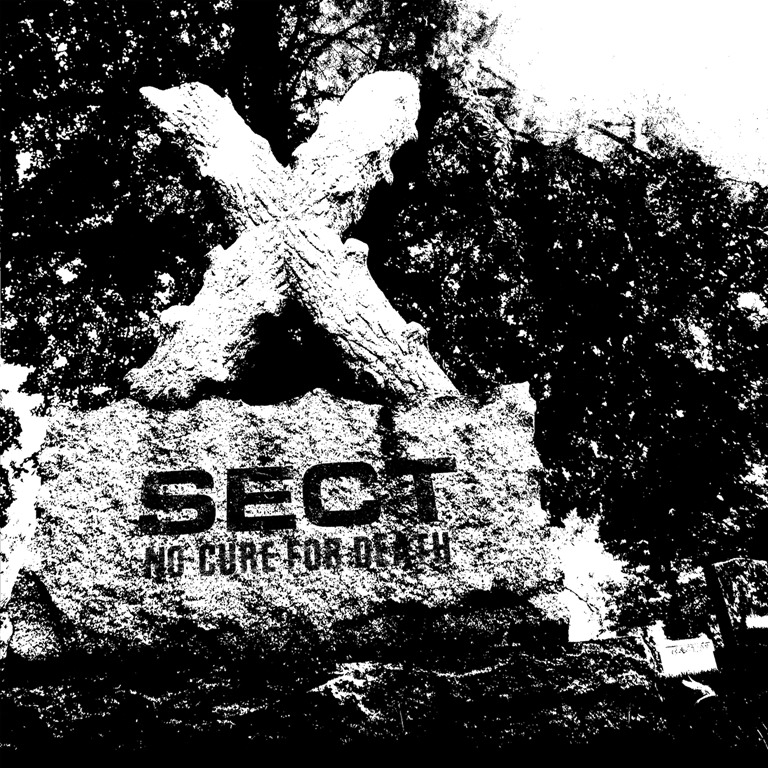
No Cure For Death is a gnarly, guttural, snarling mess of feedback and noise. Savage, brutal, unrestrained noise: that’s what No Cure For Death throws down from beginning to end – not that it’s a particularly long period between the two markers.

Death, decay, despair ooze from every pore of this feedback-soaked frenzy of blistering noise. It’s dark, dingy, a seething miasma of gut-churning overloading, overdriven loathing of all things. It’s the world we live in, of course: it’s fucked-up and ruined. It’s everything it should be.

AA

Sect cover image for Haulix

Sargent House – 22nd September 2017

Christopher Nosnibor

Chelsea Wolfe is one of those artists who seems to continually grow with every release, and 2015’s Abyss was something special: a grand, powerful, and intense musical work that reached the parts other albums cannot reach. It’s fair to say that expectations for Hiss Spun were set high as a consequence.

As the accompanying blurb tells us, ‘the album was conceived as an emotional purge, a means of coming to terms with the tumult of the outside world by exploring the complexities of one’s inner unrest’.

Chelsea gets down to conveying this turmoil from the first bars: opener, ‘Spun’, is a throbbing deluge of dense, low-tempo, Godfleshy, bass-centric grind, a seething surge of low-end noise with an overloading, freewheeling lead guitar that’s not so much a solo as an out of control rollercoaster of fretwork that heaves and lurches every which way as if uncertain of its own direction but desperate to find a route to the end. ‘Particle Flux’ is also centred around a tectonic, subterranean low-end pulsation, and builds to a multi-layered, multi-faceted crescendo.

Single cut ’16 Psyche’ has the epic qualities of some of the strongest tracks from previous album Abyss – ‘Iron Moon’ in particular – and ‘The Culling’ repeats the trick of bursting into a crushingly powerful bloom from a quiet, delicate bud. But while nailing choruses of immense scale, these tracks also pound hard, sonically and emotionally.

Placing Hiss Spin side by side with Abyss is instructive: this latest work marks a considerable shift from the brooding industrial-edged gothic folk of its predecessor toward a much more metal-orientated sound that’s not only heavier and more abrasive, but more overtly challenging and confrontational. In fact, everything about Hiss Spun is more.

Following a heavy synth drone intro, ‘Vex’ brings blistering guitar dynamics and a shoegaze atmosphere to a twisted, reverb-soaked vocal that’s simultaneously emotion-rich and curiously detached. ‘Scrape’ draws the curtain with a dark, murky grind that’s as intense as it is dense, and Chelsea’s voice soars higher than ever, wracked with desperation. Thunderous tribal drumming blasts through the squalling guitars to render an imposing finale.

The production on Hiss Spun is immense. The percussion is enormous, every snare hit an explosion, every bass thump enough to trigger an earthquake or tsunami. Every beat, every note, strikes deep into the soul and drags at the deepest levels. To explain precisely how and why Hiss Spun resonates so deeply would be to ruin its magic: this is an album which connects subconsciously, subliminally, pulling as it does between fragility and fury, and with such stunning grace, and it drives, but as a slow pace.

Instrumentally, the dynamics are breathtaking. And never has Wolfe sounded so raw, by turns so fragile and so powerful, channelling emotions to utterly devastating and bewildering effect. Superlatives are inadequate: Hiss Spun is an album so strong as to be almost overwhelming and marks, my a mile, a new career high-point.

AAA

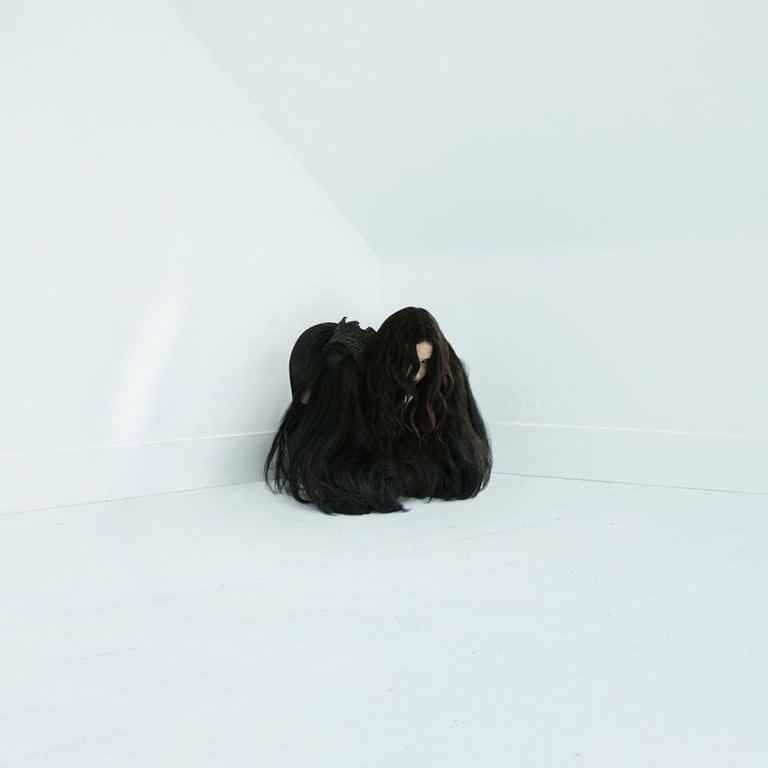
Chelsea Wolfe - Hiss Spun Cover 3000x3000 300 dpi (1)