Posts Tagged ‘Dubstep’

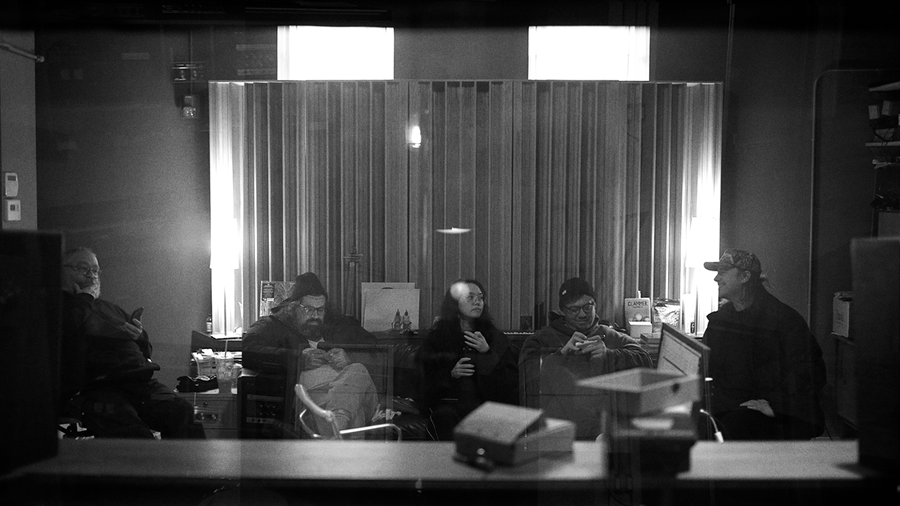
The Body and Cel Genesis have shared ‘To Be Eviscerated,’ the final preview of their collaborative debut, Whole Wide World, out November 13 via Thrill Jockey.

Following previous singles ‘Candy Crush’ and the title track, ‘To Be Eviscerated’ opens with rattling toms and ominous electronics before erupting into a barrage of blown-out noise, impassioned vocals, and restless percussion. It captures the tension at the heart of the Portland and Oakland projects’ collaboration: creation itself becomes an act of defiance, a way to carve out something meaningful from a world facing oblivion.

About the track, Chris says “Love this track, composed of an insane array of genre elements, from industrial textures to dubstep-inspired subs, roto toms to gabber kicks, all married with three distinctly horrifying vocals. An unhinged, dynamic, yet cohesively powerful banger. Perfectly captures the collision of elements and influences represented by this exceptional collaboration.”

Hear it here:

AA

The collaboration took shape on tour, with few rules established ahead of time. Cel Genesis’ maximalist compositions and aggressive editing collided with The Body’s improvisational instincts, allowing both projects to push their respective approaches into unfamiliar territory. Drawing on trance, distortion, and experimental electronics, the resulting album is driven by the visceral interplay of dual drumming from Lee Buford and Nick Cowman, alongside the combined force of both groups’ vocals.

Recorded at Machines with Magnets by Seth Manchester, with additional recording by Andrew Oswald in California, Whole Wide World evolved over two years of recording and meticulous editing. Some songs began with electronic beds generated by Cel Genesis, while others grew from live drums, with each group reshaping and reimagining the material.

Whole Wide World is dense and heavy, yet made with joy. Its songs confront today’s harsh realities through the eyes of an unrelenting optimist reckoning with the death of possibility itself.

AA
Body and Cel

Photo: Chris Danko

Ici d’ailleurs – IDA119 – 30th March 2018

Christopher Nosnibor

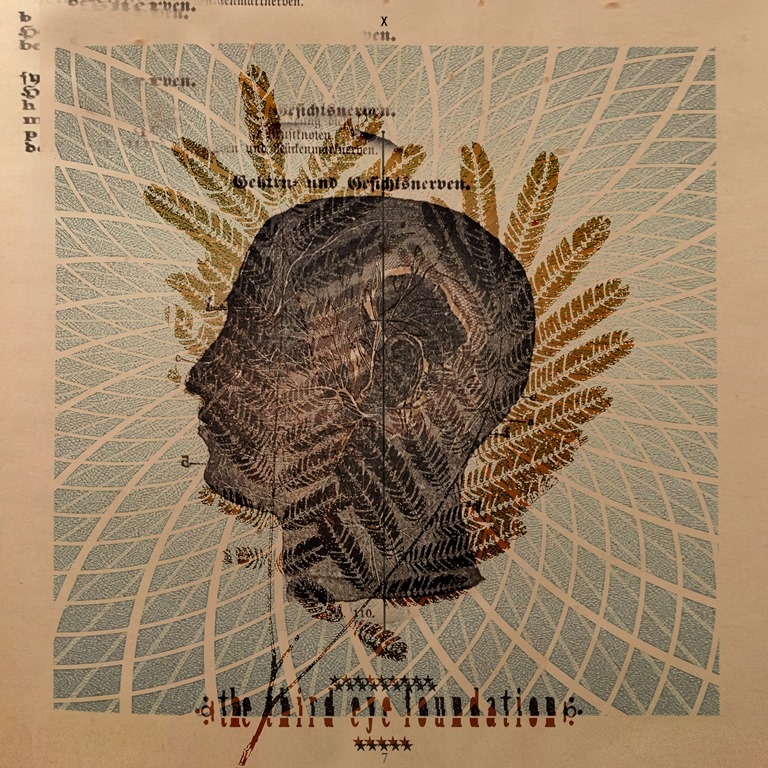
The lengthy blurb which accompanies the latest release from Matt Elliott’s Third Eye Foundation, active since 1996, covers a lot of ground. A lot has happened since Semtex, the expanded reissue of which I ruminated on a couple of years ago. And yet. Wake the Dead may not match the violence, but still packs a restrained intensity.

‘Words have no place here except to confuse matters a little further. And the 40 minutes of throbbing, hypersensitive dubstep that make up the record are not aimed at sending a message to the mind. The intention is to make souls dance, to unite them and to remind us that, despite our choices and individual convictions, we are all components of the same whole and whether living or dead, we are connected forever.’

Increasingly I find myself returning to my own reactions and responses to music, and the separation between the objective and the subjective. Any engagement with music must necessarily be subjective. Dismissing chart music because it’s vapid crap is still a subjective opinion, given that objectively, it serves a social (and economic) function and is invariably extremely well-executed and produced in technical terms, and to complain about a lack of emotional depth or lyrical complexity may on the surface appear to be an objective criticism, but a listener’s lack of connection with it is subjective. Flimsy radio-friendly fodder is entertainment: it’s music that strives to achieve different ends which is art.

Wake the Dead, while pitched as having the purpose of ‘making souls dance’, is very much art in that it exists to evoke a deeper emotional response than ‘it’s got a good beat.’ Not that the beats aren’t good, but the slow, deliberate rhythms are more of the variety one nods to rather than getting down to.

The title track sets the scene and the tone, with majestic, sweeping tones and soaring choral voices which rise towards the heavens above a slow, hypnotic semi-tribal beat has a rich resonance. The smooth, soothing cello is countered by occasional trills of feedback, creating a subtle but essential dissonance which alters the mood considerably. Gradually, over the course of the track’s thirteen-minute span, low-churning bass frequencies begin to throb and beats become stronger but also more fractured as looping echoes collide against one another disorientatingly.

‘The Blasted Tower’ combines gliding strings with stuttering, rapidfire fills, a balanced juxtaposition of soporifically soothing and twitchy tension, before ‘Controlled Demolition’ slides into murkier and rather heavier territory. With the structures less defined and a cacophonous collaging of sound pitched against warping bass tones, it makes for a cerebrally-challenging passage that culminates in a collision of brooding strings and extraneous noise.

The album’s only words are to be found on the shortest track, ‘That’s Why’, with a sampled shout of ‘Fucking pigs! I hate the fucking pigs!’ looped and mangled and fucked to fade. It feels a little incongruous, but provides a well-placed change in both tone and tempo ahead of the final cut, which takes the form of an elongated, wheezing drone graced with wordless female vocals which echo an abstract spiritual transcendence.

The six compositions segue into one another to form a continuous forty-minute suite. The atmosphere is dark, but more the darkness of twilight and shadows than pitch black small hours. There are moments where it feels a shade bleak, but these are contrasted by moments of uplifting beauty; the overarching sensation is one of a haunting feeling. As the sound fades to silence, the feeling of immersion hangs for a time. There’s no way to place that sensation in an objective context: this is about how the abstract language of sound touches the subconscious.

AA

IDA119_front