Posts Tagged ‘Cruel Nature Records’

Cruel Nature Records – 25th April 2025

Christopher Nosnibor

Limited to 30 cassette copies worldwide, which sold out in advance of the release date, anyone wanting this now will have to satisfy themselves with a stream or download. Tapes really have become cult cool again of late. Raised on vinyl, the cassette was my format of choice in the mid- to late-eighties, until I got a CD player for Christmas in 1991, although I continued to buy vinyl through the 90s because an LP cost about £8 whereas a CD cost around £12. I loved tapes, and I especially loved being able to copy stuff to tape, and do it so cheaply. It was a long time before the advent of the technology to rip and burn CDs.

But for a time, I would buy albums on tape, often in Woolworths or WH Smiths and sometimes from Britannia Music when my parents had made enough purchases to earn a free album – because a tape was about eight quid and you could stuff it in your Walkman and sometimes, perhaps, get it played in the car when going on holiday. Although I recall purchasing Children by The Mission in 1988 on the same trip my parents took me to buy a snake, and my mother moaned and asked if we could have ‘the nice man’ back on (meaning the Bruce Springsteen album I’d been listening to before discovering The Sisters of Mercy and The Mission.

So, the status of the cassette release has certainly changed – again, and one can’t help but wonder if it’s only a matter of time before the cassette single makes a comeback.

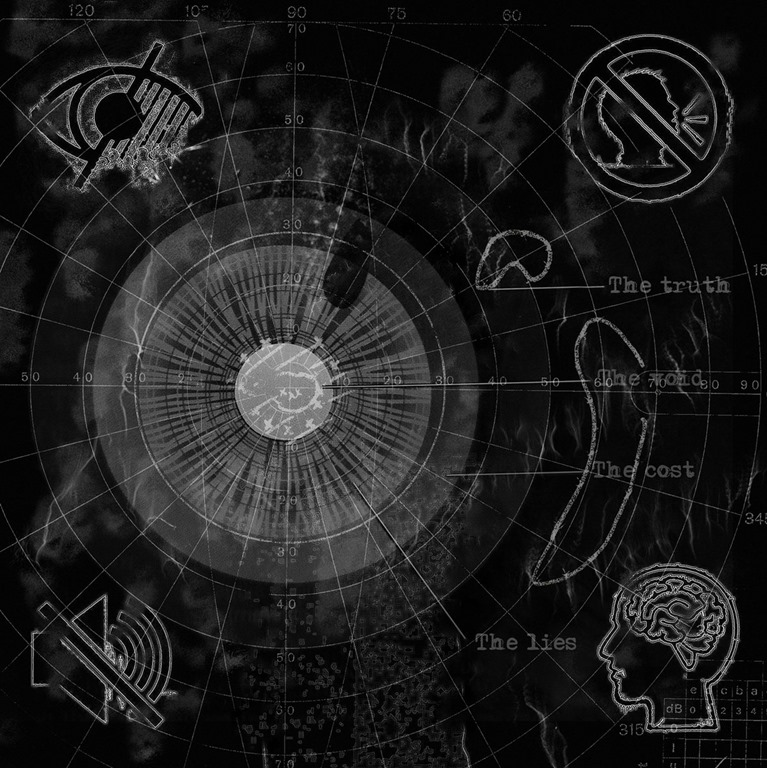
Before the Skeletal Dance Of Our Festering Jesters is… bassy. And with good reason for certain. As the Bandcamp blurbage details, ‘Blind Johnny Smoke was born severely deaf in both ears, and started to lose his vision as a teenager with only a few degrees of central vision remaining and still decreasing. Then at the end of 2023 he experienced a sudden loss of his remaining hearing on his left side leaving him profoundly deaf. This posed huge questions for him, what life will be like going forward, how this would change how he felt about the nefarious shit going on in the world around him, and whether he was still equipped to be able to express himself through music. With the aid of The Juddaman, the answer lies within the tapestry of Before the Dance of our Festering Jesters.

Musically, the album is almost obscenely focused on bass frequencies, which coincidentally are the only sounds Blind Johnny can detect without hearing aids. There is a dub sensibility that the band have always dabbled with, but here it weighs in heavily alongside trademark percussive programming and unmusical cut up noise. The accompanying words are as angry as ever and, after a few years of Blind Johnny performing on the spoken word circuit, the lyrics have depth and trickery sitting alongside blunt vitriol.’

‘Sensory Denudation’ presents a groaning mass of distortion, and the spoken word vocals offer up comparisons to Pound Land and Sleaford Mods, and nothing about this is easy on the ear as ambience and trudging industrial noise grind away. It’s the Mods and Benefits who come to mind during the stark electronic grind of ‘Safety First’ and ‘Words Without Echo’, which also introduces a Public Image kind of slant, and Before the Skeletal Dance Of Our Festering Jesters brings together post punk and ranty rap with hip-hop and industrial and spoken word. It’s hard going if you’re wanting tunes, but ‘Ghouls’ is perfectly representative of the low-tempo, thudding noise approach the band have taken to the creation of Skeletal Dance.

‘This is All I Hear Now’ is pure rant, raw and aggressive, the ‘blah, blah, blah’ refrain snarled over a thick, woozy bass, before the six-minute ‘Party On’ turns its focus on the UK government’s COVID lockdown ‘partygate’ shenanigans and dubious contracts for PPE as dense, industrial percussion builds, and I’m reminded of Test Dept’s The Unacceptable Face of Freedom. It’s pretty potent stuff.

Running beyond seven minutes, ‘Crooked’ is the album’s centrepiece, a murky postindindustrial wasteland of a soundscape dense in distortion, crashing beats trudging hard through an unusually melodic chorus which provides the album’s lightest moment at the point it was least expected. Sorry for the spoiler there. It’s back to seething and sparse, throbbing techno bass and thumping beats on ‘Behind Closed Doors’, a bleak slice of dark dance that wouldn’t have been entirely out of place on a Wax Trax! release in the late 80s or early 90s.

‘Laughter’ offers a sliver of illumination in this overall dark offering, although it’s very much relative and it’s a cold, mirthless cackle than an uproarious belly-shaker: a piano-led piece of Numanesque electropop, it’s stark but structured.

Everything builds perfectly for the monster finale, the twelve-minute ‘Satellites, a low, rippling drone crawling and billowing from the speakers in the most lugubrious and ominous fashion. A chorus of voices rises up, dissonant but united, before fading out in a waft of reverb, to be replaced by slow-smouldering synths and a sparse but insistent beat that strolls its way to an almost tranquil horizon.

Before the Skeletal Dance Of Our Festering Jesters covers a lot of ground, and while much of it is pretty desolate, it is not an album entirely bereft of hope.

AA

a0086783039_10

Cruel Nature Records – 4th April 2025

Christopher Nosnibor

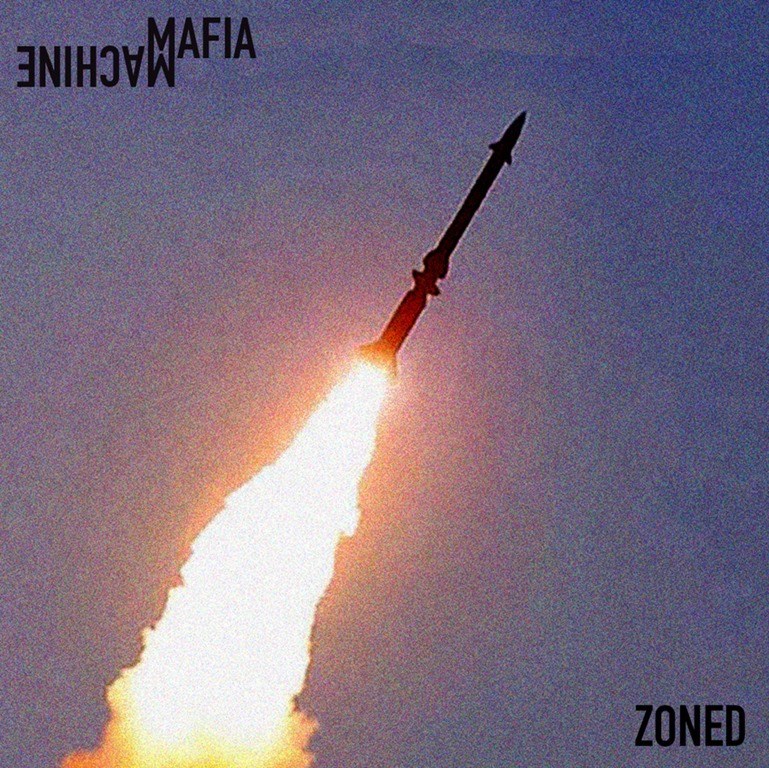
Machine Mafia may be largely unknown, but the duo’s members have some pedigree, being Adam Stone of Pound Land and Jase Kester (Omnibadger/Omnibael/Don’t Try/Plan Pony), all regulars at Aural Aggravation. Jase joined Pound Land’s ever-shifting lineup as the (then) sixth member in 2023 for a handful of live shows, and contributing additional noise to Mugged (because it needed more noise). Deciding to collaborate in early 2024, they slipped out a couple of self-released EPs, which as the notes which accompany Zoned observe, ‘more or less went under the radar at the time’ – which is why they’re getting a second go here, with Zoned being a compilation of those EPs plus four new tracks, or a new EP packaged with the previous ones, depending on your perspective. The tracks aren’t in their original order of release, and have bene resequenced, presumably for the purpose of creating a flow that’s sonic rather than chronological. And so it is that the album starts with ‘Killzones’, arguably the most overtly Pound land-like track on the album, which eases fans of Pound Land into the world of Machine Mafia nicely, or will otherwise alienate pretty much everyone else, unless they’re on the market for something that sounds like Sleaford Mods in collaboration with PiL while monged on Ketamine.

They describe themselves as ‘a voice/electronics duo in the grand tradition of Suicide, Silver Apples, Soft Cell, Pet Shop Boys etc.’ And it is indeed a grand tradition, to which one would reasonably add Sparks, Air, and Erasure, and even the final incarnation of Whitehouse, although what this list ultimately achieves is to demonstrate just how wide-ranging the electronic duo format stretches in terms of style. I very much doubt you’d find these guys donning big hats or flamboyant costumes and kicking out a set of brassy dancefloor-friendly pop bangers, at least on the evidence of the thirteen tracks on offer here. They recount that their first gig was ‘in a small craft ale bar in the Staffordshire town of Leek, receiving a ban for high decibel levels and foul language’. This sets the bar of expectation, and in this context, Zoned does not disappoint.

As I suggested in my write-up of the Killzones EP, the electronic duo they share the most common ground with is Cabaret Voltaire in their early years, mashing up samples and noise in a Burroughsian cut-up style, and churning out gnarly noise that sits between Suicide and Throbbing Gristle. This is particularly true of the collage chaos of ‘Lecture 0.3B’,

But then, ‘F.O.S’, is a blast of uptempo, lo-fi, bass driven drum-machine propelled hardcore punk strewn with feedback and snarling aggression, and ‘Where’s The Money Gone?’, from the Money Gone EP is a filthy racket with massive blasting beats which lands in the space between The Fall and Big Black, powering away at a motorik groove for the best part of six minutes while Stone hollers thickly and ever-more desperately ‘where’s the money gone?’ Well, we know it’s not gone into public services, but there some mega-rich cunts swanning around and jetting into space. And has anyone seen Michelle Mone since she sailed off on her multi-million quid yacht?

‘England’, originally released on Industrial Coast’s ‘Rock Against Racism’ compilation is very Throbbing Gristle, in the (pulsating) vein of ‘Very Friendly’.

Of the four new cuts, ‘Crabclaw’ invites comparisons to Selfish Cunt’s ‘Britain is Shit’, and this may not be entirely accidental, a stinking snarling assault on culture and the senses, with an overloading gritty bass and vitriolic vocals ranting in a mess of distortion and reverb over the murky morass of a musical backing. It’s the sound of frustration, it’s the sound of anger mashed together with despair. ‘Jackpot’, meanwhile, is like John Cooper Clarke spouting over a segment of Metal Machine Music. All the while, a drum machine and throbbing bass pulse away relentlessly: this is Sleaford Mods for real punks. ‘Human Like’ revisits the dubby tendencies first explored with ‘Killzones’, and it’s a dark, sprawling cavernous hell of reverb atop an organ-shaking bass, again bringing together PiL (think ‘Theme’) and Throbbing Gristle (think ‘What a Day’). It’s meaty, and then some, and crunches and grinds away for a full six echo-soaked minutes. Closing with the eight-and-a-half-minute megalith that is ‘Outside My House’, they go full Whitehouse, with a booming bass that’s positively weapons-grade density, over which Stone delivers a rabid, drawling rant from the perspective of a crabby right-wing old-timer while electronic extranea bubble and eddy around. It’s utterly brutal, and completely uncomfortable, and this is the brilliance of Machine Mafia. Gnarly, nasty, uncompromising, Zoned is not friendly, and it will leave you feeling drained, harrowed, punished. Mission accomplished. You’re not supposed to like this.

AA

a2183471837_10

Cruel Nature Records – 28th March 2025

Christopher Nosnibor

Pound Land have evolved, expanded, metamorphosed, mutated, from two guys cranking out two-chord dirges, to a shifting lineup of musicians cranking out some wild freeform jazz over murky two-chord dirges. And now we learn that they’ve returned to their roots for this latest offering, their third of the year, no less. As they put it, ‘Can’t Stop sees founding Pound Land members Adam Stone and Nick Harris return back to the gratifying freedom and eccentricity of DIY recordings and lo-fi audio projects. Nine diverse tracks spread over half an hour, this short experimental collection nods to Pound Land’s absurdist ‘kitchen-sink punk’ past’.

Can’t stop? Or won’t stop? Not that they should, either way: Pound Land’s mission, it seems, is to proliferate their dingy bass-driven racket as far and wide as possible, and the world – as unspeakably shit as it is, especially right now – is in some small way better for it.

“Got my joggers on / got my flapjack / got my shaven head,” Stone mumbles laconically as if half asleep, over some trickling electronics at the start of the opening track, ‘Armed with Flapjack’. Then some dirty, trebly guitar clangs in and everything slides into a messy mesh that’s neither ambient nor rock, providing a seething, surging drone by way of a backdrop to the spoken word narrative, which is only partially audible, but seems to be a gloriously mundane meandering tale involving, essentially, leaving the house and going about ordinary business.… But it actually turns out to be more of an internal monologue of an anxietised mind. “I’m alright, I tell myself that, I’m gonna be ok, I can do this… bus, and train, take one thing at a time…” It’s really quite powerful in its way.

And staying with the mundane, ‘Watching TV’ is a spectacularly sloppy-sounding celebration of the mindrot pastime that starts out sounding almost sensitive and with a dash of country in the mix, but slides into soporific sludge, before the choppy ‘Lathkill’, which clocks in at just under two and a half minutes, shifts the tone again: it’s a classic Fall rip, or perhaps Pavements ripping The Fall, a sparse, lo-fi four-chord effort which just plugs away repetitively.

Things get really murky with the pulsating ‘Stuff’, where Stone’s meandering contemplations ring out through waves of reverb, and the whole thing feels – and sounds – very Throbbing Gristle. Dark, muffled, monotonous, it grinds and clatters away, a thick sonic soup, and it’s as primitive and unproduced as it gets. It’s not pleasant, but it works perfectly: it needs to be rough, raw, unfiltered. There’s simply no way this act is ever going to have commercial appeal, and that’s perfect: Pound Land are made for limited cassette releases and playing tiny venues to audiences who will be split roughly down the middle between absolutely loving them and wondering what the fuck they’ve stumbled upon. Pound Land really aren’t for everyone. They’re the anti-Coldplay. They’re for people who relish being challenged. ‘I Spy’ brings that challenge straight away, being different again, the rawest, scratchiest, scratchiest, most abrasive no-fi-punk you’ll hear all year.

Things get even more jarring and difficult towards the end of the album. ‘Janet’s Here’ should be a breezy interlude, announcing the arrival of a guest, but instead it’s tense because the delivery is straight-up demented, and ‘Affordable Luxury’ is a rabid rant, again reminiscent of Throbbing Gristle. It’s uncomfortable, the drawling vocal secondary to the warping drones and scratchy experimentalism. Stripped-back not-quite acoustic ‘EGG’ is a trick: again, it has hints of The Fall doing ‘sensitive’ – like ‘Time Enough at Last’, for example – and it’s delicate, but it’s also not.

And this is the thing. Can’t Stop is their most wide-ranging and accessible album to date. And yet… well, it’s not really accessible, for a start.

Can’t Stop is challenging in new ways, too. Working with so little, they’ve pushed the songwriting in divergent directions, making for an album that reaches in all different directions, while, of course, retaining that primal Pound Land core and purposefully simple, direct approach and aesthetic. I love it, but I expect many will hate it. And that’s the way it should be. It’s peak Pound Land.

AA

a3349026030_10

Cruel Nature Records – 21st February 2025

Christopher Nosnibor

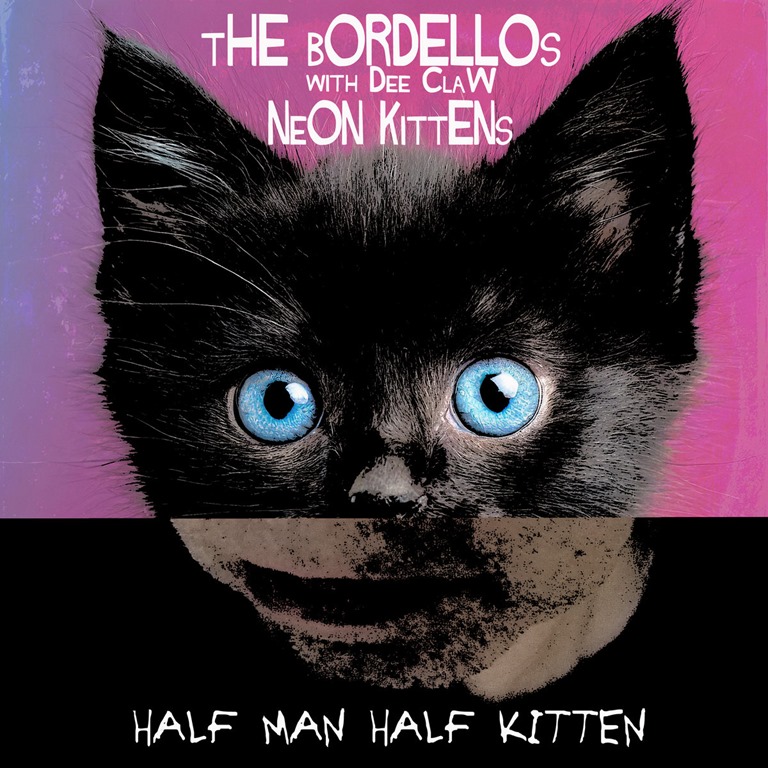
This split release has a lengthy backstory, which is given in full on the label’s Bandcamp page – but the short version is that when York’s Neon Kittens (how had I not heard (of) them, given that they appear to be from round my way and absolutely my bag? I feel ashamed, and fear I cannot even remotely claim to have the finger on the pulse of my local scene right now – but still, better late than never, right?) approached The Bordellos about a collaboration, the latter, having taken an eternity to only half-finish their current album-in-progress, some ten years after the release of will.i.am, you’re really nothing, offered everything they had for a split release. And lo, this is it.

I suppose the eight songs Neon Kittens have contributed here provide a solid starting point to their rapidly-expanding catalogue, and being paired with The Bordellos works a treat. Both espouse the same lo-fi DIY ethic, with a certain leaning toward indie with a trashy punk aesthetic.

That the cassette edition sold out on advance orders hints at the anticipation for the release: for, as The Bordellos describe themselves as being ‘ignored by millions, loathed by some, loved by a select few’, when you’ve got a small but devoted following, they get pretty excited for new material.

‘Set Your Heart to the Sun’ is perfectly representative of their scratchy, harmony-filled indie – kinda jangly, a tad ramshackle, but direct, immediate. Dee Claw’s airy vocal contributions really lift the sound and raise the melodic aspects of the songs. Not all of the songs have full drum-kit percussion, often favouring tambourine or bongos or seemingly whatever comes to hand, and more than any other acts, I’m reminded of Silver Jews or really, really early Pavement – those EPs that sounded like they were recorded on a condenser mic from the next room with more tape hiss than music, but still undeniably great tunes. And yes, they really do have great tunes – overall, they’re pretty laid-back in their approach to, well, everything: remember when ‘slacker; was a thing? Yeah. In place of polish, they have reverb, and these songs tickle the ears with joy.

Neon Kittens bring a rather denser sound and a greater sense of urgency with the buzzy, scuzzy ‘Better Stronger Faster’. A hyperactive drum machine stutters and flickers away beneath a sonic haze of fuzzy guitar: there are hints of Metal Urbain crossed with The Fall and Flying Lizards in the mix, while ‘All Done by Numbers’ brings Shellac and Trumans Water together in a head-on collision – and one suspects any similarity to Shellac’s ‘New Number Order’ is entirely intentional from a band who recently featured on a Jesus Lizard tribute. ‘Cold Leather’ presents a spoken word narrative over a lurching, lumbering morass of discord, held together by the whip crack of the snare of a vintage-sounding drum machine.

The majority of their songs are around the two-minute mark, and crash in, slap you round the chops, and are done before you really know what’s hit you. ‘Deaf Metal’ is a work of beautiful chaos, constructed around a thick, rumbling bass and rolling drums., while the rather longer ‘White Flag’ is almost a stab at a grunge-pop song, while the discordant clang of ‘Sailing in a Paper Boat’ is absolutely The Fall circa Hex Enduction Hour: lo-fi post-punk racket doesn’t get much better than this.

AA

a3951021685_10

Cruel Nature Records – 21st February 2025

Christopher Nosnibor

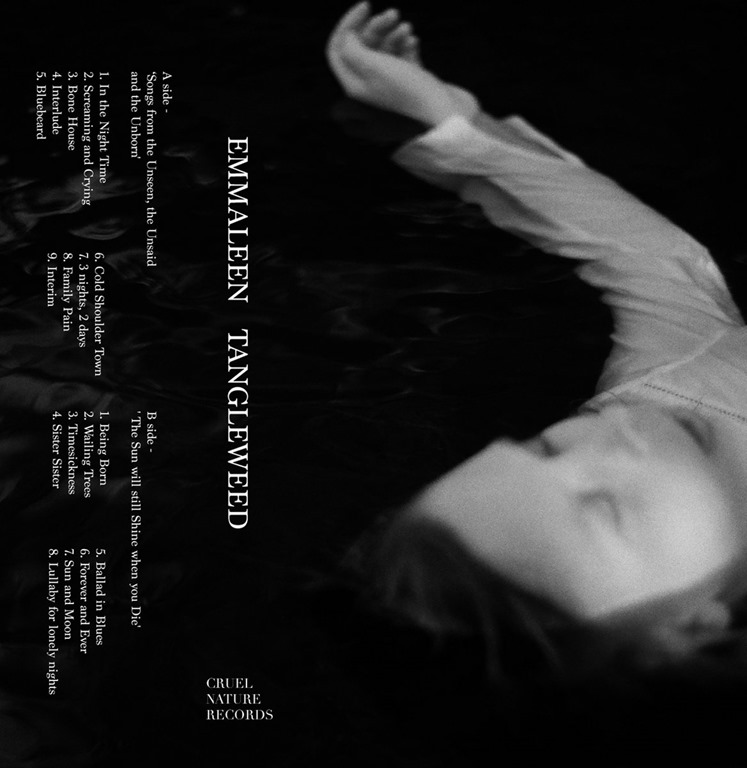
Sometimes, I find myself reading – and returning to – the write-up for an album and thinking ‘Yes: I’m going to like this… but perhaps not tonight. I don’t know if I’m ready or in the mood’. This immense release, which finds two previously-released album reissued as a single package consisting of seventeen pieces, by Namibian-born Emmaleen Tangleweed is one such example. Listening to new music daily doesn’t mean that writing about it is always easy, and sometimes, I find myself feeling daunted by the prospect, and asking myself ‘how could I do this justice?’

Here’s the preface, which accompanies the release on Bandcamp:

Emmaleen Tangleweed’s music is more accurately described as a channeling than a song. Summoning stories of lost souls too tortured to let go, she cries and yearns as they no longer can, and yet, a silver thread of faith binds them. Themes of death, relationship and lingering hope imbue the listener with an eerie feeling of communion, of conversing with souls who have crossed the great divide.

Painting a visionary picture for the listener the stories contain hidden characters and everyday dramas played out in a time capsule of song giving the words weight in the earthly as much as in the ethereal they are delicately plucked from.

There’s also the fact that I feel obliged to listen to a release the whole way through, uninterrupted, so as to experience it as intended, not as people dipping in and out and skipping through playlists do, meaning that two albums back-to-back is quite a commitment. Anyway.

Songs From the Unseen, The Unsaid And The Unborn (Tracks 1 – 8, 10) was originally self-released in November 2022, while The Sun Will Still Shine When You Die (Tracks 11 – 17) was again self-released in October the following year.

Listening to these simple yet hypnotic folk songs of Songs From the Unseen, The Unsaid And The Unborn, I find myself wondering if Tangleweed is really her name, in the same way I muse whenever I see someone wearing a coat from Jack Wolfskin. It would certainly be convenient if it was, because it’s a perfect match for the sparse but swampy blues of songs like ‘Screaming and Crying’ and ‘Bluebeard’. I also find myself thinking of early PJ Harvey – not because she was in any way blues, but because there’s something in the feel, the fact that it’s folk but not folk, blues but not blues, but not indie either. ‘3 Nights And 2 Days’, one of the shorter songs, is light in delivery, heavy in lyric, but the skipping, picked notes and easy groove are a joy.

Tangleweed’s voice is rich in timbre: not low but it has depths which imbue it with a gravity which in turn adds substance to the songs. And these are not short songs: Tangleweed spins out narratives over slow and steady acoustic strums running for five minutes at a time. But the time floats by.

The songs on The Sun Will Still Shine When You Die feel more considered, and are perhaps a few shades darker. Certainly, the seven-minute ‘Being Born’ is low, slow, epic in scope, and there are two songs – ‘Forever and Ever’ and ‘Lullaby for Lonely Nights’ – which stretch past eight minutes. The former balances a Leonard Cohen vibe with a more Beat-influenced spoken word approach. ‘Nice’ might not be quite the word, but it’s nicely done.

The arrangements – such as they are – are simple, the playing raw, immediate: it’s very like listening to the songs being played in a dimly-lit pub, with a room capacity of thirty, sitting on low stools around sticky circular tables with low chatter bubbling around as people go to the bar and pass observations. I have fond memories of many a night in pubs listening to some outstanding blues artists in my formative years, and I would say that my appreciation of live music really stems from these experiences. But it’s not solely for this reason that this release appeals: there’s something which resonates on a deeper level when it comes to heartfelt blues. It may be due to its timelessness. Wherever you go, whenever you go there, the blues is the blues, and it speaks to the soul. Tangleweed plays with honesty and without pretence, and the result is magic.

AA

a1995837137_10

Neon Kittens have made a fab little video for the track ‘Here’s My Handle’.

It’s taken from their split album with THE BORDELLOS & DEE CLAW, released on Cruel Nature Records on 21st February, and you can watch  it here:

AA

0038566804_23

Cruel Nature Records – 21st February 2025

Christopher Nosnibor

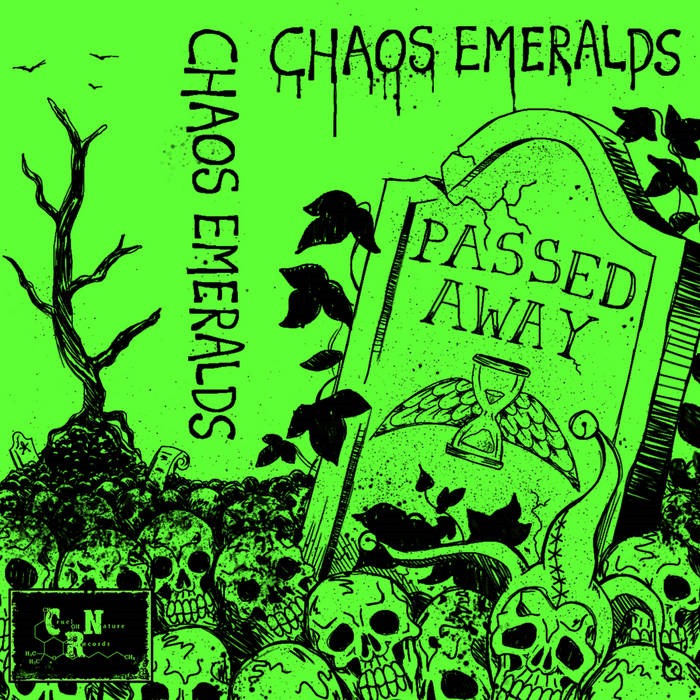
Cruel Nature are delivering a slew of releases on 21st February – an overwhelming volume, in fact. We’ll be coming to a fair few of them in the coming weeks, but first up, is the second album from Lanark / Reading based sludgy shoegaze project Chaos Emeralds, Passed Away, which comes in a hard-on-the-eye dayglo green cover which is catchy and kinda corny in equal measure.

According to the bio, ‘Chaos Emeralds is Formerly the solo project of Charlie Butler (Cody Noon, Neutraliser, Mothertrucker) with releases on strictly no capital letters, Les Disques Rabat-Joie and Trepenation Records, Chaos Emeralds has now expanded to a duo with Sean Hewson (Monster Movie, Head Drop, This) joining on lyrics and vocals.

Passed Away combines the lo-fi slowcore, shoegaze and doomy post-rock sounds of the previous Chaos Emeralds releases with a more song-focused approach to create a set of scuzzy emo gems.’

For some reason, despite ‘sludgy shoegaze’ and ‘lo-fi slowcore, shoegaze and doomy post-rock’ featuring in the above description, I didn’t quite expect the Pavement gone Psychedelic vibes of the title track which raises the curtain on the album. A primitive drum machine clip-clops away, struggling to be heard above a tsunami of feedback and waves of distortion on ‘Count Me Out’, which adopts the kind of approach to production as Psychocandy – quite deft, breezy and ultimately melodic pop tunes almost completely buried in a blistering wall of noise.

‘Juggler’ brings a wistful tone – somewhere between Ride and Dinosaur Jr – amidst ever-swelling cathedrals of sound, a soaring lead guitar line tremulously quivers atop a dense billow of thick, overdriven chords which buck and crash all about. The way the elements play off one another, simultaneously combining and contrasting, is key to both the sound and the appeal. It’s one of those scenarios where you find yourself thinking ‘I’ve heard things which are similar, but this is just a bit different’, and while you’re still trying to decide if it actually works or not, you find yourself digging it precisely because of the way it’s both familiar and different.

The vocals, low in the mix, feel almost secondary to the fuzzed-out wall of guitar, but their soft melancholy tones, sometimes doused in reverb, add a further minor-key emotional element to the overall sound, especially on the aching ‘Matter’.

When they do lift the feet off the pedals, as on ‘Welcome Home’, the result is charmingly mellow indie with a lo-fi sonic haze about it – and a well-placed change in tone and tempo, paving the way for the epic finale that is ‘In Our Times’, a low-tempo slow-burner which evolves from face to the ground miserabilism into something quite, quite magnificent, Hewson’s near-monotone vocals buffeted in a storm of swirling guitars as the drum machine clacks away metronomically toward an apocalyptic finish.

AA

a4117384026_16

Cruel Nature Records – 14th January 2025

Christopher Nosnibor

Released on various formats by various labels in different countries, the latest offering from genre-blasting French instrumental trio Toru is being released on cassette (and download) by Northumberland’s Cruel Nature in an edition of 65. Following on from 2020’s eponymous debut and a split release with Teufelskeller, which saw Toru join forces with CR3C3LL3, this time around, they’re different again, and having been featured as album of the day at Bandcamp Central just the other day, the signs are that Velours Dévorant could see them significantly expand their fanbase – and deservedly so.

Velours Dévorant featires five V-themed tracks defined by some riotous riffmongering and big, dirty, overdriven guitar noise with tempo shifts galore. Blasting in with ‘VHS’, it’s a manic ride through waves of tempestuous, bludgeoning racket from the very start. Trilling feedback fulfils the duty of a lead guitar line, while a shuddering, ribcage-rattling bass tears its way out from the chaos atop some heavy, but highly skilled jazz-inspired drumming.

Some will likely describe their sonic blitzkrieg as ‘experimental’, but that’s something of a misrepresentation, in that it suggests a lack of coherence, a haphazard and unplanned approach. The sudden stops and starts, the moments where a chord hangs, suspended in the air for just the briefest moment before the fractionally-delayed snare smash or cymbal crash, where the three of them simultaneously draw breath in just a split second… those microcosmic moments require remarkable precision – unquestionably, intuition is key, but rehearsal too. The skill is to make it sound haphazard, unpredictable, to keep the listener on the edge of their seat, buttocks clenched, while having it all worked out. Every composition contains moments which feel like the sonic equivalent of watching trapeze artists, where you tense and momentarily stop breathing as they fly through the air, seemingly in slow-motion, tense in case they fail to grab on: will they keep it together, or will everything collapse into a mess of sludge like a sewer rupturing and spewing a fountain of slurry?

These are long tracks – the shortest is over five and a half minutes – with infinite twists and turns. The skewed, surging jazz-grunge of ‘Voiles’ – a whopping eleven and a half minutes in duration – is representative, and encapsulates the essence of the album. The guitars squall and screed in a showcase of noise-rock par excellence, while the bass lurches and snarls, grooves and grinds, and the percussion is simply wild. It’s like listening an instrumental version of every track by the Jesus Lizard all at once. There’s a low-impact, atmospheric mid-section that rolls and rumbles, yawns and splashes… lazily would e the wrong word, but it takes its time, with bent guitar chords twanging like elastic bands, while the sparse percussion meanders seemingly without aim. But then it all reshapes and takes form once more, building, building, and then exploding so hard as to detonate so hard as to blow your eyeballs out of their sockets. Fuck, when these guys hit the pedals, they really do go all out.

I’ve heard a plethora of zany noise-rock acts, and have loved many – most of whom are so obscure that to reference them or draw comparisons would be the most pointless exercise imaginable: ‘hey, wow, this band I’ve not heard of sound like a bunch of other bands I’ve never heard of, that’s informative!’.

On Velours Dévorant, Toru take the tropes of post-rock, with its protracted delicate segments and slow-building atmosphere, and incorporate them within a noise-rock setting, with the result being epic tunes with some incredibly graceful, and ultimately poignant expanses, pressed tight against some of the most explosive overloading, overdriven abrasion going. And then, of course, there are the jazz elements: ‘Volutes’ is the apex of jazz/grunge hybridization, and it works so well. Not sold on Nirvana meets The Necks? Trust me.

The fourteen-minute title track is… special. It is, in many respects, the evolution of post-rock circa 2004. Chiming guitars, infinite space, haunting atmosphere. The intro is magnificent, beautiful. Her Name is Calla’s sprawling ‘Condor and River’ comes to mind. That use of space, that simmering tension, that sense of something growing which is more than… well, it’ s simply more. There are things hidden. When the riffing lets rip, holy shit, does the riffing let rip, fully shredding blasts of distortion tear through with obliterating force. The track feels like an album in its own right.

It seems like a while since I’ve felt compelled to describe an album as ‘epic’ – but this… this is next-level epic.

AA

a0213833004_10

Cruel Nature Records – 6th December 2024

Christopher Nosnibor

The ever-prolific Aidan Baker has been a frequent and recurrent feature on the pages of Aural Aggravation since its inception in 2016, and I’ve been listening to, and covering, his works since a fair few years earlier. He’s an artist who never fails to intrigue, and his manifold collaborations see him revealing new aspects to his creativity.

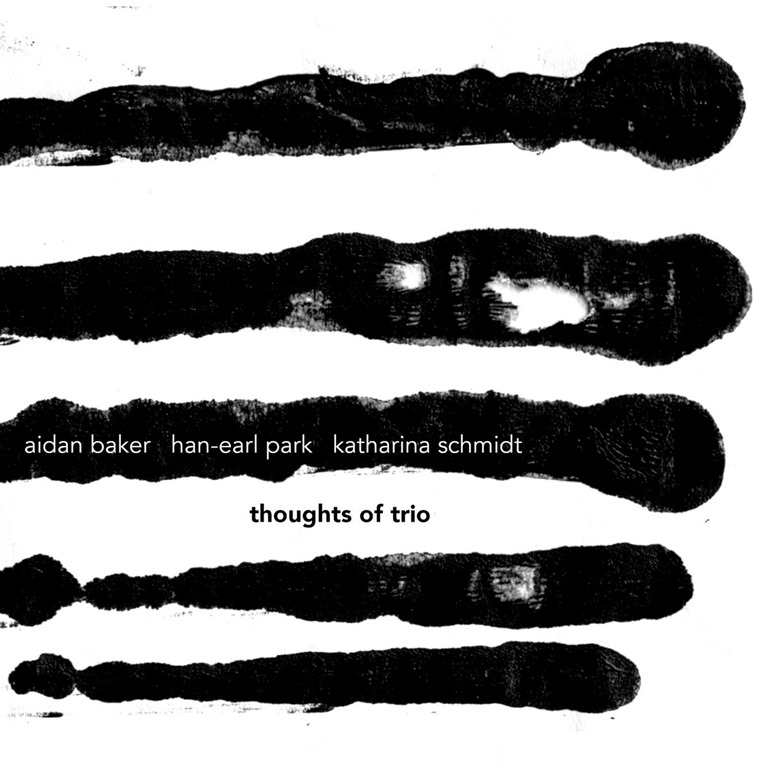
This three-way collaboration was, according to the accompanying notes, ‘recorded live at Morphine Raum in Berlin, Germany on February 21, 2024 by Canadian guitarist Aidan Baker, Korean-American guitarist Han-earl Park, & German drummer/percussionist Katharina Schmidt. The group brings together their respective, disparate musical backgrounds to explore the intersections of ambient music, improvisational (free) jazz, and musique-concrète.’

It’s worth noting just how many live releases of collaborations there seem to have been released recently: in fact, only yesterday I was delving into the dynamics of the latest offering by CEL. This may be a ‘cost-of-living’ matter, in part: economic circumstances really aren’t favouring anyone who isn’t two-homes-and-at-least-one-cruise-a-year rich, and this is a global issue, whereby post-pandemic the disparity between the wealthy and the rest has increased exponentially (a word I’m mindful of tossing about being aware of its actual meaning), and it’s never been a tougher time to be a musician, unless you’re Taylor Swift, or Ed Shearan or Elton John or Coldplay… you get the idea. And it’s certainly not (only) because of the shit streaming revenues paid (or not) by Spotify. Studio time is expensive: getting together for intercontinental collaborations is expensive… and when it comes to it, it’s not always easy, or even possible, to recreate the energy, the frisson, the immediacy of a live performance in the studio.

And so here was have Thoughts Of Trio, which captures a set from the start of the year, mastered as eight segments, simply titled sequentially ‘TOTone’ to ‘TOTeight’. The arrangements are often sparse, and combine nagging, regular repetitions with erratic irreglularities: ‘TOTone’ sounds like a pulsating wave or a slow alarm simultaneous with a game of ping-pong and some urban foxes foraging through bin bags. I mean, it doesn’t really sound quite like that, but the different elements belong to different places, and while it does work, it does not feel like a composition in any conventional sense. And this is very much the form of the album: there are no overt structures, there is no sense of cohesion or linearity.

But where Thoughts Of Trio evades the pitfall of being a discordant disaster is in just how they somehow keep things together, with an absorbing, if loose, sense of rhythm, which is both absorbing and bewildering, but, however subtly, ever-present. ‘TOTthree’ features springing guitar twangs and lurching grumbles, but a distinct sense of almost abstract rhythm. Clanking rattles and slow-bending, woozy drones hover and slowly wilt, with scrapes and subterranean bumps and nudges unpredictably rising and falling.

There’s no obvious shape to any of this, but amidst a set of pieces which are five or six minutes long, the eighteen-and-a-half-minute ‘TOTseven’ stands out a dominant track on the album, although one suspects that for those who were actually there, it was difficult to differentiate the pieces, which tend to bleed into one another. It rumbles and hums, tense and dense, simmering, without ever breaking through the tension that holds down the surface.

There’s little to no audience noise, no applause in the interludes or intersections, which works well in terms of the overall listening experience, but means that this doesn’t sound or feel like a live album. That’s by no means a criticism, and again illustrates how live recordings can replace studio recordings for so artists. This simply doesn’t sound or feel like a live recording, and that’s not only due to the lack of audience noise, but the way everything flows.

For all of the discord, the twists and knots and disparities, Thoughts Of Trio comes together somehow. While it’s is by no means overtly, jazz, Thoughts Of Trio sits between jazz and ambient, with an experimental / avant-garde. Ultimately, it does its own thing.

AA

AA

a4098448952_10

Cruel Nature Records – 25th October 2024

Christopher Nosnibor

In the debate of nature versus nurture, it’s noteworthy how many artists find themselves influenced in no small way not only by their formative years, but also the place or places where they grew up. There’s an entire thesis to be made from this, but here I make the observation because on Allens Cross, Empty Cut – a duo consisting of Douglas Fielding-Smith and Robert Bollard – have forged a work ‘Inspired by their childhood growing up in Birmingham they blend together all their experience and inspirations to create a noise that holds a heavy solid groove mixed with harsh noise and fuzzed out reverbed bass, topped with psychedelic synths, and chopped and screwed vocals.’

Birmingham, the city which gave us Black Sabbath and UB40, the second largest in England, with a population of over two and a quarter million, and has long been renowned for its diversity, and is a truly multicultural melting-pot. It’s perhaps unsurprising that cities like this – in contrast to so many predominantly white, often middle-class towns – are the source of musical innovation: throw in an element of social deprivation, the frisson of frustration driven by class and cultural disparity, and inevitably, this backdrop will fuel the fires of those with a creative bent.

Allens Cross is exemplary: as the blurbage summarises, ‘mixing together drums, bass, samples, effects and vocals they have created a sound that incorporates punk, hardcore, electronica, jazz, drum’n’bass, experimental-industrial and shoegaze.’ It’s one of those that on paper probably shouldn’t work, but thanks to the dexterity if its creators, works far beyond imagination.

It grinds in on a sample looped and echoed across a dirty bass and slow-building beat… and then everything slides into a doomy, sludgy sonic murk. ‘Bloodline; makes for a dank and difficult opening, five minutes of feedback and dinginess sprawling and lunging this way and that, culminating in a manic howl driven by frantic percussion and driving bass.

‘Fidget’ whips up a howl of feedback against a juddering stop/start bass, and with shouty vocals low in the mix, it brings a quintessential 90s Amphetamine Reptile vibe with a hint of Fudge Tunnel… until things take a detour into dub territory in the mid-section. When the noise blast returns, it hits even harder.

With none of the album’s eight tracks running for less than five minutes and the majority straying beyond six, it feels like there’s an element of slog, of punishment, inbuilt. ‘The Well Beneath’ certainly mines that dark seem of metal that plunges underground, but with the contrast of jazz drumming and some quite nifty bass work, at least until they hit the ‘overload’ pedal and everything blows out with booming distortion.

If ‘Fluff’, by its title sounds cuddly, like a kitten, or a bit throwaway, like that which you’d sweep up from the corner or the room, the reality is quite the opposite: a six-minute seething industrial sprawl, it’s slow-burning, dark and menacing, and a clear choice of lead tune… Not, but then again, with an echo of Eastern promise and a certain ambience, and the strains of feedback a way in the distance, it perhaps is the most accessible cut on the album.

We’re proud to share a video exclusive of ‘Fluff’ here:

AA

Elsewhere, ‘Hymn to Then’ pitches cold synths and rolls of thunder to conjure dark images, a stormy backdrop to an eye-opening hybrid of prog rock, industrial, and krautrock: the result isn’t only epic, but conjures images of Dracula and unseen horrors with its icy atmospherics, while the last track, the eight-minute ‘Shatter’ begins with an eerie take on Celtic folk

Allens Cross is a highly imaginative work, an album that draws together a broad range of styles in a cohesive form. Its impact lands by stealth, building as it does across a range of styles, often creeping under the skin, unexpectedly, to register its effect. Sparse synths laser-cut across distorted, arrhythmic percussive blasts, as a low-level crackle and hum of distortion hovers around the level of the ground. Fractured vocals add to the disorientation, and the experience is uncomfortable. You cower, and will for release, not because it’s bad, but because it’s intentionally claustrophobic, torturous, and so well executed.

This is perhaps a fair summary of Allens Cross as a whole. It is not, by any means, an easy listen. Enjoyable would be a stretch. But it is utterly compelling.

AA

a3947501964_10