Posts Tagged ‘Crossover’

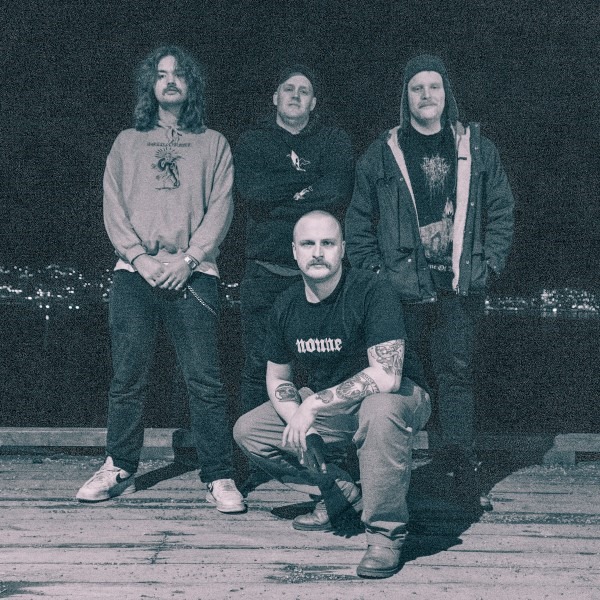
Three years after releasing their 2022 debut Infinite Death, an album that earned them a Spellemann nomination (Norway’s answer to the Grammys), Norwegian crossover outfit Cult Member are back from the frozen north with another hard-hitting ear-bleeder titled GORE.

A tongue-in-cheek strike at social unrest, draped in blood-soaked ’80s slasher imagery, GORE rips forward with the fastest, sharpest riffs in thrash, powered by the relentless fury of a true hardcore D-beat backbone.

Recorded by Ruben Willem, GORE is set for release on September 19 via Loyal Blood Records, and it’s blistering slab of thrash/hardcore sure to ignite fans of Cro-Mags, Power Trip, Slayer, and D.R.I.

‘Skull Smasher Psychic’ is the first single. Hear it here:

AA

4f3dfc32-94ed-fe4d-b66b-c369bbe82610

13th August 2025

Christopher Nosnibor

Re:O’s ninth single is a song of frustration, of dissatisfaction, about giving everything and receiving underwhelming returns. It’s a song about life’s struggles. And it takes the form of musical hybridity taken to another level. And when it comes to taking things far out, Japan has a long history of it. Only Japan could have given us Merzbow and Masonna, Mono and Melt-Banana, Shonen Knife and Baby Metal – acts which couldn’t be more different, or more wildly inventive. J-Pop may not be my bag, but on reading that Re:O take ‘the best of Japanese alternative music and combin[e] western metal and rock… Re:O has been described by fans as “Japancore” a mix of Metalcore, industrial metal, J-Pop, Darkpop, cyberpunk inspired symphonic layers with high energy and heavy guitar.” It’s a tantalising combination on which I’m immediately sold.

Hybridity in the arts emerged from the avant-garde, before becoming one of the defining features of postmodernity: the second half of the twentieth century can be seen as a veritable melting-pot, as creatives grappled with the notion that everything truly original had already been done, and so the only way to create something new was to plunder that which had gone before and twist it, smash it, reformulate it, alchemise new permutations. If the zeal – not to mention any sense of irony or knowingness – of such an approach to creativity seems to have been largely drained in the first quarter of the twenty-first century, Re:O prove that there’s life in art still after all.

With ‘Crimson Desire’ they pack more ideas into three and a half minutes than seems humanly feasible, starting out with snarling synths, meaty beats, and churning bass – a combination of technoiundustrial and nu-metal – before brain-shredding, overloaded industrial guitar chords blast in over Rio Suyama’s blistering vocal. And it blossoms into an epic chorus that’s an instant hook but still powered by a weighty instrumental backing. The mid-section is simply eye-popping, with hints of progressive metal in the mix.

The only other act doing anything remotely comparable right now is Eville, who have totally mastered the art of ball-busting nu-metal riffery paired with powerfully melodic choruses rendered all the more potent for strong female vocals, but Re:O bring something different again, ad quite unique to the party. It’s all in the delivery, of course, but they have succeeded in creating a sound that is theirs, and theirs alone. No two ways about it, they’re prime for Academy size venues, and given a fair wind, they could – and deserve to be – there this time next year.

AA

AA

a0408141558_10

Constellation welcomes The Dwarfs Of East Agouza to the label and will release the Cairo-based trio’s new album Sasquatch Landslide in early October.

Maurice Louca, Alan Bishop, and Sam Shalabi expand on their telekinetic fusion of North African rhythm, heat-haze improvisation, shaabi rawness, free jazz, and psychedelic groove, following acclaimed albums on Sub Rosa, Akuphone, and Nawa Recordings.

Sasquatch Landslide overspills with the group’s signature trance-inducing explorative energies, anchored by Louca’s hypnotic beats and electronics, with Shalabi and Bishop deploying guitar and alto saxophone in a variety of signal-mashing modes. Comprised of seven febrile jams across 42 minutes, this is at once the most focused and twitchiest album in the DOEA discography to date. Recorded by Emanuele Baratto (King Khan, Elder) and mixed by Jace Lasek (Elephant Stone, Sunset Rubdown, The Besnard Lakes), the record will be issued in 180gram vinyl and CD editions, featuring artwork by Mark Sullo.

First single ‘Neptune Anteater’ is a signature example: Shalabi opens with a skittish repeating guitar groove (that draws from his parallel lifelong practice as an improviser on oud) as Louca progressively builds a widescreen 6/8 hand-drum rhythm while oozing bass notes support Shalabi’s excursions around the central riff. This is kinetic trance, East Agouza-style.

AA

a0681556981_10

Southern Lord – 19th July 2024

Christopher Nosnibor

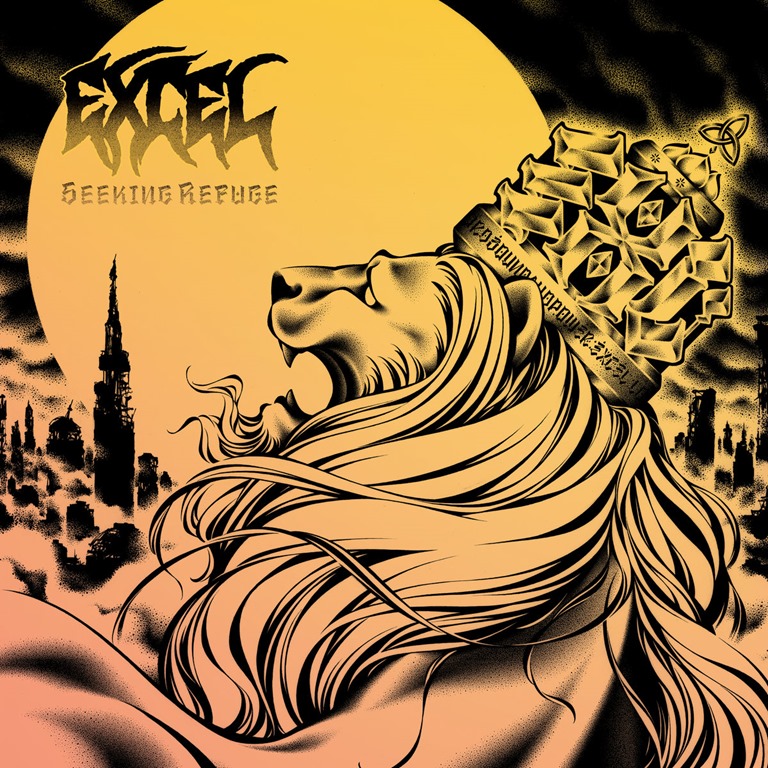
Southern Lord have once again excavated a long-lost release from the California underground scene, with a particular emphasis on hardcore and metal from the late 80s and early 90s, this time with a reissue of Excel’s 1995 album Seeking Refuge.

For context, while saving myself typing some inferior paraphrased recap, here’s the summary from the bio: ‘From the dark alleys and dead ends of Los Angeles, EXCEL have been delivering maximum crossover since crossover first crossed over. Their classic albums Split Image (1987) and The Joke’s On You (1989) remain linchpins of the genre decades after their release… Originally released in 1995 while grunge dominated airwaves and MTV, Seeking Refuge offers a glimpse at an EXCEL many have never heard before. Out of print for decades, Seeking Refuge will finally get its due, complete with a guest shot from H.R. of Bad Brains (on “Take Your Part Gotta Encourage”) and a video starring Tony Alva for the anthemic single ‘Unenslaved.’’

This is clearly one for fans first and fore most, but equally, one assumes its purpose is to bring the band, and the release, to a new audience, namely the many who missed it the first time around. And there will likely be many – like me – who simply hadn’t encountered the band previously. On the basis of the above, I suspect this isn’t really the optimal point of entry, but then, that’s how it often goes. I came to The Fall by Kurious Oranj and Swans via Children of God: arguably not the most representative of releases, but then again, comparatively accessible. I figure this is a fair summary of Seeking Refuge. It’s certainly an odd fish, and one that sounds solidly rooted in the early 90s.

Opener ‘Unenslaved’ is a bit hair rock meets late 80s thrash for the most part, and reminds me why I was never really into either; there’s just something about the guitar posturing, paired with the clean vocals trying to sound a bit tough that’s kind lame to my ear and to my way of thinking. But it goes a bit acoustic Alice in Chains in the middle, and the idea that ‘crossover’ may actually be represented by a stylistic switch mid-song.

There are some monster, churning, grungy riffs across the album: ‘Take Your Part Gotta Encourage’ is exemplary, not least of all because the chuggeracious thunder is topped with some really showy and extravagant soloing which isn’t afraid of hurtling headlong into the realms of excess.

In terms of composition, the songs are tightly structured, often making sharp turns or tempo changes midway through: ‘Drowned Out’’ suddenly slams on the breaks and drops to a slow Sabbath-esque riff that’s more of a head-nodder than a headbanger, and kicks the pace up again for a big riff finish – but again, there’s some epic fretwork that just feels that bit too much like the worst of 70s rock excess.

For all the context that suggests that Seeking Refuge was lost on account of its being out of step with the zeitgeist, it seems to overlook just how much grunge stuff was quite in thrall to 70s rock and this isn’t a million miles from Soundgarden, unless people are really going to bicker over the details. Don’t get me wrong: there are some proper metal moments: ‘Riptide’ really cuts hard, but still takes cues from Sabbath’s ‘Supernaut’, while ‘Overview’ sounds for all the world like a Rage Against the Machine rip. Seeking Refuge is solid, but not incendiary, and the endless fretwanking does get tired after a time.

With secondhand prices for the original vinyl sitting at around £35, and for the CD around a fiver, I do wonder just how badly the world is itching for this, but then, perhaps this reissue will spark renewed interest more broadly.

AA

a2959660533_10

12th July 2024

Christopher Nosnibor

As genre crossovers go, Post-Punk/Alt Hip Hop is quite a rare one. Perhaps not as radical or as extreme as the kind of crossovers with alternative and metal bands and hip-hop acts that took place on the groundbreaking Judgement Night soundtrack in the early 90s, but at this point in time, where pretty much anything goes, this is unusual. Actually, I’d like to step back from that for a moment. Not so long ago, it felt as if anything went, that postmodernism had truly reached its peak and you could have grindcore with a kazoo and not be too surprised. More recently, while pockets of weirdness are strongly entrenched – as the recent Guardian article on Nerdcore, which managed to mention Petrol Hoers and BxLxOxBxBxY, both vehicles for beardy, ferret-keeping, pant-wearing York legend Dan Buckley (disclosure – Noisenibor performed a one-off collaboration with him in his guise as Danny Carnage, which was everything you’d expect) – things seems to have become more siloed, more set, more fixed, when it comes to genre parameters. Fluidity and crossovers remain, but wild invention seems to have given way to something of a return to convention.

‘Imagine Beck meets Sleaford Mods, meets Slowthai’ the bio says. Only, listening to this, you don’t have to imagine.

What’s noteworthy about these touchstones is that two are very white, and two are very British, the British acts both being overtly political, while all three draw on elements of hip-hop in their work. None of this is to denigrate anything about Oscar Mic or ‘Sun Star’, and nor is it a criticism to comment that it’s a hip-hop tune which is overtly white, as delivered by a pale guy with a vaguely gingery moustache. It’s a true testament to multiculturalism and artistic cross-pollination, and what’s more, ‘Sun Star’ boasts some truly sinister bass frequencies which strike way low and hit hard like subsonic torpedoes beneath the shuffling beat that clatters away nonchalantly all the way. Toss in some Beastie Boys and you’re getting a sense of where this is at.

Then there’s the really melodic indie break, and the thing has something of a quirk / arty / studenty vibe, while the video bursts with experimental oddness. And when you piece it all together… it’s gloriously mismatched and off-kilter. And we should celebrate its non-conformity.

AA

SUN STAR COVER ART

Partisan – 17th May 2024

Christopher Nosnibor

It feels like no time at all since I was reviewing the cassette release of Lip Critic II, and that their ascent from self-released EPs and cassette-only albums on microlabels has been astoundingly rapid, but time has a way of playing tricks when it comes to perception: Lip Critic II was, in fact, released almost four years ago. And now, signed to Partisan and having gained significant traction playing SXSW, with the NME claiming bragging rights for giving them a cover feature a few months ago, as well as a five-star review last November, they’re certainly breaking through. There’s no question that it’s entirely deserved, either: despite being overtly weird and clearly non-mainstream, they’re a quintessential cult alternative band, the likes of which gain substantial hardcore followings and are revered long after their passing.

With a lineup consisting of two drummers and two synths, Lip Critic are no ordinary band, and they produce no ordinary music, and Hex Dealer is a schizophrenic sonic riot. It’s a bit cleaner, the production rather more polished, but fundamentally, it’s the same deranged percussion-heavy cacophony that Lip Critic have always given us, and it’s still true that most of their songs are short and snappy – around two-and-a-half minutes. Consequently, Hex Dealer is aa succession of short, sharp shocks, like poking a socket with a wet finger. The whole thing is a spasm and a twitch.

‘It’s the Magic’ brings together a smooth croon that has hints of Marc Almond and some shouty rap mashed together with some Nine Inch Nails industrial noise and some woozy hip-hop beats and some aggressive drum ‘n’ bass, all in under four and a half minutes.

Lead single ‘The Heart’ is a standout, for is frenetic, kinetic energy, and its hookiness, but it’s a question of context: it’s a blissed-out pop tune in comparison to the blistering percussive onslaught and distorted dark hip-hop blast of ‘Pork Belly’, a cut that takes me right back to the early 90s, specifically the Judgement Night soundtrack. Single ‘In The Wawa (Convinced I Am God)’ is entirely representative of the album as a whole, compressing all of its warped elements into a noisy, spasmodic, hi-NRG two minutes and nineteen seconds. Crazed, hyperactive, it’s explosive and it’s unique.

It’s a rock album with rap trappings. It’s a rap album with rock trappings. It’s a mess and shouldn’t, doesn’t, work. Only, it does. And with ‘My Wife and the Goblin’, they introduce some gnarly noise which isn’t metal by any stretch, but it certainly gets dark near the end. I say ‘near the end’, but it’s only a minute and forty-one and it’s a real brain-melting mess of noise.

If the beats to grow a little samey over the duration of the album, the counterargument is that the thrashing percussive attacks give the set a vital coherence. Packing twelve tracks into just over thirty minutes, and more ideas per minute than any brain can reasonably be expected to process, Hex Dealer feels like Lip Critic’s definitive statement.

AA

a4093774739_10

Exile on Mainstream – 28th March 2024

Christopher Nosnibor

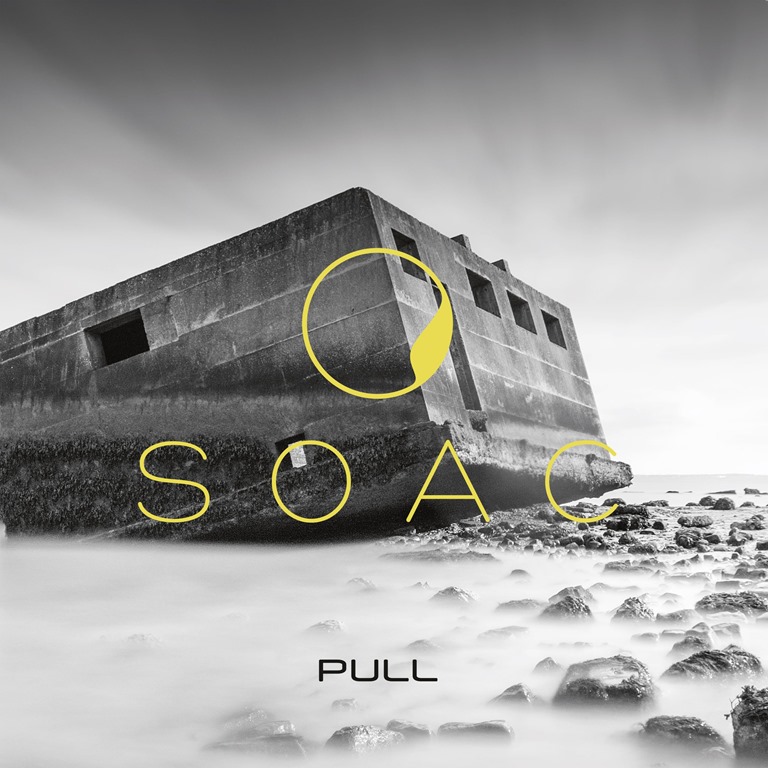
Cutting straight in with a big old guitar chug is a bold and hard-hitting way to open an album. No intro, no preamble, just big, beefy chuggernaut riffery. Bam! I’ve no aversion to a bit of intro a bit of preamble, but it’s refreshing to hit play and be smacked around the chops. The sound – and style – is quintessential grunge, and that grit, that grain, it has a grab that’s more than mere nostalgia, it’s a physical experience. But it very soon becomes apparent that Sons of Alpha Centauri are no generic grunge template rehashers, despite their adept use of the quiet / loud dynamics: ‘Ephemeral’, the opening song, draws in elements of quite blatant prog and classic rock, with melodic vocals and a reflective refrain of ‘Ephemeral… we are ephemeral’ that’s unashamedly prog in its ‘big, deep philosophical contemplations’ approach to lyrics. It’s certainly more ‘Black Hole Sun’ than ‘Smells Like Teen Spirit’.

Pitched as a ‘natural evolution’ to predecessor Push, they proffer ‘a powerhouse of searing post hardcore, alternative metal and progressive hazy rock’, where ‘Across the album, Sons of Alpha Centauri capture both a renaissance of the 90s post hardcore of their Sacramento luminaries, and a contemporary take on atmospheric dream-like rock music.’

Across the album’s nine tracks they straddle genre boundaries in a way that feels remarkably natural. Time was that I would be turned off by an album that was heavy instrumentally but not so heavy vocally – meaning I’d have been a bit hesitant about this. But it’s a mistake to perceive clean, melodic vocals as somehow weak or a detraction, as I discovered from listening to The God Machine and Eight Story Window, and Jonah Matranga packs in some emotional integrity into a strong set of songs.

‘Ease’ brings a watery-sounding bass and big, chunky guitar, and the combination makes for an unusual and interesting textural contrast, while the title track rocks particularly hard, the distorted guitar positively buzzing the speakers, Matranga giving a taut, tense performance.

At times I’m reminded of Amplifier, and not only in their incorporation of space themes – only far grungier in their melding of flighty prog and ballsy guitar attack. The chord structures of the aching ‘The Ways We Were’ are reminiscent of Placebo, and while sonically and lyrically there’s no real similarity, something about the dynamics and the heightened tension that defines Pull do warrant comparison, especially the slower, sadder ‘Tetanus Blades’. Sitting in the very middle of the set, it makes for the perfect album structure, and it’s clear that Pull has been created, crafted, curated, as an album rather than just some songs. ‘Doomed’ brings delicacy and introspection, anger and anguish delivered with a downcast sigh and wistful guitars. On ‘Weakening Pulse’ the guitars shudder and shimmer, and there’s a blend of dark aggression and choppy accessibility about ‘Final Voyage’. With its refrain of ‘Regenerate, regenerate, regenerate’ I can’t help but think of Dr Who, but that’s no criticism, and despite the big, bold, ambitious songs and matching production, they manage to steer well clear of going Muse on us.

The songs are pretty concise – mostly sitting around the three-and-a-half to four-and-a-bit minute mark, but have all the hallmarks of bigger, more epic songs. Yes, the vibe is very much rooted in the alternative sound of the 90s, but painted with the broader palette of the twenty-first century, whereby more diverse and eclectic elements have come to be accepted. It seems strange to think in 2024 that back in 1994, rap/rock crossovers were pretty revolutionary, that the soundtrack to Judgement Night was groundbreaking. In time, it came to pass that we discovered more complimentary hybrids, and Pull is a demonstration of this. There’s much detail to absorb and these are very much early impressions – but with so much to assimilate, Pull has everything about it that makes for an enduring album which only digs deeper with repeat listens.

AA

920630

28th November 2023

Christopher Nosnibor

Following on from the interim Thrown Away EP release, which boldly, and perhaps somewhat unexpectedly – pitched a Papa Roach cover front and foremost, and taster single release in the shape of ‘Slow Blade’, Binary Order drop the new album The Future Belongs To The Mad. In doing so, Benjamin Blank’s techno / industrial / metal vehicle reveal just how much has evolved since previous album, Messages from the Deep.

So many acts in this musical sphere seem to exist in a sort of genre-specific bubble, grinding out endless psychodramas centred around dark sexuality and degradation, having taken the first couple of Nine Inch Nails albums as templates for their musical existence. Fair enough. It’s easy enough to become embroiled and fixated on the relentless turbulence of your angst and relationship disconnects and how they fuck with your head. At least when you’re a fucked-up hormone-explosion, which is pretty much anyone’s teens and probably twenties.

This could perhaps explain in part the difference in focus of The Future Belongs To The Mad. Blank has been operating as Binary Order since 2008 – the same year I got serious about reviewing music – and it’s been a ling and tempestuous fifteen years. Older, wiser… and more bewildered by the world.  Blank’s statement which accompanies the album is stark, bold, bleak, and honest – but at the same time suitably vague, and I shall quote in full in order to provide context:

“It’s never easy to be honest about these kind of things, but I feel it’s important with this release to be so. The Future Belongs To The Mad was written during possibly the most difficult period I’ve ever had to get through – a period I’m not actually done dealing with – and one from which I now fear I shall never depart.

This album is an expression of my own inability to find meaning or purpose in life. And the utter disdain and emotional distraught that comes from the accumulation of living like that year, after year, after year. With this album I’ve managed to turn something that is for all intents and purposes destroying me, and created what is without any doubt in my mind, the greatest accomplishment of my life.

I don’t know if there is going to be anymore Binary Order after this. Finishing this album felt like an impossibility at one point, and now it’s done I feel like I am too. I hope anyone who listens to this can find something of value for within it. If not then I just appreciate having this platform to express myself in this way because it has kept me alive.”

Whether so much of this existential trauma was triggered by lockdown or other personal circumstances, we don’t know, but the fact that Blank is British and subject to the daily hell of living in a country in turmoil and seemingly hell-bent on utterly fucking itself and its citizens is worth highlighting, in that this seems to reflect the mood of many people I know. It feels as though the mad have already taken over and are stealing the futures of the rest of us, and our children. From this vantage, you look in, you look out, and you feel hollow and broken.

The Future Belongs To The Mad is harsh, abrasive, and rages hard from the offset, with the blistering hot guitar inferno of ‘Consternation’, which judders and stutters, halts and race, blasts of noise slamming in your face in the first bars. The vocals alternate between snarling, impenetrable metal roars in the verses and cleanly melodic choruses abrim with bombast.

Elsewhere, ‘Perfect World’ builds to a truly magnificently anthemic climax, while ‘Feel Again’ brings some crisp dark electropop that calls to mind mid/late 80s Depeche Mode with its layered synths and backed-off but crunchy guitars, over which Blank wrestles with his entire soul over darker feelings. There are dank instrumental interludes to be found during the course of the album. ‘Hope is a Mistake’ is every bit as bleak and life-sapping as the title suggests. ‘Skin’ is tense and claustrophobic electro, but again, there are segments which are smooth and soulful. ‘Face Beneath The Waves’ is a black blast of aggrotech metal / glichy electro / industrial / emo which takes your face off then soothes your raw flesh with some nicely melodic passages.

If nu-metal at its best / worst battled with stylistic duality, Binary Order carry this through to a Jekyll and Hyde manifestation of internal struggle on The Future Belongs To The Mad, which incorporates elements of numerous genres. These contrasts serve the album well in terms of it being a dynamic, energised offering, but such schizophrenic sonic stylings make for an album that’s almost pitched at two or more different markets. But more than anything, it feels as if these stylistic conflicts are the manifestation of Blank’s internal conflicts – and with this interpretation, The Future Belongs To The Mad works well. Blank hauls the listener through his difficult experiences, one at a time, and you bear witness to his self-torment a song at a time.

The Future Belongs To The Mad is not an easy album, but it is one that carries much weight and is well-realised. I won’t be alone in hoping it isn’t the last of Binary Order – but if it is, it’s a grand final statement.

AA
a3124503610_10

Quite possibly the most exciting thing to come out of Redhill in the last three centuries, Trevor’s Head markedly circle in three distinct orbits around stoner, punk and prog, creating a heavy, sonic vibe quite unlike anybody else out there.

Their new album “A View From Below, released on 5th May via APF Records (Mastiff, Desert Storm, The Brother’s Keg, Video Nasties) is a lean and cohesive expression of the power trio’s precision, which marks the next stage in the genre-bending and ever-evolving sound that is Trevor’s Head. For first single ‘Call of the Deep’, Roger Atkins (guitar/vocals) states,

"These last few years have been tough for us – for everyone – and I have constantly been struck by the strength I’ve seen in others. Whether battling personal loss, mental health difficulties, financial stresses, relationship troubles, whatever. This song is a nod to anyone who keeps fighting through the calm and through the storm. I have unending respect and pride in anyone who can do that, and this song is for them. Even if it didn’t go to plan for the protagonist this time.”

Listen to ‘Call of the Deep’ now:

AA

91sJNfls

Human Worth – 10th March 2023

Christopher Nosnibor

There’s something of a tightness around the noise scene , especially around a nexus of London acts who swap members for side projects and collaborations on a remarkably frequent basis. This is a good thing, for while all of these projects share much common ground, each offers something distinctive and unique, too, a different twist or angle from the others.

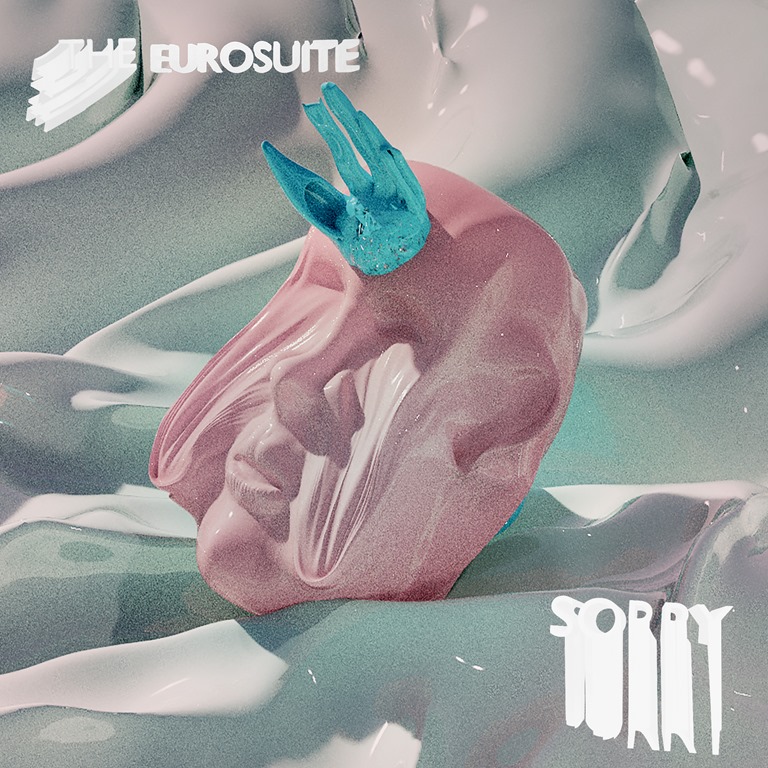
Human Worth has given a home to a number of releases from acts which have emerged from this mini-melting pot, notably recent output from Remote Viewing and Fucking Lovely. And now they’re really spoiling us with the latest endeavours from The Eurosuite, who, their bio informs us ‘consist of 4 lovely people who make disquieting no wave songs that will equally pierce your ear drums and move your hips’ and whose ‘previous musical endeavours include USA Nails, Nitkowski, Screen Wives and Mister Lizard.

What Sorry has in common with both the Remote Viewing and Fucking Lovely releases is, that like most Human Worth releases, it’s noisy. It’s also absolute class.

But it’s also very different, with electronic elements not only incorporated, but highly prominent. The first track, ‘Cup of Water’ is sparse and atmospheric, with glitchy mechanised drums bouncing about, and it’s intriguing and really quite gentle – and then they bring the noise with ‘BODY’ where it really does all kick off – and kick off it does, with frenetic drums and guitars blasting away like crazy.

The electro/noise rock crossover is unusual – while they’re by no means the first act to do it, their approach means they don’t really sound like anyone else, not least of all because the range across the album’s span is quite remarkable. Noisy as it is, the noise is quite contained for the most part, or otherwise countered by the synths to conjure an equilibrium of sorts – or, at times, a jarring, jolting contrast.

‘Seven’ showcases just how hard it can hit when everything’s cranked up and going full-tilt, but then again, ‘LIB’ throbs and pounds and nags like a melding of DAF’s ‘Der Mussolini’ with I Like Trains’ latest output, but as performed by Big Black. They leap and lurch between jarring, jolting blasts to rather more accessible structures, and I’m variously reminded of Killing Joke, Selfish Cunt, and Daughters – the latter not least of all because of the manic energy and intensity, as well as the skewed angular noise that cuts across the rhythm section.

‘Total’ throws it all into the mix as it goes big on a mathy post-punk vibe while packing on some dense guitars and thudding bass into its two-minute duration, with hints of …Trail of Dead, and again, it positively crackles with a frenetic energy. The last song, ‘The Dream’ is truly climactic, an explosion of squalling guitars, thudding drums and sparking electricity.

Sorry is an album of contrasts, of variety, and an album that doesn’t give a fuck for genre or convention. For these reasons, Sorry is an exciting album. It’s an album that doesn’t sit still for a second, and it’s impossible to predict where it’s going to go from one bar to the next, never mind one minute to the next. It’s dizzying, but also – to use a phrase popular in the tabloid press – jaw-dropping. Sorry is a sonic frenzy and endlessly inventive, and if it leaves you feeling punch-drunk and giddy by the end – Sorry, not sorry.

AA

TheEurosuite_Sorry_Artwork-Cover