Posts Tagged ‘collaboration’

ant-zen – 12th February 2024

Christopher Nosnibor

First – the format! So much is being made of the vinyl renaissance right now, and much as I love vinyl, it’s hard to be entirely comfortable with this comeback, in this form. Back in the 90s, when CDs were in the ascendence, I often bought vinyl because it was cheaper: I could pick up an LP for £7.50 when a new-release CD was £11. I still have the receipts in my vinyl copies of PJ Harvey’s Rid of Me and Pandemonium by Killing Joke, among other treasures. Now, vinyl is a luxury item. Even a standard LP is around £25, and many are pressed on two pieces of heavyweight vinyl and cost closer to £40, or more if released on Record Store Day. This isn’t right. It’s not honouring the format, it’s another example of exploitation.

But this is rather different, and altogether cooler on so many levels: ant-zen have brought us this release by Kojoohar & Frank Ursus in the form of a 7” EP, with two tracks on each side. You can’t blame them for the price tag given production costs, but the unique hand-printed inlays, etc., at least make each copy unique and make this release a million miles removed from the capitalist conveyor belt.

The thing that matters here is that this release is completely suited to this retro format: a 10” or LP release would have been extravagant, indulgent, and frankly, ill-keeping.

It’s worth quoting the liner note for the back-story here, too: ‘The spark that ignited this collaboration came from a conversation between KOJOOHAR and FRANK URSUS – aka Te/DIS – about the kojoohar album that has just been released at the time and about angst pop and its position in the music scene. talking about new tracks kojoohar was working on, the decision was made to start a collaboration.’

And so we’re presented with Frost Drought, which they describe as ‘a 4-track ep that offers edgy angst pop with analog, gripping synthesizer sounds, metallic rhythms and enigmatic melodies, complementing by frank ursus’ vocals… music and lyrics of FROST DROUGHT describe a world of isolation, mistrust, alienation and the individual’s distance from itself. left alone in the dark…’

Entering the ‘debris field’, we’re presented with dark synths, groaning, whining, whistling, and a slow-tempo-echo-heavy beat. If the baritone vocal is distinctly from the gothier end of post-punk, the instrumentation is equal parts post-punk and ultra-stark, bleak hip-hop. ‘never compromise’ pushes into stark, dark, electro territory, in the realm of mid-80s Depeche Mode. Ursus’ vocals are commanding, but so dark, and the music is so claustrophobic as to be suffocating. ‘never compromise’ sounds like a manifesto, and whipping snares sounds crack and reverberate in an alienating fog of synth, and with hints of Depeche Mode’s ‘Little 15’, it’s as bleak as hell, too. ‘threshold’ is dark and boldly theatrical, like Bauhaus battling it out in the studio with Gary Numan.

There’s no light here: this is dark and it feels like a dragging weight on your chest, on your heart. Drawing on early 80s electro but adding the clinicality of contemporary production – and a dash of Nine Inch Nails – Frost Drought is a challenging work, thick, dense, and intense, it’s a heavy listen, and one that’s incredibly intense.

AA

a3285530151_10

Janka Industries – 3rd May 2024

Christopher Nosnibor

Once again, I find myself tussling with a jazz album and in a quandary as to quite what to make of it. For many, many years, I was absolutely certain I detested jazz. Until, that is, having been introduced in my line of work to acts like The Necks, I came to learn I’d simply been exposed to the wrong kinds of jazz. The weirdy, noisy, cacophonous kinds of jazz made sense in context of my appreciation of mathy noise rock, and wasn’t such an immense leap from Shellac to be incomprehensible. Like any genre, or even tea or coffee, it’s all about finding a point of entry, a flavour that suits your palette. I used to hate both tea and coffee, having been given the former with full-fat milk and sugar and the latter in the form of a fairly weak blend with milk but no sugar, and they only really clicked when I ditched the sugar and discovered Earl Grey, and that you could have really dark-roast coffee with no milk and a shovel-load of sugar. So, you know, you find your thing.

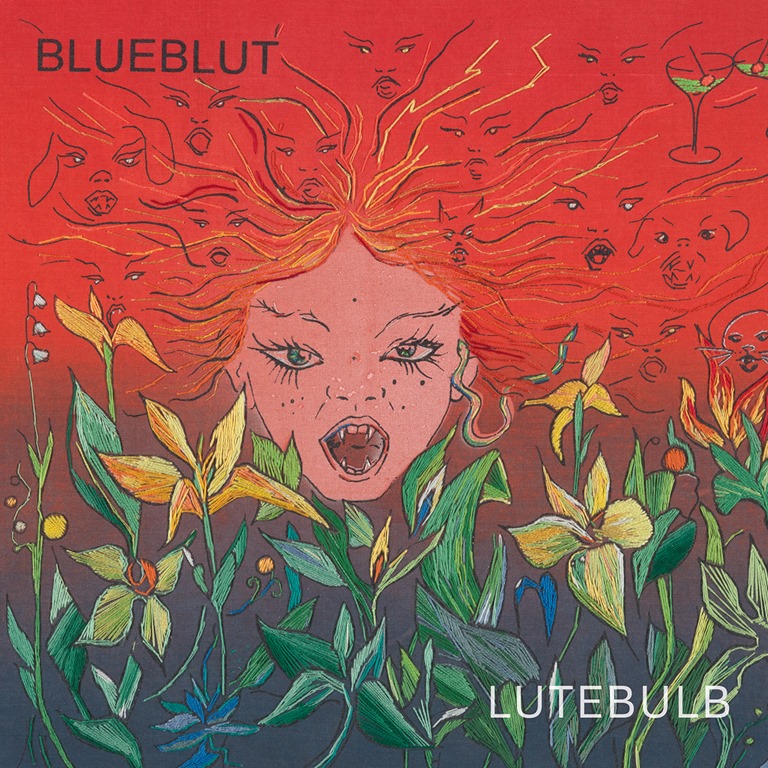
And then along comes Lutebulb, by Blueblut.

The blurb isn’t wrong in describing Blueblut’s lineup as ‘highly unusual, bringing together ‘three musicians acclaimed for exceptional contributions to their respective spheres in experimental jazz, electronica and rock.’ It’s a jazz-centred fusion, for sure, but it’s not jazz fusion as one tends to think of it, and certainly not as I’ve come to understand it. So what is it? As we learn, ‘Lutebulb is the fabulous culmination of ten years of intensive touring, with the Vienna based trio of Pamelia Stickney (theremin, vocals), Chris Janka (guitar, loops, samples) and Mark Holub (drums, vocals, percussion) socking it to global audiences with an international polystylistic musical language which takes in improv, jazz, avant-rock, ska, folk and Krautrock among other elements.’

There’s certainly a lot going on: initially, it comes on a bit laid back, not so much loungey as a smug muso pop collision of jazz and Latin dance, and I suppose the title, ‘Cocktail’ is something of a giveaway as to its swinging party vibes, but then shit happens – particularly some pretty crazy guitar work, and the percussion goes big and suddenly the party’s been crashed by a towering riot of sonic chaos, before suddenly, the entertainers seemingly remember themselves, pull their ties straight again and try to pull together some semblance of a funtime groove.

This sets the album’s template, really. Tracks tend to begin a bit kinda loose, a bit kinda boppable, a bit pool party fun times, albeit with some weirdness in the way the rhythms and the notes don’t quite chime in the conventional ways, and you wonder if it’s maybe the punch or the heat, but the tempo drifts a bit, first one way, then the other, and then maybe something doesn’t quite feel right, and it certainly doesn’t sound right and… what is going on? The room’s spinning and there are all sorts of random noises and you can’t tell if it’s people losing the plot or if some chickens have escaped and the sky’s falling in.

‘Aumba’ starts rather differently, a gentle piece led by acoustic guitar that brings a more reflective atmosphere, but it takes a hard swerve, the pace picks up, there are choral chanting vocals and then a handbrake turn into buoyant math-rock territory before some truly frantic fretwork. And because more surprises are needed, from nowhere, we get a crooning lyrical ballad in the last couple of minutes.

There’s unpredictable, and then there’s Lutebulb, which emerges with a fourteen-minute centrepiece of oddball experimental jazz that mashes absolutely everything together: one minute, I’m reminded of America’s ‘Horse With No Name’, the next, it’s Paul Simon’s Graceland and a Joolz Holland world music extravaganza. Then, somewhere in the midst of it all, we get the jazz breakdown with erratic percussion and space, dogs barking, and then, something else again. Led Zep riffage. Noise. More dogs barking. Every time I leave the house, the streets and parks and fields are like bloody Crufts, and the headfucking noise that’s emanating from my speakers – mostly a horrible conglomeration of barking and a strolling bass is making me angry and tense. And then the last piece, ‘Kaktusgetränk’, incorporates a familiar and popular jazz piece I can’t place or be bothered to research because by now I can’t decide if I need a lie-down or a massive gin.

With Lutebulb, Blueblut have created one of the most wildly varied – and in places, difficult, irritating, random – albums I’ve heard in a long time. I neither like nor dislike it: it has some truly great moments, and it has some not great moments. But when you throw this much into the blender, it’s to be expected, and I’d like to think that this kind of reaction isn’t entirely unexpected. The musicianship is outstanding, and their capacity to switch style, tempo, form, is something else, and the results are enough to leave anyone punchdrunk.
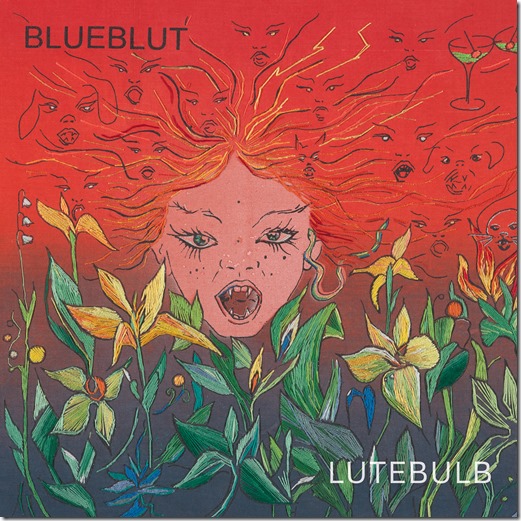
Blueblut – Lutebulb cover 1240px

“We may not speak the same language, but in the vortex of sound there is a raw, primal understanding that transcends words. Noise can be art – a visual representation could perhaps be Jackson Pollock’s ‘No. 5, 1948’ – a plexus of chaos redefining what music can and could be. Pushing boundaries with Masami wasn’t just a musical adventure, it was a masterclass in sonic anarchy.” Jack Dangers – MEAT BEAT MANIFESTO

Cold Spring is proud to present a unique collaboration between Industrial Breakbeat pioneers Meat Beat Manifesto (Jack Dangers) and the undisputed king of Japanese noise, Merzbow (Masami Akita). ‘EXTINCT’ sees the duo take listeners on a transcendental journey, focusing on the dismantling of beat and structure and recycling the result through layers of beautifully crafted noise and feedback loops, giving birth to new rhythms buried deep in the dirt.

The 20 minute opener ‘¡FLAKKA!’ takes constantly evolving breakbeats which are gradually broken down over time, driven through a filter of harsh noise, destroying the old to give birth to the new. Raw and unforgiving, the track is a behemoth that blends mutant forms of broken beats and hints of dub, creating rhythmic noise of the highest calibre in the process.

‘BURNER’ takes the record to its ultimate conclusion, the initial drum beat broken down so that it is barely recognisable. Pulsating distortion and high end audio fragments bleed into each other as the track lumbers forth and destroys everything in its path before slowly unravelling, degrading and falling apart.

A harrowing yet somewhat cathartic trip through walls of harsh industrial noise and audio degradation, ‘Extinct’ is a masterful pairing of artists who have delivered something truly unique yet totally relevant. Don’t sleep on this one!
(Text by Todd Robinson / Subunit)

Listen to the edit of ‘¡FLAKKA!’ here:

AA

f0f13226c8ffd8197b8401592d5d3cdd30872f0c

1st March 2024

Christopher Nosnibor

Joe Solo is a man with a message. Through tireless touring, relentless releases, and devoting endless toil to the cause, he has established himself as a strong and singular voice for not only the working classes, but for social equality, fairness, and a proud advocate of socialism. He sings songs of solidarity, without resorting to lumpen sloganeering, penning protest songs which are bursting with humanity – political without being overtly mired in politics. He’s also staunchly DIY, plugging away at making music from his shed, from where he also hosted a radio show for a number of years.

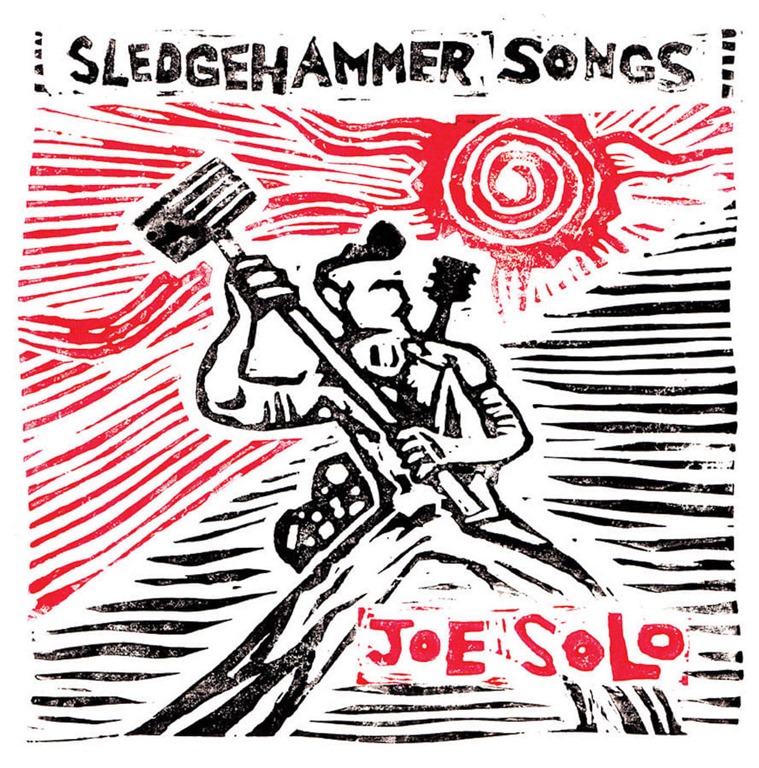
The biggest obstacle facing any DIY artist is actually reaching an audience: the algorithms of social media don’t exactly favour the little guy, and so for his latest album, Sledgehammer Songs, he’s gone all-out on engaging his friends / fans on Facebook to help spread the word – and it’s paid off, with pre-sales sufficient to necessitate the production of more CDs and a big run on the vinyl, not to mention the wealth of merch. And why this album, and why now?

Well, first, it’s so easy to get stuck in the cycle of record, release, tour, often to returns which are plateaued or even more dispiriting, and second, Sledgehammer Songs is a significant work. And because Sledgehammer Songs is very much an album which is about collectivism and community, and features a number of likeminded singers – notably Rebekah Findlay, who features on several songs, as well as York’s Boss Caine, Jess Silk, Carol Hodges, and some community choirs, too.

As Joe’s notes on BandCamp explain, ‘This is an album about music and its importance, not only to the political struggle, but to our own sense of who we are. It is both personal and protest.’ Joe’s no middle-class muso lecturing on working-class issues: he squeezes in music-making around a dayjob repairing washing machines, and he knows what it is to grind out a living to support his family, and often recounts conversations with the people he encounters in his work. Real people, real lives. Real struggle. And so, when he speaks, he speaks for both himself and for the people, and does so truly from the heart.

This very much comes through in the songs themselves. It’s a set of acoustic-led songs with simple structures, some augmented with harmonica, there are hints of The Clash, hints of Bob Dylan, slivers of Billy Bragg, and Solo sings with an unashamedly northern accent, and his voice is melodic, gentle, but he’s capable of bringing some throat for emphasis when it’s called for. ‘The Last Miner’, which adds a folksy violin and the voices of The Hatfield Brigade for a lilting sing-song tune which balances melancholy and positivity.

‘A Better Way’, released ahead of the album, encapsulates the sound and spirit of Sledgehammer Songs. It’s a depiction of the everyday realities of life in Brexit Britain, from nurses in the food banks to the diminishing spending power of wages under rocketing inflation, social division and inequality, and each line a call and response met with the refrain ‘there has to be a better way’, and while it’s a bleak picture, the sentiment is positive, unifying.

The title track with Boss Caine and Rebekah Findlay brings folksy Americana, and a celebration of the power of music, while on ‘City of Sanctuary’, the message is simple, but effective: ‘If you’re a refugee, you’re alright by me’. Listening to Sledgehammer Songs reminds us just how bad a state we’re in, where we have members of parliament saying that asylum seekers should ‘fuck off back to France’ and demonising the poor and disabled in the most shamefully dehumanising ways – led by a multi-millionaire prime minister who’s so far removed from the realities of everyday living that he doesn’t know how to fuel a car and pay at the pump. But despite it all, instead of wallowing in the endless shit – the likes of which is floating along our rivers and washing up on beaches around our sorry island – everything about this album is so direct, vibrant, real, and uplifting that it restores faith, and brings hope in the human spirit. All is not lost yet.

AA

a3482388156_10

With the release of The Body & Dis Fig’s debut collaborative album Orchards of a Futile Heaven just on the horizon, coming 23rd February, the group share smouldering new single ‘To Walk a Higher Path.’ Heavy without conforming to any of the usual tropes of metal or electronic music, the trio here carve out their own distinctive soundworld, neon-lit scenes slowly unfurling amidst light and shadow. Rippling synthesisers beam out like searchlights scanning the horizon, slowly coalescing into strafing melody and staggered rhythms, with Dis Fig’s vocal vapour trails floating weightless above The Body’s obliterated howls and blasted electronics.

Orchards of a Futile Heaven’s walls of sputtering texture and tectonic booms are soaked in the reverence and melancholy of sacred spaces brought to life by palpable intensity by Chen’s voice. Crafted during a time of personal fragility, the album’s devastating force lies beyond any of the expected noise and abrasive textures typically associated with both The Body & Dis Fig. Suffused with a raw vulnerability and a longing for catharsis, Chen’s voice searches for escape in the midst of oppressive atmospheres as if determined to find relief from guilt.

Following the new single, The Body have also announced a string of U.S. tour dates. The Body & Dis Fig plan to tour throughout the US, UK, and Europe in 2024, with collab tour dates to be announced.

Listen to ‘To Walk a Higher path’ here:

AA

Body and Dis Fig

Human Worth – 1st February 2024

Christopher Nosnibor

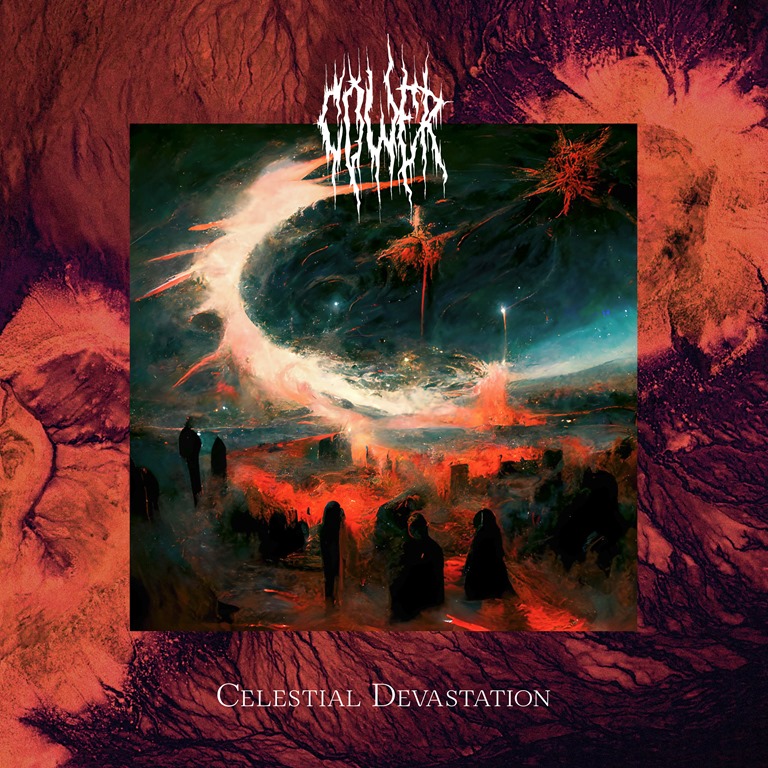
Anyone familiar with the works of William Burroughs will likely be aware of the so-called ‘23 enigma’, which essentially centres around the auspicious frequency of the occurrence of the number 23. It may be a case of confirmation-bias, but once attuned, it’s impossible not to notice, and the fact it’s filtered into mainstream consciousness via the KLF and the 2007 Jim Carey movie The Number 23 is worthy of note, if nothing else. So the fact that catalogue number HW023 has been assigned to the second album by supergroup COWER, featuring members of The Ghost of a Thousand, Petbrick, USA Nails, Yards, The Eurosuite and JAAW is something that may be of no real significance, but then again…

Few would necessarily expect the album to begin with a soft, gentle piano ballad with ‘We Need to Have the Talk’. It’s contemplative, and even if the talk is direct at times lyrically, the mood is low-key and lulls the listener into a sense of false calm. Immediately, ‘Summoner’ crashes in with pounding drums, a snare like smashing a bin lid, and a bass so thick and grimy as to churn your very guts. This broad shift is precisely what you expect from COWER, as they push parameters and do things different; this is what you want from COWER, and this is what they deliver. It’s a rambunctious roar, with an elevated artful tone and all the rage. They pack a lot into a mere three and a quarter minutes – and a lot of what they pack is beefy riffage and furious noise. It’s an instant rush, and at the same time, your muscles tense.

‘Hard-Coded In the Souls of Men’ presents as a downtempo slice of brooding electropop with hints of Depeche Mode, even down to the soulful baritone croon and spacious sound with soft synth interludes. In a parallel universe, this song would get played all over on Radio 1 and would make all of the mainstream radio and Spotify recommended playlists, and people in their tens and hundreds of thousands would love it. And then they would arrive at the album, and wonder ‘what the fuck?’ as they simultaneously shat their pants. This would be the perfect outcome, but is of course, highly unlikely, because acts on small labels just don’t have those opportunities.

The funny thing is that back in the 80s, major labels would back all kinds of bands and would promote – and shift mega-units of – an album based on a largely unrepresentative single. Back then, you couldn’t hear the album online, so would head down to Boots or Woolworths or WHS, or add it to your selection with Britannia Music, and you might love it or you might hate it, but they’d shifted the unit either way and because you only had a handful of records or tapes, you’d play it enough times there was probably a 50% chance you’d come to like it even if you hated it at first.

COWER succeed by being unpredictable, and whichever way they turn, be it noise or electropop, what they deliver is top quality. ‘Buffeted by Solar Winds’ boasts a stalking bassline and brooding vocal, as well as some synths and some circuit-melting overload that shows Nine Inch Nails how it’s done. ‘Deathless & Free’ is pure Depeche Mode circa Songs of Faith and Devotion: soulful, dark, and sonically immense, with percussion that utterly blasts you away. How is this right? And how does it work, when songs like ‘False Flag’ bring the most raging, sinewy punk, half fired-up post-punk, half incendiary grunge, entirely raw, ragged antagonism. The end result is New Model Army meets Big Black, with some wild sax tossed in for good – or crazy – measure.

The tile track is a slow, slow groover, driven by immense, industrial beats. What a contrast the energetic, intense and ultra-tense ‘Bury Me in the Lawless Lands of the West’ which really exploits the tropes of early 80s goth with is throbbing bass and fractured mesh of lattice-like guitars. Celestial Devastation;, however you pitch it, is hefty.

There are many so-called supergroups who aren’t especially super, who seem to trade on their main projects as the selling point. COWER amplify the intensity of their individual main projects to the power of three. Balancing mangled guitar noise and some pretty harsh electronics from beyond, Celestial Devastation is as good as it gets. Celestial Devastation is special.

AA

HW023_Cower_CelestialDevastation_CoverArtwork

Ahead of the release of their debut collaborative album Orchards of a Futile Heaven, out February 23rd, The Body & Dis Fig share potent, affecting new single ‘Dissent, Shame.’

The track’s devastating force lies beyond pure noise or abrasive textures, evoking weighty emotions with a minimalist drone dirge that gradually builds into an enchanting choral passage. Suffused with a raw vulnerability and a longing for catharsis, Dis Fig’s voice searches for escape in the midst of oppressive atmospheres as if determined to find relief from guilt. She elaborates on the track: “It’s about the act of abandonment, and the guilt and shame that comes with it. Running away from something, seemingly towards your own safety, but as your conscience picks you apart the entire way.”

Orchards of a Futile Heaven affirms The Body & Dis Fig as skilled sound sculptors who have an exceptional ability to make deeply affecting music, bracing as it is touching, harrowing as it is awe-inspiring. While sampling has long been essential to each, The Body & Dis Fig deftly meld their differing approaches to sampling and creating extreme sounds until the boundaries are entirely blurred. The group transmute weighty emotions into bristling sonic atmospheres, buoyed by Dis Fig’s ethereal vocals. She elaborates: “I love the balance. You could never connect to just a machine as well as you could a human. Which is why the combination is so potent for me. I don’t want to hide. I think nothing connects you more empathetically than another human’s voice.”

The Body & Dis Fig plan to tour throughout the US, UK, and Europe in 2024. Dates and details incoming soon.

Listen to ‘Dissent, Shame’ here:

The Body & Dis Fig are a natural pair. Each has pioneered instantly recognisable worlds of sound all their own that defy any traditional categorisations or boundaries. The Body, Lee Buford and Chip King, continually challenge any conventional conception of metal, collaborating with myriad artists and from the folk-leanings of their work with BIG|BRAVE to their groundbreaking work with the Assembly of Light Choir to the intensity of their collaborations with OAA or Thou.

Dis Fig, aka Felicia Chen, pushes electronic music into dark extremes, from warped DJ sets to avant production, from being a member of Tianzhuo Chen’s performance-art series TRANCE to being the vocalist with The Bug. The Body and Dis Fig find kinship in reimagining what it means to make “heavy music”. Their debut Orchards of a Futile Heaven is the perfect synthesis of two forces, twisting melodicism and intoxicating rhythms, layering a dense miasma of distortion with intense beats and a soaring voice clawing its way towards absolution.

The two found kinship in their desire to find new avenues to make heavy music that looked beyond tropes of metal and electronic music by merging the two. “I always wanted the heavier stuff but I also didn’t really like heavier guitar music,” says Buford. “None of it really felt quite heavy enough to me. A human can’t be as heavy as a machine.”

a0528546945_10

Karlrecords – 21st January 2024

Christopher Nosnibor

Reinhold Friedl’s career has been long and interesting, and continues to be so. The list of collaborations on his resumé is beyond outstanding, and he has taken the concept of the prepared piano, as first conceived by John Cage, to limits beyond imagination. As such, while the idea may not have been his own, Friedl’s advancement over the last twenty years has been the definition of innovation. But what makes Friedl such a remarkable figure is his capacity to explore so many different and divergent avenues, and to turn his hand to so many different projects – and this latest, with Martin Siewert is exemplary. Siewert’s instrument is the guitar, but his style of playing is far from conventional, tending to conjure atmosphere from feedback and sustain and otherwise working the space between the notes instead of blasting chords. As such, this is an inspired pairing.

Lichtung blasts in with a thick, heavy, grindy drone that almost borders on Sunn O)) territory: the twenty-four-minute first track, ‘Genese’ is a journey, which begins with an all-out assault of thick, gut-twisting drone and shards of shrieking feedback which twist into a maelstrom of chaos before receding to reveal altogether more tranquil shores. From this, it builds, a droning, churning wash, buzzing drones and dramatic crashes. And from the rising tempest, lone piano notes rise… These particular notes are identifiable as a regular piano, rather than a ‘prepared’ one – but that’s the nature of the tweaked instrument: random items on the strings create random sounds. It’s a curious array of sounds, and over the course of the track, the sound rises and falls, ebbs and flows, but the water is always choppy, the storm building and rumbling before it rages its full force. ‘Genese’ feels like it could be an album in its own right, but there’s a whole lot more to come.

‘Gedstade’ is a mere interlude at five minutes in duration: with plinking, plonking random twangs and scrapes and woozy drones, not to mention extraneous noise and crashes and more, it’s strong on atmosphere and oddness.

Often when interacting with music, or when critiquing music – and these are two different, if quite proximate experiences – I will ask myself, or otherwise consider, ‘how does this make me feel?’ Because ultimately, music, like any art, is about the experience of the recipient, and that experience defines its success and / or impact. To expand on that, and to clarify, many may dislike and so decry a great work of art on account of their singular experience, because it’s difficult to rationalise or otherwise quantify said work. As a critic, to baldly declare ‘they’re wrong’ would be a mistaken and to devalue the experience of others. But if others share a very different experience… then that is their experience.

And so we arrive at ‘Gestitche’, the album’s third and final track, a fifteen minute exploratory work which begins with crashes of low-end piano which sound like thunder and shake the ground beneath this exploratory composition. It’s heavy, doomy, dolorous. The scratchy, discordant guitar work only accentuated the album’s immensely broad sonic range. Squalling squealing guitar ruckus and feedback riot tears its way through the tempest of noise and plunging piano and sputtering sparks of wires. As the track progresses, things evolve and escalate, the thunder builds to a tempest, and at times you feel thoroughly assailed.

To my ears, then, Lichtungis a compelling experience. Lichtung is unquestionably niche, like all of Friedl’s but that in no way diminishes its value. And the joy of Friedl’s work is its variety, and the way in which he interacts with his collaborators. To this end, this album is a work which brings joy.

AA

a1344738009_10

Fiadh Productions – 15th December 2023

Christopher Nosnibor

My love of a good split release is something I’ve effused about variously here and elsewhere, and in a way, the contents of this particular split is pretty much secondary to the sentiment. The last thirteen years in the UK have been absolutely fucking shit. That’s not an opinion, it’s a fact. We can’t blame the government for the pandemic, but everything was shit a long time before that, and besides, we can blame them for the shitshow handling of everything, and for the way these disaster capitalist cunts milked every last penny of profit from it for their mates and their vested interests, their undisclosed shareholdings and all the rest.

And I’d keep hearing people defending Johnson, saying ‘he’s doing his best’. Only, he wasn’t. The dishevelled cretin would roll out of bed, half-cocked and probably half-cut after one of the lockdown parties he claims he didn’t know about, babbling bollocks, his only interest being self-interest. And the worst of it is that he wasn’t even the worst. And yet still people defend them, still people vote for them.

I remember watching the news after the last election, and a woman in her 70s appeared being interviewed on a street in Peterborough. She went on about how she was ‘thrilled to bits’ to have the Conservatives back and to have a Conservative MP: she ‘turned out in the pouring rain’ to put her ‘little cross’, and tells why she voted conservative, and how pleased she is that they got in:

“Well it’s the education system really. Oh, and the homeless. So many homeless people here, I’ve never seen it like this.”

And why’s that then? After years and years of Conservative government, you actually buy the line that they’re the part of change? When you say ‘the homeless’, what do you expect this government to do about them? Hire 20,000 more street cleaners by actually retaining 10,000 existing street cleaners and hiring 10,000 more over the next 40 years to come and toss them into refuse trucks? Or round them up into camps and line them up for euthanisation? I’m guessing she meant clean up the streets rather than help them, because well, where’s the fiscal value in that? Anyway, good luck with recruiting minimum wagers to dispose of the bodies once you’ve closed the door to all the Poles and other EU nationals who are currently propping the country up by doing the jobs no-one else wants.

I feel the rage. Every single day. And I feel the urge to punch Tories, and their voters, every single day, too. The current crop of Tories are fucking fascists, and anyone who supports them is complicit.

This EP’s three tracks are a head-shredding blast. Tyrannus bring us ‘Bricks And Flesh, Ashes And Iron’, five minutes of blastbeat-driven snarling black metal that’s both fast and furious, not to mention utterly relentless. It gets the pulse racing alright,and as dark and gnarly as it is, it’s pure, it’s raw, it’s exhilarating, and the guitar solo is absolutely wild.

Magicide give us two tracks, each a minute and thirty-nine seconds long. The contrast is the perfect reminder of the joy of the split release: their offerings bring a different shade of brutality, of pulverising pace. It’s a new hybrid, too, combining frenetic drum ‘n’ bass beats and an industrial edge which calls to mind turn of the millennium Pitch Shifter when they moved away from guttural industrial to create a beat-heavy, post-Prodigy Nu-metal hybrid. Black metal with tripping, stuttering rapidfire drumming, this is simply eye-popping. Thick, trudging riffs growl against grinding percussion and explosive breakbeats. There’s a load of shouting and growling, but the only audible lyric comes when everything pauses for a split second, and the line ‘this is Tory punching music’ rings out crisp and clear, in a strong Scottish accent.

And it is. The EP is full-throttle, an adrenaline rush that really gets you pumped. The message is clear and hard to disagree with for anyone with a brain or a soul. Whether you’re on board with new new labour or not, fuck the Tories. And feel the rage through this EP.

AA

a2564810484_10

Following on from Marthe’s incendiary debut Southern Lord full-length, Further In Evil, released this October, she now teams up with †The Lord† (Greg Anderson) to release two brand new collaborative tracks, ‘The Eye Of Destiny’ and ‘Wisps of the Black Serpent’.

Marzia comments on this collaboration:

“Collaborating with The Lord was an exciting challenge, and something new, and stimulating to me. I don’t usually deal with such soundscapes and when Greg asked me to add vocals and drums to ‘The Eye of Destiny’, I accepted. The track was intended by Greg to be a tribute to Quorthon (Bathory), an artist who has been a huge influence on my moods. I had started to add in battle-drum beats, but soon faced the hard task of using words to describe what (to me) is the most talented artist of all time. How to contribute in words what I can’t even process in emotions?”

She continues, “There’s the person behind it, and along with the talent there’s the reality of the loss, since he’s not here anymore to witness the legacy of his sound. What’s left of his feelings on his blog, his emotions, his development as an artist and as a person and that spark in his eyes. The eyes are the mirror of the soul, we say. And I was reading some notes he left on a letter and it went something like "may the eye of destiny be wild with you and show you the right way through life". "The Eye of destiny" was an evocative image to me, to picture in my mind the aura of his memory, as a human being and a musical genius. As words are dominant in a tribute, it was impossible, in the most humble way, to find words for him. So, I took his own words: checked all the lyrics and made a caviardage of words that in the end composed a tribute in what I considered the most honourable way possible. I love the final result, it’s my small tribute to a musical giant.”

Listen to ‘The Eye of Destiny’ here:

AA

a2467399362_10