Posts Tagged ‘Calm’

Room 40 – 7th January 2026

Christopher Nosnibor

Today, December 21st, is the Winter solstice: in terms of daylight hours, the shortest day of the year, and the longest night. As I write, we’ve had cloud, fog, mist, and rain most days here in York for weeks, so it’s essentially felt like one perpetual night for nigh on an eternity. I’m certainly no summer sun lover (I have fair skin and suffer with hayfever), but do struggle with this time of year – always did, but personal circumstances have accentuated the struggle. Watching Shutter Island with my fourteen-year-old daughter earlier (it seemed like a good idea to avoid conventional ‘family’ ‘Christmas’ fare), she commented on how the ‘man with dead wife is troubled and has wild dreams’ trope is perhaps disproportionately common in movies. She’s absolutely right, of course, but the observation hit hard and brought me back to the reason we were avoiding the schmaltzy family Christmas shit – and reminded me that there’s simply no escape from my personal narrative, that my wife was diagnosed with stage 4 breast cancer just before Christmas in 2021, and died just after Christmas in 2023. These facts not only make it hard for Christmas to be happy, but dealing with all of the stuff like Christmas shopping, present-wrapping, arranging seeing relatives, etc. – stuff that was primarily her domain – on my own is a significant source of stress.

And this is why, on seeing this release had arrived for my attention, it made sense to do myself a favour, for a change. Music is, after all, one of the best therapies. While I’ve little to no interest in new age cack or pseudomystical bullshit, and have generally failed at any attempts to mediate with the limited assistance I’ve had, the idea of a method of achieving mental calm still holds significant appeal.

As David Shea explains in the album’s accompanying notes, ‘Meditations is a set of 8 works based on the experience of meditation practice. Music made for both meditation and reflecting the realities of a life of daily practice. The breath, the quietness, the listening, the distracted dissonant and consonant thoughts that pass through. The texts throughout the pieces are fragments of the Buddhist Heart Sutra, the shortest and created from a mixture of traditions and sources, produced long after Buddha’s death and meant to be chanted or sung as a ritual and personal meditation. The experience of meditation, so often covered in mythology and one dimensionally peaceful symbols, is in fact a complex set of traditions in all cultures and has roots in indigenous cultures world wide and involves the limitations of thought as well as the quietness of the mind as a source of understanding and health.

‘The Buddhist teachings that are in focus in this album are in a sense a sequel to the record Rituals of 2015 in that they are adapted as Meditations that cross and combine traditions with any attempt consciously to synthesize them into a new whole. A conversation between traders, in the form here of musicians, languages, sound sources and the peace and struggle of maintaining a real meditational practice and living in the chaos and violence of society as well as accepting the world as it is, with all of the internal conflicts and release and rise of tension.’

Each of the eight pieces is around eight minutes in duration, and are centred around Shea’s piano, with a host of musicians bringing a range of electronic and acoustic additions, ranging from singing bowls and vibraphone, to samples and midi guitar. The resultant work is gentle, subtle, and sedately-paced. There are tweeting birds flitting around notes which hang, suspended, resonating for substantial durations. Hums and drones. Hints of melodies. Any structures are not based around motifs or repetition, but a flow. That flow is not a linear trajectory, a passage from A to B, but a flow which weaves into the places where the calm is residing.

As much as I’ve always struggled to work with visualisation in guided meditation, Meditations somehow conjures mental images through its abstraction – perhaps because of its abstraction. Being told to visualise a stream, a woodland, a beach, is too much direction, too much ‘relaxation to order’, the meditative equivalent of mandatory of fun in a corporate environment. But with open-ended, non-specific assistance, the channels seem to open more freely. Just as I find ideas and words come to me more readily while out walking, when my blood is oxygenated and my lymphatic flowing comfortably, music which invited free interpretation and successfully evokes images without directed prompts unlocks doors and presents access to unknown passageways.

Piano and acoustic guitar ripple and trickle and ebb and eddy. On ‘Sitting in a Painted Cave’, which ventures more overtly into experimental and Eastern-influenced territory, picked acoustic guitar weaves a textured tapestry. The spoken word interjection is something I find proves to be a distraction in terms of the flow, but I feel this is more because my ideal tranquil space contains no evidence of human existence whatsoever. As a human being myself, I do accept this contradiction, just as I accept the irony of my rage at the presence of others when out for a walk seeking solitude. The track’s second half is rather more dissonant and difficult, with muffled voices adding an unsettling edge. It’s rather less relaxing.

The harmonics, drone, and piano-led ambience of ‘Stillness’ is rather more tolerable, but still wailing drones and tapers quaver before the rippling piano rises from the dissonance of amid-range feedback.

I might have expected ‘The Morning I Awoke’ to be more uplifting, and more… hippy, but it’s largely piano and calming acoustic strums and brooding strings. ‘Tye Heart Sutra’ more than compensate, and offers a spiritual trip and then some. But how to differentiate between business as a need to maintain production? It’s felt like It’s felt like the longest night of the year for about 2 months now.

‘The Heart Sutra’ arrives unexpectedly, before ‘Svaha’ arrives boldly but swiftly tapers into a droning serenity. The sound is dense, a resonant ‘om’, and it leads the listener – at last – to slow, deep breaths, as an undulating vocal –a folky, almost shanty-like lilting quaver- comes to the fore.

Despite its intentions – as specified by the title – Meditations is not quite the sonic still water is first implies. There are dark currents, difficult swells amidst the soothing flows. But for that, it feels more honest, more real.

AA

AA

a2747207944_10

16th October 2025

Christopher Nosnibor

Does the constant flood of bile on social media, the relentless flow of horrible, horrible news, and the general shitness of both people and society make you want to run away, hide, live in the woods? It seems that during the lull that was lockdown – a weird period which threw so many people into a spin of confusion that we really need to accept that there have been long-lasting repercussions from what amounted to a collective trauma – something changed, as if the world shifted on its axis. Some of us were more traumatised than others, it’s true, and that’s for wide-ranging reasons.

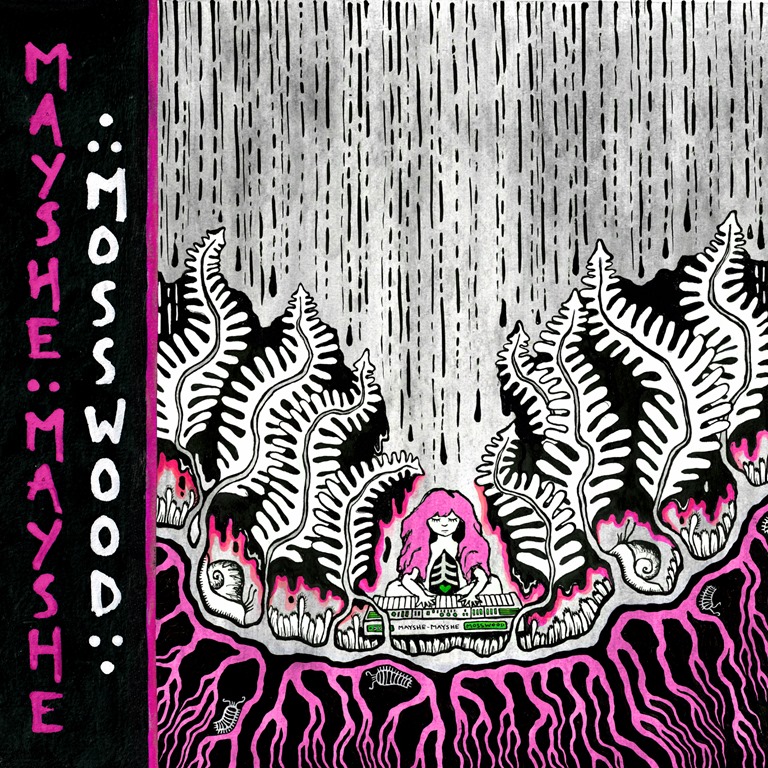
Alice Rowan – aka Mayshe-Mayshe – has documented her own post-lockdown issues with long Covid via her social media, and how it’s impacted her ability to maintain her work-rate. But here she is, finally bringing her third studio album, Mosswood to the world, and it’s the perfect antidote to all the stress and strain of modern life.

She describes it as ‘a dreamy art-pop exploration of mossy woodland and Tove Jansson’s final two Moomin novels… Her music blends dreamy art-pop and electronica with rich storytelling and infectious melodies, with organic elements woven into all aspects of her music.’ You may ask why – why would an adult be so invested in a fantasy world which has such strong connotations of childhood? A reasonable response would be ‘why not?’ In the face of the horrors which surround us everyday, retreating to the comforts of those peaceful, simpler times is the ultimate escapism. And what’s more, there is a strong connection with all things natural here, evoking the woods so many of us yearn to escape to.

Mosswood is introspective and personal, but also a passage to perfect escapism, and Mayshe-Mayshe balances breeziness and an air of naivete with anxiety and inner turmoil. And the result is so, so magnificent, magical, a balm to all of the noise. It’s the twitter of birds, the scratching of bugs, the tinkle of streams. Incorporating field recordings for the first time, on Mosswood Mayshe-Mayshe really brings nature in. Single release ‘Mycelium’ is exemplary: the percussion is more like the footsteps of overgrown insects – I’m reminded of Roald Dahl’s James and the Giant Peach in soe ways. But songs like ‘Tiny Disasters’ push to the fore the tensions and the darker aspects of the creative psyche, and reminds us that sometimes, life is simply difficult to process. ‘I’ll be afraid again…’ she repeats, twitchily, capturing perfectly exactly what it’s like to fret, chew and churn., against a glitchy, flickering beat and buzzing sound backing.

In the main, Mosswood is the sound of dappled shade, of gentility and deep breaths – and the big reverb which surrounds Alice’s voice is less like a cloak and more like a comfort blanket as the listener is led into a soft, gentle soundspace, which evokes snuffling and scuffling, and, more importantly, pure escape. On ‘The Little Things’, she sings in breathy, introspective tones of worries – but the immersive waves wash those worries away.

What Mosswood really tells us is that happy, skippy tunes do not instantly equate to effusions of joy, or endless happiness. That said, Mosswood is the sound of freedom, of connecting with nature, feeling the textures of grass, of bark, of moss. Utilising an array of instrumentation, Mosswood is understated and so, so uplifting. There are so many layers, there is so much detail to absorb. But ultimately, Mosswood reminds us that nature is there, all around, and it’s beautiful and our lives are richer if we engage with it. Look at the trees. Touch the bark. Breathe the air. This is life. Live it. Celebrate it.

AA

Mosswood cover art for digital v2Mayshe promo bug - credit Isobel Naylor

26th January 2024

Christopher Nosnibor

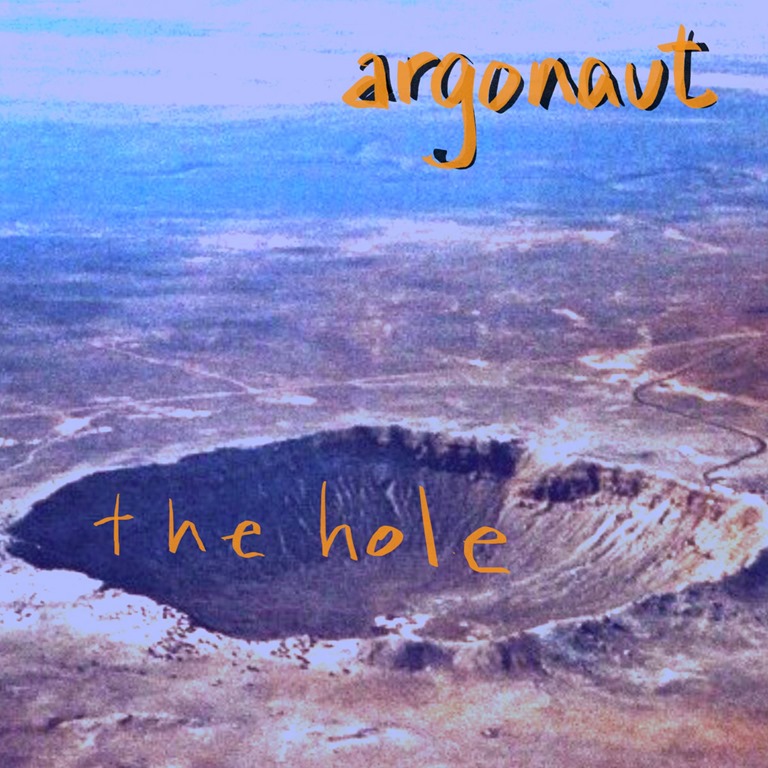
New year, new lineup, new project… having wrapped up their ‘open-ended’ album project Songs from the Black Hat and been whittled down to a three-piece, the prodigiously productive Argonaut herald the arrival of 2024 with a song for Dry January. They describe ‘The Hole’ as ‘A ten minute hymn to sobriety, hibernation and transcending the January blues. A lullaby of heartfelt harmonies trailing into ambient drone to aid deep, meditative alcohol free sleep…’

Lyrically, it’s sparse, and self-explanatory:

People say it’s hard

Because there’s a hole

A gap in your heart

A space in your soul

But I say it’s easy

Because the hole is a bin

To throw the self destructive thoughts

And all the alcohol in

I’m not one for dry January myself, although I certainly respect anyone who does, and I certainly get it. A lot of people do very much overdo it in December, stretching festivities out over the entire month. There are work dos, friends and family to catch up with, and more often than not, doing so involves feed and drink. It’s no wonder people feel like shit and feel the need to quit booze, go on a diet, do Veganuary, and take out a gym membership while making a new year’s resolution to lose the stone or so they gained the previous month.

Perhaps what’s every bit as hard as demonstrating brutal discipline in January – the darkest, bleakest month of the year – is maintaining moderation the whole year round. Such asceticism isn’t easy in such grim times: people naturally seek comfort in food and whatever else makes them feel better – and it’s alright if it makes you feel better, to lift a line from Shellac’s ‘Song of the Minerals’.

I digress: ‘The Hole’ does mark a significant shift for Argonaut, who have pushed forth strongly pursuing a trajectory of snappy to the point songs best defined as choppy lo-fi indie / post-punk crossover with lots of fuzz and reverb. This is a dreamy, drifty dronezer, dominated by thick reverb-soaked synths which surge and swell, ebb and flow. It very much does transport s back to the early 90s on so many levels. It’s not quite The Orb, but it is a very spacey effort which is predominantly instrumental and built around the repetitio of a synth wave and looped bass – or xylophone, or something – sequence of a handful of notes. And so it goes (and yes, I’m referencing Vonnegut there). And it goes… and it goes. It is every bit as meditative and ambient as they suggest, and I can feel my blood pressure dropping as the track progresses.

Counterpart release / nominal B-side, the ‘ambient mix’ runs for some twenty-two minutes, and it’s a thrumming buzz, a piece which stings like a swarm of bees frustrated at their confinement. It’s more of a track to let drift over your, rather than one to listen to intently. But this ‘Post-industrial ambience for urban meditation’ is far from soothing, even by candlelight. The tones are serrated around the edges, and possess a certain edge of aggression. Perhaps I need another whisky. Make it a double.

AA

a1544290615_10

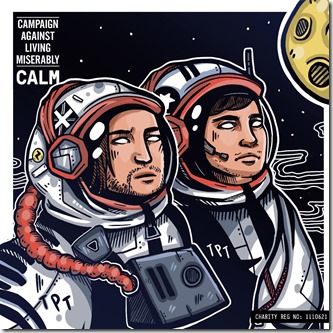
Hull Doom merchants, The Parasitic Twins have released a live video to accompany their latest single; a lo-fi heavy cover of the 90s classic ‘Spaceman’ by Babylon Zoo, which was released on April 5th. All proceeds of the sale are going to The Campaign Against Living Miserably (CALM). The single is taken from a split EP with York-based hardcore punks, The Carnival Rejects (released via Bandcamp on May 31st in association with Man Demolish Records).

Watch the video here:

Of the decision to record the cover, drummer Dom Smith comments: "Man, we love Babylon Zoo. This is a classic track that was way ahead of its time, and we just wanted to mess with it, and we’ll probably stress a lot of people out, but use it as a way to bring attention to an incredible cause in CALM."

Of CALM’s importance on a national scale, Dom adds: "Male mental health is becoming more spotlighted every day, and myself and Max [guitars and vocals] want to offer any support we can to spread the word."

Those interested in donating to CALM can do so here.

The Parasitic Twins will also head out to Europe and across the UK for a run of shows this April with grindcore mates, Boycott The Baptist and Clunge Destroyer:

APRIL TOUR DATES

19th – The Morgue, Leeuwarden – Holland

20th – Muggefug EV, Cottbus – Germany

23 – Bird’s Nest, London – UK

24 – The Parish, Huddersfield- UK

25 – Paradiddles, Worcester- UK

26 – The Bobbin, Lancaster- UK

27 – The Old England, Bristol- UK

28 – Secret Show, Carlisle- UK

Some press releases are special and uplifting and make our day when they land in the Aural Aggro inbox. This is one of those. Because news doesn’t get much better than this.

Hull Doom merchants, The Parasitic Twins today announce a lo-fi heavy cover of the 90s classic ‘Spaceman’ by Babylon Zoo, out on Friday, April 5, 2019 with all proceeds going to The Campaign Against Living Miserably (CALM). The single is taken from a split EP with York-based hardcore punks, The Carnival Rejects (released via Bandcamp on May 31st in association with Man Demolish Records). Artwork for the piece was made by Jess Zchorn.

Of the decision to record the cover, drummer Dom Smith comments: "Man, we love Babylon Zoo. This is a classic track that was way ahead of its time, and we just wanted to mess with it, and we’ll probably stress a lot of people out, but use it as a way to bring attention to an incredible cause in CALM."

Of CALM’s importance on a national scale, Dom adds: "Male mental health is becoming more spotlighted every day, and myself and Max [guitars and vocals] want to offer any support we can to spread the word."

For those interested in donating to CALM can do so here:

CALM

The Parasitic Twins will also head out to Europe and across the UK for a run of shows this April with grindcore mates, Boycott The Baptist and Clunge Destroyer:

APRIL TOUR DATES

19th – The Morgue, Leeuwarden – Holland

20th – Muggefug EV, Cottbus – Germany

23 – Bird’s Nest, London – UK

24 – The Parish, Huddersfield- UK

25 – Paradiddles, Worcester- UK

26 – The Bobbin, Lancaster- UK

27 – The Old England, Bristol- UK

28 – Secret Show, Carlisle- UK

For more information visit:

https://www.facebook.com/ParasiticTwinsBand/

Christopher Nosnibor

It may only be nine minutes on foot from the station according to Google Maps, but despite having probably been maybe twenty or even thirty times, I still find myself struggling to find it, even with GPS assistance. I have no idea why: it’s like I have some kind of mental block, or the venue has some kind of cloaking device that blocks my internal geographical radar. And so I’m disproportionately pleased when I find myself within yards of the venue without taking a single wrong turn. And then I remember the bar doesn’t take cars, and despite having intended to get cash at York station, then Leeds station, then en route, I’ve sailed past all of the cashpoints and only have about four quid on me. Even with beer at £2.80 a pint, I might be a bit thirsty at the end of the night.

I still make it back, with cash, before doors, and they’re not quite done soundchecking. The fact I’m considering plugging up just for the soundcheck brings a small buzz of anticipation: we’re here for some hefty riffage, and it’s best experienced at an appropriate volume. If it doesn’t hurt, it’s not loud enough.

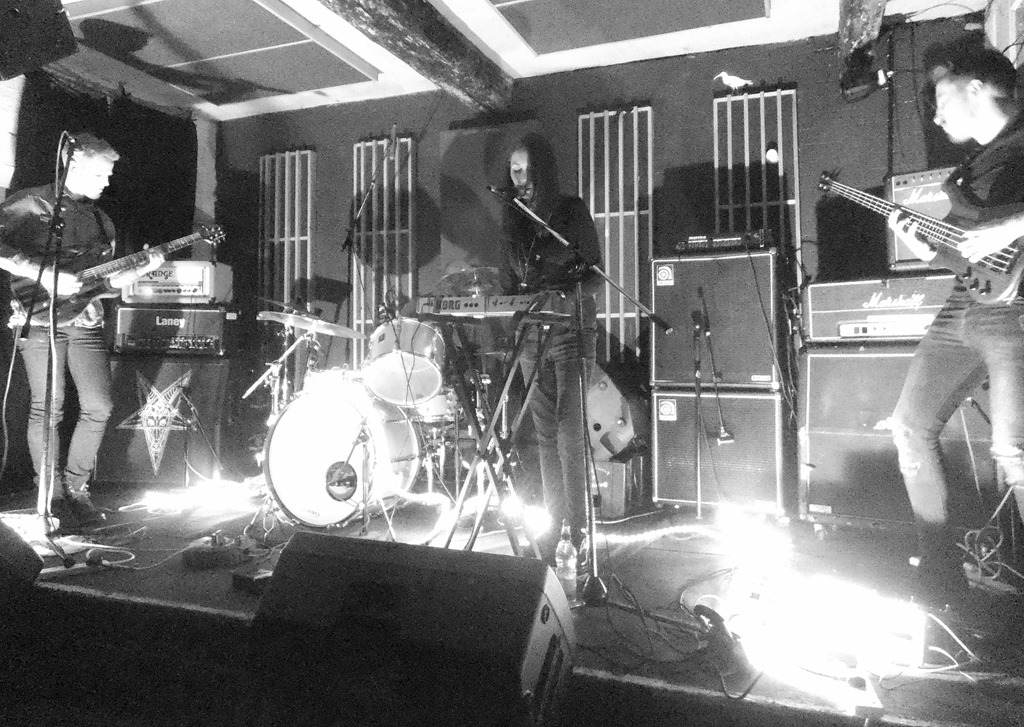
Leeds drums and bass duo Calm are an interesting proposition on paper, consisting of John Sutcliffe from Canvas, Humanfly, Kings, Natterers, and Paul Handley from The Plight, Kings and Ladies Night. In the flesh they’re interesting, too: at the opening, oscillating sequenced synth lines bubble along beneath woozy bass before the distortion crashes I like a tidal wave of sludge. The drums are more energetic than the low-BPM grind of the chords. Structurally, the compositions are segmented and almost sound like three or four pieces glued together, but the transitions make for a set that holds the attention well, and as Sutcliffe, on drums, intones mystical droning incantations into a sea of reverb against a wall of low-end that sends vibrations through my steel-toed boots, the experience takes on an almost spiritual quality.

Calm

Calm

A Headless Horse bring a much more sedate atmosphere with mellow female vocals and delicately layered, meticulously structured songs. Their songs are keenly focused on texture and melody. In contrast to Calm and the rest of the lineup, there’s significantly less weight, and less emphasis on volume overall: that isn’t to say they’re quiet, but when they bring in the riffs, they’re not obliterative, but simply denser. Comparisons aren’t everything, but The Cure and Cranes provide fair touchstones here, and Headless Horse demonstrate that they’re capable of delivering mathy post-rock with emotional resonance. Given that this is only their second outing, they show a lot of promise.

A Headless Horse

A Headless Horse

There’s a proliferation of beards tonight, and Dystopian Future Movies are very much a beard band (singer / guitarist Catherine Cawley clearly excepted). They’re also a very much an atmospheric band, and a band who exploit the dynamics of volume to optimal effect, as abundantly demonstrated by the choppy stop/start lumbering riff of ‘Dulled Guilt’ which opens the set powerfully. Their description of themselves as ‘taking a Sonic Youth approach but arriving at some dark place between Neurosis and Chelsea Wolfe’ is pretty accurate, and they pull the listener in with slow-burning ethereality that yields to punishing riffery, without at any time falling into the trap of formula.

Dystopian Futuere Movies

Dystopian Future Movies

This four-date joint tour sees DFM and Grave Lines unveil a collaborative / split EP, and they’re joined on stage by Jake Harding for a killer rendition of ‘Beholden, which begins a brooding whisper, almost folky in feel, before erupting into thunderous power chords The vocal duet is magnificent: the two singers intertwine with Hardin’s baritone croon underpinning Cawley’s graceful, evocatively gothic intonation to conclude a mesmerising set.

Grave Lines stand out as being very much different from their peers by virtue of the exploration of extended quiet passages that are as much dark folk as post-anything, while exploiting tropes commonly associated with post-rock. This imbues the songs with a palpable emotional depth, and when they crash in with the u-to-eleven distortion, it hits hard.

With ragged hair and beard, wrists and shoes wrapped in grubby shreds of bandage, and a dingy off-white vest, Jake Harding cuts a dramatic and tortured figure as he spews anguish and nihilistic fury, his body tense and wracked, over low, slow sludginess; then again, guitarist Oli, with Alan More hair and beard and sporting a torso so tatood as to appear to be wearing a heavily patterned shirt brings a stoic intensity that’s in stark contrast to the laid-back drumming of Julia Owen, who has an airy style of playing that belies the force with which she delivers stick on skin.

Grave Lines 2Grave Lines

Grave Lines

And yet it’s when Harding ceases words and spits a guttural ‘urrggh’ that most succinctly articulates all the pain and frustration the band channels.

Caroline from Dystopian Future Movies returns the favour of providing additional vocals on Grave Lines’ contribution to the new EP, the epic ‘False Flame’, and they take things right down for the penultimate track of a remarkably concise – but suitably hard-hitting – set with the minimal ‘Loathe / Disgrace’, pairing a droning organ sound which quavers against a vulnerable, melancholic vocal performance.

My notes blur to nothing as the band drive the set home with crushing force with ‘The Greave’. And in this high-volume release lies the uplifting joy of catharsis.