Posts Tagged ‘Cabaret Voltaire’

UK electronic outfit Scissorgun announce their album Scream If You Wanna Go Faster, out November 21 via Dimple Discs. Mixing urban electronica with fuzz and wah guitar, these trailblazers present a solid collection of songs, dances and abstract soundscapes. A must-have for Factory Records collectors, the vinyl includes seven tracks, while the digital and CD versions include three bonus tracks. Ahead of its release, they present the tracks ‘Gone Rogue’ and ‘Bad As Bingo’.

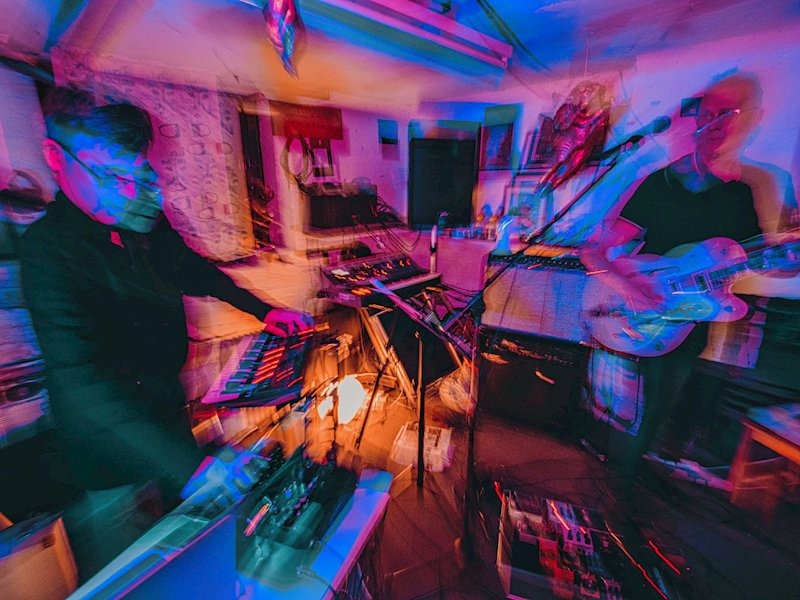
Formed in Manchester in August 2016, Scissorgun is an electronic trio comprised of Dave Clarkson (synths, rhythms, tapes, percussion), Alan Hempsall (vocals, treated guitar, samples, loops) and Adrian Ball (light show and projections). Carriers of Factory Records’ legacy.

“We always operate on instinct and improvisation is the key starting point. Some ideas become structured songs, but others remain as first recorded, with the music finding us and not vice versa. The title is a soft attempt at social comment, intended to be inferred rather than overt,” says Dave Clarkson.

Their musical scope is varied – pastoral dreams one minute and, the next, crashing swathes of noise chased down with a dub twist.

“The idea for ’Gone Rogue’ started with a busy electro bass line and, as soon as we found a good quote from a conspiracy theorist on social media, the whole thing seemed to turn into a polemic against turning your back on humanity in revulsion. We dwell on the impact of the fight for our attention on the individual and the damage done. All the while, the driving beat is pushing us on with heavy cowbells and pulsing bass. We’ll all feel better if we dance,” says Dave Clarkson.

Alan Hempsall adds, “As for ‘Bad as Bingo’, we were both overjoyed when this came out of the mincing machine. We’d been looking for something with a go-go beat to it, so this was perfect. The words flowed automatically as the best ones always do. Broad brush observations of a situation gone bad coupled with a mawkish sentimentality for what’s lost. The glitching and grinding bass line and barking dogs take on a life of their own. Suddenly it all makes sense and the initial spark revolts into structure and form.”

Alan and Dave first met in 2007 when Dave’s band, Triclops, were supporting Biting Tongues at Islington Mill in Salford. Alan was in the audience and was so taken with Triclops’s performance that he wandered over to show appreciation and a friendship was struck up, bonding over a mutual weakness for early industrial, rock and modern jazz. After nine years of gig-hopping and hanging out, the timing was suddenly right for them to organise some jam sessions to see what came out.

It so happens that both of their bands were on hiatus at the time. While Dave Clarkson was in Triclops from 2000 to 2015, he was in White Cube prior to that. He since boasts an extensive catalogue of solo works.

As for Alan Hempsall, he was the vocalist for Crispy Ambulance, who was on Factory Records from 1980 to 1982, before spending five years in the mid ‘80’s playing percussion in a Brazilian Samba band. Hempsall also famously appeared on stage with Joy Division in April 1980, standing in for Ian Curtis at a show in Bury that descended into a riot.

“As with any album, we operate on instinct. Improvisation is the key starting point. At this moment, anything can and generally does come out. The bizarre accidents and serendipity that occur during this process are the parts we keep. Those moments that feel like you’re merely the vessel that the music is transmitted through,” says Alan Hempsell.

Dave Clarkson adds, “Some ideas gradually emerge into structured songs whilst others have the fortitude to remain in their original form to some extent or another. Yet no conscious decision is made. We are not in control. It is the music that finds the musicians. As the body of work is growing and developing, it seems to take on its own identity, something else we appear to have little influence on. So, there is an element of Praxis at work here, we’ll do it because we want to and think up the reasons why later.”

AA
Scissorgun

3rd October 2025

Christopher Nosnibor

Foldhead has been quiet on the output front of late, after something of a purple patch around lockdown, there was a lull, broken by Mirfield Pads in 2022, with only the ‘Single’ release with …(something) ruined since, and a live outing or two. This is the only kind of quiet you’ll get from Foldhead, mind you: the Yorkshire maker of mangled noise likes to turn it up and blast the frequencies – and tones.

If Mirfield Pads ventured towards mellower, more Tangerine Dream-like electronica, Paris Braille sees a return to the harsher territories more frequently wandered by Foldhead.

Paris Braille – the title likely a reference to two cut-up novels by the late Carl Weissner (who not only appeared in some collaborative / split works with Burroughs, including the seminal pamphlet So Who Owns Death TV?, but translated many of his novels for the German market), namely The Braille Film and Death in Paris – is a typically abrasive affair, with the title track being a nine-minute loop of noise which captures of the essence of the ‘derangement of the senses’ Brion Gysin strove to achieve with his multi-sensory performance pieces which extended the concept of the cut-ups to its logical extreme. The thunderous beat, when surrounded by and endless loop, becomes almost trance-like and strangely euphoric. It’s difficult to discern precisely what’s in the mix here: there may be voices, or it may simply be a tricky of the human ear – my human ear – in its quest to seek recognisable forms amidst the formless sonic churn, in the same way one finds the shapes of animals and faces in clouds. In the right context, say, as a remix on a Cabaret Voltaire EP (where it would be right at home, and the William Burroughs / cut-up connection is again relevant here), this would be hailed as an industrial dancefloor stomper – largely because that’s what it is. Intense, hypnotic, relentless, it’s a pulsating, shifting noise beast that slowly spins off its axis and out of control in a swelling surge of sound.

‘CW Loop’ unashamedly harks back to the tape experiments of Burroughs and Gysin from the late 50s and early 60s, which in turn were a huge influence in Throbbing Gristle, and in particular Genesis P-Orridge, who released a selection of archival recordings on the Nothing Here Now But the Recordings LP on Industrial Records in 1980. It is, quite simply, short vocal sample, heavily bathed in echo, looped, and overlayed with a churn of undulating noise.

The third and final track, ‘Film Death’ – the title echoing and mirroring that of the first – round the set off with a return to the thunderous, beat-driven sound of ‘Paris Braille’, this time with a squall of shrill feedback and full-spectrum static. The result is akin to Throbbing Gristle covering Matal Machine Music. In the world of Foldhead, this is absolutely mission accomplished.

AA

a3884873763_10

Cruel Nature Records – 12th September 2025

Christopher Nosnibor

Postmodernism, emerging primarily as a product of post-war America was defined by hybridity, the demolition of parameters and distinctions between different cultures, genres, and was, in many respects, tied to the accelerating pace of technological development, in particular the globalisation of communications and beyond. But postmodernism also not only recognised, but celebrated, the fact that originality has finite scope, and that anything ‘new’ will by necessity involve the reconfiguration of that which has gone before. Shakespeare had all the ground to break in terms of the advent of modern literature, and one might say the same of Elvis and The Beatles with the advent of rock ‘n’ roll and pop respectively. The reason the 80s were such a watershed was because technology revolutionised the potentials for music-making, and while this saw a huge refraction in terms of creative directions, from industrial to electropop, one could reasonably argue that the next leap in music after 1985 came with house and techno.

Post-millennium, it feels like there is no dominant culture, no defining movement, underground or overground: the mainstream is dominated by a handful of proficient but in many ways unremarkable pop acts, and notably, it’s largely solo artists rather than bands, and while there are bands who pack out stadiums, they tend to be of the heritage variety. At the other end of the spectrum, the underground is fragmented to the point of particles. There are some pros about this, in that there is most certainly something for everyone, but the major con is that unlike, say, in the mid- to late-noughties, when post-rock was all the rage, there’s no sense of zeitgeist or unity, and right now, that’s something we could really do with.

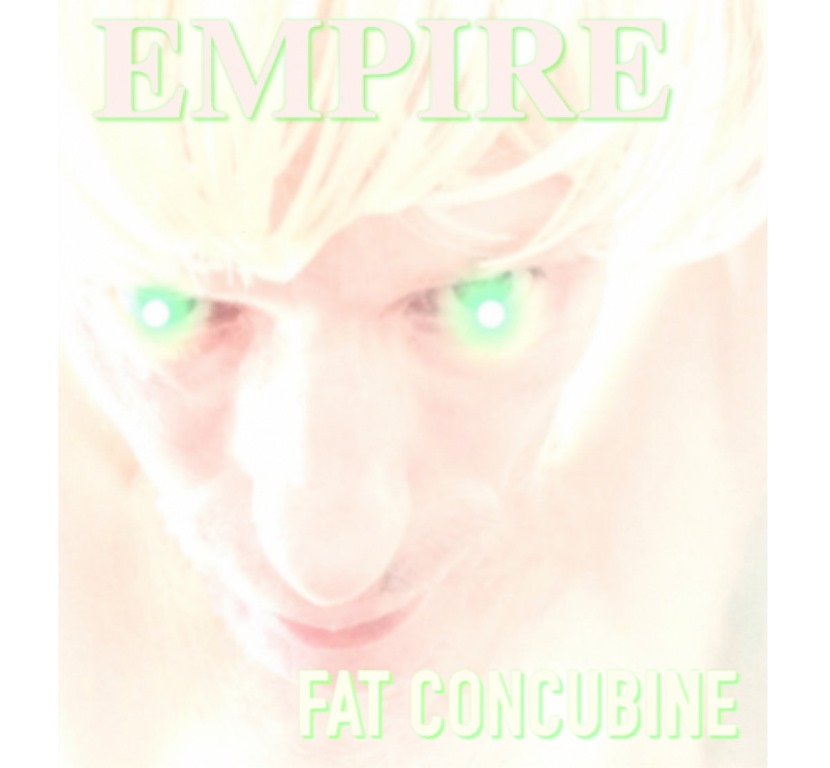
Fat Concubine are most certainly not representative of any kind of zeitgeist movement. With a name that’s not entirely PC, the London acts describe themselves as purveyors of ‘unhinged dance music’, and Empire is their debut EP, following a brace of singles. The second of those singles, ‘for Whom the Fools toll’ (with its irregular capitalisation, which is a bit jarring), is featured here, along with four previously unreleased tracks. This is a positive in my view: so many bands release four, five, or six tracks as singles, and then put them together as an EP release, which feels somewhat redundant, apart from when there’s a physical release.

And so it is, in the spirit of wild hybridisation, that they’re not kidding when they say their thing is ‘unhinged dance music’, or as quoted elsewhere, ‘unhinged no wave ravers’. ‘Feeding off the dogs’ pounds in melding angular post-punk in the vein of Alien Sex Fiend with thumping hardcore techno beats, and it’s not pretty – although it is pretty intense. The snare drum in their first thirty seconds of ‘for Whom the Fools toll’ takes the top of your head off, and the rest of the ‘tune’… well, tune is a stretch. It’s brash, sneering punk, but with hyperactive drum machines tripping over one another and a stack of synthesized horns blaring Eastern-influenced motifs.

There are hints of late 80s Ministry about ‘When we kick Their front door’, another synth horn-led tune that begins as a flap and a flutter before a kick drum that’s hard enough to smash your ribs thuds in and pumps away with relentless force. If the notes didn’t mention that it was a perversion of ‘These Boots We’re Made for Walking’, I’d have probably never guessed. As the song evolves, layers and details emerge, and the vibe is very much reverby post-punk, but with an industrial slant, and a hint of Chris and Cosey and a dash of The Prodigy. If this sounds like a somewhat confused, clutching-at-straws attempt to summarise a wild hotch-potch of stuff, to an extent, it is. But equally, it’s not so much a matter of straw-clutching as summing up a head-spinning sonic assault.

‘tiny pills’ is a brief and brutal blast of beat-driven abrasion, with a bowel-shaking bass and deranged euphoric vocals which pave the way for a finale that calls to mind, tangentially, at least, Cabaret Voltaire’s ‘Nag Nag Nag’.

The version of ‘O so peaceful’ was recorded live, and builds to an abstract chanting drone work. It offers a change of angle, but is no less attacking, its percussion-heavy distorted, shouting racket reminiscent of Test Department and even Throbbing Gristle, particularly in the last minute or so, and you can feel the volume of the performance, too. This is some brutal shit.

Empire is pretty nasty, regardless of which angle you approach it from. It’s clearly meant to be, too. Harsh, heavy, abrasive, messed-up… these are the selling points for this release. And maybe having your head mashed isn’t such a bad thing if you’re wanting to break out of your comfort zone and really feel alive.

AA

a1581875889_10

British electronic artist Max Rael presents ‘Pressing Against The Glass’, a danceable elegy for the unbelonging. Capturing the deep-seated ache of being on the outside, this is a soundtrack for those who feel eternally separated from the warmth and safety they can only observe.

Based in Hertfordshire, Max Rael is a key creative force in the UK underground through 1990s-2000s electro-goth trailblazers History Of Guns, frontrunners of the Wasp Factory / FuturePunk scene, and Decommissioned Forests. Here, he showcases his singular talents on this record, featuring unique twists on sound design and his acclaimed outsider lyrical perspectives. Musician, writer, actor, engineer and producer, Max Rael has collaborated with Fish (Marillion), Last July, Kommand + Kontrol, Freudstein and Bienheldenschafgegenstand.

“I’ve always been taken by the image of someone being outside alone in the cold looking in through a window to warmth, comfort and safety that’s not for them. I was thinking of Heathcliff looking through the windows of Thrushcross Grange in Wuthering Heights or Frank Abagnale Jr in the film "Catch Me If You Can", outside in the snow at Christmas, unseen looking in through the window at his mother with her new family, happy and warm indoors and realising there is nowhere he belongs, and no one he belongs to,”  says Max Rael.

This is the latest audio-visual offering from his debut solo album The Enemy Is Us, released via London imprint Liquid Len Media. Offering up a dark bouquet of minimalist synth, darkwave and spoken-word electronic pop, this album introduces Rael’s compelling ‘futuretroist’ sound: an alternative sonic universe built on a unique sound design that feels at once familiar and alien.

AA

AA

Rael’s powerful and thought-provoking spoken-word lyrics confronts a world in freefall—its corruption, alienation, and misery. The result seemingly effortlessly conflates a painfully personal portrait of an interior world, with an achingly universal depiction of society and the world outside. He still unearths a resilient core of hope and gallows humour that burns brightly through the darkness, offering a complex and compelling take on the human condition.

Earlier, Max Rael released the poignant shadow-streaked ‘Slightly Less Than Human’, a nervy electronic track with a great hooky synth melody and spoken word vocals. Partly inspired by Japanese author Osamu Dazai. Lyrically, Max Rael relays his feeling of being somehow different from the rest of the human race, while the non-album B-side ‘When the Only Winning Move Is Not to Play’ relates to the 1983 film War Games and the book The Games People Play by Eric Berne.

In April, Max Rael shared his spoken-word electronic pop song ‘Brighter Future’, where he questions avoidant strategies of coping with life in a seemingly increasingly chaotic and unsafe world and queries how can we reverse course from an anticipated dystopian future. The B-side ‘The People We Love Have Won (Persistence Is All)’ is a darker beast, named after Coil’s 2000 London performance at The Royal Festival Hall, which also happens to be tattooed on the inside of Rael’s left wrist.

Spoken word, electronic music and loud drums feature strongly on the 12-track album, produced and mixed by Max Rael with additional mixing by Caden Clarkson and mastered by Pete Maher (U2, Nick Cave, Depeche Mode, Pixies. Nine Inch Nails). Fusing a range of electronic music styles with other genres, Max Rael is a master journeyman of existential exploration into humanity, self, society, reality, psychology, philosophy and the future.

Max R

Cruel Nature Records – 4th April 2025

Christopher Nosnibor

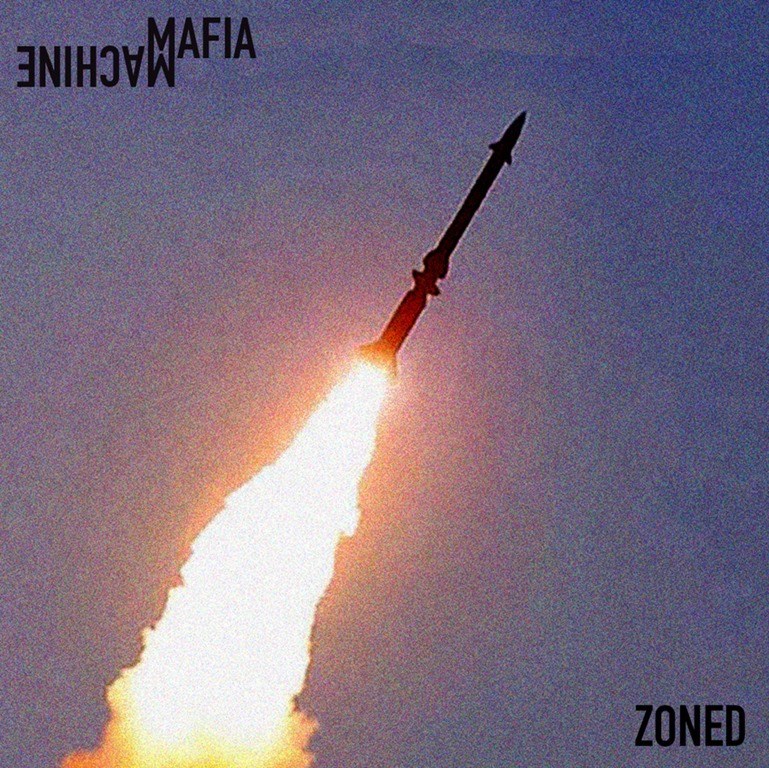
Machine Mafia may be largely unknown, but the duo’s members have some pedigree, being Adam Stone of Pound Land and Jase Kester (Omnibadger/Omnibael/Don’t Try/Plan Pony), all regulars at Aural Aggravation. Jase joined Pound Land’s ever-shifting lineup as the (then) sixth member in 2023 for a handful of live shows, and contributing additional noise to Mugged (because it needed more noise). Deciding to collaborate in early 2024, they slipped out a couple of self-released EPs, which as the notes which accompany Zoned observe, ‘more or less went under the radar at the time’ – which is why they’re getting a second go here, with Zoned being a compilation of those EPs plus four new tracks, or a new EP packaged with the previous ones, depending on your perspective. The tracks aren’t in their original order of release, and have bene resequenced, presumably for the purpose of creating a flow that’s sonic rather than chronological. And so it is that the album starts with ‘Killzones’, arguably the most overtly Pound land-like track on the album, which eases fans of Pound Land into the world of Machine Mafia nicely, or will otherwise alienate pretty much everyone else, unless they’re on the market for something that sounds like Sleaford Mods in collaboration with PiL while monged on Ketamine.

They describe themselves as ‘a voice/electronics duo in the grand tradition of Suicide, Silver Apples, Soft Cell, Pet Shop Boys etc.’ And it is indeed a grand tradition, to which one would reasonably add Sparks, Air, and Erasure, and even the final incarnation of Whitehouse, although what this list ultimately achieves is to demonstrate just how wide-ranging the electronic duo format stretches in terms of style. I very much doubt you’d find these guys donning big hats or flamboyant costumes and kicking out a set of brassy dancefloor-friendly pop bangers, at least on the evidence of the thirteen tracks on offer here. They recount that their first gig was ‘in a small craft ale bar in the Staffordshire town of Leek, receiving a ban for high decibel levels and foul language’. This sets the bar of expectation, and in this context, Zoned does not disappoint.

As I suggested in my write-up of the Killzones EP, the electronic duo they share the most common ground with is Cabaret Voltaire in their early years, mashing up samples and noise in a Burroughsian cut-up style, and churning out gnarly noise that sits between Suicide and Throbbing Gristle. This is particularly true of the collage chaos of ‘Lecture 0.3B’,

But then, ‘F.O.S’, is a blast of uptempo, lo-fi, bass driven drum-machine propelled hardcore punk strewn with feedback and snarling aggression, and ‘Where’s The Money Gone?’, from the Money Gone EP is a filthy racket with massive blasting beats which lands in the space between The Fall and Big Black, powering away at a motorik groove for the best part of six minutes while Stone hollers thickly and ever-more desperately ‘where’s the money gone?’ Well, we know it’s not gone into public services, but there some mega-rich cunts swanning around and jetting into space. And has anyone seen Michelle Mone since she sailed off on her multi-million quid yacht?

‘England’, originally released on Industrial Coast’s ‘Rock Against Racism’ compilation is very Throbbing Gristle, in the (pulsating) vein of ‘Very Friendly’.

Of the four new cuts, ‘Crabclaw’ invites comparisons to Selfish Cunt’s ‘Britain is Shit’, and this may not be entirely accidental, a stinking snarling assault on culture and the senses, with an overloading gritty bass and vitriolic vocals ranting in a mess of distortion and reverb over the murky morass of a musical backing. It’s the sound of frustration, it’s the sound of anger mashed together with despair. ‘Jackpot’, meanwhile, is like John Cooper Clarke spouting over a segment of Metal Machine Music. All the while, a drum machine and throbbing bass pulse away relentlessly: this is Sleaford Mods for real punks. ‘Human Like’ revisits the dubby tendencies first explored with ‘Killzones’, and it’s a dark, sprawling cavernous hell of reverb atop an organ-shaking bass, again bringing together PiL (think ‘Theme’) and Throbbing Gristle (think ‘What a Day’). It’s meaty, and then some, and crunches and grinds away for a full six echo-soaked minutes. Closing with the eight-and-a-half-minute megalith that is ‘Outside My House’, they go full Whitehouse, with a booming bass that’s positively weapons-grade density, over which Stone delivers a rabid, drawling rant from the perspective of a crabby right-wing old-timer while electronic extranea bubble and eddy around. It’s utterly brutal, and completely uncomfortable, and this is the brilliance of Machine Mafia. Gnarly, nasty, uncompromising, Zoned is not friendly, and it will leave you feeling drained, harrowed, punished. Mission accomplished. You’re not supposed to like this.

AA

a2183471837_10

Felte FLT-089 – 14th July 2023

Christopher Nosnibor

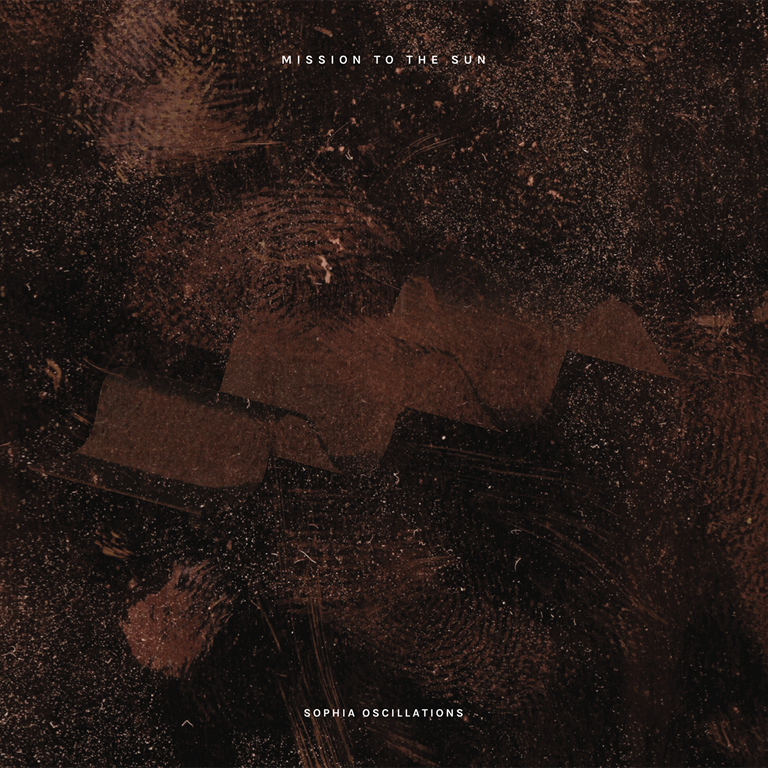
Mission to the Sun is Chris Samuels of Ritual Howls fame (synths, samples, programming) and Kirill Slavin (vocals/lyrics), and comes recommended for fans of Wolf Eyes, Moin, Throbbing Gristle, Coil, The Legendary Pink Dots, Drew McDowall, Suicide, Cabaret Voltaire, etc.

Sophia Oscillations is their second album, and it pitched as ‘an immersive journey through the dark corners of post-industrial music’, whereby ‘The Detroit based duo continues the sonic exploration started on their debut album Cleansed by Fire, while delving deeper into themes of isolation and lost communication. Christopher Samuels’ synths, samples and rhythmic programming is accented by Kirill Slavin’s haunting vocal delivery as the listener receives intersperse audio recordings from the outer reaches of inner space.’ This may seem an unusual angle of approach given their chosen moniker, but the one place hotter than the sun or the earth’s core is the core of what it is to be human. We still understand space better than we understand the deep sea, and the deep sea better than we understand the human mind. There is much scope for exploration in every sphere.

William Burroughs famously described ‘Scottish Beat’ writer Alexander Trocchi as a ‘cosmonaut of inner space’, although he also applied the label to himself, stating ‘In my writing I am acting as a map maker, an explorer of psychic areas, a cosmonaut of inner space, and I see no point in exploring areas that have already been thoroughly surveyed.’

This is an appropriate context for the eight compositions which make up Sophia Oscillations, which are essentislly beatless but strongly rhythmic in form. If they belong to the lineage of the avant-garde and the industrial music of the late 70s, it equally draws on a host of other, more contemporary threads in order to forge something quite different and ultimately new.

‘Drowning’ surges and pulses, rippling waves washing over a slow-treading bassline which wanders up and down, stepping somewhere between DAF and The Cure’s Carnage Visors while the vocals whisper and wheeze low in the mix, a stealthy monotone that’s both tense and detached. Whistles of feedback strain from the speakers and wrap themselves around the whole drifting expanse. Things take a turn for the abrasive on the title track, with machine-gun blasts of noise cutting through grainy swathes of bleak ambience, gradually fracturing and fragmenting quite uncomfortably.

There are hints of medievalism and classical on ‘Censor Sickness’, but they’re melted into a dark murk of muttered voices and unsettling atmospherics, and the combination is quite unsettling and far from comfortable: if anything, it’s queasy, and the minimal yet noisy ‘Unborn’ pushes this to another level: stark, metallic, robotic electronica, it has an 80s dystopian feel which again calls to mind DAF and Cabaret Voltaire. The late 70s and early 80s were exciting because musicians with limited means – and ability – were finding ways of using emerging, and increasingly affordable – technology to make music which represented the world in which they found themselves. As such, the emergence of experimental electronic music and industrial music was born out of a collision of multiple factors, none of which will ever recur, and for this reason can never be recreated.

Mission to the Sun aren’t attempting to recreate history here, but instead, Sophia Oscillations finds them processing history through their own filters. ‘Attrition’ brings together post-rock and crunching industrial electronica with a dash of Gary Numan and more detached spoken-word vocals, and it’s a hybrid that isn’t easy to process, because it all feels so alienating. But then, articulating alienation always does.

The churning grind of ‘Cornerstone’ sounds like the intro to something by Big Black, but instead of Roland kicking in, alongside a relentless bass, it just grinds on and on, and it’s dark and messy. Once again, Slavin’s voice is half-buried in the mix: it’s difficult to decipher the words, and his voice hovers, blank, flat, vaguely Dalek-like, in the vein of Dr Mix, but less harsh.

Sophia Oscillations is a challenging album. Yes, it’s unsettling, bleak, stark sparse, but the hardest part is the fact it doesn’t confirm to any one genre, it doesn’t follow any obvious or specific form, and it’s not the fact that it’s unsettling and difficult to find a place for it that’s the issue, but the fact it keeps you tense and on edge for its duration. But, perhaps even more than that is the fact it feels removed from anything human. But it’s not so far removed as to be alien. The brain simply isn’t equipped to process the inhuman– or the near-human-but-not-quite, the uncanny, the unheimlich. Because we recognise it, and yet we don’t. Sophia Oscillations brings the challenge right in front of your face. Sit back, draw breath, process. This isn’t an easy ride.

AA

FLT089_front

Bearsuit Records – 31st August 2022

Christopher Nosnibor

I may have mentioned it before, but I always get a buzz when I see a jiffy marked with an Edinburgh post stamp land on my doormat mat and I realise it’s the latest offering from Bearsuit records. Because while whatever music it contains is assured to be leftfield and at least a six on the weirdness spectrum, I never really know what to expect. That lack of predictability is genuinely exciting. Labels – especially micro labels which cater to a super-niche audience tend to very much know their market, and while that’s clearly true of Bearsuit, they’re willing to test their base’s boundaries in ways many others don’t dare.

Andrei Rikichi’s Caged Birds Think Flying is a Sickness is most definitely an album that belongs on Bearsuit. It doesn’t know what it is, because it’s everything all at once: glitchy beats, bubbling electronica, frothy screeds of analogue extranea, mangled samples and twisted loops and all kinds of noise. As the majority of the pieces – all instrumental – are less than a couple of minutes long, none of them has time to settle or present any sense of a structure: these are fragmentary experimental pieces that conjure fleeting images and flashbacks, real or imagined.

‘They Don’t See the Maelstrom’ is a blast of orchestral bombast and fucked-up fractured noise that calls to mind JG Thirlwell’s more cinematic works, and the same is true of the bombastic ‘This is Where it Started’, a riot of rumbling thunder and eye-poppingly audacious orchestral strikes. Its counterpart and companion piece, ‘This is Where it Ends’ which closes the album is expensive and cinematic, and also strange in its operatic leanings – whether or not it’s a human voice is simply a manipulation is immaterial at a time when AI—generated art is quite simply all over, and you begin to wonder just how possible is it to distinguish reality from that which has been generated, created artificially.

Meanwhile ‘At Home I Hammer Ceramic Golfing Dogs’ is overtly strange, a kind of proto-industrial collage piece. ‘What Happened to Whitey Wallace’ is a brief blast of churning cement-mixer noise that churns at both the gut and the cerebellum. Listening, you feel dazed, and disorientated, unsettled in the stomach and bewildered in the brain. There is simply so much going on, keeping up to speed with it all is difficult. That’s no criticism: the audience should never dictate the art, and it’s not for the artist to dumb things down to the listeners’ pace, but for the listener to catch up, absorb, and assimilate.

‘Player Name: The Syracuse Apostle’ slings together some ominous atmospherics, a swampy dance beat and some off-kilter eastern vibes for maximum bewilderment, and you wonder what this record will throw at you next.

In many respects, it feels like a contemporary take on the audio cut-up experiments conducted by William Burroughs and Brion Gysin in the late 50s and early 60s, and the titles only seem to further correspond with this apparent assimilation of thee random. I suppose in an extension of that embracing of extranea, the album also continues the work of those early adopters of sampling and tape looping from that incredibly fertile and exciting period from the late 70s to the mid-80s as exemplified by the work of Throbbing Gristle, Cabaret Voltaire, Test Dept, Foetus. These artists broke boundaries with the realisation that all sound is material, and that music is in the ear of the beholder. This strain of postmodernism / avant-gardism also follows the thread of Surrealism, where we’re tasked with facing the strange and reconciling the outer strange with the far stranger within. Caged Birds Think Flying is a Sickness is an album of ideas, a pulsating riot of different concepts and, by design in its inspiration of different groups and ideas, it becomes something for the listener to unravel, to interpret, to project meaning upon.

Caged Birds Think Flying is a Sickness leaves you feeling addled and in a spin. It’s uncanny because it’s familiar, but it isn’t, as the different elements and layers intersect. It’s the sonic representation of the way in which life and perception differ as they collide.

AA

a3019257531_10

On leaving the seminal is supremely underground Third Door From The Left in 1981, which emerged from the early Industrial scene as represented by Cabaret Voltaire and Throbbing Gristle, Canadian Kevin Thorne began recording as We Be Echo, before halting abruptly in the mid-80s. After some time out, and some time spent working as LivingWithanAngel, Thorne resurrected We Be Echo, since when there’s been no looking back.

The pandemic proved to be a fertile time for Thorne, knocking out three albums and an EP in 2021. 2022 got off to a strong start with E-volution. With another album in the pipeline, John Wisniewski was fortunate to get some time to pitch some questions to Kevin Thorne about his remarkable recent output and reflect on his extensive catalogue and 40+ year career.

JW: What is it like recording your latest We Be Echo 2022 release, No Truth, No Lie? You have been recording for about 40 years now. What has kept you going?

KT: I sold off all my gear in England (in the early 90’s I believe, as my last release was ‘I Dance In Circles’ on LiveEvil’s A Conclusion Of Unrestrained Philosophy compilation CD in 1989), and stopped doing anything musically. It was a dark time for me. In 1998 I moved to Canada, and once settled I started experimenting with music again, this time digitally. It wasn’t until the pandemic started and I bought a bass guitar that I did so in earnest. Music flowed out of me almost faster than I could get it recorded. I released Darkness Is Home, The Misanthrope and Isolation in 2021, followed by E-volution in 2022. I’m over halfway through my second album this year, No Truth, No Lie, which has a somewhat different feel to it than the previous releases, and I’m immensely proud of the tracks on it so far. I have several other tracks recorded and finished that I feel are good but just don’t make the cut for this album.

I record because I enjoy it. Especially this past two years, when it’s been my therapy. Since Gen dropped her body, it’s also been my way to keep communication open. When a track comes together particularly well I feel Gen’s presence. I still get a thrill producing a song that I love, and I will continue recording until that stops.

After I release a new album I tend to go through a mini depression. Because I love the album so much, and out so much into it, when I release it into the world and it gets virtually no response, it is upsetting. But after a couple of weeks, I get the urge to record again.

Any trends that you have seen come and go?

I’m not a trend watcher.

Where do you find inspiration to compose?

I think that the way I create music is quite unusual in that I don’t know where the song will take me, I have almost no control in the matter. It evolves from a bass and drum beginning (occasionally guitar and drum), then goes where it wants to, it feels like it has almost nothing to do with me. If I try to create something in a particular way, it generally moves itself the way it wants to. I still work full time, so I mostly record on weekends. I get up around 8am, go grab breakfast then relax for a bit and if I feel like it I go into the studio and record. Often nothing happens, occasionally a track comes together really fast. Sometimes it takes a few listens before I can appreciate what it could become. I usually record drums/bass (often several tracks of bass), then listen to that and wait for the lyrics to arrive… sometimes that’s easy and sometimes not. Then I flesh it out with more guitar or bass. I record the vocals in the basement when I’m alone (I’m still stupidly shy about singing), Listening to the track on an old iPhone with headphones while using my iPhone to record. On two of the songs on the upcoming album I started with lyric thoughts and recorded using them – the lyrics and vocals were recorded in one take with no editing, giving it a more “live” feel.

Any favorite electronic and industrial music artists?

Major Influences are TG, PTV, Cabs, but I listen to a lot of different kinds of music. Not much electronic or industrial these days though.

image3

Image provided by artist

You worked with Raye Coluori in your early days. What was that like?

Raye was great to create with, and we still chat and record on occasion. I was sick with Covid when he was in Toronto recently so missed out on a physical catch-up which was upsetting.

Recording with TDFTL was fun, our music was created in a similar way to we be echo, we started with drum and bass (me), and Raye (guitar or keyboard) and often some pre-recorded speech, then built it up from there. We recorded everything in case something worked. I think Raye still has the rehearsal tapes. I have one somewhere. His confidence really helped me boost mine. We played two binaurally recorded gigs, that we released on tape. For one track on our “Face The Firing Squad” cassette, we used a drum track sent to me by Mal (Cabs), and made good use of the Roland Chorus Space Echo I bought from TG’s Chris Carter. I still feel this album stands up, even after 40 years!

We have recorded and released one track together since I moved to Canada, and hope to do more, always seems I’m busy when he’s not and vice versa.

Later you recorded Ceva Evi. What was that experience like?

Recording on my own meant I could record what I wanted when I wanted which was very freeing. I loved the idea of using Gen’s Tibetan Thighbone trumpet on a track but couldn’t get it organized for the regular edition release, however Dave Farmer (iham) sorted it out for the special edition and he and Gen both play on the track ‘Inside Life’s Wire’.

Any future plans and projects?

I recorded a track with Iham that he will be releasing as a 12” single, and we are working on a new track now. The music we record leans more toward industrial than mine does.

I just finished a collab as Dream Duchess with Marcy Angeles that’s available on her bandcamp. I also sent out bass and drum stems of a track to a few people to see what they would do with it and have had some pretty amazing responses, but not enough to make it a release yet.

I’m also working, when time permits, on another album of old music (“Forgotten Beats”) that hasn’t seen a release yet, or was released in a very obscure manner originally.

Is there anyone that you would really like to collaborate with?

I’m open to collabs. There are many people it would be an honour to work with.

AA

a1280685993_10

Cold Spring Records – 16th April 2021

Edward S. Robinson

William Burroughs maintained a prolific output over the course of his lengthy career, and not only in the written form, committing many hours of recordings to tape. Yet even now, Brion Gysin’s contribution remains largely overlooked, despite being not only the man who ‘discovered’ the cut-ups and introduced the idea to Burroughs, but as a long-term collaborator and an outstanding polyartist in his own right. This album devotes a significant portion of the second side to Gysin’s recordings, and goes some way to redress the balance, although one suspects the immense Burroughs mythos will mean Gysin will eternally exist as a (lengthy) sidenote.

A great many of those recordings made by Burroughs – with Gysin – have been released, and a number are almost legendary in Burroughs circles in their own right, notably the 1965 introductory collection Call Me Burroughs (re-released recently), and the collection of audio experiments released in 1981 on Throbbing Gristle’s Industrial Records as Nothing Here Now But the Recordings.

Now, the last time I reviewed a Burroughs release, Let Me Hang You, back in 2016, I copped some flak from certain quarters of the online community of Burroughs fans and experts for having failed to spot that what was pitched as a ‘new’ recording excavated from the archive was in fact a previously-released recording of Burroughs with new music. My bad, as they say: I’d failed to fully research all aspects of my 1,400-word critique. Like The Who, I won’t get fooled again.

The liner notes for this vinyl-only release contextualise as follows: ‘Rare recordings of beat/cut-up writers and artists William S. Burroughs and Brion Gysin. Comprises the complete recording of Burroughs reading live in Liverpool in 1982, plus performances by Gysin of a selection of his permutated poems, as well as home recordings made by the pair in Paris in 1970. All recordings are taken from original tapes in the British Library collection.’ If ‘rare’ suggests unreleased or otherwise incredibly difficult to find, it’s worth noting that this exact track listing was released on CD, with a running time of sixty-six minutes, in 2012 by the British Library on its own label under the title The Spoken Word, credited to William S. Burroughs and Brion Gysin and is available via Discogs for a tenner. The cover image is also the same as the British Library release. That said, of all the Burroughs CDs I own, this isn’t among them, and I’ve never seen a copy or heard the majority of the material, and in many ways, this is as much about the artefact as it is about the material, and if the title seems a little lacking, at least it’s descriptive of the contents.

The Live in Liverpool recording is an interesting one, recorded as it was the night after Burroughs’ reading in Manchester as part of The Final Academy tour, where Burroughs featured alongside Cabaret Voltaire, Psychic TV, and 23 Skidoo, as well as screenings of the experimental movies Burroughs made with Gyson and Anthony Balch. The Manchester Hacienda performance was filmed, but only edited highlights made it to the ‘Final Academy Document’ released in 1983 on Factory subsidiary IKON, and re-released on DVD by Cherry Red in 2002.

However familiar you may be with Burroughs’ voice, the first few minutes of playback on a recording has an impact. No-one else sounds like Burroughs: that perfectly-enunciated drone – well-spoken, slow, deliberate – not a drawl as such, just a flat, paced rhythm with unique intonation and timbre just hits you somehow. And so it does again as that voice echoes across the decades from c.1963 on the first piece, ‘The Beginning Is Also The End (Excerpt)’, also credited elsewhere by its opening line, ‘I am not an addict, I am the addict’. Cracked, as dry as parchment, the voice summarises one of the leading themes of his work, particularly his most famous novel, Naked Lunch.

The Liverpool set opens with a reading from the foreword from his recently-completed but as-then-unpublished novel The Place of Dead Roads, where he outlines the world view that divides the population into Johnsons and shits. Obviously, back in 1982 he could not have predicted the rise to power of a shit called Johnson. The performance finds Burroughs – then aged sixty-eight in fine form – sprightly, energetic, and engaging, and demonstrating precisely why he was in demand as a spoken-word performer during his later career. He’s not only a great performer – clearly well-rehearsed, he doesn’t fluff a line, and his timing is impeccable – and entertaining, but he’s also funny, the tongue-in-cheek humour perhaps translating better via the medium of spoken word than on the page. The lively characterisations are delivered with gusto, and the audience response speaks for itself. You didn’t have to be there to appreciate this, but is certainly makes you wish you had been. Touching on smallpox and ‘anti-vaccination cults’, we’re once again reminded of Burroughs’ prescience.

Gysin’s voice – also well-spoken, but distinctly English and sounding for all the world like a 1950s newscaster as he advocates trying cut-ups for yourself to see the words ‘gush into action’ – contrasts with Burroughs’, and the audio quality of ‘Cut-Ups Self-Explained’, recorded between 1960 and 1962 but which would not see the light of day as a text until 1978 on the publication of The Third Mind, is somewhat muffled. But as an archival recording, it’s absolute gold. It’s hard to really know what’s going on during ‘I Am This Painter Brion Gysin’, and it sounds like the scraping of a marker against a wall-mounted pad. You feel as if you’re only getting half the story.

But then the sequence of ‘pistol poems’ is something else: bewildering, baffling at times they are best appreciated as sound, and works rather than poems hearing Gysin work through the permutations of ‘I’ve Come To Free The Words’, ‘No Poets Don’t Own Words’, ‘Kick That Habit Man’ and ‘I Am that I Am’ is revelatory (the latter featuring some wild pitch-shifting and delay / echo effects), although his delivery of ‘Junk is No Good Baby’ is simply hilarious. The layered cut-up experiment of ‘Calling All Reactive Agents’, which featured on the Break Through in Grey Room album on Sub Rosa in 1986, is also a remarkable example of rudimentary sampling and looping a fill two decades before the start of the real electronic revolution which saw the likes of Cabaret Voltaire and Foetus advance the principles in a musical context.

The four short Burroughs tracks that close off the album are scratchy experiments in multi-tracking that might not sound like much now, but in context, they provide essential insights into recording history.

As such, while this release provides no material which hasn’t been circulated before, it does bring a remarkable collection of material back into focus, and perhaps to a new audience – and of course, on a format that previously wasn’t available. For that experience of sitting down and concentrating, vinyl is hard to beat, and this is a release worth digesting at leisure.

AA

a2467006287_10

Klanggalerie – 18th December 2020

Christopher Nosnibor

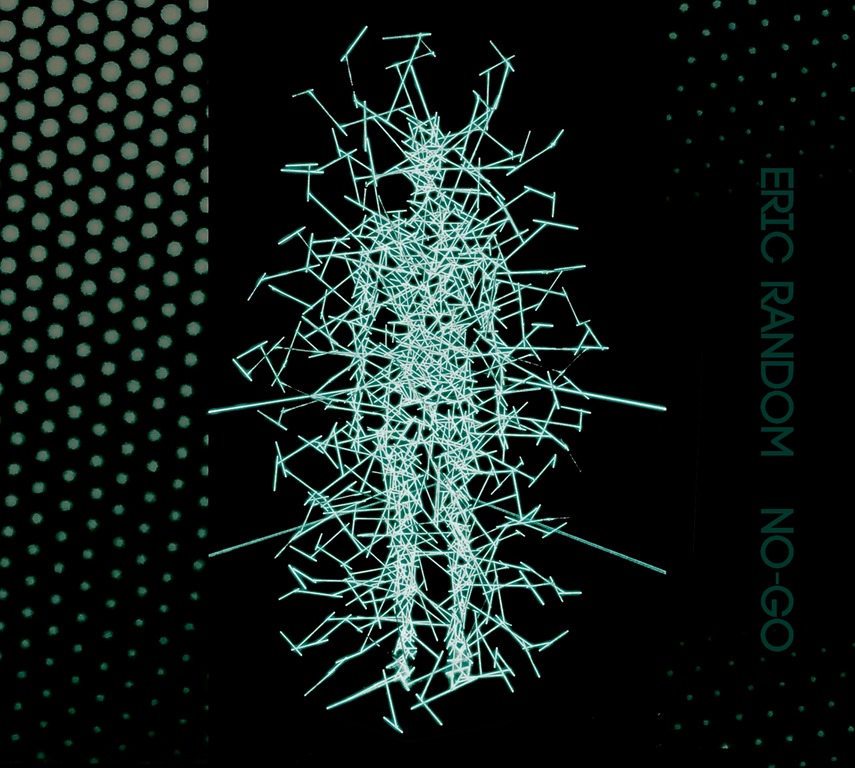
There’s no questioning Eric Random’s pedigree, having begun his musical career with The Tiller Boys with Pete Shelley and Francis Cookso before becoming part of the post-punk and experimental milieus of both Manchester and Sheffield, recording his first solo works at Cabaret Voltaire’s studio, and later fronting Nico’s band until her death in 1988. But while many artists dine out on their former glories – and it’s true that since the majority fail to scale to any great heights, a brimming resumé is something to celebrate, there’s equally a certain truth in the belief you’re only as good as your latest work.

No-Go is his fourth album since his return in 2014 following a lengthy time out. Pitched as a step further into an electronic dance direction, and inviting comparisons to Wrangler and Kraftwerk, No-Go is brimming with 80s stylisations, and all the 808 and Akai snare cracks and robotix vocals you could imagine are crammed into these eleven tracks.

A jittery stammer runs through the entirety of the opener, ‘Synergy’, while all over, multiple other synth sounds swipe and bleep over the ultra-retro groove, and all over, Random recaptures not just the sound of the late 70s and early 80s scene in which he was so deeply immersed in, but also the feel of the period. It’s easy to forget just how vibrant the energised spirit of newness was around that time, with the rapidly evolving – and ever-cheaper – technology opening new doors to seemingly infinite possibilities. This was music that sounded like the future in every sense, and while a lot of it may sound dated now, the fact there appears to have been some kind of revival or renaissance under way for the best part of the last 30 years speaks volumes. Of course, where Random differs from the oceans of retro revivalists is that he’s not attempting to reconstruct a fantasy version of a bygone era: he was there, at the cutting edge, doing precisely this.

‘Compulsion’ is a bleak wheezy cut with tinny marching drums and vocal that are oddly reminiscent of early New Order in their flat, distanced delivery. It’d Depeche Mode that spring to mind in the opening bars of the buoyant yet bleak ‘Is the Sun Up’, but then

‘Sinuous Seduction’ leaps out on account of the sample of William S. Burroughs narrating a segment of Naked Lunch, and while one of the numerous passages about giant black centipedes may not be revelatory or even particularly inventive, it does serve as a reminder of Burroughs’ vast influence on music, in particular acts like Throbbing Gristle and Cabaret Voltaire, who swiftly recognised the analogy between the cut-up and the sample, something Burroughs himself had initiated with the experiments he conducted with tape in the late 1950s and early 1960s with Ian Sommerville. But then, equally, there’s just something about Burroughs’ creaking, dry-as-sticks monotone that is just unbelievably cool, and also sends a unique shover down the spine, distinctive to the point of being immediately recognisable, and also really not of this world, that detached, flat intonation about stuff that’s plain weird is perfectly suited to the music of the early years of the electronic age. The track itself is sparse, monotonous, robotic, and while it’s as much an example of doomy Eurodisco in the vein of The Sisterhood’s Gift, it’s not a million miles away from The Pet Shop Boys circa Disco – and that’s by no means a criticism.

Sandwiched between this and the blustery hard-edged disco of ‘No Show’, the ‘It’s come again’ offers some welcome respite with its more loungy leanings. Things get lively to the point of dizzying with the last few tracks, which are uptempo an mega-layered with bewilderingly busy arrangements, and it’s a tense climax to an album that shudders and judders, bubbles, foams, and fizzes with electronic energy.

In going back to his roots, Random has really hit the zone and delivered some old-school stompers in the process.

gg347_front