Posts Tagged ‘Buzzhowl Records’

Originally released digitally on 14th March, and recorded at Hermitage Works during November 2024, the four track EP will receive its first physical release and will be available via Bandcamp.

Mixed and mastered by Max Goulding and Nathan Ridley.

Track Listing

One Window Open

Polar

Unit

Void Request

a1695055066_10

Liner Notes (by Fred MG):

Bo Gritz have been at it for ten years now. Or do we mean five?

You see, while the trio of Benjamin Salt, Max Goulding and Finn Holland have been together since 2015, they are also one of those groups who have a significant fork in the road in their past, specifically the Coronavirus pandemic. Lockdown gave Bo Gritz the opportunity for a hard-ish reset, with the band using all that time as a chance to work new synthetic textures into the tried and tested combo of guitar/bass/drums/vocals. Coupled with them securing a new permanent practice space in South London, the Covid period ultimately led to the hair-raising noise-rock of Bo Gritz’s most recent LP, 2023’s Chroma.

On Prang, Bo Gritz continue to reap the benefits of their new era. This is a potent four-tracker, industrialised and bristling. From the single-note lurch that heralds first track ‘One Window Open’ to the last thwack of closer ‘Void Request’, Prang’s barely-shackled chaos makes for an unpredictable and arresting listen. It’s ambitious, grizzly and extremely hard not to fall for.

At the noisier end of rock, there’s a strong modern lineage of album openers which get all their mileage from a stomping single-note riff. To a list which includes Pissed Jeans’ ‘Waiting On My Horrible Warning’ and Death Grips’ ‘Giving Bad People Good Ideas’ we can now add ‘One Window Open’. The track sitting just below mid-tempo allows space in the beat with which Bo Gritz can gesture towards all manner of beat-based stylings, from mercurial junglism to broken-beat techno.

The stall set out, Prang’s other three joints also tow the line of order and bedlam. ‘Polar’ is screed with strange, almost-tuneful noise which sounds like a revving motorcycle fed through an ungodly array of outboard gear. Occupying a space between texture and melody, this sort-of-lead line increasingly becomes the centrepiece of the song as things go on. Something similar takes place on ‘Unit’, and this track’s nervous twitching also has one thinking of that instrumental version of ‘Breathe’ by The Prodigy which used to be on the soundtrack of one of the Wipeout games.

As with the instruments, so with the vocals. Across this EP, Holland assimilates a sense of barely-controlled chaos into both the lyrics and delivery. The way in which ‘Polar’ sets lurid imagery (‘they said his eyes were cut out’) against the straight-laced sloganeering of capital (‘business must only get better’) makes one think of Thom Yorke’s star-making era cut with a little of that Gilla Band hysteria. ‘Void Request’ – a joint with a hint of Leeds lifers Bilge Pump in its DNA – finds Holland barking stentorian code one minute, muttering in the background the next.

Times change, but humanity doesn’t. Whether Bo Gritz had been doing their thing for five, ten or fifty years, the feeling at the heart of Prang – the suppressed horror of contemporary civilisation, the ugliness lurking underneath the workaday – is one for the ages. It’s just that now, in Bo Gritz’s new phase, they’ve got the emotional and material tools to deliver their message with a viscerality which feels thrillingly contemporary.

Buzzhowl Records – 27th September 2024

Christopher Nosnibor

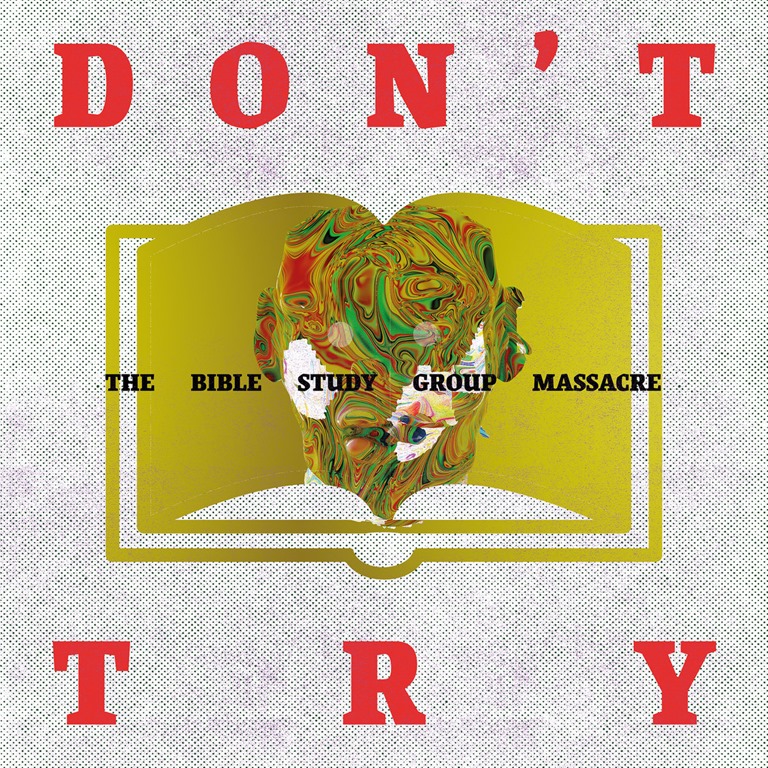
Once again, following the release of a four-way split showcasing local talent a few months ago, Stoke proves the be the spawning ground of more off-kilter noisy noise, this time from no-wave duo Don’t Try with their second EP. As an additional point of note, and also something of a recommendation / hype point, the EP’s artwork is courtesy of Dan Holloway, of USA Nails/Eurosuite/Dead Arms fame, who worked with the band previously on their 2018 single ‘JWAFJ’. To accompany the release, Dan has also realised a video in his own inimitable style.

Like ‘JWAFJ’, their first EP, Elvis Is Dead was released in 2018, meaning it’s been a full six years since they last released anything, suggesting that on the output stakes at least, they’ve been living up to the band’s name.

Lead track ‘my grazed knee’ with its gritty yet poppy synths and urgent, determined beats isn’t actually a million miles from the sound of The Eurosuite. It reminds us of the proximity of new wave to punk, and the reasons why new wave and post-punk are essentially interchangeable terms. And while punk did, undoubtedly, spawn some great tunes (I’d perhaps contend less great bands, in that many punk acts, with a few notable exceptions like The Ruts and Adverts, produced only one or two outstanding or even memorable sings, and were unable to deliver the entirety of a solid album, let alone a career), it was post-punk where things got interesting, after things had evolved from three-chord stomps. If punk was predominantly pissed-off, railing against boredom and just off the rails, what followed explored a greater emotional range, and was more articulate, both musically and lyrically. For all its rebellion and antagonism toward conventions and norms, punk very quickly established its own conventions and norms: post-punk broke down those definitions to explore in myriad different directions, fragmenting and evolving into countless new genres.

It’s been a long time since the advent of both punk and new wave now, and in theory, any contemporary exponent of either is liable to tie themselves to certain tropes. But contemporary punk bands, more often than not, seem to be so limited in their scope, whereas many current acts who align themselves with post punk / new wave offer a broader range – even the ones who have been lazily lumped into the bracket of Joy Division imitators. I mention this as I discovered both Interpol and Editors because they were constantly being compared to Joy Division, and while I came to like both bands very much, my first reaction was dismay laced with disappointment over how unlike Joy Division either act sounded.

And so, circuitously, we arrive back with Don’t Try. ‘my grazed knee,’ as I was starting to say before I embarked on my obligatory and epic detour, is a fuzzy, low-fi keyboard-driven cut that boasts a monstrous throbber of a grindy synth bass groove that lands between Suicide and Cabaret Voltaire’s ‘Nag Nag Nag.’ But it’s a lot harder, harsher, noiser, more aggressive, more antagonised. Punkier? I suppose it’s representative of the point at which that nascent industrial sound began to evolve, but there’s also a manic hardcore edge to it, which is more apparent on the harsh assault of ‘climax in the imax’. Here, everything is ratcheted up in its volume and intensity, there’s a clattering metallic snare sound that crashes like a bin lid through the song’s duration, and about two-thirds in, it sounds like someone’s started up a drill and it all suddenly goes slower and heavier and you start to feel like things are getting dark and tense. This is very much a positive, in case you’re wondering.

There’s a clear trajectory to this EP, a sonic evolution which moved forward with each track, and things turn full-on industrial on the third track, ‘ritual’, which manifests are a monstrous, relentless rhythmic pounding reminiscent of mid-80s SWANS and the heavy grind of Godflesh. The crazed, anguished vocals are howled, yelped, drawled, hinting at the manic howl of the Jesus Lizard (and so, equally, Blacklisters). After hitting what feels like a locked groove around the mid-point, everything explodes and the track – and EP – climaxes in a slamming wall of ear-blasting noise. None of it’s pretty. All of it’s good.

AA

AA

a1753193572_10

Buzzhowl Records – 7th May 2021

Christopher Nosnibor

Health Plan’s all-caps bio on their Bandcamp doesn’t really tell us much, bujt it does, I suppose, tell us enough in the pan of three short, declarative sentences: ‘HEALTH PLAN ARE DAN, STEVEN AND FRANCOIS. WE PLUGGED GUITARS STRAIGHT INTO A LAPTOP AND MADE SOME POP SONGS. MEMBERS OF USA NAILS, BLKLSTRS, THE EUROSUITE, DEAD ARMS’. Whether or not that qualifies them as a supergroup I’m not sure, but this emerging hub of intersection musicians is proving to be a fertile melting pot, and on the musical evidence of this, their eponymous debut, they are a super group. And of course, as you’d expect, a noisy one.

The album’s eight tracks are an extended exercise in crashing, droning noise rock, and it’s not intended to be pleasant: this is the kind of music where you marvel at the layers of noise as they scrape and clash against one another, feedback shrieking against low-end-grooves, as reverbs bounce off one another in different directions. And maybe there is something masochistic about enjoying this kind of thing, but it’s about sensation, and feeling the sound batter your body and brain.

‘Post Traumatic Growth’ piles in as an introduction, a mess of buzzing bass, relentless percussion, and squalling guitars, landing somewhere between Big Black and The Jesus and Mary Chain, with additional blasts of exploding lasers and blank monotone vocals.

And this is the flavour of the album: motoric and messy, lo-fi and abrasive. The rhythm section holds things down, albeit muzzed up, fuzzed out and indelicately. It works a treat: the bass buzzes and booms, and the drums thump, and in combination they punch hard. The guitars are toppy, discordant and disco-ordinated, slashing away at angles across the linear rhythm grooves.

When they dial it down a bit, as on the altogether more sedate instrumental ‘Fade’, where a thumping bass beat flutters like a heartbeat beneath a current of swirling, meandering sound, the production is still such that it’s anything but comfortable, and it’s not lo-fi, but wilful awkwardness: there’s a cymbal that cuts through the mix at a mean volume, and it’s not smooth or in keeping, but harsh, crashing, incongruent.

‘Vapid Expressions’ comes on like The Fall, like MES at huis most hectoring in a swelling surge of motoric repetition that drills into your brain. ‘Stuck in a Loop’ lives up to its title, a cyclical repetition of a motif pinned to a relentless beat, providing some kind of lull before the acerbic hollering of ‘Cataract’ that drives it to a finish in a frenzy of sax and distortion.

While so many bands take cues from The Fall, Health Plan do so with real style, and moreover, take as much influence from the band’s stubborn refusal to conform, or to pretty up their sound with tidy production. To my mind, punk has always been about an aesthetic rather than a style – primarily about going against the grain and not giving a toss about anything other than pleasing yourself – meaning that Health Plan is truly as punk as fuck.

AA

a3115426715_16

Buzzhowl Records – 12th February 2021

It had to be a limited run of 23 vinyl copies, didn’t it? The latest outing for the ever-intertextual, eternally reference-making anything-and-everything-goes melting pot of a project, Territorial Gobbing, is the first vinyl release in a jaw-droppingly prolific career.

For anyone familiar with Territorial Gobbing, Automatic For Nobody sounds exactly like Territorial Gobbing, only with a greater leaning toward some softer, more contemplative moments. Meanwhile, for anyone not familiar with Territorial Gobbing, it’s a good place to start, because it is wholly representative, but also – arguably – a shade more accessible. That is to say, it sounds exactly like the three different covers. Because yes, sometimes, you can judge an album by its cover.

And because T’Gobbing is a musical magpie of a thing, because Terry T Gerbs is the ultimate in postmodernism, indiscriminately drawing on everything and everything more or less at random, we arrive at REM brought to you by the power of 23, that mystical, magical number oft-referenced by fans and students of William S. Burroughs – myself included. The fascinating thing about the so-called ‘23 Enigma’ is that once you become aware of it, it becomes wholly inescapable. So it its ubiquity real, or a case of positive determinism? It’s hard to say, of course, but probability versus frequency makes it a fascinating thing to observe.

And, whether or not it’s knowing or intentional, the Burroughs connection is strong with Territorial Gobbing: the collaging / splicing / tape fuckery approach to audio which defines the entire catalogue can be traced to the cut-up technique devised by Burroughs and Brion Gysin in the late 1950s and extended to tape experiments in the 1960s, which in turn prefaced sampling and also begat the methods deployed by Throbbing Gristle and their peers in the late 70s and early 80s. It doesn’t matter whether or not it’s knowing or intentional, either: the nature of influence is so often indirect – but like a virus, once a concept is out, it becomes airborne and has the capacity to spread invisible, subliminally.

And while Automatic For Nobody may not be quite the sonic riot of many previous Territorial Gobbing releases, it does nevertheless manifest as a massive sonic tapestry cut from infinite and divergent sources.

Sirens and birdsong and field sounds drone and fade by way of a backdrop to the spoken word opener, ‘Spontaneous Bin Lake’. It sounds like having muttered a few observations into his phone on a windy day, Theo stops for a bite to eat and a drink, and, leaving the phone recording in his pocket, manages to record about seven different sources n top of one another, and it bleeds into the scratchy, scrapy scribblings of ‘Oxfam Tulpa’.

‘Tack Says Ski Meme Free Peas Soot’ forges an unsettling atmosphere that’s eerie in the uncanny, strange sense rather than being overtly creepy, sounding like something that was recorded under water, while the eleven-minute title track does go for the creepy vibe, coming on like the ‘original’ TG, Throbbing Gristle, at their most darkly experimental, as Gowans gasps and quivers just a handful of lines repetitively in a muttering, tremulous fashion that exudes a psychotic tension, the under-breath mutterings of someone in psychological distress. It’s dark and menacing, and utterly disturbed. The tape stutters and warps, and there are yells, yelps, and howls off in the background, with extraneous noises throughout, ranging from lilting piano of children’s tune’s to fragments of music warped and deranged. The lightness of those piano pieces only accentuate the deranged horror of the demonic whispering – the words barely audible, but the menace and threat conveyed transcends linguistic articulation.

While there may not be the explosions of noise that assail the eardrums and blast off in your face, the same sonic abrasions are present – just backed off, and toned down – which renders the material here all the more menacing – and on ‘The Ocean of Black Hair is Not Your Friend’, gurgling electronics spark and fizz by ay of a backdrop to a distorted, pitch-shifted vocal, and it’s somewhere between a ransom call and Whitehouse circa Twice is Never Enough. It’s pretty dark, but only a shadow against what’s to com with the closer ‘He’s Absorbing’, which features guest vocals from YOL and Freddy Vinehill-Cliffe. This six-and-a-half-minute mess of noise ratchets the discomfort and the volume up several levels – screeding shards of noise that stop and start blast through babbling gloops and grinding earthworks, which are interspersed with inchoate shouts and yelps, and there is nothing comfortable or pleasant about this. And as everything twists, warps, crumbles and fades into a melting mess in the final couple of minutes, it feels like the very world is disintegrating. It probably is – and this, ladies and gentlemen, is the soundtrack.

AA

TG COVER FINAL

Buzzhowl Records – 28th August 2020

Christopher Nosnibor

Anyone who was around Leeds’ live scene about ten years ago will have likely experienced the bludgeoning racket of Blacklisters. When it came to jarring, psychotic noise-rock a la The Jesus Lizard, they were beyond awesome in both volume and intensity, and they had songs, too. Most bands aspire to producing a body of work, but the reality is, any band that can craft one truly definitive song, then they’ve achieved more than more than 99.99% of bands. With ‘Trick Fuck’, Blacklisters nailed it, and in doing so assured their immortality. While for my money the rough and ready EP version was actually better than the one that appeared on their 2012 debut album, that riff… oh, that riff. Fuck, man. That riff. Anyway, the rest of the debut was absolutely belting.

They went a but quiet on the live scene, but second album Adult, which benefited from a beefier production found them on killer form, and with lead single ‘Shirts’ they actually matched ‘Trick Fuck’.

Geography and life kept them quiet thereafter, with just an EP and compilation of EP cuts and radio sessions keeping things simmering over the last five tears. Yes, five whole years.

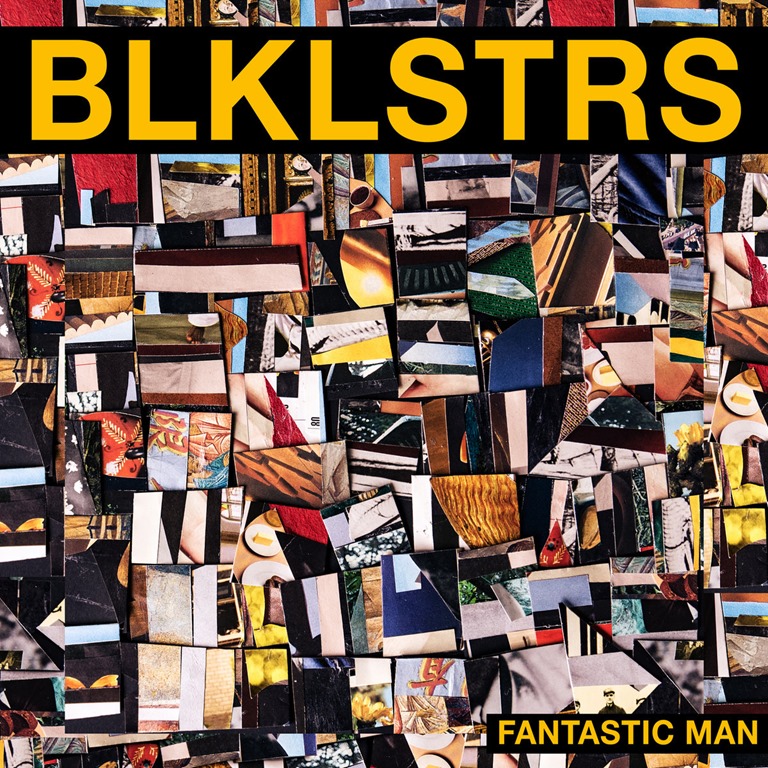
But in the bleakest, most barren of times, after an eternity of lockdown, Blacklisters unexpectedly deliver album number three. Its arrival was heralded by the dropping of single cut ‘Sports Drinks’, which opens the album and is an instant classic. It starts with a sinewy guitar then the rhythm section hammers in at a hundred miles an hour and it’s the most driving, energised, manic things they’ve recorded to date. It’s tense, crazed, Billy’s indecipherable yelling half-buried under a punishing squall of guitar.

‘Strange Face’ is another explosion of noise that makes ‘Club Foot by Kasabian’ sound like loungecore, and is so lurching jarring and warped it makes The Jesus Lizard sound soft. The title track, up next, provides no respite, pinning down the kind of cyclical riff that marks all of their best songs, and once more evoking the best of early 90s Touch and Go, particularly Tar.

There is absolutely no let-up here: ‘White Piano’ is furious and it’s back-to-back with the brutal bass-driven feedback fest that is ‘Le Basement’. And that’s what differentiates Fantastic Man from its predecessors: it’s tighter, tauter, than anything they’ve done. If before their tightness was in some way disguised by a squalling sloppiness, the playing on Fantastic Man is rigid muscular, gym-pumped and vascular.

‘I can Read my Own Mind’ is the album’s one moment of levity, with hints of Bleach era Nirvana in the messy mix, but the soupy morass of guitars all layered up in a knot of noodly treble is knotty and takes some wading through, especially with the fuzzy-edged vocals – and then it goes a bit Dead Kennedys, only like a DK 45 played at 33 and the effect is cranium-splitting.

The final track, the six-and-a-half minute Shellac-like rhythm driven mess of nastiness that is ‘Mambo No. 5’ isn’t a cover, just as ‘Club Foot by Kasabian’ wasn’t a cover, which is Blacklisters all over – irreverent to the last, its comedic value is twisted by its sonic brutality. And fuck me, it is brutal: they’ve certainly saved the most violently noisy for last, and it clanks and squalls in a thunder of rums and snarling bass.

It didn’t seem possible, but with Fantastic Man, Blacklisters have taken things up another level. The hooks may be sparse, but the slanted, angular riffs are harsh and heavy, and from out of nowhere, this could well be their best work yet. Fantastic and then some.

AA

a3392725730_10

That 2020 has been relentlessly shit requires no qualification. Its shitness is almost as unprecedented as the unprecedented overuse of the word unprecedented. Only, you’d think that meant there’d never been a plague or viral pandemic before, but there has, so what’s unprecedented is the shitness of the way it’s been managed, on a global scale. Despite the unprecedented shitness, or perhaps because of it, it’s been a remarkable year for new music already, and it’s suddenly just got even better, with a new cut from Blacklisters, far and away one of the most outstanding noise rock bands of the last decade.

‘Sports Drinks’ prefaces the arrival of a long, long, long awaited new album, Fantastic Man, due out in August. And it’s a fucking belter. Check the video here:

Buzzhowl Records – 18th October 2019

Christopher Nosnibor

What came first, the music or the mindset? I’m going to put it down to how some of us – myself included – are wired, and will forever be drawn to that tense, dark sound that came out of the late 70s and early 80s that was a reaction to – and against – everything that was happening at the time. Just as punk was a reaction to – and rebellion against – prog and the beigeness of the times, so post -punk and its various strains, including (dare I whisper it?) goth harnessed the frustration and the dejection that was a product of the first years under Thatcher and the political climate of the second cold war and rendered it in a more articulate, and perhaps more musically resonant way (because let’s face it, 90% of so-called punk bands were just playing pub rock with the amps up).

To revisit briefly an observation I’ve made variously in recent years, these are bleak, bleak times, and the future is well out of hand. The post-punk renaissance that began around 2004 with the emergence of Editors and Interpol grew from an underground which was there long before, but now it’s in full spate. Reading’s Typical Hunks fully embrace all of this as a guitar bass duo backed by a drum machine.

The guitar on ‘Snakebit’ is spindly, reverb-heavy, weaving one of those tense post-punk guitar-lines that’s pure Joy Division, and it snakes its way around a tight, insistent bass that booms and drives along with the insistence of the grooves Craig Adams laid down to define the sound of The Sisters of Mercy in the early years. That in turn is wenled to thumping beat that’s a distillation of all things Yorkshire circa 1983-4. It’s all in the programming: nothing fancy, no attempt to make it sound like an actual drummer, no flash fills or flourishes, just a hammering repetition and a snare sound that’ll slice the top off your head. Those Boss Dr Rhythm machines really are unbeatable. The vocals are tense, paranoid, and channel disaffection.

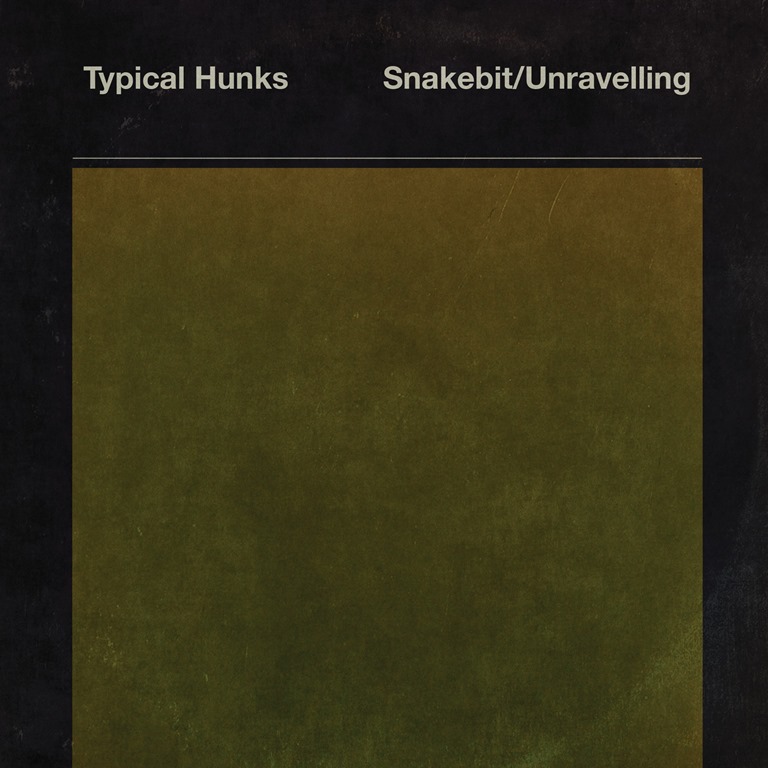
Strains of feedback and a hesitant bass hover before everything locks in around another relentless rhythm on ‘Unravelling’ with elements of March Violets, Red Lorry Yellow Lorry, and early Danse Society all spun into a solid block of discomfort. Vintage in its roots yet ultimately providing the soundtrack of the zeitgeist, this is a cracking Aside / B-side combo housed in a suitably barren sleeve, that showcases Typical Hunks at their strongest and most focused yet.

AA

Artwork

Grimoire / Buzzhowl Records – 27th September 2019

Christopher Nosnibor

The second album from Baltimore trio Gloop is noisy, messy, manic. The liner notes describe it as ‘a splattering Jackson Pollock painting of a full-length record’, and refers to their sound as ‘a kind of skewed rock music that recalls Shudder to Think, and the Pixies at their harshest and weirdest’.

It is harsh, but that harshness doesn’t come from heaviness, but from a chaotic squall of treble and wildly unpredictable song structures. It’s got the punk spirit and some aggression in its execution, but not exactly post hardcore, either, but a jarring, jolting racket that has many of the hallmarks of math-rock played in such a way as to sound perpetually out of time and out of tune with itself. It’s skewiff, not in a slacker Pavementy way, but in a demented, all-over-the-shop demented Trumans Water way. If I say it’s enough to give anyone a headache, it’s by no means a criticism: we’re attenuated to tune into regular rhythms, accordant tonality, tunes. Smiling Lines has none of these, breaking every last rule of musicality by pulling apart the very fabric of rock music and stretching it, twisting it, tearing it, stomping on it, before examining the stained tatters and deciding ‘yes, this is what we were after.’

Dom Gianninoto’s vocals are kinda shouty, but he’s given to shriek, whoop, and holler and pitch up to falsetto at any instant, adding to the crazed unpredictability of it all. Smiling Lines is the sound of wide-eyed, frenzied derangement, a relentless rollercoaster, a furious flurry of frets. It’s a short, sharp shock, and it’s fucked-up, but it’s ace.

AA

Gloop - Smiling Lines

Buzzhowl Records – 26th July 2019

Left Limbs are Raul Buitrago (drums) and Jake Saheb (guitar), and Hexes is an album of two halves, two sides, two tracks, each sprawling over ten minutes apiece in duration. And they pack a lot of challenging noise into that timespan. At times uncoordinated, at times harsh, it’s very much a journey.

At the risk of infinite repetition, I’m a fan first and foremost and critic on the side, and of the many people I work with doing this, the PR and labels – and artists – who are clearly in it for the love are my favourites by miles. The passion invariably shines through. And so I’m disproportionately excited when, during a Twitter exchange, I’m told ‘In the second track, about half way through some kind of beat emerges and if you listen all the way through it’s a really great moment, but I just like the sound, distorted guitar and drums – but dismantled.’ And I get it. sometimes -often – the ‘ow!’ of a rack lies in a fleeting transitional moment, where something = often something random or incidental – happens. You notice it. And once you’ve noticed it, you can’t unnoticed it. But it something special and sweet and it’s a ‘moment’. Your moment, a personal insight and intersection between creation and reception. And it becomes everything, the moment on which the entire piece hangs and pivots from good to magical.

And so I’m on the edge of my increasingly-worn suede-covered chair, which I’ve sat in to write reviews for the best part of a decade now, squinting in the darkness at the screen as erratic, irregular beats clatter and clank and feedback screeches, howls and whistles among echoing unevenness. And ‘dismantled’ is the word. It’s spectacularly disjointed, difficult in the most glorious of ways.

Where is this all going? It’s a clash of experimentalism, avant-garde and jazz without the groove, a messy exploration of sonic incongruity, rich in atmosphere and angularity. It meanders, thumping and bumping and squawking and screeching… and then suddenly, there it is, crashing in around the nine-minute mark. A dolorous bass booms in and the drumming picks up and it’s like Filth-era Swans for a moment as things get frenetic and the sound rapidly descends into a distorted mess of speaker overload.

It’s the crushing, headache-inducing unprettiness that’s precisely the appeal: Hexes may not be remotely political or even engaged in anything about anything, existing in its own microcosmic sphere, but it’s an ugly album for ugly times. It helps release the pain.

AA

Left Limbs - Hexes

19th July 2019 – Buzzhowl Records

Christopher Nosnibor

This quartet from Richmond, VA, may have a name that suggests quiet, introspective contemplation and piety, but their third EP, which follows ‘Touched’ (2015) and ‘ICUP’ (2017) whips up an unholy racket.

It’s a lumbering, off-kilter, shouty discord that defines their sound. Chugging, math-tinged rhythms cut across with angular guitars that evoke the spirit of Shellac, The Jesus Lizard, and the essence of the Touch & Go roster from the late 80s and early 90s. It’s gnarly, gut-churning, challenging – and hits the spot like a punch to the oesophagus.

Should we consider why there seems to be a resurgence of music that recrates that period around the grunge explosion, when alternative music that wasn’t grunge but centred around dirty-as-fuck guitars and difficult rhythms that would come to define ‘math’ rock? Probably. Back then, there was a revolt against radio-friendly rock, the slick sonic paste being pumped out by major labels. Of course, the ‘alternative’ sound very quickly got co-opted, but no-one was ever going to flog acts like Tad or Tar or Helmet or Guzzard to the masses even when Warners were angling Ministry at MTV and A&M had launched Therapy? As a top 40 singles band. The bands who got signed and broke through may have changed the face of the musical scene, but it was always the bands who remained underground who defined the era.

Now, with the chasm between mainstream and everything else wider than ever – and long beyond the point at which it becomes unbridgeable – the underground is more resolute than ever. They’re never going to make on this… but they have every inch of credibility intact as they channel their frustrations against an ever-grimmer world of conformity and vacuity. The bands that matter aren’t in it for the money – but then, they never were, and Prayer Group are admirable in their absolute lack of compromise.

They’ve just unleased the EP’s closer, ‘The Other’ by way of a taster. It’s nicely representative, and trust me, you need it.

AA

Prayer Group - Eudean