Posts Tagged ‘bleak’

Dret Skivor – 4th April 2025

Christopher Nosnibor

This latest release on Swedish microlabel devoted to the most underground of underground music, Dret Skivor, may be form an act we’ve not heard of before, but something about it has all the hallmarks of the eternally prolific Dave Procter all over it. The man behind Legion of Swine (noisy) and Fibonacci Drone Organ (droney) and myriad other projects and collaborations – some occasional, some one-off – has a distinctive North of England drollness and a penchant for pissing about making noise of all shades, after all.

Released on CD in a hand-painted edition of just two, the notes on the Bandcamp page for the release are typically minimal: ‘Is it dungeon synth? Is it just spooky music? Is there torture afoot?’ I would say I will be the judge of that, but dungeon synth is a genre I’m yet to fully get to grips with, although it does for all the world seem as if it’s a genre distinction that’s come to be applied to spooky music, and seems to have grown in both popularity and usage comparatively recently, despite its roots going back rather further.

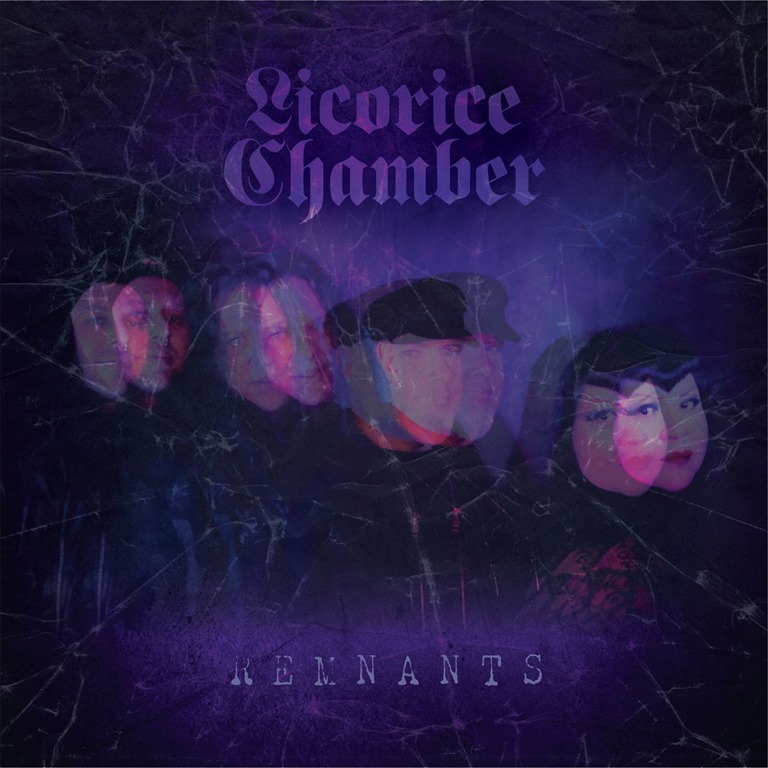
The cover art doesn’t give much – anything away, and in fact, I might have hoped for something more… graphic. But perhaps less is more here. However, the titles of the two tracks –‘the shithouses’ shithouse’ and ‘the festering flesh of the neoliberal’ are classic Procter and could as easily be titles for poems by Dale Prudent, another of his alter-egos.

The first begins with a swelling thrum of what sounds like a chorus of voices, possibly some monastic indentation, layered and looped and multitracked to create a torturous cacophony. For the first twenty, thirty, forty seconds, you wait for a change to come, for something to happen. After a minute that expectation is diminishing, and by the three-minute mark it’s impossible to be certain if there really are keyboard stabs swirling in the mix in the midst of it all, or if your ears and mind are deceiving you and you’re losing the plot. For some reason, I’m reminded of the Paris catacombs – not because it’s actually creepy, but because, just as seeing rows and rows of bones stacked up for quite literally miles becomes both overwhelming and desensitising after a time, so hearing the same sound bubbling away for ten minutes is pretty much guaranteed to fuck with your head. Near the eight-minute mark, there are most definitely additional layers of buzzing drone and there are some tonal slips and slows, like listening to a tape that’s become stretched or is slipping on its spool, but by this time your brain’s already half-melted, and I find myself contemplating the fact that while visiting the catacombs on a sixth-form art trip, one of my fellow students accepted the challenge to lick a skull for eight Francs – which was about a quid at the time. I was less appalled by the fact it was a human skull than the fact the bones looked dusty and mossy, and had probably been touched by even more unwashed hands than the handle of the gents lavs at a busy gig venue.

And so we arrive at the twenty-two-minute ‘the festering flesh of the neoliberal’. It begins with a distant clattering percussion – like someone bashing a car bonnet with a broken fence post heard from a quarter of a mile away, but with a gauze of reverb, as if echoing from the other side of a valley – or, put another way, like listening to early Test Dept through your neighbour’s wall – while a pulsing, pulsating electronic beat, like a palpating heartbeat, thuds erratically beneath it. And that’s pretty much it. But there are leaps and lurches in volume, and the cumulative effect of this monotonous loop is brain-bending. There are gradual shifts, and seemingly from nowhere rises a will of croaks and groans which grow in intensity, and it may well be an auditory confusion, but regardless, the experience is unsettling. Twenty-two minutes is a long time to listen to a continuous rumbling babble that sounds like droning ululations and a barrage of didgeridoos all sustaining a note, simultaneously, for all time.

Is it dungeon synth? Probably not. Is it spooky? Not really. It is torturous? Without doubt. This is a tough listen, with dark babbling repetitions rendered more challenging by the cruelly long track durations. The torture afoot is right here.

AA

a2009823040_10

A1M Records – 29th November 2024

Christopher Nosnibor

For most bands, unexpectedly parting company with their record label on the eve of the release of an album, the lead-up to which has involved three well-received single releases on said label, would be a devastating blow. But not so The Battery Farm. Even before A1M Records swooped in to fund the CD release, they’d already announced that the album would be going ahead as planned. That’s resilience defined. It also encapsulates the spirit of this indefatigable, undefeatable band. The Battery Farm embody tenacity, stubbornness, bloody-mindedness, and graft. They’re not making music for fun, or as a hobby, but by compulsion, with dark themes and dark grooves being very much front and centre of their work.

Flies – released two years ago almost to the week of its successor – was a strong debut, one which showcased the work of a band unafraid of experimenting, of embracing a range of stylistic elements, or revealing literary leanings. They’ve gone deeper and darker on the follow-up.

‘Under the Bomb’ whips in with synths buzzing a crackling static electricity before a sparse acoustic guitar comes to the fore, a sonorous bass note sounding out as Benjamin Corry sings – an intimate croon – and paints a bleak scene that calls to mind the grim images of Threads, the revered BBC film marking its fortieth anniversary this year. Considered by many to be the bleakest and most harrowing film ever made, its anniversary is a reminder of just how recently cold war tensions were so high that the fear of nuclear annihilation was both real and justified, as well as of just how quickly things can escalate – and, indeed, have escalated already in recent years. The closing lines ‘Survival makes you wish you’d never been born / Envy the dead after the bomb’ articulate the sheer horror of the fallout and a nuclear winter, and the song creates the context for an album which is dark, tense, and – justifiably – paranoid, scared.

The band fire in hard in jittery, driving post-punk mode on ‘The Next Decade’, Corry roaring full-throated, raw, raging, then shifting to adopt a more theatrical, gothic-sounding tone. It’s an impressive performance, reminiscent of Mike Patten on Faith No More’s ‘Digging the Grave’, and the overall parallel feels appropriate here. It’s a punchy, sub-two-minutes-thirty cut that’s almost schizophrenic and bursting with tension, paving the way for single ‘Hail Mary’, which hits hard. Minimal in arrangement, it’s maximal in volume. It’s gritty and taut, and when the bass blasts in after the two-minute mark, the sheer force is like two feet in the chest.

The singles are packed in tight, with the mathy noise-rock crossover of the manic panic of ‘O God’ coming next. Again, it’s the lumbering bass that dominates the loud chorus, and it’s a strong hook that twitches and spasms its way from the tripwire tension of the verses. ‘O God, which way is hell?’ Corry howls in anguish. The answer, of course, is whichever way you turn. You’re doomed. We’re all doomed.

The title track lands unexpectedly, as a slow-paced rock ‘n’ roll piano ballad which sounds like it’s lifted from a musical, an outtake from Greece or maybe Crybaby. But midway through it springs into life and takes off in a burst of proggy bombast. As was the case with Flies, The Battery Farm are never predictable, never afraid to throw a curveball, and they get the impact of making such switches, meaning that ‘Stevie’s Ices’, which lands somewhere between Muse and Queens of the Stone Age. The squelchy strut of ‘Icicles’ is different again: part Pulp, part Arctic Monkey in the spoken-word verse, more Nirvana in chorus, the essence of the album as a whole comes together here. The songs, in presenting two almost oppositional aspects between verse and chorus reflect a world that’s torn in two, collapsed, pulling in different directions – and while its theme may not have been directly inspired by the most recent events, given that its writing and recording predate the US election, the circumstances which brought us here – via a political backdrop which sees the UK, US, and so many countries split almost 50/50 between hard-right and broadly centre-left, a situation that brought us Brexit, which brought us Reform and fourteen years of Conservatism, which means that speech in support of the Palestinian people is met with hostile calls of antisemitism… Division and polarity defines the age, and debate is dead.

Powering through the raw big-bollocked punk blast of current single ‘John Bull’s Hard Times’ and the moodier, more reflective ‘It’s a Shame, Thanks a Lot’, a song which confronts anguish and misery and the desire to die in the most direct and uncompromising lyrical terms against a backdrop that borders on anthemic, we stagger to the fractured trickling gurgle of the disembodied ‘After the Bomb’ which spirals towards a climax before it slumps into a wasteland of ruin.

As dark as it is, The Dark Web packs some meaty tunes and beefy grooves, which elevate it a long way above Threads bleakness, but by the same token, it’s by no means a lightweight, sugary confection. Once again, The Battery Farm balance dark themes and slugging noise with moments which are that bit lighter, and even sneak in some grabs and hooks. The Dark Web is a dark album for dark times, but steers wide of being outright depressing. This takes some skill, and The Battery Farm have skill to match their guts.

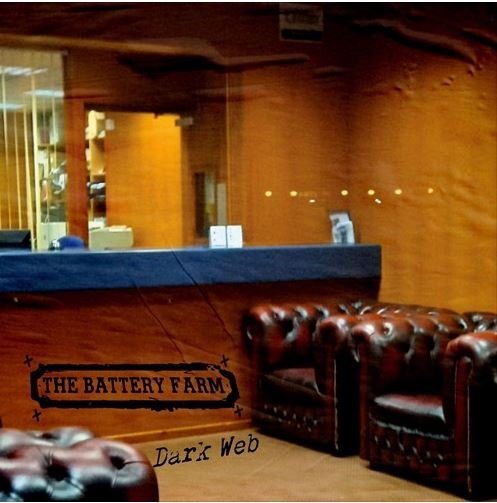
Battery Farm - Dark

Dret Skivor – 1st November 2024

Christopher Nosnibor

Procter’s been at it again. The only artist I know who can go on tour and play under different guides doing different music – or ‘music’ – depending on the booking. Not that anything he does is commercial or has any kind of mass appeal: it comes down the question of if you’re on the market for harsh noise or something a bit gentler. And how he’s back from one of his excursions, here we have new studio work, which clearly didn’t make the merch table – released in a limited physical edition of just three hand-painted CDs.

One might wonder just how far it might be possible to push the concept of Fibonacci Drone Organ, but since the mathematical Fibonacci sequence is endless, so it would seem are the limits of this project. This particular outing, with a title inspired by Ken Loach, does mark something of a departure for FDO, being less droney and more barrelling bassy murky noise. It’s also more overtly political – nothing new for Dave Procter, but usually something reserved for his other projects.

‘Disenchanted with the state of the fucking world? You’re not alone’ he writes. ‘This is a synthesised reflection of the current state of my brain. I hope it brings you some peace.’

How much peace one can expect from longform tracks entitled ‘war war death death’ and ‘american client state’ it’s hard to really know, but I for one can relate to Proctor finding solace in the cathartic release of creating dense noise. Because there comes a point where words are not enough: indeed, there are no words. In fact, I derive some comfort – small as it is – from this release. It does indicate that the state of Dave’s brain isn’t the best, but with the US election looming and the very real possibility that Trump could become president again, I can’t help but feel a combination of gloom and outright terror. In recent months, as the war in Ukraine has rumbled on, and the hell on earth in Gaza has escalated, and escalated, and escalated, and Israel’s nauseating genocidal mission continues to be funded by the West, it’s felt like a growing weight in the atmosphere. I’ve found myself tense and on edge. Everything is wrong. ‘I find no peace,’ as Thomas Wyatt wrote.

It feels as if the world was waiting for the pandemic to pass, and as if during the successive lockdowns, world leaders were simmering, festering, building their fury to unleash the moment restrictions were listed. Recent years have been painful, and as Procter’s brief notes indicate, there are many of us who are struggling, powerless, as our governments continue to push the line of Israel’s ‘right to defend itself’. No-one would deny that right, but no rational person would agree that a death toll of almost 44,000 – with many tens of thousands of women and children, not to mention other civilians in that figure – is proportional, or merely self-defence. While news outlets do report these figures – which are, it has to be said – beyond nauseating – there is no compassion in the reporting. Deaths are but numbers, the words ‘humanitarian crisis’ but words. The images of smoke and dust and devastation are horrifying, but to actually be in the midst of it, with no safe places to go, as schools and hospitals are targeted, is beyond imagination.

It’s in this context that Procter has created two grey, grating, heaving and ugly tracks, one fifteen minutes in duration, the other over twenty-three.

‘war war death death’ is bleak, and dense. There’s the heavy whip of helicopter blades at the hesitant start of the track, which gradually emerges as a long, wheezing, churning drone, resembling the rumble at the low end of the mechanical grind of the first Suicide album. And this is pretty much all there is. And from this minimal piece emerges a sense of desolation, particularly as the end, which concludes with just rumbling static – and nothing. Devastation. Dust. Annihilation.

‘american client state’ is again, heavy a serrated edged, humming drone that hovers, panning and circulating like a malevolent drone. It’s pitched in the range that really gets under your skin and penetrates the skull, not in an exhilarating way, but instead slowly wears down the spirit, dissolving any sense of motivation. The monotone hum seems to somehow articulate, in ways that words cannot, the sense of powerless I personally feel, and suspect others do, too. There’s something empty in the monotony, not to mention a squirming discomfiture. What can we do?

All digital sales money from this release will go to the Palestinian Medical Relief Society, and while it may be a drop in the ocean, and while what needs to happen is for aid to actually be allowed to be delivered – something which will require an intervention which is long overdue – something, anything, is better than nothing.

Often, there’s a droll humour to Dave Procter’s work, but apart from the title, the higher the monkey climbs, the more you see of his arse is a bleak work, and a depressingly droney as it gets. But it provides an outlet, an expression through which to focus that release, and reminds us that we must hope against hope for better ahead.

AA

a1192190513_10

Finish purveyors of extreme noise, Vorare, has paired up with Earthflesh to create the abrasive blast of an album which is Rope Tower. We’re on the edge of our seats for the album, and are beyond thrilled to present an exclusive premier of the second track from the album to be unveiled after ‘Seepage’.

On the face of it, a mining disaster in the North of England which occurred way back in 1844 may seem like an unusual choice of subject matter for two artists based in mainland Europe: it’s a pretty niche piece of local history. But it’s also a harrowing historical event that warns of the risk to life the industrial age brought. County Durham had a long mining heritage, and Haswell was one of the county’s largest collieries, employing over 300 men and boys. This single incident – an explosion – caused the deaths of almost a third of the workforce, with the blast itself killing 14, and a further 81 dying by suffocation.

For a moment, just imagine the scene, and the sensation. ‘Haswell’ makes for a fitting soundtrack, with a reflection on not only the how of their deaths, but the why…

Lyrics:

We find ourselves in the mines day in and day out, breaking our bones, shoveling our route to the alluring ore necessary for someone else to thrive off of. The caged canary leads the way deeper and deeper into the uncharted maw of Earth left gaping by bombs built by weak little men far from here. The clangs of pickaxes haunt our dreams while the fetters on our ankles might as well be extensions of our limbs alongside the instruments designed to violate the soil below our homes. As the morning seeps in lightless, we continue our work. Descending to the black hole stretching for miles on end, the explosions seem particularly strong today. We can’t see, but we can hear and feel. The chirp of the canary abates and soon runs out. Is this the smell of profit?

An account of the Haswell Colliery Explosion can be found here.

a0716606382_10

ant-zen – 12th February 2024

Christopher Nosnibor

First – the format! So much is being made of the vinyl renaissance right now, and much as I love vinyl, it’s hard to be entirely comfortable with this comeback, in this form. Back in the 90s, when CDs were in the ascendence, I often bought vinyl because it was cheaper: I could pick up an LP for £7.50 when a new-release CD was £11. I still have the receipts in my vinyl copies of PJ Harvey’s Rid of Me and Pandemonium by Killing Joke, among other treasures. Now, vinyl is a luxury item. Even a standard LP is around £25, and many are pressed on two pieces of heavyweight vinyl and cost closer to £40, or more if released on Record Store Day. This isn’t right. It’s not honouring the format, it’s another example of exploitation.

But this is rather different, and altogether cooler on so many levels: ant-zen have brought us this release by Kojoohar & Frank Ursus in the form of a 7” EP, with two tracks on each side. You can’t blame them for the price tag given production costs, but the unique hand-printed inlays, etc., at least make each copy unique and make this release a million miles removed from the capitalist conveyor belt.

The thing that matters here is that this release is completely suited to this retro format: a 10” or LP release would have been extravagant, indulgent, and frankly, ill-keeping.

It’s worth quoting the liner note for the back-story here, too: ‘The spark that ignited this collaboration came from a conversation between KOJOOHAR and FRANK URSUS – aka Te/DIS – about the kojoohar album that has just been released at the time and about angst pop and its position in the music scene. talking about new tracks kojoohar was working on, the decision was made to start a collaboration.’

And so we’re presented with Frost Drought, which they describe as ‘a 4-track ep that offers edgy angst pop with analog, gripping synthesizer sounds, metallic rhythms and enigmatic melodies, complementing by frank ursus’ vocals… music and lyrics of FROST DROUGHT describe a world of isolation, mistrust, alienation and the individual’s distance from itself. left alone in the dark…’

Entering the ‘debris field’, we’re presented with dark synths, groaning, whining, whistling, and a slow-tempo-echo-heavy beat. If the baritone vocal is distinctly from the gothier end of post-punk, the instrumentation is equal parts post-punk and ultra-stark, bleak hip-hop. ‘never compromise’ pushes into stark, dark, electro territory, in the realm of mid-80s Depeche Mode. Ursus’ vocals are commanding, but so dark, and the music is so claustrophobic as to be suffocating. ‘never compromise’ sounds like a manifesto, and whipping snares sounds crack and reverberate in an alienating fog of synth, and with hints of Depeche Mode’s ‘Little 15’, it’s as bleak as hell, too. ‘threshold’ is dark and boldly theatrical, like Bauhaus battling it out in the studio with Gary Numan.

There’s no light here: this is dark and it feels like a dragging weight on your chest, on your heart. Drawing on early 80s electro but adding the clinicality of contemporary production – and a dash of Nine Inch Nails – Frost Drought is a challenging work, thick, dense, and intense, it’s a heavy listen, and one that’s incredibly intense.

AA

a3285530151_10

Neurot Recordings – 23rd February 2024

Christopher Nosnibor

The band’s website contains, if not exactly a manifesto, an eye cast over the world in which we find ourselves here in the early weeks of 2024: ‘Human singularity, a third world war, scorching deserts, rising seas – it’s all coming for us. The slow grind is already in motion, pushing concrete, bodies, Teslas, skyscrapers, shacks, banks and bitcoin into a collective abyss. Piles of discarded trash will inherit the earth. It’s anyone’s guess as to what happens next. Is this the end of the world? Who knows. Who cares? Stand by with the rest of us and watch it burn. We’re all guiltless. We’re all blameless.’

Here, then, we come to learn the origin of the band’s name, a grim, grimacing irony condensed into a single word. This articulates the sense of pit-of-the-gut despondency we should all feel when we look around us. The drivers to take to the roads in their SUVs to drive five minutes up the road for the school run because it’s raining doing their bit to ensure it’s going to rain a hell of a lot more; the moneyed who jet off for their annual skiing holidays who bemoan the lack of snow without for a second considering the fact that they’re the reason there’s no snow, may be small-scale compared to Shell declaring profits which are double the UK’s climate funding and being pressured to can their ‘green’ strategies in order to siphon off even more for their shareholders, but the point is, we could all do better, much better, but simply none of us is truly willing to sacrifice comfort and consumerism for a future they can’t comprehend.

The accompanying press release delivers a similarly positive pitch, telling how ‘Guiltless creates apocalyptic soundscapes in their imaginings of the surreal return to proto-human civilisation, as well as what life might be like for the survivors of the next mass extinction event on Thorns.’ Prepare to be harrowed, people, prepare to be harrowed. But also, prepare to take a look in the mirror: do you need to buy products from Nestle and Unilever? Do you have to shop at Tesco and Amazon, or are their local business you can buy from? How about loose fruit and veg instead of packed in plastic? And do you actually need that thing, the latest phone model, the delivery from McDonald’s? It’s a tough one: the majority of people who are most driven towards such basic convenience choices are on the lowest wages and are the ones generating the wealth for the rich cunts who will happily watch the earth burn rather than pay tax. You might think they’d grow a conscience for the future their children will find themselves in, but they’re banking on shipping off to Mars before the half of the world that isn’t incinerated is under water. Hey, they can probably take a few polar bears and pandas along, too.

Thorns is twenty-four minutes of hellish bleakness. It’s an EP to play when you’re in the mood for basking in bone-breaking blackness. ‘Devour Collide’ begins deceptively gently, a hum of extraneous noise which is overtaken by some gentle guitar and an understated bass, propelled by rolling toms – then forty-six seconds in, everything slams in, hard and heavy, the distortion rages and the snare crashes like a tectonic event. The riffage grinds to a crawl and churns it way to crushing lows, while Josh Graham’s raw, ravaged vocals sound as if his larynx has been scorched by fire and pollution. It makes for an utterly punishing six-and-a-half minutes, and sets the tone for a truly monstrous set.

It’s a thick blast of flanged guitar which powers in on a wave of thunderous drums on ‘All We Destroy’. It’s a criminally underrated and underused effect, and one which is far more versatile than is perhaps appreciated, with the capacity to create brittle metallic tones with quite the old-school goth vibe as well as sweeping swirls – and it’s a bold ‘whoosh’ which yields to a thick, sludgy grind, as dense and heavy as a mudslide. ‘Dead-Eye’ delivers repeated punches to the gut with its lurching, lumbering low-end tumult, jarring, sinewy guitars and clattering, slow, slow, slow drumming reminiscent of early Swans, but with a doomy metal aspect. It makes for a long and challenging five-and-a-half minutes, which leaves you drained, physically and mentally, weak in the limbs and gasping for air in the wake of its devastating intensity.

The EP’s closer, ‘In Radiant Glow’ starts slow and low, and as such, it’s vibe is classic Neurot. And then, just around a minute in, BOOM! Everything slams in and hits like a tsunami. It’s utterly punishing – and rightly so.

It’s perhaps fair to say that everything is fucked. As I write, the UK government is adamant that it’s bombing of Yemen and a growing number of countries in the Middle East is ‘not an escalation’, while continuing to give support to Israel’s ‘right to defend itself’ against Hamas. No-one would reasonably deny any state’s right to defend itself, but can anyone really justify 25,000 deaths and rising daily as ‘proportionate’ or ‘defence’? Meanwhile, Russia continues to pound Ukraine, and shareholders in weapons manufacturers like BAE Systems are making a killing from all the killing. Well, might as well make as much as you can while you can, eh?

And so, here we are. Twenty, twenty-five years ago, you’d have been labelled an apocalyptic nutter for stressing out over the future and over climate change. Sadly, big business and cunts like Trump and his supporters still will, raving about the ills of wind farms and favouring fracking and nuclear power instead. Even when Venice becomes the new Atlantis, they’ll still be saying the same. But there’s no escaping now that we are fucked. Guiltless know it and they’re not here too win anyone over or to change anything, because they recognise that it’s too late and it’s all utterly futile. Thorns is a dark document which faces the grim reality. Its purpose is not to offer solace, but simply solidarity for those who also realise that we’re on a one-way road to oblivion.

AA

527031

26th January 2024

Christopher Nosnibor

Polevaulter haven’t come from nowhere but have, it seems, evolved – or devolved – from a regular band with guitars and a regular drummer, to a brutal drum-machine driven duo, a model which has landed them some high-profile support slots and attention in their own right. Debuting – at least in this incarnation – with ‘HILTSCTW’ (That’s ‘How I Learnt To Stop Chewing The Wasp And Face The Bulldog’) in February 2020, they’ve put out a couple of EPs on tape and CD, both of which have sold out, as well as a couple of digital singles, ahead of this, their debut album, which they performed live for eight hours straight and streamed it on YouTube as a fundraiser for Palestine the other week. It might not have had the intensity of one of their half-hour support sets, but it set out their position politically and as people, suggesting that as much as they’re about impact, they’re also about endurance.

With the exception of the last couple of singles, none of the songs on Hang Wave have been previously released. Hang Wave, then, is no sweeping up of their catalogue to date, but an album proper, and a work which is focused on where they’re at now, not where they were.

It’s a thudding pulsing bass drum bear that drives ‘Mia Goth Made Me Do It’, the first of the album’s ten tracks. It’s tense, and it’s dark: the bass is low-slung and bulbous, but the vocals are subject to really high-treble EQ and some crisp, dry reverb which gives them a harsh edge. This is no gentle introduction: they’re straight in and at the jugular. A mangled, confrontational industrial / goth assault, it makes for a challenging, confrontational opening to an album that’s stark and uncompromising.

Single ‘Trend’ packs snappy (and in places somewhat bizarre) lyrics, with lines like ‘Don’t tell me to put my vase away’ and ‘I do a line off a horses dick’, and stuttering beats, a monstrous bastard of a bass noise and some woozy discordant notes that bend and melt in the incendiary heat of the fire of the vocal ferocity. ‘Pissed in the Baths’, just unveiled as a final taster of the album is another murky morass of dingy post-punk, and as likely to deter more prospective listeners than it will attract. You get the impression that Polevaulter couldn’t care less, and that they’re not doing this to garner popularity, to get played on the radio, for accolades or to get rich or famous – which is a good job: in articulating alienation and also simply venturing, without restraint, down the deepest, darkest, and most obscure tunnels against a backdrop of the most unrefined, angular noise, Polevaulter have pretty much guaranteed they will achieve none of these things. Of course, in repelling the majority, they’re appealing to an extremely devoted minority of people who actively enjoy music that hurts, physically and mentally.

It’s hard to make out what the fuck they’re ranting and raving about most of the time, but the delivery – half spoken word, half hollering – is strong and is a message in itself. Because anger is an energy, and shouting into the abyss is the most exultant catharsis. Polevaulter deliver that catharsis in the bluntest, starkest of manners, and the production accentuates it all.

‘Industry Plant Based’ seems to be a swipe at more than one contemporary issue, and it’s fair to say it’s hard to imagine an act further from The Last Dinner Party.

There are no tunes to speak of on Hang Wave, and choruses are in short supply, too. Perhaps the most obvious and valid points of comparison are Benefits and Sleaford Mods – but whereas the latter bring hooks and groove, Polevaulter present nothing but bleak trudging, and while the former are focused on the channelling of rage with passion and a politically-charged message of unity, Polevaulter bring us blank nihilism delivered with a twist of crushing desolation. There are dance elements in the mix, but the mix is a cement mixer churning away a blend of grit and napalm, and this is nowhere more strongly evidenced than on single cut ‘Violently Ill’, a song so wrecked as to twist your intestines, while the air-raid siren howl of ‘GabWorld’ is chilling and unsettling.

The album winds up in a twitching, glitching, explosive mess in the form of the snarking, sparking, meltdown that is ‘any%WR’.

Hang Wave is harsh. There are no mellow moments, or softer interludes. There is nothing remotely pretty or pleasant about it, either. Outside, a storm rages – the second in as many days, and the tenth since October. The river just a few hundred yards away has burst its banks again. The sound of other people’s recycling rattles past my front door as it bowls down the street, and it’s a potent reminder of the reality and the palpable effects of climate change. It looks very much like we’re on the brink of WW3 s the UK and US dig deeper into their commitment to fire missiles into Yemen; Gaza is all but decimated; Trump looks like he’ll running for president once again, and no-one seems particularly concerned because they’re fretting about how they’ll pay the rent and the next energy bill. It’s a sick, sick world. All of it mounts up and compounds and you feel ill. With Hang Wave, Polevaulter do absolutely nothing to lift the mood or make you feel better, but Hang Wave is the perfectly bleak, nihilistic to these utterly fucked-up times.

AA

HWsleeve

Standing alone in the cold north, militant DIY dance punk duo, Polevaulter toil and labour to explore the limits of underground achievement. Known the land over for their hypnotic live performances home and away, the Northern noisemakers have built from nothing something few can argue with.

The sonic assault the two create is almost arrogant, fathered from the marriage of seismically sharp bass and loin-grinding beats. The words are quipped and brayed atop the aural landscape. They are boastful, accusing, repellent and inviting, they question and skewer the veins of masculinity, sexuality, the order of things, the music industry and the miserable reality of the North. Toured with JOHN, shared a stage with Thank, Mandy Indiana, Pink Turns Blue, Bambara, A Place To Bury Strangers, VR Sex, and others.

New Polevaulter single ‘Violently Ill’, is as the title suggests, a hard-hitting dark and fiercely off-kilter slab of awesome sickly noise and follows recent acclaim for the duos work from the likes of The Needle Drop’s Anthony Fantano and Louder Than War. The track combines pulsating beats and glitchy electronics with intense repeating shouts to create an intoxicating and exhilarating experience. With the track, Polevaulter announce their debut album ‘Hang Wave’ for release on 26th January and UK/EU tour dates starting February.

On ‘Violently Ill’, Polevaulter’s Jon Franz explains- “I created the track out of a sample I found from a free library, it was inspired by our trip to Tallinn in April. I demoed the track pretty much as is as soon as we got back, and Dan liked the sampling a lot, so we moved forwards. The lyrics were the first things I thought out at practice, and I like the fact that it has more sparse vocals than most of our tracks, gives our music chance to shine. Its maybe my favourite song on the album.”

Watch the video here:

Alongside the single release, Polevaulter are set to perform the debut album on repeat for 8 hours straight from 4pm to midnight on 13th January via a livestream to raise funds for the Gaza Sunbirds, a para cycling team based in the Gaza Strip. The team is currently providing emergency food parcels and aid to families sheltering around the Gaza Strip. For more info and to donate visit: https://www.justgiving.com/page/polevaulterforgazasunbirds

Polevaulter will tour the UK and EU as follows:

Jan 31st – The Fenton, Leeds – Album launch

Feb 2nd – Hatch, Sheffield

Feb 3rd – Little Buildings, Newcastle

Feb 6th – New Adelphi, Hull

Feb 7th – The Lounge, Manchester

Feb 8th – Old Blue Last, London

Feb 9th – Bear Cave, Bournemouth w/ JOHN

Feb 10th – Craufurd Arms, Milton Keynes w/ JOHN

Feb 13th – DAda, Toulouse, France

Feb 14th – Le Mans, France

Feb 15th – TBA, France

Feb 16th – Melody Maker, Rennes, France

AA

PV

Norwegian post-punk collective Heave Blood & Die are gearing up to drop their fourth album "Burnout Codes" on January 26th via Fysisk Format.

Dedicated to bassist Eivind Imingen, who decided to end his life just following the recordings of the album, "Burnout Codes" is shrouded in sadness and tragedy, and shows the Norwegian collective offering their most textured and innovative album to date.

Just recently, Heave Blood & Die revealed a new track titled "Mjelle", which is the second single taken from the new album following leading single "Things that Burn".  Listen to "Mjelle" here:

AA

The band had this to say about the new track: “This is the soundtrack to the industrial mourning march to goth town, screaming Power Corruption and Lies! Mjelle  is about getting up and trying to achieve, falling short and burning  out, it’s a never ending loop of finding false and temporary refuge in  avoidance. This one is for our dear friend Eivind and a nod to one of Northern Norway’s undying classics by Terje Nilsen about the windswept and red beaches of  Mjelle just outside of Bodø.”

Recorded and produced by Karl Løftingsmo Pedersen and Ariel Joshua Sivertsen (Ondt Blod, Die a Legend),  mixed by Magnus Lindberg and featuring the artwork and design by Annika Linn Verdal Homme of Daufødt, "Burnout Codes" will be released on vinyl and digital on Fysisk Format.

AA

228c246d-045d-c84d-59d8-0cf6eaa39b9b

Photo by Brage Pedersen

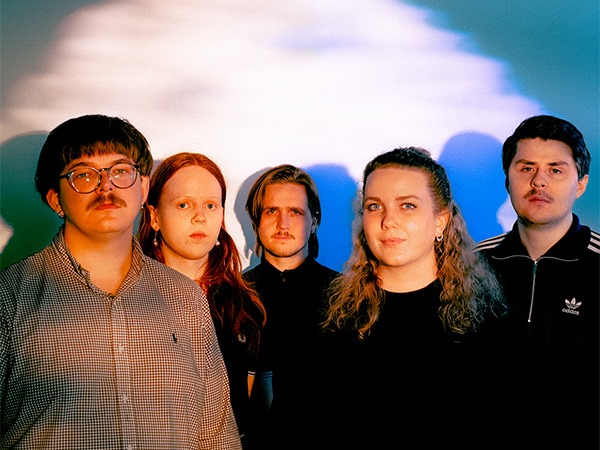
Deadset were formed just last year, originally a product of guitarist James Massey and vocalist Sam Mellors, who discovered a genuine bond over writing together. Their sound was moulded into a more claustrophobic, gritty and tense direction when bassist Adam Arnold and drummer Rio Campbell joined, taking the classic indie sensibilities of the two original members into harsher new territories.

Deadset truly came to life when the band wrote as a group and embraced each other’s musical preferences, their influences now relying to an extent on alternative 80s and 90s bands. Influences being taken from bands such as New Order, Fontaines DC and Interpol. Striving to be ever more progressive and unique, the band’s live sound is renowned for fluctuating between genres. Chorus laden and loaded with fuzz and grit.

New Deadset single ‘Bleak’ encapsulates why Deadset is a band and what they want to achieve from it. The track, which was produced by Pat Pretorius (The Talks, Life, Counting Coins) and mastered by Howie Weinberg (Nirvana, Yeah Yeah Yeahs, Daft Punk), really feels like it is humming with the anxiety and fever that everyone feels around Hull. It’s both a commentary on what they see and how they feel, looking at the social issues the band see in the area and how that’s impacted and twisted their lives. ‘We all want something to believe in’ is a feeling that resides in every member of Deadset. All feeling at times as if they’re stuck in a rut. Deadset being their opportunity to escape that rut.

“There’s a really prevalent mutual feeling about the area we all live in. Its rife with boredom and it feels like everyone’s stuck in mundane, monotonous cycles here”, says Sam Mellors. “Most people fall into traps of binge drinking or substance abuse to get away from it. It’s really hard not to fall into that trap when there’s genuinely nothing else to do. There’s still a great community of people here, everyone trying to make it a special place and it will always be a special place to us. But it’s still difficult to get away from the fact a lot of people are struggling”, he further explains. “Deadset became a band because we wanted to escape that cycle, dream of something better and create new horizons for ourselves. It’s our own escape from the depressing reality around here”, adds Adam Arnold.

‘Bleak’ is out now via Man Demolish Records.

Watch the video for ‘Bleak’ here:

AA

thumbnail_image003DS