Posts Tagged ‘Atmospheric’

11th April 2025

Christopher Nosnibor

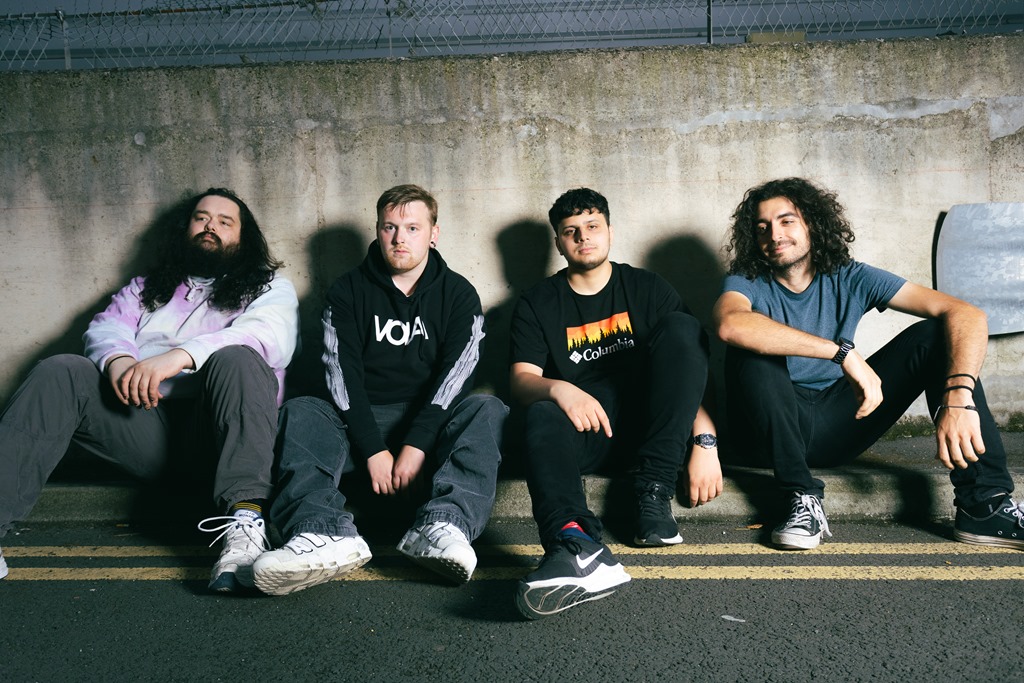
It’s still early days for London alternative / progressive metal quartet DAVAAR, formed in the summer of 2024 and with just five shows behind them, but they’ve wasted no time in venturing beyond London in their quest to build a fan-base, or in committing a chunk of their repertoire to tape (so to speak) for the release of this, their debut EP.

Although State of Feeling features four tracks, the title track is an instrumental introduction which is barely a minute long. This is a practice within metal circles that’s become so common as to be predictable and formulaic. It seemed to rise to prominence with the explosion of metalcore’s popularity in the 2010s, and often seemed to be an attempt to cover all bases for the purpose of a wider audience, as if to say ‘listen, we can play, we can do atmospheric and moody and gentle as well as WAAAAUUUGHHHHHH!’. But in doing so, it would often undermine the power of the attacking rage parts.

In fairness, it’s a little different in context of this EP, in that as much as DAVAAR trade in big riffs, their sound is cinematic, melodic, expansive, with clean vocals all the way. And so it is that this opening cut is softly atmospheric, bordering on ambient. A distant beat echoes through the drifting sonic mist. ‘Impulse’ arrives, not on a tidal wave of slugging riffery, but a ripple of picked, reverby guitar, and it’s only after some carefully-crafted build-up does the distortion kick in and the first of the big riffs hits. Even then, everything stays balanced, and the melody remains the focal point, and it’s easy to observe the parallels in their sound with those of their influences and acts they suggest sharing common ground with, including Sleep Token, Tesseract, Leprous, and Deftones.

There’s a lot of attention to detail in the song structures and the overall composition, with high levels of technical adeptness on display. There’s also a lot of polish here, with the end result being that State of Feeling feels fully formed, and DAVAAR’s potential to attain a substantial following is clear.

AA

AA

Davaar Band shot 1

18th April 2025

Christopher Nosnibor

Eric Quach has been making music – or perhaps more accurately sculpting sound on the fringes of music – as thisquietarmy for over twenty years, amassing a substantial body of work as a solo artist, with an expanded band lineup, and with various collaborations, the most recent being Cîme, his second with Tom Malmendier

We learn that Langue Hybride was written and arranged in less than 4 weeks during thisquietarmy’s music residency at Centre d’Expérimentation Musical (CEM) in the region of Saguenay—Lac-St-Jean, Québec.

The album consists of five longform tracks, which range from seven and a half to sixteen minutes in duration. It’s the shortest work, ‘Les Rayons Cosmiques’ which lifts the curtain the album, with droning, dolorous strings and distant, delicate percussion conjuring evocative atmospherics, coloured with both a simmering tension and an underlying sense of sadness, which, while hard to define, is palpable. Around the midpoint, that distant percussion builds to stand front and centre and a groove emergers, suddenly and unexpectedly, and the whole feel changes towards something that’s a cinematic hybrid of folk and space rock.

‘Respirer l’instabilité’ crashes into altogether darker territory, a gloomy, doomy trudge of slow, deliberate drumming and a low, grinding bass, over which discordant sonic mayhem plays out. After a lull of calm around the mid-point, a pulsating rhythm merges, and things evolve into a strolling wig-out with some strong jazz-funk leanings and already, a pattern is beginning to emerge in terms of compositional structure, in that around halfway, the trajectory shifts, and the piece ends in a completely different place from the one in which it started.

This is confirmed by the pivot which takes place around five minutes into the third track. Reminiscent of latter-day Swans, ‘Les radicaux libres’ is woozy and weird, expansive and haunting, and begins to pick up pace and volume six minutes in, building to a bursting sustained crescendo that’s both hypnotic and tense, and if ‘Organismes en aérobiose’ starts out soothing, the sound of dappled sun through leaves on a summer’s day, it transitions to a fist-waving stomper and concludes as a skyward-facing surge of sonic exultation, via the detour of a post-rock tidal wave, while fifteen-minute closer ‘Solastalgie impalpable’ rides a wave of thick riffage and strings reminiscent of the long play-out on ‘Layla’ – only this is arguably more successful, as it always felt like an epic and overlong anti-climax in the wake of that guitar-line. True to form, ‘Solastalgie impalpable’ does make a shift, tapering into some elongated swirling drones which reverberate and rattle the ribs and taunt the senses, before suddenly bursting into life with a driving rock riff by way of a climactic finale.

Langue Hybride is a wild ride, and while claims for acts producing ‘genre-defying’ works are not just tedious and predictable but usually completely spurious, there’s no neat way of categorising this schizophrenic hybrid, where each track is a work of two halves, presenting almost oppositional styles and characteristics .But this stylistic polarity makes for exciting – if challenging – listening: given that the only thing that’s predictable is that each piece will fly in a different direction at some point, there’s no way one could call this album predictable. The vision – and its execution – are superb, and with Langue Hybride, thisquietarmy offer something which is quite different, and rather special.

AA

a1481414249_10

Gizeh Records – 4th April 2025

Christopher Nosnibor

Returning for their eighth album, A-Sun Amissa, purveyors of drone-centric ambience centred around founder Richard Knox pull back from the rather larger avant-rock sound of 2024’s Ruins Era to concentrate once more on ‘unsettling drones and claustrophobic atmospheres’. Knox is joined for the third successive release by Luke Bhatia and Claire Knox, indicating that this is a fairly stable lineup, and perhaps this has been a factor in the album’s exploratory, evolutionary approach.

The promise is that the record’s ‘washed out and ethereal sound drags electric guitar, clarinet, voice and piano through pillows of reverb and distortion to build heaving, desolate dronescapes. Moving through dense, oppressive passages of sound and diffusing into sections of gloomy, haunting restraint. We Are Not Our Dread is filled with majestic, textural detail. It envelops and, at times, smothers you before releasing just at the right moment, resolving in a billowing, melancholic, distorted reverie.’

The first thing that strikes me – as is often the case with any project centred around Knox – is the evocative nature of the title. Perhaps I’m feeling uncommonly sensitive right now, but this one in particular lands with an unexpected impact, and as much as the implication is one of positivity – no, we are not our dread, our dread does not define us or dictate our lives – there is equally the emphasis on the fact that we have that dread. And not you, or I, but us, together, collectively. And so it is that dread become the focus, that thing which looms large over not only the title or the album, but our lives. Why do we have this dread? It would not be an overstatement that the pandemic changed everything: the world that we knew lurched on its axis and no-one knew how to handle it. And since then, insanity has run free. 9/11 may have rattled the rhythm of life for a time, but not it seems that the entire world spent the pandemic years just waiting to wage war, and now nothing is safe or predictable – not your job, your home, your ability to post stuff online. You don’t need to be a prominent protestor or social agitator to attract the wrong kind of attention. The dread hangs over every moment now. We thought we had seen the worst when COVID swept the globe and lockdowns dominated our lives, and began to breathe a collective sight od relief when things began to retract, as we looked with optimism toward the ‘new normal’. But who ever anticipated this today as the new normal the future held?

We Are Not Our Dread consists of four fairly lengthy instrumental compositions, and ‘Electric Tremble’ arrives in a dense cloud of ominous noise which immediately builds tension, and if the rolling piano which drifts in shortly afterwards is gentle, even soothing, the undercurrents of rumbling discord and distant thunder which persist maintain a sense of discomfort which is impossible to ignore.

Ever since his early days with Glissando, melding post-rock with ambient tropes, Knox has had an ear for the unsettling, deftly manoeuvring elements of the soft and gentle with the spine-tingling. And while the eleven-minute ‘All The Sky Was Empty’ is a quintessential work of epic post-rock abstract ambience, rich in texture as it turns like a heavy cloud billowing and building but without an actual storm breaking, instead dispersing to offer breaking light and a sense of hope, the wandering clarinet brings a vaguely jazz element to the sound.

‘Sings Death or Petals’ arrives on trails of feedback and rumbling guitar noise, and is immediately darker, and those dark undercurrents continue with crackles and rumbles and elongated drones which persist beneath the ghostly, ethereal voices and reverb-heavy piano and picked guitar notes. At times, this bears the hallmarks of latter-day Earth, but at the same time there’s a less structured, less motif-oriented approach to the composition, which leaves much open space. I still can’t choose between death or petals here. It builds to a churning whorl, before the final track, ‘Our Hearts Bent As Crooked Lightning’ stirs from a rippling array of simmering noise and evolves into a colossus of rumbling drones, and, over the course of ten-and-a-half minutes, grows supple with softer waves of expansive synth which remind you to breathe again. For all the fuzz and broad swells of abstract, buzzing noise that’s equal parts gripping and soothing, the overall effect is sedative, and welcome.

We Are Not Our Dread leads the listener through some challenging moments, and as each listener experiences works differently, as I hear the final soaring strains of ‘Our Hearts Bent As Crooked Lightning’ this strikes me personally as dark and challenging. The intentions may be quite different, but this is undeniably a work which is sonically ambitious, spacious, resonant. Even as the tension lifts, the mood remains, like a dream you can’t shake, like the paranoia that persists even when you’ve dome nothing wrong.

That We Are Not Our Dread is true, and so is the fact that, to quote from Fight Club, you are ‘not your job. You’re not how much money you have in the bank. You’re not the car you drive. You’re not the contents of your wallet. You’re not your fucking khakis.’ And you are not your dread. It may at times possess you, but this, this is not it. This, however, is a great album.

AA

a1068739543_10

Gizeh Records – 28th March 2025

Christopher Nosnibor

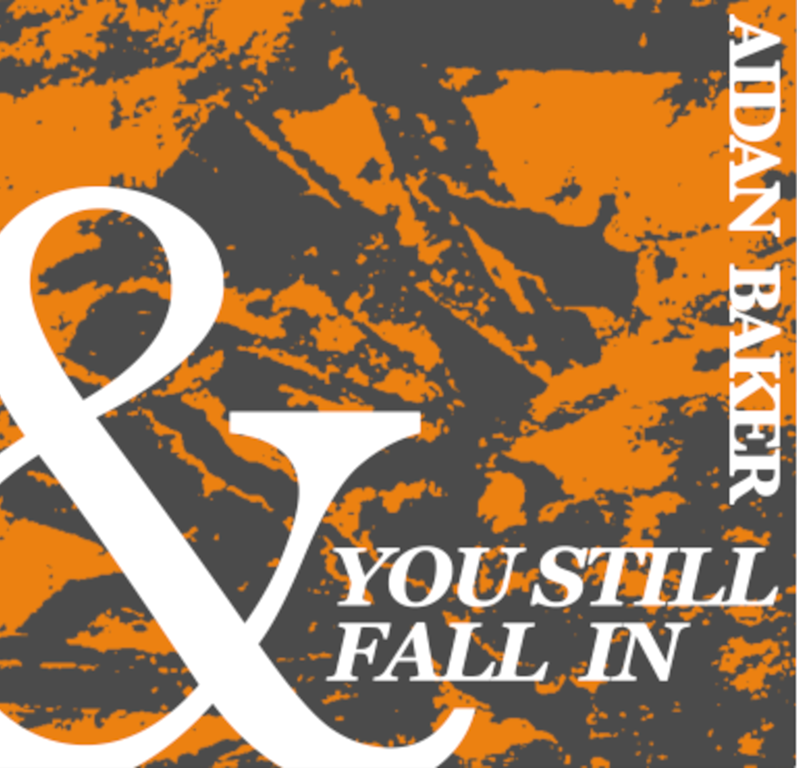
I sometimes wonder if Aidan Baker has secretly mastered cloning, since he has seemingly pursued multiple careers simultaneously. He’s been active for some time, it’s true, but even the compressed version of his bio makes for quite the read:

As a member of Nadja, Hypnodrone Ensemble, Noplace Trio, Tavare and a host of other projects and solo endeavours, Baker’s prolific output remains vital as he continues to explore a vast terrain of sounds and genres across a 30 year musical career.

His latest work, & You Still Fall In, we learn, was recorded at Baker’s home studio in Berlin, and ‘hints at the mood and songcraft of the likes of Midwife, Hood, Stina Nordenstam and Movietone. The album is a compelling listen, stripped down to mostly electric guitar and vocals and moving at a distinctly glacial pace. The intimacy of the hushed tones and muted textures lean into a dark, hypnotic and gentle stillness that lingers in the air…’

That fact that this is a truly solo work, with Baker taking care of guitar, bass, drum machine, and vocals is perhaps key to its low-key, introspective atmosphere. Intimate is the word: on the title track which raises the curtain on this soporific sequence of compositions, the acoustic guitar strum hovers to a drone, wavering in volume, seeming to drift, seeming to warp, to fade, you can hear fingertips swiping on strings between frets, and Baker’s vocal is but a mumble; you hear sound, but the words don’t fall free to clarity.

‘Drowning Not Waving’ blends rumbling bass distortions with glitching drum machine and an air of uneasiness: the experience is every inch the struggle the title suggests. And that title… the phrase may have become a popular adaptation of the line from Stevie Smith’s 1957 poem and a metaphor for depression, but to momentarily reflect on the actuality of this all-too -common experience is to recognise the extent to which we, as a society, still – STILL – fail to identify a person in crisis. ‘Cheer up, it might never happen’, we hear often. But it does happen. Even well-meaning friends will diminish the spasms of crisis with ‘well, my life’s shit or probably worse, actually’ type responses. And each such response is like a hand on the head, pushing down. And yes, I speak from experience, and not so long ago I was out for a walk in an attempt to find some tranquillity, some headspace, some time with my thoughts. A dog, off lead, ran up to me and began barking and hassling. Its owners called it back and then groused at me for my failure to smile and thank them. “Ooh, someone’s lost their smile,” the guy said loudly, purposefully so that I could hear. No fucking shit. But you know nothing about my life. My wife died recently and I am not in the mood for being hassled by dogs, and I owe you twats nothing, least of all a smile. I continued on my way without a word, let alone a smile, and there was no point in waving. I was simply drowning. The moral? People may have stuff going on you know nothing about, so don’t be a twat. And anger is only a few degrees along from depression. Music has a boundless capacity to inspire the most unexpected responses.

Things stray into even more minimal, lo-fi territory with ‘You Say You Can See Inside Me’, which captures the spirit of Silver Jews and the soul of some of Michael Gira’s solo recordings. It’s muffled, droning, barely there, even. And yet, somehow, its sparsity accentuates its emotional intensity. There’s almost a confessional feel to this, but it’s a confession so mumbled, either through shame, embarrassment, or plain unwillingness.

On the surface, & You Still Fall In is a gentle work, defined by mellow, picked acoustic guitar and vocals so chilled as to be barely awake – but everything lies beneath the surface. And the surface isn’t as tranquil as all that: ‘When The Waves They Parted’ may be defined by a rippling surge but there’s discomfort beneath the ebb, and the reverb-soaked crunch of ‘Still Cold from the Rain’ is bleak and lugubrious.

Although presented as two separate pieces, ‘Thin Film Interface’ is a continuous thirteen-minute expanse of murky ambience with lead guitar work which soars and echoes over a shifting sonic mist. It hovers in the background, yet simultaneously alters the texture and colour of the air, relaxing but with an unresolved tension beneath.

& You Still Fall In is a difficult album to place – but why should that be necessity? A lot happens, an at the same time, it doesn’t. & You Still Fall In is sparse, drifting between acoustic and altogether simpler acoustic instrumentation. But instead of dissecting the details or reasoning, I’m going to point to the album, and simply say ‘listen to this’. Because it’s simply incredible.

AA

cover

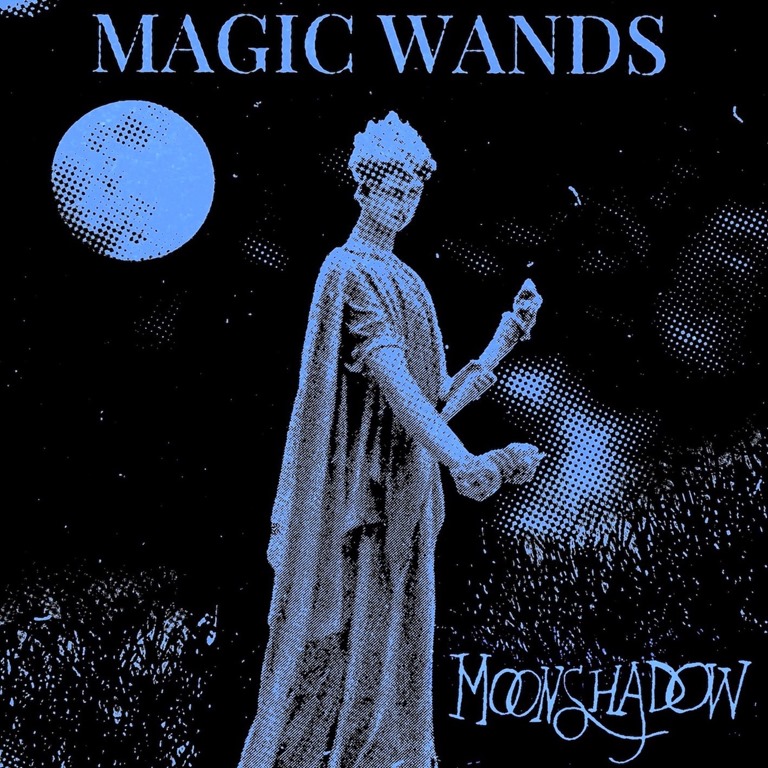
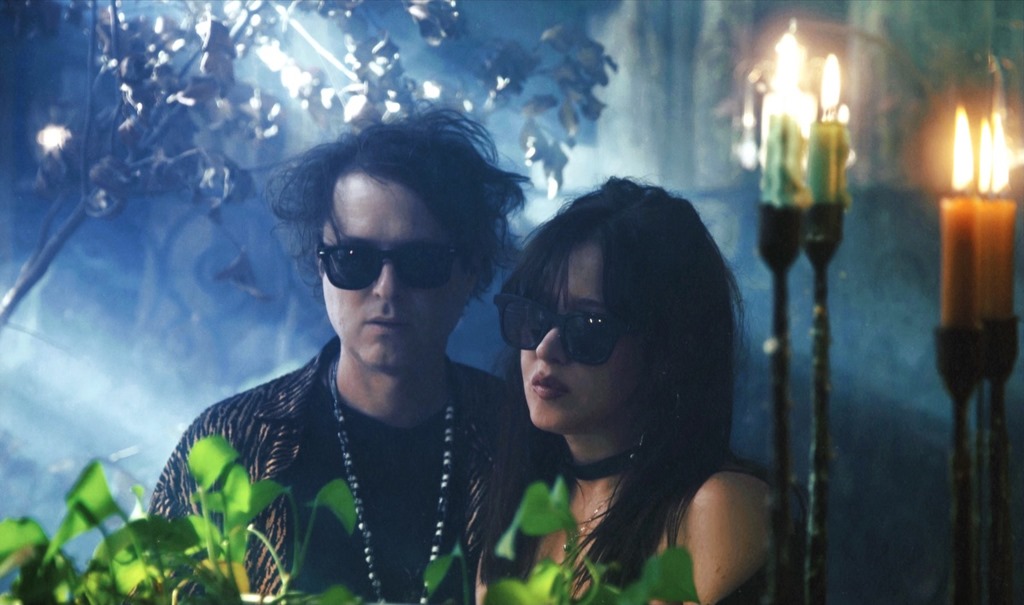
Magic Wands is a dark pop duo originally formed in Nashville by guitarists and vocalists Dexy and Chris Valentine. Now based in Los Angeles, they are known for their shimmering and dreamy sound, which incorporates elements of shoegaze, dream pop, post-punk and goth. Heavily textured guitars, synth drones and ethereal vocals are combined in their songs to conjure an otherworldly atmosphere.

‘Moonshadow’ is the title track of a forthcoming album due out in the early summer on Metropolis Records. “It is a raw and introspective song about travelling at night on an underground train and how you can’t escape yourself or your own shadow,” explains Dexy Valentine.

‘Moonshadow’ follows ‘Hide’ and ‘Armour’ (both issued in 2024) as the third song to be lifted from the new album.

AA

d3fba56b9c24b63b15c1fb2a2832d481c56146a4

Magic Wands will be supporting labelmates The Birthday Massacre on a North American tour prior to the release of the ‘Moonshadow’ album. Dates are as follows:

28th March  NEW YORK CITY, NY (le) Poisson Rouge
29th March  PITTSBURGH, PA Crafthouse
30th March  DETROIT, MI Small’s
31st March  CHICAGO, IL Reggies
2nd April  MINNEAPOLIS, MN Fine Line Music Hall
3rd April  KANSAS CITY, MO RecordBar
4th April  DENVER, CO The Oriental Theater
5th April  SALT LAKE CITY, UT Metro Music Hall
7th April  SEATTLE, WA El Corazon
8th April  PORTLAND, OR Dante’s
10th April  SAN FRANCISCO, CA Bottom Of The Hill
11th April  LOS ANGELES, CA EchoPlex
14th April  SAN DIEGO, CA Brick By Brick
15th April  MESA, AZ Nile Theater
17th April  HOUSTON, TX Warehouse Live
18th April  DALLAS, TX Granada Theater
19th April  AUSTIN, TX Come And Take It Live
21st April  TAMPA, FL Orpheum
22nd April  ATLANTA, GA Masquerade
23rd April  ASHEVILLE, NC The Orange Peel
25th April  VIRGINIA BEACH, VA Elevation 27
26th April  BALTIMORE, MD Soundstage
28th April  WASHINGTON, DC Union Stage
29th April  MECHANICSBURG, PA Lovedrafts Brewing
1st May  BOSTON, MA Paradise Rock Club
3rd May  TORINTO, ON Velvet Underground
4th May  MONTREAL, QC Foufounes

AA

e8d1899beefe821f42025a373a5d8f2bf5e9e90c

The final song in a trilogy of time-related experimental tracks, ‘Mnemosyne’ incorporates an original song – recorded in Mayfair Studios, London, in 1975 – into poetic musings, and haunting atmospherics, dwelling on nostalgia and false memory.

a0864877400_10

Bleeding Light – 3rd January 2025

Christopher Nosnibor

Under The Sanguine Moon is the fourth album from Denver, Colorado-based goth rock band, Plague Garden. As the pitch tells it, ‘The album features a prominent vampiric theme. Delve into the catacombs of a nocturnal world, where tales of bloodlust at dusk reign supreme. Listen to fantastical tales of the undead and even a little bit of Greek mythology added in for variety… From the album’s blood-red artwork to it’s [sic] hemophilic lyrics, this LP is bound to please even the darkest children of the night. For fans of gothic rock, post punk, deathrock, darkwave.’

Having got into gothness around 1987, just on the cusp of teenagerdom, I would come to discover that, just as with metal, this was a genre with many disparate threads. The vampiric fascination, which represents the popular image of goth – and espoused by the myriad dark souls who descend upon Whitby for the legendary goth weekends and trace the steps of Dracula following the small port town’s prominence in Bram Stoker’s genre-defining novel – is a league apart from the origins of the music which would come to be synonymous with early goth – predominantly Leeds-based acts such as The Sisters of Mercy, Red Lorry Yellow Lorry, The March Violets, and Salvation. You won’t find a hint of vampirism here. Bauhaus’ debut single, ‘Bela Lugosi’s Dead’ predates the emerging Leeds scene, and the whole vampire / spooky template can be pinned squarely on this single, which can’t exactly be considered representative of their output as a whole. But still, people like to latch on to easy tags.

This perhaps unduly preface is to say that the goth / vampire thing is something I find difficult to fully embrace. Goth bands doing vampy stuff is simply not the same as Steven Severin providing live soundtracks to classic silent movies.

The other thing I find difficult to really align is that while there is a whole new wave of acts of a goth persuasion emerging, there are a lot of goth acts loitering and lingering featuring older guys – in the forty to fifty-plus demographic, which I will, in the interest of transparency record as being my demographic – doing this. Plague Garden do sit within this bracket.

Under The Sanguine Moon is a solid album. It sits in the third wave goth bracket alongside the likes of Suspiria and the Nightbreed roster of the late ‘90s – brooding, theatrical, with booming baritone vocals that are sort of aping Andrew Eldritch but fall into that more generic ‘fah-fah-fah’ singing down in the throat style. With piano taking a more prominent position among the standard musical arrangement of drums / bass / guitar, Plague Garden create a layered sound which does stand out from many of their peers, and they so absolutely nail that quintessential goth sound with the solid foot-down four-square Craig Adams style bass groove. This is nowhere better exemplified than on ‘Shadows’, with its spectral guitars, the perfect cocktail of chorus, flange and reverb creating that brittle, layered sound which defined the 80s sound.

The vocals are mixed fairly low, and it’s the bass and drums which dominate, and this is a good thing – not because the vocals are bad, but because it puts the atmosphere to the fore, and means the lyrics are less obvious, which is probably no bad thing.

‘The Dirty Dead’ is a crunchier, punkier take on the sound, and carries hints of early Christian Death – think ‘Deathwish’ – and this carries on into ‘Pandora’.

The cover they mention is ‘#1 Crush’ by Garbage, an early B-side that’s one of the hidden gems of their catalogue. Plague Garden’s take is unsurprisingly lugubrious, theatrical, and makes sense as a song selection with its nagging, picked guitar part and crunching percussion.

There’s a flood of blood at the end, with ‘Blood Fingers’ and ‘Blood Debt’ closing the album. The former, haunting, hypnotic, a classic moody goth cut, the latter offering a slower, dreamier take on the former. These guys have got their sound honed to perfection, and if you’re into more trad goth delivered with a more contemporary spin – but not too contemporary – you probably can’t go too far wrong with Under The Sanguine Moon.

AA

025780

French atmospheric doom-metal act IXION has recently unveiled the new and final chapter of their trilogy, titled Regeneration, which is now available for streaming online just a few days ahead of the album release.

They write:

How would we feel if we transferred our consciousness into a new biotechnological body ?
Would we rediscover the world, with new-born’s eyes ?
What to do with our mortal remains ?
How to grasp time, or even the meaning of life, while you experience immortality ?
These are some of the questions that arise over REGENERATION, the third part of our new album Evolution !
Combining the array of sounds and vocals of the first two parts, it also reveals some unusual structures and time signatures for us, like an hybrid and still ethereal doom metal!

Stream Regeneration now and immerse yourself in the haunting soundscapes and thought-provoking themes that define this atmospheric doom-metal journey:

Four years after their critically acclaimed album L’Adieu aux Étoiles, IXION returns with Evolution, a three-part concept album released as individual EPs. This ambitious project explores the evolution of mankind, its interactions with androids, and the rise of post-humanism and will be released on October 25th via Finisterian Dead End Records.

The first chapter, Extinction, released in April, delves into humanity’s struggle with mortality in a world dominated by advancing android technology. This EP guides listeners through atmospheric doom, blending symphonic and acoustic soundscapes that feel both epic and intimate.

Restriction, released in June, shifts focus to the constrained existence of robots and androids, emphasizing their desire for emancipation. This installment features a more electronic approach to doom metal, heavily influenced by ’70s and ’80s ambient electronic music, synthwave, and sci-fi classics like Blade Runner.

The final chapter, Regeneration, was issued on October 18 and imagines a future where human consciousness is transferred into new biotechnological bodies. This EP merges the styles of the previous releases while introducing fresh structures that bridge hybrid and ethereal doom metal elements.

AA

a3040914651_10

For Malcolm Pardon, there’s beauty in our universal, inescapable demise. Like the romantic notion of the orchestra on board the Titanic playing their repertoire as the ship went down, on his second solo album Pardon looks past the bleak or macabre to observe death as a multi-layered, lifelong acquaintance.

“It’s not meant to be threatening or horrific in any way,” says Pardon of The Abyss. “There’s this constant dialogue we have with ourselves about how we’re going to die at some point. It’s like a constant companion, so you might as well get to know it, and befriend it.”

As one half of Roll The Dice, Pardon worked alongside fellow Stockholm resident Peder Mannerfelt on brooding fusions of electronica and classical composition. By contrast, his 2021 solo debut Hello Death saw him take a much more stripped-down approach, placing the emphasis on plaintive piano composition with only the subtlest of sonic treatments in the space around the notes. Without intentionally setting out to record a conceptual follow up, as he developed the sketches which would become The Abyss, Pardon found himself contemplating unknown futures and the artists’ quest into unexplored territory.

“For me, on a musical level The Abyss represents exploring your own capabilities,” he says, “Starting from an empty canvas, then slowly finding the way forward by connecting the right notes. It’s almost a subconscious experience. I sit down by the piano, and if I’m lucky I find something that takes me down the vortex.”

The lilting romanticism of ‘Enter The Void’ serves as a perfect distillation of Pardon’s approach, balancing a delicate piano refrain with a low, rumbling blast of noise before being carried aloft by swooning strings that echo down a distant hall. There’s beauty and hope shot through with foreboding in the particular treatment of each sound, the harmonic interplay between the musical elements and the gentle rise and fall of the arrangement.

Hear the track and watch the video here:

The album is out on 20 September.

ENTER_THE_VOID_MAIN_STILL