Posts Tagged ‘Ambient’

This is it Forever – 12th March 2018

Christopher Nosnibor

Ok, I’m biased. Thomas Ragsdale’s work as one half of worriedaboutsatan and Ghosting Season has enthused me for over a decade now, and his solo work, too, has consistently mesmerised and enthralled me. This isn’t just journo gush: his work is rich and immersive and simply never disappoints. His latest offering, the three-track ‘Under Dwellers’ EP is no exception.

The BandCamp blurb describes it as ‘Three pieces of music paying tribute to the world beneath our own’, and goes on to describe how ‘Acid lines are fed through tape echo and back into a reel to reel machine… Randomised synth arps clatter around unpredictably inside a distortion unit… Crumbling piano melodies faintly cry out over the hiss and hum of modern circuits… Sounds made by a human, but with no control. Music for beneath the grit and surface of our modern world’.

Ragsdale translates all of these things into something more than pitch, more than process jargon, and presents a set of atmospheric, semi-ambient compositions, rich in tone and texture, and which utterly envelop the listener.

There is little point in detailing either the structure or sound of the individual pieces, or much else for that matter. Dark clouds drift and scrape, twist and turn and swell to fill the air. Yet There is depth, and above all a certain intangible grip and pull here. One listens. One reacts. One feels it, somehow, subliminally, a head-tingling, gut-pulling soundwork.

AA

Thomas Ragsdale - Under Dwellers

Ici d’ailleurs – IDA119 – 30th March 2018

Christopher Nosnibor

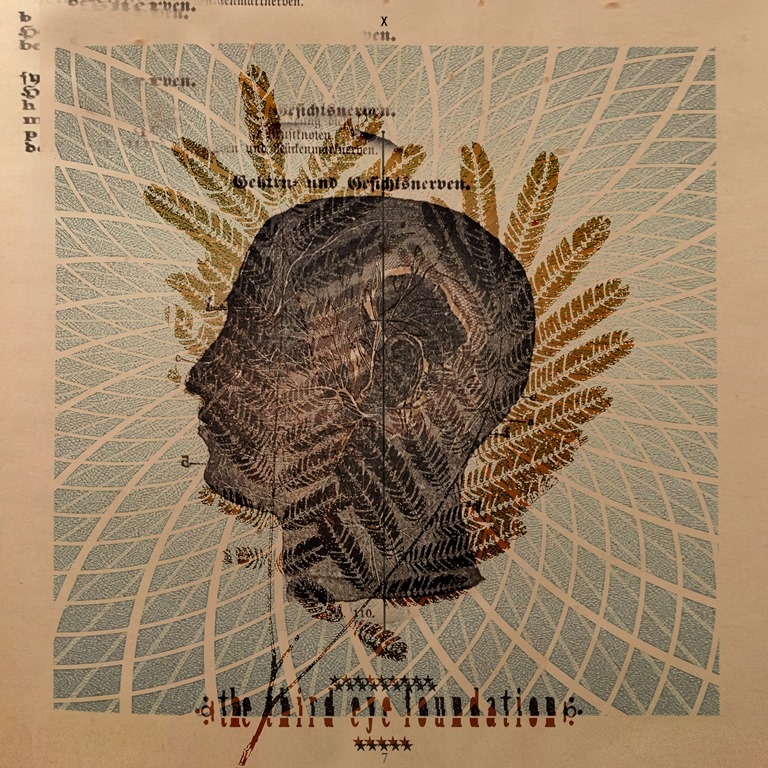
The lengthy blurb which accompanies the latest release from Matt Elliott’s Third Eye Foundation, active since 1996, covers a lot of ground. A lot has happened since Semtex, the expanded reissue of which I ruminated on a couple of years ago. And yet. Wake the Dead may not match the violence, but still packs a restrained intensity.

‘Words have no place here except to confuse matters a little further. And the 40 minutes of throbbing, hypersensitive dubstep that make up the record are not aimed at sending a message to the mind. The intention is to make souls dance, to unite them and to remind us that, despite our choices and individual convictions, we are all components of the same whole and whether living or dead, we are connected forever.’

Increasingly I find myself returning to my own reactions and responses to music, and the separation between the objective and the subjective. Any engagement with music must necessarily be subjective. Dismissing chart music because it’s vapid crap is still a subjective opinion, given that objectively, it serves a social (and economic) function and is invariably extremely well-executed and produced in technical terms, and to complain about a lack of emotional depth or lyrical complexity may on the surface appear to be an objective criticism, but a listener’s lack of connection with it is subjective. Flimsy radio-friendly fodder is entertainment: it’s music that strives to achieve different ends which is art.

Wake the Dead, while pitched as having the purpose of ‘making souls dance’, is very much art in that it exists to evoke a deeper emotional response than ‘it’s got a good beat.’ Not that the beats aren’t good, but the slow, deliberate rhythms are more of the variety one nods to rather than getting down to.

The title track sets the scene and the tone, with majestic, sweeping tones and soaring choral voices which rise towards the heavens above a slow, hypnotic semi-tribal beat has a rich resonance. The smooth, soothing cello is countered by occasional trills of feedback, creating a subtle but essential dissonance which alters the mood considerably. Gradually, over the course of the track’s thirteen-minute span, low-churning bass frequencies begin to throb and beats become stronger but also more fractured as looping echoes collide against one another disorientatingly.

‘The Blasted Tower’ combines gliding strings with stuttering, rapidfire fills, a balanced juxtaposition of soporifically soothing and twitchy tension, before ‘Controlled Demolition’ slides into murkier and rather heavier territory. With the structures less defined and a cacophonous collaging of sound pitched against warping bass tones, it makes for a cerebrally-challenging passage that culminates in a collision of brooding strings and extraneous noise.

The album’s only words are to be found on the shortest track, ‘That’s Why’, with a sampled shout of ‘Fucking pigs! I hate the fucking pigs!’ looped and mangled and fucked to fade. It feels a little incongruous, but provides a well-placed change in both tone and tempo ahead of the final cut, which takes the form of an elongated, wheezing drone graced with wordless female vocals which echo an abstract spiritual transcendence.

The six compositions segue into one another to form a continuous forty-minute suite. The atmosphere is dark, but more the darkness of twilight and shadows than pitch black small hours. There are moments where it feels a shade bleak, but these are contrasted by moments of uplifting beauty; the overarching sensation is one of a haunting feeling. As the sound fades to silence, the feeling of immersion hangs for a time. There’s no way to place that sensation in an objective context: this is about how the abstract language of sound touches the subconscious.

AA

IDA119_front

Hangman Ho Records

Christopher Nosnibor

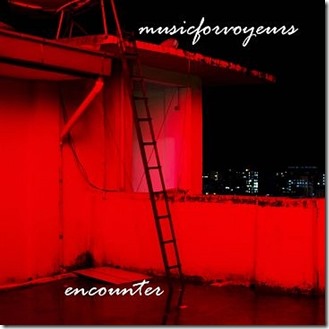
Rick Senley doesn’t do things by halves. Invariably, when I receive mail from him, it contains not one, but two CDs released in close proximity. His two solo musical vehicles, I Am A Man With a St Tropez Tan and musicforvoyeurs reflect quite different facets of his creative bent, and this has never been placed in sharper relief than on his two latest releases. I Am A Man With a St Tropez Tan’s The Tattooed Aunts and Mice on Speed is an abrasive, at times harrowing affair; its counterpart, musicforvoyeurs’ Encounter, which emerged off the back of a film project of the same name for which Senley created the soundtrack, is altogether lighter and softer, and as such, represents an almost polar contrast. That isn’t to say it’s a happy-clappy skip through summer meadows. Encounter explores the spaces between ranging depths of shade in a moving and thought-provoking way.

The eight tracks drift and flow into one another, as brooding strings forge cinematic sonic vistas over which samples pass, creating not so much a narrative, but a sense of meaning, however submerged or allusive. Death provides the primary focus of the snippets of dialogue, and while Encounter is a deeply melancholy work, its tone is ultimately reflective and contemplative rather than dark or depressing.

It begins softly, vaporous ambience washing beneath an extended sample. It concludes dramatically, with a flourish. In between, there is undulating movement and turns of atmosphere.

A humming, thrumming low-end buzz hangs heavy for a time on the second track, before majestic light and choral sweeps cascade forth. The frantic, agitated raised voice which cuts in toward the end changes the perspective and raises the tension, but Senley brings it down with a delicately picked guitar that’s dainty and soothing. Notes ripple and cascade in mellifluous glissandos. But burred edges and rumbling tones lurk just a little way beneath the surface. However pleasant and mellow any given segment of the album is, there is always a nagging reminder of an underlying tension, an insistent sense of doubt that refuses to dissipate or be shaken off. It’s this dynamic which renders Encounter such a compelling album.

musicforvoyeurs – Encounter

Click on the image to hear tracks from Encounter.

Kranky – 23rd February 2018

Christopher Nosnibor

Tahoe is the second album from Northern California producer Fred Welton Warmsley III in his solo guise as Dedekind Cut. It’s named after the mountain lake town where he now resides, and it’s fitting that an album of such grandeur should relate to a vast expanse of natural beauty. For all the ruination mankind has inflicted on nature, however badly we as a species have damaged and decimated resources and scarred the landscape, hunted species to extinction and generally fucked everything up, the fact remains that nature will always win.

Over millennia, ice ages haves come and gone, mountains have emerged and heatwaves have created new deserts. We may have all the television, cars, space stations and satellites, but nothing man-made can protect against a volcanic eruption, flooding, landslides, mudslides, avalanches, blizzards, wild fires, earthquakes and tsunamis.

The eight compositions on Tahoe are centred round drifting, wafting drones and soft-edged, vaporous tones. It’s as ambient as the breeze, as the rippling of water in a slow-moving river. It’s the sound of drifting clouds, of tranquillity. Tahoe is an album of space, of distance, of earth and air.

It’s on the album’s three longer tracks, each of which extend beyond ten minutes that Tahoe reveals the full extent of Warmsley’s attention to detail and nous for texture ad layering. The second of these, ‘MMXIX’ picks up the pace and accentuates the dramatic tension, and it’s surge and swell arrives quite unexpectedly after the mellowness that is the title track. It’s overtly beaty – shuddering, juddering, thuds hammering dense and muddy through a bassy cyclone and booming low-end notes that hover into the abyss dominate – and the piece is just more up-front overall. Contrasts abound and the textures become more prominent as the track progresses, with skittering melodies and twittering notes flitting in all directions. The third, ‘Hollow Earth’ stretches our dark rumbles over turning air and a sense of foreboding over twelve and a half minutes, with interweaving lattices of aural contrails providing the core tone of the piece.

For all of its space, the exploratory sonic expanses conjured by soft, sweeping tones, and for its cinematic softness, Tahoe is not an ambient album. It is not background or wallpaper. It’s an engaging, detailed and in places gripping piece of work. It’s really quite something else.

AA

Dedekind Cut – Tahoe

5th February 2018

Christopher Nosnibor

Sidestepping any comparison of the title to Chocolate Starfish And The Hot Dog Flavored Water and perhaps clocking a nod to Cinema Cinema’s Manic Children and the Slow Aggression, The Tattooed Aunts and Mice on Speed stands not only as one of the most intriguing juxtaposed item album titles I can think of, but is probaby one of the best you’ll hear all year.

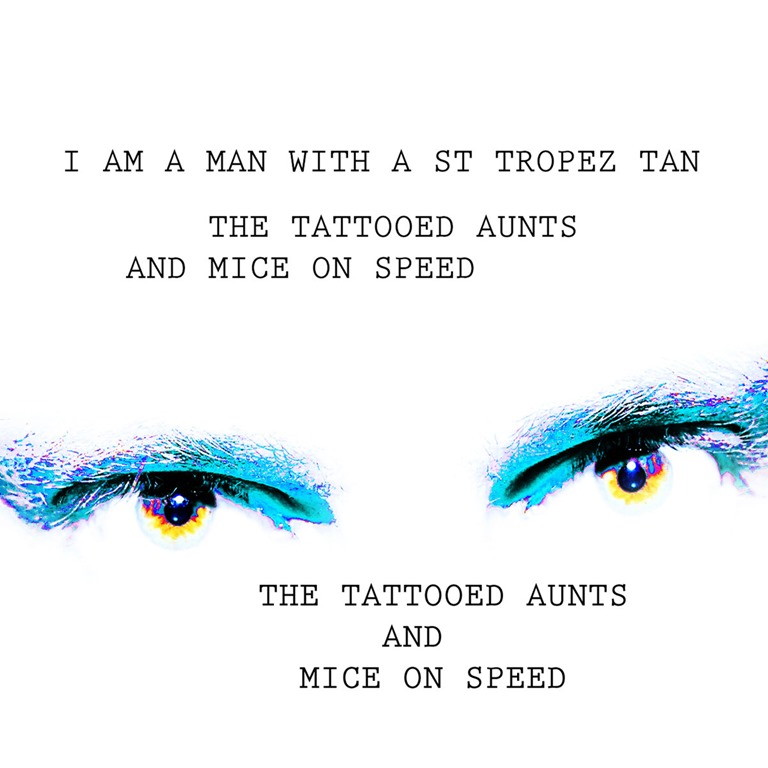
It’s been some time in coming, but Rick Senley’s fourth album under the I Am A Man with a St Tropez Tan guise. He has many, including musicforvoyeurs, alongside his work as a photographer, journalist, writer, teacher, actor and guitarist in a number of bands. I Am A Man With a St Tropez Tan is – according to Senley himself – ‘the sound of aggression borne of death, mental health struggles and addiction. It’s also a project centred around one man and his Dictaphone, a magpie-like approach to lifting and combining snippets of sound to create a nasty, messy and quite abrasive collage.

The biographical context to The Tattooed Aunts and Mice on Speed is genuinely harrowing, and I shall quote without abridgement: ‘After the death of his girlfriend and an accident left Rick housebound for months he channelled his rage and despair though electronic sounds and screams – a Chemical Brother nightmare put to sleep by Apex Twin’s downers, a bed-bath by Depeche Mode with Nine Inch Nails glaring through the keyhole and The Prodigy banging on the door.’

It’s a challenging mess of splintered noise, fragmented and disjointed, with pumping technoindustrial beats and dark club-orientated grooves pounding insistently beneath it all.

The whole thing has a nightmarish quality about it. Warped vocal samples taper in the way for a juddering beat and warping bass groove on the first track, ‘Killing Seals’, and thins become only more challenging from hereon in. the second Senley seems prepared to offer an inroad, an accessible structure centred around a solid rhythm and consistent bassline, he tears it to shreds and throws it all up in the air.

Senley pitches the album with the summary ‘Bursts of Burma, Thai ladyboys, Egyptian dogs and kittiwakes from Iceland join forces in equally disturbing measure.’ It’s perhaps a slanted perspective of the actual contents of The Tattooed Aunts, but it does give some indication of the wide-ranging sourcing of material Senley has engaged in in order to formulate this near-Burroughsian cut-up collage of sound. It’s disruptive, disturbing, a soundtrack of dissonance and dislocation. And it very much captures and conveys a mood of a difficult headspace, making for an album that’s at times tough, but ultimately rewarding.

AA

I Am A Man - Tattooed Aunts

Crónica 138 – 6th February 2018

Christopher Nosnibor

Mark E Smith has died. It shouldn’t come as a surprise. In fact, the surprise should be that he didn’t die sooner. But I can’t help but be shaken by the news. It doesn’t feel appropriate to post any music reviews: my social media streams are aclog with tributes to Smith, and it feels wrong even to add to the noise. Part of me feels I should revisit a slew of the old favourites, but they’re so engrained in my mind, I don’t really need to hear them, especially not now.

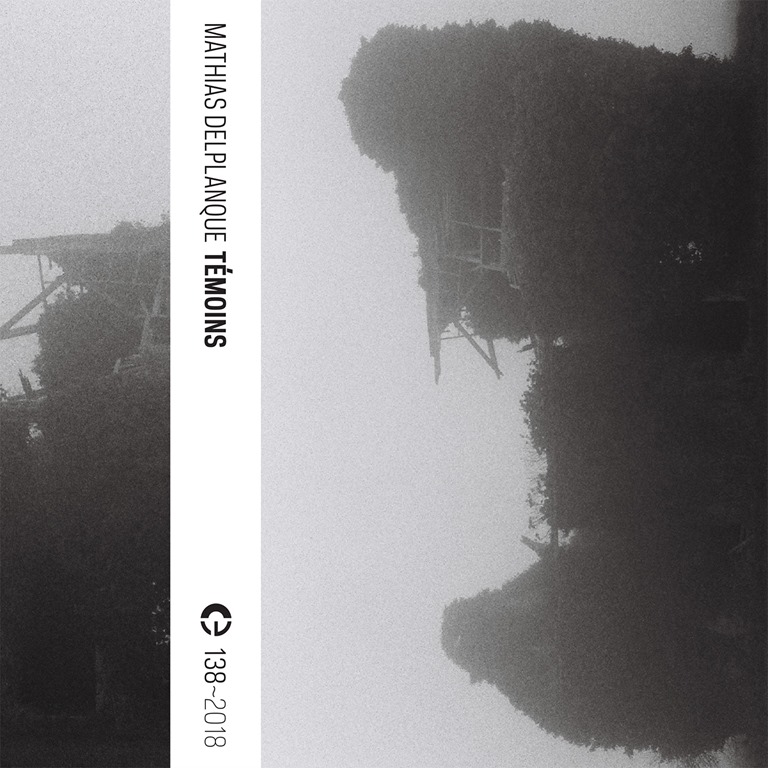
And so I immerse myself in Témoins, the latest offering from Mathias Delplanque, whose work I’ve previously enjoyed. The three sections of Témoins (including the digital bonus track ‘TU)’ are a world away from the ramshackle three-chord stomps and lyrical derangements of The Fall: these instrumental works – sound collages laid over difficult hums and drones – present a very different kind of abstraction. And it reminds me, vitally, that life goes on. Music goes on.

The sparse arrangements – often, they barely feel like arrangements – are as much about space and silence as sound. The sounds – the whirrs, the drones, he hums, the hisses – are interrupted, disrupted, broken – by seemingly random elements. Birdsong, lowing cattle, slamming doors, clatters and bangs, thumps and crackles. These are amidst the irregular extranea which form the fabric of the material of Témoins.

The atmosphere shifts and moods emerge most unexpectedly from seemingly innocuous sound pairings and juxtapositions. Late in the second piece, ‘Bruz’, thin, tentative notes hover long in the air, needling the senses while unexpected bumps and knocks at close proximity are enough to make you jump. Muffled conversation carries on all around. Here, Delplanque expertly recreates the conditions and sensations of the anxiety of agoraphobia. It grows chill, and it’s difficult to not feel tense are wary. On ‘TU’ – by far the shortest piece running for less than ten minutes – a ghostly piano drifts into the damp air while scraping footfalls combine to create an unsettling, spine-tingling atmosphere.

With Témoins, Mathias Delplanque delivers an hour of understated yet quietly compelling ambient dissonance.

AA

Crónica138_front

This is it Forever – 28th February 2018

Christopher Nosnibor

Capac are an electronic duo, currently based Athens and Bristol. But geography is a state of mind, and while details about the context and circumstance surrounding Through The Dread Waste are limited, the music stands for itself. Yes, it’s supposed to contain ‘ten interpretations of the coldest traditional winter music in the form of dark drone and atmospheric ambience’, but without a priori knowledge of the original versions, all that is left is drone and ambience.

The ‘dread’ ascribed to the ‘waste’ is entirely redundant: waste is surplus, unnecessary, for disposal. Why dread it? The sense of portent, of impending doom… Yes, in a world where there is no time to waste, no money to waste, we may rightly dread it. And yet. The waste: anything waste is unnecessary, and should be confronted, not dreaded or feared. And without value or purpose, anything is waste.

On the subject of disposal, the order page for the physical edition of the album is most telling, containing as it does the following: ‘The physical form and true embodiment of the concept behind Through The Dread Waste… You receive a fire log with a metal plate hidden deep inside. After burning the log, among the ashes you will find your metal plate revealing instructions to access the original constructions of the traditional pieces of music, prior to their deconstruction. Destruction, after all, is a form of creation.’ This echoes a classic and fundamental tenet of the avant-garde, namely the premise that one must destroy in order to create anew.

Postmodernism’s defeatism and acceptance of the death of originality is either the last gasp of the avant-garde, or the point at which is necessarily destroys itself to re-emerge, the creative equivalent of stubble-burning at the end of the cycle of growth and croppage. It would be easy to deride the ‘fire log with a metal plate’ but this is art, and there’s precious little the production and release of music by and large, especially in the mainstream. And this is art which is more than merely willing to be ephemeral, and actually invites its own destruction.

The album’s ten compositions are by no means indicative of a conventional, square set-up, as longer tracks are separated and segued by fragmental pieces. And over its duration, there is a lot of piano, and a lot of space. A lot of space. Through The Dread Waste is a sparse, ominously atmospheric set. This is music to stare into space to. At times, its presence is so sparse as to be beneath detection. The lilting piano, the endless resonant air between them, is captivating, yet so understated as s drift into the ether.

The overlaid and unintelligible snippets of voice on ‘Winter Morning’ call to mind the scratchy, pre-fade in discord of ‘Disintegration’ by The Cure. But here, there is no swampy tune riding in on oppressive drums to hammer it all home. Instead, it drifts into another space, and we consider valiant spaces and parallels. Elsewhere, monasterial voices hover in fogy darkness and drones crackle, from eternity.

As such as it’s a spiritual, transportative, and eventually an immediately accessible release (and not in the same sense of ‘accessible’ which is at the centre of the divisive and heated debate which is raging in the poetry sphere right now). Through The Dread Waste has infinite inroads, and is not abrasive or overtly difficult. Yet equally, it’s not dull or unchallenging. It has melody, and drifts in a way you can get lost in.

AA
Capac – Through The Dread Waste

Wolves & Vibrancy

Christopher Nosnibor

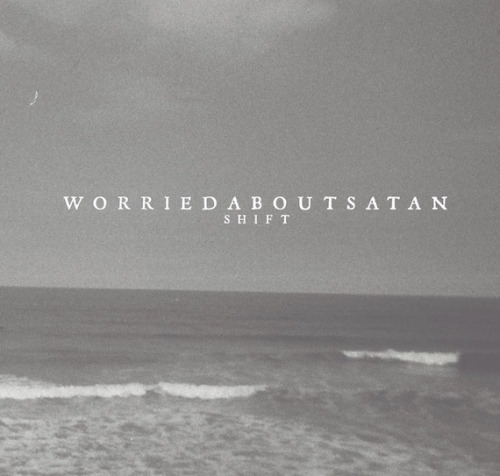
German label Wolves & Vibrancy is predominantly given to releasing metal, which makes worriedaboutsatan something of an unusual choice. Still, any release by the genre-straddling electronic duo is welcome regardless of who releases it. With two tracks spanning twenty-five minutes, Shift sits somewhere between an EP and a mini-album. And while it’s categorically not metal, because it’s worriedaboutsatan, it does, most definitely, err toward shades of darkness is places. But equally, because it’s worriedaboutsatan, it’s a work built on contrasts and detail.

On ‘Shift 1’, the rendering of those contrasts and details is analagous to a pencil sketch drawn with a relaxed, free hand, the shading effortlessly contoured by a smooth, easy, and relaxed wrist action to form soft, organic shapes and subtle movement.

A throbbing, low-to-mid drone swells dark, sombre. The first beats are but scratches. Paired, isolates. Hanging n space amidst the dense swirl. But they pick up – almost imperceptibly at first – and slowly, so slowly, begin to approximate a sedated heartbeat. From the building tension and growing density, just as it threatens to reach a critical mass of claustrophobia, emerges a soft, supple, rippling sound of light. Toward the end, a stippling, dappling pattern of light in the form of an interweaving motif rises on a slow wave.

‘Shift 2’ is more about stark contrast, black and white op-art flickers: the interweaving motif that surfaced, spectral, in ‘Shift 1’ takes on a new dynamic, a new tone, and dominates the front end of composition. The result is the sonic equivalent of a monochrome kaleidoscope, the patterns shifting in time and sequence with disorientating effect. Simultaneously calling to mind the vintage works of the likes of Tangerine Dream, Mike Oldfield and contemporary microtonal experimenters, it’s immersive and powerfully hypnotic. In time, it tapers away, and the temp slows, returning to the heartbeat bass and echoic click, before resurging around the mid-pint to weave a mesmerising sonic latticework.

Shift is appropriately titled given its endless evolution and morphology. In context of their oeuvre, its one of their ostensibly less ‘beaty’ releases, but it’ still displays the dynamism and sense of atmosphere that was have made their trademark since their emergence as premier purveyors of music that crosses post-rock and electronica. And as such, while it marks yet another evolutionary progression and expansion, Shift is quintessential worriedaboutsatan.

worriedaboutsatan – Shift

AA

Crónica 136 – 9th January 2018

Christopher Nosnibor

There’s something seriously awry with my promo download of the album. The tracks won’t play any audio, and instead flit by as if scrolling, searching through a menu on fast-forward. It’s a disorientating experience, and frustrating. But my curiosity I piqued, and so I feel compelled to piece together a review from the sources I can access, starting with the album’s BandCamp page on the label website.

The genesis and evolution of this collaborate project is described in the most factual of terms in the accompanying blurb.

To start AMT and Tarab exchanged materials and objects. AMT exchanged a single sound sculpture for Tarab’s collection of small objects. This material exchange led to activity. AMT manually manipulated, Tarab also, but more often than not he placed the sculpture in situations and let them work on it. Once again exchanges took place, this time of audio material. Elements where then selected and arranged and further rearranged; some left untouched and some where [sic] transformed.

I know little about either act, beyond the sketchy bios which accompany the release. On the evidence of the contents of this curious split album, Artificial Memory Trace – a project by Slavek Kwi, a sound-artist, composer and researcher interested in the phenomena of perception as the fundamental determinant of relations with reality – create fragments of sound, with seemingly random bumps and scrapes and whistles and near-mic distortions and whatever snippets come to hand tossed together to make bumpy, jumpy sonic rides. Very brief, bumpy, jumpy sonic rides at that: the seven AMT contributions to this release are under the minute mark, but what they lack in duration is countered by their intensity. They don’t make for easy or smooth listening.

Tarab’s seven pieces are lengthier and present a very different approach to composition and arrangement. Scuffling shuffling scrapes and thumps congeal to render soundscapes that couldn’t possibly sit within the ‘ambient’ bracket. It’s altogether too jarring, the intrusions unexpected and sometimes surprising. You can’t settle to this, you can’t mellow out or relax. If fact, this is a sonic experience that provokes twitchy, tetchy reactions. It’s not music to ‘like’ but to appreciate artistically. Its challenge is its strength.

None of this is to pitch one act against the other as being more ‘evolved’: if anything, their contrasting styles and near-duality is integral to the appreciation of this release.

How seriously should it be taken? Probably quite seriously. Nothing about Obex intimates an explicitly light-hearted release, an album geared towards ‘fun’. And yet amidst the dark, ponderous clanks and rumbles, something about Obex suggests an entertaining aspect, and also hints that this is art for the love of art over and above any grander narrative. And, context / no context, this is an interesting, textured work, rich in texture and dynamics.

AAA

OBEX

South London duo VLMV (FKA Alma) have announced their new album ‘Stranded, Not Lost’ will be released on Fierce Panda on the 16th Feb.

They’ve shared this exciting news with new music in the form of beautiful single ‘All These Ghosts’ with an accompanying live video shot at The Nave in Leeds.

VLMV is made up of Pete Lambrou of Codes In The Clouds & Monsters Build Mean Robots and Ciaran Morahan, also of Codes In The Clouds. They’ve describe themselves as "ambient-ish, post-something” their music is beautiful and spacious ambient post-rock.

‘Stranded, Not Lost’ is a gorgeous and moving record replete with the kind of brooding, ambient soundscapes, soaring vocals and crashing intensity that have earned the band a small legion of dedicated fans and recent tours supporting the likes of post-rock stalwarts Nordic Giants.

You can see the video for ‘All These Ghosts’ here: