Posts Tagged ‘Ambient’

Lawrence English shares a second piece from his forthcoming album, The Rest Is My Ghost arriving on Room40 on 7th August. ‘One Line Sky’ starts uneasy, towering and stuttering before bursting forth into an ecstatic wash of bass heavy, dense harmonics.

About ‘One Line Sky’, Lawrence says, "I spent a good deal of time researching in mega-cities whilst making this record. ‘One Line Sky’ was a term passed to me by a friend in Hong Kong. It has numerous readings, many of which float around the experiences of being at the bottom on these long canyon of buildings. which form the one line sky. The sky then is a slither of something else we can see beyond the immediate towers of architecture. I like the sense of escapism that is promised in that view, that outside of these places we build and sometimes cage ourselves into, a whole other possible life exists."

Hear ‘One Line Sky’ here:

AA

777167_0196-990000079e04513c

Photo credit: Traianos Pakioufakis

Room40 – 26th June 2026

Christopher Nosnibor

It’s rare that an album sits so far beyond the realms of any genre that it’s difficult to know where to start in discussing it. Helen Svoboda’s Headwater is one such rare album.

The pitch describes Headwater as ‘a stream of fragmentation, individuality and wholeness, shaped by disparate and complementary aspects of Helen Svoboda’s solo practice. Sixteen threads or ‘earworms’ run throughout the record to form an abstracted picture of self, rooted in a devolved songform. It can be experienced as a tapestry that blurs the edges of identity; strange, beautiful, evaporative, and fluid, like memory itself’.

Lately I’ve been quite amazed by how little people I know can actually remember from times past. I don’t mean the fact that friends from school can’t remember people from our year we weren’t eve n friends with (although I do), but just events and things in general. I find myself haunted by memories stretching as far back to when I was just three, but most people I know can barely remember what they did last week, or what they had for dinner. Seeing my mother slide rapidly into a haze of dementia forgetfulness in recent months, I’ve spent a lot of time lately reflecting on memory on many levels. I’ve long considered it analogous to a vast ROM drive, but have wondered about the means of access to the stored files. And as much as these contemplations have led to some dark places, I’ve become more accepting of different capacities for recollection, while still feeling a degree of fear for the future.

The ensemble she’s has assembled certainly makes for an unusual combination, consisting as it does of Helen Svoboda (double bass, voice, composition) with close collaborators Jacques Emery (double bass), Finnish vocalist Selma Savolainen (voice), and Tilman Robinson (electronics, production). Double bass is rare. Two double basses – in a quartet – is unheard of, and makes for some incredibly unconventional instrumental interplay across the sixteen compositions.

Many of those compositions are brief – under two minutes in duration – but convey so much.

‘Veins’, released in advance of the album and featuring vocals from Selma Savolainen is sparse, ethereal, and is representative – to some extent, although the range of the compositions is such that no one piece could ever truly summarise its contents.

The album’s first song, ‘If’, is a deeply atmospheric amalgamation of stylistic elements. In many respects, it’s predominantly a folk song, and one built on foundations of curving drones and rousing vocals. It’s stirringly evocative, and calls to mind in some ways the earthy feel of Wardruna, only without the tribal percussion or sense of the cinematic. This feels more inwardly-focused and reflective, but is certainly no less powerful.

AA

‘Child’ begins almost acapella save for a sparse, low-key drone, but builds to a wailing crescendo, and Svoboda’s voice is nothing short of captivating, conveying so much more than the words alone. In contrast, the instrumental ‘Blur’ is a sawing strain of dissonance as a cacophony of strings scrape and scratch discordantly to create a nerve-jangling tension. It may only be two minutes in duration, but it’s ten minutes in intensity.

There’s spacey experimentalism and loose jazz leanings on ‘Void of Space’, and ‘Evening Hepuli’ brings high drama and breathy, operatic hysteria over stop/start strings which ring and reverberate. The final piece, ‘Hepuli Earworm’ is commanding, in places a wild jazz frenzy, occasionally inviting comparisons to The Necks, in others conjuring expansive soundscapes and moments with real emotional edge.

Headwater is not a straightforward album: it’s quirky and unconventional, and not always immediately accessible. But it’s inventive, imaginative, truly unique in composition and delivery, and, in parts, incredibly powerful.

AA

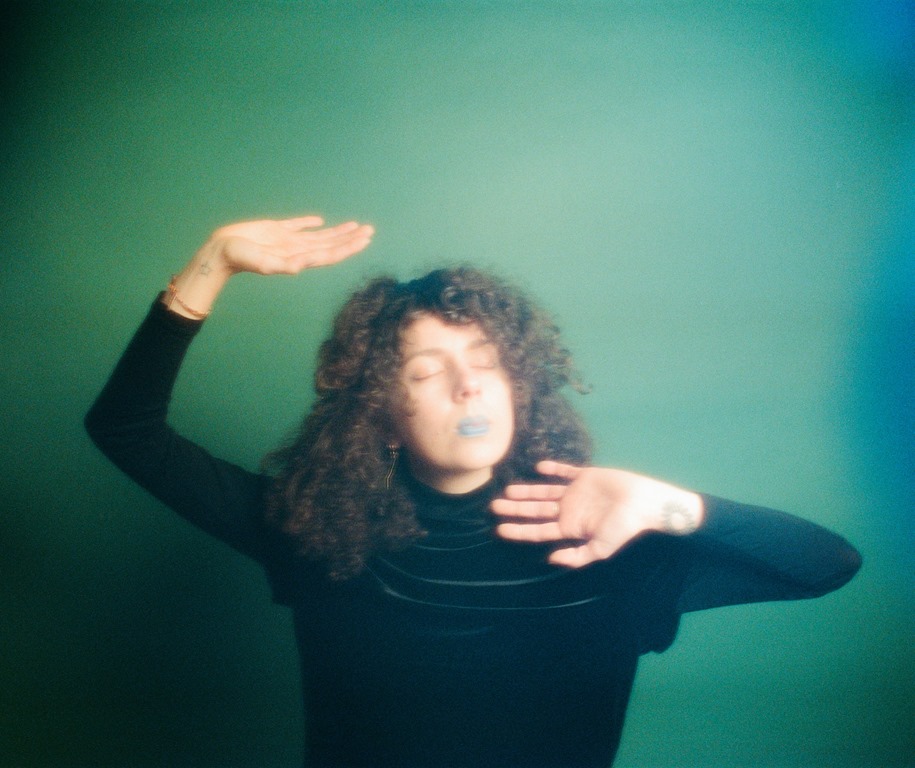
Celeste_de_Clario_347301

Photo: Celeste de Clario

Sound in Silence – 18th May 2026

Christopher Nosnibor

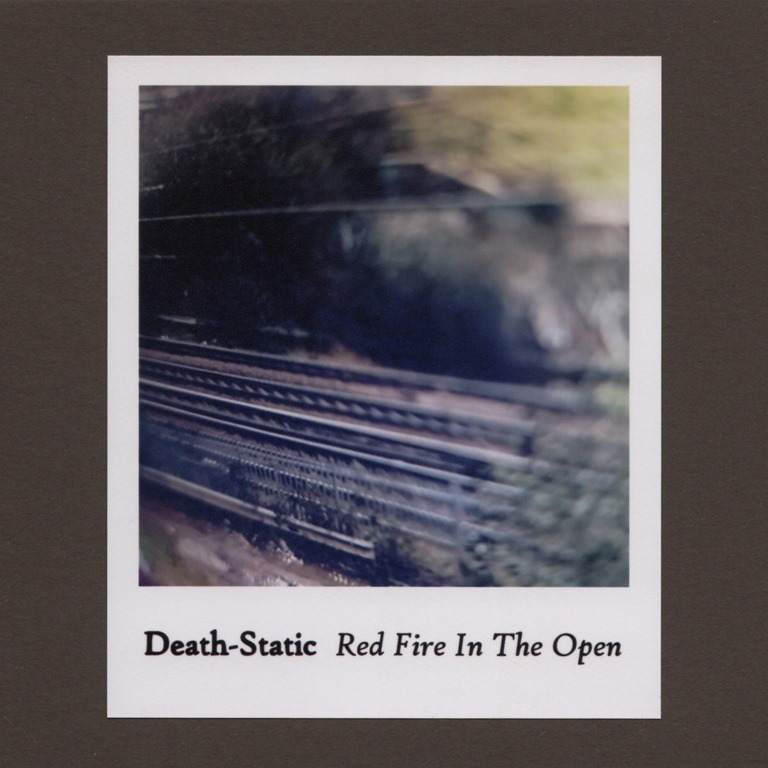
Sound in Silence produce nice releases. Like the Loom label and early Gizeh releases, they disprove the notion that the CD format is impersonal, no more than mass-produced plastic. The latest offering from Death-Static, released as a run of 200 handmade, hand-stamped, and hand-numbered copies is exemplary. It’s more than just a CD. It’s art, and an artefact, and one worthy of the music it houses.

Death-Static is the solo project of Gareth S. Brown, who has no small catalogue of output to his credit, having previously released music as a member of the bands Hood, The Declining Winter and Memory Drawings, and solo under his real name and various aliases. We learn that Red Fire In The Open, his second full-length album, ‘is more drone-based than his last year’s debut Time Is Ignorance and consists of three tracks… conceived as a prelude, interlude and main piece, using bellows instruments, organs, cellos and field recordings’.

The prelude takes the form of the fourteen-minute ‘Blackhorse Infirmary’ and it starts out as a quavering analogue drone which stutters and stalls in between undulations. It’s the kind of warm tone that’s eerily close to the human voice. Organs and bellows are uncannily breath, and the polyphonic exhalation which defines this piece is uncanny and somewhat discomfiting. It swells like a chorus of voices humming, wordless, all around you, as trilling synth drones and elongated scrapes ripple, with feedback occasionally rising up through the slow, dense drift. The final minutes are a rustling, rupturing cacophony of churching chaos and discord. Although not entirely unpleasant, it is challenging, and feels like being assailed by a storm.

In context, the interlude, in the form of ‘The Last Days of Light’ is welcome. It’s a piano-led moment of reflection. Quiet, calm, with a hint of melancholy, it’s soothing, and extremely emotive. I feel a certain sadness. Not in having been manipulated to sadness, but because there is simply something about it. Life is sad. The world is sad.

The title track, ‘Red Fire In The Open’ is the main event – a composition which stretches beyond thirty-four minutes in an exercise in patience. It’s pitched as being ‘like a guided meditation, using bellows instruments, organs, cellos, and field recordings to move the listener from the grimy, urban trudge of a major metropolitan train station to a woodland dawn chorus – and at the same time towards a sense of possibility and hope.’ It very much marks a shift in tone, but at the same time expands on the gentle drone forms of the previous pieces.

Like cheese, or for some, bacon, birdsong always makes everything better. I used to march into town to get a bus to the office on the city’s outskirts on the opposite side from where I live under the power of the MP3. Since lockdown, I’ve sought silence and felt the need to keep my ears open, and to venture into nature as much as possible. This has been a huge life change in many ways. I actually appreciate the sound of the breeze, the ripples of air though the leaves of trees, now, not because I’ve turned into some massive hippy, but because I crave the sounds of life, and feel I need that connection. The nature on my doorstep has become far more meaningful to me than any David Attenborough documentary. Whales are cool, but so are bees and birds and green spaces closer to home. We live in the most horribly overstimulated of worlds. We’re far beyond the postmodern blizzard Lyotard and Jameson wrote of, in that we’re in a place where we’ve devolved, concentration spans have been diminished to mere seconds and most people use AI to do their thinking for them. We’re so fucked, in so many ways, and on so many levels. But Red Fire In The Open reminds us that there is an alternative, and that there is more. It reminds us that it’s still possible to step outside, and to open your eyes and open your ears, and open your lungs. Please, do, while you still can.

AA

a3054815221_10

Karlrecords – 22nd May 2026

Christopher Nosnibor

Flocks is the duo consisting of drone specialist Werner Durand and percussionist Uli Hohmann, and their second album, Lagoon, we’re informed that ‘the duo further explores the aesthetics it has crafted on its selftitled debut (2023, on the now defunct ZEHRA imprint): DURAND and HOHMANN shape drone-y soundscapes based on their self-built wind- & stringed instruments, Persian percussion and subtle electronics, drawing additional inspiration from Krautrock (listen to the irresistible, hypnotique, ever-changing rhythmic pattern of the title track) as well as JON HASSELL’s “fourth world” aesthetics, placing the duo nicely between tradition and experiment!’

For those unfamiliar with the fourth world concept, it can be traced to the 1980 collaborative album Fourth World, Vol. 1: Possible Musics by Hassell and Brian Eno, with the former defining the fourth world as “a unified primitive/futuristic sound combining features of world ethnic styles with advanced electronic techniques.” And it does very much describe the sounds on Lagoon, where electronic drones and quavering digital textures are melded with percussive forms of ancient origin. Indeed, Hohmann’s credits on the album include kanjira, riq, ghatam, Tibetan bells, Venetian shells, and bamboo tube zither. And the result is nothing short of hypnotic.

The three longform tracks share aquatic-themed titles, matched with gloopy tones and fluid forms. Side one contains two ten-minute pieces in the form of ‘Whirls’ and ‘Tidal’, while the twenty-minute title track fills the entirety of side two.

The length of the pieces means they each have time – and space – in which to fully explore the tones and textures of the instruments involved, and to create fully immersive soundscapes. There are breathy stutters amidst the wavering undulations, and sounds which evoke the sound of waves lapping the sides of a small boat. There are gentle ripples, ebbs and flows in these extensive sonic expanses, and it’s not difficult to let go and simply succumb to the drift.

The arrival of some quite smooth sax in the middle of ‘Tidal’ is something of a surprise and feels kind of incongruous at first, but in time it manages to nestle in nicely. ‘Lagoon’ features stronger, busier, percussion and denser, more claustrophobic drones, and is also the most overtly ‘jazz’ of the three compositions due to the more prominent sax work. Over its extended duration, it builds a solid groove, and seems to quicken in pace, although it may only be an increasing density and the tension of eternal repetition. Eleven minutes in, and you really begin to feel it: the relentless rhythm and eternally monotonous drone which underpin all of the additional layers have a cumulative effect. As horns and clients and an array of extraneous sounds from twittering to laser-like bleeps come and go, it becomes increasingly disorientating, and while the experience is by no means unpleasant, it does fully envelop the mind and body.

The combination of sci-fi sounds and weird electronica with urgent polyrhythmic percussion does, indeed, feel other-worldly – of this planet, and not, of the distant past and the equally-distant futures of imagination. And among it all, the listener finds themselves lost, adrift between the two, in time and space unknown.

AA

AA

KR120 front

Rome’s post-rockers KLIMT 1918 reveal their ethereal and minimalist aspects with the sky-gazing advance track ‘Petricore’ as the final single taken from their forthcoming new full-length Àmor. The Italians’ fifth album has been chalked up for release on June 12, 2026.

KLIMT 1918 comment: “’Petricore’ is the story of a realisation: the sense of inadequacy that has been with me since I was born and that will never leave me”, frontman Marco Soellner reveals. “It will always be the ghost that is lurking behind the words, the shadow on sunny summer days, and the loneliness creeping into my body even when I’m surrounded by people. Like petricore after a storm, it seeps into the air, haunts memories, disarms and numbs. It turns me once again into the person that I used to be, and the very one that I never wanted to be again.”

Be the aftermath.
Be everything you feared you’d become.
Be the wound that never healed.
Be the ghost you thought you’d buried.

AA

6e3ec3b3-854d-3a3b-b3c1-a45075d5587b

Sub Rosa – 15th May 2026

Christopher Nosnibor

Mick Harris may have left Napalm Death some thirty-five years ago, but it’s still for his work with them – and his coining of the term ‘grindcore’ – that he’s largely known. There are, of course, far worse things one could be known for, particularly as this meant that he featured on the band’s seminal debut album, Scum. While having participated in numerous projects in the years since, Scorn will forever be an enduring standout in cult circles, but beyond this, Harris has explored far further-flung corners of the musical spectrum on many occasions with comparatively little recognition, with dark atmospherics having been his primary focus for a good number of years now.

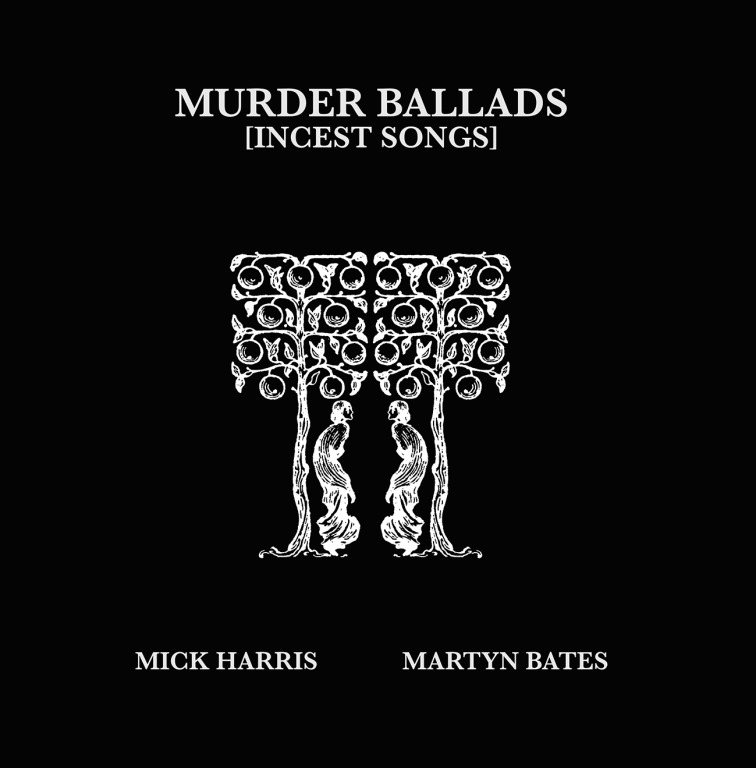
The fact that this is the third instalment of Murder Ballads, recorded in collaboration with Martyn Bates and released on estimable Sub Rosa label in Belgium – which has released albums by William S. Burroughs, Brion Gysin, Test Dept, Oren Ambarchi, David Toop, Bill Laswell, Asian Dub Foundation… the list goes on – is a measure of how Harris has transitioned to what one might call more ‘arty’ territories, which may sound snobby or poncey to some, but let’s focus on the work at hand – at least, in due course.

Although murder ballads are likely most commonly associated with Nick Cave in popular culture, they have a long cultural heritage, with roots in the folk history of Scandinavia, England, and lowland Scotland reaching back as far as the 1750s. The entire premise of murder ballads is bleak and grim, and Harris and Bates remain true to this principle here, on an album which is mercilessly dark and lugubrious.

There’s no avoiding the fact that the subtitle brings an element of discomfort. We’re in a strange place right now, culturally, in that half of the world – or maybe that’s just half of the US and those in the UK who for inexplicable reason who describe themselves as ‘patriots’ while also being fans of Donald Trump – seem to think that paedophilia is just fine, and in many states, marrying cousins is similarly just fine. Similarly, incest porn and step-sibling porn is all the rage. Why? What is wrong with people? But then, history is built on tales of incest, going right back to Greek mythology. This is no more than an observation, and to note that as a species, we’ve been warped for the entirety of our existence. That discussion is an entire thesis in itself, though.

Murder Ballads [Incest Songs] is a long way from Peter Sotos territory. But what it is, is four ominously-shaded longform compositions which are uncomfortable and uneasy. As they pitch it, ‘Incest Songs is the final chapter of the Murder Ballads trilogy, and its most fully realized expression. Where Drift and Passages explored the post-isolationist frame through voice and single instrument, this third volume dispenses with that approach entirely, opening instead onto a more labyrinthine sonic architecture – one built from overlapping, saturating, blurring voices, all of them Martyn Bates’.

Bates does indeed prove to be versatile, and capable of conjuring the most moving vocal evocations. ‘The Bonny Hind’ is essentially a folk song, a shanty, even, at heart, but the lilting vocal, which would work as readily acapella as against conventional instrumentation – flute, or fiddle, for example – takes on a more ominous shade when pitched against groaning, shape-shifting drones. The result is unsettling, and would sit within the soundtrack of a folk horror movie in the way a warped, discordant rendition of a nursery rhyme would in more mainstream projects.

‘Sheaf and Knife’ is notable for its sparse nature. Bates’ voice is practically in your ear – and this ism no small feat of the production. Whispers, echoes, and reverberations echo around, and it’s not immediately apparent that most of this is Bates, the wind and the air, and the dank, low drones which define this album. ‘The Two Brothers’ – a seventeen-minute monster of a composition – drifts into moments of space-age spin, flanged swirl and fractal details turning a textured sonic nebula behind the vulnerable vocals – and the narrative said vocals deliver is chilling, a tale of a stabbing, whereby the narrator washes the blood off and goes about his business. Or something. While the lyrics sometimes trail away in swathes of reverb the auditory experience is gripping in itself. This is the sound of heavy fog, and of silent decomposition. This leads us to the album’s final cut, ‘Edward’, extending beyond seventeen and a half minutes is magnificently haunting. At times so sparse as to be barely there, it’s a trawl into the darkest of spaces, suffocating, claustrophobic. Bates croons and quavers with a detachment which accentuates the sense of disconnection. There’s something in the way he delivers the words, against sparse, eerie, near-ambient backdrops of difficult drones, that is quite chilling: calm, soft, psychopathic. Enjoy, but watch your back.

AA

AA

SRV514 front

Lay Bare Recordings – 9th May 2026

Christopher Nosnibor

One may be inclined to jest that a release like this should carry a warning – but the joke falls flat when technically, it does: the notes which accompany the release on Bandcamp sets the scene for the debut EP from Dutch experimentalists of A Plague of Lighthouse Keepers thus:

Whilst most drone-metal outfits focus on creating atmosphere by composing ambient compositions with tremendous power and volume, the Lighthouse Keepers use more traditional doom/sludge metal as a starting point and explore its differences and similarities with genres such as free jazz, raga, noise and classical minimalism.

Elsewhere, they’re described as sounding like ‘a disturbed lovechild of OM, Sumac, Swans, Miles Davis, and Pandit Pran Nath, combining lengthy improvisations with ear-shattering explosions of intensity’. How could a lovechild of that lot be anything but disturbed?

And so it is that we enter by way of ‘The Massacre of Flour’, a title of which conjures images of a bloodbath in a bakery. What is sounds like is…. nothing short of wild. Its seven minutes leads the listener through a series of conjoined segments, arriving in a crazed blast of shrieking noise, a frenzied cacophony of feedback and squealing sax before lunging into a thick, sludge riff, which in turn yields to a slow, almost ambient drone passage with mystical swirls which rise like desert mirages. Each is gripping itself, and the transition to the next takes place almost imperceptibly: one moment you’re here, then, somehow, you’re there, in a completely different scene with no recollection of how you came to be here – rather like the way scenes change in dreams. And suddenly, the hazy serenity is torn asunder, lurching into a tectonic rift from which burst larval torture resembling Swans circa the Young God EP. It’s absolutely fucking brutal, the sound of pain, distilled and amplified

‘I Fuck People’, the shortest song on the EP, goes in hard on the avant-jazz noise chaos, forming a heavy undulation of bleats and shrieks by way of a backdrop to savage, ravaged, demonic vocals. It’s the sound of purgatorial torment. But all of this is simply a prelude to the main event, the nine-minute ‘Towers of Silence’, on which they really flex all of their muscles. Easing in gently with some abstract desert folk with hints of Eastern esotericism, it’s a slow, gradual build. There’s something meditative, spiritual in the vocals, until things begin to get twisted, mangled, and tangled. There’s anguish, there’s tension, and unease grows… breathe. But ululations which begin soothingly grow tense, and things spiral to a hypnotic cathedral of sound.

Towers of Silence may only contain three tracks with a combined duration of just over twenty minutes, but its range and intensity are something to behold. It’s drone metal, but not as we know it.

AA

AA

892210

1st May 2026

Christopher Nosnibor

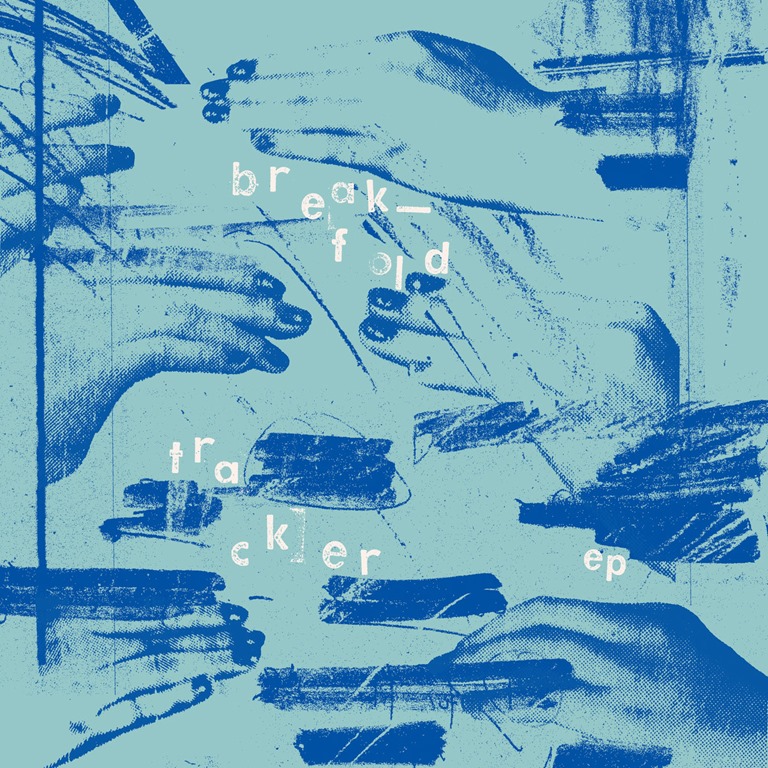
Since debuting in 2017 under the break_fold moniker after some time away from music to concentrate his energy on the demands of adult life, Tim Hann has maintained a steady flow of output – not exactly a tempestuous spate, but with the release of an EP or an album every year or two, he’s built a respectable body of work. And over the course of these releases, the break_fold sound has evolved – again, not at rapid pace, whereby one release is a huge departure from its predecessor, but the music he’s making now has developed significantly when compared to the sparse glitchtronica of 07_07_15 – 13_04_16 and 27_05_17 – 21_01_18.

Hann continues to mine his memories and experiences for inspiration, serving to document his life through sonic abstractions, an aural memoir of sorts. The Tracker EP is a counterpart to its predecessor, The Planner EP, as he explains:

The Tracker EP is a reference to my Dad, who gave himself nicknames that others in the family then started using,” Tim explains. “‘Tracker’ is a reference to his persona when on holiday or away from work. If we were on holiday and were trying to find a place of interest, he’d be in Tracker mode. Planner is when my Dad was at work.”

Families are strange, but it’s only as one grows older, and when one takes a step back to reflect on formative experiences that it becomes apparent just how strange. As a child, you assume your family life, and your parents, are normal, and that every other household is the same, at least more or less. Over time, you come to consider the things some of your friends’ households do are weird. And they probably are. Mealtime rituals, Easter, Christmas traditions… but it’s likely not until later, after leaving home and starting your own family that you begin to analyse your own upbringing, and to compare the relationship you had with your parents growing up to the one you have with your own children.

I’m often startled by just how close to their parents a lot of my friends are, and how much time they spend with them. But then, they also stayed close to their parents geographically, living just a few streets away, with their parents providing child care and doing school runs several days a week. And that to me seems strange. I’ve no issues with my parents, but my main aspiration growing up was to attain independence and live my life in my own way.

As the accompanying notes add, ‘across the EP, break_fold ties together nods to family sayings, misheard phrases, and the small but defining details of growing up in the North East of England in the 1990s… for Hann, both Planner and Tracker serve as time capsules; deeply personal yet universally resonant snapshots of childhood, family dynamics and regional identity’.

In this context, the details matter. None of the inspiration is rendered explicit on Tracker: instead, what we get is a sonic articulation of all of this. And it works. You may not take away the intended interpretation, but that’s both the beauty and the downside of a project like this: it’s as much about the listener’s experience and input as the artist’s.

‘Pet’ amalgamates an almost club-friendly dance sound with a trawling, trudging grind of a foundation, while ‘Climbing Flowers’ pairs soft synth washes that hover between Krautrock, ambient, and prog, with flickering, fluttering beats, low in the mix, fading like memories around the midpoint. ‘Workie Ticket’ – a term I first learned on my thirtieth birthday in a pub in Conwy, Wales, where, having climbed Conwy mountain, I had a bowl of chips and a pint of Mordue Workie Ticket – brewed in North Shields. While the meaning and use of the phrase seems varied, it’s most definitely a North-East thing. There’s a trance-dance vibe to ‘Carrying On’, although the bass and overlaid guitar are more post-rock, and what we get, ultimately, is a hybrid.

The Tracker EP doesn’t sound confused as much as a work that’s deeply immersed in the process of processing, bringing together disparate elements in order to sift through an array of stuff. ‘This Concept of Sharing’ is upbeat, light, accessible, even danceable, but there’s a sense of something darker beneath the surface, and this emerges on the final track, ‘Every Penny’s a Prisoner’, which swerves and bends and twists and warps, but all along rides a pulsating groove pinned in place with a whipcrack snare.

It’s hard to place The Tracker EP. As much as its ambient, there are harder dance elements in the mix. But for all its surging buoyancy, there’s a tinge of sadness beneath, and the complex twist of inner conflict and uncertainty. On the surface, The Tracker EP sees break_fold bursting out in a bloom of elation, but there are currents beneath which are deep, and darker, perhaps revealing far more than is ever rendered explicit.

AA

AA

a2375357500_10

Miasmah – 7th May 2026

Christopher Nosnibor

“What does a trip towards another world sound like? We’re about to find out. The master of tension, melancholy, and the deranged is back after a long period working in the worlds of theatre and cinema. Last seen on Miasmah with the grief stricken The Summoner, Kreng now returns with Wormhole, following closer in the footsteps of the cult classics L’Autopsie Phénoménale de Dieu and Grimoire.”

This is how we’re introduced to the first new album from Kreng in a decade, and Wormhole is appropriately titled. Immediately, the listener is drawn into a hinterland of suspense and ominous tension, a path beset by ever thickening trees and a creeping mist. You feel an urge to retreat, but as early as the second composition, the dark, jittery ‘Nachtzweet’, with dank creaking sounds and dissonant piano notes which are the pure quintessence of ‘eerie’, you find you’re incapable of turning back. The only way is forward, further into the forest – it doesn’t seem to be enchanted, but something isn’t right either: something is lurking, and it feels menacing, sinister, dangerous. Your heart’s in your mouth, and you’re no longer in control of your decisions and all you can do is creep onwards, down the wormhole, riven with trepidation.

It’s like the soundtrack to a film, but it’s hard to imagine that the visuals could be anywhere near as unsettling as this accompaniment. In the same way that films are rarely as scary as books, because films render and thus create boundaries when it comes to expressing The Terrible Thing, the monster, the ghost, the object of fear, the mind’s capacity to experience fear goes far beyond the visual. As such, a strong soundtrack has the capacity to heighten the fear factor of a movie. But the soundtrack alone, when the only visuals are those conjured in the mind’s eye… the scope is without boundaries. And these compositions distil the very essence of fear, of dread.

Many of the titles offer little by way of clues as to their meaning, or the scenes they would accompany if this were a film. ‘Cepheid’ is an American molecular diagnostics company, and what’s so scary about that? You may well ask. It also happens to be a pulsating star, which changes not only in brightness, but also diameter and temperature, too, which is in keeping with the space journey theme of the album’s title and other tracks, such as ‘Vacuum’.

The piano-led ‘Entropy’ is a soaring choral work, albeit one that elicits thoughts of death and afterlife. And if ‘To Yield’ is soothing, and allows the listener time and space to recover their breath and the heart to return to a more normal rate, the aforementioned ‘Vacuum’ is five and a half minutes of suffocating fear, and ‘Donker’ is an extended exercise in orientation-twisting, brain-bending torture.

In places conventionally ‘filmic’, with strings and piano taking the lead, there are extended passages of creeping dark ambience, the sonic origins of which are unclear, adding to the unease of the pieces – because so much fear stems from the unknown, the unseen, the inexplicable. Sounds of unknown and inexplicable origin are inherently disturbing: if you know that wail is from an owl, you can compartmentalise it, accept that it’s an owl, and move on. When you don’t know what that haunting sound it… it gives you the willies.

Wormhole is creepy, unsettling. It chills more than it thrills, and instils a deep discomfort. Close your eyes and breathe slowly. Feel the fear. Embrace it.

AA

AA

MIA063 front

Dret Skivor – 1st May 2026

Christopher Nosnibor

Trowser Carrier – formerly of Leeds and now of Värmland, Sweden – is a genre unto himself, being, to my knowledge the sole exponent of polite harsh noise on the planet. And if that seems like an oxymoron, that’s entirely the point: 2013’s A Flower for My Hoonoo (reissued in expanded form in 2023) offered up musings on cups of tea and tablecloths and all manner of English manners against backdrops of raw, skull-shattering abrasive noise.

For this release (I won’t suggest, as music journos so often do, that it’s long-awaited, as I doubt more than five people have noticed the time between Trowser Carrier releases), TC has paired up with fellow Värmland resident Fern (whose error was released by Dret Skivor a couple of years ago).

The compositions are considerably longer than on the previous releases by either artist, with Helping Old Ladies Cross The Road containing four new compositions, each four to nine minutes in length, plus a thirteen-minute remix courtesy of horse funeral.

It’s the title track which lifts the curtain on this characteristically quirky set, and it seems that Fern’s input has tempered the harsh noise of Trowser Carrier, replacing blanket distortion and abrasion with muffled, exploratory, experimental electronica, which swims casually between space-age weirdness, semi-ambient Krautrock, and sci-fi drones reminiscent of the BBC Radiophonic Workshop. TC’s vocals are low in the mix and masked and mangled by distortion and a host of other effects, barely discernible and wholly indecipherable amidst layers of reverb and tremolo. It all sound quite polite and considerate in the delivery, though.

‘Lovely show pillows’ is a work of dank, dark ambience which is unnerving, unsettling. The lyrics are completely beyond unravelling, the voice serving more as another instrument in the slow swirl of sound, but the title speaks for itself, as is also the case on ‘Nearly clean? No really clean!’ a slow drift of cloudlike ambience with submerged vocals which likely references a TV advert from the 80s or perhaps early 90s, the specifics of which elude me. It sounds like a disjointed message beaming in via satellite from a space mission circa 1970, crackling through space and time against a backdrop of whale song. Maybe I need to clean my ears: perhaps they’re only nearly clean. But then a barrage of noise like a thunder storm breaking hits with the arrival of ‘The smell of a lawn at dawn’. This is, of course, peak absurdism, and precisely what one would expect from the label, and in particular Trowser Carrier, whose objective is essentially to take the piss out of harsh noise and power electronics and industrial ambient and all the rest, while exploiting the form with a commendable aptitude.

Horse funeral’s remix of ‘TC + Fern’ appears to meld down the album in its entirety to a single seething morass of undifferentiated slow-moving sonic gloop. Here, any vocals are boiled down and simmered to mere bubbles in a broiling broth, and the track eventually evaporates to nothing.

What to make of this? Well, it’s not designed to meet conventional musical standards. Quite the opposite, in fact. But Helping Old Ladies Cross The Road sees Trowser Carrier + Fern belongs to a territory all of its own, dismantling the tropes and forms of the genres to which the album belongs. It would be commercial suicide if commercial potential was an issue. As it is, it’s simply a magnificent example of obstinate perversity – and good noise.

AA

a2738411531_10