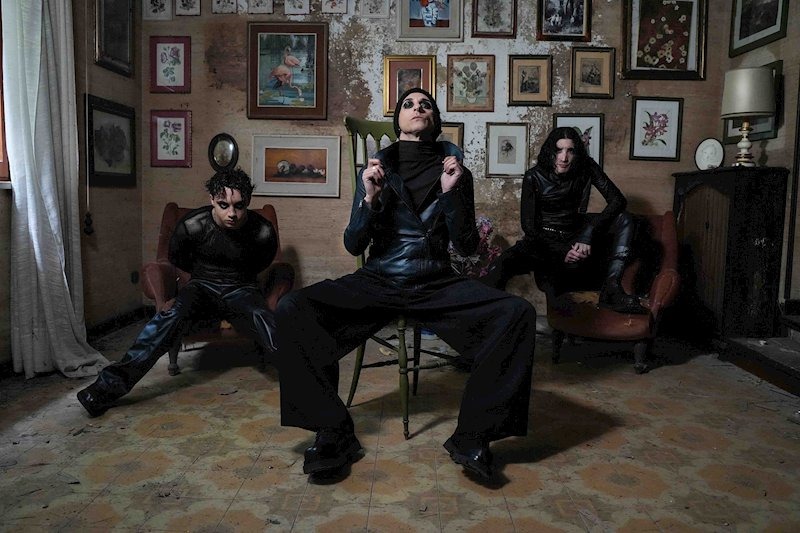
Alternative-industrial rockers NOIR ADDICTION present their new single ‘Serve Me Some Crime’, a sarcastic manifesto about embracing chaos and contradiction, where rule-breaking, humour and non-conformity become tools of personal freedom. The accompanying video, with its black-and-red aesthetic, was created by Jack Lucas Laugeni. Favouring instinct and madness over routine, control and the suffocating seriousness of everyday life, this is the first postpunk-darkwave taste of the Pretty Things Don’t Last album, forthcoming via Berlin’s Soulpunx label.
AA
Noir Addiction is led by Sonny Lanegan, a seasoned musician and producer whose creative vision was shaped by cutting his teeth in Los Angeles’s high-octane music scene, where he honed his experimental style as singer-songwriter for White Pulp and co-founder of The Dead Good. The Spill Magazine finds this “somewhere between industrial grit and sardonic self-awareness. Drawing clear lineage from acts like Nine Inch Nails and Depeche Mode, Noir Addiction doesn’t just imitate its influences—it refracts them through a modern lens of irony and controlled chaos”.
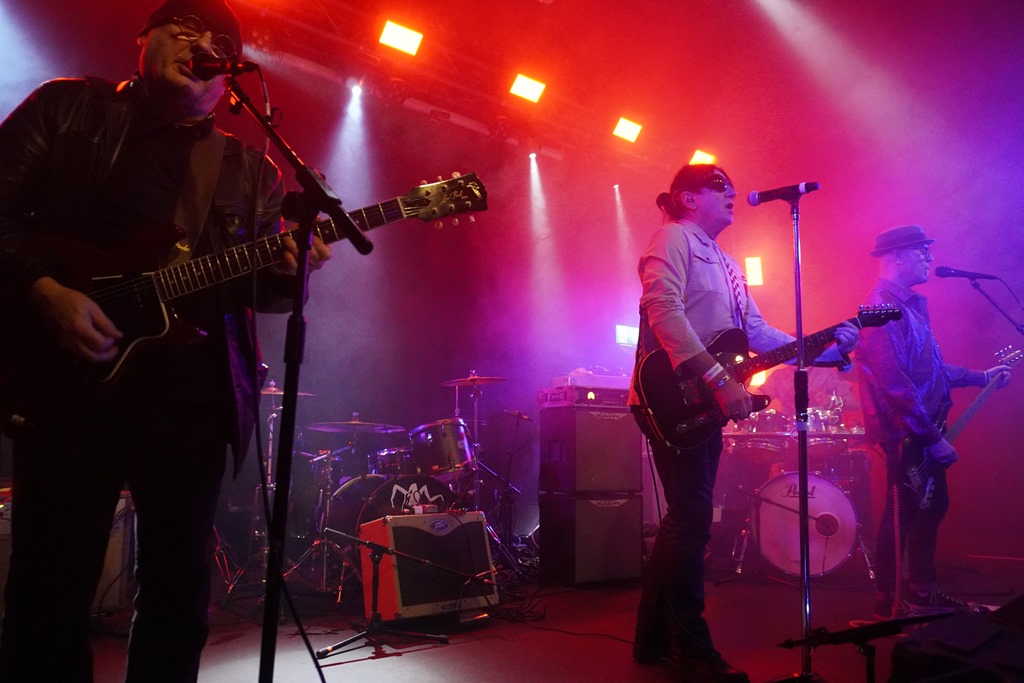
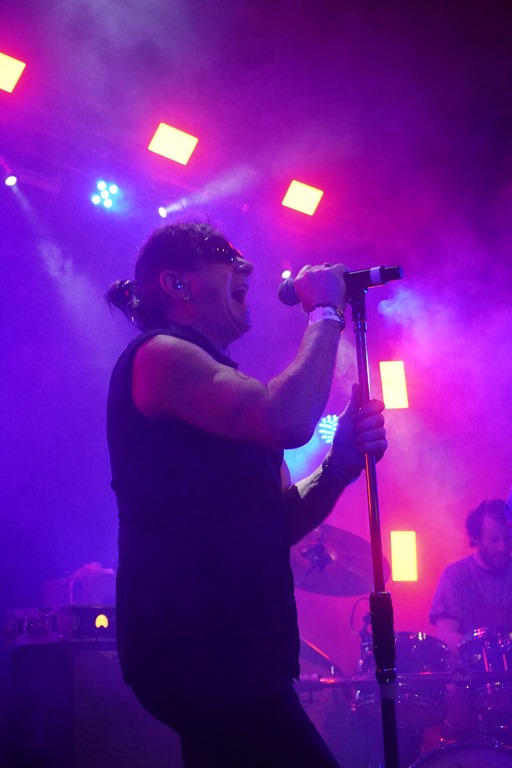
It might have been a result of the inclement conditions, but setting foot in Huddersfield for the first time in my life, I’m struck by how incredibly quiet the streets are for a Friday night, and it’s far from packed in the upstairs room at The Parish when The Shakes take to the stage at 8:15. Now, I am a strong advocate of checking out support acts, and have discovered some outstanding bands by getting down early doors. This isn’t one of them. Musically, they’re competent players, but the material is very middling rock, the kind that’s easy to take or leave, but the singer thinks he’s some kind Bono meets Michael Hutchence rock star. It’s not a good look, and even if it were, it would require some serious charisma and immense talent to pull it off, and this fella has neither. The No Great Shakes, you might say. The room is considerably busier half an hour later. It’s almost as if people knew.
The Shakes
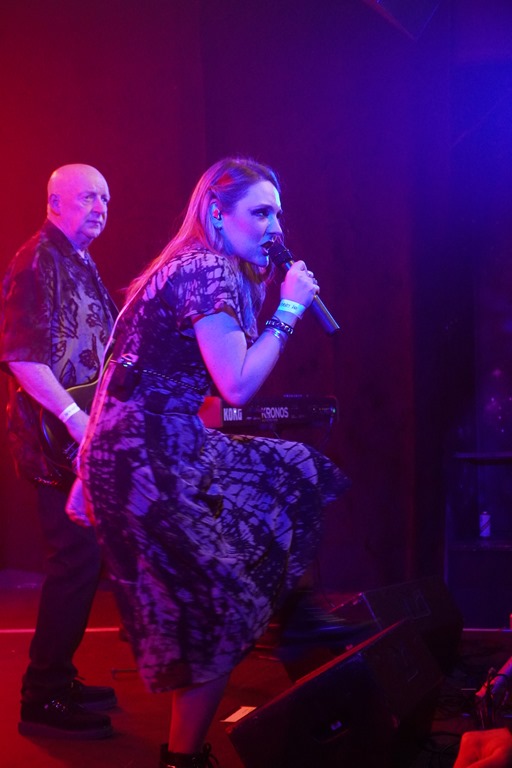
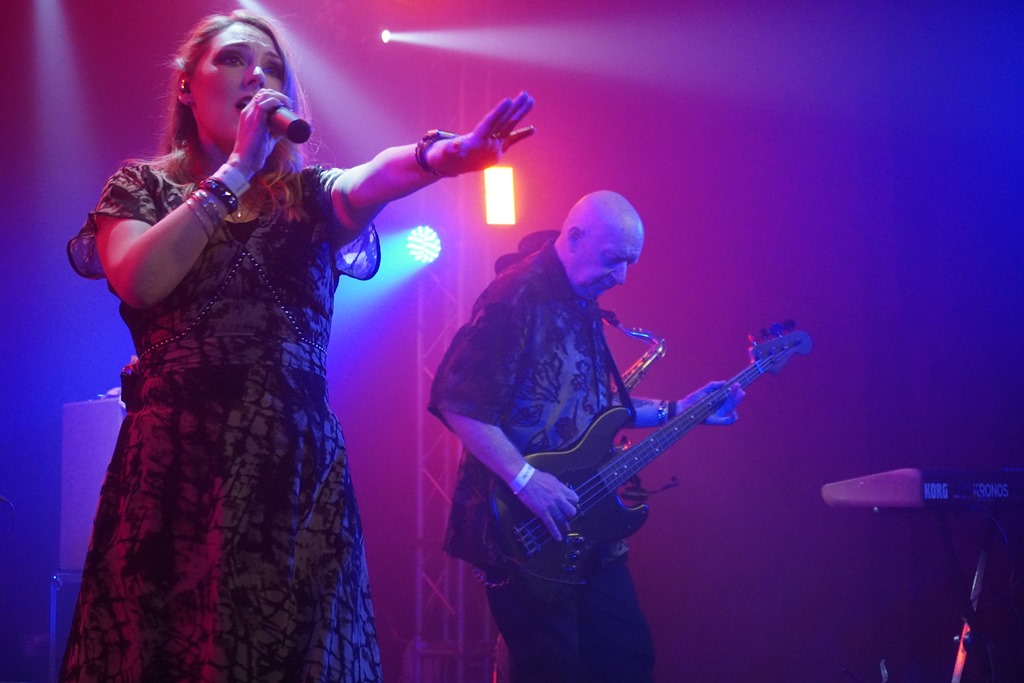
Having joined Skeletal Family in 2021, replacing Hannah Small after a brief tenure, and making her the band’s fourth vocalist, Anneka Latta has not only settled in nicely, but brings her own presence and a wonderful dynamic to the unit. Having recorded Light From Dark, released in 2023, their first album since 2009’s Songs of Love, Hope & Despair, her place feels not just solidified, but integral.
Skeletal Family
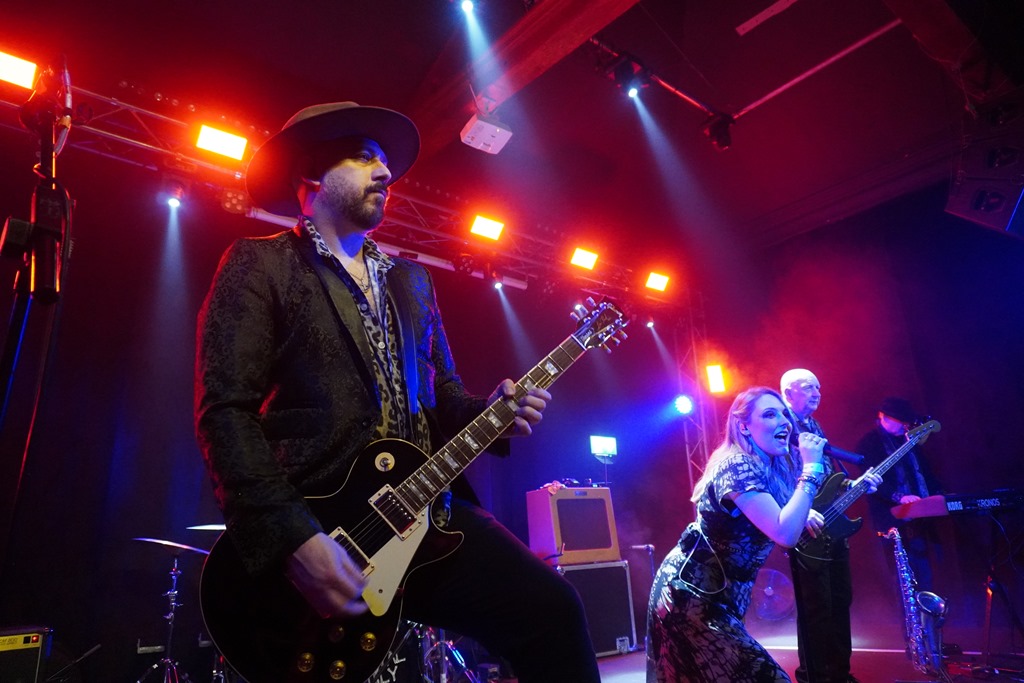
Tonight’s set draws substantially on Light From Dark, as well as featuring a new and unreleased song, which they’re planning to record in the coming months, indicating that as much as they’re a ‘heritage’ band, they’re still very much creatively active as well as keeping busy on the live circuit. And not only are they sounding fantastic, but there’s a real energy about their performance tonight. Anneka is all the energy, relentlessly bouncing, bounding, swinging and swaying about the stage, but the rest of the band are well animated, too: Ian “Karl Heinz” Taylor is particularly ambulant when switching synths for sax and adding some nice groove to the solid rhythm section, with stand-in drummer doing a superb job of delivering those quintessential rolling tribal rhythms paired tightly with Trotwood’s solid, urgent basslines. It’s all topped with Stan Greenwood’s spindly guitar lines – very much a defining feature not only of the Skeletal Family sound, but representative of that early northern goth sound. It’s clear they’re having a great time, and their collective enthusiasm is infectious.
Skeletal Family
And as much as the set showcases their current creativity, it does, essentially, contain a respectful share of their definitive early 80s back-catalogue, busting out the rambunctious sax-blasting ‘Move’ up front and an extended ‘She Cries Alone’ landing in the first third of the set. Non-album single ‘Just A Minute’ gets an airing, too, representing their poppier mid-80s sound (as was the direction of the scene around Leeds at the time, as output from this period by The March Violets evidences, and one can’t help but feel that major labels picking up the top-selling ‘alternative’ acts may have been a factor). The sole cut from debut Burning Oil is ‘Someone New’, meaning the spiker, punkier songs like ‘So Sure’ don’t make the set, but might not have been such a good fit with the rest of the songs or Anneka’s more conventionally ‘rock’ vocal style. That, and the fact they keep it tight with a punchy set of around fifteen songs, packed into a little over an hour, with no encore.
They leave us with ‘Promised Land’, which is without doubt one of the best singles of that ‘first wave’ of goth era, with its nagging guitar and driving bass. They perform it with gusto, and it sounds as fresh and exciting now as ever, topping off a set that’s both entertaining and exhilarating.
Alternative prog quartet HOLOSOIL are welcoming the new year with their newest single ‘Spirals’. The band presents a stunning music video, showcasing a hypnotic dance performance choreographed by Sofia Stadler. Featuring the circle of creation as the main theme of their newest work, the Berlin/Helsinki based quartet show themselves in bold, yet almost hidden waves, playing with tempo and elements of alternative and indie.
The single follows on prior released tracks ‘Cracks’, and‘Look Up’. Additionally, the band has also announced their upcoming debut EP, to be released digitally April 2026 (InsideOutMusic).
Watch the video for ‘Spirals’ here:
AA
The band shares about the track:
“HOLOSOIL’s 3rd single is a mystical anthem of heterogeneous essence, swirling through genres and textures, in the image of the world itself.
The lyrics are about an existential spiraling of humanity back to where we come from. Falling from illusions of linearity – into the cosmic spiral of ancient and future merging in a never-ending circle of creation. How our striving for progress ironically is taking us back to the ancient wisdom of nature.”
The Hangnails have certainly evolved. Recent releases have been a very far cry from the raw garage blasts of their early works, starting out almost fifteen years as a full-throttle garage duo.
There was something of a fallow spell after the release of DOG in 2017, after which Martyn Fillingham and Steven Reid made an understated return, the dropping of the ‘…and the’ signifying their shift towards different territories.
‘Come On Outside’ may be their most different yet. Stripped back, mellow, atmospheric, and synthy, it boasts epic, cinematic qualities – and they still make sound that you’d think impossible for a two-piece.
The visuals for the video are pretty striking, too.
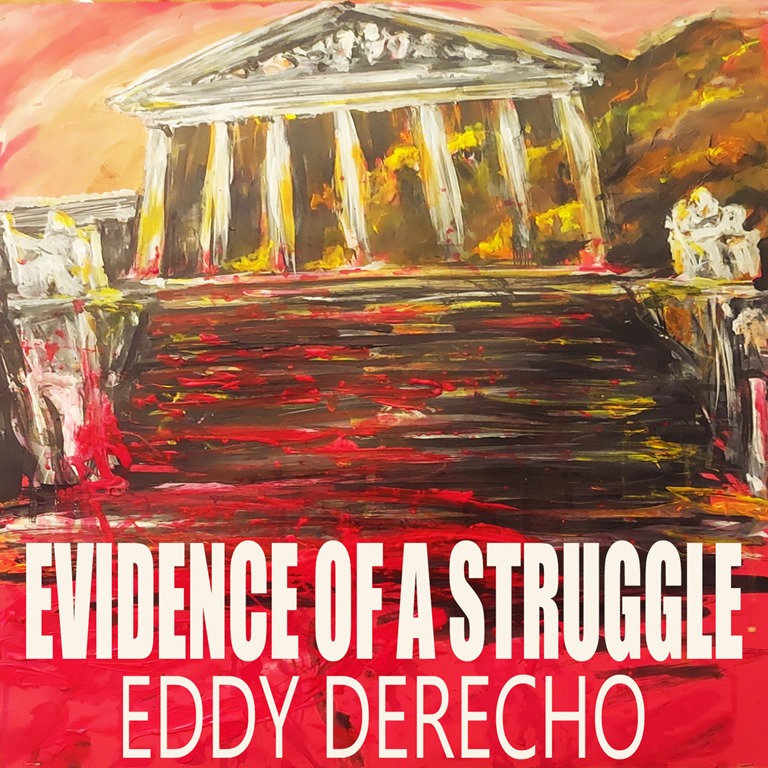
For his second album under the Evidence of a Struggle moniker, W P C Simmons V a.k.a. Rev. Billy Simmons has managed to recruit a band lineup with some serious pedigree, with Matt Walker (Smashing Pumpkins, Morrissey, of1000faces, Garbage, Filter) on drums and synths, with bass contributions by Alan Berliant (Chris Connelly, Mavis Staples, Saint Asonia) and Solomon Walker (Liz Phair, Bryan Adams, Morrissey). We’ll forgive Walker and Solmon for Mozz – musicians need to work and get paid, after all.
We aired the title track here on Aural Aggravation a little while ago, and it launches the album with all engines blazing, a full-throttle industrial / grunge beast of a cut in the vein of Filter. And from hereon in, things get darker, heavier, and weirder. ‘The Whale’ adds a psychedelic spin to some dense, sludgy riffage, coming on with some hints of Melvins, Smashing Pumpkins, and Queens of the Stone Age in the blend.
AA
‘Alma’ takes a skipping detour into rippling, expansive electronics, even alluding to prog as it locks into a looping, metronomic groove and serves up an extended guitar solo towards the end of its sprawling six minutes. But there’s a tough, serrated edge which remains consistent throughout. It’s hard to really pinpoint, but there’s a drawl, a sneer, about the vocal, and something about the treatment – be it compression, reverb – that calls to mind Girls Against Boys. Musically, there’s no similarity: in fact, Eddy Derecho is an album that’s difficult to pin down stylistically. There’s a keen 90s vibe to it, in some rather abstract way. It’s a guitar album, but that in itself isn’t it, not by a long shot. I’m almost reluctant to describe it as ‘heavy’, too: the guitars may be big and overdriven and the drums thunderous, but, well, it’s all relative, is my point. What made grunge exciting in the early 90s was that we got to hear music with aggression, angst, and edge, in a mainstream setting: anyone who was in their mid- to late teens or early twenties in in the early 90s had been raised on crisp, clinically-produced music in the charts, and sure, that production was phenomenal in so many ways – listen to Duran Duran’s Rio and it’s truly remarkable just how clean and yet, at the same time, dynamic it sounds. We also grew up with the studio slickness of Phil Collins and the like, and even ‘rock’ was highly polished. It’s no wonder that grunge was an absolute phenomenon. But was it that heavy? Not really, not in comparison to the likes of, say, Earth, or Swans, or, for that matter, early Melvins. Nine Inch Nails smashed everything with Broken and The Downward Spiral, though. Those releases were truly revolutionary. The reason I’ve taken this diversion is because Eddy Derecho is an album which has all the hallmarks of emerging from this musical milieu. The guitars are bold, but it’s not so heavy that you’d shit your pants. It’s edgy and has aggression, but it’s also fairly accessible, in that it has tunes, with tangible structures. There’s melody.
The sinewy ‘Orchan’ is perhaps one of the hardest-hitting tracks on the album: all of the elements just seem to come together to render a sum greater than the parts, and not only is the drumming mighty, but the mix is such that the snare really cuts through in a way that’s rare on contemporary releases.
Despite my enthusiastic focus on aspects of the production, this is by no means an attempt to milk the engorged udders of nostalgia – although if any ‘new’ bands should get a pass for sounding ‘retro’ it’s these guys, since they were there at the time. Eddy Derecho is an album with tunes – and the slow-burning, seven-and-a-half-minute epic ‘Aethyrs’ is a standout among them, a hefty grunger which spins in some Six-era Mansun vibes.
Eddy Derecho may well sound like a lot which has come before – but that’s true of so much music now, inevitably. But what sets it apart is the quality, and the consistency of that quality, and by sprinkling a dash of cosmic pop dust on the top, Evidence of a Struggle have hit a winning formula here.
And this is why it’s always worth turning out in time to see the support acts… Just last month, I wasin this very same venue to see Feather Trade, a band who pretty much guarantee a quality show. There were three other acts on the bill, all of whom were well worth seeing, but the pick of the crop by some margin were Suspicious Liquid, who, it transpires, won the York Battle of the Bands last year. It wasn’t hard to see why. But has I stood outside chatting, or just rocked up for the headline act I knew, I’d never have seen them. And having seen them play as a support was what compelled me to come and see them headline tonight. And once again, the support acts proved to be good value – especially when you do the sums of three bands for seven quid.
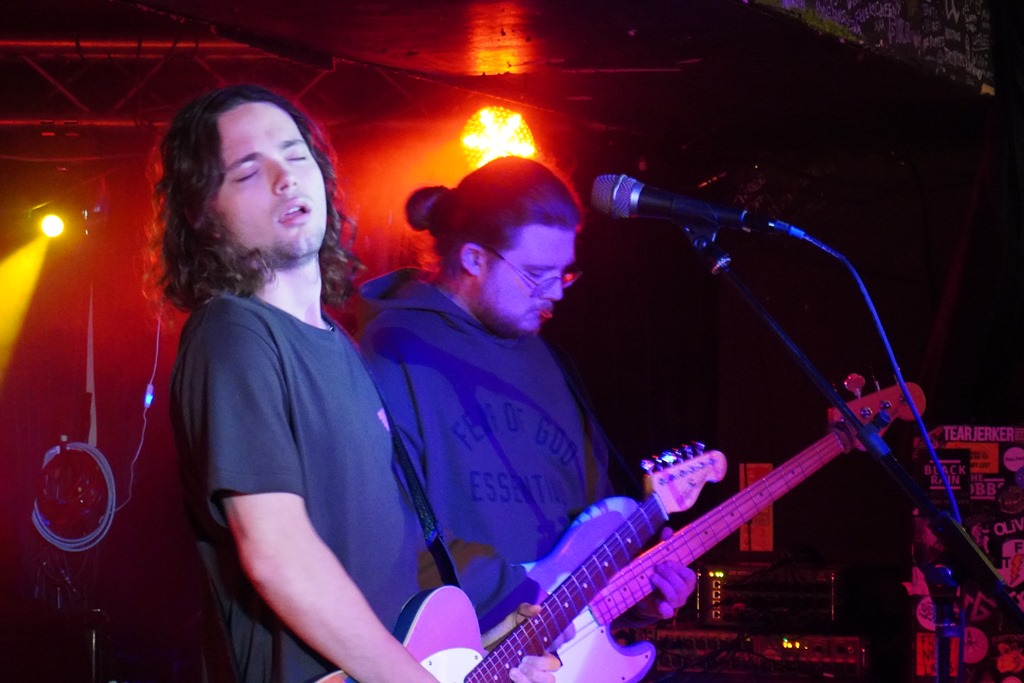
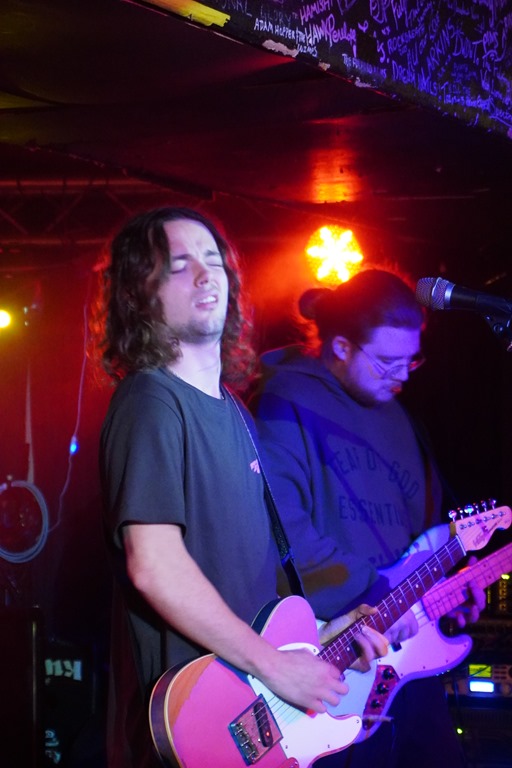
As they took to the stage, I had some initial doubts about Echoviolet: image-wise they look a bit 90s indie, especially the singer / guitarist who’s sporting a bad indie haircut, and they sounded like a band who are still working things out. Sometimes the bass and guitar lines don’t really gel, with one running ascending chords and the other descending and not necessarily in perfect time either, but then suddenly from nowhere they’d land a cracking chorus. The vocals, too, aren’t quite there yet: they sound somewhat tentative, undersung, as if rehearsing quietly in a bedroom rather than going all-out. But, as a power trio, they’re unusual in that the guitar parts favour spindly picking rather than fully-struck chords. It’s certainly distinctive, and they’ve definitely got things going for them.
Echoviolet
Broadly speaking, their sound could be reasonably described as alterative rock with a 90s flavour and some heavy moments that would have really hammered hard at higher volume. There are hints of Bleach era Nirvana, and a few dashes of dark psych, and at times they call to mind The Horrors.
The punky ‘Micromaniac’ is driven by some foot to the floor bass but dominated by an unexpected drum break near the end. Drummer definitely overplays, but he brings a vibrance, an energy to the stage, and while they’re a bit rough in places, there is clear potential here. Would see again.
Velleity are straight in with a groove, they’re as tight as fuck and the layers of synth add polish. Sure, they’re a bit muso, a bit groggy, there’s a bit too much sexface guitar wankery, but they radiate confidence and it’s forgivable because – and it’s a rare thing – they actually are as good as they think they are, and you could easily envision them going down a storm at festivals, bringing in a range of elements from Pink Floyd to Led Zepp and… Muse.
Velleity
It’s certainly a remarkable debut even from seasoned musicians, and the quality of the performance and musicianship is impossible to deny. Mid-set they drop a tune that could easily be a Smashing Pumpkins outtake, before going Alice in Chains for the last song. They grew on me as the set progressed, and the bass tone was supreme. During last song, singer popped to the bar and returned with shots which he fed the band before a particularly indulgent instrumental break. I guess you could call that showmanship…
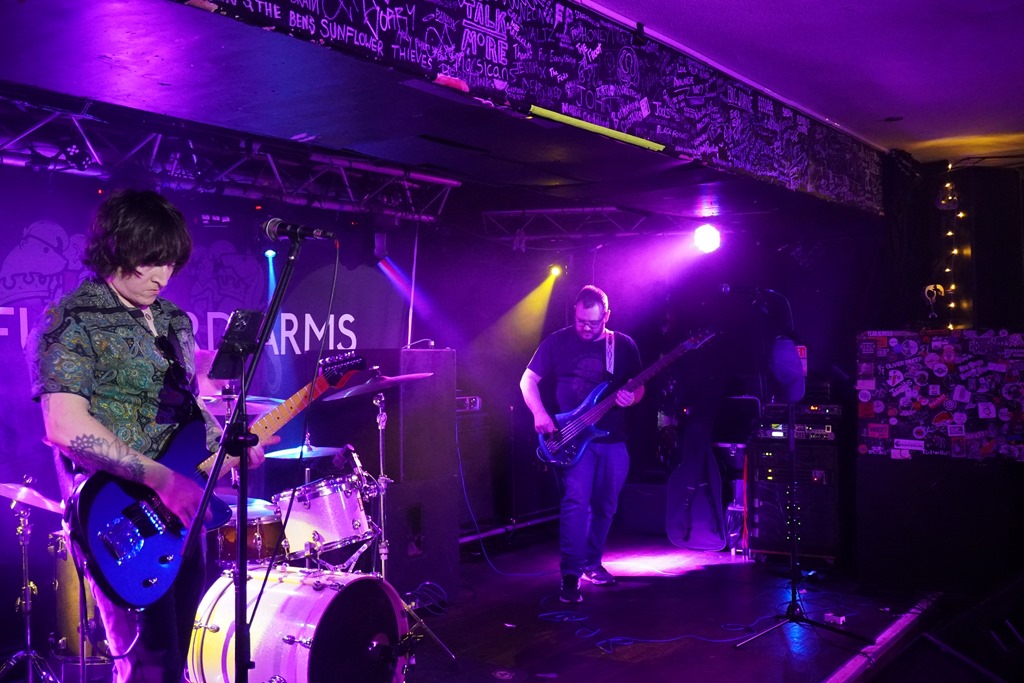
Suspicious Liquid are the reason most of us are here, and while it’s only a third full, it’s not bad for a Thursday night when students are still drifting back after Easter. And they give the show 100% from start to end. It takes some guts to open with a slow, sprawling epic… which is just what they do. Showcasing new material – a lot of new material, for that matter – and some seriously meaty hard rock riffs, they are on fire. The small audience pack forward and close to the stage, things look busy. It must be gratifying for a band to see faces up close instead of playing to a void with lights in their faces. All the elements come together perfectly, with no weak parts. Sound and performance, everything is just superb, and they play with intense focus. They boast powerful vocals with incredible range, especially at the upper end, and collectively they seem so comfortable on stage, too. Yes, this is how it’s done.
They chuck in a King Gizzard cover mid-set, followed by more new material and some colossal riffery, debuting one nine-minute behemoth near the end of the set. Every second of the set is pure quality, and on the strength of the new songs, you get the sense that the best is yet to come.
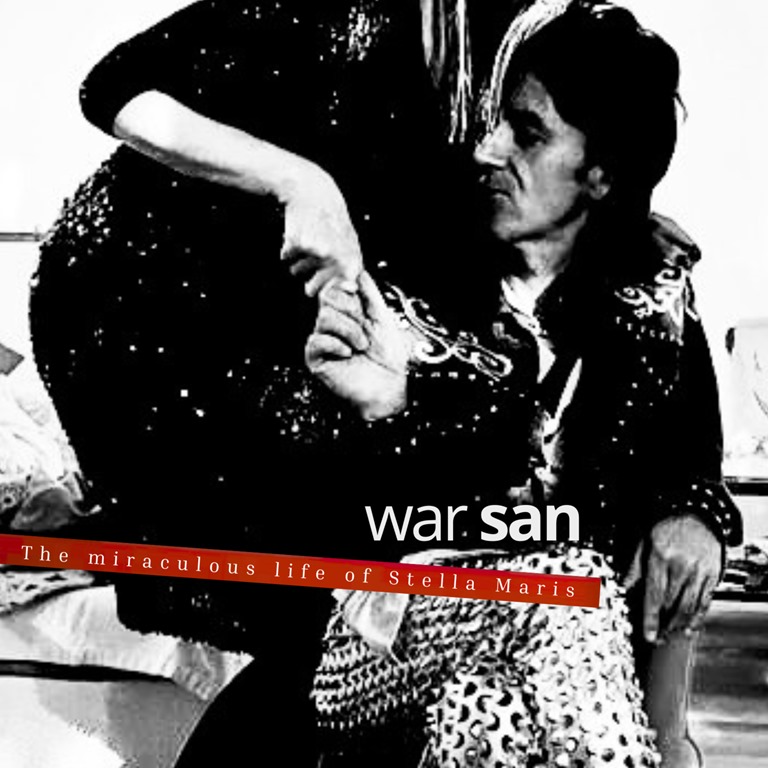
War San is the musical vehicle for Kim Warsen, an artist given to experimentalism and combining a range of genre elements. To date, he’s released four albums and an EP since starting out in 2019, and The Miraculous Life of Stella Maris is album number five. That’s quite a work rate.
Warsen himself points toward a ‘diverse range of genres, including alternative rock, electronic, and world music.’ The concept of ‘world’ music is very much a Western one, whereby Western music presents an infinite spectrum of styles, where there’s pop, electropop, EDM, EBM, rock, alternative rock, indie, indie rock, indie pop, punk, post-punk, heavy metal, thrash metal, folk, country, jazz, while the rest of the world is represented by ‘world’ music, a determination which suggests an otherness, a separation, and something of a dismissal that puts ‘everything else’ ‘over there’. I do not blame Kim Warsen for any of this: it’s simply how our (western) world works, and we use compartmentalising genre distinctions which are widely recognised as short-cuts in order to pitch works in a culture where attention is limited at best.
The first of the seven tracks, ‘The Drunken Thief’, delivers on the promise, as Warsen croons in a Leonard Cohen-esque tone over a shuffling beat, and a conglomeration of mournful strings, which surge on ‘The Sanctuary of Wonders’ amidst busy hand-percussion, while there’s a dash of David Bowie to be found on ‘Rise Rebel, Rise’, which I suspect is intentional, and if anything is even more pronounced on ‘The Iberian Oracle’. The title track is hushed and intimate, in contrast to the expansive ‘Celestial Doorway’.
Overall, The Miraculous Life of Stella Maris has a magnificently fuzzy feel, a blurry haze which clings to all aspects of the sound and the overall production lends the album a sense of mystique, and of there being something behind or beneath what you hear that’s just out of reach.
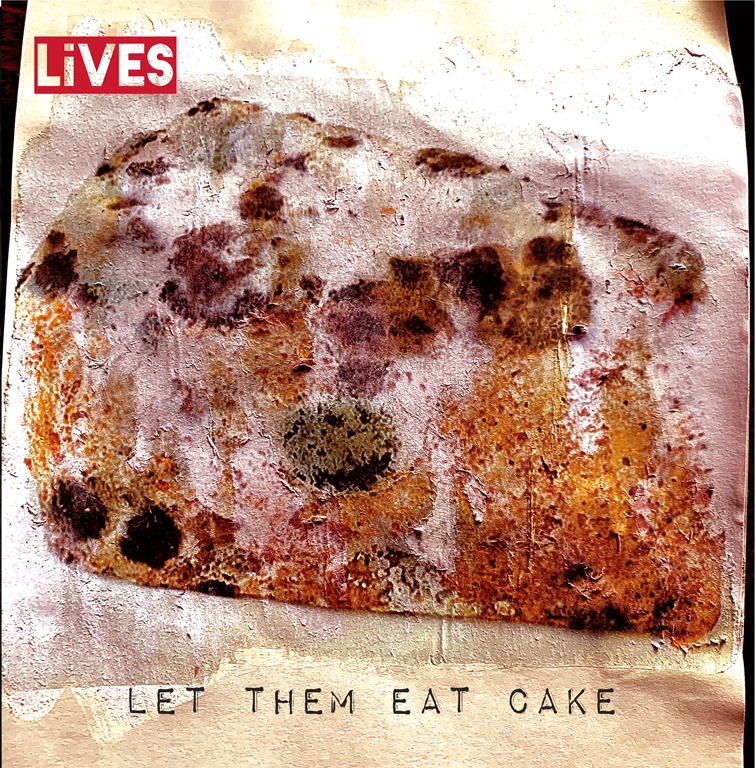
As the album’s title suggests, this is a political record. Then again, the single ‘Cancelled’, released a few months back as a lead-up, certainly gave enough of a hint that this was going to be a rage against contemporary society, and the themes of the social media ‘shitshow shower’ and the culture wars and flame-throwing, division and disinformation that has taken over so much of the Internet – a space where we seems spend more time living virtual lives than we do on real life – dominate the lyrics.
The opening lines of ‘What a Way’ neatly encapsulate the band’s angle:
He’s a little nazi with a pop-gun,
Spilling all of his hate onto the forum,
Overcompensating for the fact that,
It’s lonely life
And so it is that these seven sharp cuts (plus a radio edit of ‘Cancelled’) really pick apart just what it is about modern life that s so rubbish. That’s perhaps rather flippant, not to mention reductive of what Let Them Eat Cake is about. It explores numerous aspects of how the world on-line has eroded so much in culture, and how it’s riven with contradictions. On the one hand, the interconnected world of the ‘global village’ Marshall McLuhan first wrote of in Understanding the Media in 1964 has truly come to pass. The world is switched on and connected 24/7, and it’s possible to conduct conversations and business with the other side of the world in real time. News is instantaneous and everywhere. All music – well, hypothetically, and moreover perhaps depending on your tastes – and media are there, instantly, and for free. But on the other hand, as much as there’s a sense of sameness and conformity – same music, same news, same memes, same opinions – and an ever-blander homogeneity, the inhabitants of the global village hate one another’s guts and seem to even derive pleasure from rage, throwing bricks through their neighbours’ windows, keying their cars and burning their houses.
Everyone is shouting louder than the next, ‘look at me, look at me!’ while posting the same generic shit, the same Instagrammable coffee and cake (let them eat it, sure, diabetes is a small price to pay for millions of followers and true ‘influencer’ status, right?), and what’s more there’s simply too much of it. Anxiety, depression, and therapy have become normalised topics as people spill their guts into the world (and the subject of ‘Come Together’), and while yes, it’s good that they’re no longer taboo or shameful, what’s not good is that we’re in this position where these are everyday realities for so many.
Let Them Eat Cake is a snapshot and a critique of all of this.
‘Cancelled’ certainly gets the album off to a fiery, riff-driven start, but it soon becomes clear that LiVES have some considerable capacity for stylistic range. Of course they do: to rail about cultural sameness while doing the same thing on every song would be hypocritical.
The title track has more of a 90s indie vibe, and even goes a bit Manics, a bit Mansun, and a little bit glammy, and ‘Come Together’ has more of an indie vibe, too, but also a theatricality which calls to mind The Sensational Alex Harvey Band, but then ‘What a Way’ cranks up the guitars and hits like a punch in the guts. ‘Already Dead’ and ‘Is This What You Want?’ bring a big stoner-meets Led Zep rock swagger, which contrasts again with the country twang of ‘Hope and Freedom’.
The span of styles makes for an album that never falls to formula or gets predictable, but the lyrical focus ensure it retains that vital cohesion. What really comes across through every song is that this is an album from the heart, born of frustration, disappointment, despondency, irritation, antagonism, that whole gamut of emotions stirred by that feeling of inflammation that everything is so very, very wrong. For all that frustration, disappointment, despondency, irritation, antagonism, Let Them Eat Cake is an album packed with passion, not to mention some corking tunes.
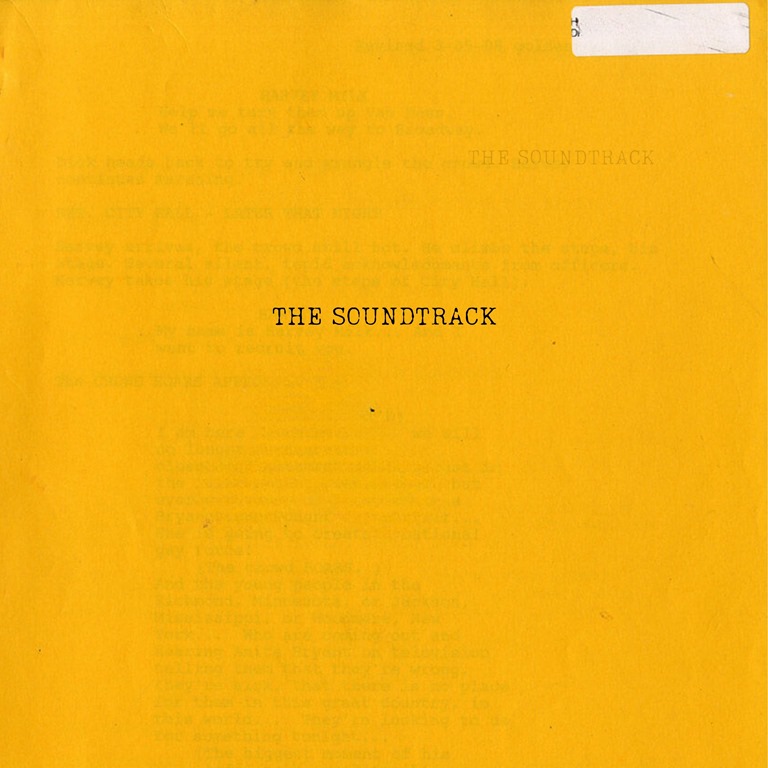
Christ only knows what this is intended to be a soundtrack to, but the debut long-player from chaotic Welsh post-punky alternative rock act Baby Schillaci could be loosely considered a concept album. The soundtrack to a schizophrenic episode, perhaps?
Opening with ‘## TITLE SEQUENCE ##’ and with ‘## INTERVAL ##’ breaking the sequence midway through, there’s a semblance of a structure here, and while some of the titles do hint at a narrative art in keeping with ‘real’ soundtracks – ‘DISINTEGRATING SMALL TALK’ and ‘JACKIE’S GIRL’, for example, elsewhere there just seems to be more of an interest in brutality and mortality – consider ‘BLUNT FORCE TRAUMA’ and the crazed, explosive single cut ‘THE FLATLINERS’.
The aforementioned ‘title sequence’ brings tension – a stark piano and brooding bass builds and ultimately yields to a surge of expansive abstract dissonance, but with a widescreen, cinematic feel, before ‘ULTRA HD HAPPY FACE’ blasts in with some thick, scuzzy guitars and there’s a strong early 90s alternative vibe to it. But as much as it’s Jacob’s Mouse and the Jesus Lizard, it’s got that roaring grunge revival thing going on, and calls to mind Pulled Apart by Horses’ debut album. ‘tHe AnTi suNCreaM LEaGUe’ comes on like Therapy? in collaboration with Sleaford Mods with a bit of Rage Against the Machine going on, which on paper shouldn’t work, but it’s an absolute riot: furious overdriven guitars nagging at a cyclical riff paired with a relentless, vitriolic spoken word rant hits the mark, and again reminds us – at least those of us who were there – just how eclectic the 90s alternative scene was. This was the decade when shit got weird, in a good way. It was a time which will be forever synonymous with grunge and Britpop, but it also gave us the previously unthinkable musical hybrid of the Judgement Night soundtrack, and a whole host of less-than-obvious crossovers. Pop Will Eat Itself were a one-band hybrid of infinite proportions, while Faith No More were more contained but no less genre-busting, and there was just so much weird shit happening the only question was as to what’s going to happen next. Sadly, the answer was Oasis, and while interesting stuff was still happening on the fringes, Oasis simultaneously killed indie and alternative and musical innovation with their turgid pub-rock monopoly.
Built around a thick, low-slung, grinding bass, ‘DISINTEGRATING SMALL TALK’ has something of the industrial roar of Filter about it, but then again, some of the stoner swagger of Queens of the Stone Age. These guys don’t limit themselves when it comes to their songwriting. Genre? Pfft. Look, if it sounds good and they get to kick out some dirty noise, it’s good. And this IS good.
‘THE FLATLINERS’ starts out like early Interpol before flooring the pedal and accelerating in a deluge of guitar and frenetic drumming, and it’s like at least three songs in one, and it’s this crazed shift from one thing to another which defines The Soundtrack. Closer ‘BLUNT FORCE TRAUMA’ is a sort of motoric workout where The Fall and The Black Angels collide, but the sound is solid and it builds to a mighty climax.
The thing The Soundtrack needs now is the accompanying movie… I’ve no idea what it would look like, but it would be wild!
It’s taken me a while to get around to this one. It happens, and happens often: I’m simply overwhelmed by the sheer quantity of new – and exciting – releases that land with me on a daily basis. Of all the things to be overwhelmed by (and I will confess that I often find myself overwhelmed by many other things, too, from parenting challenges to DIY, budgeting and the prospect of driving to the supermarket), I do realise that I’m extremely fortunate. But there’s a specific reason I’ve selected this album to post a review of today. Why today? For those who live in a vacuum – and at this moment, I truly envy you – today is the day Oasis announced their reunion and a fourteen-date UK tour. ‘The news the world has been waiting for’, people frothed on FaceBook. Fuck me: judging by the reaction and the blanket press coverage, you’d think world peace and a handout of million quid for every person on the planet had just been announced simultaneously. But no. Just a couple of gobshites have decided that for a few hundred million quid they can bare to be in one another’s presence for a bit. It’s not even looking like it’s the full or original band reuniting.
For many, Oasis were, and remain, the best band on the planet in the whole of history. For anyone with ears, they were purveyors of lumpen, lifeless, plodding, derivative pub rock. A great many of the people who are going absolutely fucking apeshit at the news are broadly in my demographic, who were in their twenties in the nineties, and who, on hitting thirty, found their cultural clock stalled, and they’ve spent the last twenty years or so bemoaning the fact that there’s no been any decent new music since the 90s and how they miss Chris Evans and TFI Friday.
Just as age tends to have a correspondence with increasing political conservatism, so the same is true of musical tastes. It’s why parents of every generation gripe about the music their kids listen to and dismiss it as being shite, without appreciating that they’re not supposed to like or even understand it, because they’re not the target audience. Do I get K-Pop? No, no more than Skibidi Toilet makes any sense or provides any amusement to me. It would be weird if I was down with the kids at the age of 48, and my daughter would likely find me even more embarrassing if I was than being the dinosaur she perceives me as. BUT – and it’s a massive but, a but so massive Sir Mix-A-Lot would die for, that doesn’t mean that there’s no new music of interest any more.
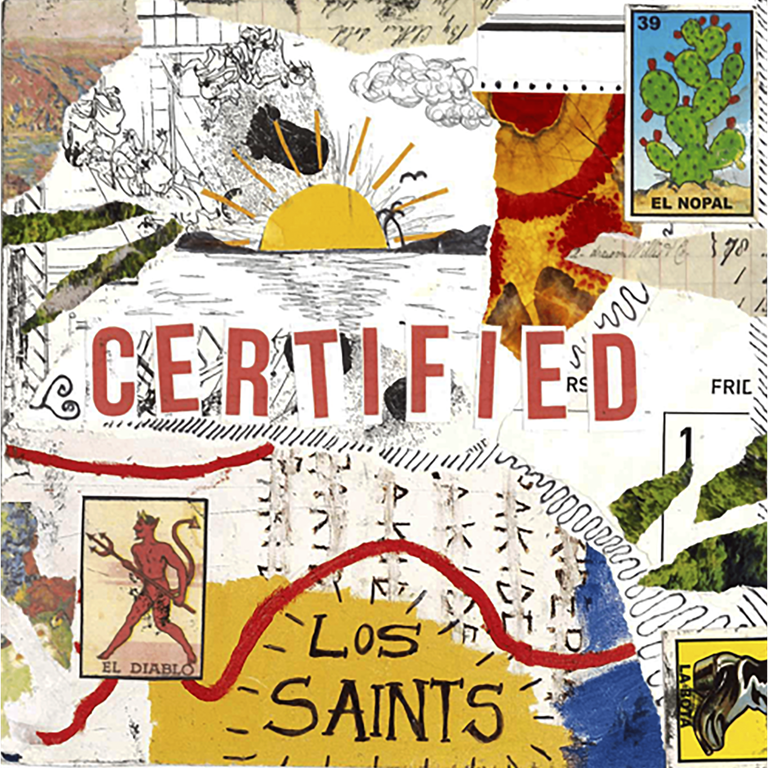
Certified, the debut album by San Diego-based Los Saints, is a perfect illustration of this fact. They describe themselves as an alternative rock band. Various other sources, in their coverage, have referred to them as showcasing a ‘bold indie rock sound’, ‘indie’, and even ‘Chula Vista’s version of Cage the Elephant’, alongside numerous comparisons to The Strokes. I’m not a fan of either The Strokes or Cage the Elephant, but that’s beside the point: both of these acts have produced music far more exciting than anything Oasis mustered during their career spent serving up half-baked bollocks and right now, in the present, amidst the endless wanking over the announcement that after fifteen years a couple of overrated has-beens are going to reheat their tedious, tepid stodge in the name of nostalgia and the interest of payola, we have Los Saints giving us Certified.
There are rib-rattling basslines aplenty, which give the songs – which tend to be on the shorter side, with only a couple of the album’s ten tracks running over three and a half minutes – a really beefy sound and a certain dynamism, an urgency (the likes of which you’ll hardly ever find in an Oasis song). Lead single ‘Faded’, which kick-starts the album with a lively two-minute stomp not only gets things off to a cracking start, but sets the tone, too – dreamy, slightly fuzzy, psychedelic vocals and mellow guitars contrast with the stonking rhythm section, and if anything, ‘Where We Goin’, which follows it is even better, and then again, the punky, poppy, melodic guitar driven indie of ‘Hard’, which lands perfectly between Asylums and Pixies. Even if the rest of the album was shit, after this opening run, you wouldn’t grumble. But no, they keep on delivering joyous tunes with the grungy pop nouse of DZ Deathrays crossed with the driving tones of Darklands era Jesus and Mary Chain and a dash of A Place to Bury Strangers. The title track pairs a nagging guitar with another chunky-as-anything bass before blasting into a breezy but sturdy chorus, and there simply isn’t a dud here.
The production isn’t overly polished, giving the album a live-sounding energy, and this only enhances its appeal, because you feel the band are really in the music, feeling the playing of the songs. Yes, some of the touchstones may be from some mythical golden era – as identified by people of a certain age – but Los Saints show that they can write songs – rather than rip them off – and deliver them with a contagious vibrance.
Bollocks to nostalgia: Certified is proof that not only is there some great new music around, but that a lot of stuff that’s held up as being ‘classic’ is objectively underwhelming and its status is tied to a period in time – and popularity is no measure of anything other than popularity itself – or, more probably, good marketing.


 Aural Aggravation