The second album from Baltimore trio Gloop is noisy, messy, manic. The liner notes describe it as ‘a splattering Jackson Pollock painting of a full-length record’, and refers to their sound as ‘a kind of skewed rock music that recalls Shudder to Think, and the Pixies at their harshest and weirdest’.
It is harsh, but that harshness doesn’t come from heaviness, but from a chaotic squall of treble and wildly unpredictable song structures. It’s got the punk spirit and some aggression in its execution, but not exactly post hardcore, either, but a jarring, jolting racket that has many of the hallmarks of math-rock played in such a way as to sound perpetually out of time and out of tune with itself. It’s skewiff, not in a slacker Pavementy way, but in a demented, all-over-the-shop demented Trumans Water way. If I say it’s enough to give anyone a headache, it’s by no means a criticism: we’re attenuated to tune into regular rhythms, accordant tonality, tunes. Smiling Lines has none of these, breaking every last rule of musicality by pulling apart the very fabric of rock music and stretching it, twisting it, tearing it, stomping on it, before examining the stained tatters and deciding ‘yes, this is what we were after.’
Dom Gianninoto’s vocals are kinda shouty, but he’s given to shriek, whoop, and holler and pitch up to falsetto at any instant, adding to the crazed unpredictability of it all. Smiling Lines is the sound of wide-eyed, frenzied derangement, a relentless rollercoaster, a furious flurry of frets. It’s a short, sharp shock, and it’s fucked-up, but it’s ace.
It seems almost beyond banal to remark that we live in troubled, troubling, challenging, and anxietised times. Since the turn of the millennium, and certainly for the last decade or so now, it feels as if we’ve been hurtling inexorably toward the end of days. Not one aspect of our existence is sustainable. We’ve known it for some fifty years, but here we are, staring into the swirling void the black hole that is our absence of future, and it’s nothing short of utterly fucking terrifying. It’s small wonder everyone’s cracking, that mental health issues are beyond rife to the point that it feels like half the population is struggling with some form of stress, anxiety, depression or related disorder. Are we getting better at speaking up, diagnosing, and treating these things – or could it simply be that we haven’t evolved at the pace of technology and society, and we’re just not built to cope with contemporary existence?
There was no way that when Amy Studt, after many, many years in the wilderness, and having followed a long, hard, road through recovery and stuttering false starts, could have envisaged the world she would finally deliver her comeback album to. So on the one hand, the recent events which saw the president of the United States of America first attempt to dismantle a 16-year-old-girl whose mission drive positive action against climate change, only for her to utterly demolish him by turning his words back on him, have no bearing on Amy’s album, the optimistically-titled Happiest Girl in the Universe. But on the other, the ‘happy young girl looking forward to a bright future’ Twitter duel is perhaps as relevant as it gets. Because in the personal lies the universal.
And Amy’s album is an intensely personal document of breakdown and recovery, and the title reflects the glowing hope of light at the end of the tunnel, of being able to find and cling to those moments of happiness, however fleeting, and accept that for all the darkness, there is light, and that light is what matters.
The singles, released at regular intervals over the last few months to give a slow-build engagement with the album have done more than pique the interest, but have built a steady-evolving picture of her creative rebuilding, and an insight into the long and difficult process that has seen her use creativity as a form of therapy.
From the haunting ‘I was Jesus in Your Veins’, which opens the album to the delicate piano-led introspection of the title track which draws the curtain with an air of soft calm , of homely comfort and a certain relaxedness that conjures images of Sunday morning coffee curled up in a chair taking it easy with a book or whatever.
But Amy sings of Diazepam, of depression, but also of empowerment: ‘Violently With Love’ is, on the face of it, a simple piano tune with vocals, but it’s a forceful songs that goes beyond ‘power ballad’ to an emotive tsunami. ‘I paid my dues. I played it your way. Now this s my way’, she sings on ‘Let the Music Play’. The video features footage of her from her childhood and beyond and evokes a deep nostalgia that’s resonant and affecting, and reminds us of the ageing process that affects us all. These are moments, locked in time, but they’re the moments of a one-time child star who’s different now. Older, wiser, perhaps, but also a traumatised adult who’s lived. Yes: she’s been there. She’s been done over by the industry. She’s still here. Survival is revenge.
‘The Water’ marks a stylistic departure, with a shift toward grand, sweeping cinemascopic sounds over a brooding piano. Studt’s voice is bathed in echo as she soars skywards once more, and in place of the quiet, intimate tone of the previous tracks, she spins skywards into the territory more common to Chelsea Wolfe and Zola Jesus. Stretching out to the five-and-a-half minute mark, it’s vast and immersive.
She’s no longer just a little girl: Amy’s a full-fledged artist ad while her years in the dark represent troubling times and reflect more on society than the artist, they’re past. Happiest Girl in the Universe is not an easy album, lyrically. Its lyrics are painfully introspective, raw, open, honest. But musically, it’s simply magnificent, and for all the pam and anguish there isn’t a song on here that isn’t lilting, melodic, and plain lovely. Happiest Girl in the Universe contain ten songs, and every last one is perfectly crafted, poignant, and touching. Amy is definitely winning: here’s looking to a brighter future.
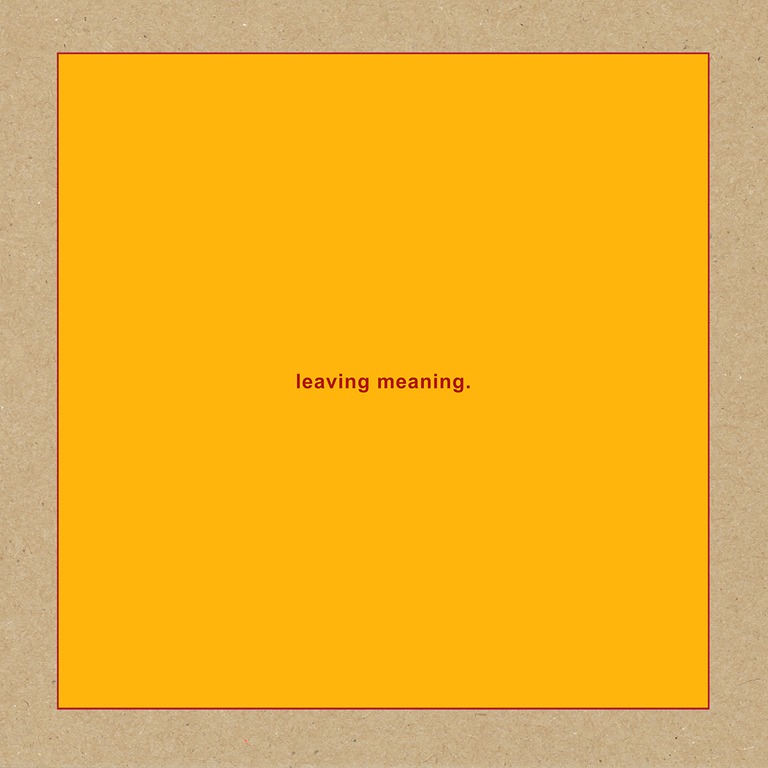
On receipt of the new Swans album, I posted on Facebook that I was ‘too excited to download it.’ This wasn’t sarcasm or bathos. The arrival of a new Swans album is always an event of no small magnitude, and with a certain sense of duty to deliver a review of a band I’ve revered my entire adult life comes a certain weight of responsibility to do justice. Swans have always been more than merely a band, standing as a sonic entity with almost infinite capacity to overwhelm. And they haven’t lost that.
Their last three studio albums, The Seer (2012), To Be Kind (2014) and The Glowing Man (2016) redefined epic and over their course took extended improvisational forms to a logical conclusion, each with a duration in the region of two hours.
Given the tone of Michael Gira’s statement about the end of the iteration of the band who produced these albums, Leaving Meaning brings two substantial surprises, the first being that many of the personnel from the previous incarnation remain present, and the second being the speed of its arrival. Kristof Hahn remains in the latest lineup, which also features eternal mainstay Norman Westberg – arguably as integral to the band as Gira himself – albeit only on some tracks, and Thor Harris, Phil Puleo, and Christopher Pravdica. They’re joined by an immense cast of contributors including The Necks, Baby Dee, Anna and Maria von Hausswolff, and Larry Mullins.
Leaving Meaning sees Gira take a slightly different and more openly collaborative approach to the realisation of his ideas, and it’s a more concise record in comparison to its predecessors. It’s all relative, of course, but in context, ninety-three minutes is concise.
Because of its sheer enormity, Leaving Meaning isn’t an album it’s entirely appropriate to dissect, and it’s constructed in such a way that it is very much best experienced as an album rather than dipped into. That means its effect is optimal when experienced in a single session, but that also means – as was the case to an even greater extent with its predecessors – that it requires a significant commitment of time in a time-pressured world. But then, Swans’ music has the capacity to lift the listener out of time and into another zone altogether.
The longer tracks are considerably shorter than even most off the shorter tracks on the last three albums, with the twelve-minute ‘The Nub’ being the album’s longest track.
Intro segment ‘Hums’ is appropriately-titled, consisting of just two minutes of cascading, hovering drones interwoven for create a soft ambience. ‘The Hanging Man’ revisits the nagging, dizzying cyclical bass motifs of numerous extended workouts from the last trilogy, and grinds it out for ten minutes. Anyone who’s familiar with the band’s extensive back-catalogue will be aware that this style of composition harks back to the band’s dawning and has remained a trademark of theirs, as well as Gira’s solo work. Paired with Gira’s vocal delivery, which switches from a monotone drone to a maniacal holler of elongated vowels and jabbering ululations and monosyllabic barks and yelps, it’s vintage Swans that threatens a climax around the mid-point but saves the real intensity for the finish. It’s less about volume than plain, bludgeoning repetition.
‘Amnesia’ is not the same ‘Amnesia’ as on 1992’s Love of Life. Perhaps Gira’s forgotten about it. It is, however, a brooding acoustic-led folk song. At heart. One of the things that constitutes a significant point of departure on Leaving Meaning is the return to sparser structures: gone are the immense sustained crescendos and pulverising explosions of discordant noise. There’s an altogether more mellow feel about Leaving Meaning. That said, there are orchestral and choral surges which punctuate both here and elsewhere.
A
‘Sunfucker’ is another classic Swans composition built around endless repetition, and with its backing vocal chants serves as an apocalyptic counterpart to ‘I Am the Sun’ from The Great Annihilator. Tapering off to drones in the mid-section, it suddenly explodes into a stomping glam bash. It’s bewildering, unexpected, everything all at once and probably the most daring and adventurous thing Swans have recorded in their entire career.
‘The Nub’ is gloomily funeral. Ethereal, haunting, but ultimately bleak in mood; ‘Some New Things’ is mantric, looping, hypnotic, while ‘My Phantom Limb’, one of the album’s standouts, has stronger echoes of Greed-era’s tortured pounding. It sits at odds with the rest of the album, but then so much of the album sits at odds with itself it feels right in a perverse way.
So what do we take from this? More or less what we’ve take from Swans over the last thirty years: with their ever-shifting parameters but constant core focus and the creative vision of Michael Gira always the driving force, Swans never cease to evolve, but never cease to be Swans, and are immediately identifiable as Swans, however far out they go.
There are two ways of going about reviewing albums: the easy way and the hard way. The easy way is to crib to the max from the press release, paint yourself as an expert on every artist however obscure they may be, while making on-point comparisons suggested by the band and their PR. The hard way is to ignore all that, listen painstakingly and go out on a limb on your opinions based purely on instinct and past experience. The hard way is to appreciate that however much you yearn to wrote objective reviews, no-one ever responds to music in a purely objective way, and reviews which take a truly objective stance are incredibly tedious to read – and to write for that matter.
So I know nothing about Kristeen Young, and expect that the cover art doesn’t really convey much of what she or her music is about. Then again, expectations exist to be confounded, and while The SubSet isn’t about goth dressmaking, the somewhat baffling choice of image is in keeping with Young’s quirky style.
‘Less Than’ crashes in by way of a starter with everything all at once: Eastern-inspired grooves collide against electronic bleepery while her vocals allude to Kate Bush in their delivery – and that’s a defining feature as she squeaks and soars her way through the album’s ten tracks. It’s an effective style that’s well-suited to the music.
Experimentalism is a prominent factor on The SubSet, and the fact there are hit-and-miss elements are par for the course and in no way detract from the overall experience: ‘Everyday Subtraction’ begins as a rather mediocre mid-pace dance cut, but steps up the drama as Young shifts her vocals unexpectedly into full-on operatic mode, while ‘In 3rd Grade’ is a tense, driving electropop shoegaze effort that throws in nods to early Garbage (back when they were exciting), before playing out on a delicate piano and soft, subtle bass and a sudden, unexpected burst of noise. When I say ‘hit and miss’, there really isn’t much miss: it’s just that some moments are more striking and distinctive than others, and Young strikes what’s probably an appropriate balance between weird and accessible to afford herself the potential of a wider audience.
‘Pretty Twogether’ is vintage electropop with a warping twist and some extraneous noise, propelled by glitchy percussion, while ‘Marine Combo Dadd’ is a semi acappella shanty with dreamy, psychedelic overtones, and it sounds incongruous, that’s because it is: once gets the impression Kristeen Young revels in creating moments of uncanniness, of oddness that are only a fraction removed from the familiar, but far enough to sit just the little bit uncomfortably. It’s a strength she works to, and well.
If The SubSet is a wildly unpredictable affair, it’s all the better for it.
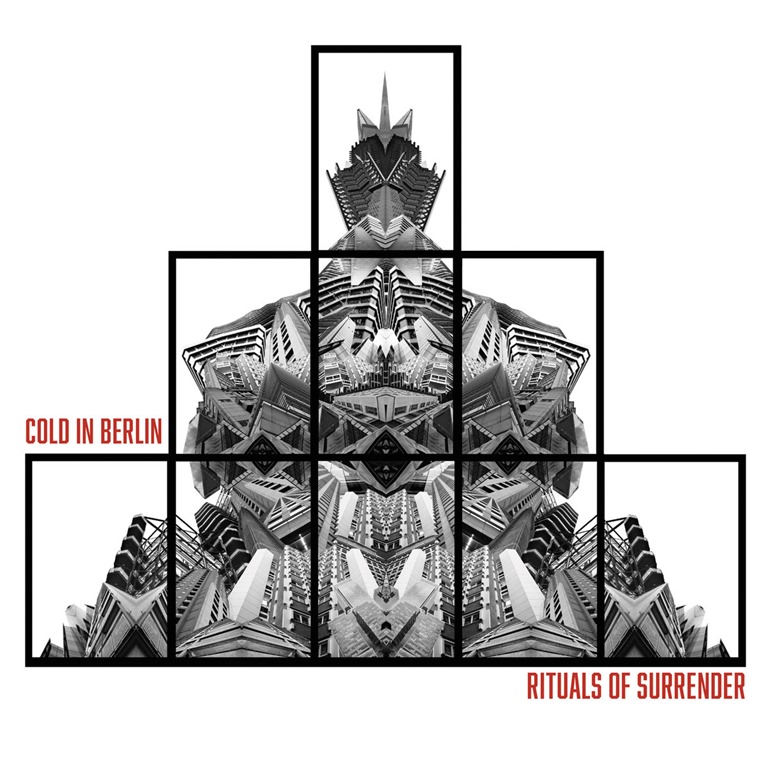
Cold in Berlin’s evolution has followed a fairly steady but swift arc: having emerged in 2010 with the spiky attack that was Give Me Walls, Rituals of Surrender represents their fourth album. That’s a respectable work rate, and over that time they’ve remained true to their dark, post-punk gothy roots, but have become progressively slower and heavier, the guitars growing sludgier, doomier.
In musical circles, there is always a ‘new strain’ emerging, even if said strain is a revisioning of an older strain. Not so long ago, it was post-punk revivalism, then there was a vintage heavy metal return, which in turn spawned the emergence of a stoner / doom / sludge hybrid. Cold in Berlin, having crashed in on the post-punk tidal wave are now more closely aligned to another more niche strain of the latter, namely colossally heavy female-fronted bands who bring an ethereal and emotive aspect to the sludgy / stoner / heavy template. Is it lazy journalism to bracket Cold in Berlin’s latest offering alongside Mammoth Weed Wizard Bastard and the last couple of albums by Chelsea Wolfe? Perhaps, but the references are at least instructive in terms of establishing a certain thread of stylistic commonality. But for every similarity, there are equal differences, and Cold in Berlin are most definitely a unique proposition in the way they balance the instrumental heft with Maya’s powerful vocals.
The album gets straight down to business with ‘The Power,’ which prefaced the arrival back in early September, accompanied by an appropriately moody, horror-hinting video. The bass and guitar grate and saw in unison over a slow tribal march. The tension builds and breaks in a landslide to a mammoth chorus.
The nine tracks on Rituals are heavy – plenty heavy – with some killer riffs. But that weight and the overloading overdrive is not at the expense of accessibility: the songs are clearly structured and benefit from strong and defined choruses.
Lyrically, the album is strewn with funereal imagery of death and decay, coffins and caskets, yet somehow manages to avoid cliché. The songs also pour anguish. ‘There is grief that tastes good in your mouth / there is grief that takes years to scrub out / There is darkness buried beneath my skin / there is darkness at the heart of everything’, Maya sings, pained, at the start of ‘Avalanche’ against a sparse sonar-like bass boom and a weeping drone of feedback before the drums and power chords come crashing in with crushing force. Can there be onomatopoeic instrumentation? If so, Cold in Berlin have mastered it, the pulverizing
The ritual aspect of surrender is never far from range: ‘You could string her up / you could string her up her body’s a temple for your love’ Maya sings commandingly on ‘Temples’ against a thunderous grind of heavily distorted guitars. Elsewhere, ‘Monsters’ is tense, intense, and grand, drama radiating from every note, and Rituals of Surrender is outstanding in its consistency.
Blending hefty riffology with full-lunged brooding, Rituals of Surrender sees Cold in Berlin occupy the space between doom and goth, emerging like Sabbath fronted by Siouxsie. And they do it so well: this could well be their definitive album.
Increasingly, I’m finding a need for ambience in my life. We live in an extreme world, and in that context, a barrage of extreme metal and heavy-duty industrial makes sense – because release. We all need catharsis, an outlet. You’re never going to get that from Ed Sheeran so I can only assume his fans are so numb, so oblivious, so distanced, so disconnected, so braindead that the hell that is modern life simply doesn’t register with them.
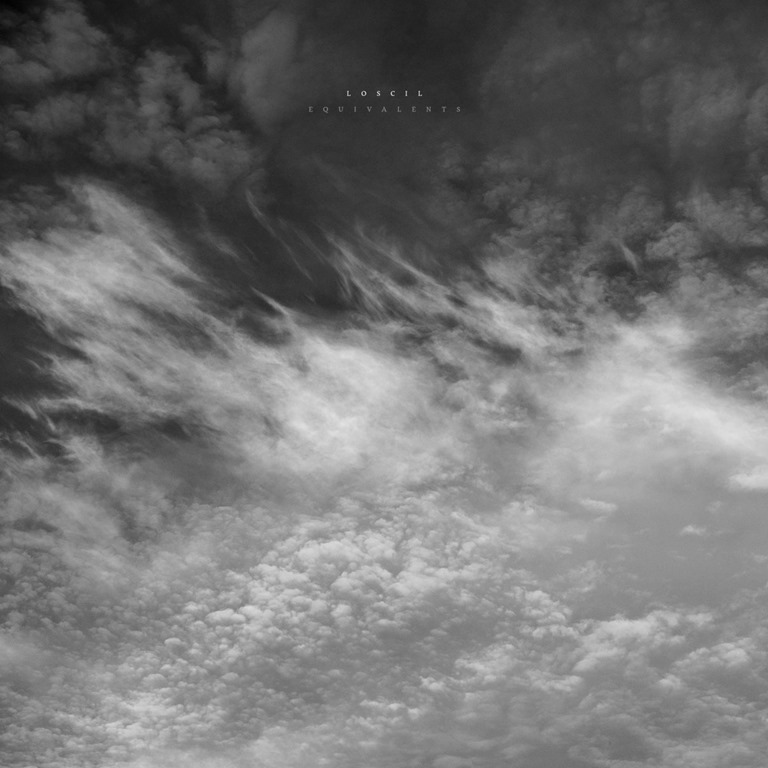
This morning, feeling somewhat stressed by life and battling with some flatpack assembly to a soundtrack of sit 90s dance tunes and tannoy hollering being blown through my window from the Race for Life event with its start at York Racecourse, just up the road, I decided it was a good time to check out – a shade belatedly – Loscil’s latest offering.
Equivalents is what you might call quintessential contemporary ambient. The compositions are formed with layers of broad, soft sounds that sweep and drift and swish and drone, eddying abstractly to soothing effect. But there are tones and textures which break the soft, vapour-like surfaces and disturb the tranquillity: not brutally so, not to violently or abrasively as to damage the atmosphere, but sufficient to prick the listener’s senses back to attention as stuttering disturbances interrupt the delicate flows.
These moments shift the album – which I’m playing at sufficient volume to drown out the pumping beats from the racecourse wafting through the window – from background to foreground, and do so in a way that isn’t jarring.
It’s the subtleties and timings of the changes that highlight Loscil’s skill as a musician. Equivalents is more than the perfect antidote to modern life and noise stress: it’s a wonderful album.
A-Sun Amissa’s fifth album promises to build on ‘the foundations of previous record Ceremony in the Stillness (2018), incorporating some of the heavier, distorted, guitar oriented themes but this time fuses them with broken, crumbling electronic beats and primal drone movements’.
Perhaps one of the most impressive things about how Richard Knox has steered A-Sun Amissa in recent years has been his systematic approach to producing new output: following a gap of fur years between 2013’s You Stood Up for Victory, We Stood Up for Less and The Gatherer (2017), with the assistance of an array of collaborators, he’s released an album a year. This has likely proved integral to the steady evolution and the sense of progression across the last three albums. And this album being almost a completely solo effort (Knox wrote, recorded, and mixed the entire album, as well as providing the artwork) has really focused his energies on pushing himself in all directions across the album’s two longform compositions
The pieces on offer here are underpinned by vast ambient passages that are drenched in distortion and reverb, slowly unfurling before more industrial, kinetic sounds are introduced and heaving guitars come to the fore. As ever, there’s a melancholic dissonance that resonates throughout, repetition is key and moments of dread are paired with shafts of light as these two monolithic pieces unravel themselves over the course of forty minutes.
‘Seagreaves’ begins as a distant howl of dark, whirling noise, scraping, screeding, creating a dark, simmering tension and a sense of foreboding, of disquiet.When it fades out to be replaced by guitar, the atmosphere shifts from menacing to melancholy. There are hints of Neurosis, and also Earth Inferno era Fields of the Nephilim in the picked notes, gradually decaying in an organic reverb. The cyclical motif is pushed along by a plodding rhythm, forging a slow, lumbering groove that builds primarily through plain repetition. Petering out to almost nothing around the midpoint, we’re left with a vast, open and almost empty space. It’s around the sixteen-minute point that everything surges back in for a sustained crescendo, a cinematic post-metal climax that finds the guitars soar while the rhythm thunders low and slow.
‘Breath by Breath’ is subtler still, elongated drones and whispers of feedback echo as if a long way away, before a piano ripples somewhere on the horizon. The atmosphere isn’t strictly tense or even dark, but shadowy, and it’s difficult to attribute a specific sensation or mood to it. When the strolling bass and sedate percussion roll in, layers of metallic guitar noise filters in – quiet, backed off, but harsh. Voices echo from the underworld, almost subliminally. And then: a momentary pause. It’s barely a heartbeat, but everything crashes in with the driving yet deliberate force of Amenra. And from hereon in it’s incremental, but also cumulative in its growing volume and impact.
Knox describes For Burdened and Bright Light as ‘a more immersive, ambitious, adventurous record of conflicting emotions as the theme of the work tackles the contradictions of being human and explores the duality of light and dark, hope and despair’, and not only is the ambitiousness clear, but those ambitions are fulfilled. Dare I – once again – describe a work as ‘epic’? Yes: the scope of For Burdened and Bright Light is vast in every sense, and it does engage the listener’s senses and provokes contemplation through it’s shifting movements, moving not only between mods but also genre forms. The result is not only unique, but powerful and captivating, holding the attention and rewarding patience over the expansive pieces.
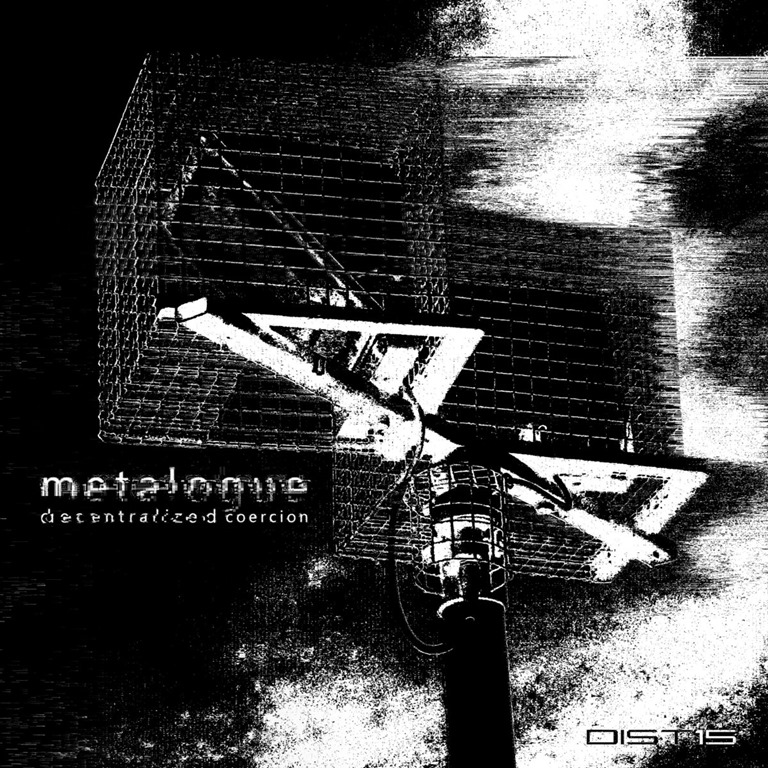
The blurb: ‘Beatmatching Metalogue’s cinematic industrial with the dark sci-fi visions of d&b/neurofunk, Decentralized Coercion deals in the threats of mass surveillance, decentralized social control, totalitarian manipulations of trust, runaway artificial intelligence and the addictive mechanisms of the attention economy. The resulting sound is that of Big Data multiplying exponentially, sucking us down in digital whirlpool.’
As well known for their remixing as their own output, and having been featured on a fair few compilations, Metalogue – the vehicle for electronic musician, programmer, and sound designer Robin Fencott – has amassed quite a substantial catalogue in a short time, with an approach to performing that lends itself well to live recordings, of which they’ve released several EPs.
However, the studio work is perhaps the medium through which the details are most discernible, with skittering synths and hectic cymbal stutters providing layers to the stark soundscapes shaped by thumping techno beats. The album’s first track, ‘New Era of Trust’ begins with sonorous atmospherics and a slow, jittery beat, before a woozy bass rolls in. It evokes Bladerunner-esqe images, conjures monochrome city scenes, dark alleys and rusted fire escapes, and 80s sci-fi. It has a certain Nine Inch Nails vibe, but the sounds are crisper, cleaner, and therefore somehow more inhuman and more detached.
Stepping up the tempo and the attack, ‘Spectral Froth Annealment’ clatters and clanks and pounds hard while whirring electronics fizz and grate to forge a bleak, paranoid space, and bleeds into the nine-minute ‘Shadow Text’, which maintains the pace. It’s not the subtle shifts in emphasis that are where these pieces appeal: it’s their relentlessness, their consistency, their clinical sharpness. The treble on the snare sound, the metallic edges, all imbue the album with a coldness that somehow reflects the zeitgeist: we’re surrounded my machines, we’re assaulted by information 24/7, and despite mankind’s unwavering belief in its superiority and capacity to control its environment, it feels increasingly s if that control is being relinquished and handed over to automation. I’m not talking about the way the industrial revolution brought us mechanisation, but that more insidious encroachment whereby Alexa is listening in and Facebook throws adverts having decided what you want to buy based on a conversation or status update from the other day, and your FitBit tells you how far you’ve walked and how many more steps you need to walk in order to burn off the packet of crisps you had mid-morning. We think we own our lives, but that sense of control is illusory. Your employer knows how long you’ve been away from your desk for the toilet, and with cameras every 30 yards (I personally pass no fewer than 13 CCTV cameras on my 23-minute walk to the bus stop on the way to work each morning, and the busses are installed with cameras as well), there is nowhere that’s private, and there is no hiding from the machines. You’re bot paranoid: you really are having your every movement watched or tracked.
Decentralized Coercion is a soundtrack to this harrowing but inescapable fact.
‘Extraction Imperative’ is bleaker, more stripped-back still, the stuttering drum ‘n’ bass rhythms twitchy and tense, and there’s little levity in the trajectory towards the album’s close, ending with the pumping yet magnificently empty ‘Behavioural Surplus’. The beats are whiplash-fast and hard as, but everything else is backed off, distant, creating a distinctly disquieting sensation.
By the finish, I’m left drained, punished, pounded, and pulverized. It’s a microcosm of life. Decentralized Coercion boils it down to a succinct sonic statement that encapsulates that life. It’s harsh, but it’s real.
When I lived in Glasgow, I was perplexed by the use of the word ‘links’ to refer to sausages for quite some time. Being from Lincolnshire by birth, I assumed (erroneously) that they were saying ‘Lincs’, but at the same time was aware that there was a certain logic gap in my thinking. It wasn’t until after about a year I discovered that ‘links’ were actually just what anyone else would call sausages, and the term was used to differentiate these from the ‘square’ sausages, or Lorne sausages, used in breakfast baps north of the border.
I hadn’t thought about this in years: after all, I left Glasgow in September 2004, and being vegetarian, never tried any square sausage – or delicacies like deep-fried back or white pudding as served by my local chippy, which also had deep-fried pizza, Mars Bars, and Crème Eggs on the menu. But despite the fact that unlike this album, it didn’t offer deep fried cash, the title of Territorial Gobbings’ latest reminded me.
The liner notes state that ‘Sausage Chain is yet more fresh, amorphous meat drippings from the Territorial Gobbing mechanical reproduction unit. The most disappointing member of Thank gives up on music, instead smearing tape up the wall, wailing into a dictaphone all while gnawing on a skip-salvaged record player… Bodyless body horror. Idiot-savant-garde. Daft ambience. Sausage Chain tries and fails to keeps it together, unravelling and scattering across the stereo field over its anxious run until only trace sausage grease remains.’
It’s a fair summary and sets reasonable expectations for the discordant hash of sound that the album contains, its five pieces not so much compositions or even sound collages, as a semi-random assemblage tossed together to create maximum disorientation and discomfort. Assuming that’s the objective, it succeeds.
‘Machine Learning to Scowl’ is as irreverent as the title suggests, and at the same time is a mess of bleeps, crackles, fizzes, tweets, and twitters before it bleeds into the primitively-captured scrape of mic feedback and distortion that is ‘Painted Teeth’. It’s only a couple of minutes long, but it’s a howling racket of the highest order, making no pretence of structure or anything other than being a noise for the sake of being a noise.
‘Caressed to Smithereens’, with six minutes of haphazard pings and thunks provides a more than adequate build-up to the album’s feature track, the eleven-minute ‘Unusual Achievements in Human Rights’, which fizzes and crackles in a grizzling hum of sparking electrodes and swampy circuitry meltdowns.
It’s a welcome addition to the rapidly-expanding catalogues of both the prolific TG (and yes, this set definitely contains as much gristle as it does meat, and probably a fair amount of rusk and fat) and the eclectic tape label Panurus Productions – and this is reason enough, surely, to check out their York show at the Fulford Arms on Thursday…
Seeking a vehicle by means of which to explore the more ambient and experimental aspects of industrial music, Fire in the Head’s Michael Page began recording as Sky Burial in 2006. Thirteen years on, The Forcing Season: Further Acts of Severance is his sixteenth album under this guise. Owing more to the gnarly noise of Throbbing Gristle than the mellow sonic swathes of Royksopp, The Forcing Season isn’t what many fans of more populist contemporary ambient would consider ambient. The subgenre classification of dark ambient, with its industrial connotations is perhaps a closer demarcation, but it’s still not entirely accurate, as there are extensive passages of levity and tranquillity within the album’s ten tracks, simply titled I through X.
Progenitor of the ambient music, Brian Eno said that ‘Ambient music must be able to accommodate many levels of listening attention without enforcing one in particular; it must be as ignorable as it is interesting,’ and The Forcing Season certainly meets this criteria: its strength lies very much in the exploration of contrasts. There are stretches where it is extremely easy to zone out, and the lack of clear structure accentuate the drifting, amorphous nature of the compositions. ‘VII’ and ‘VII’ are exemplary, as slow-turning crystalline drones eddy in a rarefied air form smooth, soothing sonic expanses that somewhere along the way build levels of turbulence or otherwise jolt the listener out of that fugue-like state with jarring tonal incongruities. In short, it’s also interesting, imbued with a sort of suspense over when the next unexpected turn will come, when next there will be a sudden switch from background to foreground, from comfortable to uncomfortable and challenging.
‘I’ opens the album gently with soft waves of sound, but soon takes a turn for the more attacking, with smooth, chilly synths layering down over abstract washes and muted beats consumed by juddering bass undulations and wailing mid-tone pulsations that rub against one another at differing frequencies and echo in different times to disorientating effect.
‘II’ moves into more murky atmospherics, with a low, throb providing the backdrop of incidentals that scrape and scatter like breaking glass. There are flickers of discernible melody in the conventional sense for a brief moment on ‘IV’, as tinkling keys ripple tunefully and offer a certain relief. But this isn’t about relief, at least not sustained relief: The Forcing Season is an album built on turmoil.
The final track is the definition of ‘sprawling epic’: twenty-seven minutes of dissonance, as flickers and whistles of bat-pitch feedback and twitters flutter around dank low-end drones, clunks and a mid-range hum that hovers like mist in a graveyard. Over time, a grating, grinding swell of sound grows in volume and density and immense thunderous crashes punctuate the sustained surge… before it too tapers away to be replaced by an ominous hum rent with thumps and crashes. And from hereon it gets darker, denser, more unsettling as difficult drones with serrated edges eddy around beneath dungeon door thuds and whip-crack explosions of noise. And gradually the tempest abates, simmering down gradually to spacey waves of cinematic spaciousness that ebb and flow.
Because it’s truly ever-shifting, The Forcing Season: Further Acts of Severance is difficult to place and difficult to digest – which ultimately renders it an artistic success.



 Aural Aggravation