Posts Tagged ‘Album Review’

Dipterid Records – 18th July 2025

Christopher Nosnibor

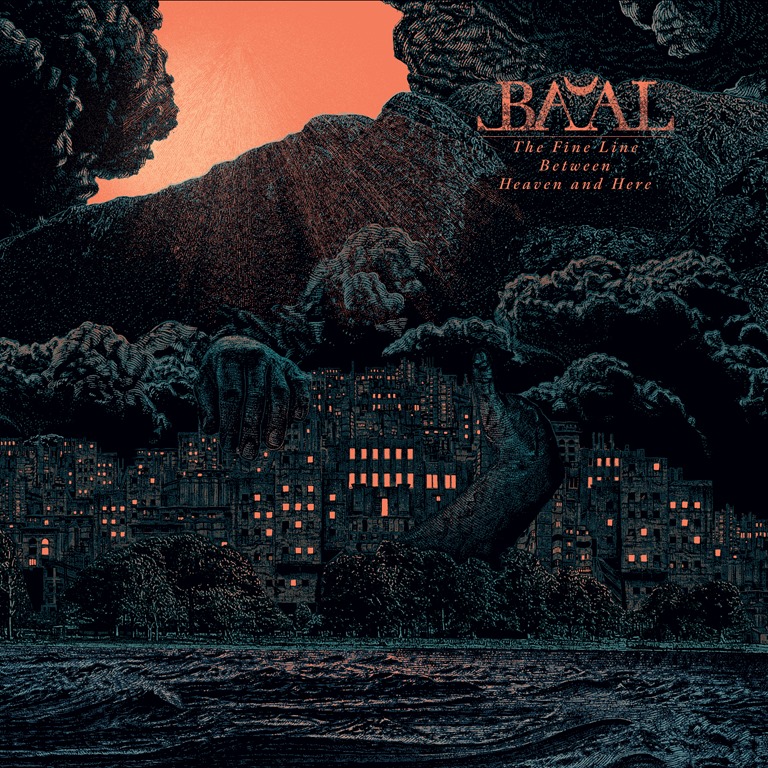
That artists can have complete control over their creative output, artwork, and every other aspect of their releases, including the schedule, is often hailed as one of the great virtues of the age of the Internet, especially Bandcamp and Spotify. It’s also oft-said that quality will reach its audience regardless. But thanks to algorithms and the fact that most creatives aren’t best at (self)-promotion and have no budget to pay anyone else to do the job, it simply doesn’t happen that way. And so it is that Hollow Cells, the debut album from Portland-based sludge / stoner metal band, Belonging, self-released in May, is now receiving a vinyl release courtesy of Dipterid Records, which comes with proper distribution and PR – which is why we’re here now.

Social media is aclog with music fans dismissing the role of critics and music reviews, scoffing about how they’re worthless and their opinions not worth shit. But the fact is that unless you have a mate with their ear to the ground, or the algorithm delivers particularly favourable results – unlikely for a minor band who’ve taken the self-release route – the industry mechanisms of labels, PR, press, and radio can make all the difference. Back in the 90s, pre-Internet, I relied on print media and late-night radio to discover new music that wasn’t top-40 chart stuff, and would be as likely to seek out an album based on a negative review as a positive one. Because criticism goes both ways, and critical reading, while perhaps a dying skill, was essential in order to read between the lines. In short, a negative review isn’t – or at least wasn’t – necessarily a bad thing.

I’ve digressed. And I’m not giving Hollow Cells a negative review – because it’s a belting album.

There’s space and separation between the instruments, and the drums – which bring us into the first track, ‘Lady Vanishes’ – have that ‘live’ feel – as, indeed, do the rest of the instruments. This is a recording that captures speaker-quivering volume. The overdriven guitar is thick, driving, the bass hangs low and heavy. The songs are structured, but primarily constructed around the riff, and the riffs are epic. But there’s detail, too, which emerges from the monolithic sludgefest. The stop / start shouty aggro racket of ‘Ceiling’ starts out a bit Therapy? but then swerves to a place that’s more Fugazi, and it’s precisely this range that shows that Belonging have something more to offer than template stoner / sludge: the energy of Hollow Cells is exhilarating from beginning to end.

The six-minute ‘Birdwatcher’ ventures into more post-punk territory, with Bryce August adopting a growlier, baritone vocal style that, when paired with steely grey guitars, invites comparisons to Red Lorry Yellow Lorry, before the song veers in a very different direction that’s more anthemic indie than anything, but with guitars which are absolutely huge.

As it progresses, Hollow Cells becomes increasingly difficult to place, and all the better for it. It’s heavy, but melodic, grungy but not so much angsty. It’s more obscure 90s acts like The God Machine and 8-Storey Window which come to mind during the second half of the album, and with each song, I come to realise how short any genre-based pitch is doomed to fall. ‘Longhaul’ is classic 90s grunge, but works on account of being more Nirvana than Bush, while chucking in a dash of Shellac. The bassline is killer

Hollow Cells is bursting with emotional depth, an ache. But then there are blasting punk songs like ‘Bonehead’ which are more in the vein of …And You Will Know Us By The Trail Of Dead. And this is why Hollow Cells is so good: it never fails to confound expectation, and never fails to exceed expectation, either. It’s quality from beginning to end – a rare thing indeed. I don’t do stars, but if I did, this would be a 9.5.

AA
a2404340897_10

Cruel Nature Records – 1st August 2025

Christopher Nosnibor

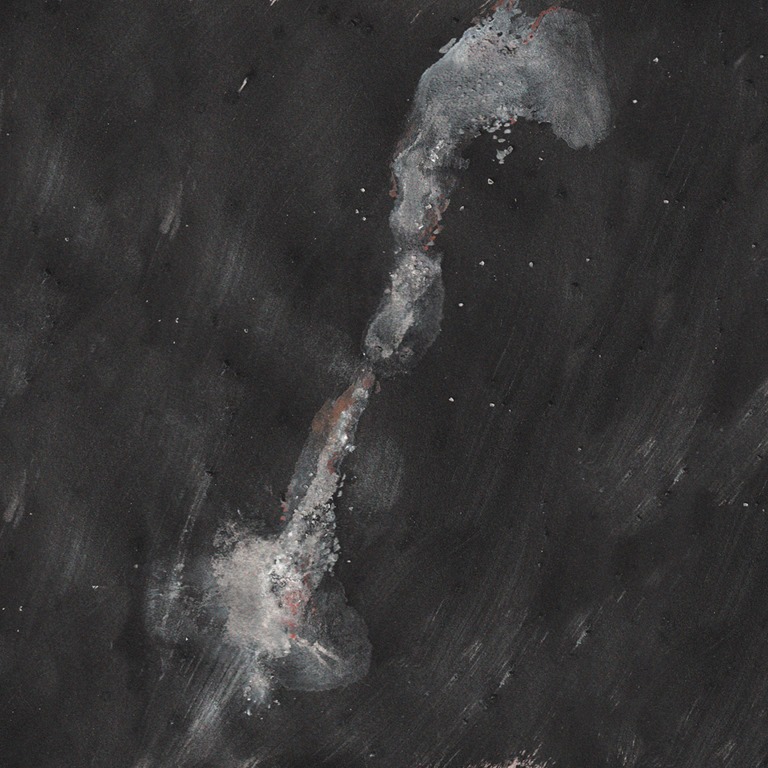
If ever an album was appropriately titled, this is it. Obliteration is from the Sunn O))) / Earth end of the slow and heavy spectrum, with everything low and grinding and dense and seeping along at a snail’s pace – but it’s also so very different. The eleven-and-a-half-minute ‘Teeth’. which raises the curtain on this colossal work, trudges along, thick and murky, the guitars like sludge, overlaid with the most haunting, ethereal vocals, like spirits ascending to the heavens – or perhaps more accurately, fleeing the molten torment of the volcanic pits of hell. The quieter passages ripple gently, but there’s something off-key and off-kilter that proves unsettling, a discordance which isn’t quite right.

The album is described as ‘a visceral, atmospheric journey shaped by improvisation, deep literary roots, and a shared affinity for both crushing heaviness and ghostly ambience’, with the notes going on to add that ‘vocalist and instrumentalist Amanda Votta draws lyrical inspiration from classic rock icons and poets alike – Led Zeppelin, Stevie Nicks, Carl Sandburg’s poems ‘Alone’ and ‘The Great Hunt’, along with Sylvia Plath.’

If none of the influences are immediately apparent, it’s likely because influence can be subtle, more a process of osmosis and assimilation rather than being about emulation. Drawing influence from Led Zep doesn’t have to equate to epic solos and using ‘baby’ a thousand times. And so it is that The Spectral Light suck all of those influences into a swirling vortex.

The churning ‘Branch’ is wild: ZZ Top on acid, Led Zep in the midst of a breakdown, riffs played at a thousand decibels through shredded speakers and melting amps. But it also spins into cracked post-rock territory over the course of its disorientating nine minutes.

Make no mistake: this is a monster: ‘Moonsinger’ warps and bends and it’s emotionally gutting in ways that are difficult to articulate. It touches the core of the very soul. The title track is defined by a dense, metallic churn… and yet there is still a delicacy about it. It’s dark, disturbing, ugly, and yet… beautiful. There is nothing else quite like this. And the dark, airless trudge of Obliteration feels like a black hole… and I find myself being dragged into its eternal depths.

Ahead of the album’s release, we’re privileged to be able to offer a video exclusive for the album’s final track and choice of lead single, ‘Whisper Surgery’. You might want to pour a big drink for this one.

AA

AA

AA

a1781525944_10

Portraits – 27th June 2025

Christopher Nosnibor

Stephen O’Maley will be forever synonymous with Sunn O))). However fervently fans revere Khanate, whatever the reputation of Burning Witch or KTL, however many solo albums he releases, and regardless of the outstanding work Ideologic Organ presets to the world, none of it will ever come close to the success of Sunn O))), which will eclipse anything and everything else he is involved ion for all eternity. It’s not difficult to grasp the reasons for this. It likely quite frustrating, but that band have elevated a niche not-really-a-genre to stratospheric levels, and have achieved more with a single, sustained chord than most could ever dream of.

When I saw him perform solo some years ago, he appeared quite comfortable with this, playing – just off stage – through a backline that was so immense it wouldn’t quite fit onto the stage of the 450-capacity Brudenell in Leeds. Better to have a reputation to play up to than not, and since bowel-churning guitar drone played at eardrum-shredding volume is what people want, delivering it seems like a fair trade.

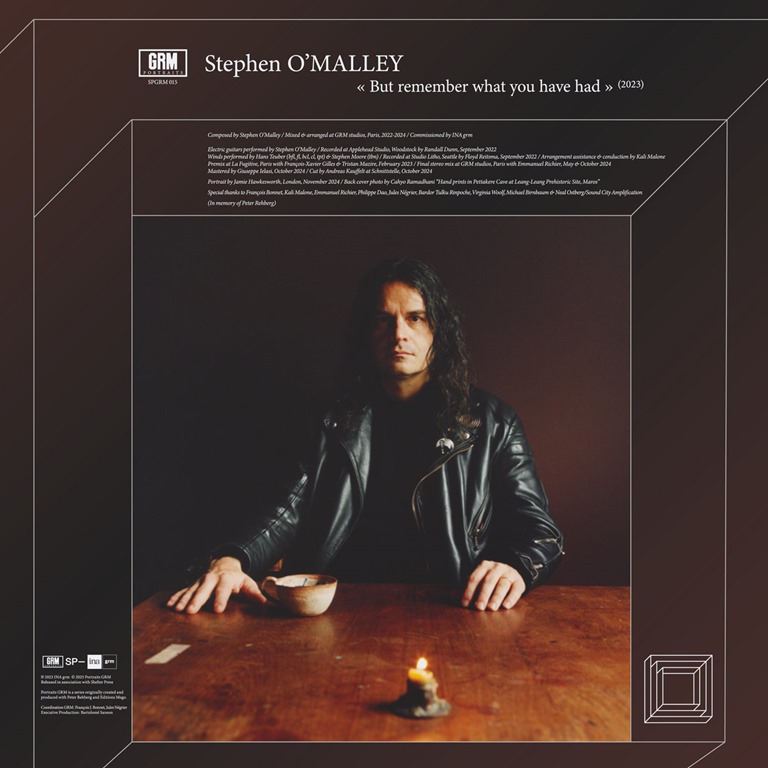
The blurb for his latest solo release suggests, however, something a shift, but by no means a departure, writing that ‘With But remember what you have had, Stephen O’Malley continues and expands his musical approach by transposing it to multiphonic electroacoustic writing and acousmatic listening. Drawing not only on his extensive experience as a composer and live instrumentalist, but also on the countless studio production and mixing sessions he has taken part in the course of his many projects (in solo, with SUNN O))) or KTL, to name but a few), Stephen O’Malley’s work on this new piece is ambitious, engaging in an inspired research that delves into the deep intricacies between polyphony, intonation and timbrality, enhanced by melodic motifs. To do this, O’Malley summons up his own very personal sound universe, constellated with amplified textures, instrumental sustained tones and raw energy, in order to diffract them into wavefronts, waves and blows that weave a complex, rich and fascinating matter. But remember what you have had stands out as an important work in Stephen O’Malley’s repertoire: it brings together the multiplicity of his musical approach in an exemplary way, while laying the foundations and promises for the future of an already extraordinary journey.’

But remember what you have had is a single, continuous piece, just over thirty minutes in duration. It begins with a parping drone that sounds somewhat like a didgeridoo. It lingers, resurging, cyclical hums and layers of sound and texture build atop of one another… and then what the fuck’s this? Bagpipes? It sounds like bagpipes. But then, it also sounds like guitar feedback and a single chord being struck and resonating for an eternity. And then another chord crashes like a giant Wave breaking over rocks at high tide with a stormy wind behind it.

Whereas the overall pitch and tone of the Sunn O))) sound is low and growling, But remember what you have had altogether more keenly favours the mid and upper ranges, and howls of feedback while whining engines fill the air as it heats up. There’s more discord as the sounds bounce off one another. It’s an exploration of the interaction between notes and frequencies, conducted in a way which can only happen at volume,

By the midpoint, the feedbacks are interweaving in such a way to form a huge reverberating howling drone, which in some respects shares common ground with Metal Machine Music, and it would be difficult – and inappropriate – to completely sidestep Earth 2 here, too. By twenty-minutes, O’Malley conjures an immense collision of sound, jousting and jostling amidst a sonic tempest, before gradually diminishing to a point of tranquillity which is more reminiscent of a string quartet than experimental wave of noise. It makes for an unexpectedly soothing finish, but once again shows the range of O’Malley’s musicianship, as well the breadth of his sonic interests, which extend far beyond all-out weight and sheer volume.

AA

AA

a3988746175_10

25th July 2025

Christopher Nosnibor

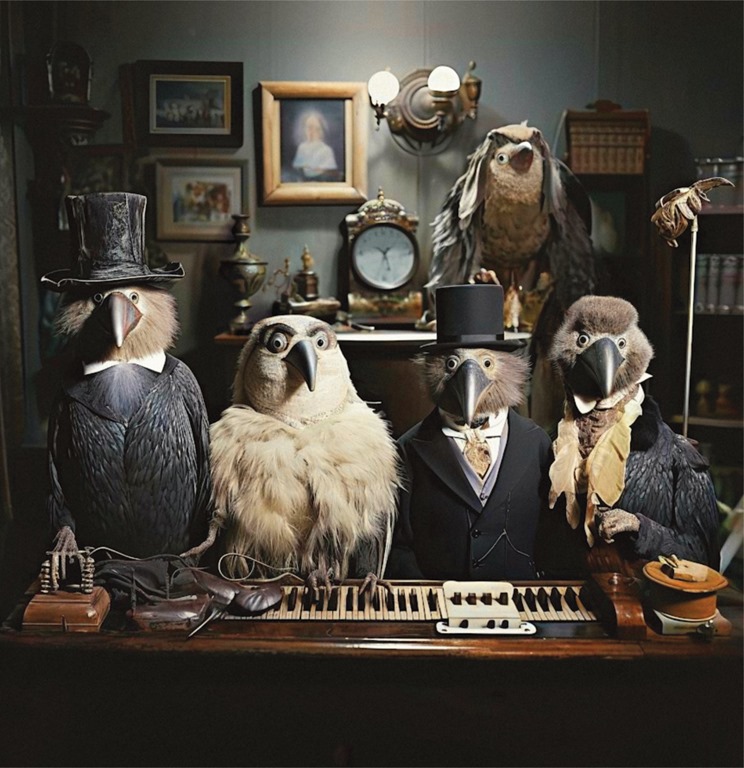
2025 continues to be the year of the comeback. My remark earlier in the week, in context of the release of the new Curse Mackey album, that ‘three years is a long time’ pales rather when considering that just a few days before I’d covered the first Red Lorry Yello Lorry album since 1992, and reviewed The March Violets touring only their second album proper since their formation in 1981. And that’s before we consider the unexpected return of the Jesus Lizard… But somehow it’s been fifteen years since the last new material from the progenitors – and likely sole purveyors of – cack pop, Wevie Stonder.

2017 compilation The Beast of Wevie provided a potted history of their exercises in perversely calculated naffness, and since then… tumbleweeds.

Sure Beats Living is every bit as bizarre as anything they’ve done previously, and successfully nudges beyond… and then accelerates over the horizon. It’s not so much cack as demented. Instrumentally, it’s a wide-ranging work, sometimes expansive, bold, ambitious, even cinematic – as the epic, widescreen ‘Piccolo’s Travels’ illustrates. But mostly, it’s a collection of lo-fi electronic dicking about with irreverent babbling in lieu of serious or meaningful lyrical content. So it’s a step up from previous outings…

It’s a sparse electro backdrop which frames the first track, ‘That’s Magic’, and no doubt fans will like it – but not a lot – as is immediately ventures into the domains of the strange, a Scots brogue narrating the steps for performing a magic trick which culminates in setting the cards alight, vacuuming the ashes and moulding polystyrene. What makes it all the stranger is that the delivery isn’t so different from that of a self-help tutorial, and reminds me of the guided relaxation CD I got given when I attended CBT some years ago.

‘Carpet Squares’ pitches the old-skool groove of Mr Oizo against crunching industrial beats… while providing detached directions for carpet-laying amidst a looping reverb-heavy collage of commentary on carpet. But then the urgent wibbly wobbly ping-pong bloopery of ‘Vanja and Slavcho’ takes things to another level. There’s storytelling, there’s cheesy Japanese-influenced pop and a whole lot more, and it’s quite bewildering – but then, so is the stomping glam beat of ‘Tiktaalik’, which kicks in hard and with all apparent intention of bringing something serious… As if these guys have a serious bone in their collective bodies.

In fairness, quirky humour and an overt lack of seriousness should never be seen as corresponding with a lack of ability to be serious. It’s often reported that comedians are in fact depressives who use humous as a way of deflecting their inner sadness, and clowns are often masking. And something in the title carries hints of a clowning subterfuge: you can almost picture a downbeat character in a US sitcom turning to the camera, breaking the third wall, with an exaggerated shrug, and declaring, ‘Well, it sure beats living’. And so it may just be my own state of mind which colours my perception of this, or maybe there really is something darker beneath the surface. ‘Push It’ inches towards funk, but ends up elsewhere completely, and in seemingly taking some of its lyrical inspiration from the game ‘Bop It’, it’s the epitome of irreverence. ‘Customer Services’ is a perfect pastiche of corporate phone line hold hell, down to the frustrated ‘shut up’ and tossing aside of the phone. Because beneath humour usually lies truth.

However you look at Sure Beats Living, this is a different kind of nuts. The core of the album is constructed around bleepy, shuffling electronica and spoken word… spoken word what? They’re not diatribes, they’re not really narratives, either. They’re words, often detached from meaning, or otherwise, where not abstract, designed to be daft, and Wevie explore words because they can.

Sure Beats Living is perverse, it’s stupid, and it know it is, because that’s what it sets out to be. And in these dark, depressing times, we need the wild irreverence of Wevie more than ever. Welcome back, you barmy buggers.

AA

AA

a3883920739_10

Room40 – 18th July 2025

Christopher Nosnibor

Norman Westberg seems to be a man of few words. Through all of his years with Swans, I can only recall interviews with Gira and Jarboe, although I have for many a decade now admired Westberg’s stoic approach to playing: no showmanship, no seeking of attention, instead channelling the sound, often with infinite patience, screeding feedback and a single chord for an eternity. His solo material is considerably softer than Swans in tone, but no less brimming with tension and atmosphere, and this is nowhere more apparent than in his solo live sets, as I recall in particular from seeing him open for Swans in Leeds two years ago. Onstage, he was unassuming: in contrast, the sound he made, was powerful.

And so it is that the words which accompany Milan are not those of the artist, but Room40 label head Lawrence English, who recounts:

In 2016, I invited Norman Westberg to Australia for his first solo tour.

He’d been in Australia a few years before that, touring The Seer with Swans, and it was during this tour that I’d had the fortune to meet him. Since that time Norman and I have worked on a number of projects together. He very kindly played some of the central themes on my Cruel Optimism album and I had the pleasure to produced his After Vacation album.

Last year Norman shared a multichannel live recording with me from a tour where he was supporting Swans. The recording instantly transported me back to the first time I heard Norman perform.

Whilst many people know his more dynamic and tectonic playing associated with his band practice, Norman’s solo work is far more fluid. Often, when I hear him live, I imagine a vast ocean moving with a shimmer, as wind and light play across its surface.

Norman’s concerts are expeditions into just such a place. They are porous, but connected, a kind of living organism that is him, his instrument and his effects. He finds ways to create moments of connection which are at times surprising, and at others slippery, but always rewarding.

There’s a deeply performative way to his approach of live performance. There’s a core of the song that guides the way, a map of sound, but there’s also an extended sense of curiosity that allows unexpected discoveries to emerge.

Milan, which I had the pleasure to work on for Norman, captures this sense perfectly. It is a record that exists in its own right, but is of course tethered to his other works. It’s an expansive lens which reveals new perspectives on familiar vistas.

This almost perfectly encapsulates my own personal experience of witnessing Westberg performing. And Milan replicates that same experience magnificently. Admittedly, despite having listened to – and written about – a number of his solo releases, including After Vacation, I was unable to identify any of the individual pieces during or after the set. Such is the nature of ambient work, generally. Compositions delineate, merge, and while the composer will likely have given effects settings and so on, which are essential to their rendering, to most ears, it’s simply about the overall effect, the experience, the way movements – even if separable – transition from one to another.

This forty-minute set is dark, disturbing, immersive, somewhat suffocating in its density, from the very offset with disorientating oscillations of ‘An Introduction’. It flows into the next piece, ‘A Particular Tuesday’, where tinkling, cascading guitar notes begin to trickle down over that woozy undulation which rumbles and bubbles on from the previous track. And over time, it grows more warped, more distorted. Something about it is reminiscent of the instrumental passages between tracks on Swans’ Love of Life and White Light from the Mouth of Infinity, and for all the swirling abstraction, there are trilling trickles of optimism which filter through here.

Amidst a swell of bass-booming, whorling sound on sound, gentle, picked notes just – just – ring clear and give form to an amorphous sonic mass, but this too gradually achingly, passes to the next phase, and then the next again. ‘Once Before the Next’ is the sound of a struggle, like trying to land a small wooden rowing boat in a gale. And it’s in context of this realisation that there are many depths and layers to Milian, but none which make for an easy route in, and there is no easy ‘check this snippet’ segment. Instead, it’s the soundtrack which prefaced the ugly one w know is coming.

While Milan is obviously a live set – and at times, the overloading boom of the lower frequencies hit that level of distortion which only ever happens in a live setting, and the sheer warts-and-all, unedited, unmixed approach to this release is as remarkable as it is incredible in listening terms. This isn’t a tidied-up ‘studiofied’ reworking of a live show. Milan is a document of what happened, as it happened. You can feel the volume. The density and intensity are only amplified by the volume, and you really do feel as if you’re in the room. Let it carry you away.

AA

AA

a1125531819_10

Upset The Rhythm – 27th June 2025

Christopher Nosnibor

It’s rare to be presented with something that has no immediate or obvious reference or context in terms of other music. But this is where I find myself with This Material Moment, the sixth album by Me Lost Me. And so it proves necessary to delve into the creative process for what Newcastle-based experimental artist Jayne Dent describes as “the most emotionally raw album I’ve ever made”. And so it is that for this release, she utilised ‘the automatic writing techniques she developed during a workshop with Julia Holter, and in the process has spun her music in different directions that draws on poetry, psalms and using mesostic poems and phonetic translations to generate words.’

And in this context, This Material Moment makes sense – at least in its own way. While automatic writing has a long history, dating back to the 16th century, it grew in cultural awareness via Dadaism, before becoming synonymous with Surrealism, and that fact that the results have yielded Dent’s ‘most emotionally raw album’ should not necessarily be a surprise – the theory is that that the process is dissociative, enabling a free passage between the subconscious and the page, with the mind freed from the constraints of self-censorship and linear thought. And This Material Moment very much seems to present an explosion of unfiltered, often free-flowing ideas, untethered by the conventions of form or structure.

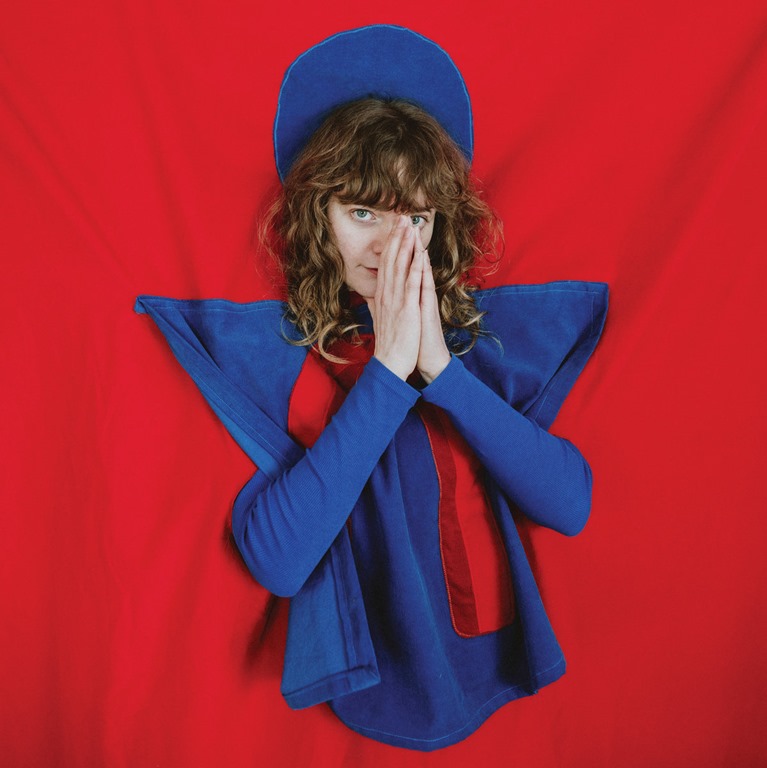
The cover art alludes to the album’s quirkiness, but in a way which rather too easy, a shade gimmicky, perhaps, failing to convey the level of nuance and complexity contained therein.

It’s on the second track, ‘Compromise!’ that the level of ‘otherness’ which defines the album. The drumming is weighty, serious, and Dent’s voice adopts an air of detachedness which is hard to define… there’s both a folksiness and elements of Eastern influence in the way it quavers against the dramatic, expanding backdrop which comes to resemble something of a mystically-hued, almost abstract, Burroughsian psychological interzone.

AA

AA

And so Me Lost Me leads the listener through a succession of dreamscapes which are often simultaneously idyllic and nightmarish. There’s a shanty-like tone to ‘Lasting, Not to Last’, but there are shrill, terrifying wails of strings or feedback which conjure images of dead souls trapped within this dimension. ‘A Painting of the Wind’ presents a sense of the unheimlich. It’s a lilting folk song… but something sits just to the left of centre, the instrumentation isn’t readily recognisable as anything, there are layer and something about is not of this plane. ‘I want to be carried away’, she intimates, and yes, perhaps so do I, I find myself thinking.

The clamour of church bells on ‘Still Life’ chimes a cord of an historical nature, evoking times past with a certain sepiatone sensation, but ‘A Souvenir’ strips everything back to an acapella – albeit multi-layered – delivery, with folk-influenced harmonies conjuring a sense of a bygone era which in many ways contrast with much of the album’s lyrical content.

I find myself flailing here: how to articulate the disconnections and disparities which are the very essence of this album? These disconnections and disparities are nowhere more highlighted than on ‘Ancient Summer’, where Steeleye Span style trad folk meets prog with a darker, almost goth vibe, with a dash of jazz and trip-hop thrown into the mix. ‘A Small Hand, Clamped’ may offer so many meanings in terms of its title: the words aren’t easy to decipher, but the atmosphere… Oh, the atmosphere. It billows and breezes, while a strolling bass… strolls.

Sometimes, albums which are ‘awkward’ to place are a turn-off in their ‘wrongness’, but This Material Moment is so absorbative, compelling, it’s impossible not to be dragged right into its very heart.

This is art which more accurately reflects our lived realities. No conversation really exists as a straightforward back-and-forth whereby each participant delivers a neat line of dialogue, and there isn’t a second in anyone’s life where their thoughts take for form of clear-cut, structurally-sound sentences. And so it is that Material Moment speaks not in a way we can readily pinpoint or identify, because it reaches us through deep, subconscious channels. It’s not an accessible album, and it’s certainly not an easy album to hail for its commercial potential. But it is an understated and yet immensely powerful album – beautiful, crafted, a folk album in many respects, but also an experimental work that seeks to explore dark psychological spaces.

AA

AA

a0524912561_10

Negative Gain Productions – 25th July 2025

Christopher Nosnibor

It’s been three years since Curse Mackey delivered Immoral Emporium. Three years may not be a long time, but a lot can happen in three years – and it has. And very little of it has been good. There has always something about industrial music – something I’ll unpick in a moment – which has displayed a sense of the apocalyptic, to the extent that at times it seems to almost bask in it. And that is not a criticism. The end is nigh, and while it’s always a question of ‘when’ rather than ‘if’, we seem to be ever closer to the brink of total annihilation. These are dark times, which call for dark music.

Industrial has come to mean many things, in terms of musical forms over the years, while Throbbing Gristle were the progenitors of all things industrial, technological advances saw acts more interested in pursuing more structured works with tape loops and drum machines, eventually giving us the more electro-orientated strain of industrial that became synonymous with Wax Trax!, and, subsequently, industrial metal, not least of all due to Ministry’s evolution from one to the other. Curse Mackey’s work very much belongs to that late 89s / early 90s Wax Trax! domain.

Concluding the trilogy which began with 2019’s Instant Exorcism, Imaginary Enemies promises to be ‘his most intense and intimate album to date… A bleak, beautiful meditation on paranoia, grief, and the ghosts we conjure from within’.

And so it is that the listener is lead into the album by route of looped samples, layering across one another, before a pounding beat crashes in, and Mackey, accompanied by a low, thumping synth bass groove, sets out his stall with ‘pressure points’, ‘psychosis’, and ‘decay’ delivered with a processed growl. There are many layers to the arrangements, creating simultaneously an expansive and claustrophobic feel. Single cut ‘Vertigo Ego’ swiftly plunges into darker, denser territories: brooding and ominous, Mackey’s vocals are a barely audible whisper. It sounds tormented, stressed, anguished.

AA

If ‘Discoccult’ and ‘Time Comes Clean’ (which calls to mind early (electropop) Ministry and Trudge era Controlled Bleeding) find us in fairly familiar industrial territory, something about the production imbues the material with a suffocating intensity. More often than not, there’s a brightness, a crispness, something of a ‘digital’ cleanness about the genre. In contrast, the sound here is murkier, more ‘analogue’ in feel, alluding to eighties synth music – something I’ve never been quite able to pinpoint as a listener and critic rather than a producer.

One can reasonably assume that album centrepoint ‘Blood Like Love’ makes a reference to Killing Joke’s ‘Love Like Blood’, even if only in title, but sees Curse lean towards gothier territories, stark, brooding, yet ultimately layered, graceful, with synth melodies and dramatic piano weaving around the samples and mechanised beats.

AA

The second half of the album locks into an atmosphere that’s less aggressive and attacking, and more brooding, moody, and introspective, and as such, marks a clear departure from its predecessors. What’s more, it works well, with the more uptempo title track marking a high point in the album, sitting comfortably alongside some of the more contemporary goth classics with its nagging, reverb-heavy guitar line and pulsating bass all held together by that classic, relentless, drum machine sound.

For my money, it’s Curse Mackey’s best release to date.

AA

a1263141378_10

10th July 2025

Christopher Nosnibor

The band’s Bandcamp page describe it as ‘the final chapter of a legendary journey’. David Wolfenden, who joined on guitar in 1982 after the release of their first single expands on this, writing that ‘40 years on and the guitars still try to strangle each other, the words still struggle to make sense of chaos and the rhythms drive us to a glorious destination.’

To describe Strange Kind of Paradise as ‘long-awaited’ would be an understatement: it’s an album practically no-one expected. Emerging that the murky milieu of the Leeds scene which was the spawning ground for all things dark and post-punk (and long before ‘goth was even a thing), Red Lorry Yellow Lorry’s early releases soundtracked the grim North in Thatcher’s Britain. They weren’t overtly political but they were clearly pissed off, and along with The Sisters of Mercy, Skeletal Family, and The March Violets (among others), they followed Gang of Four in capturing the zeitgeist.

During the 80s, they put out a solid string of albums and remained firm favourites on the alternative scene, and while they may have mellowed a shade over that time, with Blow (1989) being notable for making a departure towards more melodic territories, there was always a fire that burned through everything they did, and seeing them in 2015 at The Brudenell in Leeds reminded me on a personal level that the dark, brooding currents ran as strong as when I’d seen The Lorries play the Off The Streets benefit alongside the likes of The Mission and La Costa Rasa (and Utah Saints, where Andrew Eldritch joined them for a couple of songs) in August 1993, and they sounded exactly as they had in all the video footage I’d seen before and since.

It had looked for all the world that Blasting Off (1992) would be their final statement, and while the 2015 shows had seen the sale of limited CDs which mentioned the ‘forthcoming album’ Strange Kind of Paradise, almost twenty years on with no further movement, it seemed to be more of a mythical projection than a reality, as likely as a new Sisters album.

But last autumn, all that changed with the arrival of the Driving Black EP and the announcement that the album would follow shortly. And at long last, here it is. And yes, it was worth the wait.

The title track opens the album with the driving guitar and solid bass/drum pairing that is quintessential Lorries, the sound and mix reminiscent of Blasting Off – in particular ‘This is Energy’, but with the pace and determination stepped up several notches. Reed’s vocal is strong – in fact, it sounds the same as it did 30 years ago, although perhaps now, there are additional levels of nuance to his delivery, and it suits the songs well.

‘Chicken Feed’ (a mix of which appeared on the EP) is more melodic, even a shade groovy in a sort of 90s indie sense, the guitars chiming over layers of vocal harmony, and providing a hint of the diversity and expansion of songwriting which sets Strange Kind of Paradise apart from anything in their catalogue.

The acoustic-led ‘As Long as We’re Breathing’ is perhaps one of the most ‘different’ songs not only on the album, but in the entirety of their career, revealing an altogether softer, mellower side, while at the same time hinting at country and desert rock, Reed’s gravelly baritone reminiscent of Mark Lanegan. It’s a beautiful moment, and a truly moving song. ‘Nothing seems quite right / I’ve got a feeling we’re over the hill, but I don’t know because my chest is pretty tight / As long as we’re still breathing’, Reed sings with a palpable air of melancholy.

Then again, ‘Walking on Air’ brings a glammy swagger, but played almost in the rockabilly style of The Fall, marking another unexpected departure from the steely grey confines usually constructed by The Lorries. The same is true of the post-grunge ‘Killing Time,’ which again, is strong on melody, and big on emotional ache, riven with pining, yearning, sadness.

Side two opens with ‘Driving Black’, which, as I outlined in my review of the EP, is vintage Lorries all the way. Driving black, and driving hard. Easing off the gas a bit, ‘Shooting Stars Only’ returns to the vibe of Blasting Off, before ‘Many Trapped Tears’ goes for mid-tempo anthemic, with a solid riff. To clarify, we’re talking more Iggy Pop than Oasis in execution here. ‘The Only Language’ takes the tempo right up again, and is one of the most forceful sonic expressions they’ve made in a long time (even by their standards). Everything is firing on all cylinders as Reed snarls with total conviction ‘The only language I speak is the truth’. It’s one of those songs that gets you really pumped up, and the message has never felt more relevant.

And so it is that as this band – true stalwarts of the 80s alternative scene – finally sign off, we can reflect on how much we have to be grateful for. And as a final document, Strange Kind of Paradise sees them go off with a bang. It’s not a tired rehash, a limp collection of offcuts or unfinished works in progress, but an album that stands out as being quality all the way.

AA

a4282525804_10

Cruel Nature Records – 27 June 2025

Christopher Nosnibor

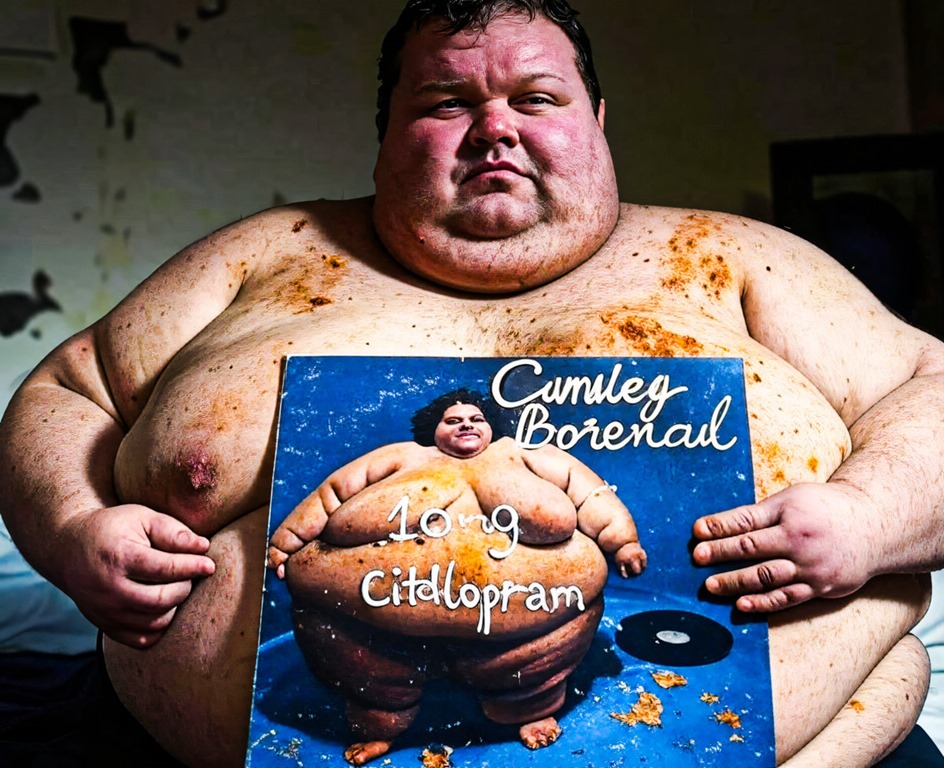
The cover within a cover artwork is only the first example of near infinite layers when it comes to this complex and inventive work from the truly demented experimentalist who records under the moniker of Cumsleg Borenail.

This latest effort promises ‘a collision of methods—part LLM-based sampling, part MPC assembly, part human lyrics—stitched together into something fluid and unpredictable. AI scavenges random prompts, returning garbled errors and fractured phrases, while voices and instruments drift in from nowhere, guided by no fixed direction. Each track begins as one idea and mutates into another, warping its original design into something unrecognizable yet strangely intentional.’

Oh, and it delivers on that promise, alright. This is truly a derangement of the senses, a collaged cut-up, an uncompromising mash-up, a smash-up, if you will, where absolutely nothing is off limit, and it all gets tossed, unceremoniously and indiscriminately, into the blender and churned up into a mess of the most mind-blowing chaos imaginable.

To provide a detailed analysis of this would be to unpick the threads in a way which would reduce the album to less than the sum of its parts. 10mg Citalopram works precisely because it’s an exercise in brain-pulping loop-heavy derangement.

‘You mean nothing me!’ a female voice repeats, and repeats, against a clattering, springing backdrop of twangs and poings throughout ‘You Mean Something To Me’. My head’s a shed by the time we’re midway through the second track, ‘Denizen Invocation Via Lunar Phase’ – because this is a work that goes off in all directions, all at once, and it’s really not pretty. It is, however, weird and frantic. It’s a mess of noise and samples and glitchy electronic samples and frantic breakbeats. Later in the album, there’s a companion piece of sorts, ‘Now I Know I Am Nothing Because You Said’.

AA

In some respects, I’m reminded of early Foetus, JG Thirlwell’s crazed tape loops and cacophonous noise bursts, and the way Cabaret Voltaire took the tape experiments conducted by William Burroughs and Brion Gysin and the ideas outlined in The Electronic Revolution as their starting point – but it’s also a bit Trout Mask Replica, in that it’s like listening to several songs being played at the same time, only it’s got bust-up techno beats exploding all over the shop and frankly, it’s impossible to know what the fuck’s going on most of the time. Too much, for sure. But that’s the point.

For context, Citalopram is a widely-prescribed antidepressant, described on the NHS website as ‘a medicine that can help treat depression and panic attacks’. This album, however, sounds more like a prolonged panic attack or all of the listed possible side-effects being experienced at once, while the numerous references to being ‘nothing’ appear to allude to the inner voice of low mood. Then again, there are other medical matters of an altogether different sort which provide the reference points for tracks like ‘Clostridium Difficile’ (a bacteria which causes diarrhoea) and ‘Snifflers, Nostril Pickers and Dribblers’. All of it is utterly batshit wonky and wildly arrhythmic, and certainly not for anyone who’s feeling tense or jittery or suffering from any kind of psychosis. For anyone else… proceed with caution. May have unwelcome and unpleasant side effects.

AA

a1363557647_10