Posts Tagged ‘Album Review’

Metropolis Records – 20th November 2020

Christopher Nosnibor

Despite their associations with both KMFDM and Foetus (Raymond Watts has been a touring member of both, and En Esch has returned the favour by contributing to PIG), and playing as the main support to Nine Inch Nails on the European leg of the Downward Spiral tour and releasing albums on Interscope around the turn of the millennium, PIG remain something of an obscurity, a band revered by those in the know. I can’t help but think that it’s because, for all their adoption of the aggrotech / technoindustrial stylings of KMFDM, and the grandiose extravagance of Foetus, they don’t really sit comfortably anywhere.

Their recent releases, which have been coming thick and fast in the past few years, while adhering to the fundamentals of their earlier blueprints, with thumping beats and grating, heavily processed guitars, have taken a poppier, and also more glam leaning. It’s a style that suits the flamboyant Watts, who’s always revelled in the theatrical and the performance aspects of rock ‘n’ roll. Pain is God continues to incorporate the glammy elements that first came to the fore on 2016’s The Gospel, particularly on stomping single cut ‘Rock ‘n’ Roll Refugee’ – but then, this is being a PIG album, it incorporates so many elements, spanning eurodisco, industrial, and aggrotech, all tessellated together to form a perfect assembly. The ‘Militant Mix’ of ‘Mobocracy’ (the original version of which was the lead track on a limited tour-only EP released last year) melds grating slabs of industrial guitar to a thumping dancefloor beat, breaking down to piano and grand strings.

‘Badland’ brings a bold funk strut and a barrel load of brash brass. Orchestral details lace the slow grinding greasy girth of ‘The Wages of Sin’, while ‘Kickin Ass’ does just that, with a thick bass groove and a guitar line that’s more hair rock than glam rock, but still manages to avoid being remotely corny. The lighter-waving anthemic ‘Suffer no More’ which draws the curtain on the album does teeter perilously close, but gets a pass by virtue of its incongruity and sheer audacity.

If the album and song titles are thin on porcine puns, the themes and tropes are the same as they’ve been since the very start of Watts’ career under the PIG moniker – sex, death, pain, evil – with a generous scattering of religious references, predominantly around Catholicism (the cover art is a reasonable starting point), and a superabundant splattering of sleaze. And with the sultry seduction of ‘Drugged Dangerous & Damned’ Watts manages to shoehorn in one of his signature triple alliterations. For some reason, it never gets tired. I suspect this is, at least in part, because Pig balance all the self-knowing parody, the supersaturation of cliché and repetition with a flair for invention, stylistic range and, above all, decent tunes.

AA

a2986325886_10

19th October 2020

Christopher Nosnbor

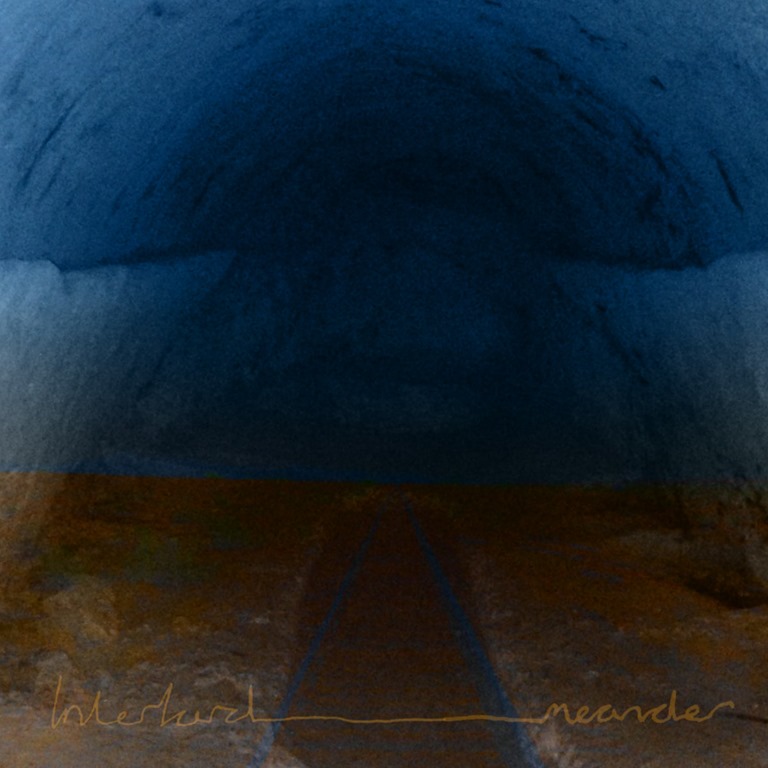
The title – Meander – intimates something that not only lacks a clear, direct trajectory, but to my mind at least, something ambling and aimless, like a leisurely walk on a Sunday afternoon in summer, a story narrated at length and via an array of detours and diversions, or a river reaching the later stages of its route towards the sea, when its force has dissipated and it weaves in a sedate series of s-bends through gentle lowlands.

Interlard’s new album may not be defined by a distinct or direct linear trajectory, but it’s anything but sedate, barrelling in with a sonic assault from the outset, with ‘Getting in the Van’ a churning wash of cyclical repetition. Yes, it may well resemble the swashing slosh of a washing machine with additional top-end bleeps, but it also stands as the opening to a passageway that heads downwards into a dark network of tunnels and caverns, an underground maze of the mind and off twisting soundscapes.

It soon becomes apparent that Meander is one of those albums that’s designed specifically to perturb, to disturb, to disrupt, perhaps in any which way it can, and to achieve this, there’s an element of chaos, or the random, as an array of sounds are collaged together, overlapped and overlaid.

‘Jonny Staccatto Does Cold Turkey’ packs all the weirdness into just over three and a half minutes, with woozy bass and discordant twangs and looped vocal samples emerging from snippets of laid-back jazz. Elsewhere, thunderous martial drumming and whirrs like drills buzz through reverberating feedback on the short but intense ‘Power Walking Holding a Claw Hammer’ that batters its way into the space between Test Department and Nurse with Wound. ‘Ugly Socialite’ ploughs a thudding furrow of bleak monotony as it trudges on, and on, and ‘Griefcase’ is dank and murky, oppressive.

Sonically, Meander is big on both texture and tone and moreover, where it stands apart from so many other works that slot into the broad field of experimental / industrial / electronica is in its stylistic range: Interlard explore far more than shades of noise and abrasion. In some respects, this actually renders it more challenging, as reconciling the more mellow passages and out-and-out incongruences within the context of a ‘noise’-oriented set isn’t easy: it goes against the grain of convention, but that’s all the more reason to appreciate the project’s broad artistic vision.

AA

a4055504987_10

Front&Follow – 25th September 2020

Christopher Nosnibor

So big a space to fill… the absence of live music leaves an abyss of indescribable scale. Social media has been aflame with outcry over the treatment of this so-called ‘unviable’ industry, crippled by restrictions – an industry that generates many, many billions of pounds for the economy. Over and over, I’ve read articles and personal pleas from those involved about the plight not only of musicians and venue owners, but the invisible but essential contributors, the sound and lighting engineers, the roadies, the studios, and it’s all so, so painful and heart-rending.

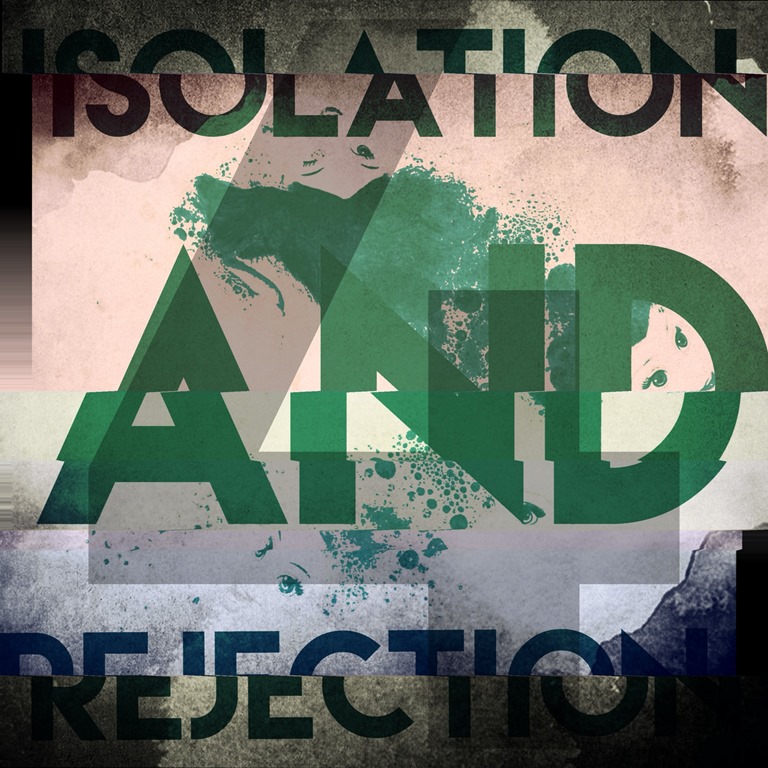
The fourth, penultimate instalment of the Isolation and Rejection compilation series which brought the Front & Follow label temporarily out of hibernation contains a further twenty-four contributions from a vast array of artists, known and unknown, assembled here under the common banner of all having been previously rejected by labels. Their loss is our gain and that of Front & Follow, whose inclusive approach to curating this series has made for a truly enriching journey over the last few months.

There is a leaning toward the electronic, and Pulselovers’ ‘Orphans’, which lands early is typical of the atmospheric strain that’s something of a staple of the F&F catalogue. Neither dance nor ambient, it’s understated, rippling, the gauzy layers pinned together by lowkey but insistent beats.

Daphnellc’s ‘Sinker Flies The Plane’ starts out jittery, hyperactive, edgy electronica that tinkles and flutters, before going all out on the hard, pounding beats, and contrasts with many of the more delicate, wispy compositions on offer here. Then again, with ‘Slava Xenoxxx’, Bone Music hit a dense industrial groove, bursting with snappy snare explosions and a blitzkrieg of samples, and for 80s robotix electro, Function Automat’s ‘Data Data’ is proper vintage, and not without a massive nod to not only Kraftwork, but also DAF and Cabaret Voltaire’s ‘Nag Nag Nag.’ In a parallel universe, this was recoded in 1978 and a truly seminal cut that brought its makers international renown.

These more accessible works are countered by the industrial-strength dark ambience brought by Revbjelde and the gouging aggressive dark drone attack of ColdSore, and Howlround push this to the next level with an overloading mess of pulsating distortion.

MJ Hibbert bucks the electro trend with his pithy acoustic indie, and if it seems a shade incongruous it’s all the more essential because of it: the spirit of these compilations is inclusivity, and this is what gives these largely instrumental, experimental, oddball collections soul.

These remain bleak times, and fir many, the long-term prospects continue to grow bleaker, and releases like this are essential not just in terms of bringing high-quality leftfield music to those seeking sonic solace, but also in creating a certain sense of community and collectivism.

AA

a2794682398_10

generate and test – gt49 – 23rd October 2020

Christopher Nosnibor

I don’t even know what day it is most days. I’m vaguely keeping track of the months and weeks, but a mostly existing day-to-day. Turn on the laptop, check my calendar, dial into the meetings I’m booked into. It’s just mechanical, I’m not really living. I know it’s 2020, by virtue of the fact I don’t know much else: confusion reigns. Time’s meaning has evaporated over the last seven or eight months.

I was drawn by the title, as the two component parts both feel relevant. That may be a personal thing, it may be a more general thing. We’re living every moment of every dystopia ever written, ever filmed, ever imagined, and I’m deeply nostalgic for all things right now, ranging from human interaction to simply feeling as if I have a life. I know I’m not alone in being alone.

I’ve long had an acute sense of nostalgia, but loathe the way nostalgia has become an industry, capitalising in the way the ageing process rose-tints the past. Anniversary edition albums and movie reissues don’t only cash in on that sense of past times, but lock people into a cycle of nostalgia, provoking reminiscences of ‘the good old days.’ Admittedly, the future has never looked so barren and the past more appealing, but generally speaking… we always yearn for the past because things were simpler when we were younger and less burdened with responsibility and emotional baggage.

It looks like this release has been languishing in the vaults for a long time, if my reading of the liner notes is right, they state that this was ‘written, produced, performed, and recorded by Matthew Thomas 1997… mastered by Matthew Thomas 2020’ Apparently, ‘2020 demanded we revisit a 1990s vision of a dystopic future’ – and yes, maybe it did. Or maybe it didn’t. Do we need to be heaped with more dystopian anguish given the pain of living in the every day?

nostalgia:dystopia promises ‘four tracks of dystobeats, placing the human voice within a context of fractured systems’, and delivers something that may be something close, I don’t know. I’m not entirely sure what dystobeats are, but I feel that we’re all living in a nexus of systems all of which are fractured and fragmenting, much to the psychological detriment of many. If lockdown was hard, the fact we’re still living in such uncertain times and under such restrictions and at distance from our fellow human beings is taking its toll. And this… it’s electronic, it’s overloading. Layers of sound collide against one another to forge challenging sound and forms.

There’s a sense of excessive volume and colliding sonic intents on the first track, ‘Pranayama’, where yawning drones like mechanical digeridoos hum and hover amid static blasts and feedback that ruptures from the simmering sonic surface like solar flares. Pulsing rhythms merge from the layers of sound.

In contrast, ‘Within in Orange Sodium Glow’ is thick, deep, and mellow for the most, with squelchy electro vibes coming to the fore: but there’s an eerie undercurrent that’s hard to ignore as lumpy beats lurch and thump amid undulating analogue oscillations, while ‘Sheering Force’ is stark, mechanoid, depersonalised, bleak and ‘Insect’ is a scratchy, buzzing mess of distorted beats and murky gyrations that emanates detachment and dislocation.

Having languished some twenty-three years in the vaults, it does seem as if Thomas had a certain sense of gloomy premonition about the future that’s now here. But then, every year of present feels bleaker than those which preceded, and since the turn of the millennium, it’s felt as though while global warming has been melting the ice caps at an exponential rate, life has been inching closer to a perpetual winter of the soul. With nostalgia:dystopia, Matthew Thomas has created a suitably claustrophobic soundtrack.

AA

gt49_front

Blaylox Records – 30th October 2020

Christopher Nosnibor

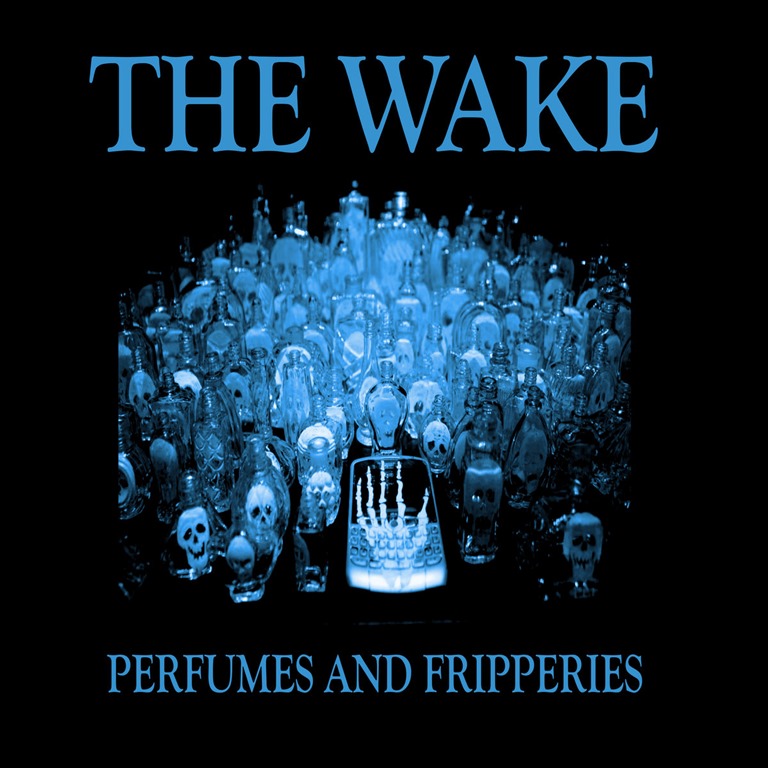
My ignorance of The Wake clearly blows every last one of my goth / post-punk credentials: where have I been all my life? Pitched as for being for fans of all of my favourite bands from my teen goth period – which I never really left – namely The Sisters of Mercy, Peter Murphy, The Mission UK, Tones on Tail, Red Lorry Yellow Lorry, Psychedelic Furs, The Cure, the band emerged in the so-called ‘second wave’ of goth appearing on myriad compilations and extensive touring with peers including Skinny Puppy and Nine Inch Nails, The Wake secured their place in goth and roll history.

‘Everything’, the second single lifted from the new album – their first in a quarter of a century – features Red Lorry Yellow Lorry’s Wolfie providing additional guitar, which further bolsters the release’s heritage credentials.

Not that it needs it: it’s a solid album in its own right. ‘Daisy’ is a daringly bleak, low-tempo opener that may not be quite Reptile House EP barren, but is nevertheless a spectacularly dark, atmospheric trudge through oppressively dark terrain, and at nearly six minutes long, it’s hardly an easy entrance.

Things go very Sisters circa ’85 with ‘Marry Me’, and the guitar work is clearly heavily influenced by Wayne Hussey, as are the vocals: this is their reimagining of the Sisters’ ‘Garden of Delight’ demo and it’s taut and murky, and they’ve got that heavily-chorused / valve sound nailed, and it’s that circa ’85 / ’86 vibe that drifts like a creeping smog of dry ice from every corner of Perfumes and Fripperies, aided by a dense production. While the swirling guitars are most obviously the defining aspect of the sound, the bass is thick and boomy, to the extent that you don’t so much hear the basslines as feel them, and they fill out the sound without being able to specifically separate the bass. Said shuddering bass is welded in a tight 4/4 to the mechanised drum tracks, which are pitched relatively low but are relentless – precisely as they should be.

There’s inevitably an element of comparing the motifs with precursive signatures: the tunnel-like vocal reverb is a Sisters signature that’s become a trope that so many bands have tried to emulate, with varying degrees of success.

The aforementioned ‘Everything’ is a hypnotic mesh of shoegaze that draws together early Lorries and All About Eve’s ‘Phased’, and Troy Payne’s vocals are treated with a steely metallic edge that replicates Chris Reed’s sound. Elsewhere, if the drum sound and overall structure of ‘Emily Closer’ is a Sisters / Rosetta Stone / Suspiria lift, the atmosphere is more Curesque, which the title kind of implies is the aim, and ‘Big Empty’ is hollow, brittle, a blanks pace of flanged bass and claustrophobically intense reverb.

‘Figurine’ marks a lurch into Fields of the Nephilim, and with the bombastic layers of female backing vocals wafting over some icy synths and a bassline that’s pure Simon Gallup on the last track, ‘Rusted’, it seems like The Wake have got all the goth bases covered. On the one hand, I should be irritated, as these things perpetuate the sameness of goth bands that’s been a bugbear of mine for years, largely because it feels self-limiting, like a genre trapped in time. But when it’s this well executed and the songs and production are this strong… you just can’t knock it.

Perfumes and Fripperies isn’t a great title, but it is a great album.

AA

a3729666156_10

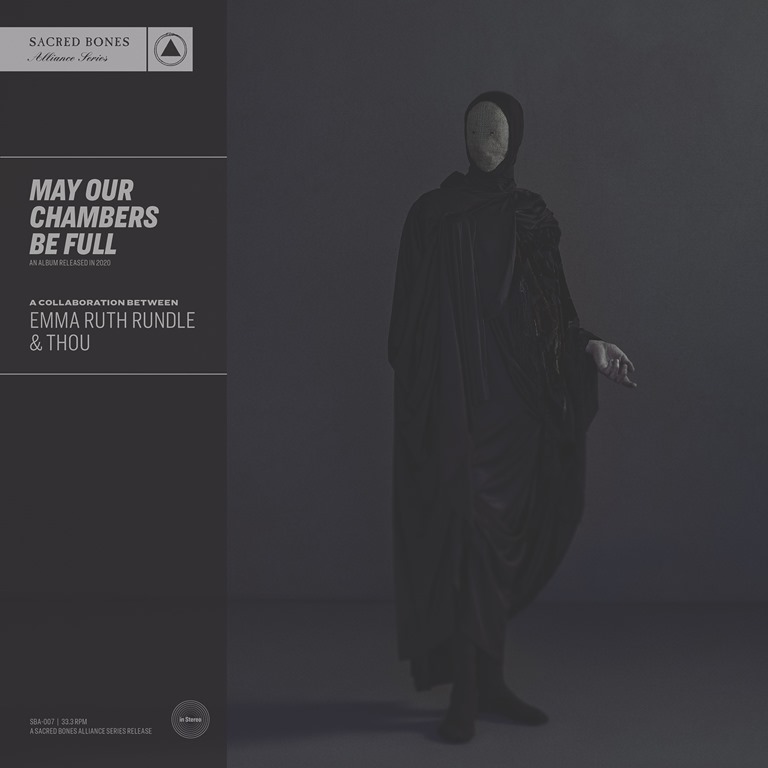
Sacred Bones – 30th October 2020

Christopher Nosnibor

This collaborative release is as interesting as it is unexpected. Coming from the heavier and of the guitar-driven spectrum, it isn’t that the coming together of Emma Right Rundle and Thou is entirely unfitting, but it is unquestionably intriguing. The coming together of two such powerful forces has, unsurprisingly, yielded a work that is yet more powerful still.

As the press release observes, ‘while Emma Ruth Rundle’s standard fare is a blend of post-rock-infused folk music, and Thou is typically known for its downtuned, doomy sludge, the conjoining of the two artists has created a record more in the vein of the early ‘90s Seattle sound and later ‘90s episodes of Alternative Nation.’

Needless to say, it’s pretty heavy in places, and not just sonically, although the guitars – more of which shortly – feel heavy enough to shatter rocks, and again, to refer to the liner notes is to reaffirm this as they note how ‘The lyrical content of the album is a marriage of mental trauma, existential crises, and the ecstatic tradition of the expressionist dance movement. “Excessive sorrow laughs. Excessive joy weeps.” Melodic, melancholic, heavy, visceral.’

The grunge influence in this album is apparent and significant, and it’s nearly all in the riffage – but this is an album with rang and depth as well as some serious heft.

‘Killing Floor’ sees the trudging guitar riff emerging from the swirling fog of an atmospheric instrumental intro that borders on shoegaze, Rundle’s voice rises majestically from the thickly distorted power chords and Earth-like picking, and never has she sounded more commanding, more subtly powerful, and never has she come closer to sounding like Chelsea Wolf. And yet, never has she sounded more unique: Bryan Funk’s strained guttural vocal snarls are utterly gut-ripping and contrast with her majestic, emotionally-rich intonation. It’s one of those songs that suck you straight in, and instantly, you’re drawn into the maelstrom.

The album’s shortest song, ‘Monolith’ is a raging beast of a tune a skull-crushing battering of overloading guitars that comes on like a grunge juggernaut, balancing melody with a density that you feel batter against your chest. ‘Ancestral Recall’ swings between brooding ethereality and raging metal, grace and abrasion, but for the most part, it’s little short of absolutely fucking terrifying, a banshee scream howling into a wall of churning guitar noise that’s utterly punishing.

In contrast to the full-on barrage, there are hints of the goth-folk of early All About Eve on the slower, more sedate ‘Magickal Cost’, and once again, the rich, lilting qualities of Emma’s voice comes to the fore. But when the levee breaks around the midpoint, all hell breaks loose, as multi-layered guitars swerve and bend through a tempest of raging noise and a deluge of percussion. The contrasts, cast simultaneously, are stunning and pack all the impact.

The album’s final cut, ‘The Valley’ is deep, a slow-builder with supple violins teetering hesitantly behind rolling drums and soft swell of clean, echo-soaked guitar. It’s by far the most conventional-sounding song on the album, with the folk-infused rock flavour of Fleetwood Mac being more to the fore than anything remotely alternative – but then the last minute and a half is unbridled sonic annihilation as all of the pent-up fury is unleased.

It’s a fitting final to an absolutely stunning album, an album which explores a broad sonic and emotional range to hit hard in the delivery.

AA

489981

Powdered Hearts – 15th October 2020

Christopher Nosnibor

Gintas K releases albums more often than I change my clothes. That’s of course intended as a comment on the prolific nature of his output, rather than a confession about my personal hygiene post-lockdown, although not going into the office or being around people – or ever within two metres of them – has meant I’ve maybe made slightly less effort of late.

The same clearly can’t be said of Gintas K, at least in terms of his work, since I don’t know if he’s been tweaking away at his circuitry in his pyjamas or the same jeans for a week and a half or if he’s been bothering to shave or deodorise daily. I don’t need to, either, of course.

Anyway: Sound & Spaces explores what’s become established as familiar territory for Gintas K, with gloops and bibbles, froth and foam, squelchy bubbles of sound rising up randomly against the crackling burrs of electronic distortion. Sound & Spaces is less attacking and less abrasive than some previous outings, and is les intense and intensive in its interrogation of microcosmic space than some of his previous microscopic, microtonal explorations.

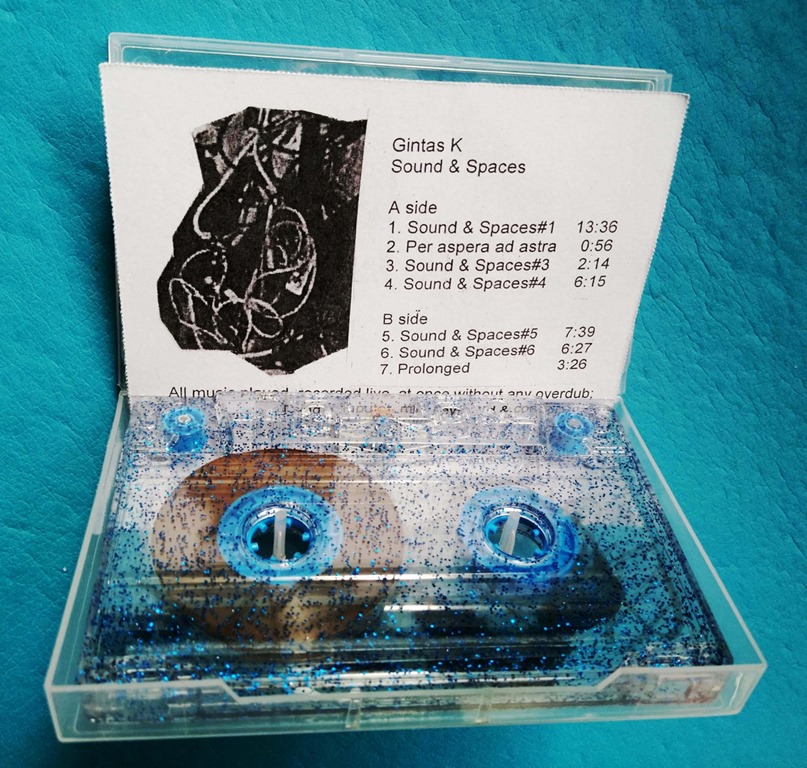
The first track – the thirteen-minute ‘Sounds & Spaces #1’ is a challenging mess of stammers and jolts, fizzing and crackling in a swampy slosh of analogue synth soup. It very much sets the tone, but in context, it’s a comparatively gentle start to what ultimately unravels to be quite a brain-shredder of a set.

‘Per aspera ad astra’ is a brief interlude of tingling, jangling dissonance before ‘Sounds & Spaces #3’ brings a bit of low-end grumbling, whining, and distortion, yawning undulations whizzing and popping all over.

By ‘Sounds & Spaces #4’, it’s almost impossible to differentiate distortion from percussion, and what originates where, although there are distinctly snare-like cracks in the feverish melting-pot of contrasting textures and tones, which become increasingly fragmented, fractured, and overloading as the album progresses. As an album it’s a frothy foment, and while some may find it simply uninteresting or a wash of so much noise they can ignore, I’m unlikely to be alone in finding the experience quite tense and uncomfortable – and nothing more so than the twenty seconds of silence at the end of the overwhelming chaos of ‘Sounds & Spaces #5’

If disorder offends your sensibilities, avoid this recording: once again, Gintas K has captured metal turbulence in aural form. It’s hard to process, but well worth enduring the turmoil for.

AA

a0638906201_10

zeitkratzer productions – zkr0027 – 23RD October 2020

Christopher Nosnibor

As the founder of one of Europe’s leading avant-garde orchestral ensembles in the form of zeitkratzer, whose releases include recordings of Metal Machine Music, works by Stockhausen, and two collections of Whitehouse ‘covers’, Reinhold Friedl is very much at the forefront of contemporary classical. Formed in 1997 with Friedl on piano (sometimes a ‘prepared’ piano, a la John Cage), they’ve established themselves a formidable force, incorporating elements of free experimentalism and drone.

For the recording of KRAFFT, the nine-piece ensemble came together with another respected musical collective, Ensemble 2e2m, a chamber group from Paris dating back to 1972, known for their unique sound and the first recordings of Giacinto Scelsi’s music.

As the press release recounts, KRAFFT for orchestra was composed in 2016 as a commission from the French State and premiered in Paris and Marseille. It was also the first meeting of the two ensembles – and yet the come together perfectly to create four immense, drone-orientated passages.

Being Friedl, there is a great deal of detail and precision behind the methodology: this is certainly not random stop-start hums and thrums or elongated notes played with varying – and usually increasing – intensity, and for this reason I shall quite at length: ‘KRAFFT is a minimalist maximal composition: all instruments play in rhythmic unison throughout. Only the sounds and their combinations change relentlessly throughout the piece. KRAFFT is spelt wrong on purpose to create an ironic-onomatopoetic rendition of the German term “Kraft”, meaning “power” or “force”. The listener is exposed to a sonic undertow. The notion of huge power and force is connected here to clandestine and unknown rules controlling the progression of sound; something is happening, but we do not exactly know what, when or how. KRAFFT is composed with the help of the computer program TTM (Textural Transformation Machine), developed by Reinhold Friedl to sculpture multiple random processes.’

The TTM formed part of Friedl’s Ph.D. at Goldsmiths University London, and was developed by the composer to sculpture texture transformations with the help of sophisticated random processes. As such, Friedl’s compositional methodology develops way in which John Cage incorporated random determiners within his work, and in using a ‘machine’ to make those random selections, he distances the ‘composer’ from the composition and increases the likelihood of true randomisation.

Returning to KRAFFT, there is a clear trajectory to the composition as a whole, namely an intensity and volume which increases incrementally as it progresses over the course of half an hour. The first part is soft, light, even playful, moving into somewhat darker, more discordant territory onto the second.

By part 4, immense booming low-end notes surge and rumble with such density as to have an almost physical force. Atop of this, the smaller strings scrape, squawk and twitter like birdsong and feedback. It’s an eleven-minute tidal wave of sound that swells and surges to a crescendo of truly enormous proportions. While it’s safe to say it’s unlikely to be aired on Classic FM, KRAFFT is as accomplished and powerful orchestral work as you’ll hear all year.

AA

zkr0027_front

Cold Spring – 23rd October 2020

The reverence for Coil amongst their fanbase – which if anything has expanded in recent years, and particularly following the death of Peter Christopherson – is quite remarkable. Emerging in 1982 following the demise of Throbbing Gristle, Coil became the primary vehicle for Christopherson and partner John Balance after contributing to the early Psychic TV releases. And perhaps one of the reasons Coil are held in higher esteem than PTV is that their output, while still substantial, was less in volume but subject to a higher quality control, as well as pursuing esoteric experimentalism while largely managing to avoid cringe-inducing indulgence. That, and the fact they pushed so many musical boundaries without being massive tossers in a musical field crowded with individuals whose creative genius was tempered by tendencies toward major-league assholism: P-Orridge should require no real qualification now, and similarly, the shady characters of the industrial and neofolk scenes, not least of all Boyd Rice and Douglas Pearce have long been exposed. And the fact that both members suffered premature deaths only compounds the way their work resonates with fans, who can only contemplate what cuold have been

Everything around the rights to the Coil catalogue is spectacularly complex, and the origins of this compilation aren’t even entirely straightforward, having originally released by Russian label FEELEE, featuring tracks from all their major albums (barring The Ape of Naples which was released after Balance’s untimely death). They were hand-picked by Coil to represent their best work and originally released to mark their first performance in Moscow in 2001.

Subsequently out of print on CD for almost two decades, this edition courtesy of Cold Spring spans Coil’s entire living career, with A Guide For Beginners – The Voice Of Silver and A Guide For Finishers – A Hair Of Gold being made available together in one deluxe set.

As Nick Soulsby observed of Balance and Christopherson, writing for thevinylfactory.com, ‘As Coil they had embarked on a wild ride from industrial origins originating in the post-Throbbing Gristle outfit Psychic TV, through a spell as dancefloor-channelling experimentalists, onward to their destination as the respected priesthood of pagan rite electronica’. And with a career spanning three decades and eighteen studio albums, it can be daunting to know quite how best to make inroads, so a ‘Best of’ makes sense.

Disc one (A Guide for Beginners) spans their later career, while disc two (A Guide for Finishers) delves deeper towards their origins, and together, in a slightly mixed-up reverse chronology, we’re able to trade their development, and what’s most interesting and apparent is their range and their willingness to explore.

Singling out tracks from a collection that spans twenty tracks and a monster running time, but emerging from the swathe of brooding dark ambience and esotericism, ‘Ostia (The Death of Pasolini)’ stalks brooding neofolk territory, dark, stark, and portentous, but without any of the nationalistic bullshit that often typifies the genre, while ‘Where Are You’ is the soundtrack to psychosis, an eerily minimal backing creeping uncomfortably behind a monotone monologue that’s unsettling and uncomfortable.

Brooding piano and shrieking woodwind and horns forge haunting soundscapes while elsewhere, minimal two-note organ and trilling electronic extranea provide the backdrop to mesmerising spoken-word narratives. Cut-up samples and fragments drift in and out (no surprise for a band photographed with William Burroughs, who had an album released on Industrial Records in 1981) and the thing that really comes across most powerfully from this compilation is that while so any ‘experimental’ and ‘industrial’ acts were – and are – pretty dull, Coil were consistently engaging, focuses on tone and resonance, and ever-evolving.

It would be hard to improve on a selection picked by the artists in terms of what can be considered the best representation of their output, and bias aside, this is hard to fault by way of an introduction.

AA

COIL A Guide For Beginners - A Guide For Finishers - Lo res album cover for web

Unseen Worlds – 25th September 2020

Christopher Nosnibor

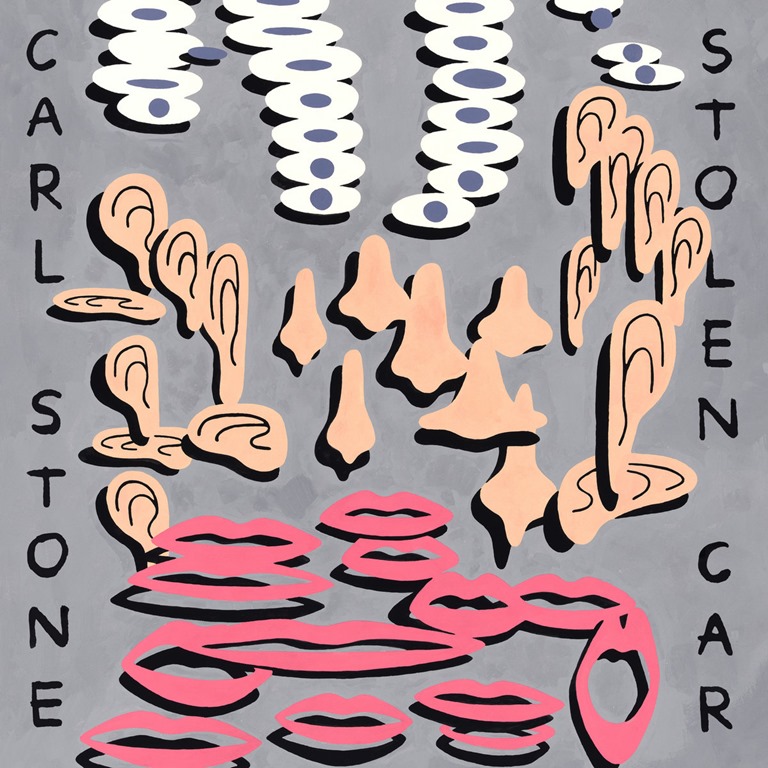
Pitched as ‘the gleeful, heart racing sound of hijack, hotwire, and escape’, Carl Stone’s latest release of a remarkably lengthy career is a smash-and grab hotch-potch of percussion-driven pieces.

Writing on the album on its release, Stone comments, ‘These tracks were all made in late 2019 and 2020, much of when I was in pandemic isolation about 5000 miles from my home base of Tokyo. All are made using my favorite programming language MAX. However distinct these two groupings might be they share some common and long-held musical concerns. I seek to explore the inner workings of the music we listen to using techniques of magnification, dissection, granulation, anagramization, and others. I like to hijack the surface values of commercial music and re-purpose them offer a newer, different meaning, via irony and subversion.’

Stone’s purpose is integral to appreciating the album, because the sounds with which it I formulated are the epitome of derivative, and without that context, one may be inclined to consider Stolen Car a serious endeavour rather than a work of subversion and commentary.

It begins with ‘Huanchaco, is a hyperactive mess of undulating synth which duels with freakout freeform jazz horns, all propelled by some frenetic drum ‘n’ bass beats.

Stammering, overlapping vocal loops provide the fabric of ‘Auburn’. Cut and spliced in such short fragments as to bubble and blur, and as everything melts into a foamy soup, there’s a fast-pace indie tune playing on the radio in the next room, and this in turn melts into the r’n’b pop froth of ‘Au Jus’, a chopped-up summary of the sound of the autotuned contemporary mainstream – slick, stylised, and devoid of content.

As the album progresses, everything seems to accelerate, growing more dizzying as K-pop and Katy Perry are whipped into an out-of-control fairground. Each track feels – and sounds – like listening to the entire top 40 single chart for the last five years with each single playing simultaneous and 25% faster than recorded. With the quickening of the pace also comes an increasingly bubblegumminess, but also a sense that things are out of control. It feels like a metaphor for postmodern culture, its endless acceleration built on a perpetual recycling whereby surface substitutes depth.

Stolen Car is a disorientating rollercoaster of a ride – a joyride where the joy is edged with panic as the smile becomes a fixed plastic grin as the fun turns to fear that at any moment you’re going to flip off the road, meet head-on with a wall, or worse still, carry on going, ever faster, forever….

AA

a3719238387_10