Posts Tagged ‘Album Review’

9th September 2022

Christopher Nosnibor

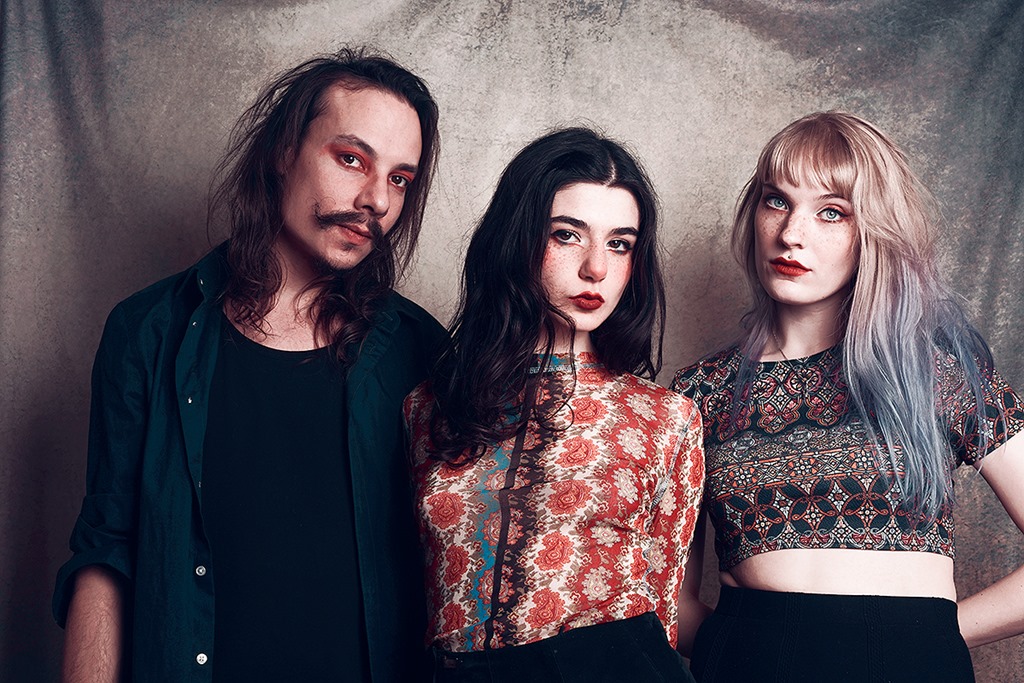
London-based Parisienne alt-noise-grunge threesome A Void have been kicking around for a bit now, although most of their kicking around seems to have been in London with few ventures beyond. During lockdown – a spell where they did a few online streams and the like – I found myself contemplating the strange geography of bands – specifically how in many places, ‘local’ is used disparagingly to denote an act who’ve failed – or declined – to venture beyond the vicinity of their region, and for any ‘regional’ act to ‘make it’ nationally, they need to venture to the capital, whereas in London a band can chug around the city’s venues forever and seem like they’re actually on tour without the word ‘local’ ever cropping up.

In politics, we complain about how just London-centric everything is, and back in the 80s and 90s, the same accusations were levelled by nine tenths of the country at the music press, as represented by Melody Maker, NME, and Sounds. It seems pretty trivial now we no longer have a music press, but back then it was frustrating to read endless reviews of London gigs by bands who never played outside London.

A Void don’t just hark back to that in their remaining firmly lodged in London, but in their ramshackle grunge-influenced stylings: for all of their time on stage, they’ve stubbornly shunned the common tendency to tighten up and get slick, with their shows being wild, chaotic, and clearly joyfully cathartic, which is completely in keeping with the music itself, which is pitched as being ‘FFO Hole / Silver Chair / Babes In Toyland’, and which got me wondering if there are any FO Silverchair, or if anyone even remembers them now.

This rough, raw immediacy carried through into their debut album, Awkward and Devastated, which featured some pretty wonky playing in places. It in now way detracted from the listening experience – quite the opposite, in fact, rendering it all the more real, all the more honest – but even now, I still find myself thinking ‘wow, they left that in?’

Penned by frontwoman Camille Alexander during lockdown, this second album was recorded between 2019 and 2021 in London, with producer Jason Wilson (Reuben, Dinosaur Pile-Up), the blurbage describes it as ‘a record delivered with a visceral, personal energy that touches on themes of heartbreak to womanhood to battles with mental health.’

The first taster we got of it was ‘Sad Events Reoccur’; presented here in two conjoined parts, a six-minute slow-burner of a single felt like a pretty daring way to mark a return after couple of years, but A Void really aren’t a band to be bothered by commercial considerations and it showcased an altogether meatier, chunkier sound that suited them well, and as such, makes for a strong start to the album.

‘Stepping on Snails’, also released as a single, has a certain swing to it, and is a winner with its explosive chorus and vocal harmonies, but it’s the thick, gritty bass that really holds everything together as the guitar wanders around hither and thither, ad I’m reminded of the squalling mess of Nirvana’s In Utero, where at times the guitar seems to serve to provide only texture and tone, while the rhythm section is what keeps the shape and prevents it from collapsing into incoherent noise.

There’s a reflective tone to ‘One of a Kind’, at least in the verses, before the distortion kicks in on the guitar and it’s a well-realised slice of tortured angst that runs the full gamut of churning emotions.

Dissociation is a giant leap forward from Awkward and Devastated, which was appropriately titled and we can see just how much everything about the band has evolved. The songwriting is more structured, but without losing any of its sense of dynamics, and the production really has optimized a much, much more solid performance in playing terms. It’s still raw and fiery, Camille still roars like she’s possessed and the force is strong, but this feels altogether more professional. That should by no means be equated to overpolished or selling out in any way: this newfound focus facilitates a more accurate articulation of the songs and the band’s intentions.

There’s not a dud track here, and the ones that aren’t instant grabs are strong growers, from the barren, bereft ‘2B Seen’ and ‘5102’ that revive the spirit of the criminally underrated Solar Race to the more accessible ‘In Vain’ that actually slips into a groove and bursts into an anthemic finale with a hook worthy of Alanis Morissette while at the same time bringing a touching emotional sincerity.

To describe an album as ‘mature’ feels like a vaguely damning praise that connotes a transition towards dullness and mediocrity: this is most certainly not the case with Dissociation. It’s just an altogether better realised set of songs: A Void have lost absolutely none of the fire, but have found the best method to get everything across, and it punches hard.

AA
ourbandisfuckinghotB

After a lengthy hiatus from 2013 to making a return to the fray this summer, Benjamin Heal’s Cowman alter ego is back with a vengeance: hot on the heels of the Crunch’ EP, which was essentially the salvage from an aborted album project, we have a full-length album proper in the form of Slaughter.

The title may or may not be a fairly off-the-cuff and easy reference to its being recorded at a studio by the name of The Slaughterhouse – evidently not the one in Driffield, favoured by Earache acts back in the day, since it was destroyed by a fire in the 90s – but it equally seems appropriate to the tense, tortured atmosphere that pervades this release.

Kicking off energetically with ‘Hydrant’, this is the sound of Cowman reinvigorated. It’s still gloriously lo-fi, and still warrants Pavement comparisons I effortlessly tossed at its predecessor, but this carries the unbridled excitement of those early EPs which preceded Slanted. But moreover, it’s fuller, scuzzier, dirtier, somehow more adrenalized, and also more frenetic, more angular, as if Trumans Water had witnessed the apocalypse. In this sense, it’s very much a return to the gnarly grind of 2013’s Artificial Dissemination and Palpating the Rumen (2009).

AA

This tension carries on into ‘Rinka’, two and a quarter minutes of multi-layered mumbling vocals largely submerged beneath a hefty chug of rhythm guitar and a lead guitar that just about carries a motif, but wanders and around as if half-blinded and disoriented by a spinning compass on a map that’s missing bits.

‘Blackstock’ is a full-on wall of sound, the mangled vocals echoing impenetrably in a churning cyclical riff, and it’s not until ‘Kissing the Rock with Eyes’ that we get something approximating a groove, but even then, it’s impossible to settle into it for long. The beat may be vaguely baggy, but it’s urgent, thwacked out at a hundred miles an hour while the guitars are cracked up, overdriven and grungy. Something has happened here, and perhaps perusing the 2010 Cowvers album, which includes rough-as-fuck renditions of songs by Big Black, The Fall, yes, Trumans Water gives a clue of the roots to which Cowman is returning to here, but there’s also a newfound sense of purpose here, as if there’s a real need to channel some post-pandemic angst into big, bad, noise.

‘Itch’, clocking in at a minute and forty-one is pure Big Black, with a squall of treble-to-the-max guitar clanging over a pummelling blast of drum machine, before the dark, dank mass of the lumbering closer, ‘Wichita Black Sun’ rolls in and mines a mid-tempo motoric groove for over a quarter of an hour. The nagging monotony is integral to the experience, like a feedback-strewn reimagination of Lard’s ‘Time to Melt’ and the entire back catalogue of Terminal Cheesecake pulped into a single document.

While ‘Crunch’ was fun, Slaughter feels like the real Cowman. It’s not an easy or accessible record; in fact, it probably requires four stomachs to fully digest, but it’s a magnificent set of dingy alt-rock noise with firm roots in the early 90s, the likes of which is rare these days, yet seems fitting for these challenging times.

Listen EXCLUSIVELY to album tracks ‘’Blackstock’ and ‘Sticks, Stones, Fingers and Bones’ here:

AA

a2206602401_10

Dret Skivor – 5th August 2022

Christopher Nosnibor

In typical Dret style, the accompanying notes are brief and to the point; functional, you may say.

As such, we know nothing of either AU or FDO as individuals – if indeed they are – of their previous works or methods, but then, nor to we need to in order to address the release at hand. ‘When analogue electronic drone meets toy keyboard drone, the results are this.’

‘This’ being a forty-three minute piece of continuous drone. Not that it’s all just one long drone: it’s multiple drones that hang and hover in layers. Despite its lack of overt structure or form, there are clear distinctions and a strong separation between the different layers, that, unexpectedly – and whether intentional or not – bring something of a conventional musicality to proceedings, with a distinct ‘lower’ drone overlaid with a higher ‘lead’ drone, as well as incidental moments of discord and dissonance as the shifting tones interact with one another. And, as the piece progresses, so the pitches change, and consequently, so do the moods. At first comparatively calm and tranquil, the tension rises over time.

Shrill wraith-like whispers flit through a darkening atmosphere as the lower drone begins to thicken and swell in density and volume and the overall sounds grows murkier, forging a more sinister, ominous feel.

Over time – and here, time feels like a vague concept, where seconds stall and minutes moderate and ultimately swing in suspension, slowing, until reaching a point around twenty-five minutes in where nothing moves and a perfect stasis is reached. The interweaving drones remain locked, and there is no movement. Life itself has stopped and the listener finds themselves frozen, like an insect set in amber to be preserved for all eternity. And here – here – the urge for any form of transition or trajectory abates, simply sliding away along with even the desire to move.

Somewhere along the way, you simply forget you exist and the sound becomes everything, and yet, simultaneously, it fades into the background as you find yourself in a fugue-like state, entranced, and barely notice when it ends.

AA

a2685101601_10

24th August 2022

Christopher Nosnibor

There are certain popular adages which are, frankly, and demonstrably, bollocks. The first is ‘if you can’t do, teach’. Admittedly, the state off education here in Britain means that academics at all levels are forced to teach outside their field with the scantest of time to prepare. I discovered this first-hand while working on a PhD thesis on William Burroughs and postmodernism and being tossed a semester’s teaching on Elizabethan literature. But moreover, most teachers wo get to teach in their specialist areas clearly can ‘do’ having attained a certain level of qualification. Can teachers of musical instruments also not ‘do’? Can diving instructors not drive?

And then there’s the popular notion that music reviewers are failed musicians. Perhaps the people who cast this aspersion should speak to Neil Tennant or more pertinently John Robb, Jim Irvin, and Sally Still. I might not point them in the direction of my own ongoing musical activities so much, but would highlight Oscar Quick, the man behind the ‘Needs More Cowbell’ site, where he posts considered reviews of new releases, who has recently turned in a handful of live shows and delivered the album Weaponised Soup.

In his bio, Quick explains how Weaponised Soup ‘features influences from disco, hip hop, rave and progressive rock, while remaining true to its core 80’s post punk sound. Dealing with Oscar’s experiences with insomnia, this record is a stream of consciousness during those many long nights, covering the extreme highs and destructive lows of staying awake for days at a time.’

As a lifelong insomniac, it’s relatable: the output happens because how else do you distract a fevered, restless brain that won’t let you rest? As you may guess, it’s not only a stylistic melting-pot, but also very much an album that jumps all over the place in a way which conveys the mania and erratic impulses that arise from protracted sleeplessness.

Weaponised Soup Album Cover

Opener ‘I Should Sleep’ sounds like The Pixies, only staggering weary with fatigue and mumbling, slurred, and fugue-like. But if you’re looking for reference points, look no further than the title of ‘Assorted Psycho Candy’, which is, unexpectedly, a remarkably atmospheric, downtempo trip-hop / post-rock crossover that finds Quick picking through a medley off musings. ‘Over the Garden Wall’ is a contemplative wash of Cure-esque synths and packs more than its necessary share of cowbell.

Some songs are more successful than others: ‘Chrysanthemums’ is a weird, almost baggy slice of dance that twitches with paranoia and tension and switches into frenetic territory around the mid-point, but the sub-Goldie Lookin’ Chain white rapping takes some absorption., and the New Order-esque ‘Respect for Dinner Ladies’ brings more Sprechgesang and even straight spoken vocals that likely sit in the Yard Act bracket, and in its simmering tension and up-front awkwardness, by accident or design, Weaponised Soup seems to capture the post-pandemic zeitgeist.

Something clearly changed during lockdown: artists are now talking openly about mental challenges and neurodiversity, and embracing these experiences creatively, and this is reflected in a new wave of music that refuses to be bound by genre, as Andre Rikichi’s wonderfully weird exploratory stylistic explosion on which I wrote only yesterday exemplifies.

As we continue to crawl from under the psychological rubble of the pandemic and successive lockdowns, into a new world that’s not brave, but fearful, tremulous, and ultimately fucked-up and swinging ever further to the right, these are truly terrible times – but as history shows, terrible times tend to spur the creation of great music. With Weaponised Soup, Oscar Quick forges a small but unique space in that fucked-up world, and it’s very much a good thing.

Derby-Uni-UGG-038

Bearsuit Records – 31st August 2022

Christopher Nosnibor

I may have mentioned it before, but I always get a buzz when I see a jiffy marked with an Edinburgh post stamp land on my doormat mat and I realise it’s the latest offering from Bearsuit records. Because while whatever music it contains is assured to be leftfield and at least a six on the weirdness spectrum, I never really know what to expect. That lack of predictability is genuinely exciting. Labels – especially micro labels which cater to a super-niche audience tend to very much know their market, and while that’s clearly true of Bearsuit, they’re willing to test their base’s boundaries in ways many others don’t dare.

Andrei Rikichi’s Caged Birds Think Flying is a Sickness is most definitely an album that belongs on Bearsuit. It doesn’t know what it is, because it’s everything all at once: glitchy beats, bubbling electronica, frothy screeds of analogue extranea, mangled samples and twisted loops and all kinds of noise. As the majority of the pieces – all instrumental – are less than a couple of minutes long, none of them has time to settle or present any sense of a structure: these are fragmentary experimental pieces that conjure fleeting images and flashbacks, real or imagined.

‘They Don’t See the Maelstrom’ is a blast of orchestral bombast and fucked-up fractured noise that calls to mind JG Thirlwell’s more cinematic works, and the same is true of the bombastic ‘This is Where it Started’, a riot of rumbling thunder and eye-poppingly audacious orchestral strikes. Its counterpart and companion piece, ‘This is Where it Ends’ which closes the album is expensive and cinematic, and also strange in its operatic leanings – whether or not it’s a human voice is simply a manipulation is immaterial at a time when AI—generated art is quite simply all over, and you begin to wonder just how possible is it to distinguish reality from that which has been generated, created artificially.

Meanwhile ‘At Home I Hammer Ceramic Golfing Dogs’ is overtly strange, a kind of proto-industrial collage piece. ‘What Happened to Whitey Wallace’ is a brief blast of churning cement-mixer noise that churns at both the gut and the cerebellum. Listening, you feel dazed, and disorientated, unsettled in the stomach and bewildered in the brain. There is simply so much going on, keeping up to speed with it all is difficult. That’s no criticism: the audience should never dictate the art, and it’s not for the artist to dumb things down to the listeners’ pace, but for the listener to catch up, absorb, and assimilate.

‘Player Name: The Syracuse Apostle’ slings together some ominous atmospherics, a swampy dance beat and some off-kilter eastern vibes for maximum bewilderment, and you wonder what this record will throw at you next.

In many respects, it feels like a contemporary take on the audio cut-up experiments conducted by William Burroughs and Brion Gysin in the late 50s and early 60s, and the titles only seem to further correspond with this apparent assimilation of thee random. I suppose in an extension of that embracing of extranea, the album also continues the work of those early adopters of sampling and tape looping from that incredibly fertile and exciting period from the late 70s to the mid-80s as exemplified by the work of Throbbing Gristle, Cabaret Voltaire, Test Dept, Foetus. These artists broke boundaries with the realisation that all sound is material, and that music is in the ear of the beholder. This strain of postmodernism / avant-gardism also follows the thread of Surrealism, where we’re tasked with facing the strange and reconciling the outer strange with the far stranger within. Caged Birds Think Flying is a Sickness is an album of ideas, a pulsating riot of different concepts and, by design in its inspiration of different groups and ideas, it becomes something for the listener to unravel, to interpret, to project meaning upon.

Caged Birds Think Flying is a Sickness leaves you feeling addled and in a spin. It’s uncanny because it’s familiar, but it isn’t, as the different elements and layers intersect. It’s the sonic representation of the way in which life and perception differ as they collide.

AA

a3019257531_10

Room40 – 2nd September 2022

Christopher Nosnibor

It’s a sign of the times that this is being released only as a download: labels – especially niche labels like Room 40 – know their audience and know their budget. The time has now passed when a connection with a label with ensure a physical release, and theres something sad about this. Still, better a virtual release with a label’s backing than no release and / or no label backing, and ROOM40 have some respect in their field.

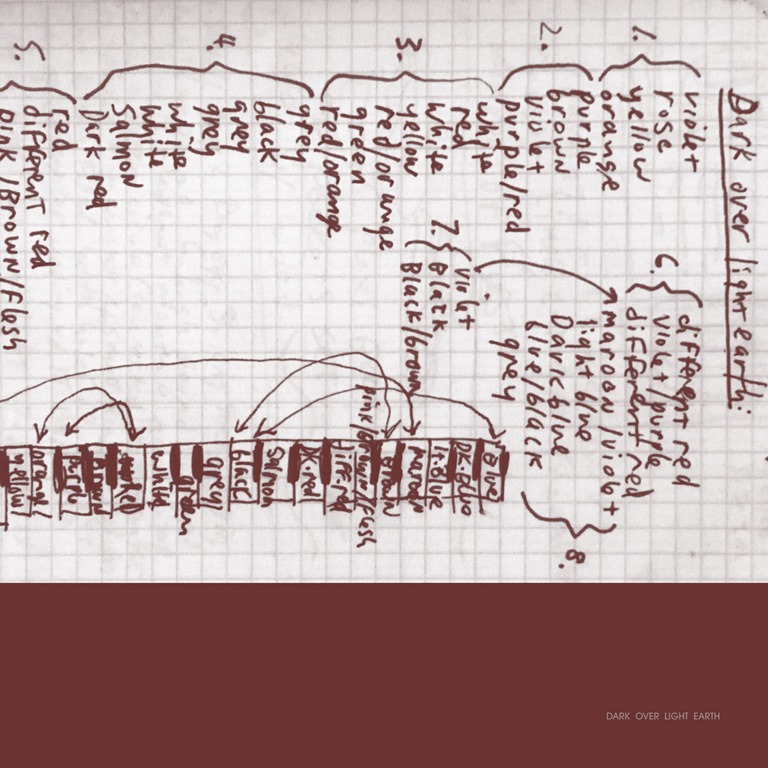
Dark Over Light Earth is very much a release that highlights the intersection of different media, specifically visual art and music. As Steve Roden explains of the album’s origins, ‘dark over light earth was created for the final weekend of the exhibition moca’s mark rothko, which featured 8 rothko paintings from the museum of contemporary art los angeles’s permanent collection… i initially made a list of every color in each of the 8 paintings, to generate a score. i recorded myself playing the score on harmonium and glockenspiel – the notes and their order pre-determined by my color notations; and the tempo, duration, and overall feel, improvised. some of these recordings were then processed electronically with filters.’

It’s fair to say, then, that this is a quite specific, technical, and theory-based work, and it’s not immensely accessible either. Granted, it features violin and amorphous synth drone, both of which are fairly familiar aspects of contemporary experimental music, and there are moments which are genuinely magical, and musical, as they skip from here to there with a lightness and ease that’s magnificent.

But so much of the album – which consists of a single track with a running time of nearly thirty-five minutes – is discordant, difficult, atonal, and it’s hard to get a handle on. The individual elements are comparatively tuneful, but when placed together… Picked dissonance flits over dolorous droning synths and mournful strings – the violin so often sounds sad, but all the sadder when it scrapes sinuously, against the note, against the grain.

The sparser passages are minimal to the max; stuttering scrapes and picked notes forge tension against not drones, but tense scrapes and scratches while notes drape in fatigue across the rough and barren soundscapes.

Listening to Dark Over Light Earth prompts me to revisit not only Rothko’s catalogue, but his biography, which reminds me that he committed suicide at the age of 66. So much is made of the ‘27’ club, that the suicide rate among older people, particularly artists, tends to be overlooked. Hunter S. Thompson, age 67; Ernest Hemingway, age 61; Robin Williams, age 63; Tony Hancock, age 44: it’s all to easy to bracket the psychology of suicide as an affliction oof young males, but this masks the broader issue.

Just as there is nothing in Rothko’s work which indicated darker underlying issues, so Dark Over Light Earth isn’t anywhere near as dark as all that; it’s simply a work of quiet, but troubled, contemplation.

It is, unquestionably, a fitting soundtrack to accompany the viewing of Mark Rothko’s work abstract, overheated, yet austere, simple yet confrontational in their stark minimalism, and in that capacity, it’s magnificently realised.

AA

a3413973115_10

Cruel Nature Records – 6th September 2022

Christopher Nosnibor

These are interesting times for Nadja, the ‘ambient / experimental / doom metal’ duo comprising Leah Buckareff and Aidan Baker. Luminous Rot was recorded during lockdown, and found a home on the legendary Southern Lord label. Released in the spring of 2021, it’s a veritable beast of a work, which combined metal with post-punk, cold-wave, shoegaze, and industrial.

Lockdown feels like something of not so much a distant memory as an unreality, and if by May 2021 it felt like life was returning to normal, the truth is that the wounds were still raw, and any attempt to move on as if life was back as it was before was simply a wilful act of delusion to stave off the effects of the trauma.

And with every trauma, there is some residual hangover, and you might say that Labyrinthine is the product of that. As the accompanying notes detail, the material was recorded during the pandemic and concurrently with Luminous Rot, and ‘explores themes of identity and loss, monstrosity and regret, extreme aesceticism, the differences between labyrinthes and mazes, taking inspiration from Haruki Murakami’s Killing Commendatore, Ursula K. LeGuin’s The Tombs of Atuan, and Victor Pelevin’s reinterpretation of the story of the minotaur and Ariadne, The Helmet of Horror.’

When a band chooses to self-release an album, it’s no longer an indication that it’s substandard or not worthy of a label release, and the case here is that Labyrinthine, which ‘this might be Nadja’s heaviest, doomiest album to date’, it’s clear that rather than consisting of session offcuts, it stands alone as a separate project from Luminous Rot, featuring as it does, a different guest vocalist on each track, and it’s worth listing them here:

Alan Dubin – legendary American vocalist from O.L.D. and Khanate and, currently, Gnaw

Rachel Davies – vocalist and bassist from the British band, Esben & The Witch

Lane Shi Otayanii – is a Chinese multi-media artist and vocalist in Elizabeth Colour Wheel

Dylan Walker – American vocalist from grindcore/noise band Full of Hell

With such a roll-call of contributors, it’s in no way possible to fee short-changed by the fact there are only four tracks, and ‘only’ is somewhat redundant when the shortest of these is almost thirteen minutes in duration. This is an album alright, and it’s an absolute fucking monster at that.

And while the CD release is on the band’s own label, Broken Spine, there are limited cassette versions by several different indie labels from around the world: Katuktu Collective (US), Cruel Nature Recordings (UK), Bad Moon Rising (Taiwan), Adagio830 (Germany), Muzan Editions (Japan), WV Sorcerer (France/China), Pale Ghoul (Australia), and UR Audio Visual (Canada) – and it’s perhaps noting that the running order differs between formats,  and I’m going by the Cruel Nature tape sequence here rather than the CD. It may be more intuitive from a listening perspective, but limitations off format and all…

This co-operative approach to releasing music is highly commendable, and seems to offer solutions to numerous problems, not least of all surrounding distribution in the post-pandemic, post-Brexit era where everything seems on the face of it to be fucked for any band not on a major label with global distribution and access to pressing plants and warehouses worldwide.

The title track is a lugubrious droning crawl: imagine Sunn O))) with drums crashing a beat every twenty seconds in time with each pulverising power chord that vibrates your very lungs. And those beats are muffled, murky, and everything hits with a rib-crushing density, that’s only intensified by the squawking, anguished vocals that shred a blasted treble in contrast to the thick billows of booming bass sludge, and it’s a truly purgatorial experience.

And then, here it comes, and it all comes crashing down hard over the course of the most punishing nineteen minutes in the shape of the brutal behemoth that is ‘Necroausterity’. In a sense, the title speaks for itself in context of a world in lockdown, and it’s sometimes easy to forget just what terrifying times we endured, watching news reports of bodies piling up in New York and elsewhere while governments and news agencies fed a constant stream of statistics around cases and deaths. It felt truly apocalyptic. And ‘Necroausterity’ is the sound of the apocalypse, tuned up to eleven and slowed to a crawl, the writhing torture of a slow, suffocating death soundtracked by guitar and drums do dense and dark as so feel like a bag over the head and a tightening grip on the throat. The recording is overloaded, distorting, and it’s a simply excruciating experience. And it simply goes on, chord after chord, bar after bar, slugging away… and on in a fashion that makes SWANS feel lightweight in comparison. It’s relentless, unforgiving, brutal, and punishing.

‘Rue’ broods hard with dark, thick strings and a heavy atmosphere, but it’s light in comparison. It’s dense, and weighty, but Rachel Davies’ ethereal vocal drifts gloriously within the claustrophobic confines and conjures another level of melody that transforms the thick, sluggish drones into something altogether more enchanting. It builds to a throbbing crescendo that is – perhaps not entirely surprisingly – reminiscent of Esben And the Witch or Big | Brave.

Wolves howl into the groaning drone of ‘Blurred’ and the guitars slowly simmer and burn: no notes, just an endless am-bleeding distortion before the power chords crash in and drive hard, so low and slow and heavy so as to shift tectonic plates and shatter mountains. Amidst the raging tempest, Lane Shi Otayanii brings an otherworldly aspect that transcends mere words, making for a listening experience with a different kind of intensity as it trudges and churns fir what feels like a magical eternity.

The sum total is the sound of hellish desperation, and while Labyrinthine may offer absolutely no solace in the bleakest pits of deathly despair, you’ll be hard-pressed to find an album that better articulates perpetual pain and anguish better than this.

AA

cover

gk. rec. – 13th August 2022

Christopher Nosnibor

Since taking control of his own release schedule – in addition to various releases via various labels – Gintas K’s output has shifted from rivulets to cascades, with this nature-themed album being just one among countless releases, live performances, exhibitions. soundtrack and compilation appearances so far this year, and, not least of all, Lėti in May, released on venerable experimental label Crónica.

There’s little explanation behind Mountains, runlets, caves & cascades, beyond a selection of quotes from HP Lovecraft and the detail that the album’s six pieces were ‘played, recorded live, at once without any overdub; using computer, midi keyboard & controller’ in 2020, and one suspects Gintas has a hard drive bursting with such recordings just waiting to be edited and mastered to form unified documents of his tireless output.

The first five pieces form the larger work that sits under the album’s overarching title, numbered one to five. They’re sparse, minimal, echo-heavy, like wandering around in a vast cavern while droplets fall into the subterranean lake that occupies the bottom, and who knows how deep it may be, how many tunnels are filled with millions of gallons of water that have run down through the ground and into this naturally-carved warren of rock-lined corridors beneath the ground.

In places, barely perceptible glimmers of sound, like bat sonar, jangle in the upper reaches of the audio spectrum. I’m reminded of the cat repellent device in my back yard, and I wonder if to some, these passages would actually appear as silence – or if for others, like my ten-year-old daughter, they would find the pitch unbearable and have to run from the room covering their ears. Quiet gurgles and trickles are the primary sounds on ‘Mountains, runlets, caves & cascades #3’ and I find myself feeling altogether calmer, picturing myself in a pine woodland with steep banks. I picture in my mind’s eye local scenery like Aysgarth Falls and Ingleton Falls and find myself at ease – but this being Gintas K, there’s disruption afoot, and blips and squelches zap in seemingly at random to remind us that this is digital art, and the fourteen-minute ‘#4’ marks the full transition into digital froth and sluices of laptop-generated foam.

And so it trickles into ‘#5’ which brings more bleeps and blips and jangling and some high-pitched rattling that for some reason makes me think of seeing footage of milk bottling plants in the 80s – back when milk came in glass bottles, and I trip on this trajectory of nostalgic reverie until the arrival oof the unsettling final track, the eight-minute ‘eastern bells’ that’s a slowed-down yawn of sound, metallic reverberations ringing out into the silence, echoing in the dark emptiness in ebbs and flows, like a conglomeration of sounds, drifting in a breeze.

Mountains, runlets, caves & cascades is a supremely abstract work, and while it’s not a huge departure for Gintas K, it does represent one of his softer, gentler, sparser and less frenetic works. It’s by no means an album to mediate to. But it is overall fairly sedate, and it not only allows, but encourages a certain quiet reflection.

AA

a3599404171_10

Expert Sleepers – 25th August 2022

Christopher Nosnibor

Fallout 4 is, as the title suggests, the fourth album in Darkroom’s Fallout trilogy.

Darkroom have been going for more than twenty years now, and have built up an extensive catalogue centred around fluid ambient work, which they’re keen to point out ‘stretches the definition of the genre to its limits in many directions: from quiet, introspective and naturalistic through celestial and melodic to intense, abrasive and synthetic.’

In presenting three longform compositions, Fallout 4 affords the collective to fully explore all of these elements.

As the accompanying notes explain, ‘Darkroom’s music has always been played not programmed, with a focus on human interaction and capturing the magic of live performance’, and the first two pieces hark back to the last performance of their 2012 tour. ‘It’s Clear from the Air’ is hypnotic, rippling, mesmerising, low, undulating drones providing a subtle low end to the textured interweaving synths that overlay subtle yet complex rhythms.

It bleeds into the twenty-five minute ‘Qaanaak (Parts 1 & 2)’ and immediately the tone is darker, denser, with a grumbling low and needling pulsations that create tension within the suffocatingly thick, beatless smoggy atmosphere. You find yourself lost, in suspension, somewhat bewildered as the tones twist and change. Electronic flares whip and lash as stuttering beats emerge through the relentlessly nagging pulsations, and continue to shift and mutate to a broiling, bubbling larva as booming bass tones surge and swell. The rhythm grows in urgency, but it’s muffled, constrained, which heightens the experience of a sense of airlessness and entrapment and as much as the throbbing oscillations are indebted to Can and Tangerine Dream, their abrasive edge hints at the uneasy, wheezing synth grind of Suicide.

The third piece, ‘Tuesday’s Ghost’ is perhaps the most conventionally ambient’ of the three, and is certainly the most overtly ‘background’ as is swims and floats and chimes along fuzzy lines of slow decay and loose, vague forms that have no shape, rise and fall. There is a discreet linearity to it, as it gradually, and subtly builds in depth and density, and it’s here that it become clear just how essential that human element is to Darkroom’s work – that sense of musicians bouncing off one another and understanding one another through intuition. There is no substitute for it, and you simply can’t programme the dynamics of form. It’s this intuitive, natural fluidity that breathes life into the compositions, and in turn, it’s this sense of life that the listener connects to and engages with. Fallout 4 may be ambient at heart or by genre… but it’s also far beyond the frontier of ambient.

AA

a2945227307_10

5th August 2022

Christopher Nosnibor

Lately, I’ve been seeing people on the Internet bemoaning the number of ‘lockdown’ albums, and even the emergence of ‘lockdown’ novels, questioning the need for anything that recreates, recounts, reflects upon or is otherwise set during the most recent of historical events. They all seem to make more or less the same case – that we all went through it, it was bad enough, and there’s no need to harp on or relive it. But artists tend to process and comprehend the world and their experiences of it through the act of creation, and just because we all experienced the pandemic and various lockdowns, no two people will have had the exact same experience or the exact same psychological response. Besides, isn’t more or less all art some form of response or reaction to the human condition, or otherwise a reflection thereof? No-one beefs about an excessive amount of war novels or poems or various genre novels, like crime or sci-fi or fantasy. Perhaps it’s because they prefer escapism to real life.

As the accompanying blurbage explains, ‘This album is a reflection of the dark days the world has seen in recent years. It’s about the tragedies many of us have faced and the effort to find the will to fight on. We remember those we have lost because it is through them that we carry on into tomorrow’.

Strange Days is pitched as ‘a symbolic re-birth for the project, returning with a new zeal to create and perform’, and it’s not short on pumping beats and rippling synths. What sets it apart from so many other industrial / electropop / darkwave hybrids is Voicecoil’s vocal: it’s in that gothy baritone region, but for all of that, and the sense of performance and theatre that comes with those well-established genre tropes, his delivery had a certain emotional depth and sincerity that lifts the songs to another level.

So where ‘Versterbrogade’ comes on like a dance remix of a Depeche Mode in terms of its musical arrangement, and the verses observe the popular style of singing in the throat, a wheezy, grit-edged monotone, the verses unleash the hook and some ‘proper’ singing with heart and soul, and in doing so breathes life into the bleak experience of life where days drift and fade into one another. ‘Speak in Sine’ brings a harder-edged beat and a starker atmosphere, and it sits well with the themes of dislocation and alienation which run through the lyrics. ‘No Easy Reply’ is remarkably sensitive, not to mention accessible, and Strange Days has some great tunes, from the expansive, pulsating yet reflective ‘Why’ to the brooding piano-led curtain-closer of ‘Drift’.

While electronic music – particularly of that dark pop / industrial / goth disco persuasion – can often suffer from feeling sterile, detached, robotic, and impersonal, Strange Days is anything but. It possesses a certain warmth, a humanity, that resonates on numerous levels.

AA

a2292779137_10