Posts Tagged ‘Album Review’

Cruel Nature Records – 2nd December 2022

Christopher Nosnibor

Many of us were waiting for the snow. And then, it arrived. And then everything ground to a halt. Welcome to the world now. What happened? It wasn’t always this way.

It’s all in a single word: ‘remember’ immediately imbues the album’s title with a sense of nostalgia. It isn’t explicit, of course, but it’s so, so evocative. Because, so caught up in life and the way everything blurs as time races past, we forget so much. The things we remember, then, hold a special place in our crowded minds. Reminiscences between friends, where moments, events, occurrences, people and places are conjured in those moments of reflection whereby we ‘remember when…’

Winters now are simply not the same as they were. I remember, in the early 80s, a full foot of snow on my parents’ back lawn, from which I would build a six-foot snowman and an igloo. We’d even build igloos on the school field during breaks. Snow didn’t stop school busses from running then. Perhaps it’s because of climate change, perhaps it’s because of the sheer volume of films, art, and literature, that depict idyllic, snowy winters, that show is so evocative. Most of can only dream of a white Christmas, but then, even Irving Berlin’s 1942 song was in itself a slice off nostalgia: ‘just like the ones we used to know’ is perhaps more accurately summarised as ‘just like the ones we see in fiction dating back to Dickens’ but obviously, it doesn’t have the same chime. Ultimately, the world is changing, and

The text which accompanies the album’s release serves almost as an affirmation of my line of contemplation, with the explanation that Remember We Were Waiting For The Snow is about what is called ‘solastalgia’: our anxiety, our concern, our sadness to see some natural phenomenon disappear. Written 5 years ago, after Žils [Deless-Vēliņš – aka (Lunt)] relocated to Latvia, it is a collection of exquisite reflective moving guitar-driven ambience drawing from same the sonic well as soundscapers like Jim O’Rouke’.

The nine tracks of Remember We Were Waiting For The Snow range from the expansive – the eight-minute opener, ‘Flakes and Feathers’ and the nine-minute closer, ‘Auseklis’ – to the fragmentary – the sub-two-minute ‘Dead Man in the Sand’ and ‘Dead Man in the Snow’.

Between the bodies, there is atmosphere. There is tension, but it’s contained by the soft curtains of sound. ‘Plasma (Under the Ice)’ is stark, scraping, brooding, dark, and difficult, uncomfortable, uneasy on the ear.

The instrumentation is varied, from screeding synths to picked guitar and mellow woodwind that falls between jazz and post-rock. But genres matter not and dissolve in the face of such magnificence. Remember We Were Waiting For The Snow drags hard on melancholic reflections. It’s also melodic and intimate, and ultimately, quite magical.

AA

cover

Front & Follow – 25th November 2022

Christopher Nosnibor

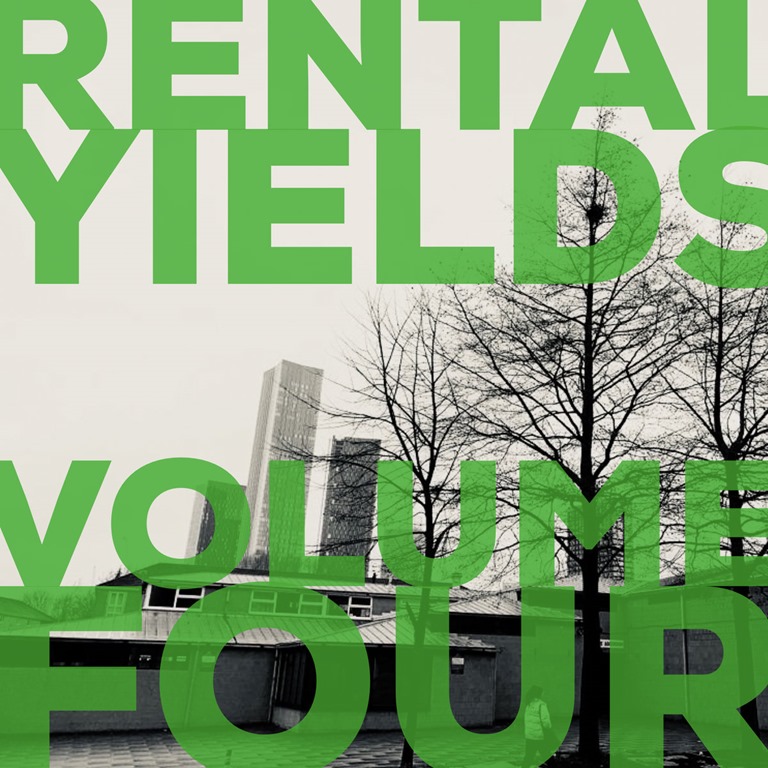
Longtime Aural Aggro faves Front & Follow have delivered the third in their series of truly immense Rental Yields compilations, with another twenty-five tracks of remixed works which showcase the community spirit they espouse as a label and among those in its orbit.

They describe it as ‘a multi-release collaboration project raising money to tackle homelessness in Manchester… Inspired (if that’s the right word – perhaps ‘motivated’…) by our current housing system, the project encourages artists to steal (or borrow, nicely) from another artist to create their own new track – in the process producing HIGH RENTAL YIELDS. Over 100 artists are now involved (the spreadsheet is fun), each one tasked with creating a new track from the sounds created by someone else – we are then collating the tracks and releasing them over the course of the next year.’

Some would describe the project as ambitious, others as simply crackers, and it’s likely both in equal measure, but this is why we love F&F. That, and the fact that they seem of have a knack for attracting and releasing interesting artists who exist far beyond the peripheries of any kid of commercial radar (or even most alternative radars).

This compilation really does make the most of the medium: unrestrained by the limits of vinyl, cassette or CD, and has a playing time of about a week. Yes, I exaggerate, but the point is, each contribution is the length it needs to be, or the artist feels it ought to be, rather than cut or constrained, meaning that while a fair few pieces sit around the five minute mark, the Decommissioned Forests vs Pulselovers rendition of ‘Rental Yields’ runs for nine minutes and forty-four seconds, ahead of the ten-minute workout that is IVY NOSTRUM vs The Snaps Jar’s ‘AND MONEY LESS’ and a few other six- and seven-minute monsters.

But what is time, anyway, and what’s it for? As much as it’s a measure of time, it’s a tool by which lives are ordered, limited, constrained, controlled. The vast majority are paid work by the hour, not by output, and time on the clock is not your time, but your employer’s. You don’t own your time, and you don’t own your space, and you give your time to some company who profit from your time and output in order to pay for a roof over your head, a space to eat and sleep, for the profit of a landlord or a bank you owe tens, even hundreds of thousands.

How often do you hear people shrug about their shit jobs saying ‘well, it pays the rent’. Imagine lying on your deathbed, reflecting on a lifetime of drudgery to say ‘I paid the rent’, while your landlord’s spent their life living it up in restaurants and on overseas holidays and celebrating their success because you’ve paid their rent too.

Audio Obscura VS Secret Nuclear’s ‘Vacant Period’ opens the album with an apposite sample from a TV show discussing gross and net yield before embarking on a glitchy, flickering journey of droning industrial Krautrock, and paves the way for an extensive and magnificent-curated collection of variant forms of ambience. Pettaluck Vs Giant Head’s ‘Dot to Dot’ is disorientation yet soothing and hypnotic – and fucking strange. But we like strange, and Front & Follow provide plenty.

If it’s a long, long listening journey of crackling stating, looming darkness, bleeps, bloops, and extraneous noise intercut with snippets of radio, film, and TV, and ultimately forges an immense intertext of sources.

Sometimes it’s swampy, eerie, tense, others it’s quite mellow and finds a subtle groove, but Rental Yields is unyieldingly brilliant, both in terms of range and quality. And you really can’t go wrong for a fiver – the worthy cause is simply a bonus.

a2023857748_10

Cruel Nature Records – 2nd December 2022

Christopher Nosnibor

Having raved about Pound Land’s second album, Can’t Be Arsed back in March, I was pretty thrilled to find the follow-up landing so swiftly. What with the exponential rise of Benefits, and acts like Polevaulter emerging, it seems that now is a good time for angsty, angry music with noisy tendencies and gritty sociopolitical leanings. Of course it is: it’s a sign of the times, and besides, it’s not a good time for anything else, unless you happen to be a non-dom billionaire or a CEO at an oil company.

If Sleaford Mods set a new template for the paired-back duo setup as being in vogue before the pandemic, the combination of lockdowns and crippling economic circumstance has rendered this an operational necessity for many musicians.

Pound Land may be up to their elbows in grimy dishwater and wading through excrement in streets where the drains and sewers are backed up due to torrential downpours and a lack of council funding, but they share little common ground with Sleaford Mods, and that’s despite favouring repetitive monotonous Krautrock-inspired grooves over dynamic structures: Pound Land are far doomier, dingier, lugging their way closer to sludge metal than anything you could possibly dance to.

The Stockport duo’s third album is a monster slab of punishing, gut-dragging, bass-heavy grimness, and one has to wonder how much to read into the title. The people are weary, ground down: will they rise up, or curl up and give up?

The blurb points out that the album finds the Stockport band pushing their ‘post-industrial kitchen-sink drama preoccupations even further on Defeated, exploring the dark comedy of everyday life in the dismal land of eternal recession. Sometimes the vision expands out of shitty Britain too, ‘Drone’ recounting the wearied observations of an electronic device as it traverses the globe… You’ve got to laugh, because if you don’t you’ll kill yourself. Or somebody else.’

The laughter is pretty dark and pretty hollow, though, and derives as much from the keen observations as any particular knack for a punchline (a line about mobility scooters with Northern soul stickers on stands out as particularly pithy) and the stark musical backing isn’t especially musical, more of a pounding trudge that provides a backdrop to an endless stream of vitriol and bleak depictions of the everyday, from pavements caked with dogshit and news items about rising fuel prices and their effect in the average household. If it sounds mundane, it is, but then we need art that speaks to us about life as we experience it, and the majority know far more about scrabbling for change to buy a loaf of bread than luxury cars, watches, and clothes.

‘Violence’ is their equivalent of Public Image Ltd’s ‘Theme’, a brutal, sprawling, brawling, squalling monster that opens the album with a relentlessly heavy battering ram of a racket, like Sunn O))) with a howling harmonica and sneering Lydonesque vocal. It crushes your skull, before it fades out swiftly and unexpectedly, which somehow works. But maintaining the PiL comparison, it’s Metal Box that is perhaps the closest similarity, in that the album as a whole is diverse, fractured, unpredictable.

‘Carry On Screaming’ sounds like The Fall in a three-way collision with Yard Act and Melvins. It’s a mangled mess of drum machine beats and psychedelia and noise with a monotone vocal drawl.

Against a thumping dirge of a noise, a grating mesh of distortion and dolorous drum, the title track is a gnarly hybrid of early Swans, and elsewhere, as on ‘Sick Day’, it becomes less about songs and more about spoken word narrative delivered against a backdrop of mangled noise, and at times, it’s pretty harrowing. Lyrically, Pound Land don’t pretty things up. Sonically, they don’t either. It’s magnificently raw and un-produced, and this is no more true than on penultimate song ‘Pathogen’, a dirty slow stomp that’s pure rage and invites comparisons to Uniform. And it sounds like it was recorded on a phone from the next room.

‘Drone’ sneers and snarls like Lydon at his best, closing with a venomous refrain of ‘fucking twat’ delivered in a thick, spitting Manchester accent.

Defeated may only contain eight songs, and only a couple of them extend beyond the five-minute mark, but it’s feels immense, and experience that’s exhausting both physically and mentally. Listening, you feel the weight of the world condense and compress as the angst and anguish press down ever darker, ever denser. It’s a bleak, suffocating document of everything that’s wrong right now. This is the sound of broken Britain, and it’s a harrowing insight into just how fucked everything is. But in this channelling of nihilistic anguish, you realise you’re not alone. It doesn’t change anything, but it’s something to cling to.

AA

cover

Cruel Nature Records – 2nd December 2022

Christopher Nosnibor

Seems I’ve blinked and missed a while slew of releases from Ontario experimentalist Clara Engel since writing about Hatching Under the Stars in the spring of 2020. Then again, the spring of 2020 doesn’t so much feel like a lifetime ago, as much as it does another life. Released on 5th April 2020, we were only just over a week into the first lockdown here in England, and we had no sense of what was to come.

As the blurb outlines, the album was ‘recorded entirely at home / solo’ and ‘Their Invisible Hands presents 13 tracks of subtle dream-like beauty… A mystical work, mixing classical and dark folk wanderings with misty soundscapes, which creates an abstract, new world atmosphere.’ Self-released in April digitally and on CD, Cruel Nature are giving it a cassette release.

In a way, returning to Clara’s work now is a powerful, and grounding experience. What has happened in the space between? Everything…and nothing. As they explain in the accompanying text, replicated on their Bandcamp, “I’m not writing the same song over and over so much as writing one long continuous song that will end when I die.”

If the last couple of years or so have reminded us of anything, it’s our mortality. And the sound of Their Invisible Hands is both spiritual and earthy. To unpack that, the sparse instrumentation, which consists predominantly of creening woodwind, chiming, picked strings, and hand percussion, has a simple, primitive aspect to it, and the slow, rhythmic undulations are attuned to elements of nature, as grounded as the act of breathing. ‘Dead Tree March’ is exemplary, a long, expansive drone that pulses in and out, repetitively, hypnotically, a sparse guide to a meditation.

Engel’s vocals, meanwhile, are ethereal and other-worldly, with a primal folk leaning that moves effortlessly between narrative and incantation, both of which tap into that subconscious part of the mind that it seems only music and nature can reach.

These themes of nature and of the ancient, of thoughts and tales lost in time, are constants in Engel’s work, giving credence to their comment about writing one long continuous song. In this context, it’s easy to see their entire catalogue as an interrogation and exploration of a quite specific field. Engel’s world is one full of magic and mystery, cryptids and magic beans and magnificent birds which sing. These songs are steeped in atmosphere and wonderment.

‘Ginko’s Blues’ is perhaps the most overtly classical piece on the album, a sparse composition led by picked acoustic guitar that calls to mind a stretched, dispersed rendition of Beethoven’s ‘Ode to Joy’, as it’s slowly dragged into a sea of scratched strings and gauze-like reverb.

Dissecting Their Invisible Hands too hard is to misunderstand its nature. It’s not an album to pick apart for the various elements, or even to comprehend its structures, origins, or meanings: any attempt to do so is to demystify its resonance. ‘It’s all fun and games ‘till somebody shows you their heart.. on a platter on a stake on a riverbed rusted…’ they sing on ‘High Alien Priest’. The metaphorical and the literal blur unsettlingly.

You shiver and find yourself mute as Engel leads you through an array of evocative soundscapes. All you can do is let go, and to explore them.

AA

a0799919546_10

2182 Recording Company – 2nd December 2022

Christopher Nosnibor

While books have blurbs that likely indicate whether or not you want to read them, records are altogether less pitch-orientated in their physicality, which, back in the day, used to make sifting through vinyl in shops and at record fairs an exercise which was a measure of one’s attitude to risk. Sometimes you’d take a punt on a record because you’d heard of the band and they sounded interesting, others, you’d go by the label or the cover or something.

Some traders – and this is something Jumbo records in Leeds still do – is put a short summary on a sticker on the PVC sleeve the record is stored in.

The virtual equivalent, for me, is scanning press releases. No way can I listen to everything I receive, let alone write about it, and some nights my inbox feels like flicking through boxes of records, unsure of what I actually want to hear until I find it. And lo, as I wander, aimless and befuddled, fatigued from another day of corporate chairpounding to keep the roof over my head and the bills paid, I stumble upon Damage Mécanique by Diminished Men. I’ve never heard of them, but on reading the pitch, I felt as if this was the thing I needed but didn’t know I needed until I found it.

Drawing from elements of film noir, psychedelic exotica, experimental rock, deviant surf and musique concrète, Diminished Men refocus their influences into something entirely unique. Collaged with menacing electricity, the raw materials are broken up and reassembled in their crude private facility. The group has spent more than a decade crafting their style and have established themselves as an integral part of Seattle’s underground music scene.

Their latest record, Damage Mécanique, thrusts the listener into a malfunctioning industrial sci-fi soundscape. Trance inducing guitars beckon with haunting wails, high-tension wires spin and spit with a crackling hiss. Circular kosmische rhythms and anxiety-drenched beats destroy and rebuild around fractured melodies and noise. The band oxidizes and melts into experimental post-punk and acousmatic environments as hypnotic groove and vertigo copulate in cinematic assemblage.

And there’s no question that they’ve got pedigree: drummer Dave Abramson is also a member of Master Musicians of Bukkake, Spider Trio, and has collaborated with Eyvind Kang and Secret Chiefs 3 among many others.

As ‘Double Vision’ crashes in amidst clattering, explosive percussion and dingy bass, I’m hauled by the collar into the realms of early industrial in the vein of Test Dept and Perennial Divide, and instantly, I’m home, knowing that this was indeed what I needed. It’s sparse in terms of arrangement, but dense in terms of sound, and it’s abrasive, rhythm-orientated, loud, heavy, and batters away at the brain.

It may seem counterintuitive to suggest that when your thoughts are in a mangled disarray and your focus is no-existent that the answer lies in music that bashes you round the bonce from all directions at once, but for me, at least, it’s infinitely more beneficial than any kind of chillout shit or ambient – although amidst loping, rolling rhythms, ‘Wet Moon’ conjures a shimmering ambience of sorts, while pointing towards esoteric oddity.

‘The Maze’ confuses and confounds with its daze-inducing cyclical riff and motoric beats which are pure Krautrock, evaporating into a mist around the mid-section of its six-and-a-half minute duration that sees it build through a jazzy post-rock segment before tumbling back into that nagging, dislocated groove – and it’s a nagging dislocated groove that dominates the wig-out weirdness of ‘Panopticon’. It’s likely of help to no-one to comment that it sounds like Murder the Disturbed but with the wild sax of These Monsters, but there it is: obscure post-punk collides with obscure jazz-infused noise rock, and it’s a corking way to end the first side of the album.

If ‘Axiel Tremors’ suggests rock excess played at a crawl, then it’s equally dragged out via some expansive jazz expressions into the realms of darkness. ‘Silver Halides’ brings a bold, brawling swagger to a cautious and subdued party of picked guitar introversion, and the final piece in this mismatched musical jigsaw, the six-minute ‘Spy’ hits the groove and drives it out of the door – while the door is still closed. Just as they clearly know how to make an entrance, they obviously understand the importance of a memorable exit.

There’s no particular or overt theme which unifies Damage Mécanique, and nor is there really anything that’s obvious stylistically speaking, as the album tosses a whole load into the mix and feels, in many respects, quite introspective in its influences and inspirations. There are, however, strong and unusual contrasts in evidence, with doomy bass and twanging desert rock working in tandem to forge a unique sonic experience., alongside, well, you name it. Quirky, atmospheric, Damage Mécanique is odd, but also compelling. It could be just the album you need, too.

kHz-1009_front

Birdfriend – 2nd September 2022

Christopher Nosnibor

Gintas K is at it again! Last year I was compelled to break my vow not to listen to, or write a word about any Christmas-themed releases on account of his album, Christmas Till the End, released on December 25th, and now, just when I’m getting into full foaming at the mouth mode over how there’s Christmas stuff everywhere since the week before Halloween, I discover he dropped an album bearing a title with overly festive connotations, which was, in fact, released at the start of September – and which was recorded in July!

Jingles With Bells was, like a number of other works, recorded live, using computer, midi keyboard, and controller.

Despite the album title being in English, and offering something of a play on words with jingles suggesting advertisements as well as festive chimes, the track titles are in K’s native Lithianian, and I’m not entirely sure I trust Google translate when it tells me that ‘irgi dugnai auksti ir aopacia garsai gerai visai’ is ‘the bottoms are also high and the background sounds are quite good’ – although it is a fair description of the six-and-a-half-minute opener. It begins with sparse drips and drops echoing as if in a giant cave, before Kraptavičius introduces his trademark flickering electrostatic glitches and whirs. The layers build as crunches and crackles clamour into a frenzy of fucked-up robotics.

Stammering, fractured beats collide and disperse in all directions, a wheezing, groaning, creaking array of electronic simulations and rapidfire thumps like hammers and nail guns, jazz percussion and despite the complete absence of any actual percussion, Jingles With Bells is marked by a complete absence of any actual beats, instead being driven by clattering short sounds that resemble beats and even trick the ear and mind with their (ar)rhythmic explosions. The last thirty seconds of the seven-minute ‘is to pacio tesinys geras’ (which may or may not translate as therefore the continuation is good’ is marked by silence, and it’s a welcome reprieve from the blindingly busy blitzkrieg blast.

‘istisinis is to pacio’ is a snarling drilling grind of bass, but also introduces the first jangling treble that might pass at a distance as a jingle, but it more resembles a dentist’s drill than sleigh, and the whole experience is less jingle and more nerve-jangling and uncomfortable.

Echoic droplets and sounds reminiscent of jangling jamjars trickle through the album, and the ten-minute monster that is ‘varpeliai noiz bugn bosas neblogai’ (‘bells noiz bugn boss not bad’ – yeah… nah) begins with what sounds like a bath being run down the plug and a crackling blast of blocks of distortion against – finally – chimes. But against a creaking croaking, cracking low end like the bow of a wooden ship breaking against rocks in a storm, those melodic tinkles soon build to forge an oppressive, head-compressing sonic torture; it’s simply all too much. But too much is never enough, and as such, it all adds up to another album that bears all of Gintas K’s quite unique hallmarks forged from some mangled laptop machinations, manipulated in real time.

AA

cover

14th October 2022

Christopher Nosnibor

Our last encounter with Brighton band Dog of Man was on the release of the single ‘Hello MI5’back in the spring. A frantic, frenetic genre clash, it proved to be quite an eye-opener.

And how, here we have the album, which they describe as ‘music to lose your shit to, a ritual of intense catharsis’, ‘delves into neuroses, madness and breakdown, delivered with punchy grooves, spidery guitar lines and gloriously distorted accordion.’

Wait, what? Accordion? This is not an instrument one tends to associate with any kind of heavy psych / weird indie / thrashy (post) punk hybrid, but then, Dog of Man do their own thing and make music their way.

The title is, thankfully, ironic. Instead of jaunty indie or breezy upbeat yacht rock Everything is Easy, the band promise an album that ‘delves into themes of neuroses, madness and breakdown – all set to punchy grooves, spidery guitar lines and fizzing accordion.’ Well, if it’s fizzing, maybe it is the instrument of choice.

Single cut ‘Turpentine’ blasts in with some ramshackle guitar that’s rushed and urgent, and as much as it’s indie with hints of The Wedding Present and early Ash, as well as contemporaries Asylums, and sets the manic pace for the album, which sees them skidding into the skewed shanty, ‘Accidentally Honest’. ‘Have you ever been accidentally honest?’ they ask. Well, have you?

With ‘No Click, No Edits’, this is properly rough and ready, raw and immediate, seemingly growing in pace and intensity as the album progresses. ‘Stroudits’ is both punky and theatrical with a dash of The Stranglers in the mix, before ‘Lurking in the Overnight Bag’ goes blues metal with a roustabout pirate slant, and reading that description back makes it sound absolutely shit, but it’s a work of twisted manic genius condensed into aa sub-two-minute adrenaline blast. Doorsy keyboards and nagging guitars reminiscent of Orange Juice are pulped together on ‘Headonastick’ before it shifts from being a driving racket that calls to mind Pulled Apart by Horses before veering off into a hoedown for the break. Are these guys nuts? It seems probable.

There’s just so much going on here; the chaotic cacophony of Gallon Drunk played with the swagger of Led Zeppelin and harpooned by the energy and knowingness of Electric Six are all packed together to tightly it’s impossible to really pick it apart or really fathom why it works, let alone has any kind of appeal. But perhaps the mystery is the appeal. When something is so crazy it shouldn’t work but does, it’s both because and in spite of it. And they make it sound so effortless.

AA

Dog Of Man Artwork

Septaphonic Records – 7th October 2022

Christopher Nosnibor

While Dystopian Future Movies’ ‘difficult’ second album, Inviolate, took a full three years to land after debut Time, their third, War of the Ether crashed in after just over two, and it’s an immense sonic documents that the Nottingham trio have compiled in this time.

Back in the spring of 2020, I wrote of Inviolate that ‘Everything about Inviolate is bigger, bolder, more pronounced and yet more nuanced, shaper and more keenly felt and articulated. And every corner of the album is imbued with a sense of enormity, both sonic and emotional: Inviolate feels major-scale, from the driving riffs to the heartfelt human intensity.’ That amplification is again true of War of the Ether. Dystopian Future Moves’ previous releases amply demonstrate a band with both an interest in and a knack for the cinematographic, the dramatic, so it stands to reason that they should extend these focal elements here.

This time around they’ve drawn inspiration from little-reported but truly horrifying events which took place at the former Catholic-run Tuam Mother and Baby Home in songwriter Caroline Cawley’s native Ireland, where 796 skeletons found in the grounds after suspicions were raised by a local historian in 2012. As the press release explains, ‘to hide the shame of pregnancy outside of wedlock, women were sent to homes like this all over the country – forcibly separated from their mothers, many of the children died in infancy due to neglect, and some were trafficked for adoption to the US. The country is still dealing with the fallout from these discoveries.’

War of the Ether is not a joyful record. It is, however, a record with real depth, and imbued with real emotion, as well as an aching sense of tragedy. And, as has been established as Dystopian Future Movies’ signature style, it’s an album which balances riffs and restraint, and is built on atmosphere and menace. They promise an album that ‘explores a wide range of genres from prog and shoegaze to doom-metal, noise-rock and folk,’ and don’t disappoint.

DFM 3 Portrait Photo 2000px WEBSIZE

War of the Ether opens – somewhat daringly – with the ten-minute spoken word crawler that is ‘She From Up the Drombán Hill’. For the most part, it’s sparse and spare, tingling guitars gently rippling behind the narrative – but there are bursts off noise, and it swells and grows and when it kicks in, it kicks in hard with piledriving riffage. The dynamics absolutely blow you away – exactly as intended. ‘Critical mass’ is appropriately titles, starting out with a haunting, echoed clean guitar and delicate drums rolling in the distance as a backdrop to Cawley’s aching, melodic vocal as it stretches and soars, and ‘The veneer’ is a magnificent slow-burner that builds to a shimmering sustained crescendo which unusually fades at the end. Against the weight of the subject matter and brooding instrumentation, it feels somewhat frivolous to focus on a fade, but it serves to highlight the many ways DFM are outside trends and exist in their own space. This is never more apparent than on the dreamy but serrated buzzing shoegaze of the title track.

For all its darkness, War of the Ether is a remarkably accessible album – not on account of its myriad hooks and killer choruses, but because it is simply so strong on melody and so utterly captivating. And because, as they demonstrate admirably on ‘No Matter’, the album’s shortest and most overtly structured song – they do have a real knack for snagging the listener with the combination of tunefulness and megalithic riffery. And then, the final track, the eight-and-a-half-minute ‘A Decent Class of Girl’ brings together all aspects of the album in a powerful accumulation of sedate, strolling psychedelia and climactic crescendos that optimise the impact of both.

Magical, majestic, and immensely widescreen, the scope of War of the Ether is simply breathtaking, and leaves you feeling stunned. Awesome in the literal sense.

AA

DFM 3 Album Cover Artwork 1500px

18th November 2022

Christopher Nosnibor

Following on from big-hitting introductions in the form of single releases ‘A Working Class Lad’, Manchester’s The Battery Farm hit us with their debut album, Flies.

They describe it a ‘an album about end times fear and societal breakdown. It is an album that tries to come to terms with the violent world we find ourselves in, and tries to reconcile with an uncertain future in world that we have decimated. It’s about the endless, screaming noise of 21st Century living and the squalid claustrophobia that entails. Driven by fury, black humour, compassion and a desire for hope.’

These are all things I’m on board with: it’s essentially a list of the top things that gnaw away at my psyche and my soul on a daily basis. Because to live in the world right now is to live and breathe all shades of anxiety.

Some people – mostly right-wing wankers and idiots on social medial, especially Twitter – like to jeer and poke fun at those who intimate any kind of panic over the state of things, laughing their arses off at those who perpetuated ‘project fear’ and the so-called ‘remoaners’ and scoffing at the idea that this year’s heatwave is anything to do with climate change citing the summer of ’76. But these are the same tossers who whine about health and safety and speed limits as being symptomatic of a ‘nanny state’, and also the same tossers whose kids will die after swallowing batteries or burn the house down lighting fireworks indoors.

What I’m saying is that anyone who isn’t scared is either beyond oblivious or in denial. The world is literally on fire and drowning at the same time. Fittingly, Flies is an album of contrasts, both in terms of mood and style. There are fiery, guitar-driven flamers and more introspective compositions which are altogether more subdued and post-punk in their execution.

BatteryFarm_Edits-7

The title track is but a brief introduction, a rushed, desperate spoken work piece set against – at first – a tense bass and a growing tide of swelling drums and guitars that in just over a minute ruptures into a full-on flood of rage. Distilling years of anguish into a minute and a half, it’s got hints of Benefits about it, and then we’re into the snaking groove of ‘A Working Class Lad’, that sees The 80s Matchbox B-Line Disaster collide with The Anti-Nowhere League in a gritty, gutsy punk blast with a surfy undercurrent.

It’s the combination of gritty synth bass and live bass guitar that drives the sound of the album. The former snarls, while that latter thuds, and in combination they pack some serious low-end punch in the way that Girls Against Boys and Cop Shoot Cop did. The synth gyrations also lend the sound a tense, robotic edge that gives it both a certain danceable bounce while at the same time heightening the anxiety of the contemporary, that sense of the dystopian futures so popular in science fiction are in fact our current lived reality.

‘In the Belly of the Beast’ is a stuttering blast of warped funk. In contrast, ‘Everything Will Be Ok’ is altogether more minimal, with hushed spoken word verses reminiscent of early Pulp, and tentative, haunting choruses which exude a subtle gothic vibe. And it all builds slowly, threatening a climax which never arrives. But then ‘Poet Boy’ drives at a hundred miles an hour and burns hard and fast to its finale in three and a half minutes.

‘DisdainGain’ comes on like Motorhead at their grittiest and most rampant, and again shows just how broad The Battery Farm’s palette is. By their own admission, they draw on elements of ‘Punk, Hardcore, Post Punk, Krautrock, Glam and Funk’, and one of the key strengths of Flies is its diversity – although its range does not make for a lack of coherence or suggest a band who haven’t found their identity, by any means. What’s more, the diversity is matched by its energy, its passion, and its sheer quality. Full of twists and turns and inspired moments of insight, Flies is a bona fide, ball-busting killer album. Fact.

AA

IMG-20221001-WA0006

Efpi Records – 18th November 2022

Christopher Nosnibor

Time flies when… life. And especially when a pandemic and a series of lockdowns rob you of two tears of doing anything. And so it is that Let Spin are marking the ten-year anniversary of their fourth album, Thick As Thieves.

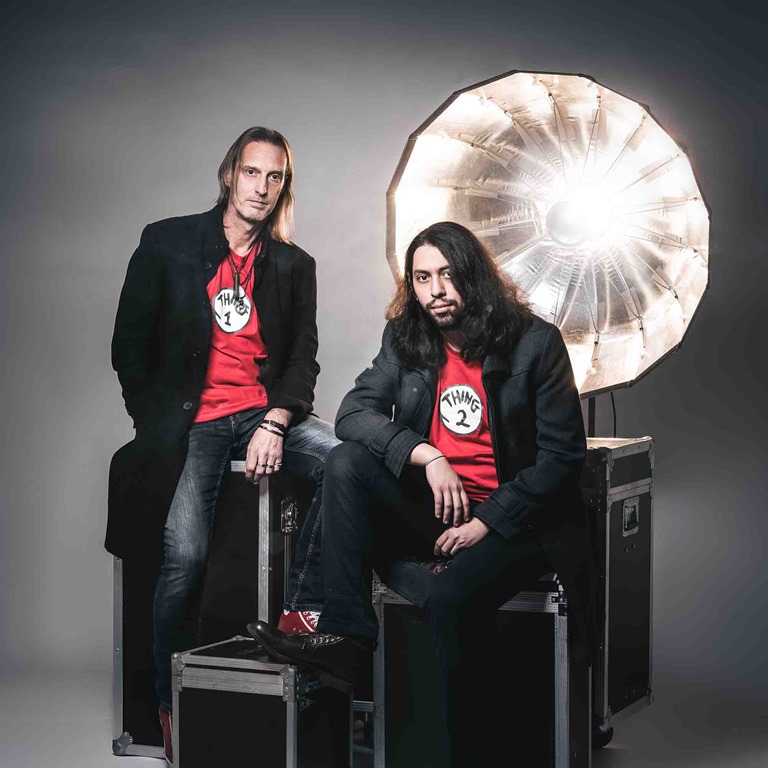
The band are something of a supergroup: Formed in 2012, Let Spin feature four highly acclaimed musicians: Ruth Goller (Melt Yourself Down, Vula Viel), Chris Williams (Led Bib, Sarathy Korwar), Finlay Panter (Beats & Pieces Big Band, Sound 8 Orchestra), and Moss Freed (Union Division, Spike Orchestra), and Thick As Thieves features ten segued tracks of what they describe as ‘adventurous post-rock, experimental jazz’.

Thick As Thieves may be a cliché, but the music it contains is anything but. In fact, quite the opposite is true. Much as it subscribes to aspects of both jazz and post-rock, it’s an exploratory instrumental set that doesn’t really conform to any specific genre trappings, instead borrowing from them in order to form a unique hybrid.

While it’s largely driven by some crunched-up, noodling guitar work, Thick As Thieves very much mines an overtly jazz theme, and while it starts out quite gentle and doodly, on the third track, ‘Red’ it takes a hard lurch into altogether nor challenging terrain, and not just because it gets louder and more percussive: it’s altogether more jarring, the tempos and signatures tumbling into stop/start confusion before the brass ruptures into a cacophonic maelstrom.

‘Broken, I Told You!’ brings a chubby, strolling bassline that’s got some serous groove in a stuttering sort of a way and packs in some deft runs that weave in and out of the wild woodwind and jittery guitar work that’s disorientating and discombobulating. It’s pretty much ok that this feels a bit weird and woozy: it needs to be. ‘North Sea Swim’ takes things down a way and meanders along before swerving into ‘’Mixed Messages’. ‘Bead’ is perhaps the most overtly post-rock / jazz hybrid work, an expansive succession of crescendos with a soaring sax undulating into waves of stratospheric reverb. Closer ‘Liminality’ is almost nine minutes long, and is a space-rock jazz monster that’s absolutely dizzying.

This is one of those albums that not only feels like its album status is essential – you don’t seek out or skip to particular tracks, but experience it as a whole – but there’s a keen sense it would lend itself nicely to being performed live, in its entirety. It flows from end to end, with judiciously-placed peaks and troughs. The ten songs may be marked out individually, but this really feels like a single continuous piece segmented out into ten slices, and it’s a listening journey. At times intrepid, at times curious, it’s got a lot going on, often all at once. Brace yourself!

AA

LS03 Thick As Thieves FRONT