Posts Tagged ‘Acoustic’

skoghall rekordings – 19th June 2023

Christopher Nosnibor

This was originally released some time ago, and now it’s getting a digital release and a CD reprint once the last of the old stock is gone, and it’s the first release on Dave Procter’s new label, skoghall rekordings, which he’s set up to home non-noise material which doesn’t sit comfortably with the remit of his Dret Skivor label. If I didn’t know better, I’d think this guy had mastered cloning, given the release and touring schedule of his myriad musical projects, the range of which is vast – although it’s fair to say that anything involving words will be a politically-charged vehicle for reminding us how shit governments, right-wingers and tabloid media are, and how capitalism shafts the workers without whom there would be no wealth for the elite. And so it is with Sounds from Underground.

‘Justice for the 95’ say the notes accompanying this release, some of the proceeds of which are being donated to the Orgreave Truth and Justice Campaign.

Memories are short, even among those who live through momentous events in recent history, and the miner’s strike of 1984-85 was one of those. It wasn’t simply a strike like we’re seeing with… most sectors right now, in what feels almost like a replay off the early 80s… the handling of the strikes was tantamount to civil war, the (Tory) government against the workers and the unions. The 95 then, refers to the 95 arrested at the so-called ‘Battle of Orgreave’ in South Yorkshire in June 1984, but all charges were dropped. As the BBC reports, ‘Police confronted pickets outside a coking plant in Orgreave, South Yorkshire, in what the miners said was a military-style operation to attack them… Former miner Kevin Horne said: “We were only striking for the right to work.”’

This is by no means the first musical work which focuses on the miner’s strikes: Test Department’s 1985 LP Shoulder to Shoulder, with South Wales Striking Miners’ Choir was released as a fundraiser, while ‘Statement’ from 1986’s The Unacceptable Face of Freedom is centred around a recorded statement detailing the brutality of the policing of the picket lines: ‘25 pickets… 150 policemen… I was dragged off to this van… another one had me in a headlock… I thought I was going to black out…’ It’s a harrowing account, and one which seems as relevant now as ever given the current government’s expansion of police powers, promoting greater use of stop and search, and the police’s ‘management’ of events like Sarah Everard’s vigil. It’s all too reminiscent of A Clockwork Orange.

As the accompanying notes outline, ‘This LP documents coal mining in all its forms – the pride of the job, the struggles of the job and the occasional deaths because of the job. A lot of my family were coal miners and most of them died from lung disease before their time.’

Yes, the miners got fucked every which way, and while the twelve acoustic-based songs on Sounds from Underground may not be as visceral or hard-hitting as some of Test Department’s works, they’re truly heartfelt. And that registers, emotionally.

While ‘Fiddler’s Ferry’ is a simple and wistful song that would perhaps class a s a sad protest song, the super-sparse ‘Macgregor th’ butcher’ is heartaching in its mood and the simple narrative. Similarly, ‘At the Face’ is simple and tells of the everyday realities of mining life – and the physical toll on those men who grafted and grafted, until death. It would be easy to romanticise the northern accent and barely-held melodies, but the fact is, it works because it’s real, and ultimately sounds like The Wedding Present covering Billy Bragg, if you need a comparison.

‘Me, A Picket Line’ and ‘Horse’s Arse’ are straight-up spoken word pieces, and perhaps the album’s most affecting tracks, because they’re so direct, the latter in particular, echoing as it does the narrative of Test Department’s ‘Statement’. But ‘Horse’s Arse’ references 2016, and you realise, nothing changes, and while sometimes things are reported and there is outcry and uproar, so often, events are ignored out of existence, and the narrative becomes skewed, rigged. But mention that and you’re a conspiracy nut, of course – more often than not dismissed by the conspiracy nuts. ‘Tory Twat’ is self-explanatory, and getting straight to the point.

And this is perhaps where we can see how Guerrilla Miner and Test Department share common ground, beyond subject matter: as much as they’re both political – because this is political, and it’s impossible to avoid or deny that this has a heavily political aspect – they’re both ultimately concerned with the human aspects of the miners’ strikes, and this in turn reminds us that the current strikes, too, are about people and their livelihoods. You will see reported, time and again, the government vilifying the striking workers for the disruptive impact of their industrial action. But any a striking worker will tell you that striking is a last resort, the only way to be heard when all avenues have failed, and if strikes are disruptive to consumers, they’re even more so to those striking. And it’s rarely simply over pay, but also conditions: and at the heart of it all lies capitalist exploitation, and such exploitation shortens and destroys lives, placing profit before people. And this is what really hurts.

Sounds from Underground is direct, real, human, affecting and ultimately sad. Listen, learn, and do everything within our power to stop history from repeating again, and again.

AA

kents lane 2 - LP art for bandcamp

5th May 2023

Christopher Nosnibor

Back in the day – that is the 80s and 90s and the time before YouTube and pretty much all things Internet – bands of a certain status would find their live shows being released first as crappy tapes on market stalls with even crappier photocopied sleeves for £3.50 a pop, and later, on CDs which flooded record fares at £12 a go (and for the bands with a real cult following, the late 880s and early 90s there were heaps of vinyl pressings, too). Most of them sounded terrible, but fans lapped them up because they’d buy anything, especially from a show or tour they’d attended. And it wasn’t always the biggest artists who were the most heavily bootlegged: it tended to be the bands with the most hardcore cult followings, which explains why The Sisters of Mercy were more bootlegged than Prince.

The Internet and YouTube and technology in general has changed things rather, in that anyone with a smartphone can upload footage of a show within seconds of the event, even sharing, say, an unreleased song in real-time. But if the quality of 80s audience recorded live bootlegs was ropey, shaky footage of an artist shot on a mobile phone from the third row while the individual dances, slightly drunk, while being jostled about is infinitely worse.

This is where the self-documenting methodology of acts like Throbbing Gristle are the answer. ‘Beat the bootleggers’ was a slogan I heard in the 90s. I always thought it was fair in principle, but the kind of people who bought the shitty tapes at the market already owned everything on every format, so the idea that they were stealing from the artist seemed questionable. Anyway, some acts made it work for them, with Throbbing Gristle’s 24 Hours box set, which contained tapes of their last twenty-four live shows, making most of the boxes different from one another, being an obvious example.

Live 2022 EP 4 shares two tracks with its recent predecessor, EP 3, namely ‘And She Would Darken the Memory’ and ‘That Summer, At Home I Had Become the Invisible Boy’, both from their debut album and both set staples to this day. There’d be riots if they weren’t. And the point of these EP releases is really for the fans – the hardcore devotees who want to hear the details of the differences of the performances from every show, and I get it: consecutive nights on a tour can sound and feel so different, dependent on so many variables, not least of all venue, location, audience, band. If you’re not convinced, go and watch and compare a band playing Glasgow and Nottingham on consecutive nights.

This EP, recorded in Belfast, is certainly different from its predecessor, recorded in London, not least of all because this is an acoustic set performed by James and Andy alone, and it contains six songs against the four off the last one. Personally, a large part of the appeal of The Twilight Sad is the ear-splitting volume and intensity, but as these versions highlight, they’re a consummate live act.

‘VTR’ is a song that loses none its potency with a stripped-back arrangement, while ‘Last January’ lends itself particularly well to the acoustic treatment with its aching melancholy emanating from every note with poised perfection. Much is often made of the passion behind James Graham’s vocals, but rather less tends to be made of the fact he has a magnificent voice, and it’s never been more apparent than here.

In context, ‘And She Would Darken the Memory’ doesn’t suffer from the absence of the blasting crescendo finale, and the quality of both the songwriting and the musicianship shine through.

AA

a1131340594_10

Ici d’ailleurs – 31st March 2023

Christopher Nosnibor

Matt Elliott, since breaking out from the Third Eye Blind moniker, has maintained a fairly steady flow of output, with an album every three years or so, with this being his ninth.

Farewell To All We Know (2020) and The Calm Before (2016) were just the most recent, with the former bring a dark, lugubrious affair: the title carried connotations of facing finality, something that doesn’t really sit comfortably in Western culture outside of the realms of art – and it seems that death has become an even greater taboo in recent years, with anything which references death, and particularly suicide – requiring a trigger warning.

Given that suicide is the single most common cause of death in males under the age of forty-five in the UK and a high on the tables in the US and many other countries, and that death is the sole inevitability in life, I feel it’s something to be faced up to, not shied away from. It may be a contentious view, but we don’t get to choose whether to leave the room in real life, so why in art? Perhaps bringing these subjects out into the open – in the same way as mental health has finally become accepted as being something we can discuss – would render them less triggering. Herein lies something of a contradiction, in that we now discuss mental health, but not the effects or consequences. And have we really broken the barrier on mental heath? I often hear or see people saying they’re not having a good day or week because ‘mental health’. It’s progress, in that historically people would have rather said they had the shits than were struggling – but there’s further to go, especially if we’re to be sure that ‘mental health’ doesn’t become the new ‘upset stomach’ that gets a pass from disclosing what’s really wrong. Not because prying is to be encouraged, but there’s talking and there’s talking, and if we’re really going to talk about mental health, then shutting a conversation down by using the phrase isn’t going to make that happen.

The press release suggests that Farewell To All We Know was ‘a harbinger of the collapsological crisis that was COVID 19. What can be built when everything is down, when everything has crumbled, ideals and beliefs, a sense of commonality and community?’ Of the new album, it poses further questions: ‘What is left when you are without words? What is left? Death, perhaps, but also life… What is left? A form of awe that dulls? An enthusiasm that dries up? A curiosity that no longer makes sense?’

As the title suggests, with The End Of Days, Elliott once again has his focus placed firmly on finality. And just fifteen minutes surveying the news suggests that we really are living at the end of days: plague, natural disasters… it’s not a question of if, but when, and how? Will climate change bring about the end of days for humanity, or will we wipe ourselves out with nuclear apocalypse before we reach that point?

‘All life’s wasted time’, he intimates on the title track which opens this delicate six-song suite – a sparse acoustic folk tune that has a lilting quality that’s easy on the ear. It sounds like he could be singing this sitting in a rocking chair by the fire, but brings a tear to the eye as he articulates the parental worries many of us – myself most acutely – feel.

And even all the smiles on children’s faces bring you pain

When you think of what they’ll face

And if they’ll even come of age

A world resigned to flame

Because we’ve burned it all away

You – I – feel so helpless. Turning down the heating, turning off the lights – you tell yourself you’re saving the environment, but you’re only making your life more difficult while industrial complexes around the globe churn out more pollution in a minute than any household will in a lifetime.

‘We need to wind time back to the eighteenth century before the industrial revolution and show them now’, my daughter told me over dinner this evening. She’s eleven, and she’s right, and I feel the anguish flow through me as the horns swell in a rising tide of warped brass atop the flamenco guitar in the closing minutes of this ten-minute epic.

It’s not the last, either. ‘Healing A Wound Will Often Begin with a Bruise’ is over eight minutes in length, and ‘Flowers for Bea’ is an immense twelve and a half. ‘Song of Consolation’ sits between folk and neoclassical and is achingly beautiful, but offers little consolation. Because what consolation is there?

Incorporating jazz and baroque, The End Of Days feels less darkly oppressive than its predecessor, sliding perhaps into bleak resignation to provide the soundtrack to the drinks in the basement bar on the last night on earth. Yes, tonight we’re going to party like it’s goodbye forever. This is the album to which to clink glasses and hug and cry and share final gratitude for those who have been there for us, made our lives worth living as we swallow hard and brace ourselves for the inevitable.

AA

IDA158_front

6th January 2023

James Wells

In my youth, I considered the likes of The Wonder Stuff and The Levellers to be ‘Indie Folk’, being, y’know, bands that were equal parts indie and folk, but apparently, I was mistaken, as the ever-reliable Wikipedia informs me that the former were al alternative rock band and the latter are folk rock. You live and learn, eh?

Indie folk, then, is Eliot Smith, Kristin Hersh, The Magnetic Fields, and Marc Todd. It’s a good job I did my research before making any judgement of Marc Todd, and I suppose there are hints of Magnetic Fields about ‘I Got Life’. It is, at least to my ear, more psychedelic than folk, but it’s an easy-going little tune, an easy-strumming, rolling melody with positive lyrics. There’s nothing demanding about it, but then, I guess for many, life’s demanding enough.

AA

Marc Todd Artwork

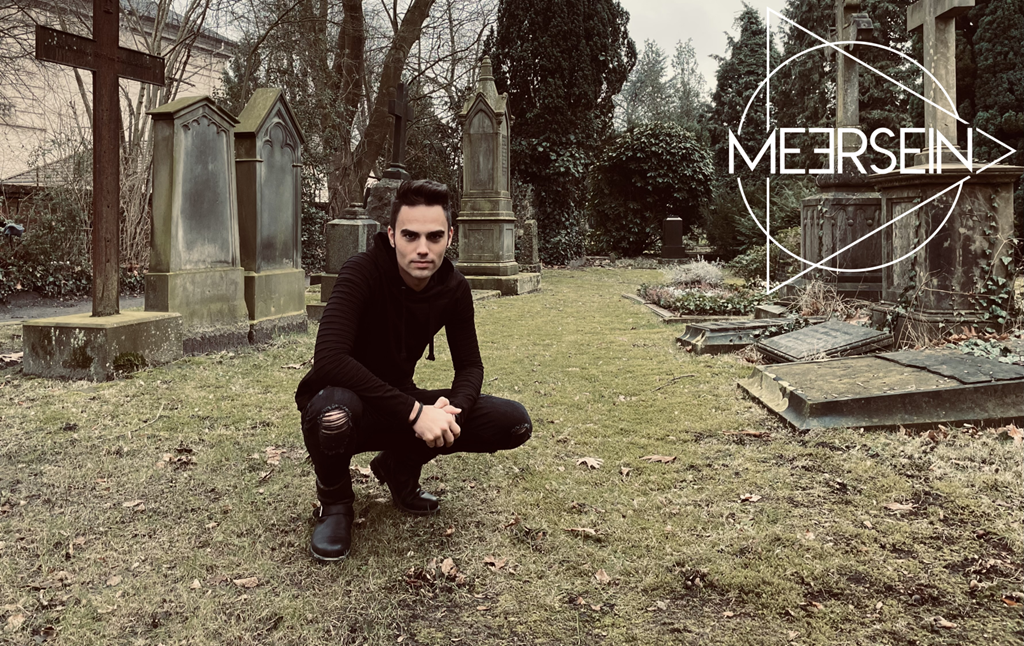
Synthpop artist, Meersein recently unveiled their third single, ‘Speechless’. In this acoustic version, which presents the artist’s first single in a stunning new guise, Meersein sums up the fear of failing someone who seems too good to be true.

We all live in a society that puts us under immense pressure; perfection instead of individuality. The fear of failing every day and not conforming to the norm hinders us even in something as natural and inscrutable as love.

With a minimalistic arrangement and soulful piano contrasting with Meersein’s classic synth-based electro aesthetic, the lyrics take center stage. The equally minimal lyric video helps invite you deeper into the heart of the singer. Both melancholic and affirmative, “Speechless” reminds you that you are not alone with your doubts. We are hundreds. We are thousands.

Do you know the feeling of being completely overcome by a sudden rush of emotion? You see that one person who makes your heart beat faster, and you are stopped in your tracks. All you can do is surrender to the awe of the moment. This is ‘Speechless’.

Watch the video here:

AA

b49cf472-fabb-4d5f-e6a9-dce568515c0b

14th October 2022

Christopher Nosnibor

I’ve likely mentioned it before, but on the one hand, Leeds has quite a distinctive sound, albeit one that’s evolved over the last decade, bit on the other, its scene is characterised by its diversity and eclecticism. It’s too be expected, of course: it’s a big city with two massive universities and a lot of small venues where artists can try out and develop their style and draw influence and inspiration from others. Time was when everyone was either doing instrumental post-rock or making a massive fucking racket.

Leeds based musician and recording engineer Rob Slater AKA Carpet belongs to the eternal production line of acoustic-based artists that’s not so much a Leeds thing but a music thing – but he himself is an integral part f the Leeds scene, having played in a number of standout bands, including Thank, Mi Mye, Post War Glamour Girls, and The Spills, as well as ‘working as a recording-engineer/producer from his own Greenmount Studios in Armley where, this year alone, his credits include Yard Act’s debut ‘The Overload’, as well as debut albums from Leeds peers Thank and Crake (with whom Slater plays drums, and who I reviewed just the other day for Whisperin’ and Hollerin’.

The press release promises ‘four tracks of thoughtful and introspective beauty, offering a compelling and unhurried insight into Slater’s musical world’. And it does that.

There’s nothing remarkable about the songs or their execution: Slater’s songwriting and execution is simply exactly as it should be: tight, emotive, melodic. It’s not exciting or dramatic by any means: it’s overtly introspective and thoroughly accessible, with easy-going songs. It’s clear that Slater simply has no interest in going massive. This may not be his choice, so much as a limitation of the medium. That’s certainly not a criticism: Carpet has a wide, if low-level appeal, and while it is, in many ways, a functional indie folk work, it’s also musically entertaining and easy on the ear, and does the job.

What is the job? Of being music. Yes, sometimes, that’s enough.

AA

a0636781393_10

Curation Records

Christopher Nosnibor

Elkyn is very much about the slow burn, the gradual diffusion, both musically and in terms of career trajectory. Joey Donnelly unveiled elkyn in 2020, having made the subtle shift from performing as elk and releasing the magnificently understated beech EP in 2019. Since then, he’s continued to release a steady stream off beautifully-crafted singles as teasers for the album, the most recent of which, ‘if you’re still leaving’ emerged in March of this year. Interestingly, the melody bears certain parallels with U2’s ‘Where the Streets Have No Name’, but nothing could be further from the bombast of the stadium-fillers’ epic: this is introspective bedroom indie, quiet and contemplative; there’s no ego, no pomp, no big production. ‘So this is it,’ he sings with a weak resignation.

So while progress certainly hasn’t been slow, it’s not exactly been swift, either, and listening to holy spirit social club seemingly explains why. To begin with, there’s the level of detail in the arrangements: on the surface, they’re fairly sparse, simple, acoustic works, but listen closely and there is so much more to hear, from delicate bass and washes of synth, rolling drums and incidental interludes with rippling piano and more. Reverb and layering are applied subtly and judiciously, too, and these things don’t happen by accident, but through a close and careful ear on every bar. The absence of capitalisation may niggle a pedant like me, but it’s clearly another conscious decision and rather than coming across like an irritating affectation, feels more like another aspect of elkyn’s self-opinion, the small ‘i’ indicative of a kind of abasement, while in no way seeking sympathy or validation. It’s a cliché to the point of a running joke when musicians say they write songs for themselves and aren’t bothered if anyone likes them, but with elkyn, it seems genuinely plausible: these songs are so intimate, it’s as if he’s playing them under the assumption no-one else will ever hear them.

If ‘found the back of the tv remote’ (another single cut) sounds like dreamy, winsome indie, it’s equally reminiscent of Dinosaur Jr’s more stripped back moments, and Donnelly shares that sense of almost being embarrassed to be audible as he sings comes through in J Mascis’ delivery. But then, this leads us to the second reason why elkyn isn’t banging stuff out every few weeks – these songs are intensely intimate, and filled with vulnerability and self-criticism, and one suspects that tendency to self-critique extends to his recordings in the same was as social situations, relationships, and life in general.

But while the tone is plaintive, mournful, regretful, sad, that isn’t the vibe of the songs in themselves, because elkyn manages to infuse every song with a certain optimism, the melancholy flavoured with hope. There’s a breeziness, a brightness, I might even say a ‘summeriness’ about many of the songs on holy spirit social club that renders them uplifting. But even at its saddest, most disconsolate and dejected, holy spirit social club brings joy simply by virtue of being so achingly wonderful in every way.

AA

a2130838683_10

11th March 2022

Christopher Nosnibor

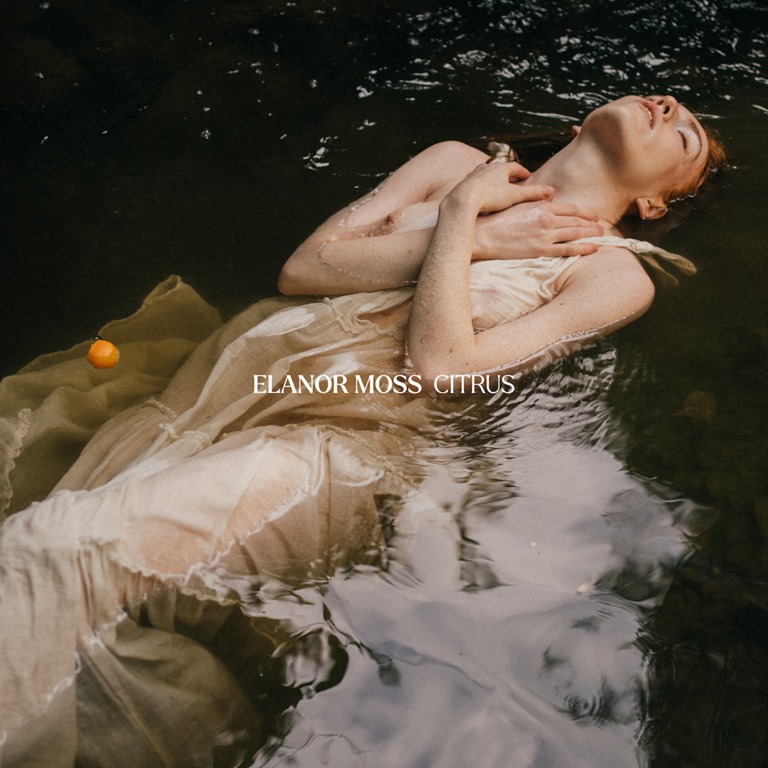
Elanor Moss seems to be drawn to water, but not necessarily in the most soothing of ways. You’re more likely to find her gradually sinking than floating on the crest of a wave of soaking in the soothing ebb and flow of a coastal tide. Her debut release, the five-track Citrus EP finds the York-based artist reimagining Millais’ ‘Ophelia’ for the twenty-first century on the cover art, while the video for ‘Soundings’ finds her awash and adrift in a bathtub, water threatening to plunge into her mouth as she sings of her ‘Drowning / the sound of my heart / As I’m sounding / the depths of this whisky jar’.

If the metaphor is obvious, it’s also highly effective. The sensation is relatable. When things become too much, and you start to feel overwhelmed… drowning is the closest simile in the common vocabulary. While few of us have actually experienced drowning, there’s an innate sense within all of us of what it would be like – struggling for air, to stay afloat. Most of us have felt that way at some point, and the beauty of Moss’ art is articulating it so succinctly.

According to the bio, ‘The Citrus EP is a collection that addresses the tension that arises within yourself when you need to muster the courage to will yourself well again. The protagonist in this collection of tracks is someone teetering on the edge of pulling themselves out of a hard time, resisting ‘getting better’ with force. You go with her through a series of unfortunate events; each one she knows full well what is happening but does anyway. But this is not a hopeless record, not at all. Their reflections from the other side and recorded from a place of empathy, strength and kindness towards a bruised past self.’

I’m not about to press the alignment of art and artist, and knowing nothing of Moss beyond her art, I’m in no position to comment on whether or not her life informs her art, but it very much feels like she’s speaking and articulating and assimilating her experiences through her songs, where certain themes recur, subtly, but undeniably. ‘I want to drink ‘till I’m too drunk to think’, she sings on ‘Sober’, while on ‘Soundings’, she croons that ‘this whisky is burning’. ‘His breath was like a heart attack / the whisky stung me like a slap’ she recounts on ‘Citrus’. But not to dwell on this unduly, the songs are ultimately positive, empowering, and the realisation of the songs is magnificent, balancing sparseness and directness with multiple layers of vocal harmony and reverb. It’s a slick production, but one that doesn’t impinge on the intimacy of the songs and their delivery, essentially centred around acoustic guitar and voice. Only a fraction below the layers and reverb is a collection of acoustic folk-flavoured songs that are raw, sincere, and relatable. Citrus is bittersweet, and-pretty special.

AA

AA

a1090927083_10

Christian Death – Quicksand

10th January 2022

Christopher Nosnibor

Christian Death have long shown a love of Bowie, which has subtly permeated their work but was rendered concrete with their version of ‘Panic in Detroit’ in the Rage of Angels album. But anyone who would think that the Bowie fandom was specific to the Rozz Williams era of the band would be mistaken: Valor has long embraced androgynous elements in his style, and never shied away from pop / art rock elements within the music itself.

There have, of course been numerous covers of ‘Quicksand’, and the one thing that’s apparent from all of them is that a great song is a great song, whoever’s playing it, even Seal. If Dinosaur Jr’s cover was a brilliant example of reconfiguring the song into a slacker anthem, Christian Death’s take, which stretches the original five-minute song well past the seven-minute mark is remarkably faithful to the original and doesn’t goth it up in the slightest. This isn’t a complete surprise: their previous covers, from Garyn Numan’s ‘Down in the Park’ to Jimi Hendrix’s ‘Angel’, which appeared on All the Love, were straight and sensitive, even reverent in their approach.

Performed by Valor and Maitri, it’s predominantly acoustic guitar and piano, but there’s a full backing with drums, bass, and sweeping string sounds, making for a take that’s bold, theatrical, and yet, at the same time, intimate, and fitting at a time when Bowie covers and links to his songs are proliferating on social media: it may be the fifth anniversary of his death, but the week also marks what would have been his 75th birthday, and it’s fair to say few, if any artists have had quite the impact he did. Elvis, The Beatles, The Stones, may have all broken immense ground, but Bowie was an entirely different proposition, on so many levels, and it’s clear the shock and grief are still strong for so many. This, then, is a fitting and well-executed, heartfelt tribute.

AA

129354