Archive for the ‘Singles and EPs’ Category

4th December 2020

Christopher Nosnibor

Woooh, shit, trigger warning! Aggressive electronic music which may trigger feelings of anxiety and n increased heart rate paired with themes of death and suicide! Biomechanimal should be plastered with red flags and probably quarantined. Wait, we’re all quarantined, and it should go without saying there’s some heavy sarcasm there.

Personally, my tigger is the ‘triggers’ crowd: unless either billed as family entertainment or the content is particularly disturbing, art shouldn’t require a warning: the very function of art is to challenge, and to present audiences with real emotions and concepts that are uncomfortable. Art is a window – or a mirror – on the world, and one that provides a conduit to explore the places we don’t necessarily venture in everyday conversation.

‘End Your Life’, which features Nysrok Infernalien is pitched as ‘a brutal, filthy expression of electronic music,’ and an ‘aggressive collaboration [which] brings together elements of industrial, extreme metal’.

If, in combining the crazed attack of the likes of KMFDM with the persistent but gnarly groove of early Ministry and stitching it together with a gauze of heady trancey cybergoth, anyone could possibly expect anything that wasn’t full on and in-your-face intense and designed with absolute precision to punch buttons – while at the same time geared up to make you move – is living on a different planet. Sonically, ‘End Your Life’ is very much rooted within genre context, but it’s actually an uplifting tune, a rush of hi-nrg beats and hyper synths, while lyrically, it’s hard to decipher, and it may be a threat or a promise or neither. But it’s more likely you’ll be too busy bouncing around to want to be slitting your wrists.

The five accompanying mixes mangle the tune to varying degrees, each accentuating a different aspect of this snarling beast of a tune, with the harsh metallic guitars often pitching to the fore, propelled by pounding beats that pump so, so hard. Die Sektor strip it back and slow it down a bit, and get a bit Nine Inch Nails in the process. Overall, there’s more than enough variety in the mixes to keep it interesting, and they compliment the original version well.

AA

a0539954098_10

11th December 2020

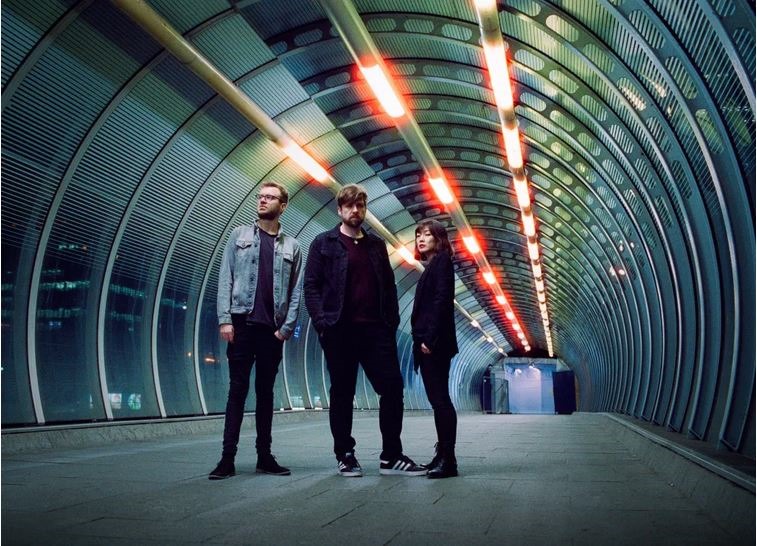
London trio Slow Cooked Bears are all about the hybridity, bringing together a mixture of visceral alternative noise rock to forge what they describe as ‘a left-field, avant-garde sound that’s both nostalgic and modern with elements of grunge, synth pop and reverb heavy post-rock’.

Now, nostalgia ain’t what it used to be, especially now it’s become the last cash cow for late capitalism to milk, and there’s never been a better time to milk it dry than in 2020 when half the world is stuck at home, unable to socialise, see friends or family, shop or conduct all of the activities that have been part of everyday life for the last century. Who doesn’t yearn for the past? Who hasn’t at some point in recent months delved into musical memories that remind them of time spent in the company of friends?

Their releases to date all carry something of a spacey theme, that seem to have little correspondence to the oddball barbarism of the band name, which makes ‘The Grand Scheme’ something of a departure from Eclipse (2018) and Space Odyssey (2019).

It kicks in with a big swaggering blues riff and burns into a grungy alt-rock descending chord sequence for the chorus. It’s hooky as hell, and they sound confident but not cocky, and there’s a 90s vibe that hints vaguely at Placebo while they’re kicking out Zeppelinesque guitar breaks spun through a contemporary filter that alludes to the likes of Rivals Sons and (earlier) Royal Blood. As such, it’s nostalgia, but with a twist, and it works. In the grand scheme of things, and even by any measure, this is a pretty strong single cut.

Capture

27th November 2020

Christopher Nosnibor

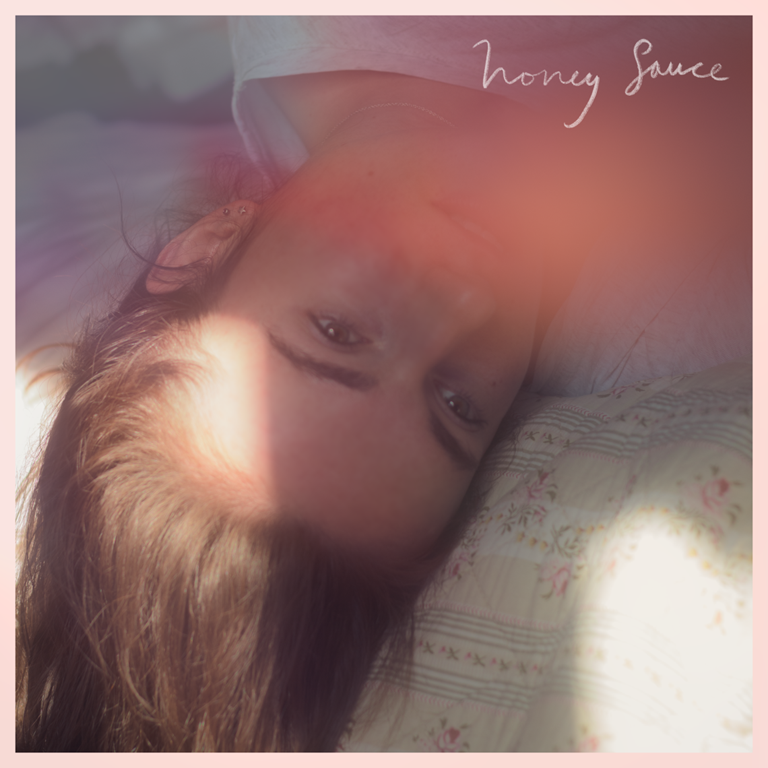
There’s nothing like a short-lived relationship ending badly and without closure to inspire a fiery breakup song, and in ‘Honey Sauce’, singer/songwriter and multi-instrumentalist Redwood goes for the lyrical purge.

Gently crooning, reflective and contemplative over a sparse backing before bringing in the full band backing, ‘Honey Sauce’ is a slow-burner and nicely arranged, but great songwriting, great lyrics isn’t about solid gold – it’s about having that one hook that one killer line, that signature moment that stands out and sticks.

With ‘Honey Sauce’, Redwood hits the mark with ‘I know you couldn’t give me your time / And I wish you’d get up and move out of my mind’. It’s a line that’s universally relatable and possesses a translatability across a host of scenarios, that speaks to the mental anguish of being unable to clear one’s mind, that tendency we all have to play scenes and vignettes on a loop that achieves nothing but anguish and self-torture.

It’s all delivered with a measured vocal that weaves an accessible, enticing melody, making for a perfectly bittersweet experience.

4th December 2020

Christopher Nosnibor

Bandcamp Fridays have been providing a rare and unique lifeline for struggling artists, and while times are still ridiculously tight in what continue to be utterly bewildering times which have hit the music industry where it really hurts – namely grass-roots venues and the artist who depend on them – the opportunity for artists to actually make a proper revenue from sales or downloads and physical releases is a big deal.

And if one thing’s become apparent, its that artists are going all-out to create releases that offer something different for their fans, and the unexpected arrival of an EP of 90s grunge covers from U.S doom quartet Embr.

Recorded in August of this year – in an actual studio, no less – with Matt Washburn (Mastodon, Royal Thunder, Artimus Pyledriver) the EP finds the band bringing a full-blooded sludge tone and a doomy, old-school, Sabbath-esque twist to four songs by leading exponents of the grunge era – with each member of the band selecting a song for inclusion.

Confession time: I absolutely fucking loved Nirvana, and still do. Alive in Chains, I dug, but never really found any enthusiasm for Stone Temple Pilots or Soundgarden, preferring Mudhoney, and the greasy heft of Tad. Nevetheless, what’s clearly apparent from listening to these four cuts is the degree of sincere affection for the songs and the sound that’s on display here. Moreover, they’ve done a great job of selecting songs that suit their own sound, showcasing the strengths of the original songs while sounding like Embr. It’s also something of a revelation hearing songs originally sung by men delivered by a female vocalist, and again, that they’ve pitched them in Crystal Bigalow’s range is a major factor in their success.

If the half-tempo trudge of their take on ‘Heart Shaped Box’ (Crystal’s choice) takes some getting used to, its impact – as the immense power chords drive down hard and heavy – is strong. The ultra-low bass that rumbles at a crawl through the stripped-back second verse is worth the money alone, but ‘Junkhead’ is probably the heaviest track here – which is no real surprise, given that AIC were always at the most overtly metal end of the spectrum in the grunge canon.

Then again, despite the rather poppy middling rock chorus, the repetitive chord sequence of ‘Mailman’ is well suited to a sludgy trudge-along, and ultimately, Embr have done a good job, making Idolatry well worth a punt.

AA

Embr-Idolatry

4th December 2020

Christopher Nosnibor

Christmas singles are divisive, to say the least. Probably because the majority of them are cack. People get funny about Christmas: sane, rational individuals turn to slushy pulp, pontificating about family and the kids. Yeah, we always do it for the kids. Enduring long hours of pent-up tension spent in stuffy, overheated rooms, feeling uncomfortable with overindulgence and a burning sensation that may be indigestion or just the slow-burning desire to escape.

Often, you will hear people saying that we should remember the less fortunate at Christmas, to spare a thought for them and maybe even a few pence, and we’ll assuage our guilt by donating some mince pies to the food bank or a pair of last year’s unwanted Christmas socks to a charity collecting for third world children or whatever. We do it, and it eases our conscience, and allows us to forget about it all while we plunge back into our own microcosms of manufactured joy, real or falsified. And no, this isn’t a guilt-trip, because I’m certainly by no means exempt here. It’s human nature. How many of us sit and feel sad for those less fortunate, those who aren’t able to spend time with loved ones or feel the comfort of a safe home environment when picking up another pig in a blanket, another slice of meat, another roastie, another splash of gravy?

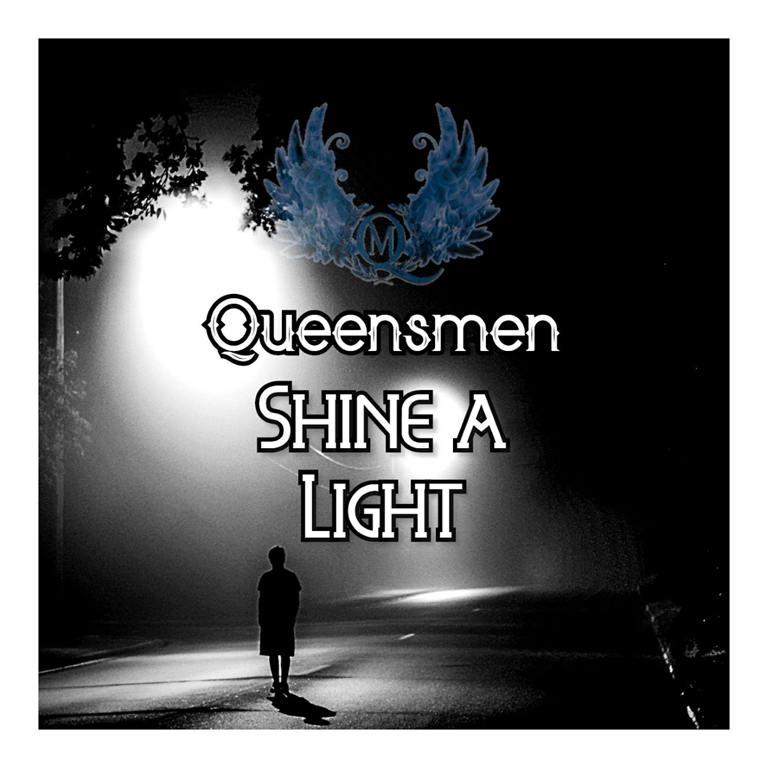
West London trio Queensmen – who don’t seem to be an intentional response to The Kingsmen, famous for their 1963 version of ‘Louise Louie’ – have released ‘Shine A Light’ in an attempt to raise attention to the plight of the homeless, and to raise money for Crisis.

Where ‘Shine a Light’ stands apart from so many other songs of its ilk is that it takes the viewpoint from someone who’s bereft, and there’s something powerful and moving in the first-person plea of ‘Don’t abandon me / I’m cold as stone / Come and rescue me / Now that I am all alone’.

There’s nothing elevated or preachy about this, and the human impact on an individual level is brought into relief here.

It would be a wrong step to criticise this for being a jangly emo/indie pop rush that musically doesn’t really reflect the gravity of the lyrics, because it’s better to deliver a message in a format that will appeal to a wider audience, and they’re not going to register any better with some dour, po-faced effort. ‘Shine a Light’ has energy and hooks, and while it really would represent an optimal achievement if everyone wo heard this would pause and reflect, spending a few pence on a download because you like the tune would be ok, y’know.

AA

Artwork

generate and test – 30th October 2020

Christopher Nosnibor

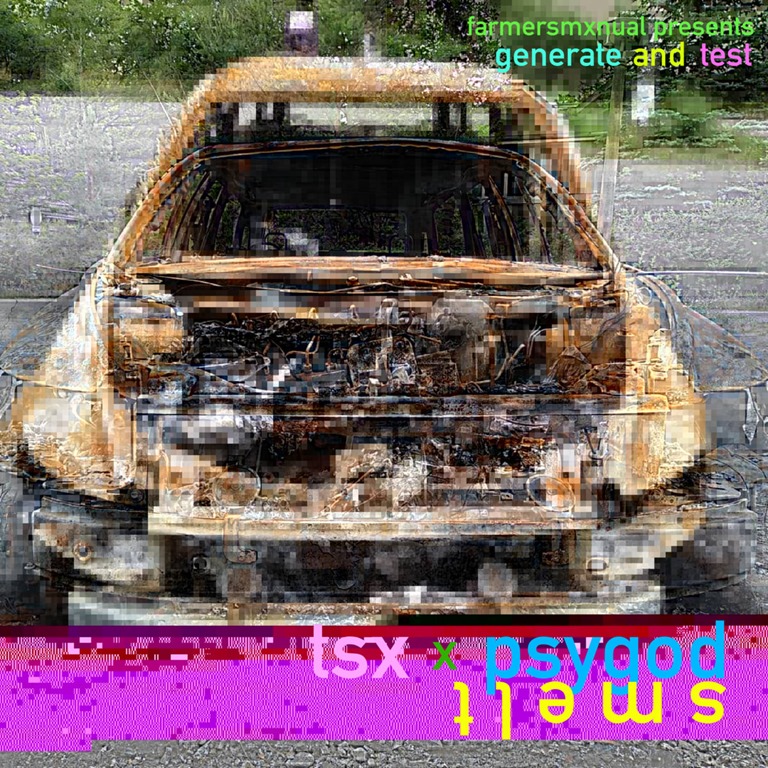
The blurb bewilders me before I hear a note, as I read how ‘ʇןǝɯs is a high density package crafted with care and luck from a rare mixture of ingredients. The four track MP (micro-package) takes you on a ride across a one- dimensional checkerboard landscape rendered in colors of euphoria and terror. Players emerge at side exits and diffuse presently. If the album title is unmanageable you can use the unoffending smelt.’

Delving deeper, I learn, ‘Entire package produced on-the-go using mobile phones, some of them rooted. Apps are Nanoloop, g-stomper, termux/python, different media recording apps. Custom app autovoice takes care of slicing the voice tracks and beat aligning them on the track.’

From this fragmentary non-narrative, I’m braced for something irregular, unusual, beyond boundaries, and that’s very much what this is. Micro-package is a fair description of an EP comprising four tracks, none of which really exceed two and a half minutes, although it doesn’t convey the flickering intensity of slow-tripping hip-hop that’s rooted in samplist, cut-up methodology with disjointed loops and fragments providing the fabric of this digital tapestry.

It may not be easy to follow, and at times so deeply immersed in obscure referencing and the exploration of the technology used to create the material, ʇןǝɯs feels as much like a case of experimentalism for its own sake than a document of artistic creativity. The titles are more or less impenetrable, at least in terms of their significance or relevance, although ‘very veird’ is quite odd, if not overtly Germanic, a collage of bleeps and a bubbling stew of vocals simmering over minimal beats and bloopy, stammering bass. It actually makes for a long two minutes, but the richness of the layering and density of the combined source materials is undeniably impressive.

There’s almost infinite bubble and fizz, crackled and grind, particularly on the closer, ‘argh uargh (kann ich ans handy?)’ where the title is a fair summary of the chaotic cacophony it contains.

ʇןǝɯs is messy and uncomfortable, but taking its sequence of input > process > output as a creative model, it’s likely the ultimate summary of 2020.

AA

a1325420827_10

25th November 2020

Christopher Nosnibor

Following what, at least to the outside world, appeared to be a fallow spell between the release of beech and its attendant remixes version, during which time elk became elkyn, Joseph Donnelly returns remarkably swiftly with a new single, ‘if only it was alright now’.

It’s a sentiment that’s so, so relatable right now as we find ourselves eddying along in a relentless tumult of who knows that the fuck. And in the space of just over three minutes, Donnelly captures and articulates all of the uncertainty and wraps it around with a warm, thick blanket of home and opens the window to let the light in.

It begins in what’s swiftly become trademark style, his quiet, introspective vocals almost a mumble, trepidatious, accompanied only by sparse, picked acoustic guitar. And it’s truly beautiful, in that most intimate, soul-searching of ways. But from here, things evolve as layers of textured sound build on one another, and at pace, and in no time, galloping drums are bounding along, pushing the song onwards, and it’s a rush – a clean, uplifting rush, like a warm breeze on a perfect summer’s day, where the clouds are just wisps, high in the upper reaches of the atmosphere.

Comparisons and references that spring up here and there, but to evoke them feels futile, and moreover to diminish the emotional and sonic richness of the work, which exists in its own self-made space, and completely apart from all external forces of influence and time, creating a brief but magical moment you wish could be frozen to last for all eternity.

24th November 2020

Christopher Nosnibor

Black days and even blacker nights call for black metal, and the second track taken from German trio Imha Tarikat’s forthcoming second long player, Sternenberster (which translates literally as ‘burster of stars’) scheduled for release on December 11th. As you might expect from a band whose name is Turkish and translates as ‘extermination sect’, it’s black in the ‘scorched earth, charred remains’ sense.

It begins with a single bass note, a power grunt, and then all hell breaks loose, and it’s fast, furious, and the production is, of course, ultra-primitive. Usually, with black metal, I’m inundated with synonyms for swamps and sludge, here, it’s The Fall that come to mind. Not that Imha Tarikat sound like The Fall musically, but the clattering racket is distinctive by virtue of the instrumental separation. What’s more, that ragged bass sound, particularly the descending run before it all collapses into a frenzied wall of nose, sounds almost exactly like the start of ‘Elves’. It’s endearingly ramshackle, and while it is in time and in key – just about – I think – it’s perfectly unpolished, a one- or two-take demo-quality throwdown. Unusually, it’s possible to distinguish the bass, the guitars, the drums, and the vocals – but not the lyrics, of course – in what is a remarkably bright mix.

With the vocals heavily doused in delay, which repeats and reverberates around among the pulverizing and utterly relentless percussion, it does take on a different feel from so much of the genre. Of course, there’s nothing audible that conveys the song’s concept which ‘metaphorically signifies the violent collision with reality that follows a fall from intoxicating heights’ but it does convey excruciating agony and kinetic energy in abundance. And it’s fucking brutal.

Tambourine Machine – 20th November 2020

Christopher Nosnibor

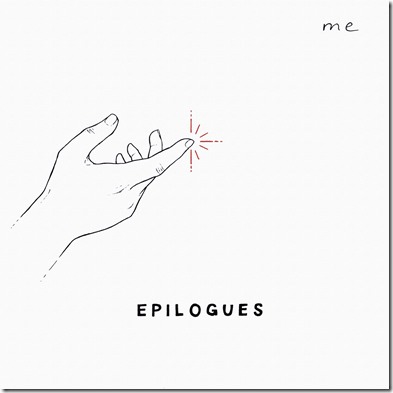
Nine years on from their inception, and seven years since their last release, Epilogues return from hiatus with a brace of new EPs, simply entitled ‘me’ and ‘you’. Mikey Donnelly has been keeping occupied, recently working solo as miles. and alongside his brother, Joey, who goes by elk.

If the title sounds like this is an exercise in narcissistic, egotistical self-indulgence, you’d be way, way off the mark: yes, Donnelly’s primary focus is himself, but this is a work of deep introspection and is one of those magical moments of fine artistry where the artist finds universality in the personal.

The recording is intimate, close-up, and you can hear every last breath, every scratch and scrape of finger on string and fretboard. The instrumentation is simple, essentially acoustic guitar and voice, with occasional incidentals so subtle as to be barely there. There is nowhere to hide, and that’s largely the point: this is a set of songs that explores identity and picks it apart unsparingly.

In the opening lines of ‘Me’ he sings, quietly, ‘Hello again; it’s me / At least I think that’s who I’m wearing; my character this week’, as he begins to lay himself bare, pulling back the layers of the onion to reveal a fragile core.

A softly quavering ambient drone marks the understated arrival of ‘Two Weeks’, a song so quietly mournful and reflective, and if one applauds the bravery of a statement which says, unashamedly ‘this is me, with all my flaws’, then it’s perhaps even bolder and more powerful to find an artist turning it around and asking ‘who is ‘me’?’. And here, Donnelly succeeds in bringing the two together, taking the listener on a journey that both questions and answers.

Donnelly is, it has to be said, a remarkably eloquent lyricist, each line adeptly spun with a rare poeticism: it’s rare to find a record where simply reading the words on the page is a moving experience.

The final song, ‘The Gap’ begins in typically hushed, reflective style, buy blossoms into a full-band finale, with drums, bass, and chiming guitar as Mikey sings out the refrain, and suddenly, he emerges from the shadows and into the light. For all the rust and dust, death and decay, there is hope and optimism.

   AA

Epilogues - Me

Click on the image to listen.

20th November 2020

Christopher Nosnibor

So often, less is more. Lyrics that are personal and specific yet vague have the capacity to convey as much more than lines that are direct or explicit. And so it is with ‘Wander & Lost’ that Kin speak of loss and yearning, of distance and sadness and that sense of feeling cut off and alone.

As much as ‘Wander & Lost’ is ostensibly a pining, post-breakup song, it equally stands as a summary of the sense of loss that the distance so many are feeling from friends and family under life in lockdown. Maintaining closeness simply isn’t as easy, and everyone, everything has changed, is changing.

Wander & Lost begins with a wistful, minor-key guitar, picked and chorus-laden, and it provides a delicate backing for the dreamy, contemplative vocals. The drums are distant and everything is balanced, the instruments and vocals all infusing to form a cloudy aural drift. There are shades of melancholy lingering on the peripheries, and it’s never easy to determine if this is the music or projection – but then again, this is why music resonates beyond its immediate boundaries, and ‘Wander & Lost’ transcends its immediate aims on account of a certain musical intuition.

This is one of those songs that’s all about the slow build, and it doesn’t suddenly erupt or explode, but instead gradually swells into a soft, rippling wash of introspection. It’s a sad song that hits that perfect sad song sweet spot.

AA

Kin press shot