Archive for the ‘Singles and EPs’ Category

Cruel Nature Records – 5th March 2021

Christopher Nosnibor

I know next to nothing about Fast Blood beyond the brief biographical info that accompanies this, their debut EP, which follows a brace of singles.

Apparently, the members of the foursome are stalwarts of the Newcastle-upon-Tyne DIY scene, but as a unit they only came together in 2019, performing together for the first time in April of that year. They managed to amass a decent resume of support slots in the eleven months before the world ended for live music, and announced their arrival in November 2019 with the hooky as hell ‘You’, which is featured here as the EP’s second track.

They trade in short – three minutes or less – poppy punk tunes, and for all their ‘nods to 90’s Midwestern indie/emo, hardcore and garage punk’, what actually comes through above anything is how they hark back to a more classic female-fronted punk vintage. That isn’t to say they sound like X-Ray Spex, or Penetration, or Blondie, but there’s certainly something of that vibe infused within their driving, guitar-driven songs which are big on energy.

‘Why do I keep doing this to myself? / I keep telling myself I’m not worthy’ Abigail Barlow sings on ‘Milo’, which was released as their second single in January last year, and while the delivery is accessible, and very much driven by a sense of ‘song’, and ‘melody’, and there’s nothing that’s overtly dark about their songs, there’s an emotional honesty and a sincerity about the lyrics that runs deeper. In this sense, it’s the best of both: a vintage style with a contemporary edge – without the crap connotations of punk-pop dragged along by the likes of shit like Panic! At the Disco, New Found Glory, and All Time Low – they balance bite with something altogether more easy on the ear. Kudos.

AA

cover

12th February 2021

Christopher Nosnibor

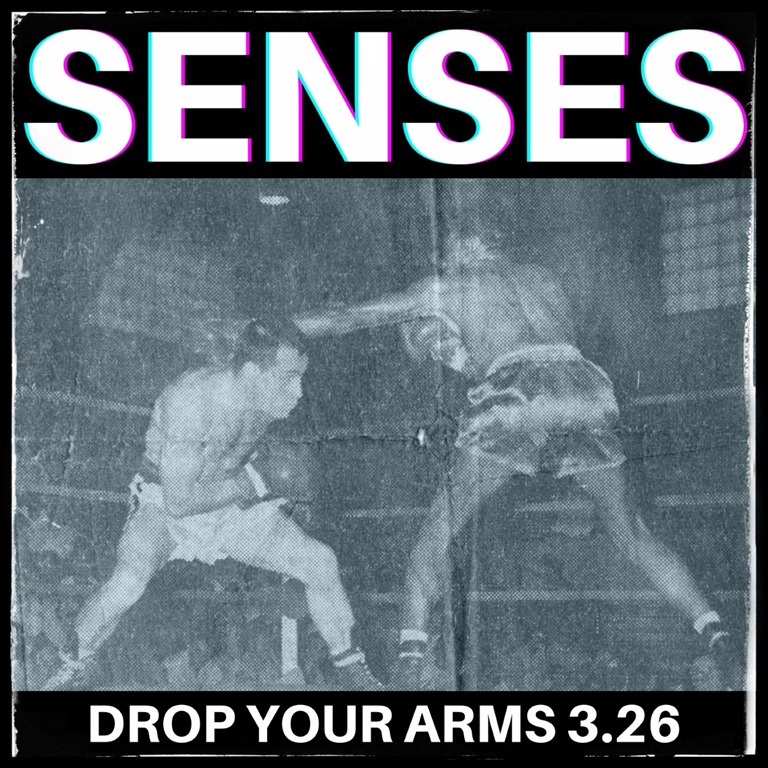
Coventry quartet SENSES have had a stuttering journey to bring them here, with the release of ‘Drop Your Arms’ as a taster for their impending debit album – which has been a long time in coming. There is a classic tale of burgeoning progress being stalled and creativity stifled by label wranglings. Throw in a global pandemic and you’ve got the perfect recipe for a stalled career. It’s almost as if some labels are more concerned with contractual constrictions than the nurturing and promotion of creativity and new music.

But you can’t keep a good band down forever, and regrouping after a hiatus to embark in a multi-media project designed to take their music to the masses and to the next level, and ‘Drop Your Arms’ is the opening gambit that prefaces the debut album Little Pictures Without Sound.

Yes, it’s indie at heat, but it’s also so much more: it’s also big, bold and anthemic – and swings between the throbbing anthemic stylings of Doves with the darker post-punk currents of early Editors (whose producer Gavin Monaghan was involved in the early recording work) – I’m specifically thinking ‘Bullets’ here, particularly when it ratchets up around the mid-point. Then again, I’m equally reminded of The Psychedelic Furs’ debut album and their ‘wall of noise’ that really hit hard.

There’s a darkness and a seriousness about ‘Drop Your Arms’, a track that drives and bounces with an effervescence and energy that’s as infectious as it is undeniable. In short, it’s a cracking single, and if the rest of the album is half as good, it’ll be a corker.

AA

SENSES_Drop Your Arms_Single Artwork

26th February 2021

Christopher Nosnibor

LA instrumentalists Teethers, centred around drummer and composer Andrew Lessman, brings together an unusual fusion for their debut release. With contributions straddling jazz, avant garde, and indie pop, for Teethers, Lessman has brought together an eclectic lineup, consisting of Graham Chapman on bass, guitarist Alexander Noise, Joe Sanata Maria and Ted Faforo on saxophones and Stefan Kac on tuba. The results are, as you might expect, unusual.

There’s a smooth, jazzy, swingy pop vibe that permeates the EP#s three tracks, and as ‘Goose Chasing’ indicates, they can locks down a tidy groove and create music you can bop to, nod along to, even dance to… and then they’re more than capable of – and willing to – drive that train straight off a cliff into a wild frenzy of horn-driven discord and madness. This is bit a brief introduction that sets the scene for what Teethers are really all about: the twelve-minute ‘Monopoly on Violence / Mushroom dance’ is a multi-faceted, shifting exploration of rippling shades and expansive soundscapes.

It’s rambling, at times immensely proggy in a vintage sense, and at times it just can’t seem to make up its mind as it ambles and weaves hither and thither, a mellow jazz meandering that hits some frenzies peaks and altogether more sedate intersections. It’s one of those pieces that transitions enticing and irritating in a mere blink – and that’s not even a criticism. Condensing so many elements into its space, it’s difficult to keep up.

The third track, ‘Love Poem’ is seven-and-a-half minutes of dappled sunlight painted in music, with a clean, picked guitar chiming in a simple, hypnotic sequence that’s a post-rock / contemporary prog crossover laced with soft, delicate strings. It’s perhaps the most focused and conventionally coherent of the three compositions, on what is a fairly wide-ranging set – so wide-ranging that it’s not easy to immediately assimilate, and even more difficult to pin down – not just stylistically, but in the most basic terms of formulating an opinion. Is it any good? Do I like it? Does it matter? There’s certainly no doubting the technical proficiency on display here, and having the confidence and audacity to make music that straddles so many boundaries and genuinely challenges the listener is an achievement worthy of recognition.

AA

a3152339815_10

14th February 2021

Christopher Nosnibor

A Sunday is an unusual day to release a single but then, the ‘Teetering’ single release is can be considered a Valentine’s gift of sorts, from polyartist Carmina Budworth. It’s a love song, a song about falling in love, that point on the brink of uncertainty, the excitement and anticipation of something new, told vividly through hazy images of the kind of drunken night out with music and people that seem so very long ago. And as such, it’s not only a love song to an individual, a song about that moment, but can be taken as a love song to the time before everything stopped.

Recorded in between lockdowns back in June of last year, it’s a song of optimism, of new beginnings. It lands at a time when after what has been for many the longest, hardest winter, there is a growing sense of optimism for new shoots of life concurrent with the coming of spring, and ‘Teetering’ conveys that spirit of optimism tempered by trepidation.

There’s a timelessly old-fashioned or vintage feel to the song that goes beyond the traditional Argentinean tango and 60s pop vibe that’s laced with soul, and it stands in contrast with the swelling drum machine beats that eventually grow to lead the backing and propel the song to a blossoming flourish of a finish that’s entirely contemporary.

Carmina has a distinctive and unusual vocal style, which is at once soft and strong, delicate and powerful. That’s not to mention her impressive range, that spans a ponderous whisper to sky-soaring freedom, and it’s enthralling. Carmina carries the listener on a wave that builds and lifts and stops before the drop. It’s a wonderful experience.

The ‘Malica Surprise’ mix pins down a smooth electropop groove with a crisp, solid beat and bulbous bass that brings new dimensions to a song that’s already multi-dimensional, making this quite a package.

AA

Artwork

19th February 2021

Christopher Nosnibor

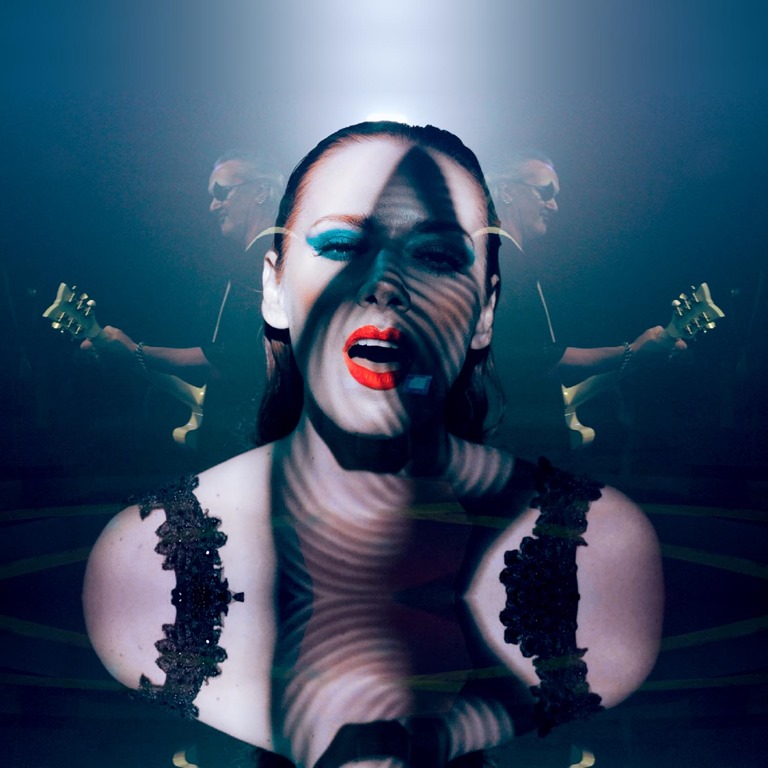
After a few months out, Richard Fox (lead guitar, bass guitar, keys, producer) and Gavin Connolly (vocals, rhythm guitar, piano), aka Arcade Fortress return with the first taster for a new album in the form of ‘Sabotage’ – their first new material since the album Create More than You Destroy last September.

The first point of note is that this most definitely isn’t a cover of the Beastie Boys’ hit. This is a good thing, because you shouldn’t mess with perfection, and should always instead strive to create your own.

‘Sabotage’ is all about self-sabotage and self-doubt: the first verse is littered with images of war and combat, from naval battles to machine gun fire, before bringing things in closer to home, presenting an inner turmoil that melds domestic abuse with a n altogether more Fight Club themed feel, where all the torment and self-loathing coalesces into a harsh-inward facing nihilism and self-loathing:

‘In an abusive relationship with myself / It’s surprisingly hard to remove / This knife from my back / Stuck in my spine because of / My own frenzied attack’, sings Gavin over a sonic backdrop that builds nicely from a sparse picked guitar jangle to a fully-realised anthemic beast of a tune.

There’s nothing particularly fancy about it: it’s not innovative or unusual, but it’s a big tune with a big feel. There is simply no substitute for a killer chorus and a strong hook, and that’s precisely what Arcade Fortress bring here.

AA

Sabotage artwork

28th January 2021

James Wells

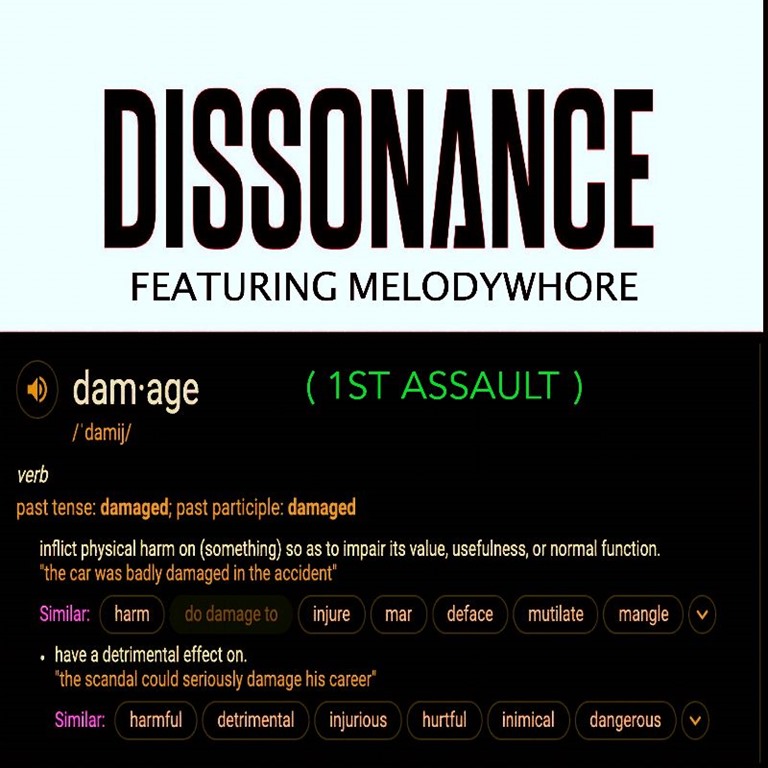
This seven-tracker follows the same format as previous EP releases from the past couple of years, and features Dissonance’s collaborative duel with Melodywhore, ‘Damage: 1st Assault’, augmented with six remixes.

The remix package very much has its roots in the field of dance, from whence the work of Cat Hall – aka Dissonance – has emerged – although, as her bio notes, it ‘incorporates elements from industrial, pop, and alternative rock’ which has seen the project ‘compared to bands like Nine Inch Nails, Curve, This Mortal Coil, and Information Society.’

Coming together with Melodywhore has facilitated the exploration of the darker, harder-edged leanings of the Dissonance sonic palette, which places ‘Damage: 1st Assault’ very firmly in NIN territory, with an erratic stop-start beat dominated by a whipcrack snare driving a bubbling synth bass, which in turn underpins some dark atmospherics. It lands somewhere between Pretty Hate Machine and the electrosleaze of ‘Closer to God’, and it’s solid.

The remixes – being remixes from a selection of guests – accentuate different features, with Joe Haze’s CF2 remix pumping up the bass and beats to create a driving, dense backdrop to the backed-off, breathy vocal (which also highlights the Curve comparison), while the more stripped-back Machines with Human Skin Corrupted remix comes on more like the original Pigface recording of ‘Suck’, but with soulful backing vocals that owe more to Depeche Mode.

Steven Olaf’s remix is dirty but also beholden to 80s robotix synth, and so it goes. The REVillusion Revision Remix is a spaced-out stomper that goes for the slowed-down anthemic vibe.

The one thing that’s conspicuous is how the remixes stay fairly true to the original form and structure: there isn’t one reworking that takes the song somewhere entirely different, and there’s nothing as daring or brain-mangling as, say, JG Thirlwell’s radical remixes of Reznor’s cuts, and there’s nothing wrong with that by any means – it all just feels a little safe and reverent. And without any of the versions doing anything particularly radical, it does get a shade monotonous listening to the remixes back-to-back.

Still, it’s a decent enough tune, and if you’re prone to playing songs on a loop, this will save you hitting repeat.

AA

173106

PNKSLM Recordings – 2nd February 2021

Christopher Nosnibor

It seems like a long, long time ag now, when I’d listen to the top 40 singles chart on a Sunday evening and be enticed to buy an album on the strength of a single. I didn’t even realise it at the time, as a pre-teen, that this was exactly the point: singles sell albums, and in some respects are as much a promo tool as a video or a TV performance or an instore signing. Time was, of course, that album sales made money, or at least made the biggest dents in recouping advances, although a hit single was always, and remains, the route to royalties.

Despite the devaluation of both the album format and the single trailer in the digital age, the practise persists and sometimes is actually pays off, because you’ll hit on a single release that completely poleaxes you with its brilliance – a song that will grab you instantly and compel you to rush out and buy the album or otherwise leave you on the very edge of your seat for its release.

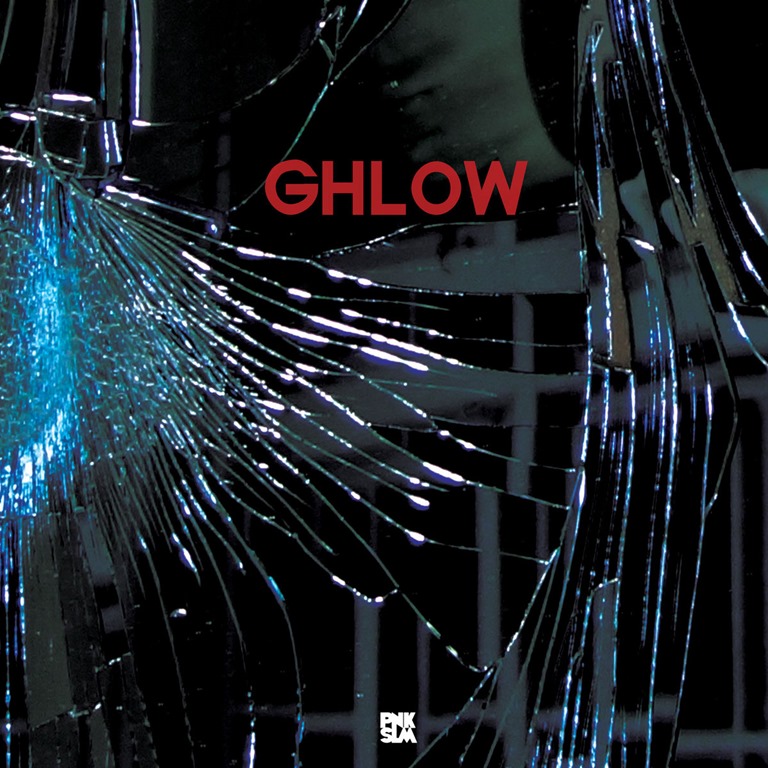
‘Not Fit For This’ is that single – released ahead of Ghlow’s debut album, ‘Slash and Burn’, due out in April – is a sharp, stabby new-wave attack that comes on full-throttle and packs some real adrenaline in its scratchy squall of trebly guitars that blister and buzz all over a drum machine that palpates frantically as it tries to make itself heard and keep up with the explosive sonic blast. It’s got that early 80s vibe absolutely down, and it’s not just about the songwriting, performance, or the hazy production that positively oozes that dank basement 8-track vibe – it’s about the attitude and the intangibles, too.

Emille de Blanche has all the dark energy of Siouxsie Soux, and she brings all the serrated edges in this gothy tour-de-force, and everything coalesces into a distillation of tension-filled gloom that’s pretty damn special.

AA

a1986326433_10

33.3 Music Collective – 27th January 2021

Christopher Nosnibor

Beauty in Chaos’ ever-shifting lineup sees more evolution for the fourth single of their latest album, Out of Chaos Comes… a set of remixes with even more guest artists contributing. Originally featured on The Storm Before the Calm in summer of 2020, the track, composed by Michael Ciravolo – who’s credited not as the core member but the curator of the Beauty in Chaos project – with The Mission’s Wayne Hussey.

The story goes that ‘Along with BIC producer Michael Rozon, Ciravolo set out to strip down the ominous tone of the original especially for this remix release. After hearing Wayne’s wife Cinthya’s rendition of The Smith’s ‘Everyday Is Like Sunday’, the idea emerged for her to sing this new version along with Wayne’. This is actually one of three versions of the song which feature on the album, and it very much does date the dark, brooding vibe out and replace it with something altogether more smoky and sultry.

And so we have six minutes of sedate – and sedated – seduction, stripped back and slowly blossoming into a melodic chorus. The accompanying video highlights the low-level lighting mod it evokes, and finds Mr and Mrs Hussey showing off some quality rugs as well as some nicely contrasting outfits.

Quippy comments aside, this is a subtle explorations of contrasts which also tips a nod to the lyrics, and very much highlights the light and dark and shadowy hues evoked by the song. Rendered as more of a pop ballad by the remixing, the chaos is very much calmed to emphasise the beauty, and it works well.

AA

Beauty in Chaos feat. Cinthya Hussey (single cover)

In November of last year, Finnish visionaries Pharaoh Overlord released their sixth record, reimagining electronic music for the future, equal parts hedonistic rapture and dark revelation. Today we are presented with a brand new video for the album epic "Tomorrow’s Sun."

Aaron Turner comments, "The lyrics for this track were written at the beginning of the pandemic and during the first wave of American upheaval in the fight for social equity and justice. It is a meditation on projecting hope forward into the future, which may serve as a bridge of perseverance to reach forwards through this time of turbulence."

The video directed by Mike Bourne (Teeth Of The Sea) captures the dystopian futuristic aspect of Pharaoh Overlord’s sound on 6. Watch it here:

AA

PC

Christopher Nosnibor

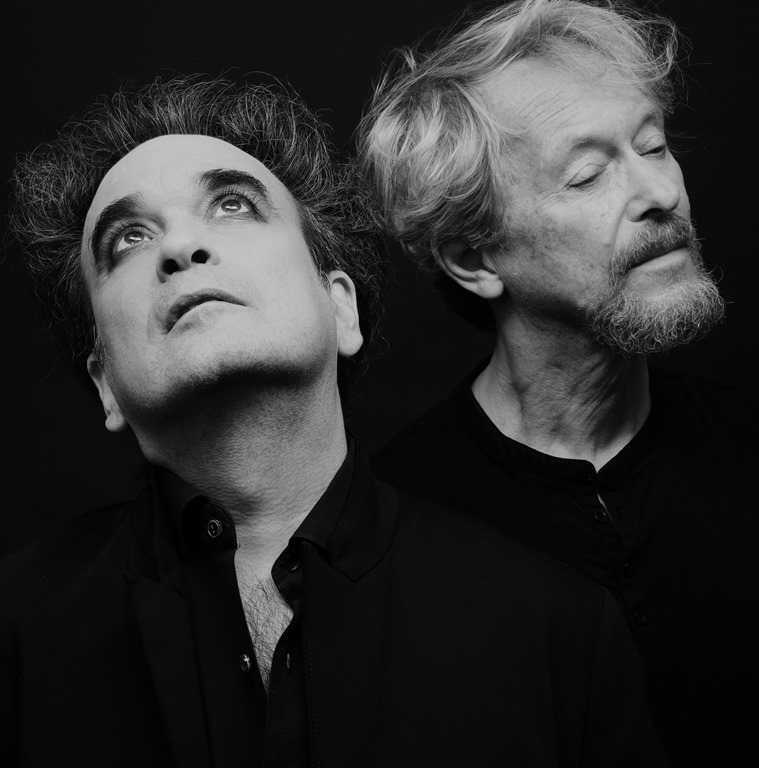
Lifted from their forthcoming double album Duel, scheduled for release in April, Deine Lakaien have unveiled their cover of The Cure’s 1983 classic pop tune ‘The Walk’.

The duo, comprising pianist Ernst Horn and vocalist Alexander Veljanov, have over the course of ten albums attained a significant status in their native Germany, but haven’t quite the same reach further afield, but there’s a strong change that this could change with Duel, which pairs an album of original compositions with an album of paired covers, ‘The Walk’ being one of them.

And it’s good. By which I mean, it’s an affectionate, even reverent cover that pays an overly sincere homage to the original – as it should, of course. Much of the appeal of the original is its rough edges, and the sound of those early 80s synths and drum machines, recorded to tape. Listening to it now, along with so many contemporaneous songs, reminds us for that for all we’ve gained with advancing technology in terms of fidelity and ease of recording, mixing, and so on, so much has been lost in terms of essence.

As Ernst Horn comments, “For an old-school synthesizer freak like me, ‘The Walk’ was of course a welcome opportunity to celebrate beautiful old sounds in simple tone sequences, although I really blunt my teeth on the hook… I guess I couldn’t get it to sound as dirty as in the original. ‘The Walk’ is really an acoustic advertisement for the original sound of a vintage synthesizer. The instrumental part was also a lot of fun, the increase to the last, ‘Take Me to the Walk‘, where I could let my equipment totally off the leash.”

It’s telling that the artist himself feels a certain sense of shortcoming, and in a way, it’s refreshing: instead of artistic ego, we get an insight into the anxiety of influence experienced by the influencee.

Horn’s comments demonstrate an unusual degree of self-awareness, and it’s true that Deine Lakaien’s efforts to recreate the spirit and sound of the original falls short: the playful exuberance is lost to a certain self-applied pressure to deliver, while the sound is close, but somehow artificial. But for all that, I’m not going to do this down one iota: it very much does capture the 80s vibe, especially wit the dominant crack of a processed snare sound that cuts through everything… everything… everything. The brooding, swampy break is nicely done and if for the most part it sounds like A-Ha covering The Cure, the play-out goes darker and sounds more like a post-First and Last and Always Sisters of Mercy demo. And from me, that’s a compliment, and this is a solid cover, for sure.

AA

Deine_Lakaien_04_by_Joerg_Grosse-Geldermann

Deine Lakaien by Jörg Grosse-Geldermann