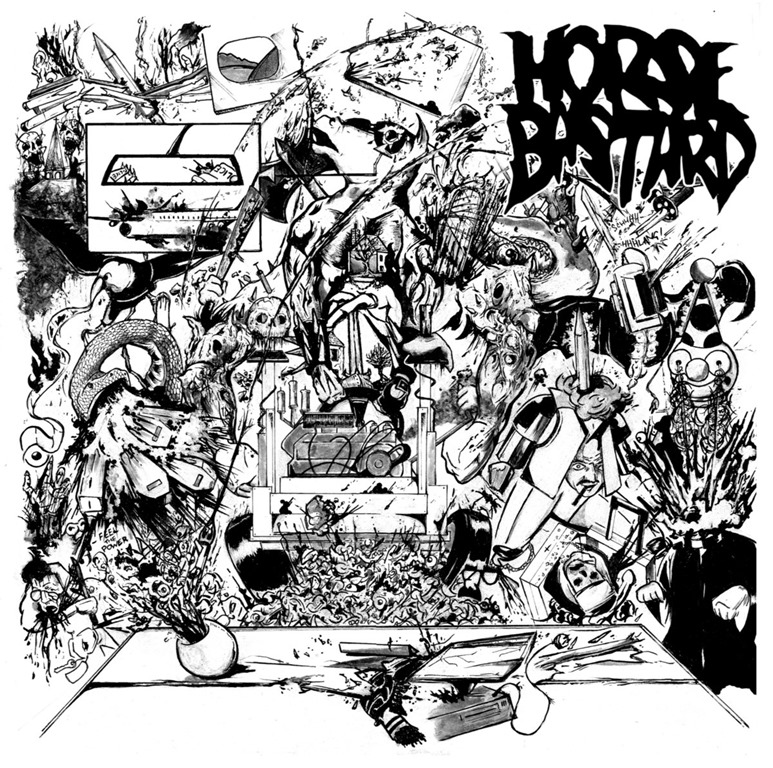
It’s eight and a half years since HORSEBASTARD last made the virtual pages of Aural Aggravation, when I witnessed their explosive set at the now sadly-gone CHUNK in Leeds in May 2016, with fellow equestrian favourers Palehorse (playing their last Leeds show), and the debut performance from future legends Beige Palace, who are also sadly missed). They’ve been going for donkeys, but despite a slew of EPs and split releases, this is their first long-player. Well, the track-list is long, at least, with twenty-eight tracks – but still only with a running time of seventeen minutes.
With the exception of the final track, ‘CORYBANTIC IDIOGLOSSIA’, the songs – or projective noise-vomits – are all around the half-minute mark, and with all of the titles set out in block capitals, it’s almost as hard on the eyes as on the ears. Almost. With titles spanning poor wordplay (‘CHAIRWOLF’, ‘FLIGHT OF THE ALLIGATOR’, ‘OLD TESTAMENTALITY’, ‘IRRELEPHANT’), the nihilistic (‘ANHEDONIA’, ‘MEANS TO A DEAD END’), and the straight-up daft (‘NOT ONCE. NOT TWICE. BUT THRONCE’, ‘INDEED RESUME COMMENCING’), it’s got everything you’d expect from a grindcore album, being a genre that recognises and revels in its absurdity, and while it can be serious, often pretends to be serious instead.
With a high-tuned snare cutting through the barrage of noise that bursts forth at two hundred miles an hour, while the vocals – as much given to screams as guttural growls – set them apart from many other acts. This means that ‘CRACK WASP’ sounds exactly how you’d expect it to, a twenty-nine second of squalling agony which assails the listener from all angles.
Guitars stop, start, stutter and lurch, and everything’s so hard and fast it’s almost impossible to distinguish between a chord change and the next song: they’re packed in with absolutely no gaps in between, resulting in the album being a continuous blur of brutal noise. There are details in the guitar playing, but they all pass so quickly it’s impossible to really register them. There’s something of a formula, in that songs tend to start with a rapid-fire drum fill before all the noise piles in on the back of it. With absolutely no let-up from beginning to end, HORSEBASTARD is a frenetic slab of face-melting ferocity.
The line ‘hell is other people’ comes from the 1944 play ‘No Exit’ by Jean-Paul Sartre, and it’s something that many of us find relatable. Indeed, it’s a line which more or less summarises my world view. One of the few settings I feel comfortable with multiple ‘other people’ (I’m on with one on one or very small groups, at least in moderation) is in a live music setting, because I can choose whether or not to interact, can limit interaction to the brief times between acts, and – and this is significant – the kind of people I find myself sharing a space with tend to be less representative of the general population. Most of us do have ‘our people’; the only trouble is finding them.
Ian J Cole’s latest work is a concept album based on No Exit ‘whereby Three damned souls, Joseph Garcin, Inèz Serrano, and Estelle Rigault, are brought to the same room in Hell and locked inside by a mysterious valet. They had all expected torture devices to punish them for eternity, but instead, find a plain room with no windows, mirrors and permanent strip lighting. They are all afflicted with fused eyelids or Fraser Syndrome where they can’t ever close their eyes and must spent [sic] eternity in this room and in this state.’
The Fraser Syndrome, from which the album takes its title is a rare genetic disorder characterized by fused eyelids.
Sartre seems to have essentially inverted the effects of the condition, but being unable to either open or close one’s eyes is a terrifying prospect. What’s worse: see nothing, or see everything? Cole’s album is based on the latter scenario, and presents a disturbing soundscape from which there is no escape.
The album opens with the immense sixteen-minute opus ‘Frightened of Cliches’, a heady blend of light-night jazz, erratic beats, and swirling ambient tension. There’s very much a filmic, soundtrack quality to it, and over its expansive duration, there are gradual shifts. The beats dissipate, there are creaks and groans like the rusty hinges of big metal doors being swing shut.
‘A Beauty Diamond Lipstick and No Mirror’ plunges deep into dark ambience. There are some synth incidentals to be found, wandering, lost, amidst the murk and the chimes, the muffled samples and layers of distortion and dissonance, but this is not an easy listen. It is, however, an intensely focused and coherent work.
‘Thelema’, created in collaboration with The Wave Prophets’ offers some light, and reintroduces the faux sax synth sound that was a central feature of Cole’s live sets a while back. But that smooth 80s vibe is now twisted into an altogether darker concoction, a conglomeration of sound that’s unsettling – and no more so than on the sparse feedback drone and hum of the eight-minute ‘Night Never Comes’: it’s a restless, uncomfortable space which it occupies, echoes and metallic clanking reverberations reverberating through the slow wailing undulations.
The piano-led ‘Hell is Other People’ is unsettling and chimes and tinkles against minor chords, before the album’s second ‘big’ piece, the twelve-minute ‘Three Damned Souls’ looms large in every way. It’s richly atmospheric, and while the atmosphere may not be overtly gloomy, it certainly is unsettling in places. Echoes and eerie whispers reverberate amidst trilling organs, bleeps and trickling electronica.
The final track, ‘Hell is Dead People’ is a live recording, and in some respects feels a bit bolted-on, but it’s a strong piece – piano-led, atmospheric, with discordant cadences playing throughout. It rounds off a solid and focused work. While concept albums can be a bit corny, or feel somewhat forced, The Fraser Syndrome finds Cole immersing himself in the themes and going deep into the psychologically difficult spaces that the source material necessitates, and the result is a strong suite of compositions, and quite possibly Cole’s strongest and most engaging work to date.
Deborah Fialkiewicz has been keeping busy – as usual. Composer of contemporary classical, ambient, and dark noise works both as a solo artist and in various collaborative permutations and guises, she’s back with a new BLOOM release in collaboration with Daniel James Dolby. And it’s a Christmas single.
I’ve never been rabid about Christmas, and the last three years have seen a succession of difficult Christmases for me personally. In December 2021, my wife was diagnosed with stage 4 breast cancer. We weren’t even sure if she would be home for Christmas. She was, but was incredibly weak after three weeks in hospital, and that she was able to sit at the table for Christmas dinner felt like a miracle. We were in shock, and she was clearly unwell. Having made substantial improvements in rebuilding her strength through 2022, she deteriorated with the onset of winter, and again was weak and struggling over Christmas. It still doesn’t seem real that she only had another three weeks. And so Christmas 2023 was the first with just me and my daughter, aged twelve. We made the best of it, but it wasn’t the same. I detail this not for sympathy, but purely for context. It means that while around this time of year it becomes nigh on impossible to avoid festive fervour, with adverts depicting happy couples and radiant nuclear families, all the usual Christmas tunes and an inbox busting with new ones clamouring for coverage, and Facebook friends and work colleagues are dizzy with excitement over getting their decorations up, sorting secret Santa and planning social activities, I’m not feeling much enthusiasm, concerned primarily with getting through it and hoping distant relatives don’t think I’m rude or twatty for not sending cards out for the second year in succession.
When writing about music, I am often – and perhaps increasingly – aware that how we engage with it, how it affects us, is intensely personal and involves multitudinous factors. Sometimes, it’s something as arbitrary as the mood we’re in when we hear a song that will determine our response. And the chances are – and I’m no doubt not alone in this – hearing chirpy tunes when I’m down isn’t going to cheer me up, it’s going to really piss me off, or set me off. It’s impossible to predict. To be safe, I tend to try to avoid Christmas songs, which involves avoiding TV and radio – which is surprisingly easy if you spend large chunks of your time in a small room reviewing obscure music – avoiding shops – manageable – tacky pubs – easy – and ignore review requests for Christmas singles.
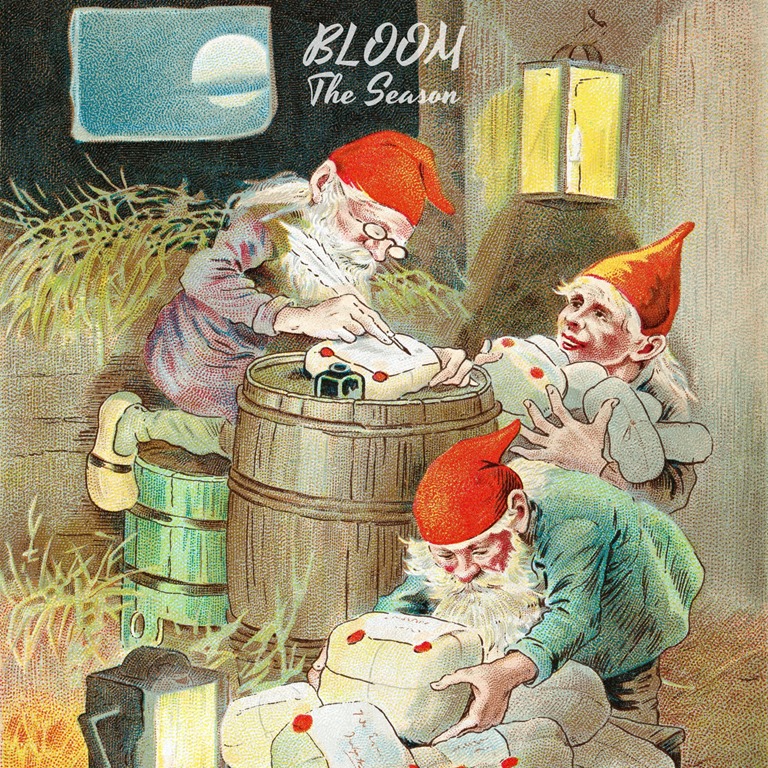
But there is always space for an exception, and Bloom’s ‘The Season’ is it. Deborah may have been posting pics on Facebook of the ‘festive mouse’ in the studio to mark this release, but said mouse is looking over a piece of kit called ‘Psychosis Lab’ made by Resonance Circuits. The cuddly cartoon cover art for this release is misleading, and for that, I am grateful.
It’s five minutes of deep, hefty beats melded to a throbbing industrial synth bass. Atop this thumping dance-orientated rhythm section, there are synths which bring a dark 80s synthpop vibe. In combination, the feel is in the vein of a dance remix of Depeche Mode circa ‘85 or ’86, around the point they began making the transition from bouncy pop toward altogether darker territories. It’s repetitive, hypnotic, pulsating, big on energy. But there are eerie whispers which drift through it all, distant wails like spirits rising from their graves. These haunting echoes are more evocative of Halloween than Christmas – and this is a significant part of the appeal. It’s a curious combination of ethereal mists and hefty, driving dance groove, which is simultaneously uplifting, tense, and enigmatic. It is not schmaltzy, cheesy, twee, or saccharine. It’s the season, alright. The season to be weird, to be unconventional, to accept those darker moods and remember that they will pass. It’s a Christmas anthem for those who aren’t feeling festive. And I will most certainly drink to that.
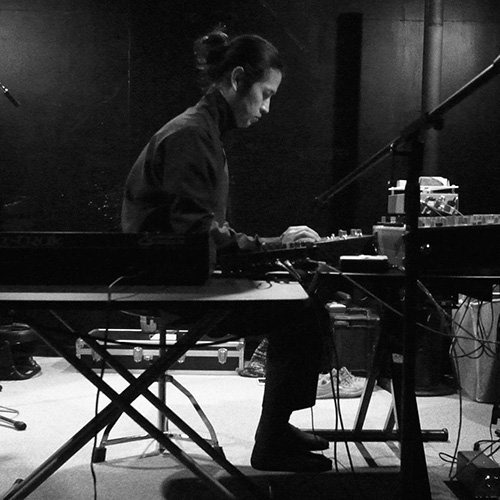
Tomoyoshi Date’s biography makes for an interesting read: he’s described as ‘a physician and musician known for his releases on prominent ambient labels such as 12K (US), LAAPS (France), and QuietDetails (UK)’. There’s much to be said for having a creative outlet which is completely separate from one’s day-job, especially when that day-job carries a degree of responsibility and likely brings with it no small level of stress.
Tomoyoshi Date has gone a step further, though. You couldn’t really call being a musician releasing ambient works on avant-garde microlabels a ‘side-hustle’ – which seems to be all the rage of late, and seems to be something people are proud of and the media love as much as they used to love contestants on Big Brother after they’d left the house, rather than acknowledging that this is a symptom of how capitalist structures are failing so many working-class people: this is more of a parallel career, and presumably Tomoyoshi Date’s ‘professional’ occupation affords the time and space to pursue the ‘other’ career.
Having recently written on how the four-CD box by Dolium, and the near hour-long single track album Leaves never fall in vain by Fear of the Object require a certain time commitment, I’m here in the face of not one, but three albums. Because Piano Trilogy is not a set of three compositions, but three separate works, recorded between 2021 and 2024, which collectively form a trilogy, released as a cassette package in an edition of 150 copies. It’s niche, alright, and as I said, there’s no way this would pay the rent as a primary occupation – which is a shame, but it’s the crappy capitalist world we live in, unfortunately. Were things different, I could write about music all day long and put food on the table.
This trilogy is formed of ‘ 438Hz, As it is, As you are, released by LAAPS and selected as one of Bandcamp’s Best Ambient albums in January 2023; Tata, composed for Silver Gelatin’s exhibit at Tata in Koenji, Tokyo; and Requiem, a piece dedicated in memory of a close friend who passed away too soon’ and ‘All three albums are packaged in special jackets featuring found photographs curated by Silverわ Gelatin and are being released simultaneously.’
An album trilogy released simultaneously is a lot to assimilate, and few, if any, listeners are ever going to listen to these three albums back-to-back, not even Tomoyoshi Date’s biggest fans. But for review purposes, that’s precisely the task I have set myself.
Date is clearly a gifted composer and musician, and it’s certainly no criticism to observe that the music drifts by, lightly and effortlessly. Amidst the piano notes which ripple serenely are stutters and glitches which deviate from the more classically-orientated template and explore more electronic, experimental territories. But Date does so subtly, delicately.
438Hz, As it is, As you are is a most soothing work, consisting of four compositions spanning around half an hour. Drones and slow-turning ambient tones, and birdsong occupy much of the space between piano notes, and the effect is relaxing, like a walk in nature. It’s the shortest of the three, with Tata and Requiem both stretching well beyond forty minutes I duration.
Tata is more ‘pure’ piano, and runs for almost forty-five minutes, while Requiem is sparse and melancholy, and stands apart: a pure piano work, it comprises six pieces, all over five minutes and up to more than eight and a half minutes in length, and rich in low-key melancholy.
These are clearly separate and distinct works, but they’re very much complimentary, and work together as a suite.
No-one will be surprised to learn that I spend little to no time listening to mainstream or chart music anymore. I say anymore, as growing up, this was my first access to music, just as it was for anyone else growing up in the 80s. Top of the Pops, the top 40 on a Sunday night on Radio 1, The Chart Show (which even had an ‘indie chart’ rundown)… This was a time when ‘alternative’ bands scored top 40 singles. People of a certain age always hark back to the revelation that was seeing Bowie perform ‘Starman’ on Top of the Pops, and seeing Marc Bolan. For me, I have formative recollections of Killing Joke on Top of The Pops… Divine… The Sisters of Mercy. I didn’t necessarily know what to make of these artists at first, but they made an impression. And after the Top 40 in a Sunday, there was the request show with Annie Nightingale, which played all kinds of stuff… and this was, I suppose, a route which led towards John Peel, reading Melody Maker… Now, to find anything different, outside of the mainstream takes effort – but equally, unless you’re already actively engaging with it, one has to actively seek it. Since The Internet became the dominant medium, terrestrial radio has seen its role and reach significantly diminished.
But from the little contemporary pop I have heard in recent years, I’m acutely aware of how songs have got shorter, how intros are abridged to the point of non-existence, how diving straight into the chorus as soon as possible is the objective. Delayed gratification? Forget it. Build-up? Huh? Albums?
Outside the mainstream, in evermore fragmented circles, artists have been pulling in the opposite direction. Albums designed to be played in sequence, containing songs with long intros and slow buildups are actually in favour.
Fear of the Object’s Leaves never fall in vain is an object which would likely strike fear into the heart of anyone unaccustomed to non-mainstream music. It’s a rumbling, dark ambient work, entirely devoid of beats, and almost of vocals (featuring as it does features the poem “Democracy Destruct” by David Henderson, produced by Kjell Bjørgeengen at Harmolodic Studios in 2003), and contains just the one track, which has a running time of over fifty minutes. There’s no ‘getting to the chorus’ on this epic slab of sonic abstraction.
Leaves never fall in vain, which takes its title from Japanese poet Chori (1739-1778), is a live recording, which documents a concert at Kunstneres Hus (Artists ́House) in Oslo October 2023. It features an expanded lineup, featuring original members Aimeé Theriot on electric cello and Ingar Zach on vibrating membrane/transducers, with the addition of Inga Margrete Aas on double bass. Not that you would know from the sound alone that there is a double bass in the mix – or indeed, any single, specific instruments. The instruments all melt together to create a free-flowing – or, perhaps more accurately, free-trickling – babble of sound, which is simultaneously busy, bubbling, with top-end activity frothing and scraping like a mountain stream, but with long, slow currents of droning mid-range flowing sedately beneath. There are passages where, perhaps, the sonorous tones of the cello are discernible, but in the main, it’s a conglomeration of sounds meshing together – layered, certainly ranging in tone and frequency, with a foam of treble which pressures the top-end of the aural spectrum at times, not to mention the nails-on-a-blackboard incidental scrapes. In places, the interweaving feedback takes on a texture like Metal Machine Music on heavy sedatives, and as much as the interplay between the performers is remarkable, so, it has to be said, is their patience. It takes a certain skill to hold your nerve and play a piece out like this. And the longer they maintain this slow-roiling, minimal-yet-dense drone, punctuated by occasional crackles and rips, the tenser it becomes.
Henderson’s poem arrives in the final minutes, a spoken-word piece which stands, stark, dry, crisp, and clear, and unaccompanied, after the instruments have died away and fallen to silence. It’s a powerful work in its own right, and placed as it is, hits with unanticipated impact. As the silence takes over the space occupied by sound for the best part of an hour, you’re left feeling affected, and somehow altered. The power of Leaves never fall in vain lies in is understatement, its subtlety. But also, its duration is a factor, being as if the entire track was an extended intro to the passage of poetry. Buildup, delayed gratification… alien to the attention-deficit age in which we live, Leaves never fall in vain stands out for existing in another world completely.
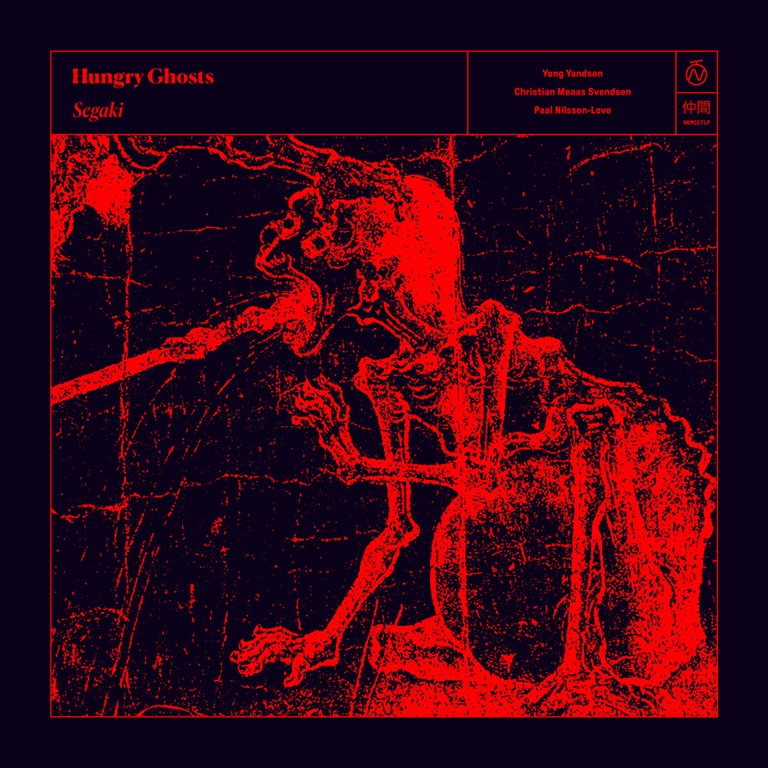
Is there such a thig as music-listening burnout? Probably not, but reviewing a new album on a more or less daily basis is knackering. There’s listening to music, and then there’s listening to music: one is passive, while the other is very much an active pursuit. But engaging – and fully engaging – with different forms of music can be strong and vigorous exercise for the mind, and when presented with music which is overtly challenging, there is a sensory workout involved, too. And Segaki, the second album by the Norwegian-Malaysian trio Hungry Ghosts, consisting of Malaysian tenor saxophonist Yong Yandsen ‘accompanied by the Norwegian powerhouse duo of Christian Meaas Svendsen on double bass and Paal Nilssen-Love on drums’ is most certainly challenging.
As their biography attests, ‘their debut record has been described as an album with an ‘unstoppable energy’ and like actual hungry ghosts (my italics) — the unfortunate souls who are reborn as pitiful creatures into their own miserable realm, punished for their mortal vices — the trio has an insatiable appetite for more… This appetite was temporarily quenched during their European tour in 2022. As part of this tour they played in a small Austrian town by the name of St. Johann in Tirol. That concert was recorded, and that recording became the raw ingredients for this release. Now, after having gone through a rather extensive two year long digestive system of listening, mixing, listening, mastering and listening again, the trio has brought us their second dish of hard hitting improv.’
The digestive system must be in quite a state if the album’s first track is anything to go by: ‘In search of filth like vomit and faeces to eat’ is sixteen sprawling minutes of frantic percussion and discordant sax frenzy. The title conjures an array of disturbing scenarios, from the dog, driven by stress, boredom, or anxiety to eat bodily waste, to something altogether more depraved and disturbed. The music itself provides no answers, only a crazed sprawl of rabid jazz which wanders and lurches in all directions, but amidst the mania, the phrase ‘shit-eating grin’ pops into my head uninvited. Of course it did. Some swear by various narcotics to open the mind, but for my money, music is the most powerful gateway to making unexpected associations and triggering recollections and reminiscences from almost out of nowhere. It’s not a grin I’m wearing by the end of this wild excursion, though, but a grimace, white knuckles gripping the sides of my chair as I exhale slowly. My head’s swimming, and I’m dizzy from the rollercoaster ride, and it’s the phrase ‘eat shit and die’ which bubbles up into my mind from my churning innards.
The viscerally continues on the altogether shorter ‘Small bits of pus and blood’ which completes side one. It’s sparser, atmospheric, uncomfortable. The percussion is altogether more restrained, yet dominates the minimal arrangement, and rhythms fleetingly emerge from the erratic clomps and clods before petering out to a lone trilling whistle.
Flip to side two and ‘Mountain valley bowels full of grime’ starts quietly but soon builds to a sustained crescendo, and keeps on crashing and braying away with a cranium-splitting intensity for almost twenty-two minutes. The drums explode in a perpetual roll, the double bass runs… run and run beneath sax mania that sounds like a jet engine.
‘A great decomposing odour’ delivers the final blow: at a minute and fifty-three seconds long, it feels like a jazzed-out sucker punch which takes unfair advantage of the dizzy, bewildered state one finds oneself in having seemingly, unknowingly, fallen down the mountainside into the valley and into the grime head-first.
The titles feel as if they belong to a gritty, grimy, sludgy metal album, but what Hungry Ghosts evidence on Segaki is that darkness, weight, intensity, and befouled viscerality are not exclusive to the metal domain, and that it’s possible to articulate sensations with a rare physicality without the need for distortion or snarling vocals – or, indeed, any vocals at all. With Segaki, Hungry Ghosts achieve a level of intensity and a power which is intensified by just how unexpected it is.
Hull has produced some impressive bands – especially at the noisier end of the spectrum –in recent years, with Cannibal Animal, Bedsit, and Ketamine Kow being particular standouts, but not to forget BDRMM, Chambers, or Low Hummer. It’s always a treat when they send a contingent to York. Warren Records have established some sort of exchange programme with The Fulford Arms, offering some quality lineups for little or no money – as is the case tonight, thanks to the support of a well-deserved arts grant for the label. Turnouts tend to be decent, too, with an unusual ratio of travelling fans from that spot just north of the Humber.
Having raved about Bug Facer’s releases, there was no way I was going to pass upon the opportunity to see them live, and there’s a growing buzz around Wench! too.
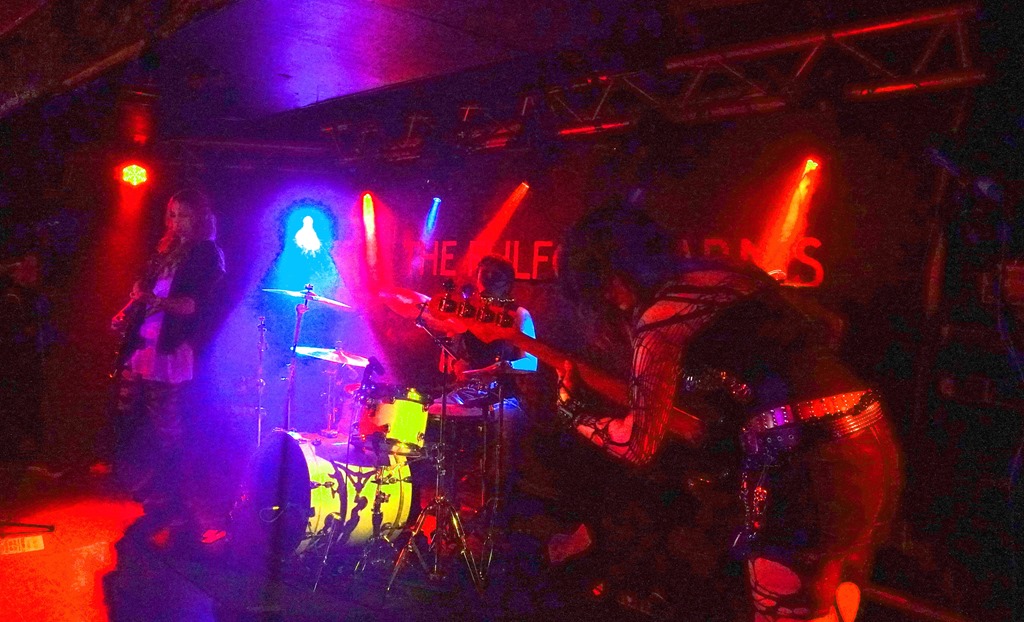
It’s immediately apparent that the buzz is more than justified. Wow. Fuck me. Wench! are phenomenal. An all-female power-trio with the emphasis on power, they play proper punk, and play loud and hard, and they’re as tight as they are fierce. It’s drummer Kit Blight who covers the majority of the vocals, and the vocals re strong, all while blasting beats at a hundred miles an hour. Bassist Hebe Gabel, a headbanging blur of spikes and studs is a dominant physical presence on stage, and steps in with some super-heavy wah-wah loaded lead breaks which owe more to stoner rock than punk. The interplay between the three is magnificent: each brings a different style of musicianship and performance to the stage, and they are one hundred percent complimentary. This may only be their second gig outside of Hull, but shows like this are almost certain to get them bookings – and fans – racking up fast.
When you read about how grassroots venues are vital for feeding the upward chain, and you realise you’re watching a band with the potential to join the ranks of Dream Wife and Amyl And The Sniffers a few years hence, the narrative takes on a powerful resonance.
Wench!
Bug Facer’s studio work is a blinding cacophony. Live, they’re something else, a brain-melting, eardrum-punishing, feedback-shredding squall of filthy chaos. The vocals are shared between the drummer and bassist – who is also, it turns out, guitarist, to add to the confusion.
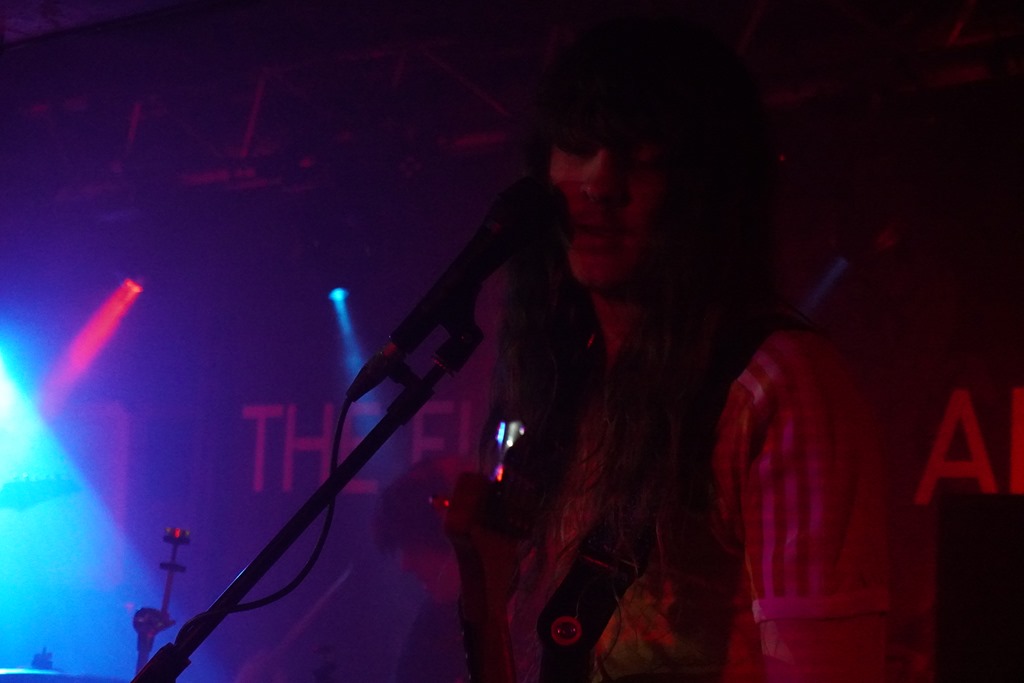
They look like they sound, and sound like they look: the bassist is a burly guy with tattoos and a Meshuggah T-shirt; the bassist looks like he’s travelled in time from 1974, sporting an orange Adidas T-Shirt, flared cords and long hair with a home-cut fringe; meanwhile, the drummer wears comfort-fit faded jeans and a comedic cast T-shirt. You never saw such a bunch of misfits, and it translates directly into the music – perhaps more accurately described as a blast of sonic mayhem.
Bug Facer
Driving rhythms underpin a wild tempest of discord and noise. They boast the crunchiest ribcage-rattling bass and a wall of guitar noise that sounds like war. The vocals are an array of shouts and grunts and monotone spoken word mumblings and psychotic screams. More than once, the bassist and guitarist swap instruments.
They don’t say much. “Is this in tune? It’s close enough” is representative of both the bantz and the approach to performing. It’s not punk, it’s not post-punk, it’s not sludge, or stoner, or anything really; but it contains elements of all of the aforementioned, and they play like they want you to hate them and getting the biggest kick out of being as sonically challenging as they can muster. Ragged, raw, and absolutely wild, it’s one hell of a set.
Credit to Heartsink for being on this bill and willing to follow Bug Facer, with whom they’ve shared a stage previously. It’s certainly a brave move – or an example of insanity.
The last time I – knowingly – saw them was when I caught the tail-end of a set at The Key Club in Leeds in 2018. Six years is certainly time enough to evolve. But punk-pop doesn’t really evolve, and exists in a state of arrested development, just as it always did, when, on breaking in the early 00s, middle-aged men would sing songs about being in school and having crushes on their classmates, or their teachers, or their classmates’ mums.
“Is anyone a fan of the US Office?” In this question, we get a measure of both the quality of the chat, and the inspiration behind their songs. I’m not entirely convinced it counts as evolution.
Heartsink
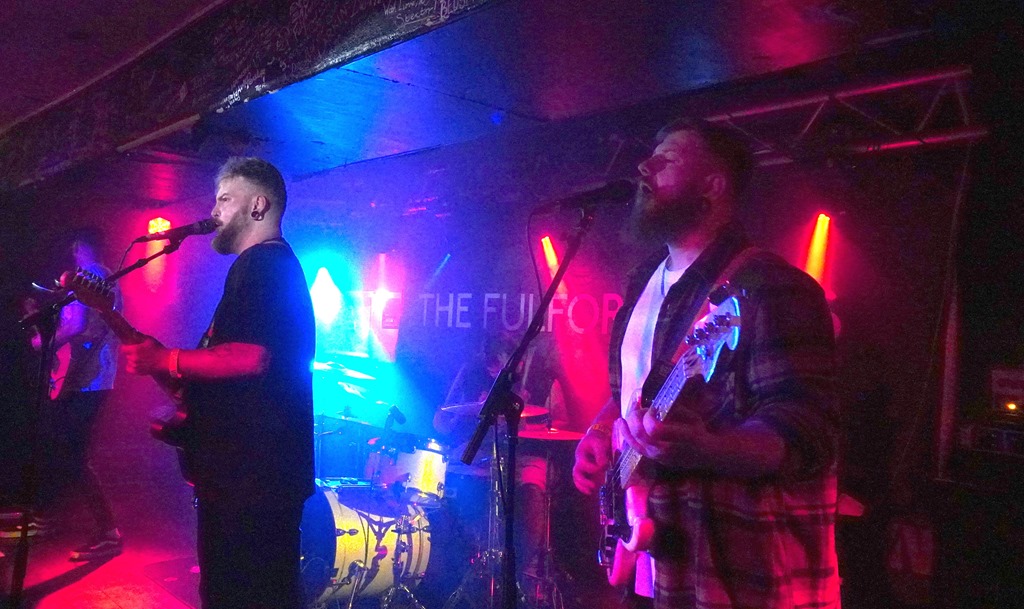
Credit where it’s due: they are undeniably solid, energetic, the songs are catchy, and they’re clearly enjoying themselves. People down the front are enjoying them, too. They’re co-ordinated with matching rainbow guitar straps… and trainers, and beards. They do bring some big riffy breakdowns in places, and the melodies are keen. But… but…ultimately, it’s generic and bland. And pop-punk. There’s clearly an eternal market for this, and fair play, especially as, what they’ve ultimately achieved is to get people out and dancing to original (‘original’) songs at a grassroots venue on the coldest November night in a decade. When venues around the country are disappearing by the week, and the ones we have are hosting tribute acts five nights a week, having the option to view three solid quality bands – two of whom are absolutely out there, albeit in very different ways – for no quids is something to shout about.
Anniversary editions and reissues have become a massive part of the music industry in recent years, in keeping with the ever-growing tendency to milk all things nostalgic. Many are shameless cash-ins, designed to compel dewy-eyed fans to purchase an album from their your again at eye-watering expense in order to hear it in a new ‘improved’ remastered form, accompanied by several discs of demos, outtakes, acoustic and alternative versions, and contemporaneous live recordings that no-one ever plays more than once if at all, while cherishing a deluxe booklet of photos and whatnot and reflecting on just how fucking old they are and wondering where the decades have gone.
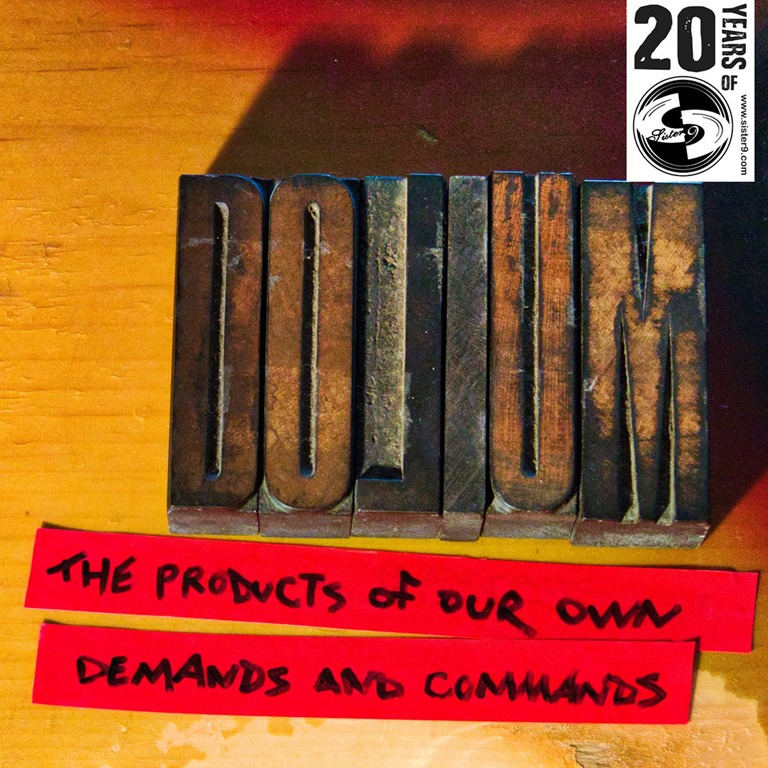
That doesn’t mean there’s no merit to marking anniversaries, and this release is rather different, being a part of the commemorations of twenty years of Sister 9 Recordings with a comprehensive retrospective of cult Sheffield act Dolium, who first broke onto the city scene around the turn of the millennium, before coming to the attention of John Peel in 2004. The band went on indefinite hiatus in 2010, but during their years of activity, amassed a substantial body of work, including two full-length albums, Kisses Fractures (2005), and Hellhounds On The Prowl (2008). A third album, Brother Transistor, was recorded but never saw the light of day… until now. Add all of their singles and other bits and bobs, including their shelved debut single – which made it to test pressing but no further due to lack of funds – and this four-CD set provides instant access to their complete discography, and more. As such, it’s a boon for fans and an ideal introduction for anyone unfamiliar with an act described by KERRANG! as ‘a less depressing Joy Division mixed with the black horror of Bauhaus and the melodic dynamics of the Pixies’.
I’m not entirely convinced there’s much ‘black horror’ to be found in Bauhaus’ catalogue, but it does capture the punky / goth stylings of a band who espoused the indie / DIY ethic and injected every moment with pure adrenaline. They started out with a drum machine, but progressed to live drums when Simon Himsworth joined. Being a small world, it would appear that this is the same Simon Himsworth who would later play guitar in brief but legendary York band We Could Be Astronauts alongside former Seahorse Stu Fletcher.
There’s an obvious chronology about the first two discs, which contain Kisses Fractures and Hellhounds On The Prowl respectively, with contemporaneous EPs and singles by way of bonuses. As titles like ‘She’s The Pill That Makes Me Want To Stay’, ‘Drug City’, and ‘Whore Whore’, all from Kisses Fractures indicate, this is a band who are fully committed to the trash aesthetic of sex ‘n’ drugs ‘n’ rock ‘n’ roll – with a heap of death and suicide on top – and Kisses Fractures is a low-fi blast of post-punk drama. With hints of The Jesus and Mary Chain and The March Violets in the mix, likening the sound to any specific bands is difficult and rather too specific: what they bring is an assimilation of an era and an aesthetic, and the sound is more that off the mid-80s than the mid-00s. It’s exciting: there’s no let-up, no mid-album lighter-waving anthem, just back-to-back overdriven explosions of raw energy that are every bit as punk as anything released in ’77 or ’78. ‘Driving With The Deathettes’ B-side ‘Daddy’s Swinging in the Attic’ cranks up the sleaze true-crime dirt, against some repetitive lo-fi riffage.
The same themes are present on Hellhounds On The Prowl, which delivers another batch of tightly-packed squalor-filled shock, horror, and filth with titles like ‘“Suicide” Was My First Word’, ‘Coughin’ In The Coffin’, and ‘Junkie Howlin’’, the latter being a swampy, hipshaking fucked-up rockabilly boogie which pretty much sets the level for the album, which does feel more evolved, if not necessarily more mature. ‘We Want Your Blood’ is a lurch into straight-up B-movie horrorcore, and the thunderous ‘She Can’t Steak My Heart’ continues to place the vampire fixation, while ‘Gü the Destroyer’ melds the high-octane explosivity of Dead Kennedys with an Industrial edge. It works, and they get away with it because there’s clearly a dash of pastiche and self-awareness infused with the relentlessly rambunctious rock ‘n’ roll.
As much as they’re about drawing on, and revelling in, cliché, and the work of their precursors, there’s clear common ground with contemporaries like Eighties Matchbox B-Line Disaster. I say ‘like’, but it’s a very short list, to say the least. Then again, the scuzzy garage blitzkrieg of tracks like ‘Godspeed Your Love To Me’ sits comfortably alongside garage revival acts like The Strokes and The Hives. Only this evidences that Dolium were better. As is so often the case, it’s not always the good bands who make it, and perhaps Dolium were just too intense, too wild, too primitive. Among an endless list of contemporaneous vampire-themed ragers, including ‘Holy Water’, ‘Oh Lord, I See No Reflection’, ‘These Fans Have Fucking Fangs!’, ‘You’ve Got Holes!’ comes on like Queens of the Stone Age, and if nothing else, showcases the band’s eclecticism.
I’m sure forums and fans have debated the ins and out of why they decided to call it a day before putting out album number three, but there’s little out in the world on the topic, and hearing the material on its belated arrival gives no clue: it presents the band in ferocious form, evolved to another level, bursting with gritty guitars and showcasing a newfound level of songwriting ability – there are hooks galore, and the production is meaty. It may be more accessible than its predecessors, but it’s by no means mainstream. ‘Get Off on My Machine’ brings the riotous grunge blitzkrieg of Pulled Apart By Horses; ‘(There Goes My) Jellies Girl’ offers unexpected melody and could almost qualify as ‘anthemic’. The gritty uptempo chuggernaut of ‘The Future In Hands’ seems to take not-so-subtle cues from ‘My Sherona’. It’s so tempting to contemplate what might have been… but to do so is futile. The past is past, and Dolium’s peak is certainly past, but Brother Transistor is a belter and that’s an ineffable fact.
AA
The fourth and final disc, which brings together everything else not included on the other discs, namely the first four-track demos and a bunch of offcuts and rarities from the span of their career, is, as one would anticipate, something of a mixed bag, and often raw, rough, and barely ready. The demos provide an insight into the early evolution of the band and their early material, again sounding more like they were recorded in 1983.
With seventy-six tracks, this is not only a monster, but a truly definitive collection which presents the good, band, and the ugly – but mostly it’s either good or ugly. One thing is clear: Dolium were a band out of time: sounding like 1984, they’d likely have gone down a storm now or as part of either the goth revival of the late 90s or a few years ago. They just weren’t the sound of the post-rock dominated mid-noughties. But if there’s any justice, history will recognise Dolium as underground greats.
Simon Whetham’s latest work is a fascinating hybrid which incorporates found sounds and elements of layering in order to create a whole other world, a different dimension. The album itself is part of a larger project, which is more readily explained through quotation than a stumbling stab at paraphrase:
Successive Actions is an iteration of the larger kinetic sound performance project series Channelling in which various motor devices, salvaged from obsolete and discarded consumer technology, are activated by playing sound recordings through them. In turn, this produces new sounds from the devices, which are amplified using various microphones and techniques. The title comes from Dirk Raaijmakers’s "The Art of Reading Machines" as a term for mass production processes. As such, the recordings played through the devices are recordings of other devices used in previous versions of Channelling, in which the sounds used were seemingly mundane sound phenomena that occur unpredictably and irregularly in everyday life, as passing traffic, wind, doors closing. So now the sounds of devices malfunctioning and breaking from their programming are causing further action and disruption.
Successive Actions contains sixteen pieces, although only four extend beyond four minutes in duration, with the majority sitting only a short way over the two-minute mark, giving the album a fragmentary feel. But there’s a strong sense of cohesion, too: the title of each of the pieces ends in ‘action’, from ‘Action’ to ‘Protraction’, via ‘Inaction’, ‘Impaction’, and ‘Abstraction’.
While much of the album takes the form of abstract ambience and general murk, there are moments which stand out with levels of heightened discomfort: ‘Reaction’ conjures the bleak whistling wind of a nuclear winter. ‘Inaction’ scrapes and buzzes; it’s unsettling, but it’s not uncomfortable to the point that it’s unbearable: it just makes you feel tense, awkward. You want to seem a less stressful environment. But there s no less stressful environment, and life is stress: to escape that is to deny the reality of the everyday, for the majority. Under capitalism, we are all stressed, and on Successive Actions, Simon Whetham gives us a soundtrack to that stress and anxiety.
Mass production is, arguably, a fundamental source of our woes in the modern age. The Industrial Revolution brought so much promise, but as capitalism has accelerated and expanded at a pace which exceeds our capacity to assimilate, so it has become an ever-greater source of alienation. And here we are, overwhelmed by the road of the big machine as it continually whirrs and grinds. Sometimes its but a crunch and a gurgle, a hum and a thump. A buzz of electricity, a mains hum, as dominates both ‘Retroaction’ and ‘Counteraction’. It’s a cranial buzz and pushes frequencies which are uncomfortable, and as the album progresses it plaiters, and turns dark.
For myself, I feel a certain sense of release while immersing myself in the textures and layers of Successive Actions. There are moments when the album really achieves a heightened sense of – and in panic, of anxiety, of intensified reality. Other moments are altogether more sparse, steering the listener inside themselves into a the depths of an interior world.
Successive Actions is deep, dark, difficult. And so is life. On Successive Actions, Simon Whethamcaptures it, all elements of life that is. It crackles and fizzes with tension, and tension is high.
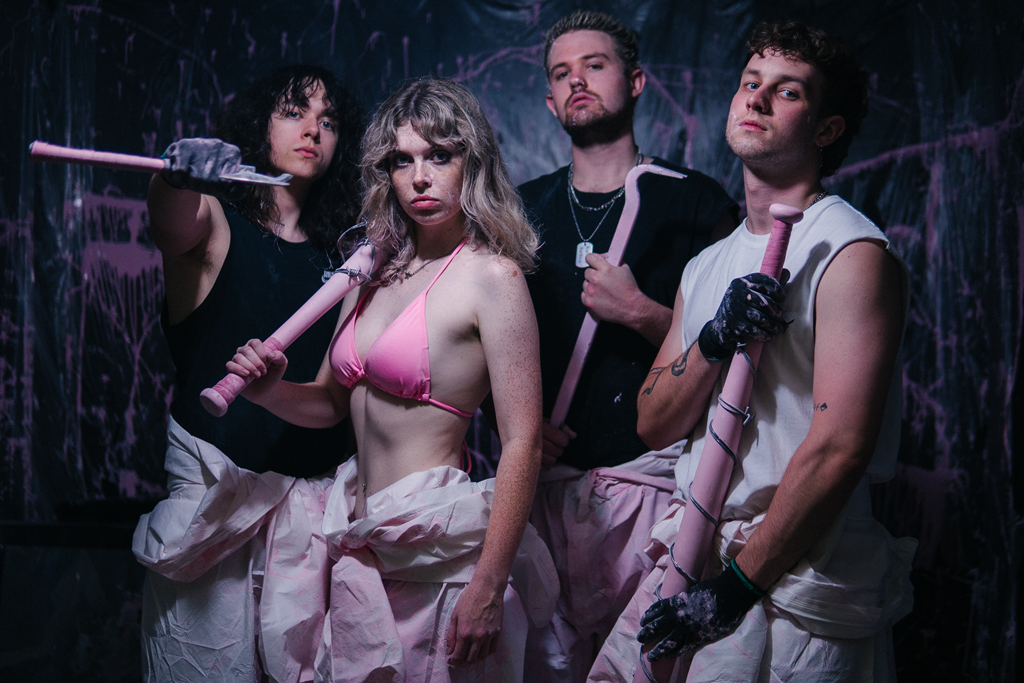
“Do not tell me to smile / I’m feeling volatile,” Eva Sheldrake warns menacingly against a dense, churning chug of overdriven, distorted guitar. Sporting a pink bikini but wielding a baseball bat, you can sense things are about to kick off. And oh boy, do they kick off.
Eville have balanced fire and fury and dense nu-metal guitars with killer hooks and keen melodies from day one, and ‘Messy’ represented a peak in terms of their accessible but hard brat metal stylings, but something has happened here.
Eva’s clearly the band focal point, and as the vocalist and lyricist, to some extent sets the agenda, and on the evidence of ‘Ballistic’, she’s reached her limit and she’s calling it out on shitty men being fucking cunts.
Daily, there are articles in the news and music media about men who are sleazy, rapey, slimeball abusers as victims – exes, fans, colleagues – reach their limit and speak out. Even when there’s no abuse involved, women are faced, daily, with leering, with looks, with salacious comments, patronising mansplaining, being told to cheer up, or to smile, and simply endless shit from twatty men who feel entitled to invade their space in any way they please. ‘Ballistic’ is an explosion of rage that simply says ‘enough is enough’. As such, there’s less focus the accessible melodic elements and everything is channelled into the message, with the medium corresponding with zero compromise.
The familiar stuttering beats kick in at the start before ‘Ballistic’ fulfils the title’s promise and explodes like ‘Firestarter’ on steroids. The band’s performance sees Eville take a giant leap to a brand new level: the guitar is a concrete wall, the drums thrash frenetically, and the vocals… Sheldrake howls like a demon, a full-throated roar, while simultaneously, the accompanying video shows the band taking their bats and smashing various objects in pure unbridled anger.
‘Fuck the system! Go ballistic!’ It’s a simple hook, but pure perfection in its concision. It’s a battle cry, it’s rousing, it’s time to fuck shit up. It is not time to accept the status quo, to tolerate bullshit and plain shitty behaviour.
It’s sheer coincidence that ‘Ballistic’ has landed just a week after the dismal US election result, and misogynistic wankers started ‘your body, my choice’ trending on the festering cesspit promoting every ‘ism going in the name of ‘free speech’, but with this timely release, Eville have delivered an uncompromising anthem that shoves it to all the incel bros and all the other douches. They’re not all necessarily rabid Andrew Tate fans, but just your everyday casual sexist creep.
Clocking in at two and a quarter minutes, ‘Ballistic’ is everything Eville have promised to date, and more, delivering an absolutely definitive statement, and one the most powerful songs you’ll hear for a long time to come.