Archive for the ‘Reviews’ Category

Majestic Mountain Records – 28th February 2025

Christopher Nisnibor

Kodok, the third album from The Grey, is pitrched as ‘a masterful fusion of raw energy, deep emotion, and undeniable artistic growth… carv[ing] a new narrative, guiding listeners through an intricate yet comforting journey of power, pain, and catharsis.’ They’ve also put a lot of work into broadening their range, or, as they put it, ‘Kodok expands the band’s sonic palette, offering a richly varied tonal composition. The album is further elevated by collaborations with an incredible roster of guest artists, including Will Haven, Ace Skunk Anansie, Ricky Warwick, fattybassman, and dARKMODE, bringing unexpected depth and fresh musicality to the project.’

The album contains only six tracks, but there are some bona fide epics here, in particular the first piece, ‘Painted Lady’, which extends to almost twelve minutes. It begins with dark, thunderous rumblings, and then the guitars crash in, and the riff GOES. It’s a slow, pummelling brute of a tune, with rolling drums and weighty bass, but the guitar has an unexpected brightness to it… and over it’s expansive duration, we’re lead through an array of soundscapes – sometimes rolling hills, others gathering storms over exposed rock summits, and around the eight-minute mark it goes full riff juggernaut.

It’s metal, it’s post-metal, it’s stonerish, it’s wide-ranging musically articulate. And it feels like an album. They explain how it’s ‘Designed as a sequential body of work—with a clear beginning, middle, and end’ and that ‘Kodok invites listeners to fully immerse themselves in its journey’, and it certainly does feel like a journey,

The seven-minute ‘La Bruja (Cygnus)’ really goes all out on the weight, the heft of the guitar churning out a supremely girthy riff is powerful, but the second half switches to amore ethereal sound, with subtly chiming guitars and atmospheric synths, and – for the first time – vocals, before a crushing flange-soaked riff assault by way of a finale. ‘Sharpen the Knife’ goes darker and heavier, with a grainer, sludgier feel and invites reference to Neurosis in its thick, dense, earthy churn… and then things get heavier still on the nine-minute ‘CHVRCH’, which is simply immense in every respect, its dynamics evoking not only Neurosis but Amenra. There is delicacy, grace, elegance here, and you feel yourself ache inside, and then the pedals are on and immediately it’s a tempest.

By rights, I should be yawning at another nine-minute riff-driven workout with dynamic, prog-influenced breakdowns, but there’s something in that wait, the suspense, then the release when it finally drops that’s exhilarating, and ultimately a source of joy. I suppose that just as some people get a huge buzz and the big laugh from the sitcom or comedian with a catchphrase or quintessential punchline that really is IT, the anticipation of the riff landing followed by that BOOM! moment is similar, only more cathartic. It’s not easy to articulate to anyone who hasn’t experienced that specific rush just how powerful it can be, and how it’s a multisensory explosion, something that’s physical, emotive, almost euphoric, as well as simply something you hear with your ears.

During the course of Kodok, The Grey deliver these moments with frequency and precision, with maximum impact. When there are vocals – as on the simple, acoustic ‘Don’t Say Goodbye’ – they’re compellingly melancholy, and it provides welcome transition ahead of the soaring epic that is ‘AFG’, a cut whereby its five-minute running time is simply nowhere near enough.

The download features a couple of extra cuts, but in terms of maintaining the album’s integrity, no extras are required.

AA

a3706604145_10

Kranky – 21st February 2025

Christopher Nosnibor

One thing you have to say about Tim Hecker is that his output has been varied, and his career interesting. This isn’t a case of damning with faint praise: it’s very much about highlighting what makes him such a remarkable artist – the fact he doesn’t simply mine the same seem in perpetuity. The difference between the organ-based compositions of Ravedeath, 1972 (2011) and the dark ambience of No Highs (2023) is vast, and is emblematic of an artist who simply cannot be confined within narrow constraints. Electronic music is an immensely broad church, and Hecker’s output ventures the field far and wide.

This is perhaps exemplified no more clearly than on Shards, ‘a collection of pieces originally written for various film and TV soundtracks Tim Hecker has scored over the last half decade. These compositions were originally written for scoring projects including Infinity Pool, The North Water, Luzifer, and La Tour.’

The album’s seven compositions highlight Hecker’s capacity to mould mood.

‘Heaven Will Come’ evolves and expands over the course of its four minutes and forty-eight seconds, growing from delicate but expansive elongated organ-like notes to a swirl of anxiety, with dank, rumbling bass lumbering around, as if without direction, amidst warped, bending undulations, an uneasy discord. ‘Morning (piano version)’ is very pianoey… but also brings booming bass resonance, and slight, flickering, glimmers of sound, almost insectoid, and mournful strings which bend and twist and ultimately fade… to be replaced by a deathly bussing drone and distortion which fills your head in the most uncomfortable way.

The hectically scratchy plink and plonk and looping delirium of ‘Monotone 3’ hints at the trilling of woodwind-led jazz, but there are menacing drones and weird shapes being sculpted here.

Hecker specialises in the disorientating, the unheimlich: the majority of the pieces here are superficially calm, tranquil – even the more brooding ones. But something about each isn’t quite right – there are dark undercurrents, or there is a twist, from out of nowhere. And herein lies Hecker’s unique skill as a composer.: he can twist ambience into discomfort, and at the most unexpected times and in the most unexpected ways. Consequently, Shards brings many twists and turns: at times soothing, at others tense, and at others still claustrophobic and even almost overwhelming, and it completely take you over as you feel this range of different sensations.

Shards – appropriately titled in that it draws together splinters of Hecker’s diverse  and divergent output is an exercise in depth, range, and magnificence. Sit back, bask, and take in the textures.

AA

a3720420051_10

Christopher Nosnibor

On this night twenty-four years ago, I was at Leeds University Refectory, watching The Sisters of Mercy play their tenth anniversary gig. Having previously only seen them once, in November 1990, at Wembley Arena, to be in the front row in a venue so much more intimate was absolutely mind-blowing. This reminiscence has little to no correspondence to tonight’s event, beyond the date, although I recall that it was a bitingly cold night, the kind of seasonal grimness that means it’s a real effort to venture out.

Thankfully, despite it not only being absolutely biting, but being a Sunday, a decent crowd has ventured out for this, the second part of the album launch event for The Illness’ debut album (the first part having been in Liverpool the night before, with the band being split between Liverpool and York). 6:30 doors and the prospect of not only two quality bands and an early finish are likely all contributing factors in terms of incentive.

So what do we know about The Illness? Not a lot. It’s taken them a decade knocking about to get to this point. The notes which accompany the Bandcamp of their eponymous EP, released in 2020 and featuring Steve West and Bob Nastanovich of Pavement, gives a clue as to where the time goes: ‘Following 5+ years of scrapped sessions, line-up changes and other distractions, both tracks were initially recorded in the basement of a former maternity home, Heworth Moor House in York (on Scout Niblett’s old 8-track machine). Steve recorded his vocals at Marble Valley Studio, Richmond, Virginia and Bob in Des Moines, Iowa.’

It’s a tale reminiscent of the likes of The Stone Roses and My Bloody Valentine stalling on their second album… only this is a band that stalled for more than five years without releasing a note. So the fact Macrodosed has arrived at all seems nothing short of miraculous.

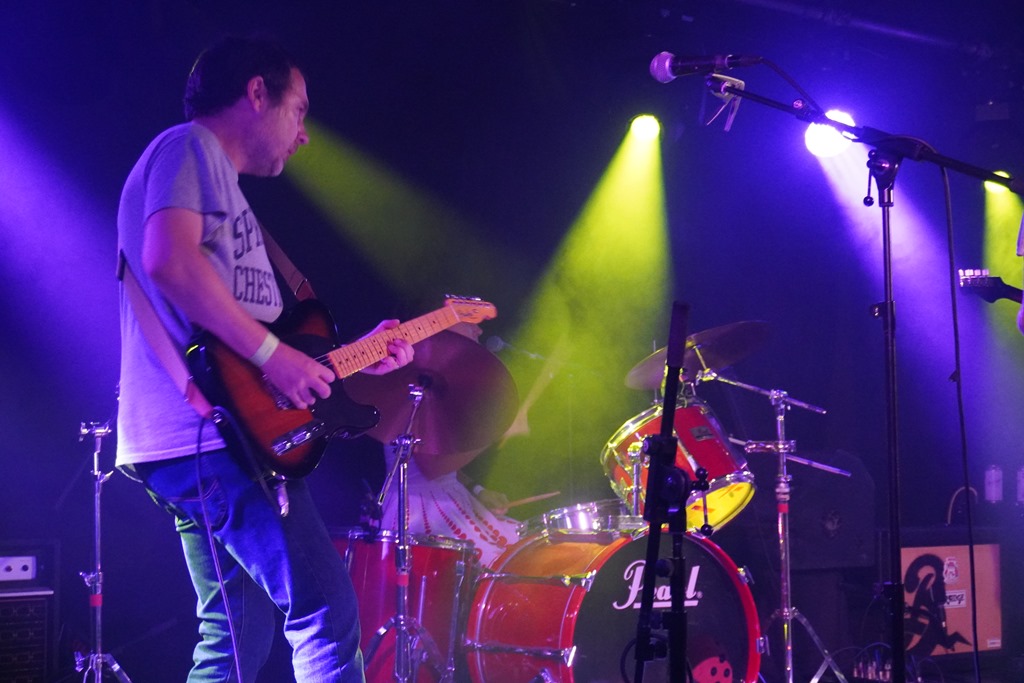
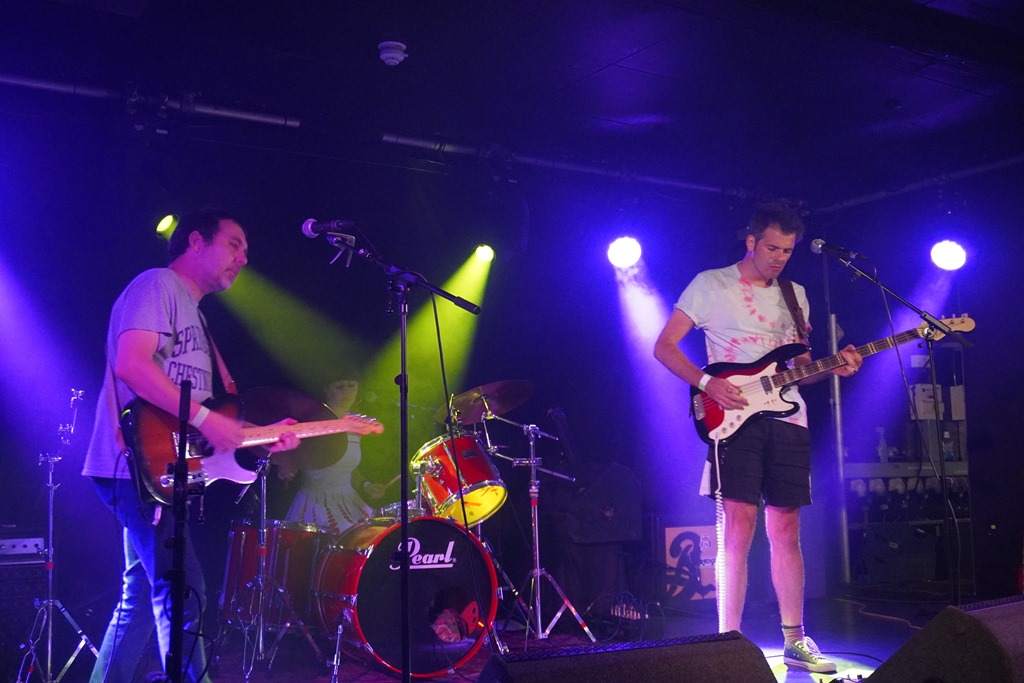
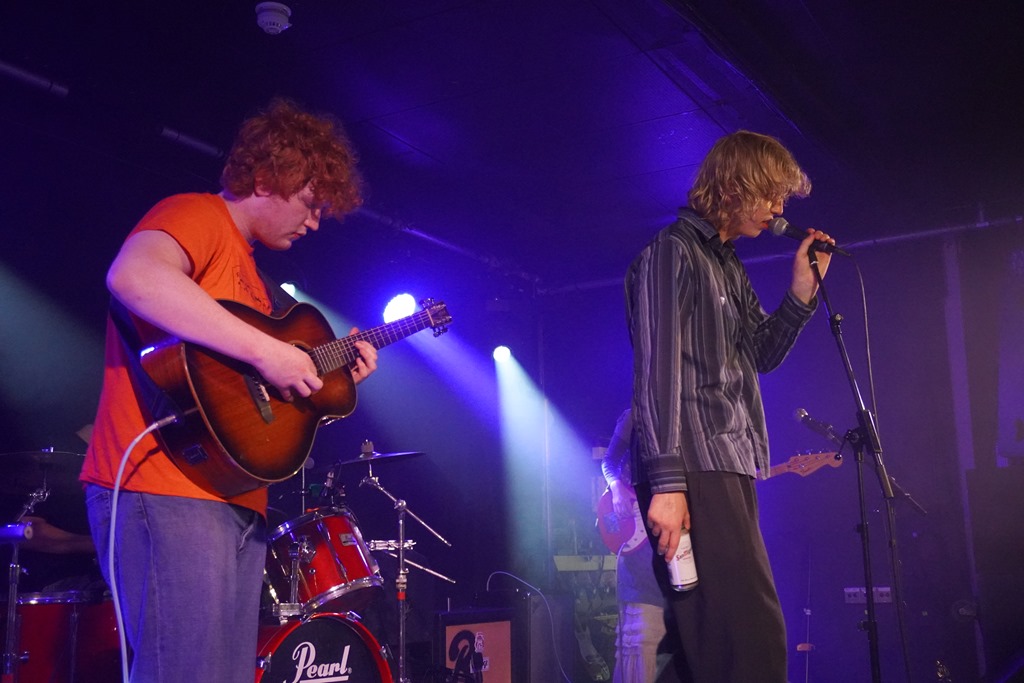
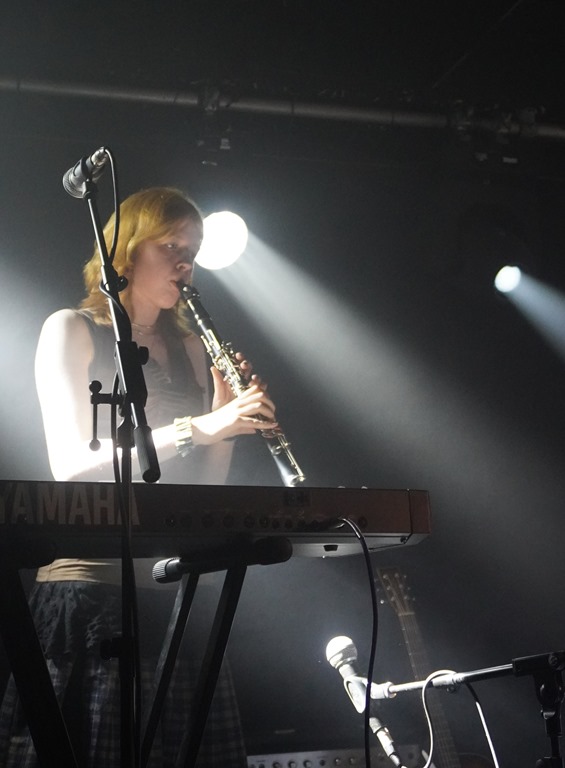
Before they launch the album, Nature Kids – a band who’ve been gigging around York for a while but I have no experience of – warm things up, and they’re nice. That’s not ‘nice’ in the bland, insipid way, but the enthusiastic way. They serve up a set of mellow indie, which is both happy and sad at the same time. There’s some nice twangy country tones and subtle keyboard work, and some saw action, too. ‘Always’ goes a bit post-punk and has a tidy groove to it, and is a standout in a set of consistent quality. The lead guitar is what really stands out – although it’s subtle and understated, to the point that it takes a few songs to realise what it is about their sound that’s so magic. No two ways about it, this is a gem of a band.

DSC01079DSC01082

Nature Kids

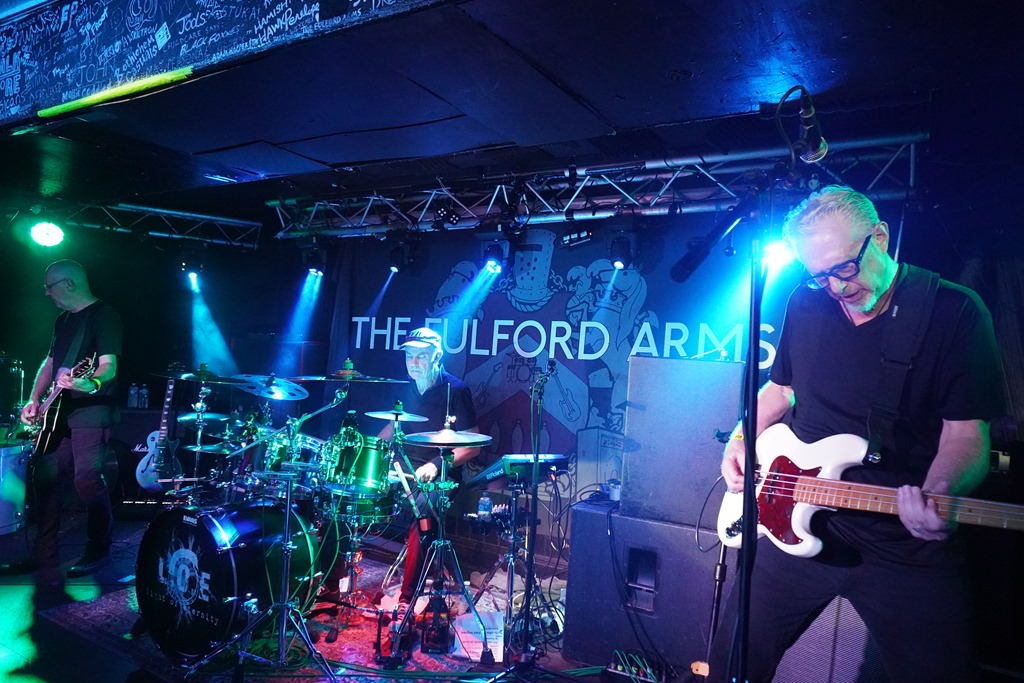
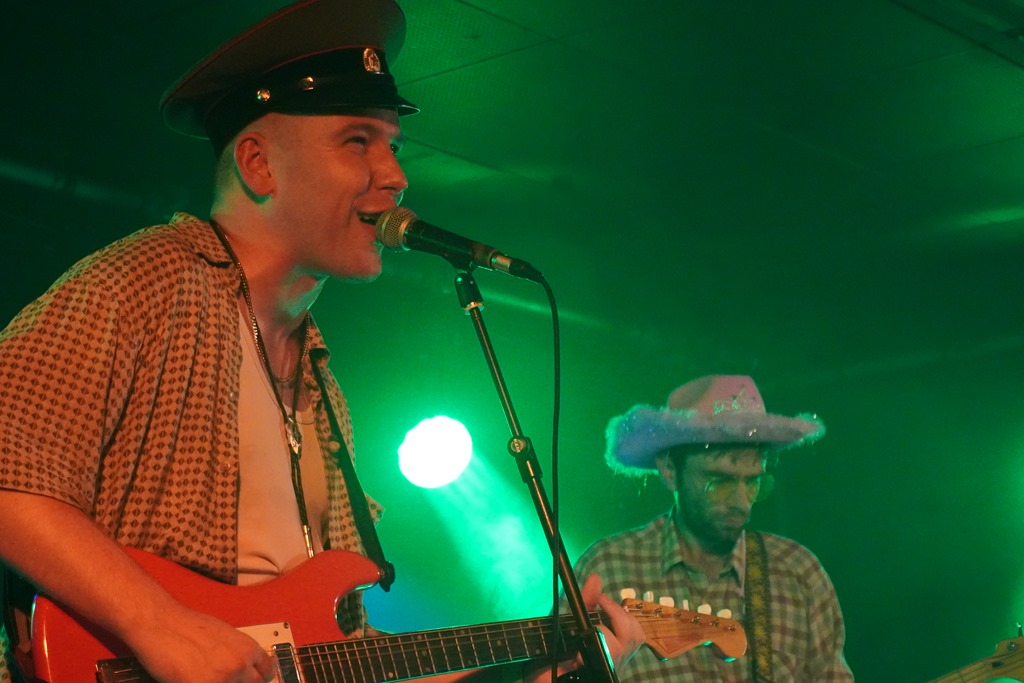
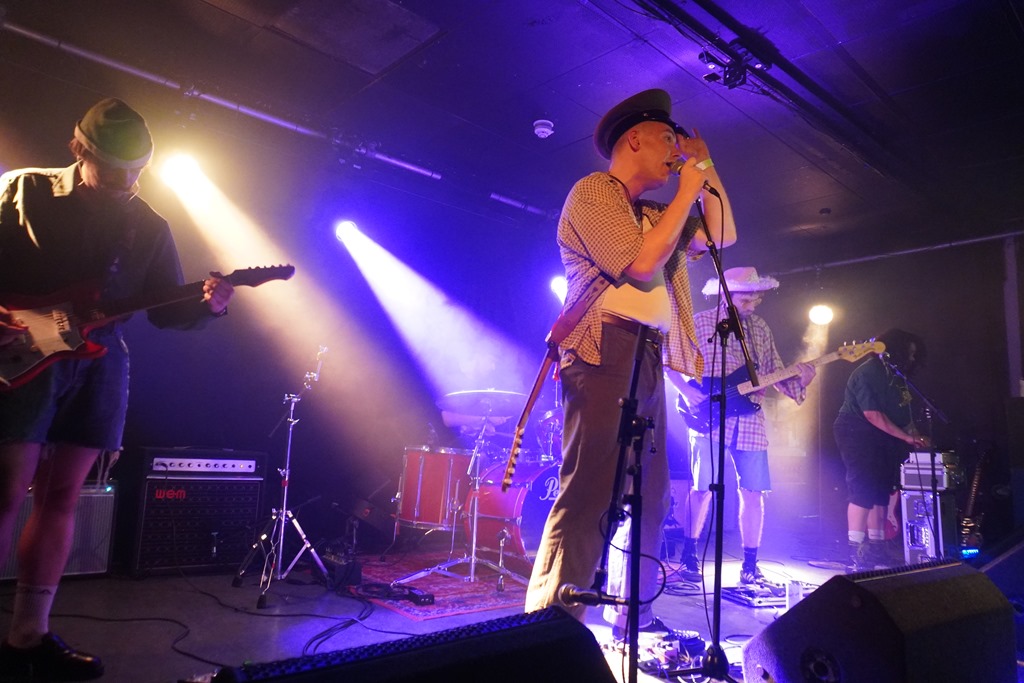
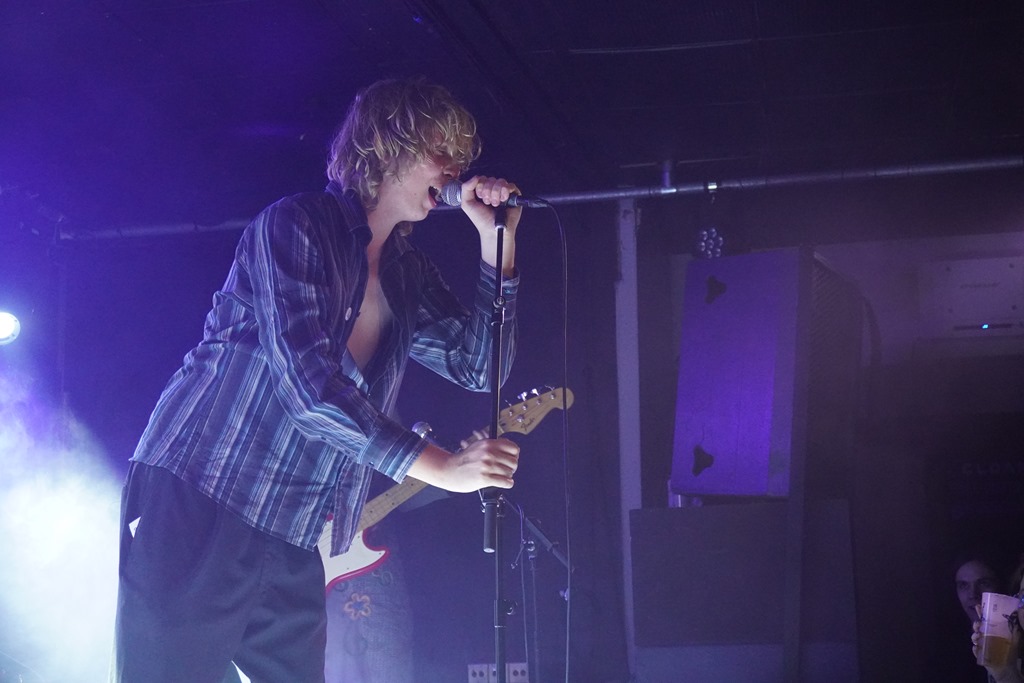
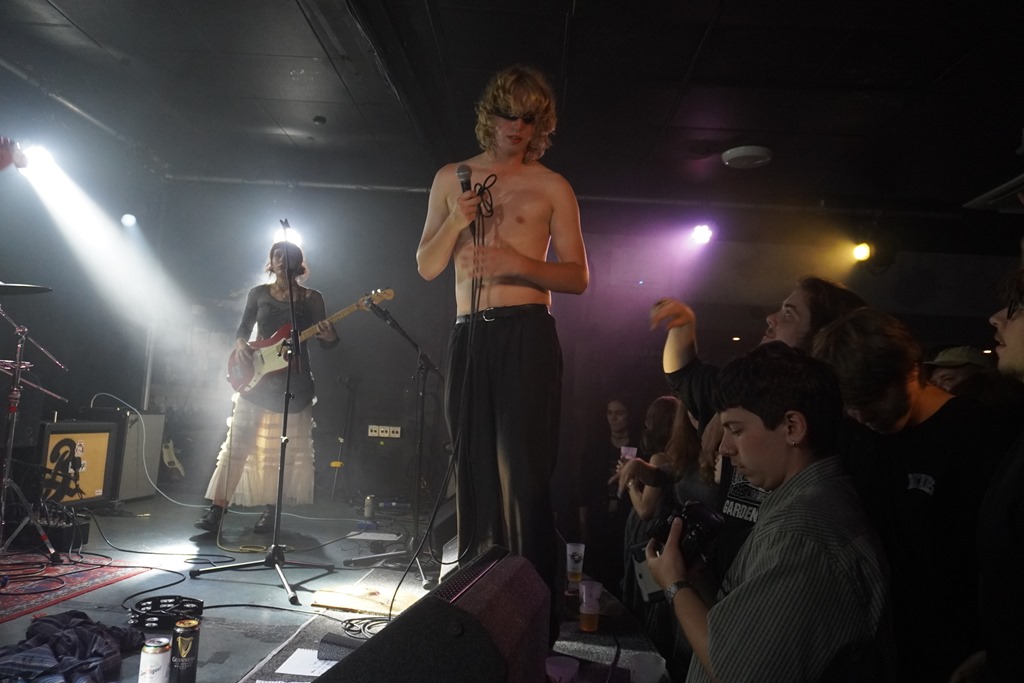
The Illness is not so much a band as a collective, and just as the album has a roll-call of guest contributors, so they present an ever-changing lineup on stage. There are never fewer than six of them, but sometimes as many as eight, and there is instrument and position-swapping galore, with vocal and bass duties switching all over.

Much of the time, they have three guitars, bass, drums… but there are some synths happening, and their sound is an immaculate blend of indie, prog, epic psychedelic space rock, all executed, if not with precision, then behind a curtain of shimmering sonic fireworks, from blooming roman candles to the spirals of Catherine wheels.

DSC01087DSC01101DSC01097

The Illness

‘Speedway Star’ is the second song of the set, and it’s laid back but had a certain grip. The album version featured David Pajo, and the question keeps arising: how? Ultimately, it doesn’t matter: what matters is that their set – a mere forty-five minutes – is something special.

The final song of the night is a full-on motorik wig-out, and it’s absolutely magnificent, with two trilling synths and two guitars, it’s equal parts Stereolab and Early Years (do better comparison). Danny (Wolf Solent, etc, a man who’s essentially a one-man scene in York and who I gather is a late addition to the band’s lineup) , who’s been keeping restrained throughout goes all out with a blistering guitar workout

The Illness may be well under the radar and well underachieving – given their connections alone they ought to be massive, never mind the fact they’re uniquely brilliant – but perhaps that will change given the brilliance of the album and superb shows like this. The Illness are totally sick… right?

Intervention Arts

Christopher Nosnibor

While eponymous debuts are commonplace, apart from artists who name all of their albums eponymously, it also seems to be a thing for long-established bands to release a self-titled album well into their career, and, to my mind, it seems somewhat strange. Nevertheless, Killing Joke have in fact done both, and Interpol have also managed two eponymous albums (if you count album number five, the anagrammatic El Pintor). Have you run out of ideas or something?

The Awakening has been a thing for a good quarter century now, during which time Ashton Nyte has also released a number of solo albums, a brace of books, and been a constant feature in the lineup of industrial / goth collective Beauty in Chaos. He’s a busy man.

The twelve tracks on The Awakening represent something of a revisiting of the classic goth template, and in this context, the title makes perfect sense. It’s a return to the beginning, treading the ground where it all began, and feeling that spark once again: an awakening, indeed.

‘Shimmer’ creates the atmosphere with dolorous bell chimes and slow, deliberate, ceremonial percussion, before single cut ‘Mirror Midnight’ thumps in with a sturdy bass groove melded tight to a relentless, solid drum machine beat. Laced with delicate traces of brittle, chorus-laden guitar, it provides the backdrop to a crooning baritone vocal delivery. Lyrically, it’s rich in esoteric imagery and it’s classic goth – mid-80s in style, md-90s in production. And this is essentially The Awakening: it’s dark, brooding, espousing the doomed romanticism that was central to The Sister of Mercy’s genre-defining debut album, First and Last and Always.

‘Through the Veil’ goes epic, and if its arena aspirations seem somewhat removed from the claustrophobic confines of the first phase of goth, it likely owes something of a debt to Floodland, while the acoustic-led ‘Your Vampire’ evokes The Mission circa Children (I’m thinking ‘Heaven on Earth’, but perhaps a little less bombastic), although ‘Island in a Stream’ is an equally valid reference point.

‘Haunting’ – also a single – and an obvious choice, it has to be said, is a burly burst of muscle-flexing guitar propelled – again – by a throbbing bass and pumping drum beat, draped with cool Cure-esque synths, culminating in a climactic rush of a finale. ‘See You Fall’ stands out as another quintessential goth banger: the instrumentation again is reminiscent of early Mission songs, and the drumming, with its dominant snare is absolutely cut from the same cloth as The First Chapter, although Nyte’s vocal reminds me – quite happily – of Andrew Eldritch demoing vocals on ‘Garden of Delight’.

Things take a turn for the heavy – and the political – on ‘Fallout’. It’s a reminder that the music of the 80s emerged from a time of terror, a political lurch to the right, and living under the shadow of the bomb. And here we are again. We can never escape history: it simply repeats. And so, it stands to reason that music is also cyclical.

‘Not Here’ hints at Bauhaus, while the thunderous ‘Cabaret’ – which seems to take certain cues from ‘Dead Pop Stars’ by Altered Images and The Psychedelic Furs’ ‘Soap Commercial’ in terms of its spindly lead guitar line – is a modern goth classic.

The Awakening mines a seam of trad goth which straddles the first wave and the 90s revival, or second wave – which is precisely the starting point of The Awakening. This album feels rather like time travel, in the best possible sense, and, in context, it’s less a case of homage as revisitation and renewal.

AA

AA

The Awakening 1 - photo by Ashton Nyte

14th February 2025

Christopher Nosnibor

Eville, who have been gaining momentum – and radio play – for a while, soared to a new peak with ‘Ballistic’ late last year. While sonically encapsulating the title, it also distilled the very essence of the band into THE most explosive two-and-a-bit minutes of no-messing nu-metal.

If ‘Plaything’ suggests something more cuddly, think again. Once again, they tap that classic nu-metal structure of a quiet but tetchy intro, jittery electronics by way of an intro – Something that can be traced back to Pitch Shifter’s first couple of albums back in the early 90s. ‘Gritter’ from Submit is exemplary, and of course not only would Pitch Shifter transition to an overtly nu-metal sound at the turn of the millennium, incorporating elements of drum ‘n’ bass in their sound in the late 90s, but guitarist Jim Davis played with both Pitchshifter (as they became) and The Prodigy. This detour is simply to illustrate the crossover between genres, and to contextualise the sound Eville have absolutely mailed – because after this tense, tetchy intro, the monumental riff hits, and hits hard, and immediately hits an irresistible groove.

A mere ten seconds in, and it’s clear that this is going to be a killer – and it is.

‘I might look cute but Imma get gnarly / I can get nasty, nothing gets past me,’ Eva Sheldreake warns, picking up the lyrical thread of ‘Ballistic’ and presenting a strong feminist stance. The message is direct and clear, and the band’s photos back it up: whether the outfit is a pink bikini or decorating garb, never judge a woman by her outfit, and never assume she’s lacking capability, whether it’s to do DIY or play guitar and rock out, hard.

‘Plaything’ certainly rocks out, and hard. The sheer density of the sound kicks the air out of your lungs, while the chorus hook is as strong as they come. The mid-section goes full Slipknot, the barbed-wire-wrapped baseball bat referenced in the lyrics translating to the brutal delivery.

Where Eville stand out – apart from on every level – is in the way they bring ultra-pro, radio-quality production and accessible melody to massively hefty, bludgeoning metal. If there was ever any doubt that they should be playing festivals rather than pubs, ‘Plaything’ obliterates it. No two ways about it: these guys are ready to conquer the world.

Metropolis Records – 21st February 2025

Christopher Nosnibor

If one nation really loves its rock and it’s goth stuff, it’s Germany, and there are a fair few UK bands who, while they fair ok at home, are absolutely massive in Germany: the fact The Sisters of Mercy have continued to headline major festivals there well into the 00s, while at home, apart from Reading in ’91, they’ve never really featured in festival lineups gives a fair indication of the difference. So it should be of no surprise that it’s in Germany that Swedish post-punk/goth act Then Comes Silence grew their fanbase first in Germany, before expanding across mainland Europe after sharing stages with artists such as A Place To Bury Strangers, Chameleons and Fields Of The Nephilim.

Boxed should probably have been retitled Unboxed for this edition, being a digital reissue of tracks included in a limited and long-sold-out box set edition of their 2022 album Hunger, Consisting of two songs in Spanish, two instrumentals, two remixes and one outtake from that album, its reissue lands coincidental with the completion of a US tour in support of their seventh album, Trickery, released last year.

As one may expect from the summary, it’s more of a mixed bag of novel odds and ends than a serious or coherent EP release, and the presence of the songs sung in Spanish remind me of when The Wedding Present released ‘Pourquoi Es Tu Devenue Si Raisonnable?’, a French-language recording of ‘Why Are You Being So Reasonable Now?’ Sung in Gedge’s flat, Leeds accent, it sounds like… The Wedding Present, of course, and I’m sceptical about the translation given just how nearly the lyrics fit the melody.

Anyway. Boxed. The Spanish language versions of ‘Dias y Años’ and ‘Cebo’ are solid, but obviously don’t really bring much to the table, especially for the non-Spanish speakers – beyond a novel spin, that is. But make no mistake the ultra-percussive, stony goth groove of ‘Cebo’ (or ‘Worm’, as it is titled in English) is a killer cut in any language.

The first instrumental, ‘Spökenas Intåg (Walk-In)’, which in fact lifts the curtain on the release, is a somewhat spooky, atmospheric composition, imbued with filmic qualities, and it would sit comfortably on the soundtrack of a movie or maybe even a docudrama about a serial killer or something.

‘We Only Have So Long’ is a thrusting, energetic, guitar-driven song, packing groove and force into two and a half minutes, and while its offcut status is because of how it doesn’t really sit in the framework of the album, it might have made a standalone single, because, why not? It’s certainly not weak.

Although remixes rarely mark an improvement on the original – although there are notable exceptions – the H Zombie Remix of ‘Blood Runs Cold’ does at least bring something different.

The final track – amd second of the instrumentals – ‘Skuggornas Intåg’ bookends the EP and strives to give it some kind of cohesion, some kind of shape, being a clear counterpart to ‘Spökenas Intåg’. It’s atmospheric but inconsequential, and does feel rather like a space-filler or odd-end outro.

Ultimately, this release is simply what it is: a reissue of some bonus cuts for the benefit of the fans who missed out on the limited version of the album. It’ll no doubt make for a tidy addition for the new fans they accumulated on the tour, too, and it’s decent – but by no means their most essential offering.

AA

629423

Editions Mego – 21st February 2025

Christopher Nosnibor

Russell Haswell and Florian Hecker are both prolific as solo artists, each with numerous collaborations with other artists to their respective credits, Haswell also having been a contributor to and touring member of Consumer Electronics. The UPIC Diffusion Sessions are a long-running collaborative project which began in the early 2000s, exploring Iannis Xenakis’ UPIC system as the sole instrument.

As the accompanying notes outline, ‘The UPIC is a computer music system that generates sound from visual input. The original intention of the system developed by Xenakis was to make a utopian tool for producing new sounds accessible to all, independent of formal training. One can locate footage of Xenakis and a group of children making drawings for the system in the 70’s.’ They continue, ‘The duo set off experimenting with a diverse array of hand-drawn images to feed the UPIC system including news photographs of disasters and atrocities, “food porn” through to depictions of the natural world and microscopic images of molecular structures (including ‘the blackest ever black’). The resulting eccentric audio from these images is claimed by the artists to heighten synaesthesia and is as mysterious as it is baffling.

I suppose the potential outputs for the UPIC are as infinite as the inputs, and this alone makes for a fascinating project, and the results here are, indeed, mysterious and baffling. The recording from this session is represented by a single track, just over half an hour in length.

Immediately, trilling oscillator tones rise in pitch – and keep rising, until you feel the pressure build inside your skull. There are glitching spasms of sound which flash across like subliminal messages. The pressure drops and the siren wails fade out, before scuttering blasts of seemingly random noise collage and intersect across one another, buzzing and fizzing, humming and thrumming… the forms move quickly, and shift from dark to light, hard to soft instantaneously. Shimmering sprays of abstract sound burst like fireworks, short interludes of harsh noise wall, microtonal bubbles and ZX Spectrum like babbles and bleeps all intersect or pass within mere seconds of one another. It is, very much, a sonic collage, the audio equivalent of William Burroughs’ cut-ups, an aural articulation of the simultaneity of experience of life in the world. Burroughs’ contention was that linear narrative is wholly inadequate when it comes to representing the real-world, real-time lived experience, whereby overheard conversations, snippets of TV and radio, and all the rest, not to mention our thoughts and internal monologues, overlap, and to present them sequentially is not true to life.

Leaping disjointedly from one fragment to the next at a bewilderingly rapid pace, listening to this is rather like the way the mind, and often conversations, skip from topic to topic without ever seeing any single train of thought to a defined conclusion, bouncing hither and thither in response to triggers and associations which often seem to bear no logic whatsoever.

There are thick, farting sounds, buzzes like giant hornets, choruses of angry bees, weird sonic mists and transcendental illuminations… of course, these are all conjured in the mind in response to these strange, sometimes otherworldly, sci-fi sounds, part BBC Radiophonic Workshop, part tinnitus and nightmare of imagination. Unpredictable isn’t even half of it as alien engines and spurs of 80s laser guns crossfire against earthworks, roaring jets, explosive robotics, skin-crawling doom drone, whispers and whistles, proto-industrial throbs…it’s a relentless blizzard of sound.

‘Experimental’ has become something of a catch-all for music that draws on eclectic elements or perhaps incorporates a certain randomness: this, however, is truly experimental, given that there is no way of knowing how the programme will interpret the input provided. And as much as the output involves oscillatory drones and the kind of synthy sounds associated with analogue, and with woozy, warping tape experiments, it evokes the drones of collapsing organs, wild sampling and everything else your brain could possibly conjure.

At once exhilarating and exhausting, UPIC Diffusion Session #23 is… an experience.

AA

eMego316V front

Self-released – 14th February 2025

Christopher Nosnibor

Yes, it’s ‘when’, not if, and since January 20th this year, it feels as if that crumbling which has been slowly emerging, first as a series of cracks, is now accelerating, to the point that we’re well on the way to almost certain collapse as Trump ‘the peacemaker’ puts his foot to the floor and hurtles us headlong toward self-extinction, one way or another. So after the ‘when’, the only question remaining is ‘how?’

While we ponder that, US interstate internet-based technical / experimental death metal act have delivered – after quite some time – their second EP. Having formed in 2015, it took them until 2022 to birth Manifestum I, following which singer Chrisom Infernium departed, being replaced by Shawn Ferrell. In the overall scheme of their career to date, When Society Crumbles has come together pretty quickly.

It’s overtly a concept work, centred around a fifteen-minute suite of three pieces which each address component aspects of ‘When Society Crumbles’ – ‘Infrastructure’, ‘Insight’, and ‘Inferiority Complex’. Well, ok.

The guitar parts alone contain about three hundred notes per minute, a frantic blanket of fretwork bursting from the very first bars. The vocals switch from growls to barks to howls to the squeals of wounded pigs, sometimes layered to occur simultaneously, while the drums blast away at a manic pace.

One thing that stands out from the first track alone is the production. Perhaps it’s the technical angle, perhaps it’s the circumstance of the recording, since being in a room and making noise is a very different experience from bouncing audio files around via Dropbox or whatever and adding to them in isolation. It’s not the clarity or separation per se, but the way the different instruments reverb – or don’t so much – in different ways. It isn’t that it sounds or feels cobbled together – it doesn’t – it just sounds different. But in a world where so much music is uniform, conformist, even if to supposedly alternative values, different stands out, and we need different. But the way that snare drum and the tom rolls cut through… they dominate in a way that’s rare, but it works: all too often with death – and black – metal – the drum dominate live, but are submerged on the recordings, reduced to a rattling clatter that’s more like the hyperfast clicking of a knitting machine than the thunderous blast of a drum kit being hammered hard. In places, it’s so technical as to border on the jazzy, although it’s clear they’re not just about technical prowess.

Not quite so different is the relentless fury the trio bring with the pounding percussion and frenzied picking: these elements are very much of the genre – death metal played with a real attention to technical detail. There are some well-considered tempo changes, and even some gentler, almost folk-inspired moments on ‘Insight’, where it drops down to some soft picking.

The three movements of ‘When Society Crumbles’ lurch into rabid dark territory on the third and final segment, where heavily processed vocals rip across a full-throttle all-out metal assault. The final track, the standalone ‘Every Last Soul Unmade’ is the longest by some margin, extending to almost six minutes and slamming down a tumultuous broadside of wildly noodling lead guitar over a bass that lands like a knee to the stomach. These guys know what they’re doing. I hope they keep doing it when civil war breaks out. I mean if, if…

AA

228618

28th February 2025

Christopher Nosnibor

Sister Envy may hail from Wales, but they sound like they’re from way out of the reach of Earth’s gravitational pull.

Their third single, ‘Swallowed By The Ground’ begins gently, but builds in successive waves: the delicate, wistful jangle of the opening bars has something of a classic 90s / 00s alternative / indie vibe to it, with an emotional pull that’s equal parts Placebo and The Twilight Sad – and then the chorus powers in on a tsunami of guitar.

They set the expectation that the song ‘combin[es] elements of the epic gaze sound of early Verve or My Vitriol with echoes of the sound of bands like Smashing Pumpkins and Nirvana’, and yes, this much is true, but so many acts draw on the same touchstones without raising so much as a shrug in the direction of their underwhelming derivative sounding efforts. Yet Sister Envy take those same elements and spin pure alchemy.

The best songs are nigh on impossible to break down to the details of why they work, and it’s here where the famed line about dancing about architecture really makes the most sense. Dissect why ‘Smells Like Teen Spirit’ was an instant timeless classic and you will not only end up empty-handed, but you’ll have stripped out the joy, too. Sure, as is also the case with Radiohead’s ‘Creep’ you have disaffection, alienation, dynamics, and a huge, ripping guitar blasting the chorus, but these elements alone do not in themselves a classic make. It’s in the delivery, for sure, but it’s also in that… je ne sais quoi. ‘Swallowed By The Ground’ has it: passion, power, hook, dynamics, and fuck yeah. This is special.

Cruel Nature Records – 21st February 2025

Christopher Nosnibor

Sometimes, I find myself reading – and returning to – the write-up for an album and thinking ‘Yes: I’m going to like this… but perhaps not tonight. I don’t know if I’m ready or in the mood’. This immense release, which finds two previously-released album reissued as a single package consisting of seventeen pieces, by Namibian-born Emmaleen Tangleweed is one such example. Listening to new music daily doesn’t mean that writing about it is always easy, and sometimes, I find myself feeling daunted by the prospect, and asking myself ‘how could I do this justice?’

Here’s the preface, which accompanies the release on Bandcamp:

Emmaleen Tangleweed’s music is more accurately described as a channeling than a song. Summoning stories of lost souls too tortured to let go, she cries and yearns as they no longer can, and yet, a silver thread of faith binds them. Themes of death, relationship and lingering hope imbue the listener with an eerie feeling of communion, of conversing with souls who have crossed the great divide.

Painting a visionary picture for the listener the stories contain hidden characters and everyday dramas played out in a time capsule of song giving the words weight in the earthly as much as in the ethereal they are delicately plucked from.

There’s also the fact that I feel obliged to listen to a release the whole way through, uninterrupted, so as to experience it as intended, not as people dipping in and out and skipping through playlists do, meaning that two albums back-to-back is quite a commitment. Anyway.

Songs From the Unseen, The Unsaid And The Unborn (Tracks 1 – 8, 10) was originally self-released in November 2022, while The Sun Will Still Shine When You Die (Tracks 11 – 17) was again self-released in October the following year.

Listening to these simple yet hypnotic folk songs of Songs From the Unseen, The Unsaid And The Unborn, I find myself wondering if Tangleweed is really her name, in the same way I muse whenever I see someone wearing a coat from Jack Wolfskin. It would certainly be convenient if it was, because it’s a perfect match for the sparse but swampy blues of songs like ‘Screaming and Crying’ and ‘Bluebeard’. I also find myself thinking of early PJ Harvey – not because she was in any way blues, but because there’s something in the feel, the fact that it’s folk but not folk, blues but not blues, but not indie either. ‘3 Nights And 2 Days’, one of the shorter songs, is light in delivery, heavy in lyric, but the skipping, picked notes and easy groove are a joy.

Tangleweed’s voice is rich in timbre: not low but it has depths which imbue it with a gravity which in turn adds substance to the songs. And these are not short songs: Tangleweed spins out narratives over slow and steady acoustic strums running for five minutes at a time. But the time floats by.

The songs on The Sun Will Still Shine When You Die feel more considered, and are perhaps a few shades darker. Certainly, the seven-minute ‘Being Born’ is low, slow, epic in scope, and there are two songs – ‘Forever and Ever’ and ‘Lullaby for Lonely Nights’ – which stretch past eight minutes. The former balances a Leonard Cohen vibe with a more Beat-influenced spoken word approach. ‘Nice’ might not be quite the word, but it’s nicely done.

The arrangements – such as they are – are simple, the playing raw, immediate: it’s very like listening to the songs being played in a dimly-lit pub, with a room capacity of thirty, sitting on low stools around sticky circular tables with low chatter bubbling around as people go to the bar and pass observations. I have fond memories of many a night in pubs listening to some outstanding blues artists in my formative years, and I would say that my appreciation of live music really stems from these experiences. But it’s not solely for this reason that this release appeals: there’s something which resonates on a deeper level when it comes to heartfelt blues. It may be due to its timelessness. Wherever you go, whenever you go there, the blues is the blues, and it speaks to the soul. Tangleweed plays with honesty and without pretence, and the result is magic.

AA

a1995837137_10