Archive for the ‘Albums’ Category

Miasmah Recordings – 16th April 2021

Christopher Nosnibor

It was the heavyweight score of his debut album, Hold, that provided my introduction to the work of James Welburn, and very much piqued my interest – because in some way, sonically at least, it seems I like to be published. Almost six years to the year on, Welburn delivers another immensely heavy set with Sleeper in the Void.

According to the accompanying blurb, the album ‘feels like a story in two parts, rising lethargically, but with gargantuan power. The second begins with the momentous In and out of Blue, where Juliana Venter’s disembodied, spectral dirge takes center stage among the furious drums and bassy riffs, reaching a full crescendo with seconds to go. Parallel marks a release – Hilde Marie Holsen’s nostalgic soundscapes, pristine as glass, meeting the distant thunder of Welburn’s strings on the horizon. And finally, Fast Moon ends the record in a most surprising way – a tribal industrialized banger, complete with vile distorted beats and every other spice in demand on a blackened dancefloor.’

It’s intense from the outset, and ‘Raze’ is anything but lethargic. It begins with a modestly middling dark ambient drone, but before long, pattering drums are hammering like machine-gun fire and whipping up a frenzy while all around the drones increase in volume and intensity until there’s a veritable cyclone of sound raging all about. The experience is dizzying, suffocating.

The percussion is again punishing on ‘Falling from Time’, but while the sound is still dense and murky, the thundering rhythm, is far more mechanised, more industrial, thudding in a furious frenzy amidst an impenetrable smog of sound. The tempo is fast, and it’s relentless: you could perhaps even dance to it, although that’s not so much my thing: instead, I found my pulse accelerating and a glow of perspiration as the tension grows. Finally, the synths break into a softer swirl, although there are ominous tones eddying around as the drums finally peter out and it’s finally possible to catch your breath and compose yourself. It’s but a brief respite before crushing percussion crashes in on the doomy dirge of the title track: stuttering, stop-start detonations cut through the shoegaze on ketamine crawl of the blurred blizzard of extraneous noise.

Julia Ventner’s vocal on ‘In and Out of Blue’ and ‘Fast Moon’ (the latter of which is a grating, bulbous bass-driven beast of a cut that loops and lunged in a trill of treble and a crackle of fizzing distortion) are haunting, ghostly, and pitched against the lurching cacophony of drums and juddering blasts of noise that hit like a taser to the abdomen, it’s not only a contrast and a change of atmosphere her presence brings, but a new level of trembling intensity.

Sleeper in the Void unquestionably makes an evolution for Welburn: while incorporating many of the same elements fundamentally, their application is quite different on Sleeper in the Void in comparison to its predecessor. The basslines are less overtly structured, and Sleeper in the Void sees Welburn move further from any loose conventions of ‘rock’ toward something more abstract. It may be less direct, less bludgeoning, less reminiscent of early Swans, but it’s certainly no less intense or powerful, and it’s still dense and percussion-driven. If anything, the greater sense of nuance and Welburn’s expanded palette only amplify its menacing resonance, making Sleeper in the Void an album that may be challenging, but achieves optimum impact.

AA

MIA050_front

Editions Mego – EMEGO298 – 16th April 2021

Christopher Nosnibor

As the title perhaps suggests, Cylene Suisse Redux is a document of the tour of Switzerland undertaken by François J. Bonnet and Stephen O’Malley in December 2019, following the release of their first album, Cylene. That said, it’s no straight live recording, as the two longform tracks – naturally corresponding with a side of vinyl or cassette each – were edited and manipulated respectively by Jim O’Rourke and Ryoji Ikeda, ‘giving them carte blanche, and each in turn chose a distinct personal approach’.

The two musicians chose to entrust sound material recorded on the tour to the expert ears of two friends and great musicians Jim O’Rourke and Ryoji Ikeda, giving them carte blanche, and each in turn chose a distinct personal approach.

For Ryoji Ikeda, it was a question of finding a moment, circumscribing a fragment of time through his listening, with minimal intervention. For Jim O’Rourke, on the other hand, the live recordings became material to be deconstructed and reassembled, to tell, according to his musical sensibility, a path of metamorphosis for Bonnet and O’Malley’s music.

According to the press release, ‘Cylene Suisse Redux is a prismatic substrate of a series of concerts surrounded by friendship, lakes, mountains, and by nightfall’. But how does that translate as a listening experience?

O’Rourke conjures an ominous sci-fi soundscape, abrim with other-worldly odyssey, as spooky-sounding mid—range drones hover and twist in a haze of reverb. This is the sinister soundtrack to a sinister movie set in a barren wasteland in an alien climate, as clouds of red dust drift through the thin, inhospitable atmosphere. Something is awry: danger is omnipresent, and anything could happen at any moment. Sonorous tones echo out into the emptiness, accentuating the bleakness of the sonic expanse in which we find ourselves. There is nowhere to hide, and there is nothing solid or familiar, only an ever-shifting drift of layer upon layer of sound without and signposts or markers, nothing to orientate oneself with. You feel isolated, alone, exposed, vulnerable, as you advance, with trepidation, onwards through this nerve-jangling eighteen minutes.

Ryoji Ikeda’s approach is quite different, and so is the end result, which starts out like a distant freight trail screeching to a halt with the scrape of metal upon metal, and it continues far off in the background as insistent drones, broad and bulbous, hover and turn, twist and whine, evolving over time. This is more what you might consider ‘typical’ ambient drone, favouring neither lightness nor darkness, and with neither a leaning toward bass not treble, and therefore not challenging and sensory aspect too hard. It’s still ominous in places, but not overtly unsettling or uncomfortable. Because there’s some sense of linear trajectory, it growls louder and darker as it progresses, swelling in volume and intensity, while the soft-edged drones develop sharper edges and become increasingly shrill, howling dissonance and pain before gradually tapering down, albeit with some afterburn.

You’re left wandering, aimless, vacant, in no-man’s land, wondering precisely how you should feel and how you should react to what you’ve just heard – and that’s as it should be. François J. Bonnet and Stephen O’Malley create music without boundaries or definition, and that indistiction is further accentuated by O’Rourke and Ikeda. It’s for the listener to do the work, to explore and to find the points of resonance. There is much space to explore. Go forth.

Herhalen – H#023 – 21st May 2021

Christopher Nosnibor

The press release for this second album by The Incidental Crack – a collaboration between Justin Watson, Rob Spencer and Simon Proffitt – which follows last year’s Before The Magic describes the trio ‘exchanging field recordings, samples and random noise between Manchester, Wigan and North Wales, culminating in studio sessions focused on detailed processing and sound manipulation. They have yet to meet. Maybe one day when this is all over, in a pub in North Wales, free from this madness’.

As such, it’s a classic lockdown project, a virtual collaboration that proves that when it comes to the making of music, distance doesn’t have to be an object. In fact, it’s probably easier to collaborate without the logistics of brining people together in the same place at the same time. Writing on the project, Justin (one half of The Gated Canal Community and formerly of Front & Follow, a label which will be familiar to regular readers of AA), notes that Municipal Music ‘includes tracks recorded during the same period, using our now foolproof approach of sharing stuff, fiddling with it, sharing some more etc.’, adding, ‘It kept me sane at least during the last year!’

That is something that’s certainly relatable: keeping occupied has, for me, been the only way to keep myself together. I’m not saying it’s healthy, it’s just how it is. And increasingly, I’ve found abstract music easier to manage. Structured music, anything overtly ‘song’ orientated and rhythm driven is, all too often, just so much noise and instead of providing a welcome point of focus, feels just like being smacked from all sides at once. So while there may still be a lot going on in this, it’s not psychologically disruptive, and is suitably absorbing and immersive.

There are three extended-length tracks in all, which exploit the full dynamic range, with a strong focus on texture. The first, ‘The Second Cup of Tea of the Day’ is strong – certainly more English Breakfast or Nambarrie than Earl Grey or anything herbal – and probably inspired by the sound of a boiling kettle that’s been manipulated and fucked around with. However, it sounds at first more like a freight train, an extended continuous roar occupying the first three minutes before it gradually abates in volume and intensity, and gentler, softly-woven ambient drones fade in. there are still rumblings and incidental clatterings, forging a soundscape that never fully reconciles the tensions between the elements of soft and harsh, the light and dark. Bubbling Krautrock with bulbous beats collides with metallic shards of grating noise.

‘Just Passing Through’ is appropriately positioned in the middle, and is altogether gentler, softer, warmer, and pursues a more conventional ambient line. But there are peaks and troughs and ebbs and flows as the sound swells and at times shifts toward more unsettling territory, with some woozy oscillations that tug uncomfortably at the pit of the stomach before receding and allowing calmer vibes to return once more.

The third and final cut, the fourteen-minute ‘Ice Cream at the Pavilion’ starts with what sounds like the crashing of waves against a rocky beach in a storm, which strangely reminds me of a number of occasions we’ve had ice cream at the coast on family outings, because it’s always ice-cream weather for children. Voices chatter and babble and whoop excitedly, while a dolorous church organ begins to while away majestically in the background. Eventually, it’s superseded by a barrelling drone and a throbbing, slow-pulsing sound that swells and surges.

There’s a certain wistfulness and nostalgia to be found in the spaces in and around Municipal Music, although perhaps some of that’s my own reception aesthetic, a response as much to the circumstances of its creation and the allusions of the title, both of which remind me I’ve not left my own municipality in months, haven’t met any of my collaborators or friends in so very long, and yearn for both proximity to (some) people and also the countryside and country pubs. All of these thoughts wash around in my mind as the sounds surround me, and it occurs to me, finally, that Municipal Music is good music to think to.

AA

023 The Incidental Crack - cover

AA

The Incidental Crack - artist photo

Wild Goose Chase Records – 27th April 2021

Christopher Nosnibor

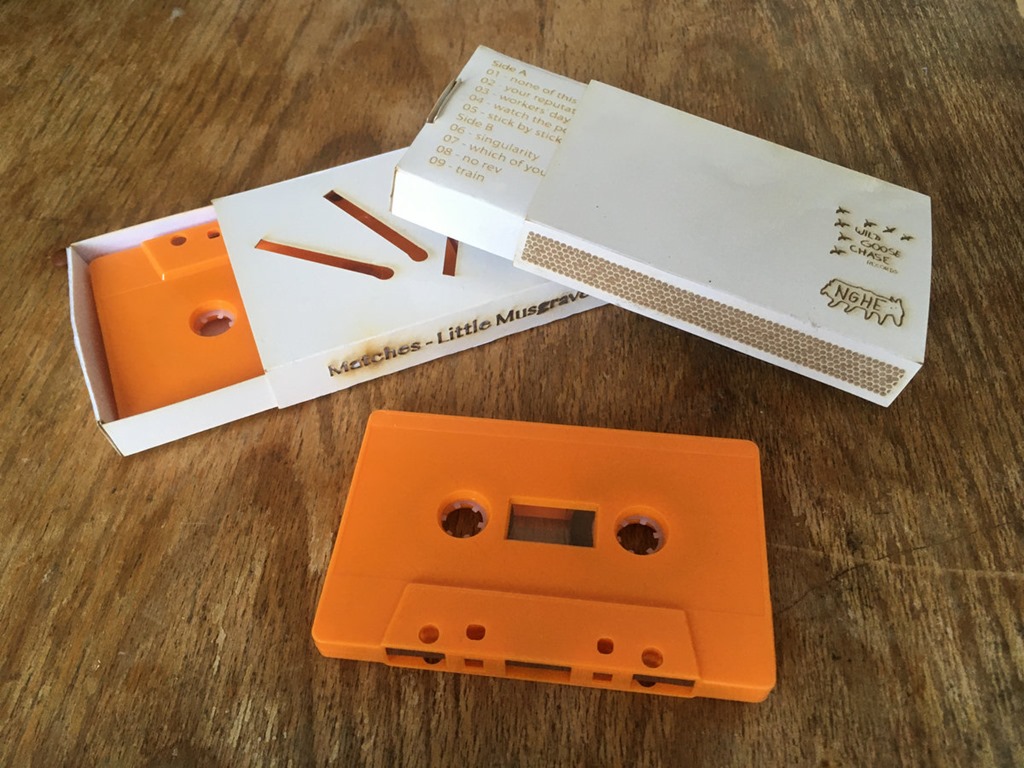
Little Musgrave – the vehicle for Brussels-based Joey Wright – was conceived and recorded during the first Coronavirus lockdown, and its homemade, DIY, lo-fi stylings are perhaps representative of the style and form that will, ultimately, prove to define the period from Spring 2020 to Summer 2021 as musicians, twitchy and desperate for release took to recording at home, minus bands, and without access to studios or even half their kit, let along bandmates. Primitive drum machines, apps, recording and even mixing on mobile phones and releasing via Bandcamp has for many been the only way.

Why not wait? You may ask. Because creatives often need to create and to put it out there: creativity is a compulsion, and for many, public reception is validation of their output, even though got many it’s equally a source of anxiety and self-doubt.

‘Matches’ is a no-messing mess of sinewy guitars chopping out some rough and ready post-punk tinged indie that lands, lay-legged and in a heap between The Fall and Pavement. Wright isn’t really a singer in the conventional sense, often adopting a more Sprechgesang mode of delivery – although that isn’t to say he can’t sing, and there are some brief moments of melodic reflection. This is also a fair reflection of the abstract / elliptical lyrical content, which is wildly veering and often abstract, but not without moments of sensitivity.

The lack of polish, while borne out of necessity, is endearing in that it also presents a lack of pretence. And, also of necessity, the fizzing guitars and simple, insistent rhythms that pump away and pin the loosely-played songs together, are found alongside, as the liner notes proffer, ‘sounds which could have been recorded live in the dentist’s chair – we’re talking drills, saws and high-pitched whines’. With trips to the dentist off the table during lockdown, one assumes these extraneous sounds were sourced elsewhere, and primarily around the home. It’s remarkable just how unsettling a blender or electric shaver can sound when recorded and played back out of context, you know.

More often than not distilled into sub-three-minute bursts, clattering percussion and jarring angles are defining features; ‘Your Reputation Precedes You’ pitches a semi-spoken word performance over a clanking industrial-edged backdrop, while elsewhere, ‘Workers’ day’ is dissonant, difficult, and antagonistic, but as a thunking synth bass groove emerges through it all, it takes on an awkward electrofunk vibe that evokes the stylings of early Shriekback – before dissolving into a mess of feedback, whirs, and buzzing, and the scratchy Fall-esque ramble ‘Stick By Stick’ collapses into mangling noise.

And while Matches doesn’t sound like The Fall per se, its wild eclecticism and the levels of discord achieved by the guitars (are they in tune, let alone playing the same key? Just listen to ‘Which of you has done this?’ to get a handle on the stylistic collisions that aren’t just characteristic but define the album.

Weird and wonderful with the emphasis on the latter, Matches is inventive and unusual. At times difficult and brain-bending, it’s also self-aware and interesting, and deserves some time to adjust to. It’s not mainstream, but it’s got real cult potential.

AA

a3799742460_10

Audiobulb Records – 5th May 2021

Christopher Nosnibor

The wonderful thing about stories is that there are no rules – no rules about what they should contain, how they should be told, or whose perspective they should be told from. Even the standard expectations of ‘beginning-middle-end’ are an artifice, and for any convention, there are infinite ways to deviate from it. Linearity is a construct which assists in rendering events more easily navigable, but sometimes, disrupting that linearity is an integral part of the unravelling of events. Stories – be they true or fictional – are often a way of making sense of the world through the construct of narrative. Sometimes, we forge our own narratives from fragments of confusion in order to orientate ourselves, and as such, stories are instinctive and integral to our understanding the world and our place in it.

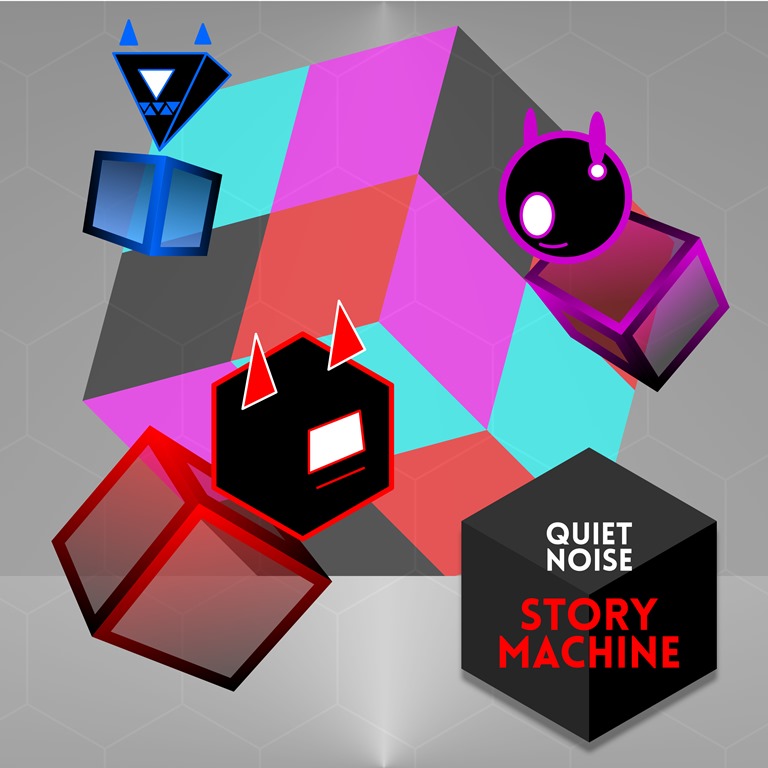
The fourth album from Quiet Noise, the vehicle of West Wales based producer Adam Wilkinson, is, like so many albums from the last year, the product of lockdown. ‘In a studio that overlooks a valley where the air breathes a lone craftsman sets to work mapping his experience through experiment,’ his biography tells us. Does this mean that Wilkinson was perhaps better equipped than many to deal with the last fourteen months, given his solitary nature? Not necessarily, but while many lockdown musical projects, which have been steeped in an air of claustrophobia, anxiety, and tension, Story Machine is a breath of fresh air that conveys aa sense of – if joy is too strong, then appreciation – of life. Perhaps it’s the fact that after four years being busy producing music for singers and film makers, Wilkinson finally has time out to return to the world of Quiet Noise to explore his own avenues of creativity. Adam explains the limitations that determined the album’s formation, recounting, “stuck at home, sitting with my wife and children while they worked from home, I set myself the challenge of creating pieces using only equipment that could fit in my space on the living room table. Motivated by my game and pleasantly surprised by what I could achieve.”

For the most part, Story Machine is an overtly electronic set that comfortably incorporates a diverse range of styles from across the spectrum – and a large portion is fresh and accessible, danceable even. The range is such that the individual pieces feel as though they each tell their own stories – but then again, taken as a while, perhaps they’re chapters of a longer story that is the album as a whole.

With bold, surging orchestral strikes and tension-building strings, ‘Grand Entrance’ is appropriately titled. ‘Climbing Trees’ is altogether more light-spirited, with a buoyant electro beat and birds twittering – although it suddenly explodes in a surge of light that’s a veritable epiphany. ‘Murmurations’ brings a very different vibe, with a straight-up dance groove. The beats are bold and uptempo, and while the top synths are quite soft and subtle, bringing an expansive but chilled later to the sound, the bass is bouncy and urgent.

In among it all, there are some moments where vast expanses of sound burst seemingly from nowhere, radiating an almost prog-rock grandiosity. These bursts of extravagance are a shade audacious, but somehow, they work. Above all, Story Machine is an uplifting experience, and in the face of so much bleakness, it’s one that’s most welcome.

AA

Quiet Noise Story Machine Cover 12 v2

Nova Alternativa – 16th April 2021

Christopher Nosnibor

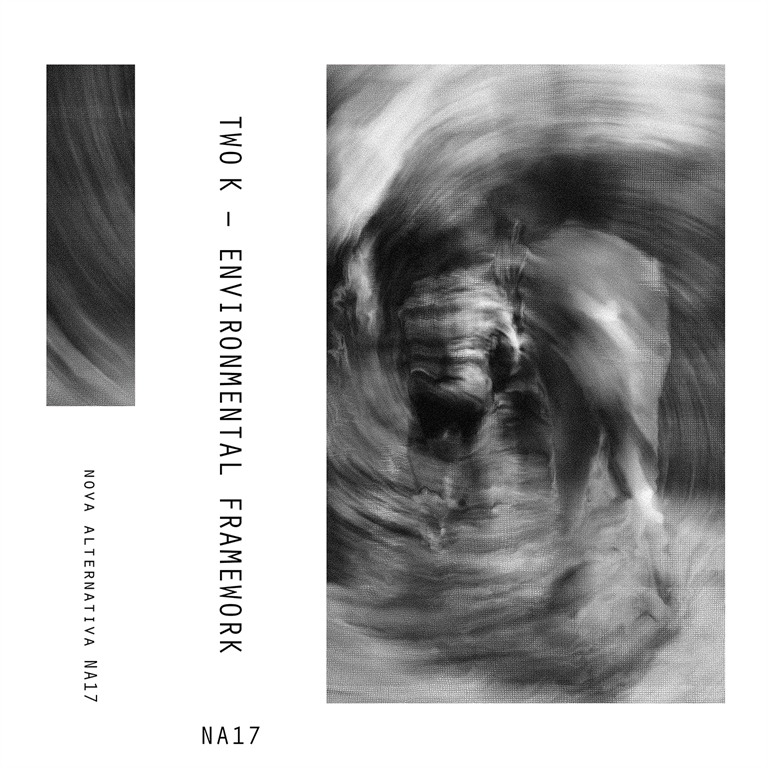
The two Ks are Gintas K & Jan Kruml, and Environmental Framework is a collaborative work, whereby, as the liner notes outline, Jan worked with the historically first and last track that Gintas published. Gintas reworked tracks from Jan’s (Instinct Primal) live set from January 2021.

But rather than simply rendering this as an album of two sides, which would be perhaps the obvious approach, but instead, the seven tracks are sequenced with A1-A2-A4-B1 composed by JK, remixed by GK, and A3-B2-B3 composed by GK, remixed by JK.

Bring unfamiliar with Jan Kruml’s work, and having not heard the live set in question, it’s difficult to judge just how radically Gintas K has reworked the pieces here, but the remixes 1 and 3 of ‘Myths’, with their combined running time of ten minutes are sparse, spacious, and unsettling, as an elongated droning drift hangs, conjuring n eerie atmosphere. Incidental echoes and flickers, barely-present crackles of static rise and fall, fading in and out of the mist almost subliminally, but growing thicker and denser and more layered over time in the first, before transitioning into the explosive digital sloshing that is something of a signature for Gintas K. If this raises the question of the extent to which a remix can become more the work of the remixer than the original artist, here it’s worth commenting that it does work well, and places a complimentary light on Kruml’s sounds, and the way in which Jan approaches the ‘Noisebient RMX’ of ‘Phono’ very much returns the favour as it presents a clamorous babbling microtonal rush against a broad sweep backdrop.

The first remix of ‘Entering the Cave’ (which is in fact Remix 4) is hectic, a busy bubbling rush of sound that recreates that vintage analogue froth, only on a cocktail of steroids and speeds – amped-up and foaming away at a blizzard’s pace. Remix 1, which immediately follows, is altogether more low-key, shadowy, manifesting as a rumbling, grumbling ominous ambience. It’s dank, dark, and very much does evoke the scene of the title.

As the liner notes point out, ‘they never met in person, but sonically it’s like if they knew each other for decades’ – and certainly, there is a keen sense of intuition displayed here, as the two artists seemingly become interchangeable in their works.

It’s drone that defines Kruml’s remix of ‘Almost the End’, which is, fittingly, the penultimate track, before he revisits the ‘Noisebient’ theme for the epic span of the album’s bookending ‘Invite Round For A Cup Of Tea’, which strains and clamours and whirs in a flurry of granular tonality for over ten minutes. If it’s familiar territory for Gintas K, it equally highlights how at ease Jan Kruml is with this type of electronica, and despite its segregated origins, the remixing process has given the material a sense of unity that renders Environmental Framework a remarkably cohesive work that actually feels like ‘an album’ rather than a bunch of remixes. A true artistic triumph.

AA

cover

Trash Wax Recordings – 14th May 2021

Christopher Nosnibor

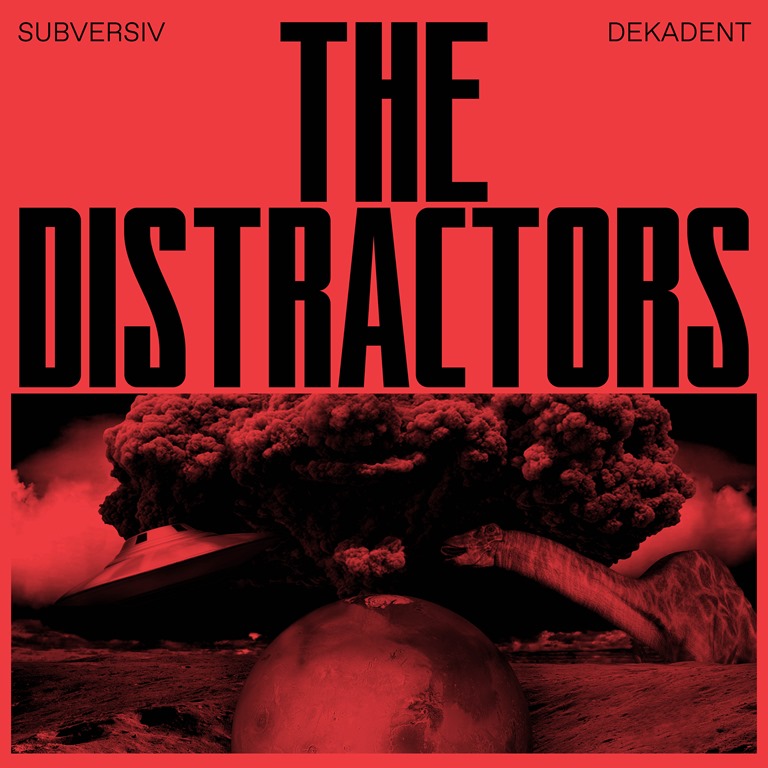
Belgian four-piece The Distractors formed in 2019, and despite the last year and a bit not being the time for bands to build a fan base through live activity, they’ve managed to deliver their debut long player, which they’re the first to admit is an homage to their influences, as filtered through the band’s quirky, anarchic creative methods and general disregard for orthodoxy.

‘Everybody Hates Poetry’ is a straight-ahead punk three-chord thrash with gruff vocals that isn’t a million miles from The Anti-Nowhere League, and immediately establishes their style and credentials. And there really is nothing fancy about any of this. It’s a no-messing punk album, and you could pretty much leave it at that.

For a movement that was so revolutionary in terms of its achievements, a lot of punk music wasn’t nearly that innovative, although it’s perhaps a fair assessment that the most commercially successful and renowned punk acts of that first watershed were the least innovative and most accessible. The likes of Sex Pistols, Sham 69, and The Vibrators, on reflection, were just pub rock cranked up a few notches, and pretty tame. Real punk was Wire, Metal Urbain, Throbbing Gristle, bands that challenged both the establishment and musical convention. I say ‘was’, as punk rapidly transitioned from anti-establishment to an establishment of its own, a genre rather than an attitude.

But The Distractors combine both: punk style and punk attitude, and that’s the selling point behind Subversiv Dekadent, an album that does live up to its title, by and large.

Simple chord sequences – no more than three or four – are standard, and the songs are very much cut from the simple-but-effective mould or energetic primitivism.

‘The Night is Young (and So Are You)’ has an element of wrongness to its lyrics, and also mines a surf-punk seem that’s big on reverb and swagger, with contrasting guitar parts that balance the choppy and the noodly to strong effect. ‘Love You to the Max’ isn’t exactly tender, but it’s heartfelt and brimming with passion, and with a picked, chiming guitar in the verses, it’s got dynamic range, too. ‘To Hell With Good Intentions’ is one of those full-throttle ragers that slams in hard and fast and is all over in under two minutes. It’s not pretty, but it is strong – and that’s probably a fair summary of the album as a whole.

The innovation and uniqueness ratings for Subversiv Dekadent are low, but that’s not the point: the fury and energy ratings are off the scale, with the driving, gritty guitars cranked up really high and the energy and passion going up to eleven. Subversiv Dekadent is loud, fast, and it’s exciting. And that’s what a punk album ought to be.

AA

Artwork

9th April 2021

Christopher Nosnibor

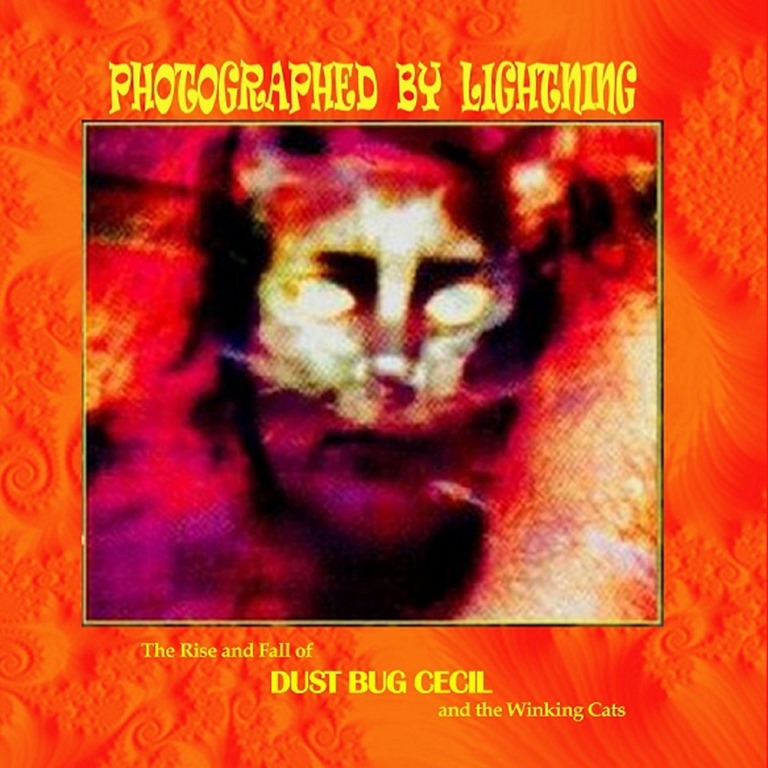
The remastered re-reissues of avant-experimentalist oddballs Photographed by Lightning continues apace with the emergence of Dust Bug Cecil (or, to give it its full title, The Rise and Fall of Dust Bug Cecil and the Winking Cats, supposedly taken from an obscure book about a direct to disc recording pioneer, and may in turn be a skewed play on Ziggy Stardust. Of course, everything is skewed in the world of PBL, and if Music From the Empty Quarter wasn’t evidence enough of this, then this should be enough to convince anyone: presented here as a whopping thirty-eight track document (2 CDs worth), Dust Bug Cecil is augmented with the entirety of their other 2002 album, Let Me Eat the Flowers. On the strength of this, it vocalist Syd Howells and co (here represented by Dave Mitchell (vocals, bass, keyboards); Bionio Bill (drums & percussives); Roland Ellis (saxophone); Chris Knipe (mandolin & fiddle), and Rev Porl Stevens contributing vocals to ‘White Master’)) had perhaps ingested more than just pansies prior to these sessions.

As Howells recounts it, ‘following the behemoth like Music From The Empty Quarter we went in search of tunes. Found some too. Glued them together with words and somehow found ourselves making a ‘pop’ album.’ In comparison to its predecessor, Dust Bug Cecil is a pop album in that there are none of the sprawling ten-minute epic headfucks on offer here, with most of the songs – and, indeed, they are songs – clocking in around the three-minute mark. It’s ‘pop’ in the style of the dark pop of post-punk, but its values are ostensibly altogether more punk, and its sound is primitive and murky. It’s pop in the way The Jesus and Mary Chain write breezy, surfy pop tunes and bury them in is a squall of noise that renders them almost indistinct.

There are melodies and choruses bursting out from every corner, but in context of 2002, songs like the album’s opener, ‘Eyes on Stalks’ and ‘Numb Alex’ sound like early 80s new wave demos: driving Joy Division-esque bass dominates a rhythm pinned down by a frenetic drum machine that sounds like it’s struggling to keep up with the throbbing energy, and there are hints of The Cure and B-Movie in the mix here.

The guitars buzz like flanged wasps on the vaguely baggy / shoegazey ‘Lady Lucifer’, prefacing the sound that A Place To Bury Strangers would come to make their signature. Elsewhere, the sound swings from almost straight 60s-tinged indie on ‘Let Me Eat the Flowers’, while ‘The Remains of a Tramp Called Bailey’ sounds like a head-on collision between The Pixies and The Psychedelic Furs, and ‘The Risen’ comes on like early New Order. If it reads like I’m chucking in a list of seemingly random and incongruous artists by way of confused and confusing reference points, it’s because that’s what the listening experience is like. None of the elements of the album are unique by any stretch, but their hybridisation very much is. The 60s garage vibe of ‘Untitled (for Dylan’) and the Fall-like scuzz of ‘David Dickinson Said’ (with its obvious but necessary ‘cheap as chips’ refrain) are well-realised, and suit the lo-fi production values.

Sonically, Dust Bug Cecil is nowhere near as challenging as Music From The Empty Quarter, and it was almost inevitable that they had to do something different, having taken the avant-jazz oddity to its limit. Then again, of course, there’s still the customary weird shit, like the squelchy racket with spoken word of ‘Bob’ and ‘Pablo’, and the doomy industrial synth robotix of ‘Be This Her Memorial’, which mean it’s hardly the most accessible album going and it is quite bewildering just in terms of its stylistic eclecticism.

It’s unquestionably a mixed bag, and not all of the efforts are completely successful or gel quite as hoped, something the band themselves acknowledge with hindsight. But it’s still very much a musical, if not commercial, success, showcasing a band capable of wild diversity in their creativity, as well as a band who’ve spent a career making the music that pleases them over anyone else.

AA

a2359923339_10

Christopher Nosnibor

Videostore continue to make the most of lockdown, with the pair banging out a second mini-album, comprising three of their recent singles along with three brand new tracks. Does the title have a significance? Does the end of lockdown mark the end of Videostore as Nathan and Lorna return to work and also reconvene with Argonaut? Perhaps time will tell, but for now, this is a document of the effects of life in confinement – or, as they put it, ‘what happens when you are locked down with Disney plus and Taylor Swift and Spacemen 3 CDs for company.’

It’s an interesting blend, but also a hybrid that works and is distinctively Videostore: scuzzed-out lo-fi pop songs that articulate ennui and nostalgia with a rare energy. As ever, it’s the contrast between Nathan’s worldweary monotone baritone and Lorna’s light, lilting, airy tones that really distinguish and define their sound.

It starts off with single cut ‘Superhero Movies’, a lively blast of choppy guitars where they ruminate on the disparity between movies and life, whereby everyone aspires to be a superhero from the comfort of their sofa. Media and unattainable aspiration is also the focus of ‘Your Perfect Life’. ‘Halfway There’ is a middle-aged lament that finds Nathan mulling over the passage of time, and in its downtempo mood and delivery, I’m reminded of The Fall’s ‘Time Enough at Last’, and even the semi-spirited call of ‘techno techno techno techno’ and a swerve into synth territory near the end can’t lift the melancholy mood – that’s a job for the blistering Pixies-like blast of single ‘Your Mind’, which stands out even more in context.

Low-key single ‘Anglepoise’ marks another return to Brix-era fall stylings, and there’s something affectingly sad in the sound of tiredness, of defeat. The last song, ‘Go’ is the biggest surprise of the set. It’s not a cover of the Moby track, but it is an all-out electro dance banger. It’s incongruous, so say the least, but there are some trademark squalls of noise among the trancey synths and insistent beats.

They Closed Down The Videostore may only contain six tracks, but it’s their most diverse work yet – and if the store remains open, the indications are they’ve no shortage of ideas to pursue.

AA

a1198813050_10

Tartarus Records – 28th May 2021

Christopher Nosnibor

Then a release comes pitched as ‘FFO Gnaw their Tongues, Lustmord, Haxan Cloak, etc’, you know it’s going to be pretty fucking gnarly and pretty fucking heavy, not to mention dark. The band describe themselves as ‘a vessel of auditory violence whose sole purpose is to exist in this place and moment in time. It is an overwhelming form of aural terror conveyed through primal and mechanical means, conjoining visceral matter of an organic origin with that of an abiotic one. These together fabricate an entity focused on the seething aspects of interminable dread and the humiliation of flesh’. Holy fuck. I’m simultaneously quaking and on the edge of my seat for this.

I’m not entirely sure what ‘larynge’ is, and even the Internet has been of minimal assistance, and the connotations of ‘golden dirges’ in my mind says probably more about me than a band whose name in the current climate makes me think of blood clots. In other words, none of the prefatory encounter is anything but bleak in the way it sets expectations for the album, and Golden Dirges, Molten Larynges is, indeed, a challenging work.

It’s harsh, it’s noisy, it’s hellish, a purgatorial racket that combines extraneous noise, guttural snarls, and ritual beats. It’s fucking nasty, the soundtrack to the most torturous horror imaginable. Imagine being skinned alive and flayed with torches as flames rise all around, and you’re being watched by razor-toothed beasts, pale, emaciated, and brutal, s pat of the most gruesome ritual you can conceive. Your eyes are stretched open and you’re forced to watch your own chest being torn open and your ribcage prised apart as your exposed heart quivers and pulsates in its cavity. Your halfway to experiencing Golden Dirges, Molten Larynges.

Harsh blasts of noise surge like a tide at the start of ‘Devour their Bodies Saturated with Brine’, before an explosion of demonic noise simply shreds everything as the ritual ceremony builds to its most brutal climax as chthonic entities revel in the bloodshed.

And there is absolutely no respite, no retreat, no light. Most of the tracks are under five minutes, but they each feel like an eternity. ‘Our Torches Soaked in Oil’ conjures a descent into an abyss both in title and sonically, but the clunking percussion, cutting through a dank morass of swirling noise is disconcerting, before the vortex of dark noise yields to a spitting demon spewing venom from an unexpectedly gentle piano. It’s but a brief respite before the industrial churn of ‘Rattling Mutter’ brings a wall of noise and anguish that redefined punishing.

Golden Dirges, Molten Larynges is a different kind of heavy: it’s certainly not metal, and nor is it industrial or power electronics. It’s also blacker than black. This is beyond. It’s

the sound of the earth being pulled apart – not by horses, but by Satan’s slaves. It’s like being dragged by barbed hooks buried into the chest and back over rough terrain if burning coals. It is all the torture, all the pain, the soundtrack to the catalogue listing of atrocities that make up the second half of 120 Days of Sodom. As the gut-hammering percussion resonates against a grumble of anguished muttering and screaming agonies on ‘A Thicket of Abrasions and Broken Wounds’, it becomes fully apparent the sheer extent of this album’s relentless abrasion and its capacity to plunder previously unseen depths. There is no preparation for this: it redefines torture.

AA

a2071770922_10