Archive for the ‘Albums’ Category

Empty Quarter – 1st June 2021

Christopher Nosnibor

The latest instalment in the reissue series of albums by oddballs Photographed by Lightning is something of a departure from its predecessors – but then, each album marks a different departure, and if one thing this contemporary appraisal of their back catalogue highlights is that they never stated still or retrod ground, which each release existing in a completely different realm from those which came before.

Recorded in 2002 and released in 2004 and considered by the band to perhaps be their strangest offering (and it’s got some tough competition), it lists as its inspirations the works of Kenji Siratori, Friedrich Nietzsche, Suehiro Mauro, Georges Bataille, J G Ballard. I’m often particularly intrigued when a band’s citations are literary, or otherwise non-musical, perhaps because in some respects, while there is naturally much crossover between all creative disciplines, literary influences tend to be more cerebral, ideas or concept-based over sonic. When a bands say they’re influenced by Led Zeppelin, you can probably hear certain stylistic elements in the composition: but you’re not going to hear elements of Ballard in the guitar technique of any band – although with a substantial catalogue of releases to his credit, Kenji Siratori is a notable exception to the rule, particularly as the experimental Japanese polyartist’s forays into extreme electronica and harsh noise in the vein of Merzbow actually do very much resemble his literary works also as a brain—shredding sensory overload.

This is certainly a fair summary of the experience of this album: the title track, a mere intro at under two minutes, is a blend of scratchy, synthy noise with extraneous elements collaged here and there.

‘The Embryo Hunts in Secret’ and ‘Putrid Night’ are both a sort of psychedelic new wave collision, and with the wandering basslines that veer up, down, and everywhere amidst treble-soaked chaos, the effect is disorientating dissonant, as if everything is slowly melting or collapsing in on itself. Everything is murky, dingy, kinda distant-sounding and discordant. Take ‘Kundalini Butterly’ – a spiralling kaleidoscopic mess or scrawling feedback and a bass that sounds like an angry bee bouncing around inside an upturned glass, coming on like Dr Mix covering Cabaret Voltaire’s ‘Nag Nag Nag’.

Blood Music is noisy, but it’s not straight-ahead guitars noisy: instead, it’s a mangled menage of bits and bobs hurled together – not clumsily, but then, not delicately, either, with pulsing washes of rhythm throbbing and crashing all around. It gets weirder and darker as they plunge into ‘My Hole’, where the bass bubbles and throbs beneath a continuous stream of trilling distortion, synth whistles and wails, and there’s a lot of overloading, whupping distortion that derails the helicotoptoring synths and froth and foam that sloshes around at the lower end of the sonic spectrum. ‘Dark Sun’ goes kind of industrial with a hefty, thunking beat, with a relentless, distorted snare, low-slung, booming bass and heavily treated vocals, and there’s chaotic piano all over the place: the emphasis is very much on the dark here.

Dave Mitchell’s lyrics are, we’re led to believe, to have been inspired by whatever he was reading, but buried low in the mix, bathed in reverb and given a grating metallic edge, he sounds like a malfunctioning Dalek chanting incantations. To be clear, that’s by no means a criticism.

Final track, ‘Frame’ is more overtly ambient, but dark, with a certain industrial hue as it shifts to pound out a relentless beat against braying sax and a whirlpool of aural chaos: I’m not about to suggest that PBL were going through any kind of NIN phase, but there are hints of parallels with The Fragile in places here.

Everything about Blood Music is seemingly designed to challenge, to present the music in the least accessible way possible – and it’s far from accessible to begin with, for the most part. The dark density of the sound is heavy, and there’s something quite deranged about the album as a whole, in a way that’s hard to define… but deranged it is. Which seems a pretty fitting summary of the band’s catalogue as a whole: the only thing you can really predict is their unpredictability.

AA

a3521472505_16

Cruel Nature Records – 4th June 2021

Christopher Nosnibor

Cruel Nature’s programme of releasing difficult, niche music on cassette tom a discerning audience continues with this Finnish-Iranian collaboration of droney, dark ambience with lots of echoes and ominous, subterranean beats that resonate with dark overtones of damp caves and tunnels. The coming together of different cultural backgrounds lies very much as the heart of this release, and those contrasting elements are celebrated in their coming together. I say celebrated because while this is by no means an uplifting album. Indeed, the five compositions are often darkly sombre or otherwise menacing and unsettling. There is a sense that this release – details of which are sketchy, particularly about those behind it – is hinged upon these differences, which almost suggest it shouldn’t work, and that it only does so by virtue of grim determination and a certain musical ear.

It’s difficult to make a fully-informed critique of works that bring together music from diverse cultural backgrounds without appearing as some Jools Hollandy ‘world music’ wanker, but I’d like to think that delving into more nuanced and less populist works means I have some handle on differentiating a release such as this from one like, say, Paul Simon’s Gracelands. The simple and key differentiating feature is that Gnäw pull on myriad influences from across the sonic and geographical range without patronising their sources.

The percussion becomes more prominent as the album progresses, and on ‘گمگشته چوپان’ frenetic hand-drumming dominates the murky drones that hover and hang with a heavy air. Esoteric string instruments are plucked, quaveringly, the notes echoing outwards.

The tension builds and the tone of the drones shift, darker and denser, taking a further turn for the more monotonous and more oppressive on حل’اج’m which makes a sudden shift in the final couple of minutes, tapering down to a mellow, noodling, doodling mellowness that feels like a release, a moment of much-needed relaxation.

Closer ‘Marras’, the album’s longest track, meanders and trembles tremulously, leading the listener on a difficult and at times addling route along a journey with a questionable destination. But who cares where we’re going with an album like this? It’s all about the ride, and I is a weird and wonderful mystery tour.

Video by Jase Kester

avatars-000044123198-xvf3em-t500x500

Southern Lord – 25th June 2021

Christopher Nosnibor

Twenty years is a long time. But that’s how long it’s been since Iceburn last graced us with new material. The shifting collective, primarily operative between 1990 and 2001 reconvened in 2007, with this current lineup again at the core.

As the band’s bio summarises, ‘The band’s initial output slowly evolved from hardcore and metal to free improvisation and noise. The 10 year arc saw the band following their own path and becoming more and more obscure as they got deeper into unknown musical worlds. By 2000 the cycle seemed complete and Iceburn did their final tour in Europe 2001. In 2007 this early core crew reunited to play a local anniversary show focused on the earliest material. Every few years since they would get together for another ‘reunion’ until that word became more of a joke, it was clear the band was back, getting together every week, and working on new material.’

And here it is: two truly megalithic tracks, each spanning the best part of twenty minutes, and packing them densely with some hard-hitting, churning, trudging, sludgy riffs.

This is some heavy, doomy, din: the riffs are Sabbath as filtered via Melvins, and let’s face it – Sabbath may have invented heavy metal, but it was Melvins who reinvented it with that gnarly, stoner twist and all the sludge.

It’s about halfway through the eighteen-minute ‘Healing the Ouroburous’ that things take a bit of a crazy turn. The lead riffing steps up to next-level flamboyant and I’m starting to think ‘this is maybe a bit much’. It’s not just that it’s technical, it’s just a bit fretwanky, even a bit Thin Lizzy, like ‘Whisky in the Jar’ jammed for fifteen minutes at a gig with three local support bands for a minor-league headliner – but then they pull it back and we’re returned to slow, lumbering territory. If there’s a brief burst where it sounds a bit Alice In Chains, it’s forgivable, because within the obvious genre framework, Iceburn bring in so much to expand the limits of convention, and it’s refreshing, especially from a band with so much history. It would have been so easy for them to just turn out a brace of droning riff beasts where not a lot happens, and no doubt they would have been lauded for their return to form and their place in the underground canon, but… well bollocks to that. Then there are the vocal – shifting between a low growl and some quite melodic moments, but all kept low in the mix.

‘Dahlia Rides the Firebird’ is another absolute bloody behemoth, a collision of Earth and Melvins, and a real slow-burner that takes suspense to a point near the limit. It takes three minutes before it even begins to take form, and then lumbers like some giant Cretaceous riff-lizard – one with big, swinging riff knackers at that. Yes, this has some swagger, and it builds, and it builds… The monster crunching riff that crashes in to punch hard in the last five minutes more than justifies the wait. When it lands, it’s absolutely fucking colossal.

Asclepius is a statement, and one which informs us that Iceburn are forward-facing and aren’t looking to recreate the past or retread old ground just to please people. And that in itself should please enough people, because this is so, so solid.

AAA

a1401051411_10

Come Play With Me – 11th June 2021

Christopher Nosnibor

These are difficult times, fraught with division – not just the well-established social and economic divides, but with infinite fragmentation and fallout over issues and identities. It seems unfathomable that there should be any need for debate when it comes to racism and sexism, and yet here we are in 2021 and still these topics are divisive, and while Pride events have done much to raise awareness, gender issues are not only grounds of immense discrimination, but also division, and, in some quarters, infighting. It’s difficult, and for many, incredibly painful.

Over the five and a bit years since its inception, Leeds label Come Play with Me has done a lot of work to represent the under-represented, primarily in giving a platform to local artists. Its latest compilation is billed as ‘a callout to support women, marginalised genders and LGBTQ+ artists based in Leeds and further afield around the north of England’, and as such has a specific and explicit agenda, and above all, serves to provide a platform and to send a message of unity and solidarity.

The blurb informs us that ‘The album features a collection of 12 brand new diverse tracks from an exceptionally talented group of artists including emerging shoegaze/dreampop sensation Bored At My Grandma’s House, renowned composer and Carnatic vocalist Supriya Nagarajan, art-rock collective Dilettante (led by multi-instrumentalist Francesca Pidgeon), and soul/pop singer-songwriter Tyron Webster.’ And it’s true: Side By Side showcases an eclectic range of artists, which is a solid representation of the diverse, cross-cultural melting pot that is the scene in and around Leeds.

Tryon Webster isn’t the kind of artist you’re likely to see playing in any venues like The Brudenell or Wharf Chambers or Oporto: they may have a local slat, but are more geared towards guitar bands and alternative acts, and Webster’s smooth r’n’b is decidedly more mainstream, as is the smoky would of Dilettante’s soulfully smoochy ‘Single Sleeve’.

Then, in contrast, Bored At My Grandma’s House’s ‘China Doll’ demo is a magnificent sliver of lo-fi indie with some effortless low-key harmonies over a sparse acoustic-guitar-led backing and minimal arrangements.

Long Legged Creatures were the last band I saw perform a proper gig, back on 14th march 2020, and I was impressed by what I referred to as their ‘electro/post-rock/psych hybrid’, and ‘Creatures’ is certainly a drifting, dreamy number – but then again, Witch of the East mine a dreamy post-punk / post-rock seam with ‘Something’s Wrong’. Shauna’s ‘Modes of Thinking’ welds the iciness of The Flying Lizards withy some deep dance groove action that’s half nightclub, half industrial motorik grind.

The chances are, not everyone will love every track on here, and adherents of the live Leeds scene will likely be surprised by just how much non-noisy, soul and jazz-flavoured sounds are on offer here: Day 42 are leagues away from, say, Pulled Apart By Horses, and sound more like Sugababes. But that’s not only ok, it’s the very point of this release. Regardless of musical preferences, it’s impossible to fault the quality of any of the acts showcased here. Moreover, this goes beyond genre and style and musical preference. This is a statement of inclusion. Embrace it.

ei

1st July 2021

Christopherr Nosnibor

No doubt it’s an age thing, but the title of this compilation from Leeds noisemakers Thank – a collection of everything they’ve released to date, which number three in total existing across a brace of EPs and a one-off single – makes me think of Maureen Lipman in the 1987 ad for BT when he grandson tells her he‘s failed all of his exams except pottery and sociology, and she famously cries, ‘He gets an ology and he says he’s failed… you get an ology you’re a scientist!’ I’m amused by this, and I have an A-level in Sociology, and I’m certainly no fucking scientist (I also have a PhD in English literature, and lot of good that’s done me, too). As a further pointless digression, the title also reminds me of the third album by another legendary Leeds band, That Fucking Tank.

This is relevant, because back in 2004 or so, Tank were ubiquitous, and proved to be an absolute revelation. It wasn’t that the DIY ethos was anything new – it emerged when punk broke, and has long been a major feature of the Leeds scene. Track back about 40 years and The Sisters of Mercy were representing Leeds internationally on their own label. Whatever bollocks recent governments have spouted, the North has always been a powerhouse of its own making. Free of the sway of whatever’s cool in London at any given time, the Noeth – and particularly Leeds – has forged its own identity and done its own thing. And Leeds has, over the last tent o fifteen years, been a city with a scene throwing up a lot of angular, noisy stuff.

Emerging from the DIY microscene centred around the rehearsal space / occasional gig venue that was CHUNK, Thank draw on a host of influences from home and away, but sound like no-one else.

That debut EP, Sexghost Hellscape, from 2017, was – and still is – a wonderfully deranged mash-up of all kinds of strains of noise, with throbbing synths and punchy fink-tinged post-punk basslines reminiscent of Gang of Four providing the backbone of some off-kilter blasts of noise and some ragged, shouty vocals. The insistent pounding of ‘Punching Bag’ – a dismal, depressed swipe at celebrity taking ‘Stars in Their Eyes’ as its starting target – has that twitchy relentlessness of Shellac about it, and it really only cuts loose right at the end. Thank get delayed gratification – and sometimes they really torture us: there’s no real gratification on the squirming, crawling eight-and-a-half-minute dirge of ‘Petrol Head’ that grinds mercilessly like early Swans. It has the roaring rage of hardcore, slowed to a glacial crawl, and it twists at the gut with its low, slow percussion-driven relentlessness.

Standalone single ‘The Curse’ is an anguished roar of rage – it’s sparse, mangled, messy, and comes on like Uniform minus the riffs. It’s pretty fucking dark and brutal.

Skip on to the last EP, and it’s an even more rabidly raging effort, harder, harsher, more furious. ‘Commemorative Coin’ ups the rage another forty percent. It’s like PIL on steroids: pink and fuck, but more articulate than some three-chord thrash, many time more oppressive and infinitely more powerful. In contrast ‘Think Less’ goes full 80s electro, but it’s jitter, jarring, a three-way collision between Talking Heads, Revolting Cocks, and DAF. It’s crazed, manic, and intense. ‘No Respect for the Arts’ is all-out, foaming-at-the-mouth frenzied. It’s raw. It’s passion, and it’s real. And they speak from the heart here. Please was released in the Autumn of 2019, and this reminds us that the arts were being battered to fuck long before the Covid pandemic shut everything down. Over the last decade, successive Tory governments have been shafting the arts from every whichway. Artists have a right to be angry, but so few articulate that anger so directly though their music. We have reason to thank Thank.

Thankology give us no fewer than ten reasons to thank Thank, They stand as the very epitome of the Leeds underground / alternative /DIY scene: uncompromising, unbeholden to trends, and doing it because they believe in it, and just because. Bands like this are rare these days, and Thank stand apart in these times.

For those who’ve had a taste, this will give the full flavour, and for the uninitiated, here it all is. Get stuck in.

AA

AA

a0669879946_10

Mongkong Music – mkng-01

Digital release date: 4th June 2021 / Physical release date: 4th July 2021

Christopher Nosnibor

Having been introduced to the world of microtonal experimentation around a decade ago, I’ve found a certain fascination in those close lenses on the most minute of details – the musical equivalent of peering through a microscope and seeing objects and life forms on a granular, even cellular level. I’ve also learned that anything that can be rendered or viewed from a micro level, it’s probably been done, or otherwise is within someone’s sites to do, or I simply haven’t found it yet. Take, for example, the ensemble Microtub – not a small bath, but a trio of microtonal tubas.

Mycrotom is not a microtonal tom drum, nor a microtonal extension of the work of the Vegetable Orchestra (a ten-piece collective based in Vienna who make music using instruments crafted from actual fresh vegetables). In fact, the moniker is somewhat misleading, for as the press release notes, ‘Tom Simonetti alias mycrotom has created rather large-format sound carpets in the Bertolt Brecht mechanical engineering city of Augsburg. He now presents the same: soundscapes on which you can go out of work and walk away.’

So, it’s actually about sound carpets. I have to confess that I chuckled a little on reading that, before reminding myself of my own habit of describing works as ‘sonic tapestries’ and going into detail about the ‘fabric’ of numerous compositions – and that was before I listened to the album.

The pieces are built on interesting juxtapositions – sparse motoric beats click metronomically through gloopy synth basslines that could have been lifted off early 80s electro cuts on Wax Trax! while xylophone-type chimes ring out lilting motifs. Extraneous sounds are looped to forge unusual rhythms, and there’s a muddy, murky aspect to the sound that makes it difficult to separate the different elements.

Many of the synth sounds are vintage in style, squelchy, thick, fuzzy-edged, and while the arrangements are sparse, the effect is far from minimalist: there’s quite some density to the sound, and what’s more, a lot of Ratoratiyo pursues quite danceable grooves, and with a hybrid of 90s minimalism and 80s robotix, it feels completely removed from anything human.

‘Logic by Machine’ contains human voices – sampled, distanced, detached – against a sparse, rhythmic loop. It’s anything but comforting, and leaves one feeling even further adrift, alienated. It’s a strange experience that twists at the cognitive filters in unexpected ways. After all, none of the elements are new or particularly unusual – but their assemblage is, and in ways that are difficult to place a finger on. And it’s that difficulty of placement that lies at the heart of the challenge for a listener. You ask yourself ‘how does this fit with my experience?’ and ‘where do I belong in all of this?’ There are no handholds or footholds in terms of emotional resonance, in terms of experience. And precisely what does this convey? The sounds may be warm, but the experience is somehow cold, with a sense of separation.

It’s from this place of distance, a position of removal, isolation, that we begin to explore the spaces of Ratoratiyo, and the exploratory adventure begins.

AA

mkng-01_front

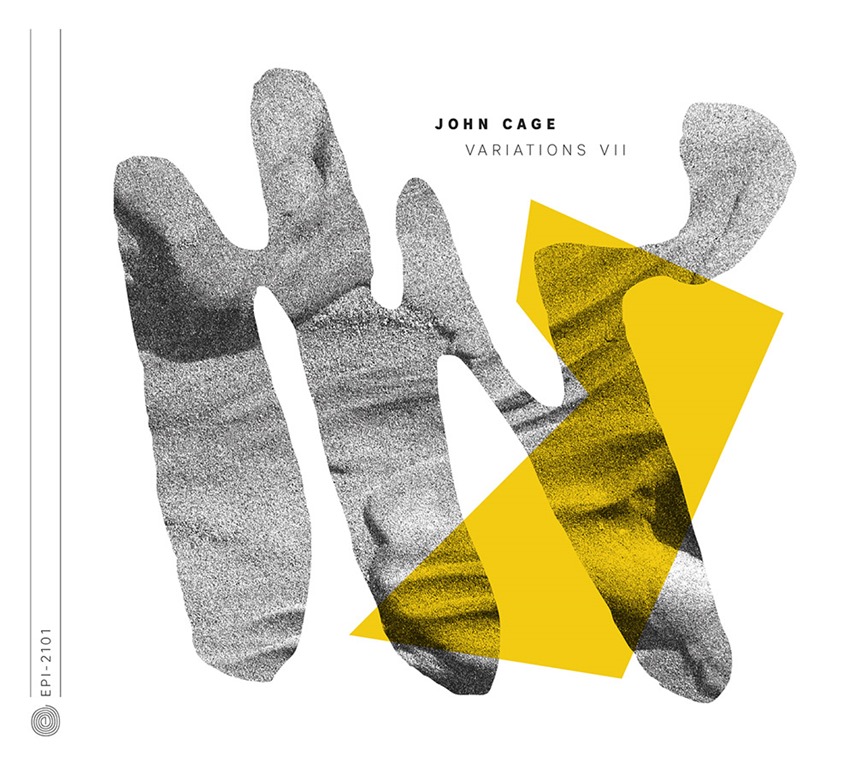
CD Epicentre Editions EPI-2101

Christopher Nosnibor

It’s testament to his degree of innovation and influence that John Cage’s works remain a source of fascination for so many almost 30 years after his death. Few composers have reached across so many fields, let alone a composer as radical and overtly experimental. But Cage singlehandedly broke all the ground, especially when it came to exploring elements of the random, of the relationship between the performance and the audience, and of incorporating strands of philosophy into the creative process.

This recording of Variations VII is very much an unadulterated document of a specific event, best detailed in the liner notes:

Variations VII was created by John Cage to be performed at a special event, 9 Evenings, Theatre & Engineering, held from 13th to 23rd October 1966 in New York and in which a team of engineers, led by Billy Klüver, worked with ten artists from the American “avant-garde”, with the aim of enabling them to extend their exploration of the possibilities of electronics in their own art. Here is how John Cage described this piece in the programme for the event:

« It is a piece of music, Variations VII, indeterminate in form and detail, making use of the sound system which has been devised collectively for this festival, further making use of modulation means organized by David Tudor, using as sound sources only those sounds which are in the air at the moment of performance, picked up via the communication bands, telephone lines, microphones together with, instead of musical instruments, a variety of household appliances, and frequency generators. »

And so ‘Intro’ is four minutes of audience chatter, a throng of conversations, all in French, over and across one another. It may feel superfluous to some, but in so many ways, it’s integral to the experience. It not only captures the moments before the performance as it happened, but also transports the listener there, and reminds us that this is not a studio work, designed to capture some kind of perfect realisation of the piece for all time. There is no trickery or manipulation after the fact: this is a live performance, in front of a live audience, something that happened in the moment, and the moment is all there is, and the life of the piece is tied to that specific moment. And then, there is the fact that Variations VII is, effectively, about chatter.

Crackles of static, whistles and whines rent the air as the performance begins; the sound of radio dials turning, tuning in, finding – or failing to find – the right wavelength. Hums, hisses, and snippets of conversations, fragments of music. Whups and whirs, shill shards of feedback and blizzards of white noise emerge from a myriad pieces of sound, booming yawns of interference all criss-crossing over one another in a disorienting real-time sonic collage. Machines grind, babies cry, there are explosive, thunderous blasts of distortion, It’s like walking down a busy street, hearing pieces of conversation, radios blaring from cars, engines revving, and the parallels with William Burroughs’ cut-up technique, for those familiar, are clear. This replicates the experience of life in real-time, and real-time experience is not linear, but simultaneous: a plane flies overhead and you catch sight of an advertisement, and a reflection of a face in a shop window while conducting a conversation, and all around, other people conduct their own conversations…

The mechanics of it are complex and ambitious, but also typical of Cage’s approach to composition:

‘Ten telephone lines connected to the sounds of ten different locations in New York City. History has taught us that one of the first uses of the telephone at the end of the 19th century was, besides transporting voices, the live re-transmission of concert performances of opera. A few privileged listeners could therefore listen to the music in their own homes. Several decades later, John Cage reversed this, so to speak, by inviting the sounds of several distant environments into the concert venue!’

And so it is that the 1966 piece was performed live once more on August 15th, 2020 at the festival Le Bruit de la Musique. The performance lasts for an hour and eight minutes, during which time we’re subjected to a bewildering array of sounds, unconnected, disparate, all completely independent of one another, uncoordinated, random, haphazard and hither and thither. It’s a bewildering experience: not a lot happens, but at the same time, everything happens, a lot of it simultaneously. For the duration of the performance, the spell remains unbroken. For some reason that I really can’t explain, I find myself sitting, ears pricked, on tenterhooks, listening out for details. Towards the end, a blitzkrieg of overlapping extranea build to a tempestuous tumult of harsh noise that sounds like Throbbing Gristle a whole decade before their conception. And as it gradually tapers down, a cough from the audience cuts through the quiet – but it’s not quite finished. We wait, on edge.

Suddenly, there is silence.

Only when the performance ends is the tension broken.

There is a pause, a few seconds of uncertainty, before the applause breaks. There are a few whoops, but mostly, it’s polite. Enthusiastic, but polite. There is no chatter now. One suspects that having witnessed this – bearing in mind that it’s 1966 – many would have been simply stunned of vocabulary. The era may have been accustomed to all kinds of newness, all kinds of shocking, taboo-breaking art, but this…?

Variations VII hasn’t dated, and not lonely does it still sound contemporary, it remains incredibly relevant: if anything, its relevance is greater in 2021 than it was in 1966, perfectly recreating the experience of total media and sensory overload. Never mind The Beatles, here’s John Cage.

Cruel Nature Records – 11th June 2021

Christopher Nosnibor

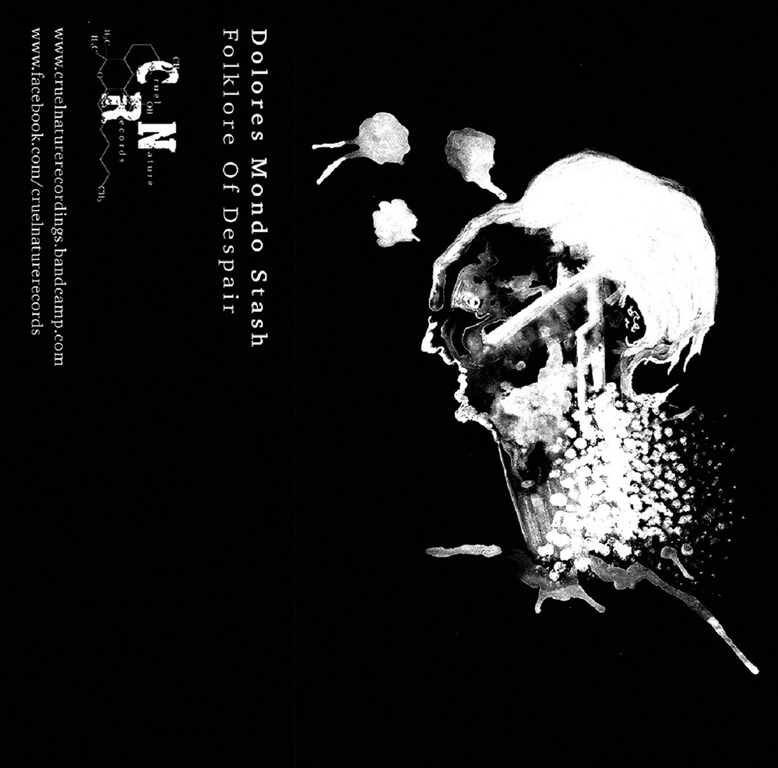
We’re in eerie electronics territory here. Haunting, creepy. Suspenseful. There’s something of a vintage sci-fi feel to this nightmarish trip, as gurgles and scrapes bibble up through swamps of whistling organ-like drones. It’s a dark record, but not because it relies on heavy drones, low, rumbling, doomy bass, hard volume or distortion: Folklore Of Despair worms its way into the psyche, prodding and poking stealthily into the recesses of the subconscious, gently rubbing and scratching at those small, nagging uncertainties that stem from the fear of the unknown. Whistles and bleeps intermingle with tense violin-type drones and quibbling analogue sounds, spooky, spectral notes and crashing crunches which disrupt the flow and create a different kind of tension, one that feels like things are going out of control and colliding on every side, a catastrophic nightmare where carks skid into one another as every third driver find their steering no longer works or their brakes have been cut. It’s disorientating, and the effect is so strong because everything about the album is so unpredictable.

There are no conventional structures here, or even any clear structures at all. Like the best suspense movies, the unexpected always occurs unexpectedly. The tense build-ups are often false markers, but then again, there’s not much letup in the tension, which they sustain and sustain, and your nerves are jangling because your gut tells you ‘something isn’t right’.

Things get really weird really fast: second track ‘Darkness is Driving the Machine of Debauchery’ is quite headfuck, as glitches and warping sounding like a stretched and buckled tape struggling to traverse over the heads. It squeaks and squeals and sounds as if whatever was recorded on the tape before is bleeding through, like voices from the other side – I’m reminded tangentially of the 7” containing sample recordings of voices from the ether that accompany Konstantin Raudive’s 1971 book, Breakthrough: An Amazing Experiment in Electronic Communication with the Dead (something that would feed into the theories expounded by William Burroughs on the tape experiments he conducted withy Brion Gysin).

An actual voice, murky, muffled, drifts, disembodied and strange through the creeping chords on ‘If the Forest Ate the Trees’, where the notes drift like fog, but there’s more to its being unsettling than that: there’s an otherness, a strangeness you can’t quite put your finger on, as if maybe the drifting fog in the graveyard scene has been filmed in reverse. It’s the fact it’s difficult to pinpoint that heightens the effect so.

Thunderous beats – distant, as if playing in a club three blocks away – pulse, deep, and bassy, on ‘Floral Patterned Gearshift’, and the sound is all but drowned out by the shrill, clamorous shrieking synapse-shattering tweets that flurry like a swarm of bats scurrying and flurrying. You have to fight the impulse to duck to avoid the aural assailants, invisible yet somehow tangible in the mind’s eye.

At times, everything simply collapses into chaotic cacophony. It’s hard to process, and ever harder to digest. Folklore Of Despair is a complex and uncomfortable album, which is nothing the title hints it may be. I’m not even entirely certain what it is, but it leaves you feeling jittery, jumpy and on edge.

AA

a0307778435_10

Kranky Records – 28th May 2021

Christopher Nosnibor

Over the course of two decades and fourteen albums, Scott Morgan, under his Loscil moniker, has created a body of work which has probed myriad different directions within the electronic / ambient field. While his previous works have explored minimal arrangements and the application of difference source materials such as field recordings, none has been so intently focused on rendering a limited range of course materials in the most varied ways possible – which is precisely what Clara does, taking the same source material and seeing just how far it can be taken in different directions.

The accompanying text explains the process in detail, describing the album as ‘a stunning meditation on light, shade, and decay, sourced from a single three-minute composition performed by a 22-piece string orchestra in Budapest. The subsequent recording was lathe-cut on to a 7-inch, then “scratched and abused to add texture and colour,” from which the entirety of Clara was sampled, shape-shifted, and sculpted. Despite their limited palette, the compositions summon a sense of the infinite, swelling and swimming through luminous depths. Certain tracks percolate over narcoleptic metronomes while others slowdive in shimmering shadowplay, sounding at times like some noir music of the spheres’.

In some respects, then, Clara is a remix album, in the sense that some remix albums stretch and deviate so far from the original material that the song being remixes becomes unrecognisable, and one begins to question the extent to which the track is the work of the original artist and the extent to which the credit for its creation belongs more to the remixer. This may all be Morgan’s ‘own’ work but at what point does the source material become buries beneath the reworking? Perhaps what’s most remarkable about the album, considering its origins, is just how…. Normal, how smooth it sounds, as opposed to being a fucked-up mess of crackle and pop, hiss and static. I had anticipated scratches, abrasion, mangled noise, clicks, pops, something approximating the sound of a Brillo pad being applied directly to the microphone. But no.

‘Lux’ introduces the album in what feels like familiar territory: long, slow swells of strings flattened out into partial abstraction, smudging the definitions that stand between orchestral and ambience to forge sounds that have become almost the standard form in contemporary ambient. And this indeed the form for the album as a whole.

It’s no criticism to observe that Clara sounds like Loscil: Morgan is a master in the field of contemporary ambient, and has a supreme ability to sculpt slow-shifting soundscapes that are eternally intangible, unreachable, yet immersive in their soft clouds and vaporous drifts. ‘Lumina’ has some softly bouncing bubbles rising and eddying around in a soothing sonic foam that’s slow and gentle, while the ten-minute ‘Stella’ floats past almost imperceptibly.

Nothing about Clara is going to raise the blood pressure.

The track titles all refer to light and luminosity, and instead of scouring the ears and the soul, Clara recreates the warm glow of a log fire burning down to embers, or a dimmed bulb late on a summer’s evening after the sun has faded from the sky, leaving a purple-hued sky in its wake. ‘Sol’ slows and dissolves down to a low, pulped-down pulsation, from which in its mist emerges a rippling loop of rippling mellowness that hints at the abstracted ambience of Tangerine Dream.

Even in the face of the most broken, damaged of source sounds, Loscil smooths the edges and renders them something else, and something other, by a process of softening, of melting into abstraction. Clara is a magnificent work of transformation, of distancing, whereby the end product emerges in an entirely different sphere from that which begat it.

AA

457773

Demo Records / Crossness Records – 30th April 2021

Christopher Nosnibor

While I’m no fan of remix albums as a rule, the last year or so has clearly made it difficult for artists to create new material, and since touring’s been off the table, options for maintaining profiles – or making sales – have be limited to say the least. And with time to reflect and review, revisiting and revising previous output through fresh eyes seems more than reasonable.

It’s also refreshing to see ‘Could Divine, Remembered’, the release from anrimeal (the recording project of Ana Rita de Melo Alves), described not as a remix album, but a ‘meditative companion piece to her debut album ‘Could Divine’’. As the blurbage explains, ‘‘Could Divine, Remembered’ refuses the limits of the traditional ‘remix album’ – sure, there are remixes here, but amongst them you’ll find demos, reflections, confessions, rituals, and the artist’s own heartbeat. The sum of these parts is an immersive audio documentary about the making of Ana’s debut. For those familiar with ‘Could Divine’, this is a chance to look behind the scenes and magnify its meticulous detail; for those unfamiliar, it allows a first visit to an abundant internal world.’

I fall into the latter camp, although drawing lines across between the tracks on this new reworking and the original proves an informative exercise, and the reworked titles provide some insight into the inspirations or ideas behind these alternative renditions of each song (notably ‘Encaustic Witches’ returns here as ‘Encaustic Witches as an Ambient Track to Help Me Sleep’ and ‘Headrest’ appears as ‘Headrest, A Story About Feeling’. Elsewhere, explanatory or embellishing details appear, as ‘Death’ becomes ‘Death is a Burning Ritual’.

“When I think of nature, nothing happens,” she says at the very start of the album on ‘Hello and a Half’: it’s quite a contrast to the twitter of birdsong and lo-fi acoustic guitar that heralds the arrival of ‘Marching Parades’, the opener on ‘Could Divine’, and immediately we’re parachuted into the documentary aspect of this fascinatingly multi-fascinated work, which lays Ana’s workings out bare. Cars pass as the speech takes on an almost spoken word narrative form – but even that’s not straightforward as delays double-up her voice and as she explains how the album is about her ‘going into the wild’, it seems that some of that wild is more psychological than literal, an exploration of internal territories hitherto uncharted. At times, it ventures into the kind of disorientating cut-up tape works of William Burroughs and Brion Gysin in the late 50s and early 60s, and elsewhere, her monotone voice, against a sift, dappled backdrop is soporific and sedative.

This is an album of ideas and of origins, of snippets and sketches, as well as of reworkings and revisions. It’s bitty, but somehow hangs together remarkably well as an insight into Ana’s creative process. At the same time, in straddling the before and after that sit either side of Could Divine, it questions the notion of the ‘end product’, the idea that there is ever a ‘finished article’.

The demo of ‘Could Flower’ reveals the early shoots of the idea that would become the album’s title track. It’s a haunting acoustic folk piece, which would subsequently metamorphosise into a fragmentary, multi-segmented work that transitions as if through a dream sequence. There’s an ethereal, evasive quality to Could Divine, Remembered, and it places the album in a realm all of its own.

As an aside, all profits from the release will be donated to Plataforma de Apoio aos Refugiados, a Portuguese refugee support organisation. In bleak times, we once again see art being used as a conduit for good – and this, it has to be said, is good art.

AA

a3633893503_10