Archive for the ‘Albums’ Category

illereye / Eyeless Records – 28th July 2023

Christopher Nosnibor

Lee Riley’s works include only minimal information about their inspiration or methodology, often coming only with the advice of ‘loudspeakers or headphones’. This is sound advice – if you’ll pardon the pun – not least of all because try as I might, I have never yet succeeded in listening to anything telepathically. This no doubt sounds incredibly facetious, but I’m only partly joking. With my inbox bursting with more new music than I could ever listen to in ten lifetimes, and that’s assuming a lifetime is a couple of centuries, I often find myself lamenting my inability to simply absorb all of the music by some kind of cerebral osmosis. I have sat and visualised a method whereby I place electrodes to my temples and the files simply transfer, or even a large syringe by which the music could be injected into me. I have similar visualisations about writing. Speech to text dictation programmes simply aren’t enough, it’s not practical for the most part. Since I compose most of what I write in my mind while walking along or doing other things, what I need is thought to text, by which the ideas simply appear on the screen. Way more useful than the AI shit that’s supposedly taking over.

With no detail to contextualise the title, or the sound contained therein, From Here We are Nowhere leaves us to interpret for ourselves, and before I hit play, I feel a sense of pessimism descend upon me from the inference of the phrase. The future is bleak… we are nowhere… lost, adrift, or worse, the connotations are there of ceasing to exist. Perhaps it’s my habit of having news channels on in the background while I go about my day, while I work my dayjob, while I cook on an evening, on mute but with subtitles, and the last week or two have elicited a sense of impending apocalypse. And I ask myself, why has it taken till now, when half the world is either melting or on fire to take climate change seriously. So where do we go from here? Probably nowhere.

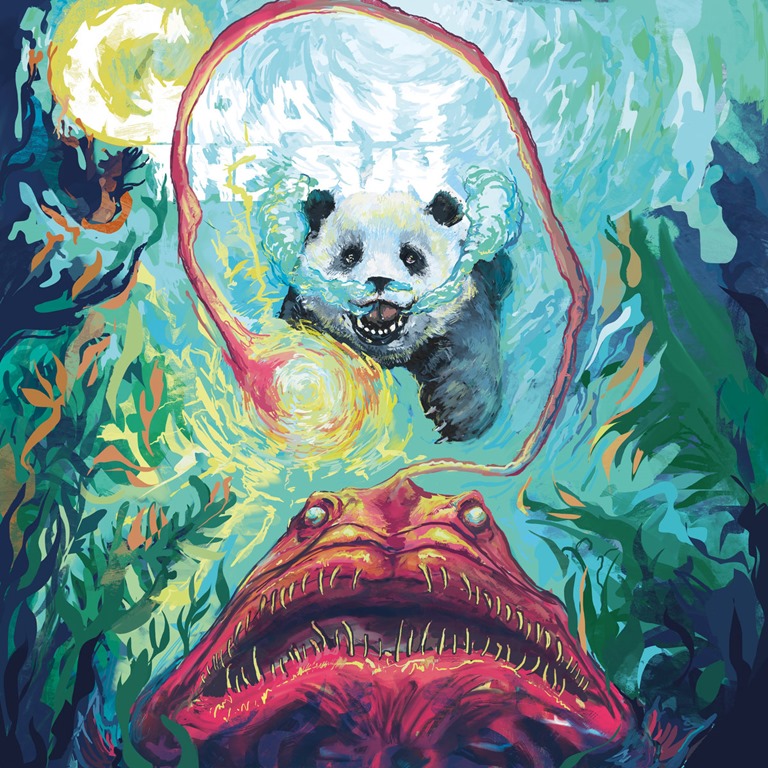
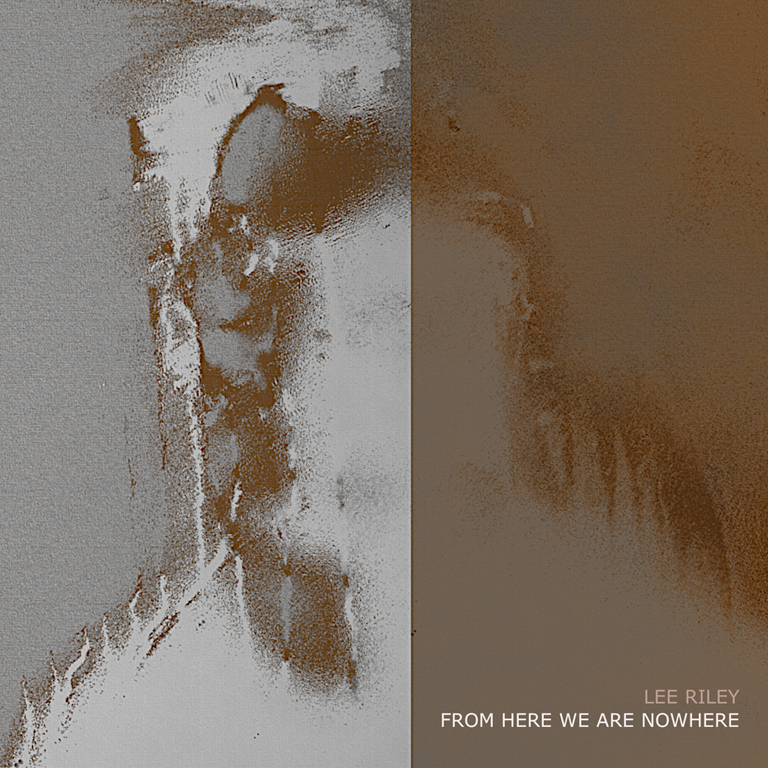
The six pieces on this album take the form of dense, suffocating drones: the title track thrums and throbs like a thick, acrid smoke that engulfs your entire being, five-and-a-half minutes of muffled tones that grow in tension. Shards start to scrape and funnel near the end, but then it’s gone, just beyond reach. There is something illusive about this album. It feels as though there are forms to be found, but they’re submerged. ‘Lifting Undertow’ is ominous, and the scrunching scrapes and rattles are menacing, reminiscent of a sensation I experienced in a recurring dream as a child, perhaps most easily described as the visual disturbance of a migraine manifesting in an aural form. It’s all very quiet and low-key, making you feel quite detached from the plane on which the sound is playing out, and this is true of the album as a whole. ‘Undoing These Knotted Times’ is a long, low, sonorous undulating buzz that’s sedative and soporific, but also uncomfortable and queasy, as bleary and blurry as the cover art suggests. As that final note hovers and fades, a desolation grips harder: is there really any scope to undo these knotted times? Or is this simply a painful paradox?

The idea of ‘Staring Through Lit Skies’ feels optimistic, evoking perhaps a sunrise, but the reality is that the serrated drone and scrapes of feedback are more like looking at the searing sun through the smoke of a wildfire. It’s painful, and damaging, and it saps your strength as the only dawning is the realisation that we are all doomed.

I feel in my limbs and in my lungs and in my heart as the final trails of ‘No One Knows What’s Inside’ dissipate into the thick, claggy atmosphere following a crackling hum of distortion and grumbling, and then, there is nothing. And here we are, as we find ourselves… nowhere.

AA
cover

Amphetamine Reptile Records – 16th July 2023 (CD, DL) / 23rd July 2023 (LP)

Christopher Nosnibor

The late 80s and early 90s were my time in terms of musical discovery. Door seemed to open door seemed to open door… and these were exciting times, too. There was a lot happening, and a lot of it was noisy. While endless column inches were given to Sub Pop – and not wrongly – two other labels stood out to me at this time: Touch and Go, and Amphetamine Reptile, the former home to the likes of Shellac, and Girls Against Boys, the latter, Cows, Helmet, Tar, Dwarves, and the mighty Melvins. It’s hard to overstate the importance of these labels at the time. But latterly, Sub Pop turned pop, releasing fay indie by Fleet Foxes, while cranking out reissues of the albums that put them on the map as the home of the ‘Seattle Sound’, and Touch and Go reduced its roster significantly few years after The Butthole Surfers hauled them to court over (lack of) contractual issues, releasing only a handful of more commercially-orientated artists in recent years.

And then there’s AmRep. They’ve kept on doing what they do. The label never put out masses of releases per year, and perhaps that’s been a factor in its sustainability, focusing on curation. That, and the fact that The Melvins’ output alone is enough to keep the label both busy and afloat. A label dedicated to alternative and noise rock, Mr.Phylzzz are right at home here.

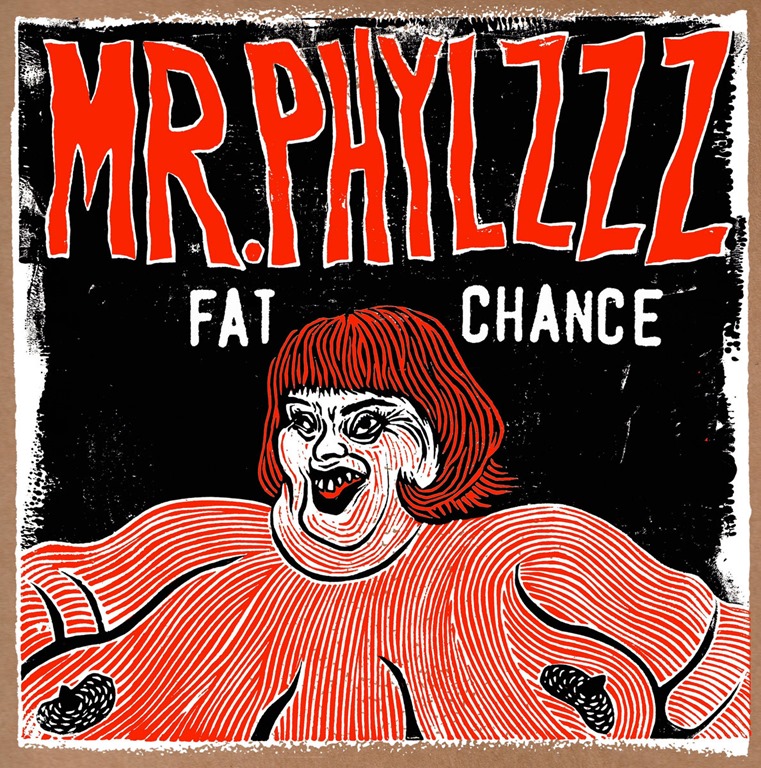
Fat Chance, the third album from Mr.Phylzzz, and which swiftly follows its 2022 predecessor, Cancel Culture Club, promises a ‘a distinct tonal shift while staying true to the band’s signature style’ and ‘an unrelenting, dynamically charged experience, described by the band as their most straightforward and focused record yet.’

It was recorded at Electrical Audio studios, a fact which speaks for itself, and the tracks were laid in just four days. Having road-tested the material in advance, the recordings capture a big, dense live sound and a real sense of immediacy. And there is very much a sense not only of focus, but of purpose, which radiates from the songs, and the sound quality and production is much improved but with no loss of power. Squalling noise and cacophony has yielded to tight structures and slugging grooves.

‘Pontiac Grand-Am’ brings blistering slabs of guitar and pumping drums, driven by a wild energy, and it’s one hell of a way to start an album. With Clinton Jacob’s yelping vocal style, I’m reminded of Electric Six and Pulled Apart by Horses, although it’s the latter they clearly bear the closer overall sonic resemblance. But the difference is that this mad, manic chaos of noise is created by just two guys instead of a full band. And this is a mad, manic noise that takes no breathers. The majority of the songs are two-and-a-half to three-and-a-half minutes long and are defined by absolutely piledriving riffs.

‘Maybe’ takes what starts out sounding like a fairly standard Nirvana-inspired riff and then chops it into a jarring, stuttering churn. The first six songs are crammed into sixteen eye-popping minutes without a second’s let-up, and it leaves you panting, your heart palpating.

And then there’s the obligatory long song to bring the curtain down, and the seven-minute ‘Pick Scrape’ delivers what it says on the tin, an experimental instrumental with a pick scape that builds through a series of crashing crescendos, something that’s somewhere between no-wave and avant-garde jazz, and one hundred percent racket.

If stylistically, Fat Chance has its roots in grunge and the noise rock sound of the 90s, it’s also an extremely contemporary album, and not just on account of duos being very much en vogue (although as likely a fashion borne out of practicality and necessity in terms of logistics and finances in this direst period of capitalism yet, which finds the artist at the bottom of the pile when it comes to making their work pay). Sonically, and in terms of its delivery, and its all-out, in-yer-face attack, Fat Chance is an album of the now – and it’s a blinder.

AA

a2133784088_10

Ipecac Recordings – 21st July 2023

Christopher Nosnibor

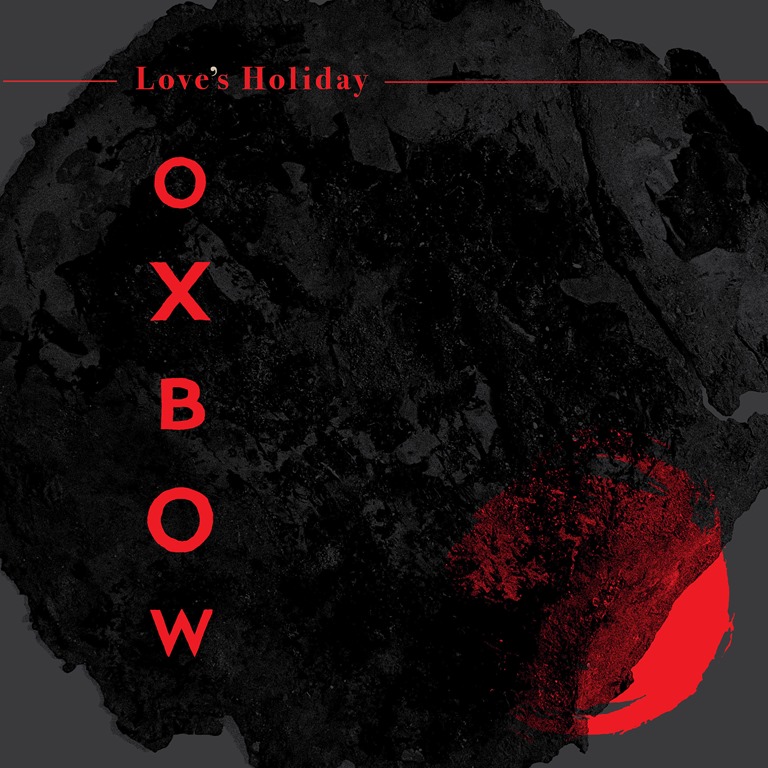
Thirty-five years is a long time. Not jus in cat or dog years, but in human years, too. For many, it’s half a lifespan. Perhaps it’s not so long in the scheme of the existence of the planet or cosmos, but that’s a timespan incomprehensible to most people, for whom the time from lunch till dinner feels like an eternity. But here Oxbow are, marking thirty-five years of existence.

A defining feature of their work has always been its diversity, and Love’s Holiday showcases that in abundance. The three songs released ahead of the album couldn’t have been much more different from one another, from the grainy, pained, and soulful ‘1000 Hours’ to the brooding, contemplative ‘Lovely Murk’ (both concerned with death and dying) via the full-throttle energised grunge-driven poke of ‘Icy White & Crystalline’.

How representative are they of the album? Entirely. Love’s Holiday has range, both sonic and emotional, and Robinson’s lyrics are dense and multi-facteted, and read like poetry. At first you’re struck between the eyes, but them you chew on them, because there’s more than mere impact, with smart wordplay running throughout, and they’ve visual, evocative, charged.

It screeches in with the sinewy discordant noise rock of ‘Dead Aherad’, Eugene S. Robinson hollering hard against scratchy guitar and tetchy drumming – and then, seemingly out of nowhere, everything locks together and brings a melodic chorus that’s somewhere between grunge and prog, landing in what you might call 90s alt-rock territory. Or you might not, but I’d challenge anyone to define it more specifically.

The raw, seething ‘Icy White and Crystalline’ drives in before ‘Lovely Murk’ and ‘1000 Hours’ follow one another in succession, changing the mood, pace, and dynamic of things. This piece of sequencing works well, as the intensity of the opening brace is enough to leave you gasping for breath and experiencing palpitation. Kristine Hayter’s Lingua Ignota choir vocals on the former fill the song with a white light, with something of a Gospel feel, in keeping with the song’s theme of death and ascension, after which ‘1000 Hours’ balances darkness with light.

A choral surge and rolling piano provide the backdrop to ‘All Gone’, and Robinson showcases his vocal versatility to stunning effect; first, a cracked, Bukowski-like drawl, before breaking into barrelling delivery more akin to Tom waits, and then switching to a hushed, intimate croon. The song bristles with tension and oozes soul.

There’s another switch of instrumental arrangement on ‘The Night the Room Started Burning’, with acoustic guitar entering the mix, and things taking a tense post-punk, almost gothy twist. But again, the choral backing adds a haunting dimension to the song, and it’s incredibly powerful. Pushing on with the stylistic collisions that they absolutely own and utilise to optimal effect, ‘The Second Talk’ melds no-wave noise with country-coloured slide guitar, before ‘Gunwhale’ takes leave by the grandest, most theatrical means possible, before slowing to a grinding drone.

If the overall mood of Love’s Holiday is reflective, introspective, there’s so much detail among it all that it’s hard to unpack even after several listens. Herein lies its greatest strength: it’s not an album which conforms to a genre, but an album which serves as a vehicle to convey, not one thing, but a whole spectrum of complexities. Love’s Holiday is not easy to process, but it’s an eye-opening artistic achievement that thirty-five years in, Oxbow are absolutely at the top of their game.

AA

OBLH_cover_final

Unseen Worlds – 4th August 2023

Christopher Nosnibor

Having failed to make it to Carl Stone’s show in Leeds the other week – in the same way I’ve failed to make pretty much any shows this year and am largely tied to engaging with music in recorded forms for the foreseeable future, it feels only right that I should compensate in some small way with a review of his upcoming compilation album, a monster career-spanning triple album.

And when it comes to his career, the title sets out the immense landmark it represents. Not just the fact that this release is a summary of a career spanning half a century, but the broader context that there has been electronic music for so long. Village Voice have called him “the king of sampling”. Being born in 1975, I only became aware of sampling in the late 80s, and while Tangerine Dream and Kraftwerk and Throbbing Gristle are legendary as pioneers of electronic music, you probably don’t generally think of there being many other artists breaking ground and experimenting as far back as 1972.

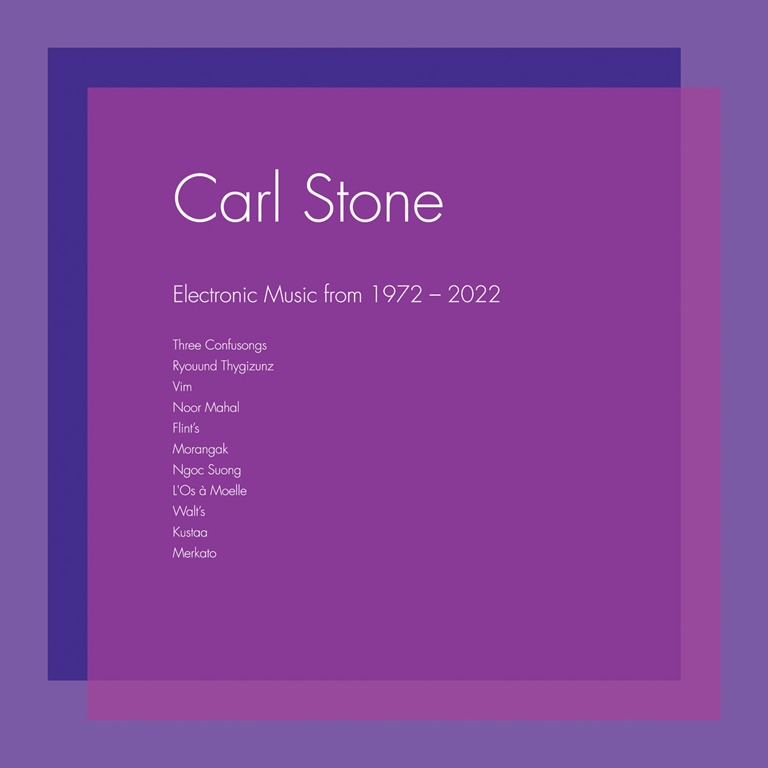
The accompanying notes provide an outline that’s easier to quote than to summarise: ‘Electronic Music from 1972-2022 seeks to frame fifty years of Carl Stone’s compositional activity, starting with Stone’s earliest professionally presented compositions from 1972 (‘Three Confusongs’ and ‘Ryound Thygizunz’, featuring the voice and poetry of Stefan Weiser – later known as Z’EV) up to the present. This collection is not meant as a definitive history but rather as a supplement to be used alongside the previous two archival releases. It is simultaneously an archival release marking Carl Stone’s evergreen 70th birthday and a document of archival art. In the spirit of disorienting repetition and layering, call it an archive of archiving.’

This, then, is by no means a retrospective in the conventional sense, but it does clearly trace a trajectory of the evolution of Stone’s work. The album doesn’t spread the tracks evenly, being weighted heavily to certain years, with each year effectively representing an era.

The 1972 material, which occupies side A and represents the early years, is very much a cacophony of loops and echoes, reminiscent of William Burroughs and Brion Gysin’s tape experiments of the later 60s, and foreshadowing the first releases by Foetus and Cabaret Voltaire, as well as the disturbing drones and processed vocals off Throbbing Gristle, and clearly very much ahead of its time and venturing into the realms of dark ambient before it was even given a label.

Side B leaps forward fifteen years to 1987, with a brace of scraping, discordant pieces, both of which extend beyond the ten-minute mark. The production of these more structure, beat-orientated collage pieces is quite eye-opening: how times and technology change! ‘Vim’, which sounds like a cut-up of The Beach Boys is very much a cut-and-paste assemblage of loops, but the sound is crisp and marks an evolution more of light years than actual years. At ten and a half minutes, it feels it goes beyond proving its point, but then again, perhaps that is a point in itself. It also reminds us of the changing musi8cal landscape: 1987, the year the Justified Ancients of Mu Mu released the sample-riot 1987: What the Fuck is Going On. This is significantly more sophisticated than the JAMMs, and takes a less confrontational approach to the application of the emerging technologies. In contrast, the other 1987 track, ‘Noor Mahal’ combines tribal drumming and hypnotic folktronica, prefacing the airy new age folk crossover forms that would bubble up in Enya’s ‘Orinoco Flow’ and The Beloved’s The Sun Rising’ a year or two later.

And this is what ultimately threads Stones’ work together. He’s astute enough to be aware that evolving technologies are in themselves the soundtrack of the times, and it’s clear listening to this in sequence that experimental music invites chicken-and-egg discussion as to whether the music evolves because of the way technology facilitates it, or of the technology encourages those who are so inclined to push it to its furthest ends.

There’s just one nineties cut, with the jaunty ‘Flint’s’ from 1999, before the millennium brings a selection of dark jerky pieces (‘Morangak’ (2005) is a particularly gnarly Dalek-like mess of a loop) with two absolute beasts in the form of ‘Ngoc Suong’ (2003) and ‘L’Os à Moelle’ (2007), which both sit around the twenty-three minute mark and occupy a side of vinyl apiece, proving particularly disorientating. The former is also particularly testing, an experience akin to water torture, while the latter is… different by its sameness. Like listening to The Eagles on a three-hour car journey. I woke up with a jolt, my face on my keyboard, realising my review was incomplete and it was fifteen minutes later than it had been, and this track feels like a comment on the time in which it was created. It gets weirder as it progresses, of course.

Cut forward to 2022, with three much shorter pieces occupying side F, and ‘Walt’s’ presents a different kind of surprise, being bright, crisp, with technicolour energy and it’s almost game-showy. Spinning folksiness with cornball AI –sounding blooping, and also whipping in some Bollywood bang and an 80s synth-pop vibe, it’s dizzying, and these elements are present in varying levels on ‘Kustaa’ and ‘Merkato’ which are overtly ‘world’ music inspired wile spreading in all directions at once. And this, ultimately, is what Electronic Music from 1972-2022 tells us: Carl Stone has spent five decades ahead of and / or capturing the zeitgeist, distilling the essence of the contemporary into a headspinning whirl. This may be a swift tour, but at the same time it’s comprehensive, and well worth exploring.

AA

AA

a3301642996_10

16th June 2023

Christopher Nosnibor

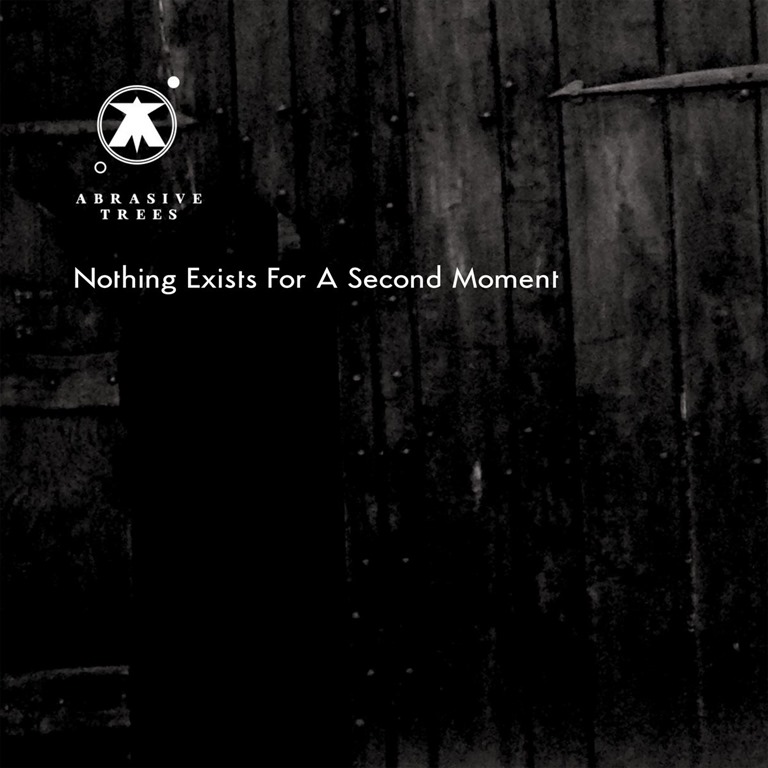
After a lengthy and sustained spell of creativity, dark Devonshire band Abrasive Trees are taking stock, reflecting and consolidating on their achievements to date, something which also affords newcomers an opportunity to catch up, March saw the release of Epocha, a compilation album which gathered their singles and EPs from 2019-2021, and now, housed in a sleeve which continues the thread of the design of its predecessor, they offer up a live album, which captures the band performing at hatch Barn, a venue close to their base in Totnes.

Live albums are notoriously tricky. So many live acts have an energy live that simply doesn’t translate when recorded. Then, at the opposite end of the spectrum, I recall meeting a metalhead in my first few weeks of university who was gushing in his enthusiasm for Iron Maiden “T’ Maiden” as he referred to them as being an amazing live as because “it sounds just like ont’ album”. This stuck with me, because I wasn’t accustomed to such thick Northern accents back then, and also because the idea of a live show so slick it sounded like the CD was a cause for consternation. Some people may think it’s a good thing, of course, but for me – even at the age of nineteen – it seemed to be missing the point of playing live. Especially when it’s a big band, who you’re likely to be watching on screens instead of looking at the stage. Might as well be watching a video at home for that.

Then there’s the recording itself: too much audience and it sounds like a shitty bootleg that’s as much that gobby tosser and his mate yammering away over the band; too hermetic and soundesky and it sounds dead and like there was no-one there, and all the vitality of the live experience is lost. This six-track release, once again mastered by Mark Beazely of Rothko, is magnificently realised: the sound is superbly crisp and clear – it’s obviously taken from the sound desk – but there’s a hum and a sense of space and audience, and it isn’t so clinical as to sound like another studio recording.

There’s irony in the title here: the live experience exists only in the moment, but here we are with a documents which gives us that second moment of existence. But of course, this is not the thing in itself, but a recreation, which captures only a part of it. Dimensions are missing: the sights, the ambience, and so on. This gives us not the full give experience, but an aural document of the band’s performance alone. They know this. We know this.

Four of the six tracks here are featured on Epocha in their studio forms, but the two mid-set songs, ‘Kali Sends Sunflowers’ and ‘Moulding Heaven With Earth’ are from the post-Epocha double-A-side single, and ‘Moulding Heaven With Earth’ is extended here from its near-six-minute form to almost eight her, making for a colossal centrepiece to the half-hour long set. Over its duration, the band sound solid, and assured, and they bring the detail of the studio recordings to their live show, with added dynamics and energy – the bass and drums in particular when they hit peak crescendo cut through in the way that only ever really happens live, and so it’s a credit that this release captures that energy.

The set opens with ‘Before’ from the Now You Are Not Here EP, and while abridged from its original six-and-a-half-minute sprawl to just three and a half, it conjures a magnificently atmospheric space, with chiming guitars, drifting ambient synth drones, hand-drums, and brooding sax, not to mention Easter-inspired vocalisations to build tension, and it segues into the ornate and delicate ‘Now You Are Not Here’ from the same EP, introducing vocals to the set, and finding the band at their most dramatic, evoking the quintessential goth sound from circa 1985-86. Mattthew Rochford’s voice quavers and you really feel as if you’re with him, teetering at the of the world… before the chorus-soaked maelstrom descends.

The soft swell of clean, reverby guitar on ‘Kali Sends Flowers’ is so very reminiscent of Wayne Hussey it sends an unexpected pang of nostalgia, echoing as it does both ‘Severina’ and the intro to ‘Deliverance’. But instead of Wayne’s overt drawing on Christianity in his lyrics, Abrasive Trees delve into other belief systems, and crash into some bold crescendos in the process.

The samples on ‘Moulding Heaven With Earth’ are studio-clear, without sounding at odds with the mix of the music itself, while the near note-perfect ‘Replenishing Water’ breathes deeper as the guitars burst through the air and it explodes into a monumental extended climax that’s absolutely killer and one hundred percent exhilarating. There is so much energy and life here. There is not much vocal, and for some reason this often takes me by surprise.

There isn’t much chat either, but then, on the evidence of this recording, Abrasive Trees’ set relies on building and maintaining tension rather than rapport.

‘Bound for an Infinite Sea’ begins with the crescendo and drives hard to an energetic, bass-driven finale, Rochford’s voice brimming with emotion – and delving into gloom before soaring into gripping tension – and it’s all of this and more that makes Nothing Exists for a Second Moment so great. It’s almost as if you were there, and very much wish you were, but Nothing Exists for a Second Moment achieves the rare feat of making you feel something almost like having been there, slipping a subliminal buzz in the process… It’s as close to a second moment as possible.

AA

a1140864367_10

Waxing Crescent Records – 7th July 2023

Christopher Nosnibor

Since parting ways with Gavin Millar and worriedaboutsatan, Thomas Ragsdale has been incredibly busy recording both as Ffion and Sulk Rooms, as well as playing synths with Mancunian post-rock act Pijn. Looking at his bandcamp, you wonder how he has time to piss, let alone sleep.

The Incidental Crack, meanwhile, are no strangers to these pages either, and Simon Proffitt, Rob Spencer and Justin Watson are hardly idlers when it comes to creativity, with The Incidental Crack Does Nothing, released almost a year ago to the day from this release, following two albums in 2021.

And as the accompanying notes explain, it’s this shared love of the act of creating that brought the two together: ‘Split was created through the desire to collaborate. Thomas Ragsdale and The Incidental Crack spoke about the idea of working on a split release and then all hurried away into their studios to get to work. The split idea soon become a reality as music was exchanged ready to share.’

The title is factual, and gives nothing away, but it’s also descriptive in a way, in that it’s distinctly an album of two halves, complimentary and contrasting.

Sulk Rooms present a single longform composition of some twenty-one-and-a-half minutes in duration: The Incidental Crack’s contribution is of more or less equal length, but spread across three pieces.

Sulk Rooms’ ‘Objects In The Mirror Are Closer Than They Appear’ has no connection to Meat Loaf and his bombastic rock, and is instead a big, slow-moving mass of ambience, which has a density and shade as well as a certain lightness. ‘Vaporous’ and ‘cloud-like’ are terms I often reach for in the face of such works, but this feels more like standing atop a mountain while the cloud thickens to the point that there is no visibility, to the point that you’re unable to even discern the presence of your own body, and so dense as to be suffocating – perhaps more like a smog or smoke. Tim Hecker managed to create such a sensation the time I saw – or, more accurately, was present, when he played in Leeds a few years back. The smoke was so dense and the lighting so minimal as to induce a kind of sensory deprivation. But with the swirling sounds all around, there was, simultaneously, sensory overload. You need balance: many of us are reliant on multiple senses, and those who lack sight, hearing, often experiencing a sharpening of the senses which do function. But his is not an immediate thing, and to suddenly find oneself with restrictions, it’s a shock of sorts. And so while ‘Objects In The Mirror Are Closer Than They Appear’ is soft and tranquil, the experience isn’t entirely soothing as I feel an inner tension grow as the time drifts and dissolves, diffusing in reverberating waves of vocal samples.

The Incidental Crack’s three cuts are descriptively titled and combine elements of the dramatic and the mundane to intercut aspects of pathos with bathos to somewhat comic effect.

‘Rob To Holland Via Köln And Back Again’ sounds like is should have something of a travelogue feel, but is, in fact, a work of dark ambience with deep tensions evoking the chilling fear of The Cold War, while ‘Lawnmower Death And Subsequent Resurrection’ isn’t an homage to the parodic thrash band Lawnmower Deth, but a soundtrack to the trauma of dealing with tools and appliances when they don’t function as intended. Yes, most of us have been there, but to feel it so bluntly and boldly is impactful. This – if I’m not mistaken – the sound of a guy recording his DIY and the like before seeking a narrator. Yet, there are some dark atmospherics too, and thee overall sensation is ominous rather than uplifting. And by that measure, the ‘Bus Stops In Wigan’ must be pretty fucking terrifying: places to avoid in bleak territories.

As split albums go, it’s absolute perfection in that it gives you everything you want. If the two acts operate very differently in formal terms, both have created deep, dark works here that make for a release that’s wide-ranging, interesting, and just a little scary.

AA

a0921513698_10

Kranky – 7th July 2023

Christopher Nosnibor

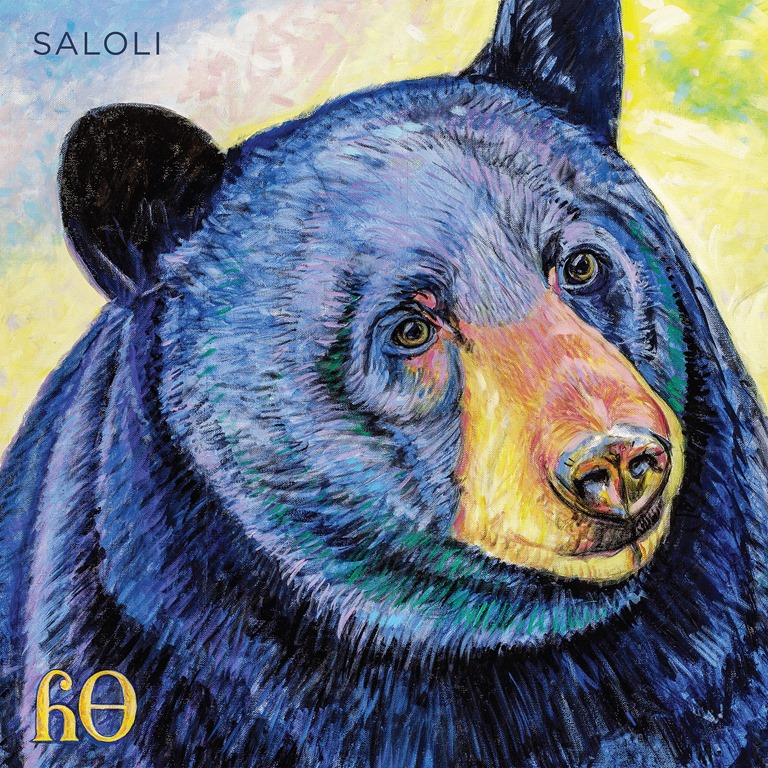
If the prospect of an album from a solo pianist whose recording moniker is the Cherokee word for ‘squirrel’, and which is intended to evoke ‘a day in the life of a bear in a canyon in the Smoky Mountains,’ with each track channeling a different emotion or experience in its daily explorations, sounds as if it may be soft, neoclassical tinkling, Canyon will come as rather a surprise.

As the accompanying notes explain, ‘Canyon was composed and performed live on a Sequential Circuits MultiTrak synthesizer…routed through a delay pedal. This refraction adds a lyrical spatial quality, as though “echoing off canyon walls.” It’s music both gentle and adventurous, curiously rooting through soils and streams, in a sustained state of discovery’.

It’s a proper vintage piece of kit, an analogue synthesizer only produced for a couple of years in the mid-1980s. Described by Vintage Synth Explorer as ‘a six voice analog synth with sophisticated filters, envelopes, modulation capabilities and built-in sequencing’, it’s clearly got versatility in its favour – which means Saloli has a broad range of sounds and effects at her disposal to articulate the range of moods and emotions of her subject. But above all, it has that classic analogue warmth of tone, the rich, organic texture that resonates in a way that’s almost biological. It’s something that’s both affecting and in some way comforting, the fuzzy edges conjuring a sonic blanket, and even when venturing into more abrasive territories, analogue synths very much have the capacity to reach the parts their digital successors somehow can’t.

The album starts strong: ‘Waterfall’ spirals and cascades in a swirl of synth that doesn’t necessarily evoke – at least to me – anything bear-like, but the more ambient end of Krautrock ‘Lillypad’ drifts soft-edged semi-ambience strolling and ‘Snake’ is unexpectedly graceful. But then, if you’ve ever watched a snake move, it is a graceful, supple movement, and snakes have an undeservedly bad reputation among humans. Very few of them are dangerous, and they’re certainly not the only creature to shed its skin. Again, the notes provide an insight which perhaps has a bearing on the tone here, explaining that ‘In Cherokee teachings, humans and animals are considered to have no essential difference – originally, all the creatures of the earth lived together in harmony’, and as such, ‘Canyon captures shades of this Edenic notion across eight elegant pieces, alternately meandering, pensive, playful, and pure. Sutton’s playing, as always, is dexterous and dimensional, mirroring the dazzled senses of its muse. If then, the compositions don’t quite confirm to our expectations, based on our perceptions of the various inspirations, it could well be on account of Saloli approaching them from a very different perspective. Why are we scared of snakes? Some of it is likely biblical in origin, some to popular portrayals in movies and media. But one is not afraid of one’s equal, and living together in harmony means there is no reason for distrust.

Such belief systems may be difficult to comprehend, but how much better, more pleasant, more bearable, would life the world over be if everyone held these views? There would be no social hierarchy, there would be no capitalism, there would be no war. Consider that for a moment.

The beauty of Canyon is that it’s a work which encourages and inspires contemplation.

It’s the playful side of Saloli’s songwriting that comes to the fore on the slowly bouncing ‘Yona’. It’s mellow, light, uplifting, and contrasts significantly with the introspective ‘Silhouette’ which follows, a reflective, melancholy pie, which makes you ache ever so slightly inside: you can’t quite pinpoint the reason, but that’s the power of music. Moreover, it’s the power of Saloli’s music, as the forms shift from string-like elongated notes to shorter, more piano-like sounds, with all of the variables in between.

‘Full Moon’ is positively bloopy and gloopy, trilling tones like synthesized pan pipes echoing out over a bubbling, bass, and it works nicely: there is contrast, there is movement. And in an abstract way, it captures the energy that seems to emanate from a full moon. And there is an energy which affects creatures and humans alike: some if it’s mystical and mythical, but I’ve often felt hyper without even realising it’s a full moon.

There’s something buoyant but also stealthy and predatory and then again, at the same time, increasingly discordant and with shades of darkness, about ‘Nighthawk’, a seven-and-a-quarter-minute monster with transportative qualities, before the true closer, the eight-minute ‘Sunrise’ heralds the arrival of the new. A new dawn, a new hope. Breathe deep. This could be our reality too.

AA

604344

Upset The Rhythm – 7th July 2023

Christopher Nosnibor

Personal confession: I’ve had a tough few months. No, I don’t really want to talk about it, but the name of Newcastle-based artist Jayne Dent’s musical vehicle is one which resonates – because the fact is, it’s easy to lose sight of yourself, especially when under stress, especially when under pressure, especially when dealing with difficult circumstances.

Yes: me lost me, albeit briefly, meaning the moniker s relatable. But you have to get lost to get found, and without fail, at least in my experience, music has a remarkable capacity to have a positive effect on one’s mental state.

If old favourites may offer solace, discovering new music can often prove cleansing, as you approach it fresh and without association, and because you’re engaging and exploring instead of retriggering recollections as with music that’s familiar (I find listening to music I know well is only half-listening while my fills the gaps, and I suppose that’s part of the appeal: it’s easier and less demanding when you know every word and exactly what’s coming next, than grappling with something, and familiarity is comforting. But the challenge of the new seems to run through different neural pathways, and in paying attention to something, your focus turns to that something instead of idly looping over those forefront throughs you’re seeking respite from.

I suppose it’s the same reason people enjoy and become rather obsessed with Role-Playing Games, or RPG: they offer an escapism that the passivity of TV or movies don’t. While I’m not a fan myself – having reluctantly dabbled with Dungeons and Dragons, I found it slow and contrived and it simply didn’t grip me – but I get it. I get it. What I get more is the tension which runs through this album, the fourth from Me Lost Me, which started out as a tentative solo project before subsequently expanding to a collective. What I get are the themes, as set out on the accompanying notes:

‘Hauntological in part, RPG is concerned with tales and with time – are we running out of it? Does insomnia cause a time loop? Do the pressures of masculinity prevent progress? Jayne Dent asks these questions and more on RPG, her homage to worldbuilding and the story as an artform, calling back to those oral traditions around a campfire, as well as modern day video games – bringing folk music into the present day as she does so.’

It certainly feels as if we’re running out of time, and an exponentially-accelerating pace. We’re recording the hottest global temperatures on record and are looking like going the way of the dinosaurs not long after the whole of Lincolnshire – our largest county for domestic agriculture, which sits several feet below sea level – is reclaimed by the waves, turning Boston and its stump into the Atlantis of the 21st Century, yet our government is more preoccupied with ‘stopping the boats’ and painting over murals that might look a bit ‘too welcoming’ to asylum-seeking children than stopping oil and fracking. Once again, as I type, I’m hot and flustered and short on breath. In this context, ‘Heat’, released a few weeks ago, hits the mark. We’re on a collision course with the end of days. RPG explores – in its own way – this end of days anxiety.

‘What things have you seen in real life and thought that’s not real, that’s like a video game?’ Those are the words of the sample which open the album, on the hypnotic collage that is ‘Real World’. It got me thinking: what have I seen? Truth is, simply turning on the news seems unreal these days: every day there’s something that makes you think ‘you couldn’t make this shit up.’

‘Festive Day’ exploits traditional folk instrumentation with spartan strings, plucked and scraped, and drones, and there’s an ‘old’ vibe to it, particularly with Dent’s lilting vocals, which occasionally soar magnificently as she sings of sand and sea. ‘Mirie it is While Summer I Last’ is pure folk, an acapella round of traditional-sounding folk that would be perfectly as home on a Steeleye Span album, and instrumentation on ‘The God of Stuck Time’ is minimal – but there are warping electronics and contemporary issues strewn through the lyrics, not least of all in the refrain of. ‘Checking in again / Checking Out’. It speaks of the world we live in.

Where RPG succeeds is in that is doesn’t moor itself to any one form or period: ancient an modern, sparse folk and fractured electronica alternate and sometimes collide: ‘The Oldest Trees Hold the Earth’ is magnificent in its simplicity, its earthiness, and Jayne’s voice is magnificent. It evokes the spirituality of the centuries when alone or with minimal accompaniment, but when backed by electronica or more jazz-leaning backing, it also works, as an instrument and as a carrier for the words, which cover considerable ground, both ancient and modern.

RPG sounds pretty, but it’s serious and it’s quite dark in places – but it also traces the contours of landscapes past and present with a lightness of touch that’s uplifting. With so much texture, detail, and atmosphere, this is an album that’s subtly moving, and there isn’t a moment that’s predictable here as it veers between folk, electronica, ambient, and abstract noise. Lose yourself in it.

AA

a3302533055_10