Archive for the ‘Albums’ Category

May 2024 / July 2024

Christopher Nosnibor

Gintas K is possibly one of the most-featured artists here at Aural Aggravation, and I’ve written about his work elsewhere, prior to establishing this site. I’ve often commented – sometimes flippantly, sometimes in sheer awe – at his rate of output, but it seems appropriate to make the observation once again, since a little while ago I found myself simply swamped and a shade overwhelmed by the volume of submissions I was receiving. Electroacoustic Space Drumming landed in my inbox and I failed to so much as open it, let alone download it. Then, Outsider’s appeared, reminding me I was behind on things, only to discover that a split tape release with Jacob Audrey Taves had come out in between the two.

The first of the releases, Electroacoustic Space Drumming, comes courtesy of London label Anticipating Nowhere Records, as a download and limited cassette (in an edition of 20, more than half of which have gone already).

The titles are incomprehensible to me, but I very much doubt this will make any difference to my appreciation of this jangling, bleeping glitchfest. The six tracks do very much sound like a circuit meltdown, the digital xylophonic cadences interrupted by sudden jolts or sound and stuttering microbeats like an Action Man marching band trapped inside a jam jar half-full of water. Creaks, groans, and splashes abound and contrive to create a complex and layered work.

It’s difficult – if not impossible – to unpick everything that’s going on, and consequently, you simply sit back and let it wash over you. But that doesn’t mean it’s comfortable, or easy to do so.

And then there is Outsider’s, with its questionably-placed apostrophe in the title. Outsider’s what, precisely? And with twenty-three tracks, released digitally and as a colossal five disc CD work, it’s an absolute beast.

The five CDs make sense in a way which is less apparent on the digital release, as there are essentially five segments or suites, with the tracks belonging to each names with a suitable prefix: jazz, crunchy, noise, drones, and piano stuff. Each contains between three and six pieces, effectively an EP’s worth apiece.

In truth, the track titling isn’t especially helpful: the six tracks of the first set, ‘jazz’, and entitled ‘jazz good’, ‘jazz also good, jazz prolongation’, ‘jazz’, ‘jazz’, and ‘jazz.’ Spoiler alert: there’s nothing especially jazzy about the ‘jazz’ cuts, but there’s electronic percussion that cuts through foamy bubbling washes and a disarray of oddness that sounds like machine gun fire, and glitches aside, it almost feels co-ordinated. And no-one needs a jazz prolongation, although this decidedly unjazz cut, we can forgive.

The four ‘crunchy’ cuts are riots of bleeps and squips, a riot of sound that’s no more vigorous than on the first, ‘crunchy.geras greit.’ The two pieces simply entitled ‘crunchy’ combine haunting, hovering tones, and collapsing circuits and lurching synaptic stutters, like exposed wires sparking as they swing, and things become increasingly scratchy, scrapy, a frenzied buzz of fractured, fizzing, fucked electronics.

The three ‘noise’ pieces build in their noisiness, but at heart aren’t all that dissimilar from the ‘crunchy’ pieces, although perhaps quieter and less overwhelming, and overwhelming it is. Then again, the ‘drone’ pieces aren’t especially droney, and more represent explosions of frothing discord, and the final suite, ‘piano stuff’ is a cacophonous conglomeration of bubbling noise down a drain.

These recordings remind me of my early days of reviewing, back in 2018 or so as my introduction to truly avant-garde, experimental electronic works, and Gintas K – perhaps one of the first acts I discovered as an exponent of dripping, bleeping, weppling, weirdness. All this time later. he’s still proving to be a rare master of electronica. Come 2024, and Gintas K is still right there at the forefront.

a1621189998_10a2101315344_10

Drek Skivor – 5th July 2024

Christopher Nosnibor

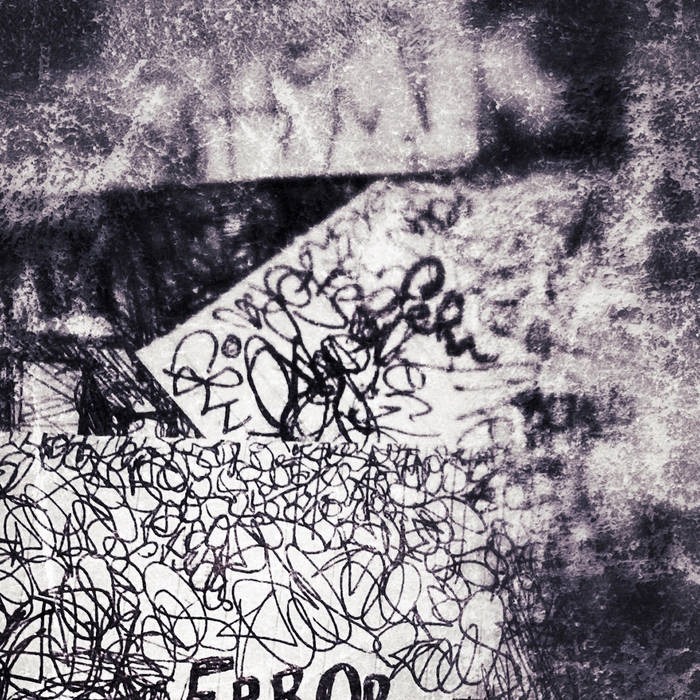
It’s been a little over a year since we last heard from Fern. Previous release, Deformed, was, as I put it, ‘appropriately titled’ and ‘some mangled shit.’ Such is Fern’s approach to music-making, it would seem, seeing damage as potential, an opening, a possibility. It may be a perverse pleasure, but it can be a pleasure nonetheless, to hark at the sound of breakage and malfunction. Perhaps because it’s noise which possesses an honesty that’s rare in so many musical recordings, where the more common ambition is to create the best, most polished, or otherwise superior version of something, be it a song in the conventional sense, or a live recording of something perhaps less conventional. It’s a rational and valid objective, but the reason I suggest that the sound of something broken is honest is because it feels rather truer to life’s lived experience.

How many obstacles must one surmount to achieve that polished definitive version? Moreover, how many obstacles must one surmount to simply get through the days? Life has a habit of throwing shit at you. Just when you think you’re having a good day, an ok week, something breaks – and it nearly always costs money. Your laptop dies, your phone screen cracks or your charger cable breaks. The shower starts leaking or there’s a power cut. Some days – and weeks, and months – it simply feels like everything is against you. Something goes awry at every turn. Life, then, is imperfect, an endless succession of glitches and breakages, against a backdrop of noise and distortion and shouting and frustration and confusion and just a whole load of shit in general.

I arrive at Error having recently had a couple of posts removed by Facebook having been flagged by their bots as ‘spam’ due to my attempts to artificially gain likes by tagging people. Those people specifically being the Aural Aggravation page, the band, and their PR and / or label. Somehow, this is spammier than sponsored links to shit I have no interest in that repeatedly crop up every time I return to the site and spammier than the relentless porn links and so on posted in groups. And so I arrive at Errors frustrated, antagonised, feeling that systems are against me, and feeling – in some way – persecuted, as if this is some deliberate obstruction to my efforts to promote obscure music. Music like this.

‘Is this music the result of a degaussing error? Or is it a long gone and forgotten tape shaped and distorted by time and a chewing cassette deck, still here for us to experience……’ This is the way the release is famed on Bandcamp. And I find that Errors isn’t as messed up as all that. It’s not exactly easy listening, but…

The first track, ‘slip ‘n’ slide’ is a fairly standard work of glitchy minimal electronica: a bit dark, a bit stark, bit trip-hop. ‘abrupt morning’ hums and crackles, and something about the production renders everything muffled, distant, in the way The Cure’s Seventeen Seconds feels simultaneously claustrophobic and distant. It is not a comfortable sensation. It is a work of sonic wizardry, to create a sound which stands at such polarity.

‘mellow dream’ is a more conventional ambient work, a buffeting sonic cloud carried by the wind, although there are some less mellow moments where darkness enters the equation and unsettling undercurrents rumble disquietingly.

‘ignite interlude’ goes all-out on deep bass hip-hop, but sounds like listening to a Wu-Tang side-project from the pavement as it plays from a car pulled up at traffic lights with the windows up, before ‘c’mon intro’ hits a slamming industrial dance seam – but again, it sounds as if it’s bleeding through the wall from next door. The album takes a solid turn towards the dancefloor in its second half, although the insistently percussive ‘bits and pieces’ is more reminiscent of Throbbing Gristle. ‘generative form’ feels like something of a collapse into a formlessness defined only by a looping repetition, emanating a kind of fatigue that paves the way for the suffocating collage of loops and electronica of ‘lambs’ – where they sound as if they’re being tortured and strangled. It’s a scrambled melange of sounds collaged from wherever, which brings the album to a suitably dark and unsettling conclusion.

I’m not quite sure what I’ve heard here, or whether I like it or not, but that, I feel, is the desired effect – and it’s certainly a desirable one.

a2358833930_16

The Helen Scarsdale Agency – 14th June 2024

Christopher Nosnibor

For some time now, The Helen Scarsdale Agency has homed some quite challenging experimental noise and industrial-orientated releases. It seems somewhat incongruous, the name suggesting they’re a stuffy literary agency or something.

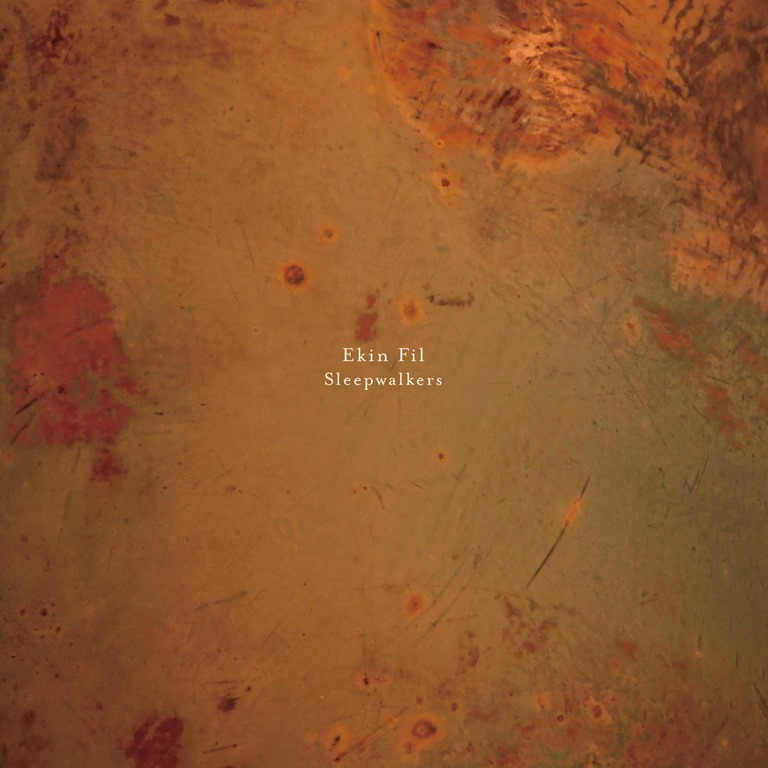
The notes which accompany this latest offering from Ekin Fil are instructive and informative, in terms of expectation and context, and as such, worth reproducing here:

‘The drone-pop consternations of Ekin Fil emerge through vaporous tone and forlorn, distant song, as if plucked from a dream. These exist on their own accord, moving with their own internal logic of an emotion heaviness that belies any the passing observation of this as mere shoegazing ambience. Her songs, her compositions find themselves adjacent the fragmented etherealization of Elisabeth Fraser’s voice from a forgotten scene of a particular David Lynch film, as a ASMR trigger for Proustian recollection. Something profound. Something hidden. Something desolately sad.’

Do I want to feel something sad? This is a question I asked myself in all seriousness. Everyone has felt deep, desolate, profound sadness at some point, to varying depths and degrees, and while wading through the mires of a recent bereavement I find I can be set off easily and unexpectedly. But sadness is necessary, and is sometimes something to be embraced. To embrace sadness is not the same as to wallow, and to face sadness squarely is to accept its presence, and perhaps begin to make peace with it. And only in making peace with it is it possible to begin to move on.

The album’s first piece, ‘Sonuna Kadar’ is a billowing cloud of thick ambience, suffocating, disorientating. Occasional chimes do little to light the way, and the vocals drift, lost, lonely through this tentative space. Things grow darker still with ‘Stone Cold’: long noes echo out like sirens, and soft, fizzy-edged notes ripple before being absorbed by cruising waves of thick, heavy sound. The organ is almost without question the heaviest of sounds, a droning, wheezing sound that has the capacity to be uplifting, but, more often than not, is slow a d mouthful. It’s a synthesized organ drone with slowly throbs away on ‘Reflection’, too lugubrious, soporific effect.

Vocals echo as if reverberating in caverns, cathedrals, while the instrumentation is abstract, its direction unfathomable. ‘Sleepwalkers (Version 2)’ is heavy with atmosphere, and the experience is haunting.

The absence of percussion or structure renders these pieces formless, rootless, shapeless, and consequently they hang like heavy cloaks which drag the head down to the ground, and, staring at your feet you contemplate the weight of the world.

Sleepwalkers is one of those albums which seems to build in effect cumulatively over its duration, and wile it’s not overtly heavy with, say, distortion or volume, it brings a weight that drags you down, and the final composition, the ten-minute ‘Gone Gone’ pulls the shoulders down.

Listening to Sleepwalkers doesn’t fill me with sadness, as much as a sense of unease. It does unquestionably bring a sense of weight, but on listening I feel a sense of uneasiness and uncertainty more than anything. But music presents much of what you pitch in and bring to it. With Sleepwalkers, Ekin Fill presents music with open doors. What will you bring?

AA

a0105911352_10

Regenerative Productions – 7th June 2024

Christopher Nosnibor

The last couple of years – and 2024 in particular – has seen a huge upturn in acta reconvening after lengthy breaks. Anticipation for the Autumn drop of the first album from the Jesus Lizard in over two decades is immense, but then only this week I wrote – extremely favourably – on the new album by The March Violets, released eleven years on from its predecessor, and From Fire I Save The Flame by Three Second Kiss – twelve years down the line from their last album. They all have their reasons for pausing, and for the timing being now, but as much as its perhaps coincidental, it makes for exciting times for fans who had little to no expectation of ever hearing new material. And what’s more, and perhaps most remarkable, is that these albums have been proving to be GOOD – not some damp squib, reheated soufflé reunions which sully their catalogues and make you wish they hadn’t bothered (in the way Bauhaus’ Go Away White was such a monumental let-down).

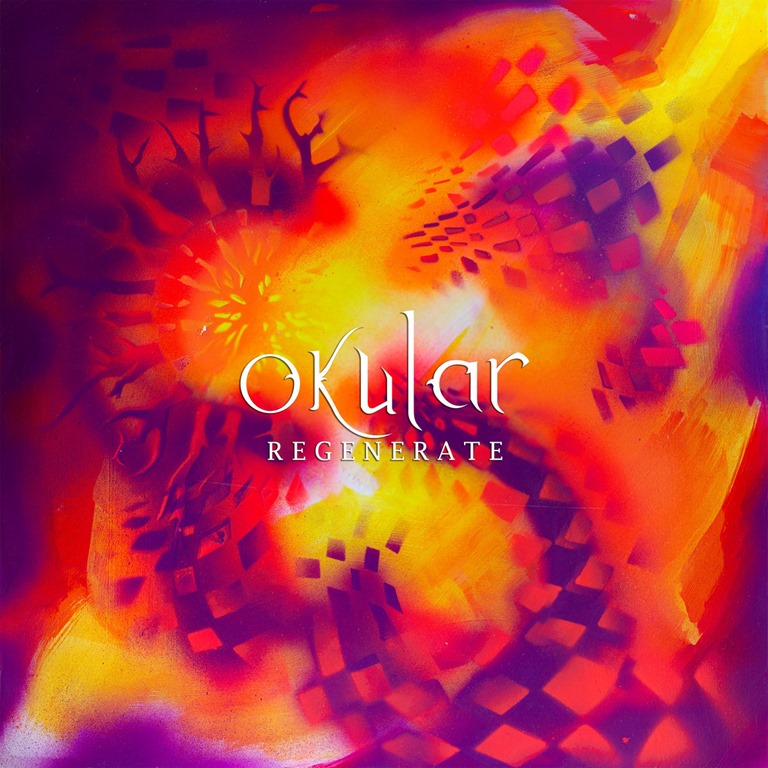
And so here we have Norwegian death-metal outfit Okular with their first full-length release in eleven years since their 2013 second album Sexforce.

I will confess to being unfamiliar with their previous work, which means I’m unqualified to comment on how the aptly-titled Regenerate stands in comparison. But I do feel able to consider Regenerate on its own merits.

Blasting in with ‘Back to Myself and Beyond’ the sound is dirty, murky, dingy as fuck, snarling, gnarled vocals spewing venom and gargled gasoline over churning guitars, from which emerge the occasional squealy note before flicking into a quickly-woven blanket or fretwork wizardry. Underneath it all, the bass and drums thump and thud away at a hundred miles an hour, muffled, muddy, and manic.

The two-and-a-half-minute title track follows this five-minute titan, and it’s a fast-and-furious fretfest, on which the vocals switch between menacing growl, strangled rasp, and raw deep-throated demonic howl.

All of the requisite tropes are in place: a hefty percussive barrage and super-fast fingerwork provide the backdrop to ugly, bowels-of-hell vocals, with some rapid drops and sudden breakdowns, and when it comes to genres, missing these elements is case for disappointment. That said, there is still scope for invention, and ‘A New Path’ brings what its title proffers, opening with a soft acoustic almost country-tinged grunge intro, before doom-laden power chords crash in, an unstoppable chuggernaut – and the two elements play off one another to forge a really interesting dynamic.

The album’s shortest track, ‘Debauchery’ surprises again, with another almost folky acoustic flavour to start, before simmering up to a boil to deliver what it promises in the shape of some spectacular soloing, preceding the album’s longest track, the six-and-a-half-minute epic what is ‘Another Dimension of Mind’. It’s a delicate, lilting, layered acoustic segment – which is really quite technical and borders on a blend of folk and neoclassical – which plays out on the album’s closer, ‘Elevate’, and it’s really quite nice. Of course, everything blasts in at double the standard intensity for the final minute, and it’s positively incendiary, a ground-scorching flame-thrower assault that hits like a tsunami before an abrupt and unexpected end.

Regenerate is a smart album. By its nature, technical prowess and musicianship is portrayed almost extravagantly, but, as is the law, it’s contrasted with the dirtiest, hardest, fastest riffs. But Regenerate offers so much more – more texture, more stylistic diversity, more range, a really ambitious approach to songwriting that goes beyond the confines of genre.

AA

a2807309953_10

Metropolis Records – 19th July 2024

Christopher Nosnibor

Metropolis Records – 19th July 2024

Cut back to not so long ago – in real terms – and the prospect of a new album from The March Violets was simply not something you’d imagine. 1987/88: The Sisters of Mercy had broken through in a major (label) way with ‘This Corrosion’ and Floodland; The Mission’s ‘Tower of Strength’ almost reached the UK Top 10 before Children scaled the heights of number two in the album charts, and this was the commercial heyday of goth… and one-time peers, The March Violets were a footnote in the genre’s history, having gone pop and signed to a major, only to go nowhere far and call it a day. They were fondly remembered by those who did, and compilation The Botanic Verses documented their body of work in the early 90s, but… Rosie was busy doing poetry and the like and Si was hiding behind smog as Nurse to Dr Avalanche as part of The Sisters of Mercy’s touring crew.

Then, in 2007, twenty years after they vanished, the band reconvened for a show in Leeds at what was then still the Met. It was a glorious celebration, not only of The Violets and their career, but also the heritage of the Leeds scene, with The Chris Reed Unit representing one of the city’s most singular and longstanding acts, and Merciful Release stalwart James Ray presenting thee magnificently eccentric ambient dance grooves of 25 Men.

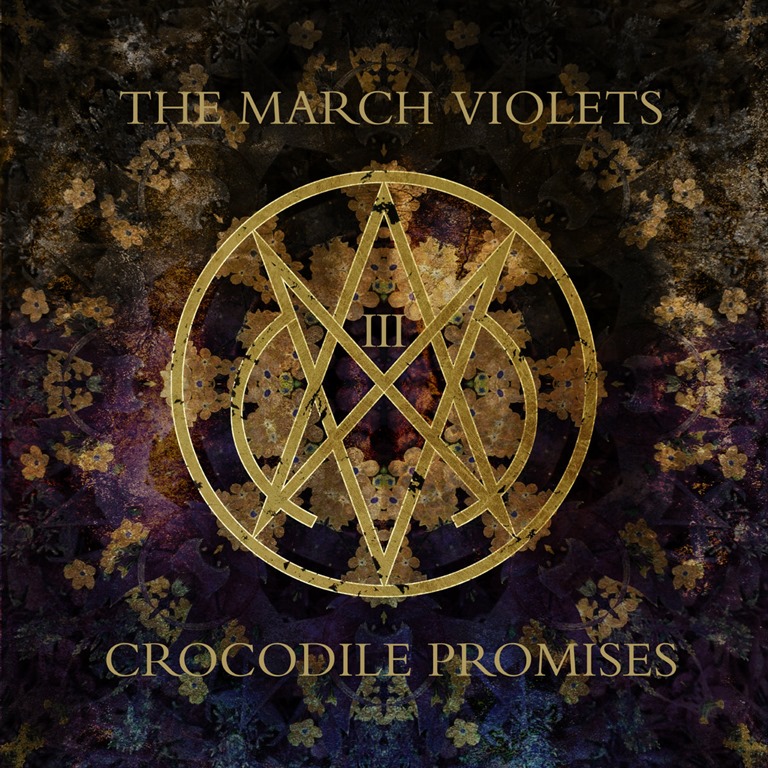
Health issues stalled things for a while, but miraculously, 2013 saw the eventual release of Made Glorious – which was in fact their debut album, since the three previous long-players had all been compilations (I’m including the US-only Electric Shades among these). And now, after further setbacks – notably Denbeigh’s departure from the band following a stroke, but also some not insignificant touring under their belts – they deliver album number two, Crocodile Promises a mere eleven years later.

No-one could, or should, expect a band who’ve been going for so long and undergone so many changes – both personnel and personal – to sound exactly the same as they did when they started out. And nor should anyone want a band to exist in a state of suspension or arrested development. Here’s where The March Violets are a rare thing: a band which has evolved, expanded, grown, but equally has never lost sight of their roots. As their Bandcamp bio summarises it neatly, ‘Original Post Punk Drum Machine Band From Leeds. Started at the Beginning, Imploded, Reborn for the 21st Century. Play Loud Play Purple.’ Yes, they’ve even retained their original slogan. And it still works, too.

Whereas Made Glorious was a sprawling beast of a release, comprising sixteen tracks – a double album, effectively, Crocodile Promises is a taut, succinct nine-song document.

Single release ‘Hammer the Last Nail’ kicks the album off in classic style with a snaking drum-machine groove and twangy gothy guitar interweaving behind Rosie’s sultry, vampy vocals.

Where Made Glorious felt a tad slick, Crocodile Promises returns to the pumping, gritty sound that made the band one of the greatest first-generation post-punk acts. ‘Bite the Hand’ is a tangle of metallic, trebly, chorus-hazed guitar against a thrumming bassline and pumping mechanised drum machine, and it’s got the hunger and edge they displayed back in ’83. It’s likely a coincidence that the title is a phrase which featured in a quote from Andrew Eldritch when commenting on the Violets’ departure from Merciful Release… right?

‘Virgin Sheep’ maintains the angular energy, and once again recaptures blistering force of their first iteration, calling to mind the frenzy of ‘Radiant Boys’. ‘Mortality’, the title track from the album-in-progress which was shelved on account of Denbeigh’s stroke is another classic Violets cut, and what becomes apparent while listening to Crocodile Promises is that feels natural, comfortable, not a struggling, forced effort to recreate the past. Of course, the timing is beneficial: the next generation of new music-makers are discovering grunge, post-punk, shoegaze, and goth, and suddenly, the bands who were the progenitors of these styles are finding new audiences, and instead of sounding dates, the styles feel fresh once more.

Of course, great songs are timeless, and great songs are a feature of Crocodile Promises. ‘Crocodile Teeth’ is perhaps more fractal dream pop than goth or post-punk, but it’s got that late-80s Siouxsie vibe that gives the dreaminess a serrated edge. Its inclusion brings balance and space to the album, too.

It would be wrong to say that The March Violets are quite the same band they were without Denbeigh’s snarling interjections, but it would equally be a mistake to criticise the current iteration on account of this. The March Violets are survivors – and a great band. Ever-present co-founder Tom Ashton continues to prove pivotal in defining their sound, and, equally, their attitude. As much as they were a part of that early 80s Leeds milieu, The Violets stood apart, and that slightly wonky, sharp-edged, skewed guitar was, and remains, integral. And moreover, Crocodile Promises is a great album. Its strength lies not only in its consistency, but also its energy and its atmosphere, both of which it brings in abundance. But best of all, this is a true return to form. There isn’t a dud cut here, and every song is up there with the singles up to ’86. It’s incredible that a band at this stage in their career could drop a definitive album – but that’s exactly what The March Violets have done.

a2052340793_10

A-Zap Records – 23rd August 2024

Christopher Nosnibor

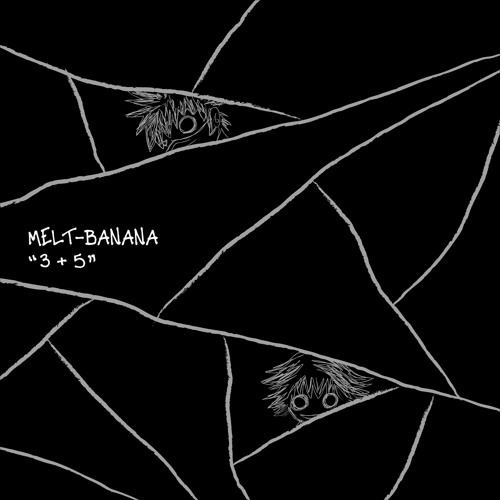
There is truly only one Melt-Banana. And Melt-Banana boldly encapsulate all of the craziness that makes Japanese music so peculiar and unlike the music to emerge from any other place. Here in the west, we can, in truth, only marvel at it – all of it. Because it makes no sense. It’s a country of extremes, with hyper-pop culture dominating, and a sense of plasticness and artifice defining the mainstream. But then, Japan is also the home of the most extreme noise – Merzbow, Masonna, for example. It’s not just extreme sonically, but beyond words in terms of performance.

The pitch for this, their eighth album, informs us that ‘3 + 5’ synthesizes elements of a variety of Extreme Musics, Hyper-Pop, classic Punk, vintage Metal, and Noise. It’s informed by Japanese culture in general, and the subcultures of gaming, anime and homegrown underground music in particular. The album’s nine tracks have been crafted to maximize the independent appeal of each song (since so many listeners will be streaming and playlisting these songs). Each selection boasts its own unique charm and ideas that beg for repeated listening.’

I had the good fortune to witness their live spectacle here in York not so long ago, and they were everything anyone even vaguely aware of their work would expect: intense, noisy, crazy, and wildly entertaining.

They create music that fits with the bizarre incongruity of their name – abstract, humorous, combining elements that don’t – or shouldn’t – really sit together – somewhat surreal, patently absurd, but also perhaps a shade Pop Art. Put another way, everything all at once, tossed in a blender and blitzed, the output being like a bubbling hot smoothie or something.

They do have a tendency to favour short and fast, as recent taster track ‘Flipside’ reminded us, clocking in at a minute and fifty-six. It does happen to be the album’s shortest track, but then, the longest is under three-and-a-half, and the majority of the nine songs are around the two-and-a-half minute mark. That means that with a running time of around twenty-seven minutes, the album would comfortably fit on a 10” record.

For a moment, ‘Code’ hints at something spacious, experimental and electronic to open the album – before seconds later, all kinds of sonic mayhem erupt and chipmunk yelping vocal squeak over something that resembles Metal Machine Music played at double speed, before it takes a turn into space rock territory, but again, at twice the pace, with some prog flourishes and a bunch or bleeps and widdly synths all criss-crossing over one another at two hundred miles an hour. For anyone for whom this is their introduction to Melt-Banana, they’ll likely find themselves dizzy and completely bewildered as to wat the fuck they’ve just heard. It is, unquestionably, utterly deranged, and at doesn’t get much more quintessentially Japanese than this.

‘Puzzle’ is kind of a high-octane rock tune, at least at first – but then someone hits the accelerator and in a blink you’re on ‘Rainbow Road’ on the N64 Mario Kart after eating three bags of Skittles and you’re totally wired.

Hyper doesn’t really cut it. Even the more expansive instrumental segments of ‘Case D’ happen at about 600bpm, and it’s like listening to a prog album at 45rpm.

As I listen, I find myself typing faster and faster, as if I’ve sunk six cans of Red Bull while chomping on a whole packet of Pro Plus. My fingers are pale blurs against my black illuminated keyboard, and they’ve seemingly run away from my brain and are just frothing out words in response to the frantic mania pouring into my ears – no, not pouring, but being injected by 10,000-volts of electrical current into my brain via my eardrums.

‘Scar’ slams big guitar rock and skittish melodic pop together like a banging of heads. It sounds like music from a computer game or an animated movie. It sounds like music made in a fictional context. Because in real life, music like this couldn’t exist. And in the main, it doesn’t. Only Melt-Banana are demented enough to actually make it.

Penultimate track ‘Whisperer’ goes big on dance / rock crossover and actually slows to a pace that doesn’t feel like a synaptic twitch or a seizure, before ‘Seeds’ closes the album with a two-and-a-half minute frenzy which chucks everything into the mix.

The whole experience leaves you feeling giddy, dazed, amazed. 3 + 5 may not bring anything radical, new, or revelatory to the Melt-Banana oeuvre, but stands as a classic example of what they do – and it’s as ace as it is nuts.

AA

MB 3 5

Dragon’s Eye Recordings – 7th June 2024

Christopher Nosnibor

There isn’t really anything funny about Yorkshire Modular Society, conceptually or otherwise. But one never really fully appreciates one’s own locale, especially not when it’s in the north of England, a region renowned for its pithy, gritty nature rather than its glamour. People will tell you that Yorkshire folk are welcoming and friendly – and tight – and as a non-native whose lived in Yorkshire the majority of my life now, it’s probably a fair summary. The county boasts some of the most magnificent countryside, and I only need to walk ten minutes from my house to be in woodland or fields – not bad considering I live twenty minutes from the centre of a cathedral city, not to mention twenty minutes from the train station, which will land me in Leeds in under half an hour. But for all that, and despite the huge number of outstanding bands to have emerged from Leeds over the years, mention Yorkshire and people will probably think of brass bands, cobbles, and Hovis, flat caps and equally flat brown beer. People tend not to think ‘Yorkshire, the county of experimental electronica’. They’re missing something significant.

There is a thriving modular / electronic scene in Yorkshire, notably with electronic music open mic (EMOM) nights in Leeds, York, and Halifax, all giving platforms to acts who aren’t necessarily on the main gig circuit, although venues like Wharf Chambers in Leeds and The Fulford Arms in York will often feature weird and wonky stuff from across the electronic spectrum.

Like many electronic experimenters, the YMS BandCamp page presents a prodigious self-released output, so if you’re wondering where to start, a release selected by a label seems like a fair point.

Of this continuous hour-long ambient work, Yorkshire Modular Society says, “As the cityscape pulses with electric fervor, oscillations emerge like whispers in the rain-soaked streets. LFOs, like elusive shadows, guide the listener through a maze of sonic intrigue, each modulation a glimpse into a world of mystery. Within the depths of digital tape modules, time unravels and reconstitutes, casting a veil of uncertainty over the sonic landscape. Reverb and delay wash over the senses like urban decay, adding depth to the sonic architecture that surrounds.”

Fiery the Angels Fell is a lot calmer, more soothing, and less apocalyptic than its cover art suggests.

As is often the case with ambient works, I find my mind – like the music – drifting, and my contemplations following divergent trajectories. Here, I found myself wondering what the end would – or will – really look like. Growing up in the 80s, I envisaged the white light of nuclear annihilation, but on recently watching Threads, came to realise that this may not be the spectacular moment of silence prefacing perfect oblivion my younger self had fantasized. But no part of me ever envisaged an globe, or an egg, colliding and splitting in half with molten flames as something I may witness. The cover art, then, harks back to pure 60s / 70s sci-fi vintage. The artwork propagates tension. The sound soothes it.

While there are some billowing clouds along the journey that is Fiery the Angels Fell, this is a delicate, graceful work dominated by organ-like drones and soft sounds which ebb and flow. If this is the soundtrack to the end, I will likely sleep through it, and awake pure nothingness.

AA

de6063_art

Cruel Nature Records – 28th June 2024

Christopher Nosnibor

It’s a perennial complaint around the passage of time, an oft-tossed-out remark with each month that everyone churns out as a space-filler, especially when speaking to someone they haven’t seen in a while – ‘I don’t know where’re the year’s going!’ But 2024: what the fuck?

I recently read Four Thousand Weeks by Oliver Burkeman after a friend kindly sent me a copy after I’d been bleating about how I always had too much to do and too little time to do it in. I almost simultaneously had a heart attack and shat myself reading the opening chapters which explained the book’s premise – namely, that the average human lifespan is around 4,000 weeks. Somehow, I’ve blinked and missed about 20 of them already this year. And whenever I receive an album in advance of its release, I add it to the list, and think ‘Hey, I’ve got a while on this one, I can take my time and still get a nice early review in.’ Because getting in early is satisfying – and, being transparent, brings traffic. I don’t make any money from doing this, so hits don’t equal quids, but there’s a certain pride involved – not to mention a sense of duty.

On learning of there being a new release imminent from The Incidental Crack – longstanding regulars at Aural Aggravation, an occasional collective who’ve managed to maintain a steady flow of releases in recent years, I was immediately enthused, but the end of June was a way off, and life… and here we are at the end of June. In no time, it will be the end of the school year, and once we hit August bank holiday the nights are shorter and it’s time to think about jumpers and central heating and the end of another year and being another year closer to death.

The Incidental Crack have a knack of conveying the pessimism that pervades the futility of the everyday, the way in which those small, mundane disappointments mount up and slowly sap your soul. Look no further than titles like ‘The Kettle Broke’, and ‘There Was No Path At the End of This Field’ on this latest offering for evidence of microcosmic gloom and frustration. The impact of small – almost non-events – can never be underestimated in the context of a stressed and overloaded mind. And people aren’t in that headspace simply don’t get it. Kettle broke? Just get a new one, they’ll say. No, no, that’s not the point. The kettle broke, the cat was sick on the rug, the bread went mouldy, I spilled my drink and it’s an absolute disaster and my life sucks.

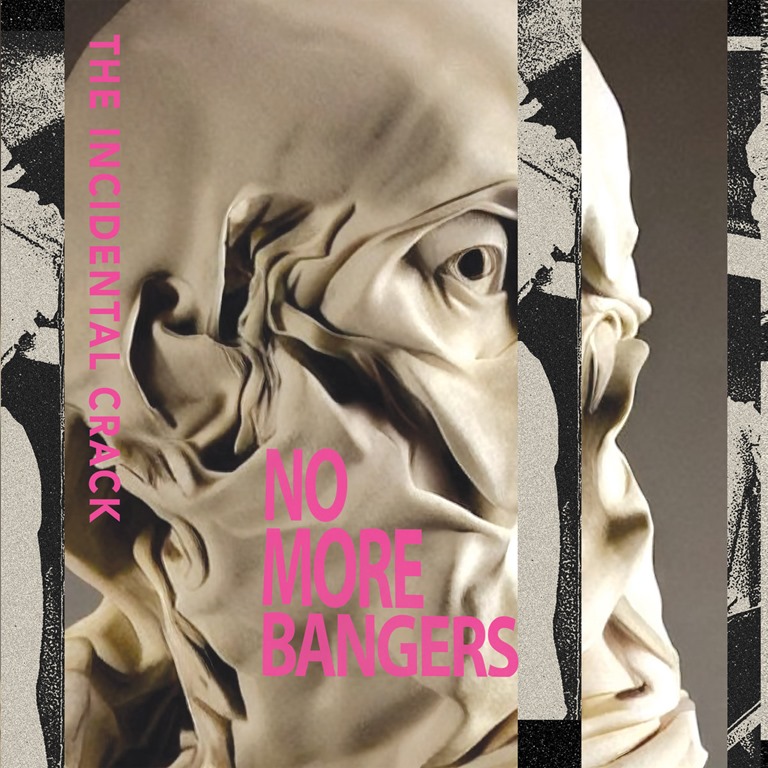
The fact is that sometimes, when life feels intense, the smallest details count for a lot: it’s not making a mountain out of a molehill when simply getting through a day feels like an epic battle, and walking to the corner shop feels as daunting as a marathon. And No More Bangers – a title which is equally ironic and carries a tone of sadness, of defeat – is detailed, with infinite nuance proving integral to these five minimal – and lengthy – compositions.

The pieces are constructed around nagging electronic loops, scrapes, drones, hums. There’s nothing dominant, sonically, or structurally. Ten-minute expanses of trickling dark ambience create brooding soundscapes and a tension that sets in the jaw, the shoulders. Insectoid chatters and clicks, stutters and scrapes build the fabric of the sound. Clamouring echoes and rapid repetitions evolve internal rhythms without percussion, with surges and swells driving the second half of the twelve-minute ‘The Springtails Love It.’ But it’s a nagging tension and feels more like being poked repetitively while trying to rest than an inspiration to get up and dance.

‘The Kettle Broke; is largely a hum, a room ambient sound which does next to nothing other than play back the sounds in your head and your kitchen when you’re trying a new recipe and find it requires digging the blender out from the back of the cupboard.

Sometimes, late at night – but also during the day, as I work from home – I find myself acutely aware of the quietness. There will be spells with no traffic, no planes or helicopters overhead, no dogs barking, no pings alerting me of new messages, no meetings. During these often unexpected moments, I will become aware of the whir of the laptop fan, the constant hum of the dehumidifier in the bathroom adjacent to my office, my own circulation.

This is the soundtrack that No More Bangers presents. Low-ley, low-level ambience which sounds like the boiler running through a maintenance cycle, like the throb of the fridge, the fizz of extractor fan. Delivering 100% on its title, this album is absolutely banger-free. But more than that, it feels strangely familiar, and yet familiarly strange.

AA

a0749472000_10

Southern Records – 24th May 2024

Christopher Nosnibor

I’d feel guilty for taking so long to get around to reviewing this one, but since the band took twelve years to get around to putting out a new album, I figure I deserve some leeway. Besides, this isn’t an album that you can just grab ‘n’ go with an opinion; with near-infinite twists and turns, it requires time to digest and reflect. Hell, ‘Soul Catchers’ kicks it off and packs into six minutes a whole album’s worth of riffs, tempo-changes, curves, and detours. At times angular and noisy, at others, showcasing a more technical style.

Loping drums and noodling guitars dominate the opening of ‘Mother’ before scratchy discords crashes. The Shellac comparisons have been done to death, but are entirely appropriate, although there’s something that’s perhaps a shade more jazzy in the playing style here. This is highlighted by the instrumental interludes, which really do change the dynamic of the album as a whole, with some really nice piano work on display. But crucially, during the actual songs, it’s the drums that are front and centre, and batter hard at delivering stuttering, stop/start rhythms. It’s a timely reminder – well, after the arrival of To All Trains – of the impact Steve Albini had on alternative rock and recording methodologies. Before Albini – and still, generally – in rock music, the drums are background, keeping time, while the guitars dominated. His approach saw the drums take on a new level of importance, and expressive drumming, recorded right, alters the whole dynamic of a track. And there’s a lot of dynamic and some serious drumming on From Fire I Save The Flame. Every snare smash blasts the top off your head, and you feel like your in the room while the band are cranking this out live just feet from your face.

Again, another lesson from Albini: bands are often at their best live, when the energy and adrenaline are pumping and the heat and the blood are up, and to capture that on record is gold. From Fire I Save The Flame feels live: the performances are raw, unpolished, intense. That Steve is gone doesn’t really seem entirely credible right now, and the world – not just the world of music – will be so sadly lacking in his absence. But it’s clear that his legacy will endure, and endure. This album might not even exist without him, and certainly wouldn’t sound the way it does were it not for him, and the same is true of many releases now and in the future. This isn’t to detract from anything the band themselves have done here – and Three Second Kiss have reconvened to deliver something special – but, well, the point stands.

‘Garum’ lurches into noisier territory once more, reminding us why you’ll often find TSK mentioned alongside the Jesus Lizard – who have recently announced a new album after significantly longer than twelve years. It’s as pretty as a barroom brawl, spilling and staggering in all directions: the bass repeatedly punches you in the gut while the drums leave you dazed and with a split lip.

There’s sinewy, straining guitar galore on ‘Fuss’, before the final track, ‘Heart Full of Bodies’ grinds down to a slow-swinging crawl, before the growling bass and some thrashing drums whip up a climactic frenzy to draw the curtain quite dramatically on an album that’s heavy with dinge and dirt, unashamedly unsmooth, untamed, unprimed for radio.

From Fire I Save The Flame isn’t just a brilliant return, it’s a brilliant album in its own right, period. And landing as it does in between the Shellac album and the upcoming LP from the Jesus Lizard, 2024 is shaping up to be an outstanding year for quality noise music from bands many had considered dormant. It’s about time we had some good news, and this is some very good news indeed.

AA

a2253768086_10

Christophedr Nosnibor

13th June 2024

With erratic and anomalous punctuation defining their testy antagonistic electronic stylings, the latest offering from self-styled ‘Industrial Bass’ pioneer, SINthetik Messiah is nothing if not intriguing.

This time around, there’s something of a ‘concept’ element to the work, outlined as follows: ‘In a galaxy torn by strife, a hero rises but falls to tyranny, sparking rebellion. Amid chaos, a journalist’s death fuels uprising, while another leader seeks peace. War looms between factions, as a loyalist questions his cause amidst shadowy manipulation, setting the stage for a power struggle.’

As such, there’s a keen narrative element to the album, which we learn via the pitch ‘expertly fuses industrial and drum and bass genres, creating a unique blend known as ‘Industrial bass.’ It serves as a sonic reflection of contemporary challenges, infused with a sci-fi allure.’

The end product is techno and gothy, heads down, heavy. ‘Assassins That Run On Faith’ brings driving techno and stomping beats and calls to mind later Pitch Shifter, and the same is true of ‘Don’t Lose Who You Are’.

A lot of the narrative element is lost on me, and maybe lost in translation.

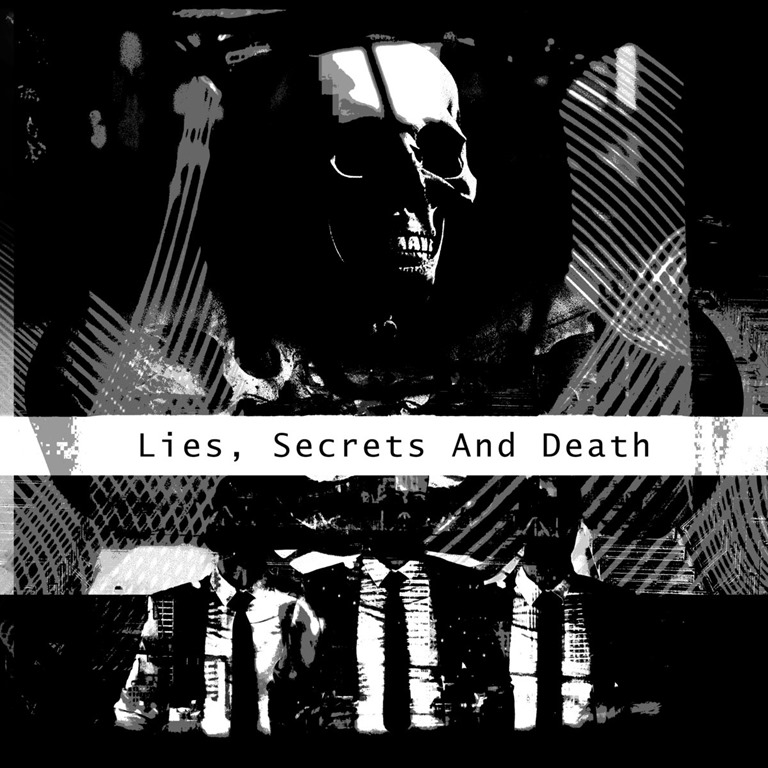
Lies, SEcrets & Death is big on energy, and throbs and pulses away, hard, and deep. The beats blast hard and thrammer away relentlessly, and it’s tense and taut and delivers on its promise. But ultimately it’s a dance record, and I can’t get into that groove.

AA

a4216920167_10