Archive for the ‘Albums’ Category

Sub Rosa – SR388

Christopher Nosnibor

As significant as the fact Cristian Vogel has worked with the likes of Radiohead, Maxïmo Park, Chicks on Speed, Thom Yorke, Jamie Lidell, Neil Landstrumm and Dave Tarrida is the fact that the CD and vinyl versions of this release have completely different track-listings, with only two tracks featured on both. That’ probably quite an expensive pain in the arse for hardcore fans, especially as the versions here are remastered, and the CD release features a previously unreleased version of ‘Around’.

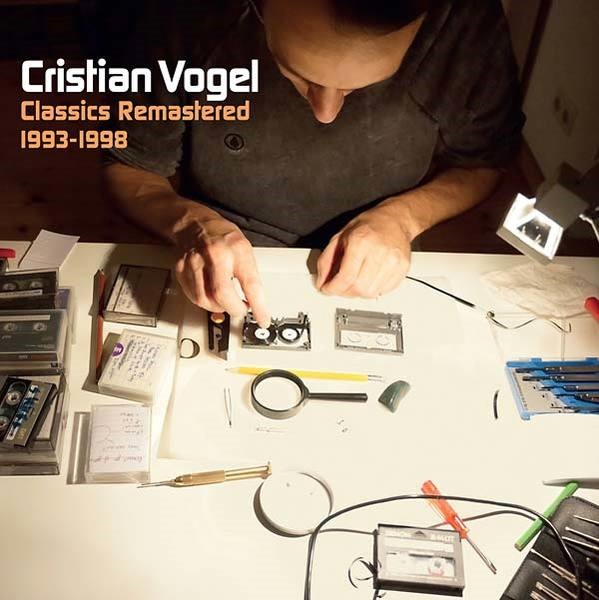
So, as the title suggests, this compilation picks the best cuts from Vogel’s 90s output, and presents them, remastered in 2015 by the artist himself (indeed, he’s been systematically remastering the majority of his early work, offering tweaked versions of his extensive back catalogue through BandCamp).

In terms of sequencing, the CD (the focus of this review) makes more sense than the vinyl. With the exception of the very last track, the material is sequenced chronologically, with Disc One spanning 1993 to 1995, with tracks culled from Beginning to Understand and Absolute Time, and Disc Two spanning 1996 to 1998, from All Music Has Come to And End and culminating in Busca Invisibles. It may be an obvious point, but it’s significant, in that it does mark a clear linear evolution of Vogel’s music.

Repetition lies at the heart of the compositions, with looping motifs running end-on-end with shifting layers of instrumentation on top, and with explorations of tonal shifts providing the focus and points of interest over progression or changes of key or tempo. ‘Machine’ combines techno robotix and Krautrock with drifting ambient currents, while ‘Beginning to Understand’ contrasts echo-heavy metallic, treble tones with thumping bass frequencies. Minimalist beats and stark bass grooves define many of the tracks, particularly on Disc One.

The tracks from Absolute Time showcase denser sound, the dominant beats making for a harder feel, more driving and propulsive. On tracks like ‘In’ and ‘Absolute’, it’s all about the frequencies; the bottom-end tones sit in the frequency range that really batters the eardrum, while the higher frequencies are cosseted in dense aural cushions while stomping 4/4 beats bump and grind hard.

The output from the years ‘96-‘98 are given less extensive coverage, with, for example, only two tracks apiece from Specific Momentific, Bodymapping, and Busca Invisibles featured (in contrast to the six cuts from Absolute Time and five tracks culled from All Music Has Come to an End . Nevertheless, it more than gives a flavour of Vogel’s output, and Disc Two begins with ‘Absence of Fear’ which marks a rather different approach from the earlier works. With a much looser, less claustrophobic sound, it’s built around contrast and juxtaposition, and with complex rhythm patterns criss-crossing one another to quite disorientating effect. In many respects the twelve tracks on this second disc are the more interesting, in that they show Vogel’s experimentalism pushing to the fore. While firmly positioned within the parameters of techno, these recordings document a desire to expand the territory of the genre, and it’s not difficult to hear in these nuanced pieces why Cristian Vogel is so respected, both within is field and far beyond.

Vogel


Cristian Vogel on Bandcamp

Cristian Vogel – Classics at Sub Rosa (with audio)

Entertaining Violence

Christopher Nosnibor

I am often drawn to duality of interpretation or meaning, particularly when that interpretation hinges merely on emphasis. As such, I think ‘Entertaining Violence’ is a great name for a publisher / label, and looking over their small but select catalogue to date suggests it’s highly appropriate. Essentially, Entertaining Violence is concerned with art, and the principle functions of art should be both to entertain and to educate, or, perhaps more accurately, to provoke thought. Art and entertainment are by no means mutually exclusive, and nor should it be considered untenable for art to both entertain and provoke. Their latest release achieves this, although it does very much depend on one’s perspective as to just how much entertainment it provides.

To provide some context from the press info: in the summer of 2015, Sergio Calderón – founding member of London-based avant-garde band 無 (MU) – was invited to participate in the exhibition Not a State, But an Artists’ Colony at Intelligentsia Gallery 智先画廊, Beijing. Sergio conceived STEREO as a transcendental and meditative experience compromising a Two Channel-Video and Sound Installation. As such, STEREO is a soundtrack piece, which was recorded as a live improvisational work of guitar sound and texture recorded at Entertaining Violence Gallery, London the 15th August 2015.

It is not a work which builds at any point: there are no crescendos or bursts of sound, but there are infinite textures. STEREO is a work which explores tonality, in the subtlest of ways. The track drifts on, concentrating on the ebb and flow, the wash and drift as notes struck rise and fall, decay and reverberate in the space in which they’re created. It doesn’t ‘go’ anywhere: that is not its purpose or aim.

What this 47-minute piece really conveys is the tonal range of the electric guitar, when played minimally and given room to breathe. Some may call this drone, ambient; and certainly, the notes and chords stuck are left to hang in the air for an eternity. The tones, the sounds are in themselves muddy, hazy, murky; this is no crisp digital replication of a guitar’s sound, but a fading analogue sound, fuzzed and degraded by environment, by space, by recording technology. It reminds that the listener is never truly ‘in the moment’ when listening to a recording, they are not ‘present’ and the recording is just that; a captured version of events; a recording is not the event itself. A recording may accurately convey the sound, or at least he sonic experience, but it can never fully convey the environment in which the recording was made, it can never capture and convey the experience of being present in the moment the audio was captured. It will never incorporate the experience of whatever may be going on around simultaneously, it can never capture the emotion or the mental processes contemporaneous to and triggered by, the moment.

For all of this, however great the listener’s separation from the moment, a work like STEREO, or, indeed, specifically STEREO affords almost infinite space for the listener to lose, and find, themselves.

https://player.vimeo.com/video/165013545?color=ffffff&title=0&byline=0&portrait=0

STEREO — 無 (Excerpt) from Sergio Calderon on Vimeo.


mu01_stereo1

MU at Entertaining Violence Online

Self-release – 24th June 2016

Christopher Nosnibor

I’ve pretty much lost count of the number of versions I’ve heard of ‘She Moved Through the Fair’. As is the way with traditional folk songs and blues standards, no-one owns them, they simply exist. And from the interpretation ranging from Van Morrison to All About Eve and including Sinéad O’Connor and Fairport Convention, Pentangle and Arbouretum, none sound like Dylan Carlson’s sprawling eight-minute instrumental rendition. But then, that’ because Carlson’s version sounds like recent Earth albums, which in turn place a unique spin on traditional and ancient folk music.

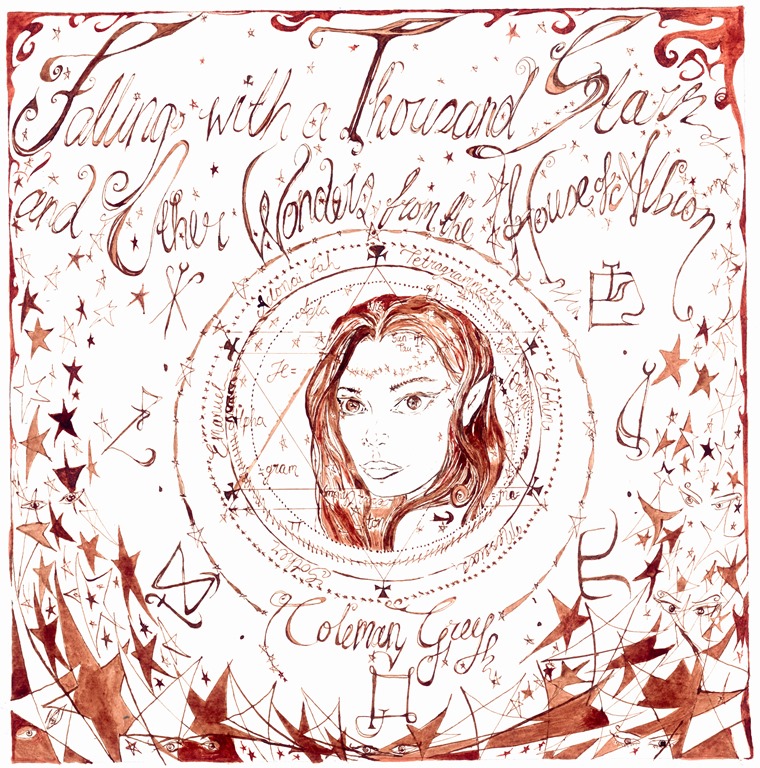
This is clearly become something of an obsession for Carlson in recent years, and his explanation of the concept behind Falling with a Thousand Stars and Other Wonders From The House of Albion evidences this. Describing the album as his ‘interpretations of Scotch-English folk ballads about human/supernatural interaction, specifically those “spiritual creatures” known as “fayres/fairies/etc.”’, he places it within the realm of misty mysticism and a landscape of verdant forests as old as time itself.

Carlson is clear to separate his appreciation of ‘fairies’ from ‘the tiny winged ones of Victorian nursery stories and decor, but the beings of folklore and the historical records (mostly trial dittays from witch trials).’ Applying the hypnotic drone that had long been his signature to slowly-unfurling guitar motifs characterised by fuzzy-edged analogue tonality, Carlson has a unique way of evoking a combination of mysticism and nature, fantastical worlds intersecting in ancient forests as old as the Major Oak and the Fortingall Yew. Combining mysticism and nature,

While the ten-minute ‘Tamlane’ is not only the album’s centrepiece but a definitive standout, the seven tracks on Falling with a Thousand Stars and Other Wonders From The House of Albion individually and collectively tap into a dormant resonant subconscious. Carlson’s spindly guitar pickings twist like the fronds of creeping ivy around the immense trunks of ancient trees, which manifest as heavy-timbered droning notes which point back to the dark ages. The oucome is a musical experience shrouded in mystery and unknowable and yet somehow strangely affecting.


a2_coleman_grey_cover_front 1_edit (2)

Graphite Records – 17th June 2016

Christopher Nosnibor

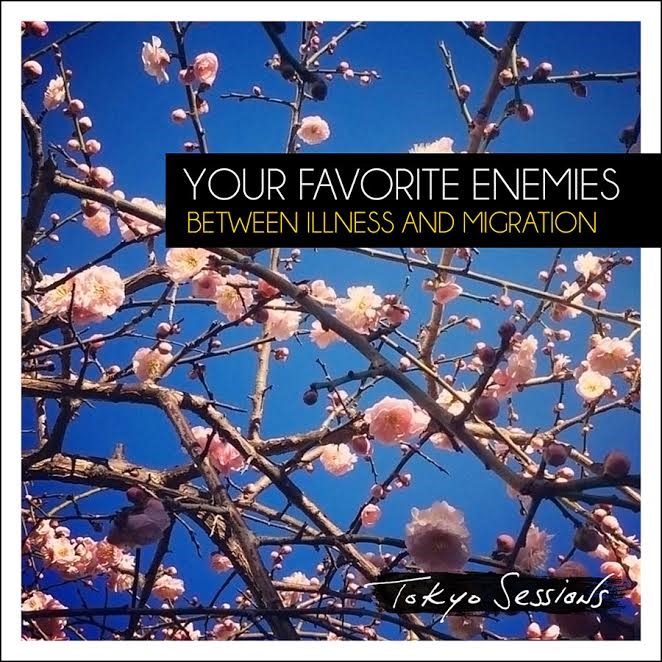
They may be Your Favourite Enemies, but I have to confess I hadn’t heard of them until the promo for this plopped into my inbox. There shouldn’t be too much shame in that: they’re hardly a household name, and while I’m pretty good at spreading my musical feelers far and wide, I can’t possibly have heard, or heard of, ever band ever. But then, as Wikipedia helpfully reports, on its Canadian release in 2014, fourth album Between Illness and Migration peaked at #2 in the iTunes chart on the day of its release, between Coldplay and The Black Keys. Ok, so they may not be a household name in the UK, but they’ve evidently got quite a fanbase in their native Canada.

The blurb that accompanies the album is an intriguing as the references: a band collectively drawing influence from take influence from artists such as Sonic Youth, Fugazi, My Bloody Valentine and Mars Volta, and who view themselves as ‘a communion of high level noise, post-punk, psych, shoegaze and prog rock,’, Your Favourite Enemies are described as ‘six chaotic individuals who collectively let go of their own self-depraved illusionary make-believes to surrender to the inner noises of moments they communally turned into songs, thus giving birth to a musical journey defined by an assumed incarnation of epiphanic catastrophes, raging contemplation and transfiguring uplift.’

The album’s subtitle originates from the fact that the band performed the album in full n Tokyo, and subsequently felt compelled to return the studio to rework the material with a view to capturing the intensity of that intimate show.

The album’s first track, ‘Satsuki Yami – My Heartbeat’ is representative of the sound and style: atmospheric, dynamic, spoken word verses are accompanied by meandering, chorus, echo-soaked guitar, building to an evocative, motive chorus. ‘Empire of Sorrows’ not only sustains but builds the tension, transitioning from a strange hybrid of post-rock and neo-prog, but with a choppy edge . Alex Foster’s spoken vocal delivery reminds me of King Missile’s Ed Hall, without the overt quirkiness or smart-arsery.

Elements of contemporary prog inform the segmented compositions, the vast depth of the sound and the expansive running times, with the majority of the album’s track’s running comfortably past the five-minute mark. But equally, they display a keen ear for melody, and a number of the songs slot in comfortably with the contemporary rock sound. ‘1-2-3 One Step Away’ is a cracking pop song, with a surging chorus, instant hook, nagging guitars and energy, all without sacrificing texture or detail.

‘A View From Within’ was an obvious single choice, showcasing a more commercial rock sound, with a distinct chorus, and a slick production. In contrast, ‘Underneath a Blooming Skyline’ crashes in with scorching guitars atop a thunderous bassline and tumultuous drumming: Miss Isabel’s blank, monotone vocals create a sense of dislocation and discomfort.

The guitars on ‘Just Want You to Know’ are pure Bug era Dinosaur Jr, but the vocals are more straight ahead alt-rock, melodic, tinged with angst, and if ‘Anyone’ gets a bit 30 Seconds to Mars in its stadium emoting, it’s got enough guts to give it a credibility, and besides, ‘Obsession is a Gun’ whips up a magnificent maelstrom of bursting tension. As a whole, Between Illness and Migration balances accessibility and melody with a focused viscerality and grand sense of scale.

The bonus tracks which make up the ‘deluxe’ edition are the radio versions to ‘I Just Want You To Know’, ‘Where Did We Lose Each Oher’, ‘1-2-3 Step Away’ and ‘A View From Within’. They don’t make the album, but if you’re a completest you won’t be too disappointed, or if you haven’t purchased it previously, you can’t go too far wrong here. They’re certainly my favourite enemies now, too.


Your Favourite Enemies - Tokyo

Hallow Ground – HG1605 – 1st June 2016

Christopher Nosnibor

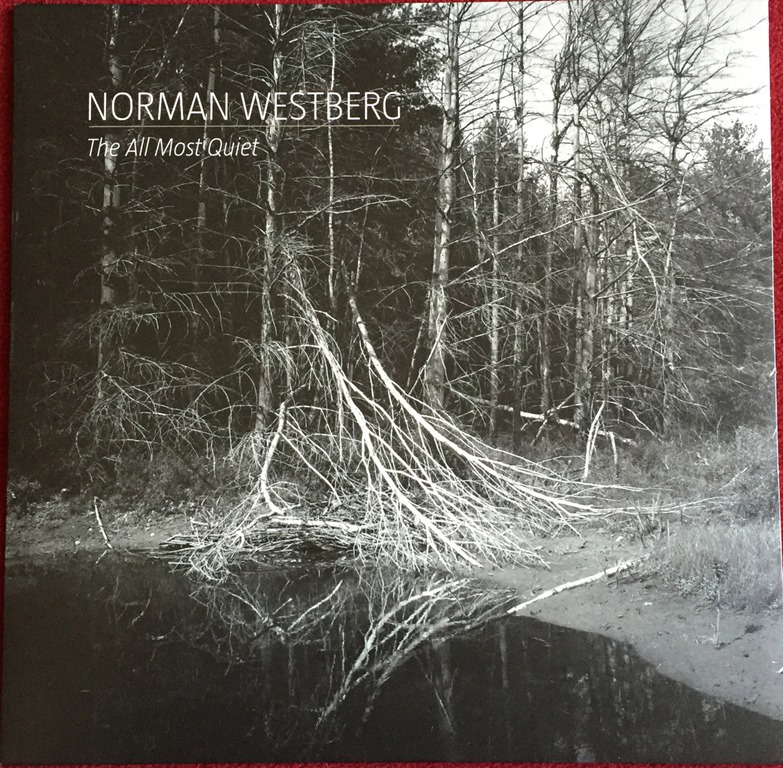
While MRI, released by Room40 in February, was a reissue of a 2012 album, The All Most Quiet contains new material in the shape of two long-form tracks. Like its predecessor, The All Most Quiet is radically different from his contributions to Swans. The fact he’s actually found the time to compose and record new material is impressive in itself: the latest Swans album, The Glowing Man was released on 10 June, and the two-hour colossus of a sonic experience was developed and recorded off the back of a full year spent touring its predecessor, To Be Kind. Given the duration and intensity of a Swans live show, it’s remarkable that Norman Westberg’s had time to piss and still has the energy to stand, let along record a new album. But then, perhaps his solo work has therapeutic benefits, and affords him the opportunity to decompress after long days spent in the Swans pressure-cooker.

The All Most Quiet is, as the title suggests, not a loud album. It is also a gentle album. But that doesn’t mean it lacks dynamic tension, and while it is calming, it’s also not completely undemanding.

The title track starts its long, meandering journey as a mid-range drone which pulsates subtly. The tonal changes which emerge are gradual. It’s easy to let it simply drift by, and it’s pleasant enough to appreciate in this way, but attentive listening brings its rewards. The introduction of new layers, textures and tones, shifts in the scale and pace of oscillations change the mood, subtly, inconspicuously, but no less definitely. And while The All Most Quiet bears no obvious resemblance to Swans, it is possible to hear a certain correlation in the way Westberg builds on slow-burning transitions to hypnotic effect. There are hints of ominousness and darkness, but the sense of scale and grandeur seeps through the very fabric of the sound. The second track, ‘Sound 2’ maintains the atmosphere, and the absence of any clear highs or lows builds a tension beneath the calm surface.

The All Most Quiet once again highlights the trait I most admire in Norman Westberg’s approach to guitar laying: patience. No heroics. No sense of the ego common to guitar layers. His playing is focused on achieving texture and an overall listening experience. Whether he’s peeling off shards of noise, as on early Swans’ releases or creating more sculpted sound, as on their later releases, and in his solo recordings, at no point dos one ever find oneself thinking ‘what fretwork! What guitar wizardry!’ In fact, much of the time, Westberg’s guitar doesn’t sound like a guitar, particularly on The All Most Quiet. And for the most part, the sound is too immersive for one to really think at all.


Norman Westberg - The All Most Quiet


Norman Westberg Online

Tavern Eightieth – TVEI23 – 28th March 2016

Christopher Nosnibor

Given the fact that this release contains pieces based primarily around delicate solo piano work, there’s a curious bluntness and odd directness about the title that stirred a discomfort on first contact with Euan McMeeken’s latest project. The phrase ‘Love, if you love me, lie beside me now’ has a kind of domineering tone, with hints of emotional blackmail. It’s needy, but with controlling undercurrents. But then, such lines, particularly with the doubling of the word ‘love’, also has echoes of Elizabethan poetry.

None of this is conveyed in the six compositions here, at least on the surface. ‘No One Can Reach Us Now or Ever’ is an elegant piano piece, although there are atmospheric rumblings in the distance. In combination, they contrive to form an emotional ambivalence: the possibility that this could be an uplifting dream of safety and security is equalled by the bittersweet elegy framed in the knowledge that the only safe place is not on this earth. Perhaps it’s another subtle tendril of control, the same need to cling manifesting as separation from the world, enforced isolation. Perhaps not. Perhaps McMeeken’s compositions are intended as blank walls on which the listener’s thoughts and reactions can be projected, mapped, explored. Perhaps Ali Millar’s short prose piece provides the direction in its melancholy-hued narrative. More than anything, it’s not what is said over the course of the six tracks, but what is unsaid and what lies beneath the surface.

The pieces, although not designed to follow any overarching theme, do flow into one another very naturally, and the tone changes progressively between the beginning and the end. Sadness creeps into ‘Seen Through a Doorway’, and the notes waver and flicker in and out on ‘Under the Arc of the Sky’, and hang in a thick air, intimating hesitation, uncertainty. Strings enter at the midpoint of the final track, ‘There is Nothing Yet I am Here’, spreading an uplifting mood and a sense of optimism. And yes, perhaps there is hope. Perhaps this album s best appreciated when not searching for the meaning. Sometimes, some things simply are, and this is a magnificent, thoughtful musical work.


glacis-759x500


Artemisia Records – 17th June 2016

Christopher Nosnibor

Wolves In The Throne Room have achieved that rare thing of achieving a substantial fan-base and widespread recognition, while retaining the ultimate cult status. They’re genuinely seminal, having reinvented and reinvigorated black metal, largely on account of the imagination they’ve displayed in their approach to the genre’s well-established tropes. Diadem of 12 Stars was their debut album, released in 2006 , and even now, it’s in a different league from the majority of the black metal being churned out in 2016.

Wolves in the Throne Room have always been about expanding the horizons of the black metal genre, and making music on their own terms, and their devastating debut clearly sets the co-ordinates for a monstrous musical adventure.

Originally released on a small DIY label and unavailable physically for many years, this reissued version has been carefully remastered by Jason Ward at Chicago Mastering Service. The band redeveloped every photograph from the original negatives, creating richer, high quality prints in order to present the artwork as originally envisioned. In short, there’ much to get excited about. This is an album that deserves to be appreciated as conceived and envisaged.

The tale around its conception and evolution is one worth retelling, because the context matters. To save some typing I shall quote from het press blurb: ‘Written almost exclusively in a windowless, black room over the long dark nights of Winter 2005, Diadem Of 12 Stars was the first official Wolves In the Throne Room release and built around the reimagining of black metal as an ode to rain storms, wood smoke and the wild energies of the Pacific Northwest… Diadem Of 12 Stars is about lunar sorcery on Cascadian mountaintops and encounters with wild spirits. In contrast to the icy, razor sharp soundscapes of their 90s Norwegian forebears, the sound of Diadem is lush and ethereal, dripping with rain soaked moss and lichen.’

Indeed, what really stands out is just how textured and varied the songs are. It’s blistering blinding in its intensity. It shows all the hallmarks of classic black metal, in particular the dominance of the dense wall of noise guitar and the ruined, demonic vocals. But there are passages of exquisite beauty alongside the raging torment. The first track, ‘Queen of Borrowed Light’ is by no means a post-rock track, but detours into magnificent and luscious instrumental passages which are almost the very definition of post-rock. Weaving between different moods and exploring both an emotional and sonic range, it’s an intriguingly

Multi-faceted composition which immediately set Wolves in the Throne Room apart from their peers.

The opening segment of ‘Face in a Night Time Mirror Part I’ is remarkably accessible, almost a conventional rock composition, which feeds into a delicate acoustic passage, before, of course, all hell breaks loose in an earth-shattering tumult of ferocious angst. This is exactly as it should be.

‘Face in a Night Time Mirror Part II’ dredges the silt beds of the bowels of hell for an excruciatingly heavy fourteen minutes. It’s black and it’s metal: it’s the sound of purgatory, distilled and amplified.

The last of the four tracks, he twenty-minute ‘(A Shimmering Radiance) Diadem of 12 Stars’ is beyond immense: it’s not simply a matter of length, and I’ll refrain from making any puerile gags about girth etc. for a change. Instead, shut up and listen and let your jaw hang as it transitions from expansive prog rock to snarling, speaker-annihilating metal of the blackest shade. The shock and awe is, again, less about the album’s extremity but its range. It’s an outstanding and incredible album, and the passage of a decade has done nothing to dull the fact. And this more than justifies revisiting it now.


Wolves in the Throne Room  - Diadem


Wolves in the Thrown Room Online

Christopher Nosnibor

The phenomenally prolific Ashley Reaks – musician and collage artist with a left-leaning anarchic streak – follows up Cultural Thrift (September 2015, with Joe Hakim) and Compassion Fatigue (February 2015) with what you might rightly call a concept album. True, the aforementioned releases from 2015 were both marked by thematic unity, but this approaches things from a different angle, with each song being about a different serial killer.

That serial killers inspire a certain morbid fascination cross many sectors of society requires little qualification: the popularity of both real-life crime and fictional crime TV and literature speaks for itself. Serial killers are, in truth, extremely rare.

The industrial scene’s fascination with serial killers feeds into the broader picture of a fascination with inhuman perversions and brutality of every shade: Throbbing Gristle’s ‘Very Friendly’ is anything but, and Whitehouse’ early career was largely based on an obsession with sadism and serial killers, notably Peter Kurten and Dennis Andrew Nilsen, to whom their fourth and eighth albums respectively were dedicated to; but then there were also tracks like ‘Dedicated to Albert de Salvo’ and ‘Ripper Territory’ (that’s the Yorkshire ripper, Peter Sutcliffe), and ‘Fritz Haarmann’.

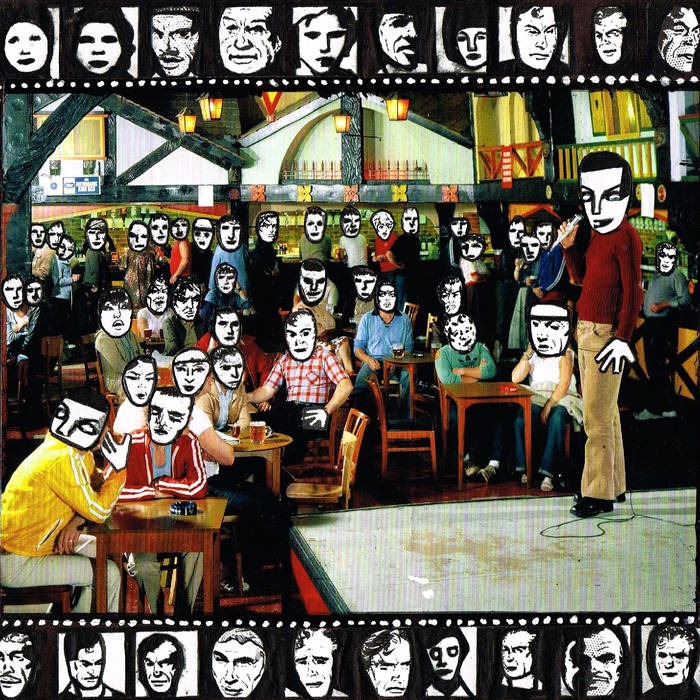
Ashley Reaks is no purveyor of industrial noise or one to employ base shock tactics. His weirdly psychotic collages are shocking enough, while the music on his latest album presents his now-trademark multicultural mash, with a heavy leaning toward anarchic dub reggae and post-punk. And in terms of his subjects, he’s shown a lot more imagination than most, drawing inspiration from an array of lesser-known killers. Should we be impressed by his research or concerned by his dedicated research? Probably, yes.

There’s no mistaking the fact Reaks is a complex character and an intriguing, multi-faceted artist, and as much as the album’s title caries an element of humour, it may equally carry more than a grain of autobiographical truth. Suffice it to say more troubled individuals of no artistic bent commit suicide than become murders. And Reaks’ interrogations of socio-political situations seems to be the primary motivation here. Curiosity, rather than glorification is what this is all about. And it’s a great album.

Over shuddering, throbbing dub basslines and some fairly easy-going grooves, Reaks explores the backgrounds and circumstances of a range of men – all men – convicted of heinous crimes, more often than not with a sexual element.

Amongst them, James Gregory Marlow, aka The Folsom Wolf – a white supremacist drug user with a body count five in a spree which ran from July to November 1986, and Robert Black, aka Smelly Bobby Tulip, a Scottish serial killer and paedophile convicted of the kidnap, rape, sexual assault and murder of four girls aged between 5 and 11 in a series of killings committed between 1981 and 1986, and suspected of 12 other unsolved child murders committed between 1969 and 1987. The album by no means glorifies any of its subjects, and instead serves as a narrative exploration.

The blurbage points out that the album features the improvised Eastern-tinged vocalizations of Norway’s Maria Jardardottir, prog-punk polyrhythms, as well as a guest solo from Jackson 5 and Commodores trombonist Frank Mizen. This is significant, not because of the namedropping it facilitates, but because of the artistic connections it highlights: Reaks has enlisted some admirable artists here, and the end result is quirky but accessible. Indeed, the sonic vibes stand at extreme odds with the dark and disturbing subject matter of the songs. But this is precisely how Reaks excels artistically. Balancing darkness and light, concept and execution, he leads the way through a warped alternative world of his psychic creation.


Ashley Reaks - Serial Killer

Trace Recordings – 8th July 2016

Christopher Nosnibor

It’s virtually impossible to hear or read the word ‘Rothko’ without thinking of the abstract expressionist artist Mark Rothko – at least if you have any kind of cultural awareness. And if you didn’t immediately consider Mark Rothko on arriving here, then either kindly leave, or settle in for an education of sorts. I’d hate to be accused of elitism here, but equally, I anguish on a daily basis over the mass cultural ignorance of our supposedly educated society. Having not been taught something in school or the fact something predates one’s existence is no excuse since the advent of the Internet. ‘I don’t know any Beatles songs – they’re before my time,’ is something I hear depressingly often. They’re before my time, too, and growing up in the 80s and 90s there was no Google. Perversely, the same people who are clueless of their artistic cultural heritage know all about Star Wars and Scooby Doo and Marvel heroes created well before their time. These people are buying into nostalgia kitsch of years which predate their existence. But the chances are that while they’ll happily buy into marketed nostalgia, they won’ grasp real nostalgia or real history.

This, of course, is where the latest offering from guitar / bass duo consisting of Mark Beazley and Michael Donnelley comes in. Discover the Lost is an album out of time, and in many ways bereft of context. And yet, it’s important to orientate oneself in time and space before engaging with this album.

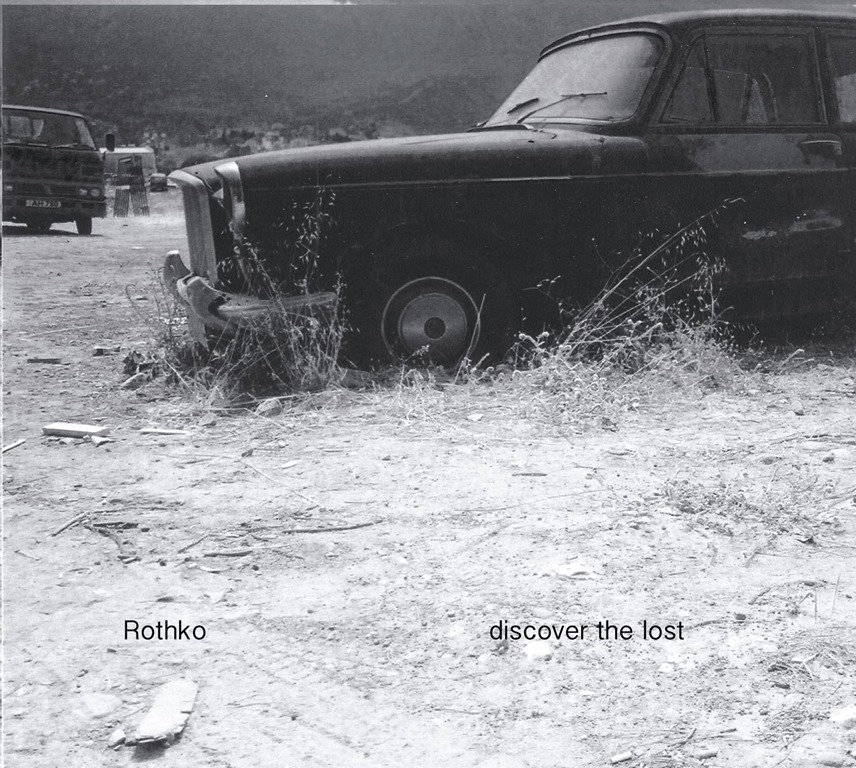
The black and white cover art is the very definition of nostalgia. It intimates the passage of time, the gradual decline of things made. The grass growing tall around the abandoned, rusted car is a representation of abandonment. Time moves on. The man-made world slowly degrades and is taken back by nature, But, during the process, the natural world is sullied by these once valued but now ugly, unwanted items, stains haunting the landscape with echoes of the past. But it’s important to distinguish between the kind of ersatz nostalgia of the mass-market, whereby the Rubik’s Cube and bigger Monster Munch are the focus of a widespread collective reminiscent sigh, and the kind of personal nostalgia which is altogether more difficult to communicate let alone package. Discover the Lost sees Rothko look beyond the consensus market-led strand of nostalgia and tap the vein of the latter in a work that’s evocative and intensely personal to the listener.

There is a grainy warmth to the instrumentation on the album’s ten tracks. The album’s intent may be upbeat, but the reflective atmospherics style of Rothkos’s music is thick with reflection, regret and missing. The analogue tonality of the guitar evokes through sound the sense of something old, worn to a deep patina by people long gone and forgotten. The music is slow, deliberate, haunting, the notes drifting into the air, carried on the echoes of empty rooms, as still as a tomb.

‘Thoughts for Tomorrow’ calls to mind the epic instrumental introduction to Her Name Is Calla’s ‘Condor and River’, but it would be erroneous to describe it as post-rock. It is, however, an evocative and subtly moving piece that resonates, and while the title suggests a forward-facing perspective, it’s nevertheless laced with melancholic retrospection. Strings sigh forlornly over ’Photographs of Then’. Of course, a photograph can only ever show the past, however recent, and often, the image only gains its full meaning or sense of place over time. Context reconfigures with hindsight. Nothing is fully fixed

The dark ambient drone of ‘Time that You Took’ marks a shift in tone. Upbeat it is not. A sinister bass prowls around ‘Truths and Signs’, before the closing couplet of ‘Way to Home’ and ‘You’ offer the light of hope.

The sequencing of Discover the Lost is integral to the listening experience: the tracks stand alone individually, but it’s only listening to them each in sequence that the full effect of the album really emerge. This is the beauty of Discover the Lost: it’s not about immediacy but a slow unfolding and realisation, the emerging discovery.


Rothko

Karisma Records – 3rd June 2016

Christopher Nosnibor

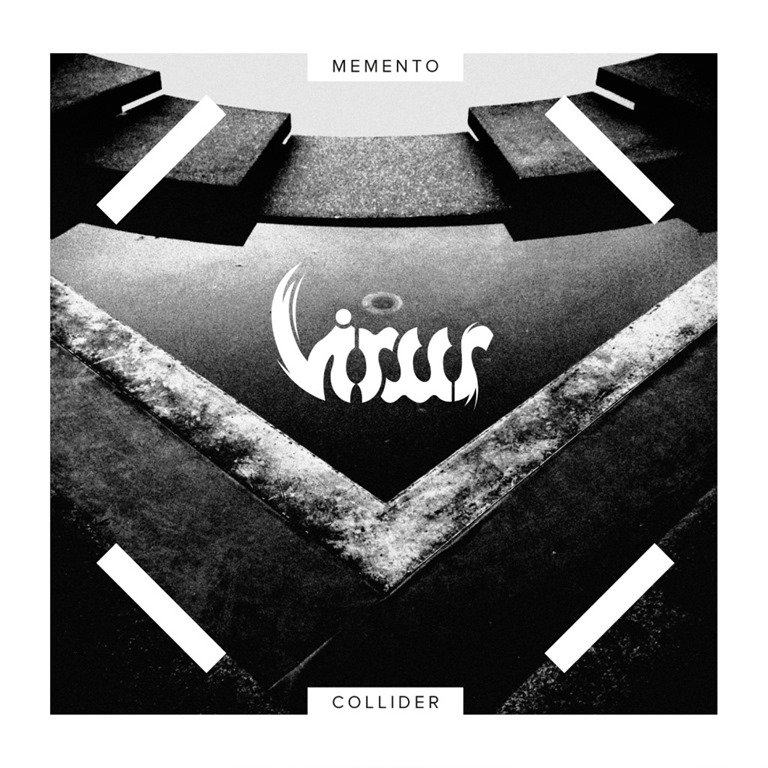
When an album contains only six tracks, and is housed in over art like this, there’s a certain degree of indication of what one may reasonable expectancy. Memento Collider fulfils some of those expectations, but confounds just as many. For a start, it isn’t a drone / doom / metal album, although it is heavy and it is dark. And the tracks are on the long side.

Sure enough, the album’s ten-minute opener is a tense, dark and expansive affair, built around an interlooping bassline and uncomfortable, – guitars that bounce contra to said bassline to build an uncomfortable dissonance. It’s heavily steeped in the post punk / proto-goth tradition in the vein of acts like The Danse Society circa 1983, the flat yet portentous, nihilistic vocal delivery only accentuating the awkward and uncomfortable atmosphere, a sonic dystopia.

‘Rogue Fossil’ again works a groove centred around looped motifs, a hectic, nagging bas coupled with urgent, stuttering jazz drumming hammers insistently while the guitar clangs and chimes at obtuse angles against its claustrophobic shell. The theatrical enunciation of the lyrics, in particular the hook (i.e. the song title), which accentuates the ‘i’ in ‘fossil’ adds a peculiar, alien slant to the track’s angular discordance.

‘Dripping Into Orbit’ melds together theatrical goth-tinged art rock and hectic, angular math rock to forge a bleak and uncomfortable sonic space. The rolling tempo changes re disorientating, accelerating and decelerating bar by bar in a fashion that evokes the spirit and sound of Shellac.

As the album progresses, it becomes increasingly locked into an inward-facing mesh of difficulty, an aura charting increasing stress and crackling cognitive disorder. The effect is cumulative, but each song brings with it new layers of dis-ease.

Listening to the jarring post-punk of ‘Gravity Seeker’, the track which features the album’s title buried in its lyrics as guitars trip and trail all over a lugubrious and repetitive groove, I find myself being sucked into a vortex of bleakness and begin to wonder just what kind of hell the and members have endured to produce music this unflinchingly bleak. The recording sessions for Memento Collider can hardly have been a laugh a minute. But perhaps it was a lot more fun than the music suggests: it’s a mistake to conflate the art with the artist, and equally, catharsis can often be the means by which mental equilibrium can be maintained. Its’s healthy to channel all of the ark stuff the weird stuff and the negativity into something creative – and this is indeed dark and weird.

The final track, ‘Phantom Oil Slick’ spans a full nine minutes and fills it with jangling guitars which bounce every which way over a bass that surges and swells before it breaks in a tidal frenzy. It’s dark, intense, and borderline psychotic in every aspect. A collision indeed. Strap in and go for it.


Virus

Virus Online