Archive for the ‘Albums’ Category

Ritual Productions – 4th May 2018

Christopher Nosnibor

Silence. Hit play and get silence. This is a Bong album, and they’re in no hurry to get going. Why should they be? They have all the time in the world. And beyond.

For a band whose name suggests herbal inertia, and whose brand of stoner doom conveys the same elongation of time, they’ve hardly been slack in creating a substantial body of work since their formation in 2005. Over that time, they’ve evolved, developing from heads-down sludge toward more expansive territories. Thought and Existence is nothing if not expansive and exists in a territory somewhere between the infinite expanses of inner and outer space.

At first, the drone is quiet, distant. A voice rings out, monotone, ominous, ceremonial. The ceremony is about to begin. The guitars don’t so much kick in as glide, rising in thickness and volume, like a mudslide. It’s over three minutes in, but barely two bars have elapsed before the murky, muffled drumming arrives. A single chord hangs, sustaining forever. Slow is not the word: the pace is beyond glacial, as light years elapse between each beat, each cymbal crash ringing out like a supernova in a distant galaxy. Movement so slow as to be barely perceptible, yet strangely beautiful and utterly compelling.

The eternal drone condenses the weight of all matter. And the voice… The voice booms sonorously, elongated vowels protract each syllable to wordlessness.

Thought and Existence consists of just two side-long compositions, the second of which, ‘Tlön, Uqbar, Orbis Tertius’ (the title of which is taken from a work of speculative fiction by Jorge Luis Borges which is heavy on concept for its brevity) rolls in slow, deliberate waves, a simple riff repeating on, and on, and on. The effect is absorbing, hypnotic, immersive. It’s also curiously uplifting and transportative, a form of sonic meditation.

AA
BongThoughtAndExistenceCover

Kranky – 6th April 2018

It was Alexander Trocchi, often referred to as the ‘Scottish Beat’ with whom the phrase ‘cosmonaut of inner space’ who seemingly has the strongest connection, largely on account of the fact that this was how he often referred to himself. However, it was in fact coined by William Burroughs, who said, “in my writing I am acting as a map maker, an explorer of psychic areas, a cosmonaut of inner space, and I see no point in exploring areas that have already been thoroughly surveyed”.

This is pertinent, as the press release which accompanies the functionally-titled No. 4 – Belgium-based composer Christina Vantzou’s fourth full-length for Kranky – explains how her latest work ‘ventures further into the uniquely elusive and evocative mode of ambient classical minimalism which has become her signature: a fragile synthesis of contemplative drift, heady silences, and muted dissonance. In regards to the new album she speaks of focusing particular attention on the effects of the recordings on the body, and of “directing sound perception into an inner space.”’

More often than not, I will dismiss the contents of any accompanying verbiage in order to engage with the music unswayed by sales pitch or theoretical position. However, there was something about the context of this album which resonated, and – not wholly intentionally, I should stress – informed my listening and analysis. One may assume that ambient music is ambient music. But no: there are those vast, swirling, cinematic ambient works which explore immense spatiality; there are those works which gather and collage sounds specific to a given time or place, or both, and which are concerned in some way with location, be it geographical or temporal; and then there are those inward-looking explorations which filer through the libraries of the mind and memory. This very much sits in the latter category, with Vantzou’s sparse, minimal compositions possessing deeply haunting qualities, with the notes echoing into the deeper recesses of recollection.

The titles ascribed to the eleven compositions which comprise No.4 are all vague yet strangely evocative. ‘Doorway’; ‘Staircases’; ‘Some Limited and Waning Memory’… so non-specific, and precisely for this reason, so resonant. Within the personal lies the universal and between the spaces between the softly echoed piano notes, the subtle, drifting strings, the soft washes of sound that drift like vapour and gradually dissipate into the air.

Tranquillity descends. Under Vantzou’s aural guidance, I find myself reflecting on my own inner space and conjure images and recollections of experiences linked – however tangentially – to those spaces named in the titles. A bulbous bass pulsates on ‘Garden of Forking |Paths’ and I’m transported back to my father’s long, sprawling garden – and because the bass sound is reminiscent of The Cure circa Faith – specifically Carnage Visors – I’m back to when I discovered this music, age fourteen or fifteen. I visualise dappled orchard sunlight and smell grass clipping. This will mean nothing to you, but by allowing myself to drift inside, I’m feeling that interiority that Vantzou’s work intimates.

In times past, I may have felt embarrassment as taking such a tangential approach to a review. But music – and the response it elicits – is not scientific. To analyse this objectively would be futile, and worse still to strip the soul from its very heart. No.4 isn’t an album to listen to, so much as to feel.

AA

Christina Vantzou – No.4

New Heavy Sounds – 4th May 2018

Christopher Nosnibor

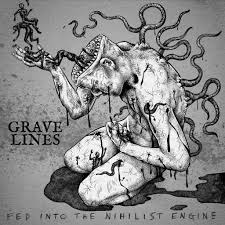
Grave Lines’ second album is… heavy.

From a personal perspective, they impressed me no end when I caught them supporting Black Moth when their tour for Anatomical Venus landed in their hometown of Leeds. Mostly, because their set was brutal in its weight, the howling vocals sitting in the mid-range and low in the mix against a tempest of low-end guitar noise.

Fed Into the Nihlist Engine doesn’t disappoint, and captures the essence of the live sound. It also opens in the most daring fashion, with a fifteen-minute epic that blends ferocity and dirginess to form a perfect balance: at first coming on like Amenra in their haunting, atmospheric passages, before erupting into a full-blown assault of rage. Its crawling pace and sinewy lead guitar parts, paired with dense, chugging rhythm with major emphasis on the bottom end make for a punishing experience. However, over the course of the album’s nine tracks, Grave Lines demonstrate a remarkable range and a deep-seated sense of atmosphere and texture. It’s heavy – seriously heavy, in fact – but it’s also light: ‘Shame Retreat’ is a delicate acoustic song, simple and completive, and elsewhere, there are some beautifully melodic passages.

In fact, much of the weight of Fed Into the Nihilist Engine isn’t about crushing guitars, overdriven and overloaded and labouring amp-blowing riffs – not that there isn’t an abundance of these. No, Grave Lines explore the brooding a the shadowy, the quietly intense, the darkness of the gothic. ‘Self Mutilation by Fire and Stone’ sees Harding adopt an almost crooning goth baritone in places. ‘Loss Betrayal’ – at least for the first minute or so – sounds more like early iLiKETRAiNS with its chiming post-rock guitar and reflective stance. And then it all piles in, while on ‘Silent Salt’, the guitars grind and churn relentlessly from the start. ‘Loathe Displace’ is similarly disarming, stripped back, a wheezing, undulating organ drone providing the instrumental backdrop to Jake Harding’s surprisingly sensitive and tuneful vocals.

But when they do hit the overdrive pedals, they really go in hard and heavy. The one thing they don’t do is uptempo. These are slow, deliberate slabs of sound that bludgeon the senses. This is the sound of anger. This is punishment. There’s a lot of grind and churn going down on Fed Into the Nihilist Engine: ‘The Greae’ has that early Melvins vibe about it, only shoutier, and it grinds on well past the seven-minute mark.

Fed Into the Nihilist Engine really works the contrasts and dynamics, but not in the way, say, Neurosis do – which I suppose is my way of saying not in a way that’s formulaic or predictable.

Ultimately, Fed Into the Nihilist Engine is a dark album. And yet, it’s a dark album that’s haunting, moving and achingly beautiful in its articulation of despondency and disquiet.

AA

Grave Lines - Nihilist Engine

Metropolis Records – 6th April 2018

Christopher Nosnibor

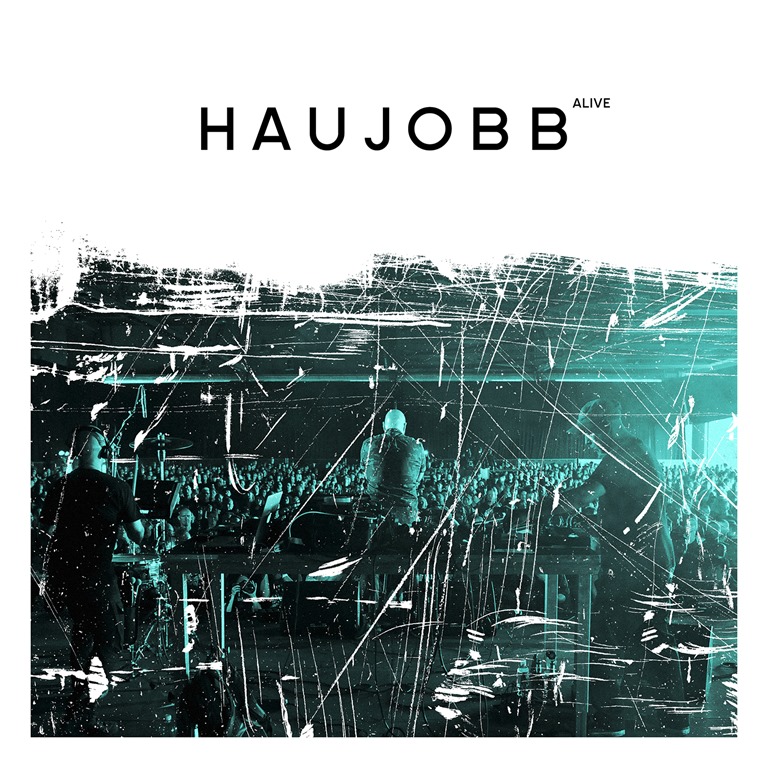
However much music you know, there’s always a near-infinite realm beyond your ken. Until now, German electronic crossover act Haujobb – a hybrid of electro, noise, IDM and techno, who lean toward the more mainstream electro-industrial sphere – have existed beyond my range of awareness. I can’t imagine why.

I would rarely recommend a live album by way of an introduction to any band, but then again, it was by listening to Concert that I found the motivation to explore The Cure in more detail, and it was Welcome to Mexico… which compelled me to listen to releases beyond Gub.

So, we’re presented here with ‘a career-spanning collection of the band’s most beloved songs, recorded at various recent concerts throughout Europe’, which, according to the blurb, ‘stands as a testament to the band’s live prowess and unique creativity’.

They’ve produced a vast body of work over the course of their 25-years existence, and Alive gathers 15 cuts from across it, opening with the slow-building ‘Machine Drum’. Lifted from 2011’s New World March, it’s brooding, dark, and angry. But – overlooking the absence of audience noise, which on one hand can interfere with the listening experience, but by the same token is also pretty much integral to the live experience, and I always eye (metaphorically) a live album with no audience noise suspiciously – the question of how representative it all is encroaches on the enjoyment of such a release. And sequencing matters: is this live collection in any way representative of the actual live experience? I suspect not. The sound quality is pretty consistent given that it’s a compilation culled from various shows, but then again, the slickness and uniformity mean it doesn’t feel very ‘live’, and equally, with so much of the instrumentation sequenced and preprogrammed, meaning that it’s a little hard, perhaps, to convey the band’s live prowess.

‘Renegades of Noise’ – and a fair few others, if truth be told – sounds like a Depeche Move studio offcut, as remixed by RevCo. Elsewhere, ‘Input Error’ is driven by a clanking industrial beat and a bucketload of aggression and anguish. As on ‘Let’s Drop Bombs’, The anger is palpable, while electronic stabs rain in like gunfire from every angle near the end. And while Haujobb occupy well-trodden territory, the semi-familiarity of the structures and delivery doesn’t undermine the fact they’ve got some strong songs and a mastery of driving beats and hypnotically looping sequenced grooves. In all… it’s not bad.

017339

Sound on Probation – SOP018 – 17th April 2018

Christopher Nosnibor

Zonk’t is one of the many guises of polychrome composer Laurent Perrier. According to his biography, while many of these projects often share many common elements, they are all built on a strong individual identity, and are therefore distinct and different from one another. Thus, Zonk’t ‘has always been a way of exploring the most ambient fringes of dub, and the transition from the all-digital to compositions made entirely on modular synthesizers has overall not changed its approach in depth’.

The album takes its title from the cryptanalytic process developed by Alan Turing during the Second World War, which ultimately facilitated the deciphering of the coded messages the German military produced via their Enigma machines. The track titles all relate back to the theme of the title. However, this album seems more concerned with the evocation of messages buried or encoded than the application of complex formulae to the compositional methodology.

‘Square’ (which I assume to be a reference to the Polybius square, also known as the Polybius checkerboard, which in cryptography, is a device invented by the Ancient Greek historian and scholar Polybius, for fractionating plaintext characters so that they can be represented by a smaller set of symbols, at least according to Wikipedia). occupies the entirely of side A, almost 20 minutes of slow-paged ambient dub propelled by thick, heavy beats. Thin, twisting sinews of sound like strings stretch across the space and spin layers of texture.

Side B contains three more short-form compositions in the shape of ‘Chronogyre’, ‘Colossus’, and ‘Conditional Probability’. The first of these forges a low, deliberate groove that undulates at a deliberate pace, while erratic, glitchy beats and crackles of static flitter and clank through the swampy tones. ‘Colossus’ picks up the pace and the bass-centric density, thwupping and thrumming in waves. A stark synthesised stab echoes out before the final track – the most direct and beat-orientated of the set – conjures an immersive retro-futurist groove.

It’s the combination of space and bass-orientated groove dislocation that makes Banburismus worth the effort. It’s not immediately accessible, and doesn’t sit comfortably in either the ambient or dub genres. Crossovers as far removed from not only the mainstream but the mass market as this will inevitably slide into ultra-niche categories, but this by no means devalues the work. If anything, the existence of Banburismus only further illustrates the need for art more than mere entertainment.

AA

SOP018_front

30th April 2018

James Wells

Execrate – ˈɛksɪkreɪt/verb

verb: execrate; 3rd person present: execrates; past tense: execrated; past participle: execrated; gerund or present participle: execrating

1.feel or express great loathing for.

synonyms: revile, denounce, decry, condemn, vilify;

2. archaic curse; swear.

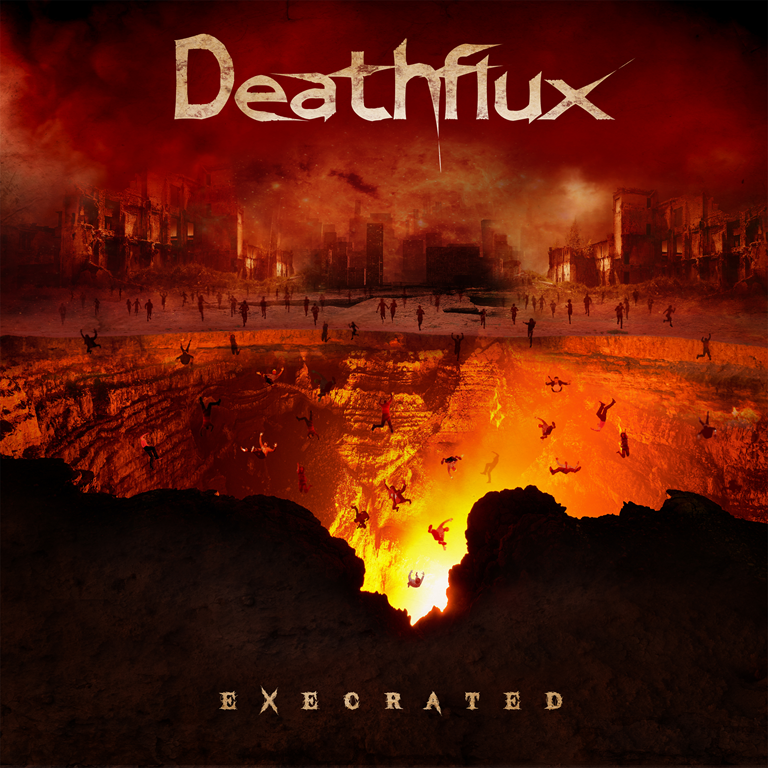
Nottingham-based Deathflux, formed a couple of years ago around guitarist Tom Clarke, articulate deep and unbridled loathing through their highly technical but relentlessly fierce brand of metal. They may curse too, but the snarled lyrics are only partially audible.

To set their agenda clearly from the outset, the album’s first song is called ‘Bludgeon’. And it does, the stop/start guitars shudder against drums like machine gun fire to forge a blast(beat) or grindy abrasion.

Lead single ‘Transcend’ (all of the tracks have one-word titles, adding to the stark and brutal effect) is representative of the albums 7 tracks: the drumming is so fast the effect is more akin to the rattle of a knitting machine than distinct and separate beats registering to mark time. The guitars – with several octaves of strings – are a blurred blizzard of fretwork, while the vocals epitomise guttural nihilism. It’s about conveying sentiment and raw emotion than actual lyrics. Where actual lyrics are audible, they’re venting violent threats like ‘break your face now!’

There are some wild guitar solos laid over the churning riffs, and there’s no let up in the seething fury that radiates from every note.

AA

Execrated Artwork - Lo Res 1

Sett Records – 23rd March 2018

James Wells

Acquainting myself with the band, it transpires that they were founded in the 90s, and that this is the ‘post-punk rock-noir’ outfit’s first album since Return to the Breath in 2000. 18 years? What the fuck have they been doing? I remember the music press making a deal of the five years it took for The Stone Roses to deliver The Second Coming, although that pales against the eternity My Bloody Valentine took to record the follow-up to Loveless. And as for The Sisters of Mercy… Well, they’ve been holding out 27 years now. Something about a contract for a million quid not being forthcoming, or something.

There are some clear Sisters influences to be found in the mix of Chandelier. They’ve got that echoey, chorus heavy guitar sound down and it’s an interloping weave or notes against a strolling bass which heralds the arrival of Chandelier, and its opening track and single cut ‘Beginnings’. Part ‘First and Last and Always,’, part God’s Own Medicine era Mission, part mid 80s Cult… it’s all there.

The one thing that’s clear is that the last 18 years haven’t been spent innovating or reinventing their sounds or bringing a dynamic, unexpected edge to the classic ‘goth’ template. There’s nothing wrong with the songs or their execution, other than the fact they sound painfully studied and generic. So, the press blurb references a lengthy roll-call of The Cure, Siouxsie and the Banshees, Cocteau Twins, Sisters of Mercy, The Joy Formidable and Republica (I’m really not hearing any Republica in the mix, although the shadows of Rose of Avalanche and Rosetta Stone before they went all NIN loom large).

While the sounds – the echoic, fuzzy valvey guitars, for example – are vintage, warm, organic, and the mechanised percussion sound is par for the course, the emotive edge of Chandelier feels excessively studied and lacking in personality. From the drum reverb to the controlled flange, everything about the album is familiar to the point of déjà-écoute. It’s very much rote and by-numbers. It’s got everything, apart from passion and energy. And originality.

AA

Autumn - Chandalier

Ici d’ailleurs – IDA119 – 30th March 2018

Christopher Nosnibor

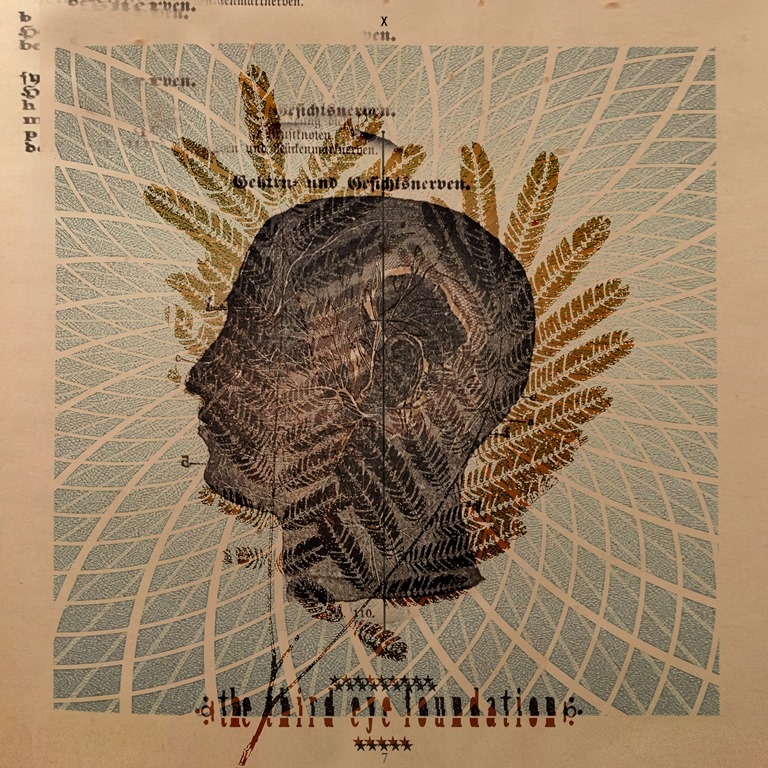
The lengthy blurb which accompanies the latest release from Matt Elliott’s Third Eye Foundation, active since 1996, covers a lot of ground. A lot has happened since Semtex, the expanded reissue of which I ruminated on a couple of years ago. And yet. Wake the Dead may not match the violence, but still packs a restrained intensity.

‘Words have no place here except to confuse matters a little further. And the 40 minutes of throbbing, hypersensitive dubstep that make up the record are not aimed at sending a message to the mind. The intention is to make souls dance, to unite them and to remind us that, despite our choices and individual convictions, we are all components of the same whole and whether living or dead, we are connected forever.’

Increasingly I find myself returning to my own reactions and responses to music, and the separation between the objective and the subjective. Any engagement with music must necessarily be subjective. Dismissing chart music because it’s vapid crap is still a subjective opinion, given that objectively, it serves a social (and economic) function and is invariably extremely well-executed and produced in technical terms, and to complain about a lack of emotional depth or lyrical complexity may on the surface appear to be an objective criticism, but a listener’s lack of connection with it is subjective. Flimsy radio-friendly fodder is entertainment: it’s music that strives to achieve different ends which is art.

Wake the Dead, while pitched as having the purpose of ‘making souls dance’, is very much art in that it exists to evoke a deeper emotional response than ‘it’s got a good beat.’ Not that the beats aren’t good, but the slow, deliberate rhythms are more of the variety one nods to rather than getting down to.

The title track sets the scene and the tone, with majestic, sweeping tones and soaring choral voices which rise towards the heavens above a slow, hypnotic semi-tribal beat has a rich resonance. The smooth, soothing cello is countered by occasional trills of feedback, creating a subtle but essential dissonance which alters the mood considerably. Gradually, over the course of the track’s thirteen-minute span, low-churning bass frequencies begin to throb and beats become stronger but also more fractured as looping echoes collide against one another disorientatingly.

‘The Blasted Tower’ combines gliding strings with stuttering, rapidfire fills, a balanced juxtaposition of soporifically soothing and twitchy tension, before ‘Controlled Demolition’ slides into murkier and rather heavier territory. With the structures less defined and a cacophonous collaging of sound pitched against warping bass tones, it makes for a cerebrally-challenging passage that culminates in a collision of brooding strings and extraneous noise.

The album’s only words are to be found on the shortest track, ‘That’s Why’, with a sampled shout of ‘Fucking pigs! I hate the fucking pigs!’ looped and mangled and fucked to fade. It feels a little incongruous, but provides a well-placed change in both tone and tempo ahead of the final cut, which takes the form of an elongated, wheezing drone graced with wordless female vocals which echo an abstract spiritual transcendence.

The six compositions segue into one another to form a continuous forty-minute suite. The atmosphere is dark, but more the darkness of twilight and shadows than pitch black small hours. There are moments where it feels a shade bleak, but these are contrasted by moments of uplifting beauty; the overarching sensation is one of a haunting feeling. As the sound fades to silence, the feeling of immersion hangs for a time. There’s no way to place that sensation in an objective context: this is about how the abstract language of sound touches the subconscious.

AA

IDA119_front

Superstar Destroyer – 16th March 2018

Christopher Nosnibor

It’s pleasing to see that Bearfoot Beware are still here after eight years and a bunch of EPs to release a third album. They’re one of those bands who are destined to remain on the fringes of cultdom, who will never be huge, but who produce art, and do it for the love. Now more than ever, in a climate where the industry is all about money and is populated by careerists and independent bands and venues are simply unable to sustain their existence due to the world needs bands like this. Bands who are driven by passion and a desire to make the music they want, without keeping an eye on trends or pandering to markets. They’ve always done their own thing, and ‘Sea Magnolia’ is no sell-out and offers no concessions. To anything. They’re as DIY, and uncompromisingly all-over as ever, and, best of all, they’re showing no sign of their frenetic energy dissipating or being otherwise subdued or contained in order to mould their style to accommodate commercial pressures.

The title connotes infinite blandness, an absence of character. This certainly isn’t the case where BB’s lively sonic firecrackers are concerned.

The album kicks off in shouty fashion with the angular, jolting ‘Point Scorer’, which manages to swerve in some noodly mathy moments between the jarring chords. The tracks are packed in tight, and hard on its heels slams in the riffy, grungy, ‘Without a Shot Fired’. It’s got a driving urgency and has a hard(core) edge.

If ‘Knot in the Rope’ calls to mind Shellac in terms of its instrumentation and the choppy guitars and chunky bass, it’s certainly no bad thing. It’s a big, dense, shouty sonic ruckus. And then it goes a bit Pavement just over halfway through. As it happens, ‘shouty sonic ruckus’ pretty much covers the album as a whole – and most of their back catalogue, got that matter. But Sea Magnolia feels more organised – however haphazard, chaotic and discordant it is. Because it has some nifty riffs, and the rhythm section is strong and sprightly as it leaps and lurches with precision timing from one segment to the next. ‘No Wisdom’ is particularly twisty, turny, amped up, choppy, jarring. And with the majority of the album’s nine uptempo tracks clocking in around the three-and-a-bit minute mark, it’s succinct and a lot more focused than it probably first appears.

None of the songs on here is straightforward: you won’t find anthemic choruses done to death over predictable structures, and lyrically it’s as just as non-linear in formulation. Every couple of bars you find yourself wondering what’s going to happen next, and whatever you’re probably expecting, it won’t be that. This, of course, is precisely the album’s strength. Predictable it isn’t and there’s never a dull moment. And yet for all that, they still throw in some decent hooks amidst the chaos. It’s a massive achievement – and a great album, if you can hack it.

Bearfoot Beware – Sea Magnolia

AA

Bearfoot Beware