Archive for December, 2025

Portion Control are a highly influential British electronic group who formed in London in 1979. Their early, innovative use of drum machines and samplers on classic albums such as I Staggered Mentally (1982) and Step Forward (1984) inspired a subsequent generation of acts that included Skinny Puppy, Nitzer Ebb, Front Line Assembly and Nine Inch Nails.

True forefathers of scenes such as electro-punk, Industrial and EBM, they continue to excite and inspire, regularly releasing new material promoted with bursts of hi-octane live energy, vocalist Dean Piavani prowling the stage as audiences are assailed by a deluge of electronic sounds aligned to a barrage of visuals.

Following decades of staunch independence, Portion Control have just signed to Artoffact Records with the intention of providing a much deserved broader platform from which to promote their work. Alongside new material, the label will curate and reissue the group’s back catalogue, allowing their work to be fully appreciated at last.

Marking the announcement of this exciting new partnership is the release today (5th December) of a fully remastered and expanded version of SEED EP3, first issued in 2021 as a set of short and long-form pieces. Expertly overseen by Paul Lavigne at Kontrast Mastering, SEED EP3.1 boasts an additional three new tracks that include ‘Possessed’ video. Now containing 16 electronic songs and instrumentals, with a total duration of almost 64 minutes, SEED EP3.1 acts as both a starting point to discover Portion Control as well as providing an enthralling revisit for existing fans.

AA
9116c2a5ae663800128440de7ac568f8047fbfbf

Dret Skivor – 5th December 2025

Christopher Nosnibor

This last week or so has been good for noisy, weird, abstract, experimental stuff. It’s pure coincidence, but these things to very much arrive in waves. There’s no thyme nor reason to it: Some weeks I’ll find my inbox abrim with guttural metal – and I’m by no means complaining – but sometimes I will crave noise, and there is none. Not proper noise, anyway. That said, this isn’t abrasive, full-on noise, but a work of abstract ambience dominated by field recordings, mostly of birds and billowing winds.

The last klôvhôvve release, which came out in the spring of 2024, was recorded live in Nottingham just a few weeks previous, and similarly this one was recorded live in November of this year. That’s about all you’re likely to learn with a dret release, although the accompanying notes are generous in their praise to the album’s contributors: ‘Thanks go to the wonderful animals and nature of Hammarö whose sounds you can hear being manipulated by klôvhôvve’. This is laudable: we don’t thank or celebrate nature nearly enough. There are gulls aplenty here, among other creatures less obvious by their calls (at lest to me).

It begins with the rumble of thunder, and it grows closer and more menacing. And then comes the rain. I assume it’s the rain. I’ve heard enough of it in the last couple of months. It feels like it will never stop raining. Again. Öljud rumbles and creaks and billows: a lot of this sounds like heavy rain and high winds, conditions which simply make me want to hibernate rather than reconnect with nature. There are quack and quarks, and all kinds of trilling sounds. Nothing much happens – if anything, really. It doesn’t need to.

Is it ok to drift off to an ambient work? I would have to argue that when listening to a studio work that’s particularly tranquil, it’s a compliment rather than an insult. Öljud is subtle, rumbling. Not a lot happens, and what does happen takes place slowly. Very slowly.

AA

a2852538014_10

Finnish industrial band, THE FAIR ATTEMPTS welcomes the coming year with a haunting new single, ‘Anniversary of Our Destruction’. Diverging from their usual bombastic fusion of industrial rock and metal, THE FAIR ATTEMPTS founder, Timo Haakana along his wife & lyricist, Starwing step boldly into the realm of gothic dance music, drenched in deep emotion.

’Anniversary Of Our Destruction’ has a very personal story attached to it. As founding member, Timo Haakana explains, “One year, our wedding anniversary was a lovely, romantic day with a twist. So many things broke that day. Together, we laughed about the destruction the day left behind, and thus, that special day became the ‘Anniversary of Our Destruction’”.

The song was also inspired by Timo’s personal trials and the struggle that we all often walk through. Amid disease and hardship, The Fair Attempts found beauty and elegance in how we’ve always held our dignity even during our darkest hours.

The message of ‘Anniversary Of Destruction’ is this; We live through our ruin and walk this path collectively – all of us. It’s dark times. As Timo states, “If I could share a New Year’s message and piece of inspiration in the fashion of The Fair Attempts, it would be this song.”

AA

b8ae90f1-e614-1bd6-5e2f-febca4d3336f

Christopher Nosnibor

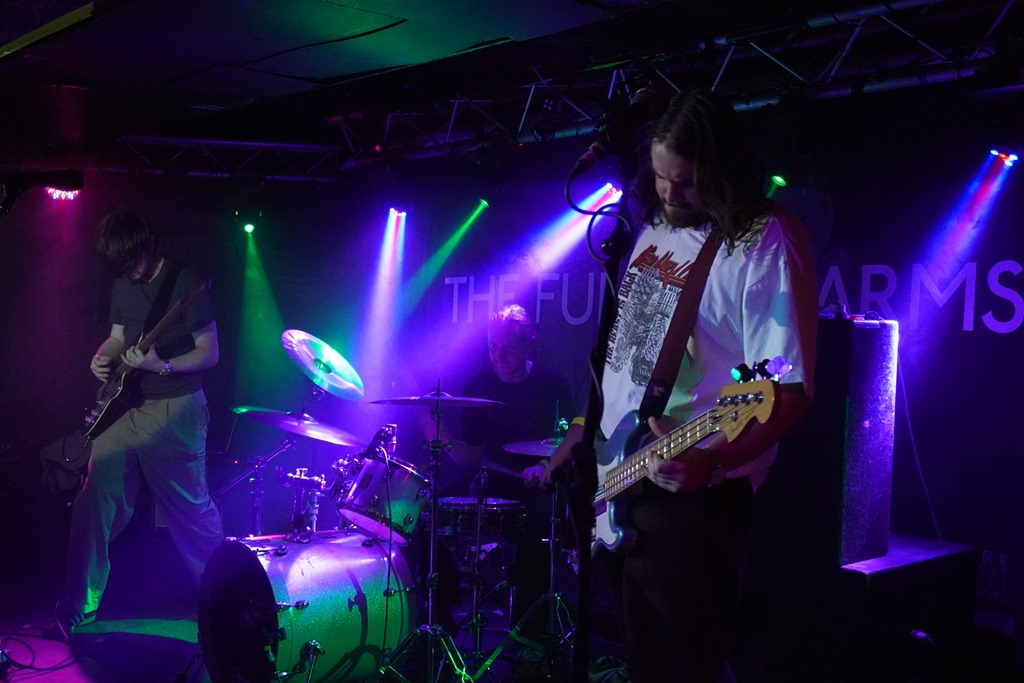
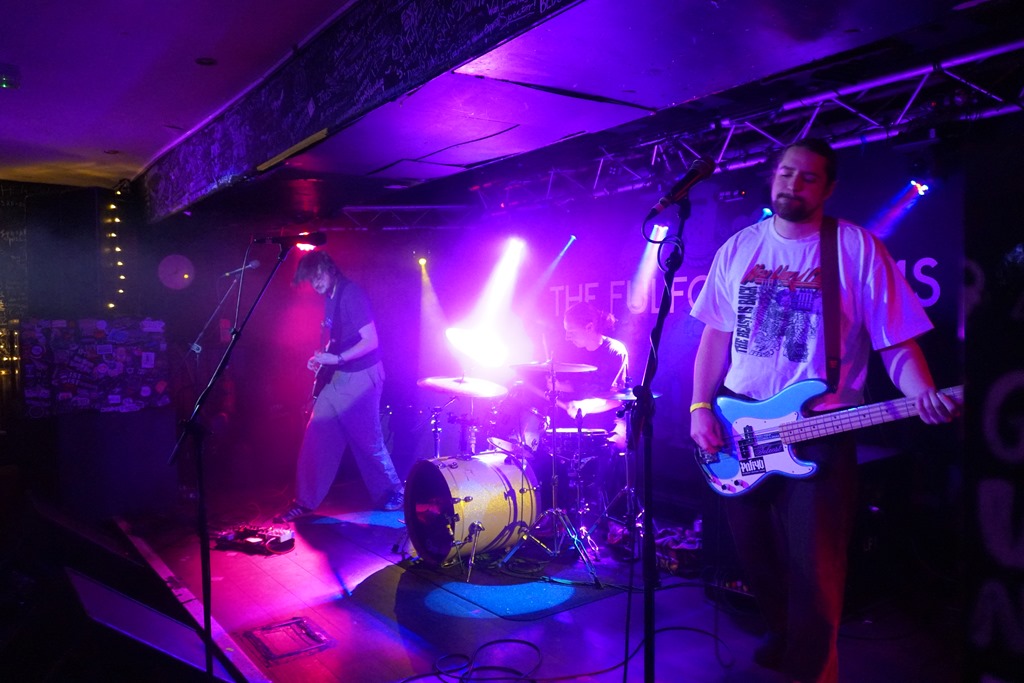
It’s a cold and very wet Thursday night in December. The kind of night that would validate the narrative that music venues go bust because they’re not supported, and people want to see bands they know over local acts and so on – if the place had been quiet. But there’s nothing quiet about tonight., in terms of turnout or decibels. Ok, it’s not rammed, but it’s respectably busy, and as for the volume… These guys take it all the way to eleven.

The promoter’s strategy of booking a local / student / uni band to open up is one that rarely fails, and there’s a significant turnout early doors for ATKRTV. It helps that they’re good, albeit an acquired taste and not your average uni band. Operating in the classic power trio format, their primary inspirations are clearly US noise rock and grunge – there’s a bit of the Jesus Lizard here, a dash of Sonic Youth and Shellac there – as well as UK 90s noise that makes nods to the likes of Fudge Tunnel and Terminal Cheesecake – but there’s a lot going on, with hints of avant jazz in the blend, too. They’re a bit rough round the edges, but there is a musical style which is forgiving of this, and the jagged jarring juxtapositions of squalling guitar work with some meaty bass work evidences a technical ability beneath the surface of the feedback-strewn tempest. And while the banter might need some work, the songs are a glorious angular explosive racket, and they give them a hundred percent. And this is why it’s always worth getting down early doors. Every headliner was a support act once, after all.

DSC05224DSC05185

In my recent review of that debut album, Atavism, I commented on how the challenge would be for them to replicate the live sound in the studio. This is because their life sound is simply immense. There really is no other word for it. And this is not volume simply for the sake of it: this is volume as an expression, volume which renders the music physical, volume without which certain frequencies and tonalities, so integral to their sound, would not be achievable. Their performance in this same venue back in February was spellbinding, and I came tonight in the hope of replicating that experience. And oh yes, I did, and then some: Teleost seemed to take things to the next next level tonight.

Theirs is a subtly different take on the whole droning doom / stoner form, incorporating almost folky elements in the way that more recent Earth albums do. And instead of being solely about bludgeoning riffery – and hell, there’s plenty of that – there’s a rare attention to detail, not just in the delicate picking and soft cymbal splashes in the quieter moments, but in the full-spectrum sonic experience they conjure. And yes, conjure is the word: this is a world of magic made with a mystical blend of musicianship, amps, pedals, and something else quite indefinable. The way Leo Hancill uses a standard guitar, played through a substantial but not extravagant pedal set and two amps, to cover the range of both guitar and bass is spectacular in itself, but what really makes their sound unique, and it’s so easy to lose yourself in the timbre and texture, the way the sounds reverberate against one another to create this sensurround experience.

DSC05272DSC05244DSC05267

Teleost

Once again, I find myself truly mesmerised by Cat Redfern’s ultra slow drumming. What’s most remarkable is how effortless she makes it appear. Granted, her sticks are batons, but she is still an immensely hard hitter please with absolute precision. Yet she plays with an order of serenity, her expression calm, almost a smile, although it’s clear that’s behind this is intense concentration, and perhaps an element of telepathy between herself and Leo. Certainly the intuition between pair is remarkable, and no amount of rehearsal alone can achieve this level of tightness. The way they navigate the peaks and troughs, spinning elongated quiet passages, where they reduce everything to a hushed hum and the tinkle of a cymbal before bringing in a cataclysmic riff with pinhead precision is nothing short of phenomenal. And for all the noise, the experience is remarkably calming.

Before Teleost, there was PAK40. But with basis / vocalist Andy Glen now resident in Germany, and Leo Hancill living in Glasgow, activity from this former York duo is now extremely rare. That they’re touring with Teleost, having released a new EP simultaneous with the Teleost album makes economical sense, but also represents a significant feat of co-ordination.

It’s not difficult to identify the origins of Teleost when listening to pack 40. They’re certainly slow and heavy. But their style draws more overtly on the Sabbath-based doom sludge template, and there much more overtly metal. In places, they present a sort of blackened New Age metal hybrid. There’s also something more direct about their drum / bass combination. But oh, that bass. The thick, tearing distortion when the riffs kick in are agonisingly close to brown note territory: you feel your ribs rattle and your skin quivering.

In contrast to Cat Redfern’s zen drumming, Leo drums with his face, and in contrast to Hanclil’s slow nodding guitar style, Andy Glen goes all out with some unrestrained headbanging as he unleashes the most pulverising bass riffs. PAK40 are harder, and more abrasive. And this is why the double-header works: for all of their similarities, the two bands bring different shades of heavy. And they’re both intense, physical forces.

DSC05300DSC05280

PAK40

I babble some shit to people on the way out. I think I got away with it, because everyone is equally dazed. We’ve been blitzed, blown out of our minds and shaken out of our skins tonight by a musical experience that borders on transcendental. It’s a cut above your average wet Thursday night in December, for sure.

There’s a very good reason not to compile ‘best of the year’ lists until after the year is finished. There are always late contenders, and this is a prime candidate by way of a late entry for one of the singles of 2025.

‘Bound’ is the new single and collaboration from the past and the present of the femme, gender queer, punk scene, featuring Pettybone, Shooting Daggers and Petrol Girls. 2 and 1/2 years in the making, this is the first new music from Pettybone since their split in 2012.

Pettybone formed in 2010 after being drawn together through the individual struggles they had encountered in their lives, with the desire to speak up about their experiences. Their debut album From Desperate Times Come Radical Minds followed in 2011 and by 2012 the band split, but their impact and influence is still felt to this day, with both Petrol Girls and Shooting Daggers being inspired by them.

The same year that Pettybone split up, raging feminist, post hardcore band Petrol Girls were formed. Most recently they released their 3rd album Baby in 2022 (Hassle Records). While queercore punk band Shooting Daggers formed in 2019, going on to release their debut album in 2024.

The punk scene is small, in the femme, gender queer scene it is even smaller. All 3 bands know each other – Zel (Pettybone) taught Raquel (Shooting Daggers) to play drums way back in the day, and Zel also filled in on drums for Petrol Girls a couple of times. Raquel from Shooting Daggers comments, “We’re all friends as well as having massive respect for each others bands. So, what better than do a collab that spans the Globe?!”

Pettybone guitarist Ivona first had a guitar riff and sent it to Zel in Aotearoa to get some drum ideas, then sent it onto Lianna (Pettybone) in London for the bass. They met up in London early late 2024 to lay down the instrumental track with Sam Thredder in London (who also recorded the Pettybone’s debut album). The instrumental was sent to in Petrol Girls vocalist Ren in Austria to come up with some lyric ideas. At the time she replied: “I have something brewing! Something against white liberal feminism and liberation for everyone. It’s about discomfort not being the same as unsafe.”

Shooting Daggers vocalist Sal worked on melody and there was some back and forth on the lyrics and vocal lines with Petrol Girls’ Ren and Pettybone’s Ivona.

Unfortunately, Pettybone singer Amy was unavailable to take part in the project, and Ren also couldn’t do it from Austria, so Sal from Shooting Daggers stepped in and smashed out the vocal at Holy Mountain studio. The track was then mixed and mastered by Casper Maxwell in Naarm/Melbourne.

Ren (Petrol Girls) comments on the lyrics for the new single,

“’Bound up in our liberation we are bound’ comes from the Lilla Watson quote in the context of the aboriginal liberation movement in Australia, but its so well known because it expresses such a vital idea. I was really touched to be invited to write lyrics for this feminist collaboration and wanted to express faith in liberation and collectivity, which are the core of any meaningful feminism. The lyrics are mostly a response to arguments I was having at the time with people around me where I live in Austria about the genocide in Palestine, but I think they can apply pretty widely. We need feminist solidarity across borders. We need anti-racist feminism, abolition feminism, anti-colonial feminism, anti-fascist feminism. And we need each other.”

‘Bound’ will be self-released by Petttybone via their Bandcamp on the 5th Dec 2025.

AA

a1845458027_10

Big Big Train, the award-winning, progressive rock band, will issue their 16th studio album via InsideOutMusic on 6th February 2026. Woodcut is a landmark release for the group, whose line-up draws together members from England, Scotland, Italy, the USA, Sweden and Norway, in that it marks their first ever full-length conceptual piece – quite a statement given the musical depth and storytelling qualities of a band formed in Bournemouth way back in 1990. Woodcut is a continuous narrative exploring creativity, sacrifice and the thin line between inspiration and madness and featuring a character called The Artist.

Today they launch a second single from the album, titled ‘The Sharpest Blade’, a track that sees violinist Clare Lindley sharing lead vocals with the band’s frontman – and Woodcut producer – Alberto Bravin.

Lindley, who also wrote the lyrics for ‘The Sharpest Blade’, explains: “Having gone for a walk in the woods and happened upon an amazing piece of heartwood, lit by a natural beam of sunlight, the Artist has taken it home. In the song ‘The Sharpest Blade’, he begins to carve the heartwood. Although he still has doubts and dark inner thoughts, he finds himself carving a wonderful scene. It’s so good that he feels it is perhaps not of his own hand…”

Watch the video for The Sharpest Blade, once again created by Crystal Spotlight, here:

AA

Additionally the band have just announced a UK/European headline tour for September/October 2026, including their biggest headline show to date at London’s O2 Shepherd’s Bush Empire. Find the full list of dates below:

BIG BIG TRAIN – THE WOODCUT & OTHER STORIES TOUR

Friday 25th September – The Stables, Milton Keynes, UK

Saturday 26th September – The Asylum, Birmingham, UK

Sunday 27th September – Komedia, Bath, UK

Monday 28th September – The Apex, Bury St Edmunds, UK

Wednesday 30th September – The Spirit Of 66, Verviers, Belgium

Thursday 1st October – Colos-Saal, Aschaffenburg, Germany

Friday 2nd October – Poppodium Boerderij, Zoetermeer, Netherlands

Saturday 3rd October – De Pul, Uden, Netherlands

Sunday 4th October – TBA, France

Tuesday 6th October – La Sala, Madrid, Spain

Wednesday 7th October – Razzmatazz 2, Barcelona, Spain

Friday 9th October – Teatro Astra, Schio, Italy

Saturday 10th October – Phenomenon, Fontaneto d’Agogna, Italy

Sunday 11th October – Z7, Pratteln, Switzerland

Tuesday 13th October – RNCM Theatre, Manchester, UK

Wednesday 14th October – Playhouse, Whitley Bay, UK

Thursday 15th October – Slay, Glasgow, UK

Saturday 17th October – O2 Shepherd’s Bush Empire, London, UK

AA

BBT_LeadPromo2025

Photo credit: Cécile Lopes

29th November 2025

Christopher Nosnibor

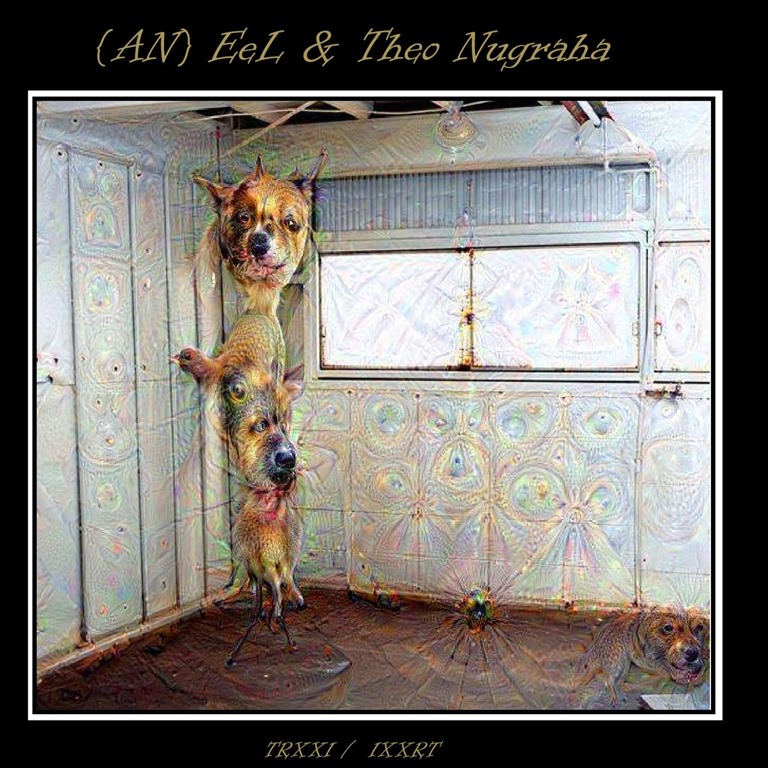
It’s not a good thing to feel nostalgia for something from the recent past which wasn’t even any good to begin with. But on seeing the cover for this split release by Theo Nugraha and {AN} EeL, I’m reminded that Google DeepDream was actually quite fun for about five minutes in 2015. Ah, hindsight… The results DeepDream produced were weird, psychedelic, trippy, and resembled no dream or subconscious thoughts I’ve ever known, its hallucinatory aspects were oft said to share qualities with LSD. But this was part of the appeal: it was novel, silly, with dog faces emerging from inanimate objects, whappy wallpaper, and the like. How many of us knew that it would be a precursor to the AI hell we now find ourselves in? Ten years is not such a long time in the scheme of things, but in the context of the now, it feels like another lifetime. A lifetime when doing daft stuff with digital tools wasn’t annihilating the environment, when it wasn’t stealing the work of writers and artists, when it wasn’t rendering jobs obsolete while creating billionaires at the expense of those losing their livelihood. Arguably, the golden age of The Internet was in the first years post-millennium, when applet-based chatrooms first made it possible to connect in real-time with people around the globe and MySpace was a wild melting pot where people came together through shared interest and communities evolved. This isn’t just some nostalgia wank: these were exciting times, and the world truly began to open up in ways hitherto unseen. These were times when The Internet offered freedom, where, as Warren Ellis’ novel Crooked Little Vein expounded, anything goes and if you could imagine it, you’d find it online. Godzilla Bukkake? You got it.

Everything changed when major corporations realised that they could really, really make on this. But major corporations being major corporations, they didn’t want to participate – they wanted to take over and own it, to wring every penny of profit from every last keystroke. And so now, while Napster and Soulseek were the equivalent of home taping, which didn’t kill music, Spotify and most other major streaming services really are damaging artists’ livelihoods – because unlike small-time peer-to-peer file sharing, this is a multi-billion dollar industry which siphons off pretty much all of the money for owners and shareholders rather than artist – and then you have scums like Daniel Ek using those proceeds to fund war. Something has gone seriously wrong.

Theo Nugraha’s contribution, 1XXTR is a longform work – seconds short of thirty minutes – and while it’s perhaps not quite Harsh Noise Wall, it’s most definitely harsh noise, and there’s not a lot of variation. It may even be that any variation is in the imagination as the mind struggles to process the relentless barrage of sound and seeks tonal changes, details within the texture. It doesn’t so much sound like a cement mixer – more like being in a cement mixer with half a ton of rocks, at the heart of an atomic blast. There are squalls of feedback and mutterings beneath the blitzkrieg, and around ten minutes in, the tempest suddenly begins to rage even harder and it’s like being hit by a train. Twenty minutes in, the relentless roar drops to merely the blast of a jet engine and the sensation is like huge pressure drop, or a fall. It’s impossible to discern what’s going on inside this swirling vortex of noise (there does sound like a vast amount of collaging and random things floating in and out), but it’s a full-on physical assault that vibrates every cell in the body. By the end of this most brutal half hour, you feel battered, bruised, damaged.

‘TRXX1’ by {AN} EeL, which runs for a second over the half-hour mark, is altogether less abrasive, but it’s no more comfortable. At first, it’s a clattering, metallic rattle, like an aluminium dustbin rolling down the street in a gale, accompanied by rattles and chimes. Extraneous noises – twangs and scrapes – enter the mix, and the sound starts to build, like the wind growing stronger at the front-end of a storm. But soon, from nowhere, a squall of static – or rainfall – begins to swell and while off-tune notes reverberate in the background, and a scan of radio stations yields alternately cut-up fragments and random noise, and while it may not possess the same physical force as Nugraha’s piece, ‘TRXX1’presents a disturbing array of frequencies and makes for a particularly tense listen. There’s a thunderous ripple like a freight train a mile long barrelling along, while disjointed voices echo here and there, and as bhangra and old-time brass fade in and out, the collage approach to the track’s creation, harking back to William Burroughs’ tape experiments, and early Throbbing Gristle become increasingly apparent. The Police’s ‘Can’t Stand Losing You’ cuts through what sounds like a snippet from lecture or interview. The repetition of the same fragments becomes difficult to deal with after a time, and you begin to feel like you’re cracking up. The it’s back to the sound of metal buckets being dragged down a cobbled street, with random busts of discordant noise jabbing in for extra discomfort. The final segment is a cacophony of abstract drones and crashing, calamitous racketry – a combination which is uncomfortable and unsettling.

The two pieces are quite different, but equally difficult in their own ways, and as such compliment one another. And if you’re seeking an album that really tests your capacity for abrasion and nauseating noise, 1XXTR / TRXX1 hits the spot like a fist to the stomach.

AA

a2950925012_10

12th November 2025

Christopher Nosnibor

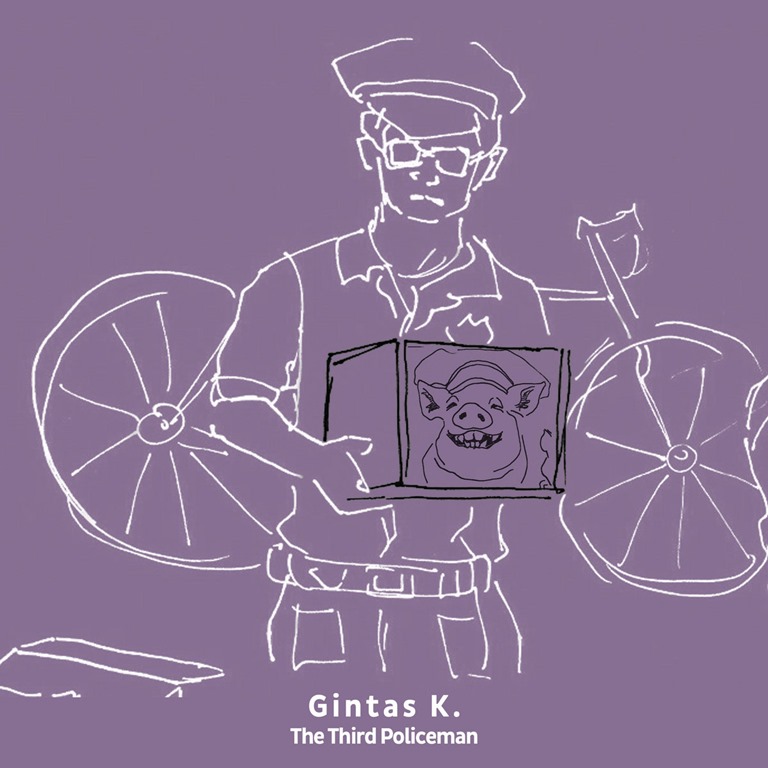
While the approach to recording his latest album is pretty much standard for Lithuanian sound artist Gintas K – that is to say, ‘recorded live, without any overdubs, using computer, MIDI keyboard, and controller’, the inspiration and overall concept is a little different this time around, with Gintas explaining that ‘The album is a subtle allusion to Flann O’Brien’s absurdist novel The Third Policeman, reflecting its surreal and enigmatic atmosphere through sound. In itself, this is quite ambitious – not quite the musical equivalent of interpretive dance, but nevertheless.

And, in contrast with many of his other albums, which tend to be relatively concise and often contain some shorter, almost fragmentary pieces, this one is a whopper, with thirty-one tracks and a running time of over two hours.

Initially, it’s display of K at his most manic, with ‘black box#1’leading the first four-track suite more frenzied and kinetic than ever, the sound of an angry hornet the size of a cat trapped in a giant Tupperware container. There aren’t always discernible spaces between the individual pieces, and after just the first eight minutes of wild bleeps and buzzes, I’m already feeling giddy. ‘black box#1 – 4’ is a quintessential Gintas K blizzard of noise which starts out like trickling digital water tinkling over the rim of a virtual glass bottle and rapidly evolves into an effervescent froth of immolating circuitry.

The second suite of pieces, ‘black box inside#2 Dog Hoots’ is made up of eight chapters – compositions feels like a bit of a stretch – and while there are a couple of sub-two-minute blasts, the fifth is a colossal nine minutes and forty in duration. This marks distinct segment of the album, in that it sounds a little more structured, like the sounds of a toy keyboard or a mellotron, rewired and then tortured mercilessly. It grinds and drones, hums and yawns, it bubbles and glitches and whirrs and it fucking screams. Before long, your brain will be, too.

The third segment, a set of six pieces labelled ‘black box inside… Calmness’ is anything but calm: in fact, it’s more likely to induce a seizure, being more of the same, only with more mid-range and muffled, grainy-sounding murk. There are more saw-like buzzes and crackles and pops and lasers misfiring in all directions. It’s not quite the soundtrack which played in my head as I read the book, but the joy of any art is that it affords room for the audience to engage and interpret on a personal, individual level.

The nine-part ‘rolling’ (or, to give it’s full title ‘black box iside#4 Rolling’ is more fragmented, more distorted, more fucked-up and broken. The pace is slower, the tones are lower, and it’s the sound of a protracted digital collapse. It’s unexpected to feel any kind of emotional reaction to messy noise, but this conveys a sense of sadness. By ‘Rolling – 4’ it feels like the machine is dying, a breathless wheeze of a thick, low-end drone, an attempts to refire the energy after this are reminiscent to trying to start a car with a flat battery. It’d messy and increasingly uncomfortable and wrong-sounding as it descends into gnarly distorted mess. ‘Rolling 7’ is creaking bleats, woodpecker-like rattles. and warping distortion, with additional hum and twang. The last of these is no more than roiling, lurching distortion, without shape or form.

Arriving at the four pieces tagged as ‘omnium – The Fourth Policeman’, its feels like you’re surrounded by collapsing buildings and the exhaustion is not just physical. Gintas K has really pushed the limits with this one. The is an arc, a trajectory here, which can be summarised as ‘gets messier and more horrible as it progresses’. Artistically, this is a huge work, a work of patience, and a work of commitment and focus. As a listening experience, it’s intense, and will likely leave even the most adventurous listener feeling like their head’s been used as a cocktail shaker and that their brain has been churned to a pulp. Outstanding.

AA

a3200436950_10

Puerto Rican trio Ender announces their upcoming EP, Ender II: In Silent Throne, scheduled for 20 February 2026 via Praetorian Records. As the first preview from the EP, the San Juan group is now streaming “The Obelisk,” a track that deviates from their progressive doom foundation by embracing a sharper, tech-death-leaning intensity. Exploring themes of sorrow, defiance, and personal struggle, the EP represents not only their growth as musicians but also their commitment to pushing the boundaries of progressive doom and giving back to the metal scene that continues to inspire them.

Of the track, Ender states: “‘The Obelisk’ is a song about the collapse of faith, confronting what happens when something once sacred becomes corrupted. It reflects the tension between devotion and disillusionment, a theme that runs through the core of our forthcoming EP, In Silent Throne. Musically, it captures who Ender is at this moment: heavy, emotional, and unafraid to explore darkness through sound. This track marks the first step into the atmosphere and intensity that define the new era of the band.”

AA

e42c4a64-81d3-b52e-f6c0-7704639d8281

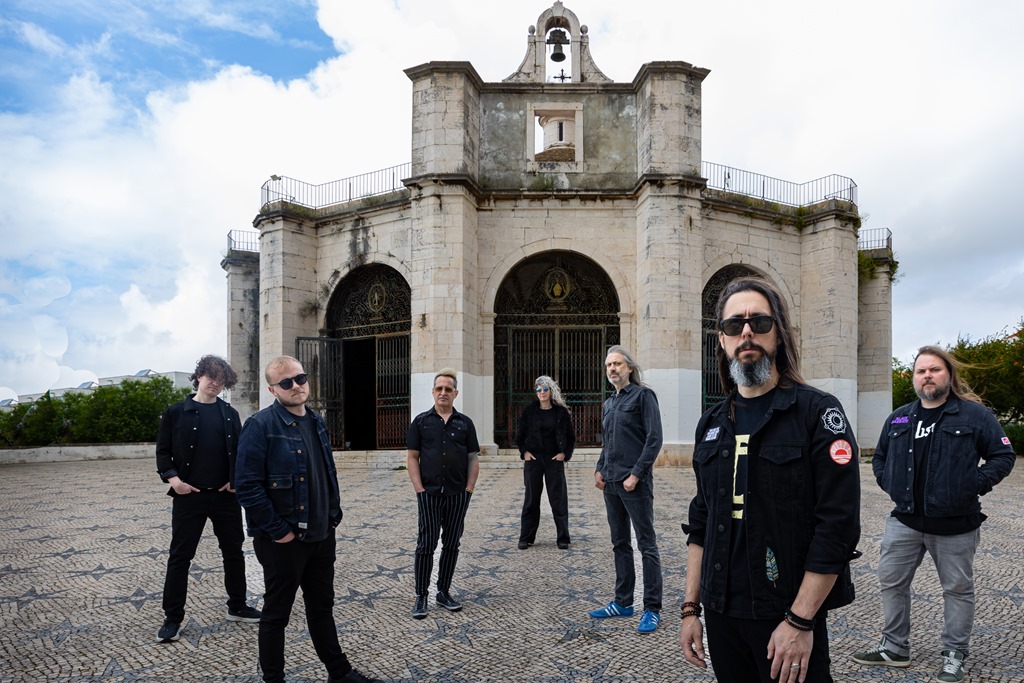
Ender band photo by Christian Reyes

Christopher Nosnibor

13th September 2025

It is impossible to escape AI now, and its ubiquity has arrived at a shocking pace, its acceleration seemingly exponential. You can avoid social media, but can you avoid computers or mobile phones for even more than a few hours? The news – beyond the main headlines, at least – is abrim with reports on how it’s affecting us as individuals, as a species, and the environmental impact. I watch a training video at work: it’s presented by AI actors who move their arms in strange ways and occasionally mispronounce a word in the worst way. Meanwhile, management want us to save time on report-writing by using Copilot. Drained by all of this, I go to the pub for soe decompression time, and the talk is of how jobs are being undermined by AI, and some guy’s got a video AI made using just a photograph. Why? Why do we need this? We don’t, of course, but it’s novel, mindless entertainment that can be created in seconds. Increasingly, it feels like we’re volunteering ourselves for virtual lobotomies. Despite the fact that the current technoscape is every sci-fi dystopia playing out exactly as told in real-time, it seems the majority of people are more than happy to embrace AI. Even writers, artists, and the like, present themselves as ‘curious’ and will engage with AI for prompts or to brush up something they’ve done. But the fact it that it’s a slippery slope, which gets steeper and steeper and further down is an abyss that plunges straight to hell. The worst of it is that it’d becoming increasingly difficult to separate real life.

One of the issues I have personally is that just as every significant technological advancement since the Industrial Revolution brought the promise of more leisure time by making work lighter, the opposite is true – unless you consider unemployment and life on the breadline to be leisure. AI isn’t saving time by vacuum cleaning the house, hanging up the laundry, putting the bins out or doing the school run: it’s simply devaluing creative skills. Anyone who has read an AI-generated article, heard an AI-assisted song, or seen some AI-created art will know that there’s something ‘off’ about it, that it’s soulless and vaguely alien. Meanwhile, the world seems to be spiralling into a cesspit of animosity, hatred, and division. Something happened during the pandemic which meant that when we all emerged from lockdown, war and rage and unspeakable cuntiness exploded on a scale beyond articulation. It’s no wonder people are struggling with life right now.

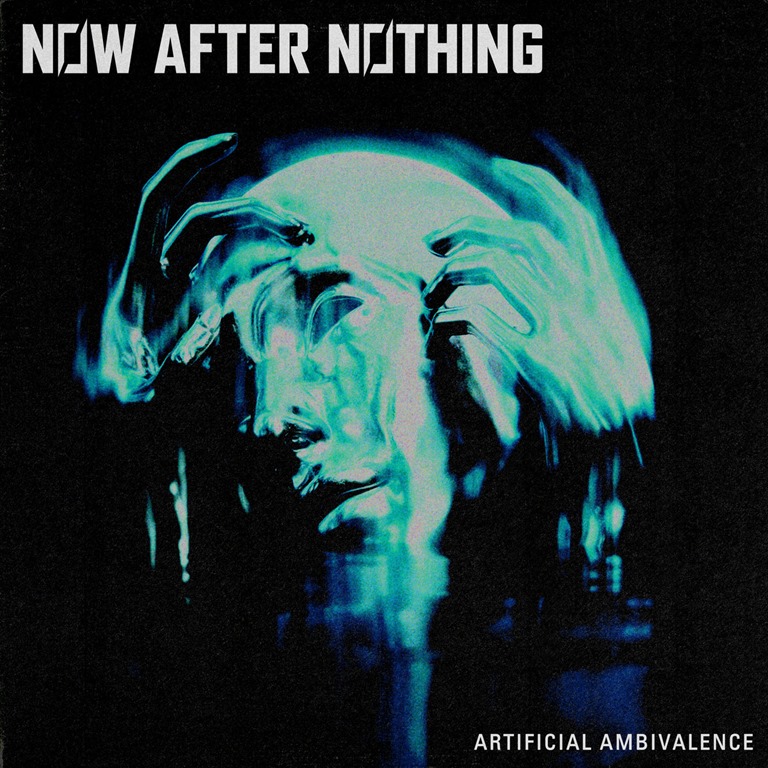
Now After Nothing is, in some respects, a therapeutic escape from all the shit. Multi-instrumentalist Matt Spatial paired with Michael Allen after what he describes as ‘a relatively difficult time in my life [where] I had become lost and depressed without a creative outlet with which to express myself’. There’s much to say that creativity – and exercise, both physical and mental – are the best self-maintenance. Listening to this EP, it’s clear that Spatial is really pouting everything into this.

His comments on the EP are worth quoting: “Artificial Ambivalence, as a concept, to me represents the state of feeling lost and/or the ‘shutting down’ from the negativity and toxicity around each of us,” Spatial explains. “They say ‘ignorance is bliss’, but in the (mis-)information age we seem to have reached a point of being pummeled into exhaustion from the constant barrage of negativity. For some, while the desire is stronger than ever to make positive change in the world, we might get derailed by feelings of helplessness, hopelessness, and being powerless in a society that seems to increasingly favor only one set of values. For others, it’s the choice to conveniently ignore the inhumane atrocities happening in our society when those atrocities don’t directly impact that individual.”

Of the music, there are references to ‘goth-glam grooves slick with sweat, raw enough to leave a mark’ and a nod to the fact that ‘fans have called it “S&M disco,” a sinister shimmer of punk, industrial grind, and nocturnal new wave.’

The first thing that strikes on the first listen of this EP is the energy. Everything is up-front and it lands like a proper punch in the face. Big, gutsy riffs underpin some sinewy lead guitar parts, driven by some explosive percussion and sturdy, throbbing bass. Straight out the traps, ‘Sick Fix’ blends post-punk and grunge to create a hard-hitting blast, and one that’s got hooks and melody in spades, too, with hints of Big Black in the background. It sets the bar high, but ‘Criminal Feature’ hurdles it effortlessly.

Slowing the pace and changing not only the tempo but the mood, the piano-led ‘Holly’ broods hard and is unashamedly mid-80d goth in its vibe, but also incorporates more post-millennial post-punk and goth in its genetics. The result is – to wheel out a cliché – anthemic. And it is, of course, the perfect mid-set slowie, which sets things up for the chugging, bass-driven beast that is ‘Fixation Fantasy’, a track that’s more 90s alt-rock than post punk or goth. More than anything, I’m reminded of psychedelic grunge also-rans Eight Storey Window in the ear for melody and the emotional heft delivered by some achesome riffs delivered at an intense volume.

‘Dare’ brings some dark pop intimations paired with some searing guitar work which lands like a post-rock Placebo crossed with Salvation – that is to say, it’s richly immersed in that mid-80s Leeds sound. It’s inspired stuff, and then some. Closing off, single release ‘Entangled’ offers glorious shoegaze gentility before breaking into a magnificent slice of synthy post-punk with some massive guitar. Artificial Ambivalence is better than ‘all killer’ (which it is) – it’s next-level solid quality and absolute gold.

AA

a3532593873_10