Archive for October, 2024

COP International – 6th December 2024

Christopher Nosnibor

What a year this is proving to be for bands who have lain dormant, at least on the studio front, for quite literally decades. And when it comes to Red Lorry Yellow Lorry, it really has been a long time. The last Lorries release was an ultra-limited gig-only affair back in 2015, with just 50 copies pressed for Leeds in the August and 100 for Valencia the following month. Said EP featured two new songs, ‘Safe as Houses’ and ‘Piece of my Mind’, which were listed as being from the ‘forthcoming album Strange Kind of Paradise’. Time passed, and it really didn’t look like the album would ever see the light of day. But now, this official EP presages its arrival in February 2025, some thirty-three years since they called it a day with Blasting Off (1992).

The Lorries always stood apart from their contemporaries: whereas the Leeds post-punk scene of the early 80s clearly favoured black in every possible way, the band’s guitar sound was steely grey and like scraping metal, and paired with murky bass and relentless percussion, they forged an industrial clang that, was the perfect mirror to both the landscape and the times. Chris Reed’s baritone was less theatrical and more gnarly and angry-sounding than your archetypal goths which would follow. Fans will already know and appreciate all of this, but with so much history – and so much time having passed – some context is worthwhile, especially for those unfamiliar.

During their 80s heyday, they built a catalogue of outstanding 12” releases, with some of their best cuts not on the albums, and with Driving Black, they’ve added another. It contains six tracks, with two mixes of the title track – I gather the original will feature on the album – long with a mix of the as-yet-unreleased ‘Chickenfeed’. ‘Safe as Houses’ and ‘Piece of my Mind’ finally get to be heard – and owned – by more than 150 people, and hearing them again in this context reminds me of the buzz I got when first heard them almost a decade ago: they’re unmistakably RLYL, and if they’re more in the vein of the material on Blow and Blasting Off, the one thing that’s remained consistent throughout the band’s entire career is their sonic density, that claustrophobic, concrete-heavy heft, with ‘Piece of Mind’ being a solid mid-tempo chugger and a grower at the same time. It seems that the two tracks from the 2015 EP didn’t make the album cut – but this can be seen as good news, if they have material of this quality going spare. The same is true of ‘Living With Spiders’, a frenzied track which has spindly guitars crawling and scratching all over it. It would be a standout, but the consistency of quality across the EP means it’s one more cracking tune.

The strangest thing is how time – or our perception of time – seems to become evermore distorted. Perhaps some of it’s an age thing, but… I remember at the time, The Sisters of Mercy’s release of Floodland was hailed not only as the rebirth it was – stylistically and in terms of commercial success – but as a huge comeback after a great absence. But Floodland arrived only just over two years after First and Last and Always. Even more remarkably, I seem to recall the release of Crawling Mantra under the name The Lorries that same year was considered something of a comeback and a departure, even though Paint Your Wagon was released only the year before. The world seemingly lost the plot when The Stone Roses delivered The Second Coming after a five-year gap (and they really needn’t have bothered). And now, while Daniel Ek is advocating the production of ‘content’ on a constant basis, we have bands putting out their first new material in an eternity, and rather than having forgotten about them, fans are fervent – and rightly so.

Chris Reed’s reuniting with David ‘Wolfie’ Wolfenden – Leeds alumni who first appeared with Expelaires in 1979 along with one Craig Adams, who would do a stint as a member of The Mission’s touring lineup – is most welcome, because they’re simply a great pairing, and this is nowhere more apparent than on lead track ‘Driving Black’, which is vintage Lorries, kicking off with urgent, driving drums, before the throb of bass and rhythm guitar and a sinewy lead guitar, sharp and taut as a tripwire cut in and casts a thread right back to their earliest work in terms of style and structure.

The parallels between now and the 80s are uncomfortable; we may have ditched a Conservative government, but workers are still feeling the pinch, and global tensions are off the scale. That the BBC’s apocalyptic movie Threads is getting only its fourth screening – to mark its fortieth anniversary – feels worryingly relevant. And so it is that Red Lorry Yellow Lorry still sound essential and contemporary is equally testament to their songwriting and delivery, and the bleak times in which we find ourselves. Putting the social and political backdrop to one side, the Driving Black EP is an absolute triumph. There are no half-measures, nothing is weak or half-arsed, and it’s – remarkably – as if they’ve never been away.

AA

Red-Lorry-Yellow-Lorry-_Driving-Black_-EP-3000-Cover

Trace Recordings – 11th October 2024

Christopher Nosnibor

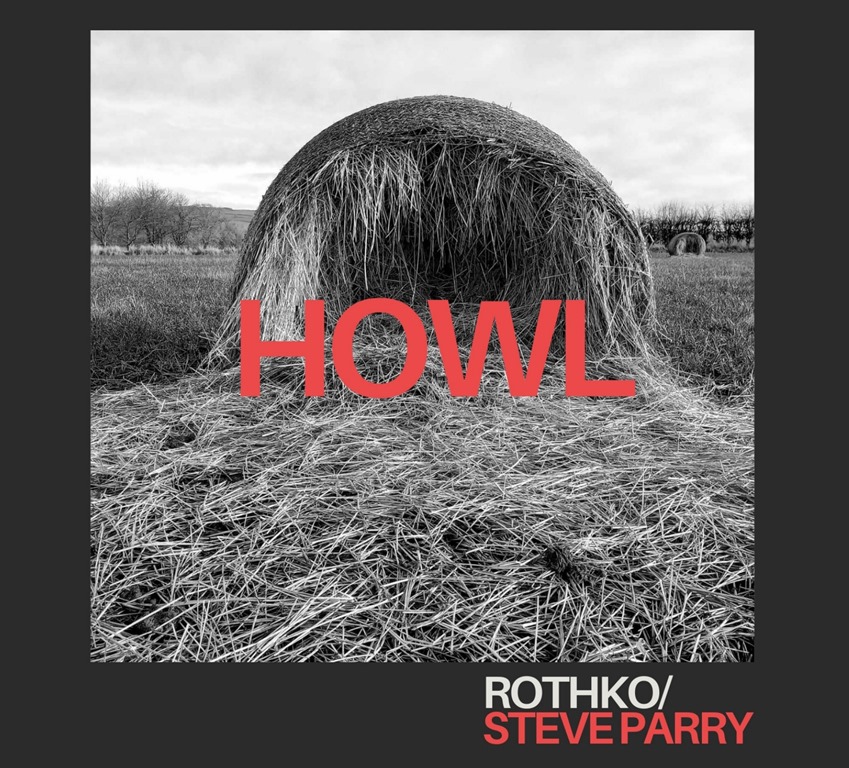
One might say that this collaboration has been a long time in coming: the pair have been friends for some twenty years, and have made contributions to one another’s recordings over that time. There’s no question that it was worth the wait. Their process and the way in which they each contributed is integral to the finished work, and here, not only to save typing, but to ensure nothing is lost in translation or paraphrase, I shall quote from the accompanying notes:

‘Emanating from the sounds of a church organ, with many short pieces recorded by Steve Parry in an ancient secluded church, and then embellished by Beazley, with his resonant bass tones, electric guitar and electronics, HOWL captures the senses of ambience, harmony, discordance and noise, with recordings of the churches space, of its emptiness, interspersed with the music.

‘The two, long, resulting pieces, create an almost ritualistic event, of something taking place that is mysterious, uplifting, and, in parts, unsettling.

‘The album reflects an emptiness, the echoes from ancient walls, a deep sense of place—and the refractions between these two artists. HOWL veers between moments of meditative beauty and unsettling discord, creating a soundworld that feels ritualistic, mysterious, and transformative.’

This is very much an accurate summary and fair description of the album, consisting as it does of two compositions each with a running time of around twenty minutes, but it’s more of a challenge to convey in fullness the resonant effects of this vaporous sonic drift. The first, ‘In the Season of Darkness’ is formed around elongated drones, but their organ origins isn’t immediately obvious in the ear. One associates the instrument with bold, piping swells which sing to the heavens, but here, it’s more subdued, almost a low, rumbling wheeze which provides an eddying undercurrent. Acoustic guitar and slow, meandering bass are far more dominant, and it’s very soon clear that this is by no means an ambient work, or a work without structure or form. The guitar and bass play distinct notes and motifs, often alternating with one another, but sometimes playing in co-ordination, and others still across one another. Treble strains like taut whines of restrained feedback filter through, these higher-end frequencies forming a counter to the resonating bass and the mid-range organ drone which slowly begins to emerge and take form a few minutes in.

The dissonant incidentals rupture the surface like lightning through a thick, rolling cloud cover. The mood is sombre, ominous. The fact it’s pitch black outside and has been since around 6:30, I’m feeling autumnal and writing by candlelight probably means I’m feeling it more, but this is music with a subliminal, subconscious pull. There’s a segment around the mid-point where there’s a pause, and there’s nothing but clatters and clanks, like tin cans rattling in the wind, before the drone returns, darker and denser than before, and with a sepulchral reverb, and it’s something which taps into something primitive and earth-born within. I can only really articulate it by way of a brief recollection of a time I visited an obscure stone circle in Scotland. Most of the stones were gone, but the shape of the circle was marked out by a ring of nettles. It was probably around twelve metres in diameter, and the few remaining stones were no more than three feet high. It was a little way off a minor road, in an unkept grazing field and as unremarkable as it was forgotten and neglected, and I had only paused by it because I had spotted it on the map. But, arriving at the place, something happened: the air temperature dropped a couple of degrees, the wind sped up and clouds obscured the sun; but more than this, there was an atmosphere which brought goosebumps and a shiver down my spine. The place had an atmosphere, and I almost felt as if I was for a brief moment splitting across millennia. The sensation was but fleeting, but it was palpable. The experience of hearing this piece is akin to that, resonating on a level beyond the sphere of commonplace experience.

Counterpart composition, ‘In the Season of Light’ is, again, constructed around a long, long, reedy drone, this time with piano and delicate scrapes and wind-like rustles and whooshes adding the additional layers and textures. It doesn’t feel our sound especially light or uplifting: dark sonorous tones and groaning creaks occupy the corners, before, again around the mid-point, a gentle guitar part, reminiscent of later Earth tunes, arrives, and there are some delicate strings, too. Finally, light begins to break through.

HOWL clearly has no correspondence with Allen Ginsberg’s seminal poem, but does very much tap into something primal and primitive, the way we feel the effects of the seasons, the sun, the moon, possessing what one might perhaps describe as a ‘spiritual intuition’, reaching elemental aspects of the human DNA. Understated, but powerful and moving, it’s a subtly intense work.

AA

6 page ECOpack with measurements.pdf

Former LORDS OF ACID vocalist, Mea Fisher is back unleashing the inner demon with her new single featuring En Esch (Slick Idiot, <PIG>, Pigface, ex-KMFDM). ‘Devil Inside’ is a twisted and delicious siren-like song where distorted guitar riffs, metallic percussion, and dystopian synth bring deep, dark fantasies to life. Written originally by Mea and strictly made for Lords of Acid, she has refined and transformed the song into a creation that is distinctively hers. Its heavy metal elements fused with a trance-inducing dance beat truly sell the feeling of traversing through the underworld’s hottest night out. Méa easily takes charge—her spellbinding vocals whispering temptation and commanding attention in the same breath. “There’s a hunger that lies,” she admits, “and you hold the key.”

Mesmerizingly, Méa calls fans to follow her and “take a bite of forbidden.” En Esch’s guttural, gruff backing vocals light the whole thing aflame. Danny Lohner (Nine Inch Nails) also lends his guitars to the track.  The seductive, Luciferian qualities of ‘Devil Inside’ compel listeners to close their eyes, lose themselves to the beat, and indulge in their deepest desires.

Check the video here:

AA

ed7e1c64-bd6b-529d-b152-d5795e48c59e

October 2024

Christopher Nosnibor

Having just effused over the benefits of Bandcamp Friday, as well as wrestled with the overwhelming volume of notifications and review submissions, this one lands as the kind f curveball only the likes of Foldhead are likely to deliver, in that this is by no means a new release. Beserk Pinball Machine / Quasar Delirium was in fact first released back in 2021, as something of an archival recording: ‘Recorded in 2015 for a tape label that ceased to exist prior to the intended release date. The 25 copies that had been made were distributed at the Experimental Yorkshire festival which took place at Hebden Bridge Trades Club on 21 July 2018’ And now the Bandcamp page has been refreshed, with ‘two new mixes + a new piece.’

I’m not sure if ‘beserk’ is an intentional variant of ‘berserk’, but I’m going to assume it is. The etymology of the word ‘berserk’ is quite fascinating. The word itself means ‘out of control with anger or excitement; wild or frenzied’, but its origin lies in the reverence the Saxons held for bears. ‘Berserk’ translates as ‘bear shirt’, and berserkers were the warriors placed at the front of a battle formation: their job was to chew their shields, gnash their jaws and foam at the mouth like frenzied bears in order to share the shit out of their opponents before the charge.

This release is every bit as scary and unpredictable as a frenzied bear, and certainly inflicts a bear-like mauling on the senses, being particularly brutal on the ears, and on the lower intestines for that matter.

The opener and lead track, ‘Beserk Pinball Machine’ is an absolute noise monster. There are – sort of – vocals in the mix, but they’re distorted and largely buried beneath a deluge of mangled noise, churning distortion and feedback all mixed together to forge the nastiest mess of trebly sonic ruination. It’s just shy of fifteen minutes shattering, explosive, convulsive digital meltdown which makes Merzbow sound mellow, and Kenji Siratoi supremely calm in comparison. Paul Whatshisface, having previously been a member of Smell & Quim and Swing Jugend – as well as occasional noise duo …(something) ruined has had a long career operating in harsh noise circles, and this is both noisy and almost unspeakably harsh. The noise frenzy ends abruptly, but there’s a spell of low-level hum at the end which offers some respite, however much the not-silence nags.

‘Quasar Delirium’ is appropriately titled: another quarter of an hour of brain-melting, tinnitus-inducing noise squall. Only this has more fizz, more squeal, more laser bleeps, more treble, and more feedback, more melting circuitry, all against a backdrop of churning cement-mixer grind, washing machine spin-cycle metallic reverberations. The experience is how I imagine standing next to a massive propeller engine without ear defenders, while a Star Wars type laser-gun battle takes place all around – while buildings explode and collapse all around, and there is nowhere to hide.

The concept of remixes in this context is rather amusing, and ‘Machine Pinball Bezerk’ and ‘Delirium Pulsar’ are more about fucking shit up even harder than remixing in the more conventional sense. ‘Machine Pinball Bezerk’ sounds like an atomic bomb: it’s noise on the scale of the scene in Threads where the buildings are decimated by a wall of white-hot flame. It’s a scene that seems to last an eternity despite being maybe five minutes at most. The fifteen minutes of ‘Machine Pinball Bezerk’ feels like a lifetime and you can almost feel the tinnitus coming on after just five minutes, while your brain melts and trickles out of your ear.

‘Delerium Machines’ delivers more of the same, the most pulverising, excruciating blasting racket. It hurts, and the overall experience is disorientating: an hour and a quarter of the most abrasive, churning noise imaginable. It’s not Harsh Noise Wall, but there’s not much variety, either, meaning that this release is a relentless assault that will likely leave you wilted, drained by the end – and that’s assuming you can still hear.

AA

AA

a1518553209_10

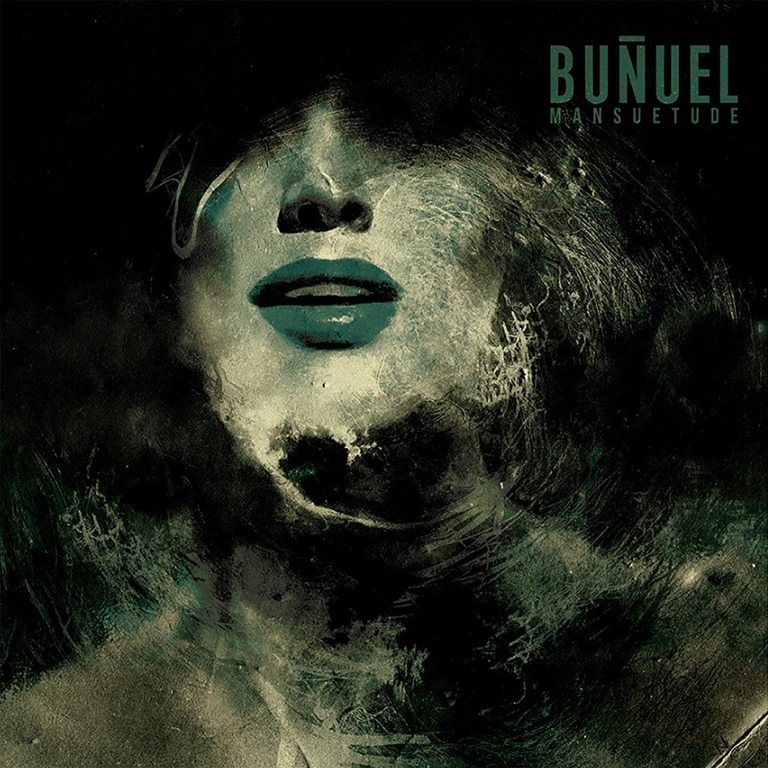
Buñuel share the frenetic new single "Class" from their fourth full-length album Mansuetude, a co-release between SKiN GRAFT and Overdrive, arriving 25th October 2024.

About the track Eugene S. Robinson comments, “America is schizophrenic about class and class attributes. On the one hand we claim it doesn’t exist here, on the other hand like Paul Fussell lays out in his book on class it works its way through every aspect of American life and living. The song itself eviscerates the notion by placing it where it most needs to be placed: in the iD fuelled underworld.”

Listen to ‘Class’ here:

AA

BUÑUEL boasts the singular vocals and razor sharp lyrics of Eugene S. Robinson (ex-Oxbow) and a powerhouse Italian trio comprised of guitarist Xabier Iriondo (Afterhours, A Short Apnea), bassist Andrea Lombardini (The Framers) and drummer Franz Valente (Il Teatro Degli Orrori). Mansuetude was produced by Timo Ellis, and features guests including Jacob Bannon (lead singer of Converge), guitarist Duane Denison (the Jesus Lizard, Tomahawk,The Denison Kimball Trio), vocalist Megan Osztrosits (Couch Slut), cellist Andrea Beninati and David Binney on alto saxophone and vocals.

The title, Mansuetude – meaning “meekness” or “gentleness” – might seem like a juxtaposition when listening to the record that is, in Eugene’s words, “extreme but articulate”, however the record aims to convey a balancing of different forces and shades of being which make up the human experience. Throughout Mansuetude, Buñuel take every given opportunity to stretch out their musical tendrils towards discomfort, surrealism, and the deconstruction of tradition, as they reach absolute abandon. They go well beyond the realm of noise rock, encompassing many moods from post-hardcore to avant-noise, hard-blues to post-industrial, symphonic to trash metal and even free-jazz.

Drummer Franz comments that “Buñuel is a name that embodies a certain cultural and literary reference, which evokes an entire world. Like his films, our Buñuel is surrealism. We take the listeners into a place that’s suspended between dream and reality.”

“What we’re doing with Buñuel is to carve out a very specific glimpse… partly into hearts of darkness, but more specifically into the depth of our secrets,” says Eugene. “Secrets we keep from each other, ourselves and whatever futures we’ve imagined for ourselves. We are ultimately trying to communicate something direct and deadly about the human condition.”

Buñuel makes music for those of us willing to take a closer, unflinching look at the depths of human instinct, and on Mansuetude the band extend their reach farther than before, creating an album that is akin to a powerful impulse, or perhaps even an exorcism.

Mansuetude is a double album with three sides. A balancing act performed for and by the unbalanced.

AA

a1827083267_10

Dret Skivor – 4th October 2024

Christopher Niisnibor

Unlike Record Store Day, which has been hijacked by major labels and swamped with overpriced reissues to the point that it no longer benefits any of those it was initially intended to, Bandcamp Friday is something I wholly endorse.

Bandcamp’s model is rather different from other streaming services in that it provides a platform whereby people can pay to actually own the music, be it in digital or physical format. While purchase is available through some – Apple, Amazon – rates for artists aren’t great. Many people have ditched physical media form reasons of convenience and space, but the trouble with streaming – and this doesn’t only apply to music – is that it can be removed from a platform at zero notice, which is irksome when you’re halfway through a series or really want to watch a particular movie… or want to listen to an album. The Internet is not the infinite, permanent archive of everything ever we were promised it would be around twenty-five years ago, and the reason for this can essentially be summarised in one word: capitalism.

Maintaining a site costs. Everything costs. The Internet and – especially streaming services – do not exist for the benefit of either artists or end users, at least not anymore. But here, Bandcamp Friday represents the best of the Internet, in that all proceeds go to artists. And artists deserve, and need, to be paid. Because we need art. It may be massively underappreciated and taken for granted as wallpaper, but humanity needs creative art to survive. It does not need capitalism: if anything, capitalism is strangling culture and, moreover, killing the planet. Art predates not only capitalism, but houses, farming, even language.

This does mean that every Bandcamp Friday finds my inbox even more swamped than usual with notifications of new releases, and the run-up means a significant influx of emails for review of simply notification, and it can be quite overwhelming.

It’s with almost clockwork consistency that Swedish obscure noise label Dret Skivor drop a new release on Bandcamp Friday, and this one is no exception, arriving in the form of a collaborative work between the notorious cult noisemaking vehicle that is Legion of Swine and bøe under the portmanteau moniker of BØESWINE.

In classic Dret form, bøeswine offers two longform tracks – ‘bøe’ and ‘swine’ – each of which runs for approximately twenty minutes and occupies a side of the ultra-limited cassette release. And so it is that ‘bøe’ groans and drones and groans and clanks and clatters out an amorphous mess of noise with sparks of tinnitus-inducing treble cutting through the endless hum and scratching distortion for a full nineteen and a half uncomfortable minutes. It’s pretty harsh, and darkly uncomfortable. More than harsh noise, this level of churning grey noise is hard on the ear: it’s like standing next to a cement mixer at the edge of a demolition site as every window is smashed by a wrecking ball. Once ‘bøe’ has assaulted the eardrums and left you in a state of physical and psychological ruination – and it will, it’s that dingy, grindy, mangled, abrasive – we come to the twenty-one-and-a-half-minute ‘swine’, another monster epic driven by dark noise, strains of feedback and fizzing electronics, and this time it’s amped up to the power of eleven to render THE nastiest noise.

It’s a relentless force, as harsh as an atomic detonation in your back yard. So much noise, and so relentless. And I love it. Yes, it’s uncomfortable, unyielding, positively painful. But musical experiences are simply entertainment of they don’t test. This is like the ultimate test, a work of the darkest, most fucked-up, unstructured noise. Any comparisons to Throbbing Gristle are entirely valid. Bøeswine is equally punishing and magnificent.

AA

boeswine for bandcamp

Following the announcement of new album The Crying Out of Things, out November 8th, The Body have shared the heavyweight single ‘Removal.’ Digging deep into the duo’s eclectic influences and truly omnivorous taste, ‘Removal’ smelts industrial noise and earth-shattering dub pressure down into a mutant rhythm track. The track unfolds from hypnotic coils of chest-rattling drums and hazy vocal samples echoing out through the dancehall before descending into room-razing, coruscating noise driven by guest vocalist Ben Eberle’s caustic howls.

From The Body’s origins, incorporating unorthodox methods to achieve an oppressive atmosphere has been essential to their alchemy. Full choirs, unexpected sound samples, 70s-inspired horn lines, dub drum beats and diverse guest performances have speckled their varied and eclectic repertoire, the common thread being a complex webs of distortion and noise. The Crying Out of Things harnesses elements from their ground breaking catalogue: the expansive ecstatic distortion and live energy of I’ve Seen All I Need To See, the ambitious layering and arrangements on I Have Fought Against It, But I Can’t Any Longer, and the corroded pop edge of No One Deserves Happiness into one compact work. Guest performances include vocalist Ben Eberle, horn player Dan Blacksburg, and recent collaborator Felicia Chen add essential textural range. The Crying Out Of Things makes clear The Body’s distinct power to convey a dark range of emotions, thought inventive arrangements, dynamics, and sound selections.

Listen to ‘Removal’ here:

AA

unnamed10-990a28028a05143c

Ex Records – 20th September 2024

Christopher Nosnibor

It’s hard to conceive that The Ex have been going for a full forty-five years. It’s more than understandable that the pandemic proved a challenge for them, a band accustomed to getting out and doing it live. As their bio points out, in 45 years they did more than 2000 concerts in 45 countries. But creativity isn’t something that can simply be switched off. Again, to turn to how their notes set it out, ‘The pandemic was a standstill for many, including The Ex. Or perhaps it was more a kind of recharging, as the band is back on national and international stages with new music, ready to return to the studio… It was time for a new 45rpm 7” single. From the brand-new set they are playing full-on this year, they picked two blinking tracks: ‘Great!’ and ‘The Evidence’.

For some reason, I’ve always considered The Ex to be more of an album band, but as the compilation Singles. Period evidences, they’ve released a fair few singles through the years. And what’s interesting is how they clearly approach singles and albums very differently, exploring expansively on albums in the same kind of way they do live and striving to see just how far out they can push things, while exercising remarkable discipline and concision with the single releases, with tracks of two or three minutes and rarely exceeding four in running time. This awareness or tailoring of material to medium is quite a rare thing, but illustrates their phenomenal versatility as musicians, and also provides some insight into their methodology and creative processes.

‘Great!’ is. It’s an uptempo meandering sliver of discord whereby the musicians play across one another rather than together to spin a slice of angular post-punk that’s not a million miles from The Fall in their early years. ‘The Evidence’ – which clocks in at under three minutes – is more focused-sounding, and more noisy. Both songs are the work of a band who are still firing on all cylinders with ideas and energy.

This single is exhilarating in unexpected ways. It sounds fresh – and yes, it might also sound like it’s from circa 1979, but it sounds authentically 1979, rather than some old buggers trying to recreate and rekindle the vibe of their youth. Just what their secret is, I don’t know – although one suspects the fact that they’ve continually striven to create, and to create something new, something different, is a significant factor. In life, as well as with musicians, it’s so easy to simply settle, to adopt a routine, to take the easiest path within an established comfort zone. Fair enough: most people want an easy life, especially when they reach a certain point. But, critically, to accept a diminishing scope for activity is to consign oneself to a future of diminishment in every way. This clearly isn’t the mindset of The Ex, and this single provides ‘The Evidence’ that they’re still ‘Great!’.

And after that shameful punchline, I should probably get my coat – but shall instead pour another drink and get to the next review – because diminishment is stagnation and death, and re-engaging with The Ex post-pandemic is an invigorating experience.

AA

EX148 front

‘Woke Frasier’ is the third and final single from the Leeds band’s upcoming second album I Have A Physical Body That Can Be Harmed, out on November 8th via Big Scary Monsters.

They write: “You can think of this as a sort of sequel to the ‘Torture Cube’ video, also by George Chadwick. Who can say whether or not Rodney Fipplecash will make further appearances within the Thank cinematic universe? Only time will tell.”

Check it here. It’s woke gone mad, I tell you!

AA

454339437_1028923172571477_5341763220979679497_n

Ipecac Recordings – 4th October 2024

Christopher Nosnibor

The band’s very name carries considerable weight. It’s a phrase oft-used, but rarely really assessed and processed. But the band’s comments around their second album place it front and centre: “This is more of a statement about how things are going in the world right now.” says Spencer. “Things were pretty shitty before. I think things may actually have gotten a little bit worse.”

In the last week, here in the north of England, it’s rained. A lot. Here in York, the river breached its banks for the first time this autumn. Last year, this didn’t happen until sometime in October, although – despite multi-million-pound work being done on flood defences – vast swathes of land lay under water for the best part of six months thereafter. It’s also rained a lot in the south, too, with flash flooding. Yesterday, I turned on the news to see images from the US, which showed trucks being driven on rapid currents of rivers which hours earlier had been roads. And yet still people shrug and say ‘meh, it’s cyclical, we’ve had ice ages, we’ve had climate change before, I don’t see any evidence it’s man-made. Besides, we’ve just had the coldest summer in years, how’s that global warming, eh?’ When it comes to climate denial, denial is the operative word. Sure, climate is ever-changing, but not at this rate.

But as a species, we seem hell-bent on self-destruction: seeing things unfold in real time in the Middle East is terrifying, the mounting death toll in Gaza – or what’s left of it – a horror almost beyond words, while Russia continually alludes to a nuclear response. But this isn’t even a return to the Cold War climate, because a very hot war rages all the while, with no sign of abatement or a peaceful resolution.

So, have things ‘gotten a little bit worse?’ It would seem so. And the thing about history is that it happens – or is made – fast, and sometimes faster than others. As I type, I’m having to turn the volume up to drown the sound of fighter jets running night exercises – I like to hope they’re exercises – nearby and over the city. RAF Eurofighters – currently, it would seem there are seven running circuits around the area – and occasionally US planes, too, have been evermore present of late, and it’s hard not to feel nervous.

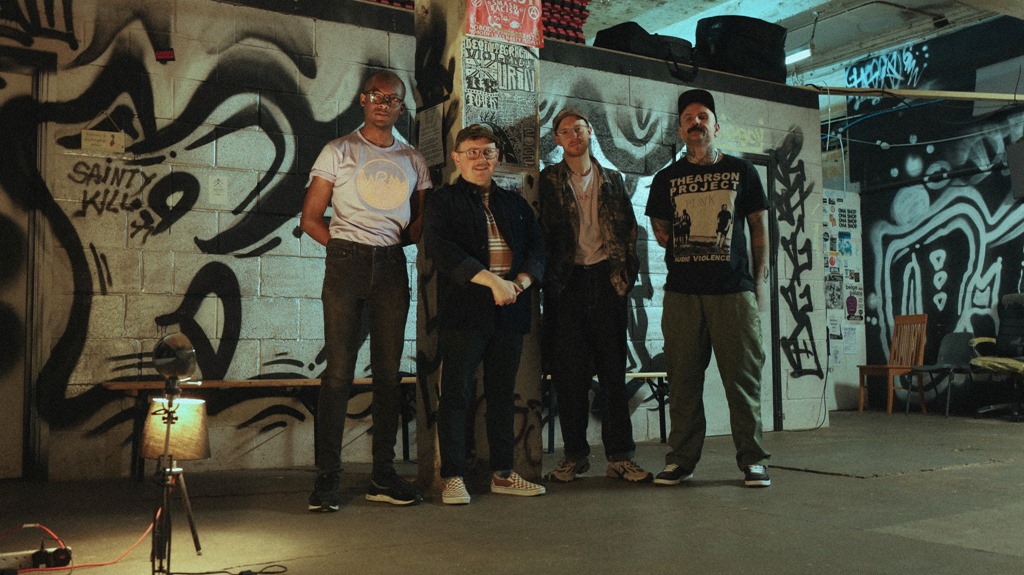
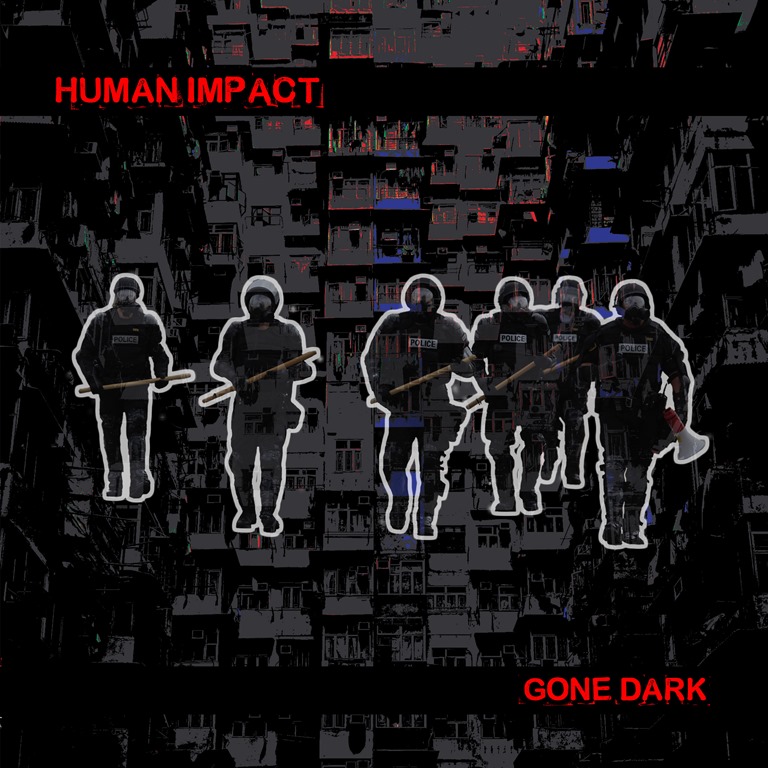
Turning up the volume on Gone Dark at least is no chore: it’s an album which needs to be heard at the kind of level it was played, the kind of level you know it would be played live. Seeing Unsane at The Brudenell in Leeds back in 2011 will forever be a standout for me. Nothing fancy or showy: they were simply relentless and brutal. And so it is that Human Impact bring the best of their component parts, consisting as they do of Unsane frontman Chris Spencer and Cop Shoot Cop squallmaker Jim Coleman, with bassist Eric Cooper (Made Out of Babies, Bad Powers) and drummer Jon Syverson (Daughters). These are four guys who know how to make the most punishing noise. And if noise has colour, the colour of Human Impact is a stark, steely grey, with the texture of sheet metal.

As the accompanying notes explain, ‘Gone Dark‘s songs emerge from a cinematic miasma of dark ambience, processed field recordings, street rants and industrial grinding. Like embers flickering from an inhospitable wasteland, Gone Dark‘s nine tracks provide paths away from total annihilation, with Spencer barking “Wake up or live on your knees” (‘Collapse’); “Now is the time to resist” (‘Destroy to Rebuild’) and “Follow the sound … the future is now” (‘Corrupted’)
“It’s just sort of the modern state of being, to me. From really a human perspective in terms of us being part of the masses, all of us together as one giant conglomerate of production and taxpayer bullshit,” says Spencer. “I make a conscious effort to try to think of things in terms of ‘we’ and ‘us’ and what’s happening to us as a whole instead of just my stupid problems.”

Understanding this context is integral to appreciating Gone Dark. There’s a pervading weight to every song, and the mood is of rage – the kind of rage that comes from a feeling of powerlessness. ‘Collapse’ sets the bleak, nihilistic tone as it hammers away, the guitar and bass meshing together to form a dense sonic sludge. It’s abrasive, but suffocating, conveying a sense of desperate confinement. Anger, anguish, anxiety. Gone Dark positively burns with all three.

It would be wrong to bemoan any lack of variety across the album’s nine punishing assaults: Gone Dark reflects life in the real world. There’s no respite, only relentless, brutal onslaught, kicking after kicking. You don’t get to catch your breath or mellow with some nice time out: no, you just have to endure the blows and do whatever it takes to stay afloat, and you stagger, punch-drunk, swaying on your feet wondering how much more you can actually take. It’s not a real question, since there is no option to do anything but plough on. Life is harsh, and this is a harsh album – not in the sense of harsh noise, but in its unyielding density. Gone Dark is the sonic equivalent of a good kicking. It’s so raw, so harrowing, and so intense it hurts.

AA

114481