Archive for October, 2023

Gizeh Records – 3rd November 2023

Christopher Nosnibor

While Christine Ott has maintained a steady flow of works over recent years – her fifth album arrives just two years after Time to Die – her latest offering has been a long time in the making. For example, we learn that ‘Die Jagd nach dem Glück’ (The Pursuit of Happiness) is an extract from her original composition for Lotte, mon amour, a film-concert created in 2014 based on 4 short films by Lotte Reiniger, a German director from the first half of the 20th century.’

It’s pitched as ‘a collection of twelve pieces for solo piano, twelve impressionistic miniatures, instrumental and cinematic fractals celebrating the beauty of life…

Éclats (Piano Works) is a kind of mirror image to Chimères (pour Ondes Martenot) (2020, Nahal Recordings).

‘Pluie d’arbres’ introduces the album with magnificently weighted, perfectly paces, rolling notes which balance grace and tension, and it’s a beautiful and engaging composition that comfortably slots into the ‘classical’ bracket not simply by virtue of its being a piano piece, but the delicacy of it all, and the way it articulates changing moods intuitively and with a depth of spirit.

The individual pieces follow one another in such a way as to create the impression of their being written to flow together, and while the tempo and tone may shift during the course of a single piece – there are flurries and flutters, moments of airy levity like the morning sun filtering through a curtain wafting on a gentle early summer breeze, notes coming suddenly in tinkling cascades – the album as a whole feels like a single, continuous piece. Rather than any one track being ‘dark’ or ‘light’, they each run through a succession of sensations, turning on a pinhead from brooding to playful, uplifting to reflective.

There’s an honesty about this, which speaks to the human condition. Yes, you may have good days and bad days, but most days are a series of peaks and troughs, highs and lows, unexpected and near-immediate switches that some about as the result of various but specific interactions – or, indeed, sometimes, a lack thereof. Éclats feels real because it doesn’t try to be any one thing, but more taps into the unpredictability of life. And Ott plays in such a way as to bring all of this out through the music, through her connection with the keys.

At times sad, at times uplifting, at times, it simply is… and this is the real joy of the experience of listening to Éclats. At its lightest, it carries you on rippling sonic clouds and pokes at the sky: at its darkest, it hangs heavy in your stomach. It’s hard not to be drawn in and fully engaged with this set of pieces, and it will take you anywhere if you let it.

AA

Eclats_DIGITAL_Artwork

Darkplace is a mysterious new Swedish dark dream pop/post-punk group whose just released debut album, ‘About The End Of The World’, is a conceptual work inspired by the bleak landscape of the Stockholm suburbs that birthed them.

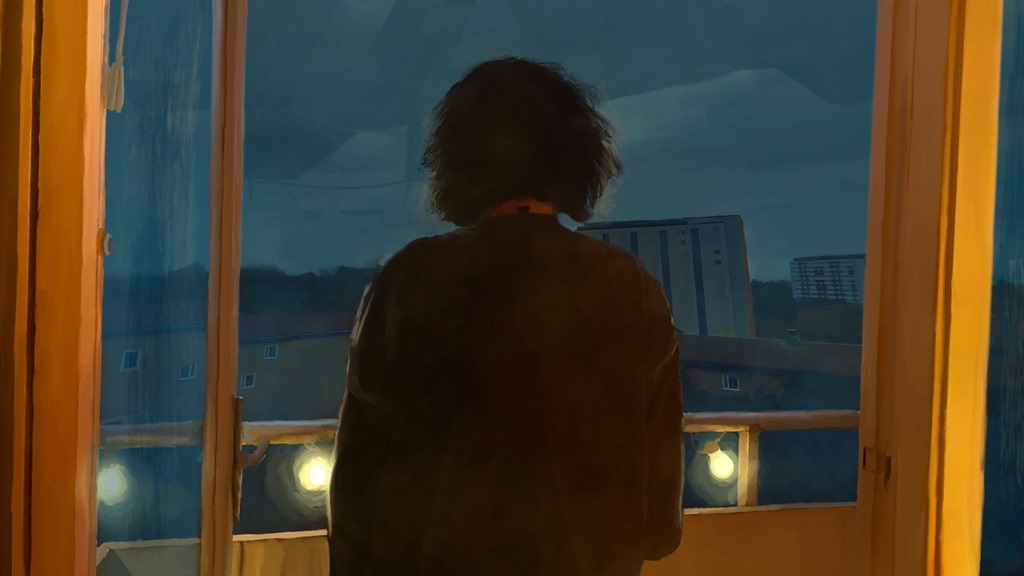
Centred around an alternative reality – or is it just a grim present and future? – the album has been unveiled gradually via a series of videos based on animated digital paintings for several of its tracks.

Four singles have been issued ahead of the album, with the introductory ‘Arken över Hesselby’ (The Ark Over Hesselby) presenting the outskirts of a city haunted by an unknown aerial presence. Its follow-up, ‘Fearmonger’, offered an apocalyptic scenario with sirens wailing and a lone soldier fleeing the prying ‘eye in the sky’ of a mysterious airship. The third, ‘Cars’, was the first to feature vocals and saw the story move on to a man travelling north following cryptic messages written on motorway signs. ‘This Is Loud’ saw the plot thicken and bring the story full circle…back to the beginning and Hesselby…with another stunning visual to accompany it.
A video for the track ‘The End’ has been made available to celebrate the release of the album and can be seen HERE. The band cryptically comment that “when the Monuments switch on you can taste metal and your ears pop. Working from home became vital for people who lived close to them. GPS’ seem slightly off. Is it because of interference from them? My regular walks also seem to differ in distance.”

A 25 minute video for the full album can be seen here:

Although rooted in late 80s/early 90s indie styles, Darkplace incorporate a variety of other genres into their sound. However, for the members of this highly secretive group, it is not just about the music. They perceive themselves as more an art project that happens to be exploring and commenting on the state of the world through their chosen mediums of music and video.

The majority of the tracks on the album are short instrumentals that were written with specific storyboards in mind, with the group revealing that: "We started creating the art before we had the music in most cases, so the tracks were written as soundtracks to the animation.”

The art itself is a multi-layered process that involves photography, sculpting, oil painting, digital editing and animation. Using apps like Nomad Sculpt to create it before exporting scene specific angles and imported into Procreate to be painted, they add: “we use oil paintbrushes and paint over the photo. It is layers upon layers and it gets messy. Exporting gets even messier since we want depth in the scenes and need to export them in layered depths. A few scenes in this project have been animated frame by frame and it has taken almost two years to complete.”

b6893297bad438aad16874077803dfb07c8cbfff

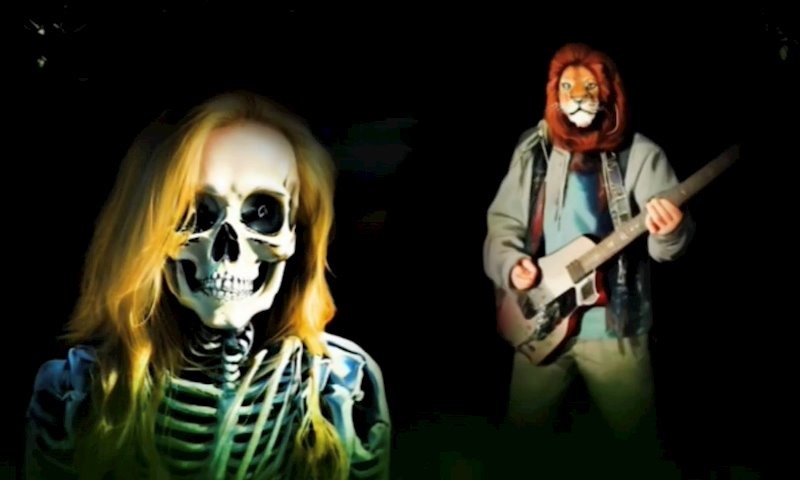
Portland post-punk alt-rockers SKY LIONS presents ‘Werewolves’, a wild offering from their debut album Inside The Circle. The duo is made up of Radio Sloan and Outer Stace, who over the years have performed with or as a part of Courtney Love’s band, Peaches’ band, Le Tigre, The Need, Time Bitch and Photona.

Sky Lions’ musical collaboration began in childhood, before they were aware of any rules. Outer Stace says, “’Werewolves’, in part, is about the idea of shifting from our outer selves to our inner selves, the fleeting peace that can bring; transformation and adaptation… So, the art direction possibilities were pretty endless. It was a lot of fun to create the different versions of ourselves that we could be.”

Watch the video here:

AA

“It’s like a metamorphic reality of death and the future. It feels like things we’ve seen,” says Radio Sloan. “Our sound is that of accepting existence for all its flaws. Sky Lions has a darkness that isn’t entirely heavy metal, post-punk or darkwave. Rather, it’s a culmination of who we have been, who we currently are, and how we interpret the world around us. Moving within that world is the core of our musical expression.”

From early days experimenting with instruments to their evolution into Sky Lions, they’ve carved a niche where innovation, music, feminism, Trans/queer identity and horror come together. Sky Lions weaves together the threads of life’s absurdity, unquestionable magic and tragedy. Their trans / queer / feminist lens adds a relatability of lives lived and times to come, creating an immersive sonic journey that challenges the mind and ears. Through genre-blurring compositions and evocative lyrics, they hope to channel their ethos into a call for transformation! They hope that their songs challenge stereotypes, and ignite conversation.

Sky Lions

Ni Vu Ni Connu – 2nd November 2023

Christopher Nosnibor

While the late 80s and early 90s saw the absolute peak in format-driven consumer exploitation, with the major labels finding evermore extravagant and ostentatious ways pf presenting a single or an album to boost its chart position by milking hardcore fans who would buy every format for the sake of a bonus track, a remix, or a poster, there’s been a strong return for physical releases in recent years. Admittedly, the days of CD singles packaged in tri-fold 12” sleeves, cassette singles in album-sized boxes, 12” boxes in which to house a series of CD singles, albums released in boxes as six 7” singles, and the like are well over, the fetishisation of the object is very much enjoying a renaissance, most likely as a reaction to the years when everything became so minimal and so digitised that no-one actually owned anything.

This was a bleak period. As someone who had spent a lifetime accumulating books, records, CDs, even tapes, I found it difficult to process. I had grown up aspiring to own a library and a wall of records, and found myself foundering, drifting in a world where entire lives were condensed to a playlist on a phone and a few kindle picks. I’d walk into houses – admittedly, not often, since I’m not the most sociable of people – and think ‘where’s the stuff?’ Stuff, to my mind, is character. It’s life. People would endlessly wave their Kindles and tell me ‘it’s just like a book!’ and rejoice at their Apple playlists on their iPods because they had their entire collections in their pocket and no clutter. I suggesting I should clear out my ‘stuff’, these techno-celebrants were missing the point, and continue to do so. Rifling through a collection, finding lost gems, engaging in the tactility, remembering when and where certain items were purchased is an integral part of the experience. My collection isn’t simply a library of books and music, it’s a library of memories.

In more underground circles, the existence of the artefact remained more consistent, perhaps because more niche artists and labels always understood the relationship between the artist and the consumer as conducted via the medium of the object. The release of this epic retrospective as a 4-LP box set is, therefore, less a case of getting on board with the Record Store Day vinyl hype in the way that HMV are now carrying more vinyl – at £35 a pop for reissues of 70s and 80s albums you can find in charity shops and at car boot sales for a fiver (and you used to be able to pick up in second-hand record shops until they died because no-one was buying vinyl), and more a case of business as usual.
a2289573057_10

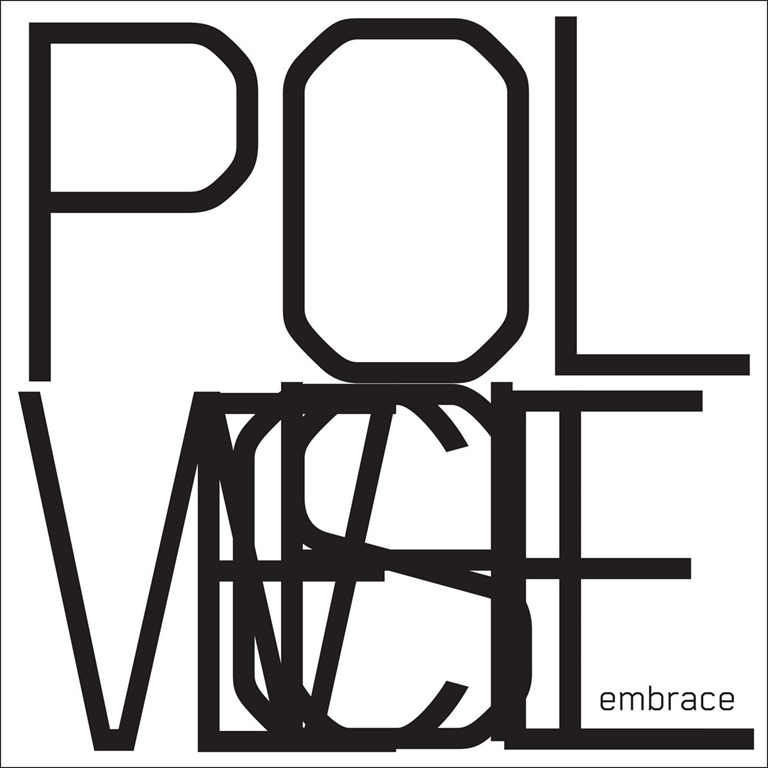
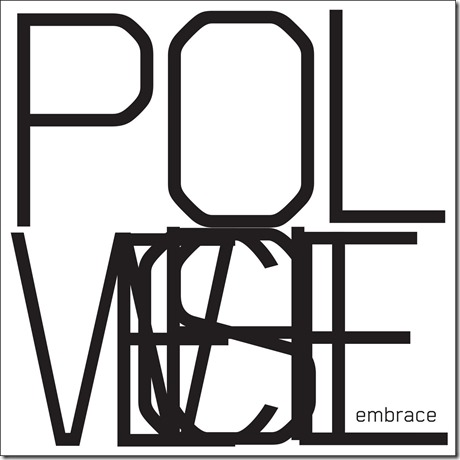
Vienna- and Berlin-based ensemble Polwechsel have a thirty-year career to reflect upon, and with a substantial back-catalogue to their name, and it’s a landmark that truly warrants a box-set retrospective. Although it’s not a retrospective in the conventional sense: this is a work created in collaboration with a selection of instrumentalists and improvisers who share their exploratory mindset. Traditional compilations feel somewhat lazy, and are ultimately cash-ins which offer little or nothing new to the longstanding fan. And so this set serves to capture the essence and style of their extensive catalogue, rather than compile from it.

There’s a lot of ground to cover, too. As the accompanying notes detail, ‘Vienna- and Berlin-based ensemble Polwechsel have been making music at the interface of collective improvisation and contemporary composition. With their changing cast, the group have been at the forefront of musical experimentation, from style-defining works in reductionism in the 1990s, which concentrated on silence, background noises and disruptions, to a change in direction in the 2000s, which saw the introduction of traditional musical aspects such as tonal relationships, harmony and rhythm. Through varying constellations, instrumentations and collaborations, Polwechsel have developed a unique body of work that has firmly established them as one of the driving forces in contemporary music-making… Their music has mostly straddled a line between contemporary music and free improvisation, and is characterized by quiet volume, sustained drones, and slowly developing structures.”

And so it is that for EMBRACE, Werner Dafeldecker, Michael Moser, Martin Brandlmayr and Burkhard Beins are ‘joined by a roster of likeminded guest musicians and former band members to perform a series of new pieces reflecting the whole breadth of their musical investigations.’

‘Jupiter Storm’ is spacious, spatial, strange and yet also playful, an assemblage of sounds that lurch from serious and atmospheric to sleeve-snickering toots and farts, and everything in between over the course of its eighteen minutes, with slow—resonating gongs and trilling shrills of woodwind and plonking random piano all bouncing off one another, while the bass wanders in and out of the various scenes in a most nonchalant manner. On ‘Partial Intersect’, drones and hesitant drones occasionally yield to moments of jazzification, parps and hoots and squawks rising from the thick, murky sonic mist which drifts ominously about for the track’s twenty-minute duration.

Sides C and D contains ‘Chains and Grain’ 1 and 2, again, longform pieces almost twenty minutes long, comfortably occupying the side of an album, are the order of the day. Clanking, clattering, chiming, bells and miniature cymbals ring out against a minimal drone which twists and takes darker turns.
cover

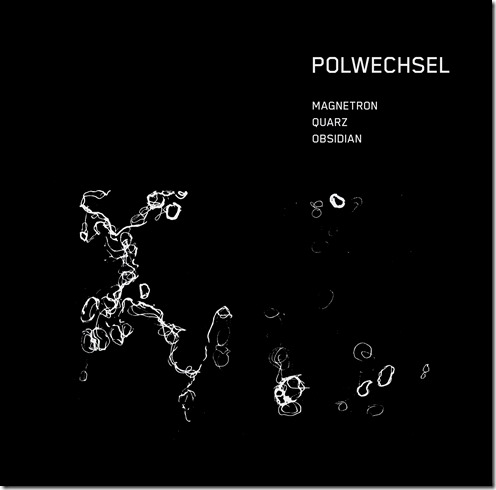
The tracks with Andrea Neumann are eerie and desolate, and occupy the third album. These pieces are different again, with the two ‘Magnetron’ pieces building from sparse, moody atmospherics to some piercing feedback undulations. The shrill squalls of treble, against grating extraneous noise, make for some tense listening. The second in particular needles at the more sensitive edges of the nerves. ‘Quartz’ and ‘Obsidian’, are more overtly strong-based works, but again with scratches and scrapes and skittering twangs like elastic bands stretched over a Tupperware container. The fourth and final album contains two longform pieces, with ‘Orakelstücke’ occupying nineteen and a half minutes with creaking hinges, ominous tones, and a thud like a haunted basketball thwacking onto a bare floorboard. There are lighter moments of discordantly bowed strings, but there’s an underlying awkwardness with crackles and scratches, muttered conversation in German. The fifteen-minute ‘Aquin’ is sparse, yet again ominous and uneasy, majestic swells of organ rising from strained drones and desolate woodwind sinking into empty space.

The set comes with a thirty-two page booklet containing essays Stuart Broomer, Reinhard Kager and Nina Polaschegg (in both German and English) and some nice images which are the perfect visual accompaniment to the music, and while it’s doubtless best appreciated in luxurious print, a digital version is included with the download.

EMBRACE is a quite remarkable release – diverse and exploratory to the point that while it does feel like an immense statement reflecting on a career, it also feels like four albums in their own right. It’s a bold release, and an expansive work that certainly doesn’t have mass appeal – but in its field, its exemplary on every level.
Rare Vitamin Records – 20th October 2023

Christopher Nosnibor

The Battery Farm have had a truly extraordinary twelve months: the Manchester foursome released their debut album last November, and have been gigging hard off the back of it, with some pretty high-profile shows along the way. And this is a band that’s driven – not so much by ambition or aspirations of stardom, but by passion. These guys are purveyors of political, pissed off, authentic punk – not haircuts and threads, but sweaty, full-throttle 110% all the way. Benjamin Corry makes for a powerful presence, vocally, visually, and in the interviews he’s given. He may appear a shade scary and borderline deranged, but comes across as affable, articulate, and genuine.

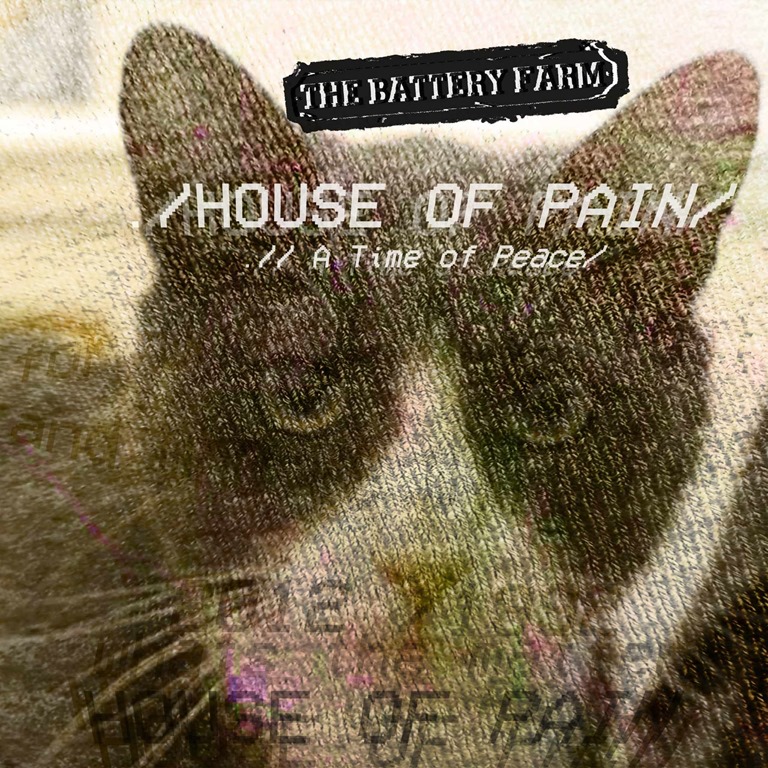
The band exists to rail against the shitness of the world we find ourselves in, and perhaps buoyed by the reception of the album and recent shows, their twelfth single is more amped-up and fiery than ever. ‘House of Pain’ is three minutes of riff-driven fury that blasts in at a hundred miles an hour with a message that needs to be heard. Arguably, that message could be boiled down to the barest bones of ‘fuck this bullshit’, but the expanded articulation is that it addresses ‘the shame imposed on all of us who are scraping by in an ongoing and worsening cost of greed crisis. You do what you have to to survive, and how dare anyone in a position of privilege look down their nose.’

It needs to be heard because, as I was reading only earlier today online in The Guardian, ‘The number of people experiencing destitution in the UK has more than doubled in the last five years – up from 1.55 million in 2017. One million children are now living in destitute homes – a staggering increase of 186% in half a decade.’ That every single supermarket now has a place to donate to food banks speaks for itself; yet our government, whose job it is to protect society’s most vulnerable, simply dispense advice that if you can’t afford a cheese sandwich, to forgo the cheese, and who seem to think that broadband and mobile phones are luxury items the poor should do without, despite the fact it’s impossible to apply for jobs or even maintain benefits without them. The privately-educated governing elite are in the pockets of the likes of the oil industry, and they absolutely fucking hate the poor, and they want you to hate the poor too. And their hateful campaigning and sloganeering is depressingly effective: how else do you explain working-class people voting Conservative? It’s bewildering to think that people in impoverished towns in the north of England would vote for these cunts who’d happily bulldoze every council estate in the country, that they might think that the likes of Bozo Johnson and Richboi Sunak give even a flake of shit about them, let alone represent them – but the increasingly right-wing Tories appeal to the mentality of the impoverished and disenfranchised by apportioning the blame for the state of everything on ‘illegal’ immigrants, who come over here and sponge all the benefits. Stop the boats! Right. Then what?

The Battery Farm are spot on when they describe the current situation in the UK as a ‘cost of greed’ crisis. Everyone who’s already in the money is making on this: banks, oil and energy companies, supermarkets… any increases in costs are being passed directly to customers, and then some, all to protect profits, all to pass on to shareholders, all to give CEOs even bigger bonuses. The injustice, the social division is at a point where something has to give. Sadly, it seems that something is the lives of those at the bottom of the heap.

The Battery Farm can’t change the world, but they can provide a voice and an outlet to the anger at this injustice, and flipside ‘A Time of Peace’ is another full-throttle gritty blast of punk fury, reminiscent of the sound of ‘79/’80 – I’m thinking grimy roar of The Anti-Nowhere League and fellow Mancunians Slaughter and the Dogs by way of references here.

At the time of writing this, four days after release (I’ve been slack / drowning in dealing with everyday life stuff (delete as appropriate); physical copies on 7”, CD, and cassette have sold out, which is a huge achievement and shows just how they’ve built a committed following through a combination of belting tunes and sheer hard slog. This is their strongest work to date.

AA

394506170_667417382037187_39104650144548114_n

Prohibited Records – 27th October 2023

Christopher Nosnibor

The… the… you know? Clicking fingers, gesticulating, waving hands in a rolling motion around your ears. The… thing? The… you know? The thing? The thing!

We’ve all been there. It’s on the tip of your tongue, the fringes of your memory. It hangs like a shadow, a fraction beyond the reach of the active brain. You curse your mind because you know it, and your interlocutor would, too, if only they had a clue what you were on about. The thing. The fucking thing.

The very prospect of reviewing Shane Aspergen’s EP flung me into a spin , because the title tossed me into the frantic headspace in which words run out and everything feels overwhelming, and it’s all down to the title. Because… well, that’s the thing. What is the thing? And how do you even begin to describe it?

This EP, we’re told, ‘comes as a precursor to a forthcoming album (tentatively titled Emblems of Transmuting Heat) that was finished a few months prior to the conceptualization of this four-track EP. While recent in its development, the music originates from the same period of transition, during which Shane Aspegren relocated from Hong Kong to Los Angeles.’

It feels like the sonic articulation of transition, of movement, and it feels transitory, ephemeral, fleeting moments, some of which leave an indelible imprint, others which fade instantly or barely even register in the moment. Precisely how or why this is, it’s hard to pinpoint with any kind of exactitude. But then, that feels like the point: the pieces are impressionistic sound collages. It’s a molecular morass of clamorous, scrabbling treble and scratching insectoid busyness and bubbling synthines which dissolves in a fuzzy hum and clatter; a cross of Gregorian chant, ambient, experimental electronica, and dance.

Aspegren explains how the title track ‘is a complete reworking of a different piece [he] started in 2022. “I completely abandoned the original in its initial form — the raw vocalizations were the only thing that I wanted to keep when I went back to revisit those sessions. The voices were recorded as a form of cathartic release during a period of time that I was heavily exploring voice and frequency as a form of somatic connection and release. In the end, this morphed through several different iterations, and finally turned into this version more than a year later, after moving to LA.” The sense of movement here is one of a forward propulsion, which comes largely from the subtle but insistent beat.

‘Imaginal Pathway’ is but a brief interlude, as was intended, penned as an interlude for the Imaginal Pathways app for which Aspegren was the lead artist. It’s a mere minute and a half – of eddying ambience layered with light, hovering drones which bends and droop amidst birdlike tweets, over which a narrative – seemingly lifted straight from an education video – explains the workings of the ear, a ‘magical’ organ ‘which transports perceptual vibrations from the physical realm into the experiential’.

The final track, ‘iTiS’, is the most recent composition, which came about following his relocation, with Aspegren recounting “It started with a Moog Subharmonicon improvisation and turned into a slow build of layers and structure. Strangely, it feels like the oldest track to me… like I made it in another era of my life.”. It certainly sounds like music from another era, too, the contemporary kit very much harking back to more vintage analogue sound. There’s a soft, squelchiness to the bass tones, a blurring edge to the broad space-filling sweeps. But perhaps sometimes the equipment determines the mood and the sound more than the creator. Either way, it makes for a fitting close to the EP – for having brought the listener through a journey of upheaval, of uncertainty, of feeling unsettled, it ends with what feels like a sense of final settlement, of resolution. And end, but also a new vista, and the possibility of a new beginning.

AA

PRO065_art

Two years after Time to Die, French composer Christine Ott returns to Gizeh Records with her fifth album, Éclats (Piano Works), a collection of twelve pieces for solo piano, twelve impressionistic miniatures, instrumental and cinematic fractals celebrating the beauty of life.

‘Étreintes’ is available on all streaming platfroms now and Éclats (Piano Works) is out November 3rd.

Listen to ‘Étreintes’ here:

AA

a1066363075_10

New Heavy Sounds is stoked to announce a new multi-record project by Cold in Berlin The Wounds.

Consisting of an EP, The Body is the Wound, and an album, due in 2024, The Wounds is a musical vade mecum of what is to come in a fresh era for the band.

Vocalist Maya explains: “The Wounds started as an idea about bringing together stories of loss and the idea that wounds can be growth, healing and that slow burn you use to fuel other fires.”

The Body is the Wound EP launches the next chapter in CIB’s journey.

Released on 19th January (New Heavy Sounds), the four tracks cover diverse musical ground, drawing ideas from krautrock, post-punk and doom, but always with the requisite  amount of weight. 

Watch the video for new single ‘Dream One’ here:

AA

QmYmfrwQ

7th October 2023

Christopher Nosnibor

West Midlands post-punk trio , The Glass House Museum, comprising Joe and Jon Cummings (both vocals and guitar) and Lee Meadows (programming and bass), have been releasing music since 2017, but ‘The Committee’ is their first new material since the mini-album Artifacts in 2020.

It begins with some dark atmospheric grumbling, some gloomy bell chimes and squawks, presumably the menacing cries of the vultures mentioned in the song’s chorus, and also featured on the cover art. And, naturally, the collective noun for vultures is a committee. Despite this literal referencing and representation, it’s apparent that the song’s meaning is truly somewhat rather more figurative: ‘Tread careful, stranger,’ is the caution which starts the song’s lyrics.

With the sequenced rhythm section, they hold the solid core groove tight, giving it that quintessential goth vibe.

Over the years, I’ve witnessed many detractors – and even fans – ask why bands like The Sisters of Mercy don’t get a drummer. There are numerous reasons why they don’t, won’t, and never would, but the main one is that the drum machine is a defining feature of the sound of that particular strain of post punk which came out of Leeds in the early 80s. That hard, relentless beat, paired with a bass that followed it, bam-bam-bam-bam, overlayed with guitars, edged with a metallic clang and shrouded in chorus and reverb created a perfect tension that isn’t really like anything else – and this is why it’s provided the blueprint for so many bands over the last forty years.

But to dismiss it as being ‘derivative’ would be to miss the point: this is about heritage and lineage, and also there’s a certain degree of knowingness to making references that are, in some ways, I suppose, tribal in their function. If you know, you know, and you’re one of ‘us’. And so it is that the lettering on the cover is lifted from Siousxie and the Banshees’ A Kiss in the Dreamhouse, offers another referential insight into the band’s stylistic touchstones. The devil really is in the details.

The vocals aren’t of the spiky punkier aspect of post-punk, eschewing the edgy styles of Siouxsie and Skeletal Family’s Anne-Marie Hurst and if anything, are more in the vein of Julianne Reagan in her rockier moments.

But the most significant thing here is that the ingredients are well-blended and folded in together around a decent tune with some sharp energy and a solid chorus, and none of it feels formulaic or ripped off. In short, ‘The Committee’ is in the ‘classic’ style, but with a strong identity of its own.

AA

533356