Archive for June, 2023

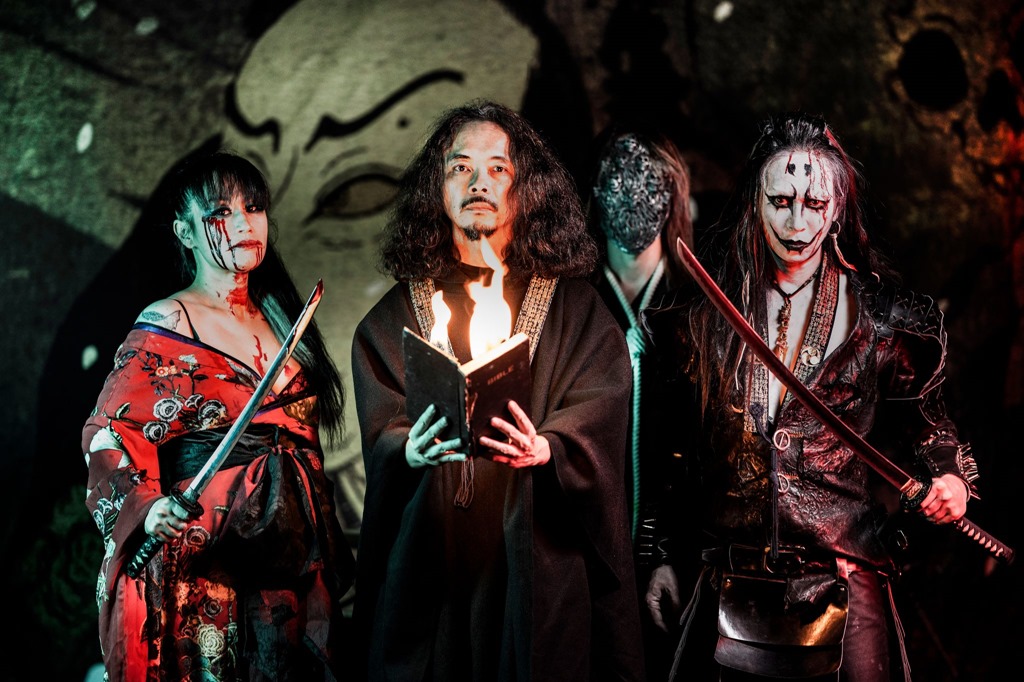
Following the announcement of the band’s new live album, ‘Live: Eastern Forces of Evil 2022’ and first single ‘Mayonaka no Kaii’. The band have unveiled their next track to come off the live album ‘A Victory of Dakini’.

The track is taken from the band’s visionary album ‘Scorn Defeat’, which the band will be performing in full, later this year at the UK’s Damnation Festival. The track, reminds us of the band’s beginnings and explores their more primitive style that would come to progressive into the fully fledged Sigh sound we know now.

The song details the story of a Japanese goddess ‘Dakini’ that rides on a white fox, according to Buddhist religion. Kujaku-Ou is a Japanese manga published around 1988 – 1991 and in it featured a lot of oriental occultism and were often the inspiration behind Sigh’s early material. Originally Dakiki is a goddess from India that would eat human flesh, however in Japan she is considered to be the goddess of sexual lust.

Mirai elaborates below:

‘A Victory of Dakini" is the opening track of our debut album "Scorn Defeat". I believe the first track of the first album is something special for most bands, and this is true to our case, too. Of course the song is way more primitive and simpler than what we are doing today, but obviously it’s got a magic feeling, which we will never ever recapture. "Dakini" is a goddess riding on a white fox in Buddhism. I wrote this song inspired by a Japanese manga, "Kujaku-ou".

‘A Victory of Dakini’ kicks off the live performance with ominous chanting before Sigh’s signature Death Metal crawl begins, conjuring all manner of otherworldly entities. The song itself is a masterful blend of Japanese culture with angular Death Metal precision, a style that has only been improved upon with each release right up until 2022’s ‘Shiki’.

Watch the video here:

AA

8K0cGLhg

Sigh by POKO

Invada Records – 30th June 2023

Christopher Nosnibor

You know what? This never gets tired. I started reviewing live stuff in the 90s, but it wasn’t until 2008 I started receiving albums for review. Receiving albums ahead of release was a big deal back then: it made me feel somehow special. Advance promos probably meant something more then, on reflection. They would be, more likely than not., a single CD – or even a single-track CD – and my objective would be to get my review out ahead of, well, as many people as possible. It wasn’t so much about generating buzz as feeling a buzz.

I miss the steady drip of CDs and vinyl through the letterbox, although am coming to accept that space is an issue here, and if the endless bombardment of emails with downloads and streams sometimes – often – feels overwhelming, with up to fifty review submissions a day, when I clock a release I’ve been getting excited about well before time, the buzz still hits.

The way albums are released now isn’t quite the same, either: time was when there would be a single or two ahead of release, there’d be reviews and then the album would arrive and you’d have to buy it to hear it. Now, singles aren’t really singles and half the album’s been released on various streaming platforms along with a bunch of lyric videos and ‘visualisers’ (that’s one for another time). But having only slipped out a couple of tracks in a relatively low-key fashion in April and May, this landing in my inbox to download ahead of release, gave me a genuine buzz.

Gas Lit, released in 2021, was a powerful, album on so many levels. As they put it, the album was their ‘fight for Indigenous Sovereignty, Black and Indigenous Liberation, Water, Earth, and Indigenous land given back.’. The Australian duo make music with meaning, and do so with passion and sonic force.

How often do we hear recently that the failings were systemic? Systemic failings in the NHS led to deaths, and systemic failings in the schooling system resulted in kids committing suicide, systemic failings in vetting and so on has resulted in a culture of racism and misogyny in the MET police… daily, we hear or read news about systemic issues. And we know, we know the system is fucked. Not merely flawed: fucked.

And on fourth album Systemic, Divide and Dissolve examine ‘the systems that intrinsically bind us and calls for a system that facilitates life for everyone. It’s a message that fits with the band’s core intention: to make music that honours their ancestors and Indigenous land, to oppose white supremacy, and to work towards a future of Black and Indigenous liberation.’

“This music is an acknowledgement of the dispossession that occurs due to colonial violence,” says Takiaya Reed, saxophonist and guitarist in Divide and Dissolve. “The goal of the colonial project is to separate Indigenous people from their culture, their life force, their community and their traditions. The album is in direct opposition to this.”

Divide and Dissolve represent a people for whom the system hasn’t failed: it was always pitched against them, and succeeded in stripping Indigenous people of everything. What kind of system is it where this brutal debasement is a success? A capitalist one, of course.

Systemic certainly isn’t a flimsy pop record, then. But it is inherently listenable and does unashamedly incorporate pop elements, and this dynamic only serves to heighten its sonic power.

‘Want’ lulls us into a false sense of tranquillity, a looping motif pulsating over grand drones: it’s quite pleasant, even. And then ‘Blood Quantum’ hits: after a delicate, supple chamber-pop intro, the guitars crash in and it’s like a tidal wave. It’s a slow-stomping riff that grinds hard, and the textures are thick and rich.

The setup is simple, and the guitar and drum combo has become increasingly popular in recent years – but for all of its limitations, it also has considerable versatility, and Divide and Dissolve exploit and push those parameters by exploring the interplay between the two instruments when played slow and heavy and at high volume. And so it is that without words, their songs convey so much.

Photo_by_Yatri_Niehaus_516198

Photo by Yatri Niehaus

There’s almost something of a Duane Eddy / Western twang to ‘Simulacra’ before it explodes in a thrashing flurry of distortion and pummelling percussion. But for all the sludge-laden noise of ‘Reproach’, there is a grace and beauty about it, too, and this is what differentiates Divide and Dissolve from their myriad ‘heavy’ contemporaries: they imbue their songs with a palpable emotional depth. ‘Indignation’ begins with trilling woodwind, and possesses a wistful, aching jazz vibe before the thunderous deluge of guitar and drums heaps in. Featuring a spoken word recital from Minori Sanchez-Fung, ‘Kindgom of Fear’ is the only one of the album’s nine tracks to feature vocals: it’s a more minimal musical work which allows the words to stand to the fore, supplementing them with atmosphere and adding further variety and contrast to the album, notably ahead of the ragged riffery of ‘Omnipotent’.

The tranquil strings of ‘Desire’ provide the perfect bookend to stand opposite ‘Want’, and their synonymity is highlighted in this way. To want, to desire, something – something back – seems reasonable, should not need so much fight… but while there is the need to fight, Divide and Dissolve make protest music. It may not be protest music in the way many of us recognise it, but slogans and punk and folk are tired and worn, and on Systemic, Divide and Dissolve speak in their own strong and powerful way.

AA

644835

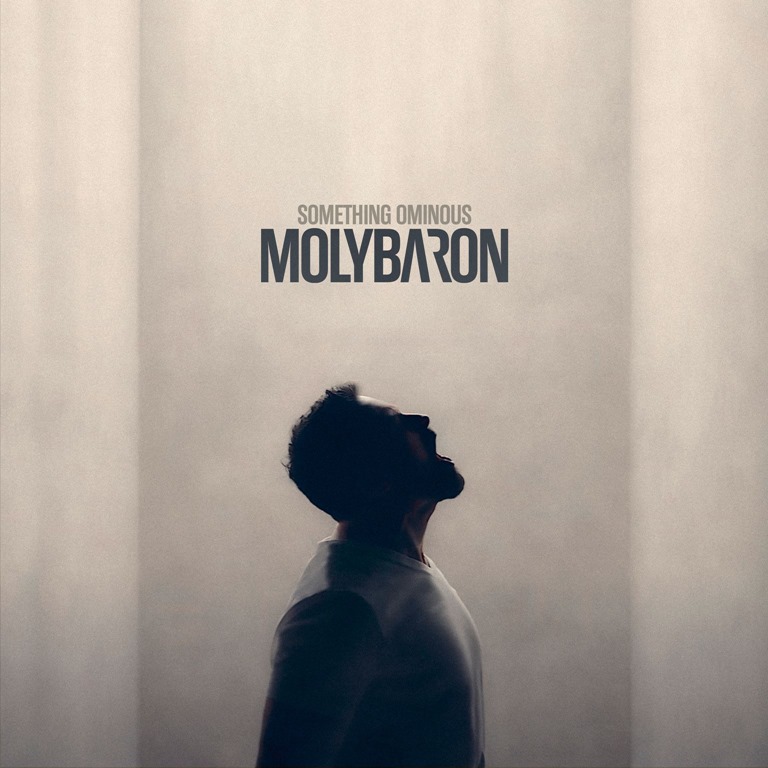
French/Irish alternative rock-metal outfit Molybaron, known for their energetic, hard-hitting sound, return with their most intense track to date, the aptly titled ‘Something Ominous’.

‘Something Ominous’ is an explosive, riff laden track, describing a fabricated invasion unleashed upon an unsuspecting public. Designed to instil widespread panic, meticulously orchestrated events are broadcast, creating a convincing illusion of extraterrestrial aggression, strategically deploying staged encounters and simulated attacks. As fear spreads, the population succumbs to the manipulation, allowing the state to exploit the chaos and implement their agenda of control.

Check out the video for ‘Something Ominous’ here:

AA

c2Twxc9w

14th July 2023

Christopher Nosnibor

I could harp on about how I was introduced to Cinema Cinema way back some time around 2012 when I was writing for fringe magazine Paraphilia, and the fantastic interview I got to do with Ev Gold on the release of their second album. But my recollections for dates are hazy, and no-one really cares.

Cinema Cinema simply don’t do predictable. The only thing you know to expect for sure is that whatever they do, it’ll be different. There are few bands so committed to the pursuit of doing whatever the fuck they please. While many will find a sound a adhere to it, or otherwise make a marked shift in direction having worn a template out, Cinema Cinema push themselves with each record to be different, and to see just how far their can expand. They describe themselves as art-punk, and have been described as ‘experi-metal’, while venturing deep into the terrain of avant-jazz on their two collaborative releases with Matt Darriau of The Klezmatics (CCXMD (2019) and CCXMDII (2021)). There is something uplifting to see a band who refuse to be defined or limit themselves: Cinema Cinema are whatever they want to be.

For this latest outing, their seventh album, the New York cousin duo is again trio, this time featuring the mighty polymath percussionist Thor Harris. Having witnessed Harris performing with Swans, he is an immense presence onstage – and that also translates to her performances in general. The man can turn his hand to practically any instrument that can be used for percussive purposes, and he doesn’t just bring percussion, but an impressive collection of synths to the party, marking another substantial shift in Cinema Cinema’s sound on Mjölnir. It couldn’t be much mor dramatic: they’ve not only ditched the free jazz but gone for short, punchy pieces: with the exceptions of ‘Zero Sum’ and ‘Voiceless Idaho’, the majority of the album’s eight tracks are around five minutes long or shorter. Structurally, then this is different: the last couple of albums featured ten, even eighteen-minute monsters with sub-two-minute interludes. As such, Mjölnir feels more even, more balanced.

It also feels like something of a return to their noise roots, as demonstrated by recent single, the roaringly aggressive ‘War On You’, a driving explosive sonic attack that sounds – quite unexpectedly – quite like The Screaming Blue Messiahs with its thunderous drums and choppy blues-based riff – while at the same time pushing in yet further new directions. And those directions are myriad: Mjölnir is the musical equivalent of an octopus, its tentacles reaching in all directions at once.

But before that, ‘This Dream’ is a warped nightmare of woozy, bending synths, dark drones and twisting discord. There’s a nagging bass groove that sits somewhere between Air’s ‘Sexy Boy’ and Suicide. That probably should not be a statement that even exists, but it’s a measure of Cinema Cinema’s range, and the fact they make it work is a whole other matter. The guys have a rare knack – and that’s an understatement.

‘Zero Sun’’, the first of the album’s sprawlers, — this one clocking in at seven minutes and forty-five – is a beast, with trilling organs and lasers on stun – and couldn’t be much more of a contrast to the chopping, drum and bass0driven blasts that define the album; s sound.

Mjölnir is tense, and Mjölnir is and noisy. There are moments that worder on progressive, but overall, it’s noisy, aggressive droney, and exploratory. It’s not an easy listen: for as much as it’s got name contributors, it’s challenging, antagonistic. No two tracks are alike, and instead the tracks are blurring… ‘Blurring’ is bewildering, and the bleak vocals of ‘Voiceless Idao’ which border on the demented as they scrape across a track that wrestles with itself into crumbling and collapse.

The shrieking cacophony of that last track is particularly hard-hitting, and reminds us of what Cinema Cinema’s recent work have been lacking: riffs. That’s no criticism: they recent works just haven’t been very riffy. But now, the riffs are dank and dense and it’s no hyp to say that Mjölnir finds Cinema Cinema at their absolute peak. This… yeah, this is good alright.

AA

digital_cover_mjolnir

Celestial North released her new single ‘Otherworld’ on Friday. this life affirming and glorious dreamscape is the lead single and title track from her forthcoming debut album ‘Otherworld’- released on the 7th of July 2023.

It was premiered on Chris Hawkins, BBC 6 Music show this week he described it as ‘Stunning. An uplifting, beautiful dreamscape to Utopia and might be the best music you’ll hear this week”.

Hear it here:

AA

a1328765549_16

Louisville KY alt-duo Feral Vices take on abusive religious systems on new single ‘Lock & Key’.

Lead vocalist and guitarist Alexander Hoagland says, “’Lock & Key’ is about the abusive religious systems that I think a lot of us grew up in where leaders were taking advantage of their positions for money, power, sex, or some combination of those. Being in that world, you’re taught that this is a blessing or that is a blessing when in reality you’re being taken advantage of and are forced to experience the evils of it alone because once you start tugging at the strings of that, the whole system falls apart. It’s a very hard and lonely place to be even though you’re surrounded by people and I think that makes it even harder to get out of or acknowledge the reality of. So, this song was my way of talking about that and processing it for myself.”

Watch the video here:

As a two-piece alternative rock band out of Louisville, KY, Feral Vices has created a sound and feel all their own. Drawing from influences ranging from Queens of the Stone Age to Refused to The Jesus Lizard and even The Dillinger Escape Plan, lead singer and guitarist Alexander Hoagland and drummer Justin Cottner bring a feel to the world of two-piece bands not yet well tread. Constantly touring and releasing new music, the prolific duo has earned spots on the stage with bands like Four Year Strong, Microwave, Save Face, and more. As well as having their song "Mass Produce Your Revolution" as the end credits to the Scott Adkins and Ray Stevenson film Accident Man: Hitman’s Holiday, Feral Vices is a band to keep an eye on.

Screenshot_2023-06-09_at_12.00.48_PM

Photo: Riley Aaron (@imrileyaaron)

9th June 2023

Christopher Noosnibor

The fascination with true crime has exploded in the last decade, and it’s hard to know what to make of it. Some true crime documentaries, like Making a Murderer and even The Staircase (the 2018 one, that is) have been hard-hitting and ultimately compelling. But then the dramatisations of not only The Staircase, but also David Tennant playing Dennis Nilsen, feel like perhaps a step too far into the macabre serial killer revelry that saw bands like Whitehouse vilified in the 80s. At some point, serial killers and all the dark gruesome shit that historically was the domain of weirdos and outcasts shot into the mainstream.

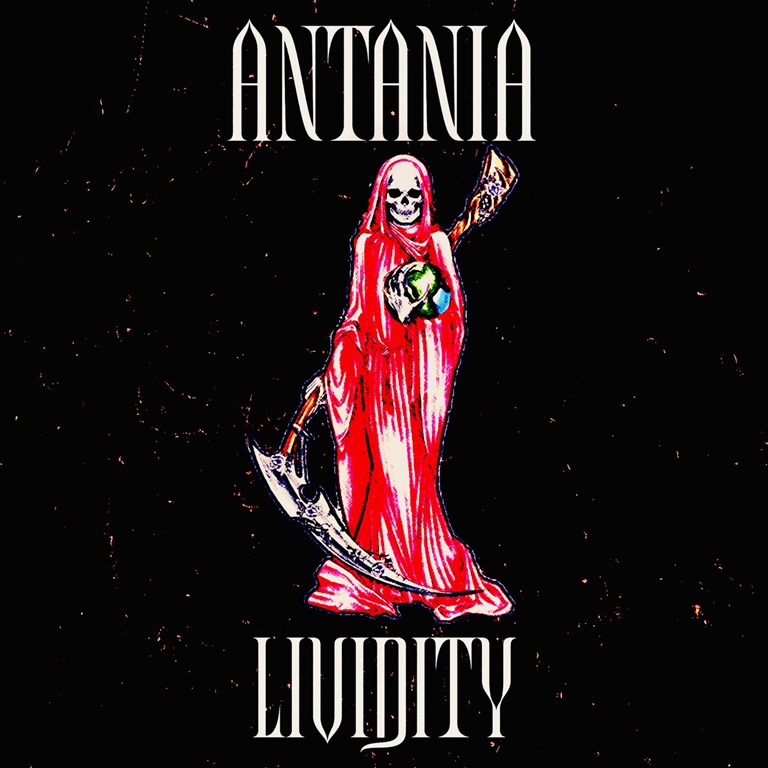
It’s a curious contradiction. While America is immersed in an existential crisis over the right to bear arms, quite literally hundreds of children and teens – and teachers – have been shot dead already this year – and bearing in mind it’s only early June it’s beyond terrifying. The anguish of killings is almost unspeakable… and yet it’s now great TV. What does that say about our society? As the accompanying notes explain, ‘The songs on Lividity were written right from true crime stories, Each song represents a true story of murder and violence as the Antania duo find their inspiration from real events.’

But then, this doesn’t have to be about sensationalism: the title of Antania’s album is pure Law and Order, and we could reasonably trace a lineage back to Ed McBain’s novels of the 60s, which saw pulp pave the way for the birth of the procedural crime novel.

And with this release, they promise a set that ‘mixes a “doom bass” sound with acid metal, for a ‘a slow, rhythmic bass-heavy release’. And that is precisely what they deliver, with ten tracks of rapid-fire drums and gnarly darkness bashing through mangled samples and snarling, swampy synths.

The samples on the first song, ‘3 Days’ are culled from recordings of Angela Simpson, who openly admitted to the torture, murder, and dismemberment of her wheelchair-bound victim: “I beat him to death… I killed him and cut him up,” Simpson told 3TV in a jailhouse interview shortly after her arrest in 2009. Hot on its dingy heels lands ‘Antania’, and it’s got that back metal sound to it, grainy, gritty, as if recorded on a 90s Walkman from the room next door.

This kind of production makes sense at times, but at others – at least for me – it doesn’t so much. Yes, to obfuscate the details creates an intrigue, and imbues the recordings with a quite literal obscurity. But if Bathory created a gnarly template that ploughed the deepest subterranean depths to drag the burning coals of Satan’s soul from the bowels of hell, most of those who followed in their grim wake have simply mined the seems of unlistenability.

The heavily processed vocals on here, which are so OTT cliché ‘scary’ that they actually emerge on the other side to be genuinely scary, are paired with swampy synths and creepy extranea. There are even some riffs happening here, as on the churning grind of ‘Angels and Demons’. It’s utterly fucked up and tormented, the sound of a soul in torture. There’s o clear indication, however, of what each of the individual tracks were inspired by. It’s a shame, because although Lividity is about the blacker than black atmosphere., given the context, it would be interesting to know whose vocal samples occupy the various songs, and which cases the songs are inspired by. I daresay there are clues for the hardcore true crime fanatics, but the rest of us would like to feel included, too.

That said, there aren’t many points of entry into what is a difficult and utterly brutal album. Every track feel like the soundtrack to the goriest, bloodiest, most brutal murder ever. Every track feels loser, slower darker, heavier, gnarlier.

‘August’ plunges yet deeper, darker depths, and Lividity just keeps on getting nastier and nastier. From whichever perspective you view it, it’s not a pleasant album: as the songs succeed one another you feel the life slowly ebbing from you, as one by one they pound away without mercy. You will it to stop, but no: Antania keep on bludgeoning away until you’re beaten, your head lolling with exhaustion.

As I felt myself being battered, tortured, by this most brutal racket, I felt myself sag, and also recalled the earlier days of the internet – specifically, the discovery of sites like gruesome.com where you could find a full reel of film of pics taken by a couple who had dismembered the body of the woman’s husband and posed the body parts to show him picking his nose and the like.

There’s little need for crime fiction when true crime is this sick, and Antania provide the perfect soundtrack to this gruesome shit.

A

AA

a3172920995_10

Consouling Sounds – 26th May 2023

Christopher Nosnibor

Size matters. Or at least, scale does, if you’re measuring epic. You can’t do epic by halves, and that’s a fact. And when an album weighs in with just five tracks but has a running time of almost forty minutes, you know you’re in proper epic territory (and that it certainly isn’t an EP masquerading as an album). And this is one hell of an album, and it goes beyond epic.

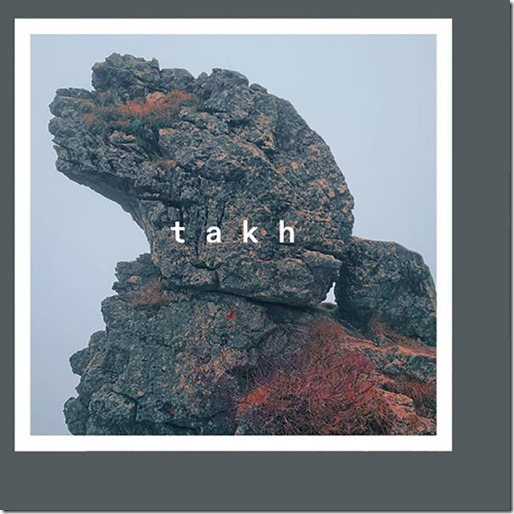
As the bio explains, TAKH emerged from ‘The fruitful collaboration between The Black Heart Rebellion and Echo Beatty’s Annelies Van Dinter on the People album was the beginning of a new musical story. After the end of TBHR Alexander, Annelies, Emeriek and Pieter went deeper in their quest to write music reflecting the true emotions of the musicians. After about one year of free improvisation, TAKH created something truly unique. The idea was very simple: to release the result of the collaboration without pre-orders and announcements…’

There is absolutely nothing out there on-line which provides a precursory listen to this album, and that in itself is beyond rare in an age when bands – and labels – hype releases to the nth degree. More common is that you’ll have heard every track weeks before the release, and this makes TAKH’s stealth approach all the more welcome. It takes us back to the days of before the Internet, when you’d read about a band in Melody Maker or hear about them from a mate or on the sixth form stereo – the means by which I introduced my friends to / tortured my friends with Swans and Godflesh during breaktime.

Swans are one of the bands listed as influencing TAKH, and it shows in the compositions, and to some extent, the musical arrangements, not least of all the way the final track echoes latter-day Swans in their hypnotic, immersive swells of sound.

‘Salomonne’ enters in a swathe of ancient Eastern mysticism, long, trilling vocal drones and esoteric spiritualism which sets the atmosphere before the arrival of the drums, bass, and rasping vocals. In combination, the tension builds as does the sense of vastness, and you feel an endless desert and sky spreading before you, extending infinitely to the vanishing point at which the two meet and fade in a haze. It slowly trudges, shimmering, simmering, and burning, to its weighty climax. It’s metal, but not in a particularly recognisable form.

The percussion dominates the droney ‘Unabashed and knowing’: if The Cure’s Pornography comes to mind, it’s a fair comparison, but this actually feels more like The Glitter Band paired with Joujouka and the triptastic done of a digeridoo. Around five minutes in, seemingly from nowhere, rising like a desert storm, the dual vocals rise up climactically to deliver something resembling an impassioned chorus, even bearing a semblance of a hook, before being drowned in a rising wave of sound: part shoegaze, part eddying panic and a sense of unfamiliarity, and all propelled by a relentless percussion., before ultimately fading to a heavy elongated drone.

The album’s shortest song is also perhaps its most conventional: a crawling bass and plodding beat pin ‘Drôme’ together, and the vocal passages are intersected with a chiming nagging guitar motif before the tension breaks – or more cracks a little – around four and a half minutes in. Perhaps it’s just me and I’m a little cracked, but the break into the light makes you want to cast your eyes to the skins and open our arms, not necessarily expecting a response but to simply absorb.

‘Azure Blue’ has a warped sea-shanty feel to it, amidst the crushing post-rock crescendos which surge and splash. Spread out over almost seven-and-a-half minutes, it’s a beast, albeit one that’s subdued and contemplative.

The album concludes in reflective style, with the ten-minute ‘Hair of a Horsetail’. Captivating vocals, at once ethereal and earthy, quaver over a slowly wavering drone. It’s a duet of sort, and one which delves into deep and ancient spirituality. The bass rolls in around the midpoint, from which the song builds, making for a climactic closure to an album that’s powerful, while often understated. It has so many levels, so many layers, so many depths; at once uplifting and exhausting.

TAKH - S T Cover

Music Information Centre Lithuania – 7th June 2023

Christopher Nosnibor

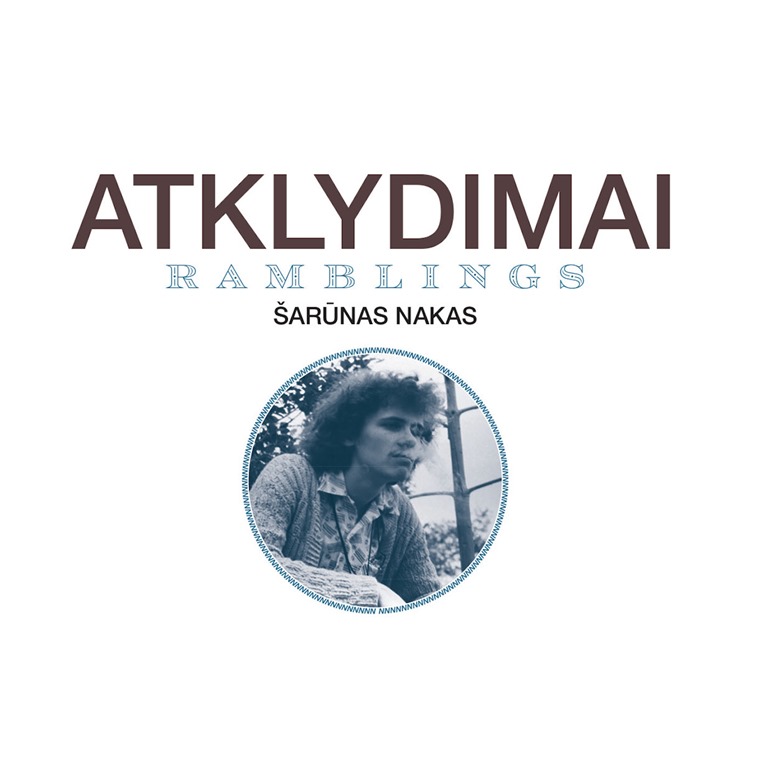
This is one of those releases where the context counts for almost as much as the content: ‘The cycle of nine vocal, instrumental, and electroacoustic pieces, Ramblings, a large part of which was written as music for the scandal-plagued drama play Literature Lessons by Jonas Vaitkus, was recorded in 1985 in the legendary Vilnius Record Studio, which at that time was very open to experiments. The recordings were made using a multi-channel tape recorder, a borrowed KORG synthesizer, saxophones, a prepared piano, a cello turned into a noisy bass, percussion, and bells. The composer used all the texts and the title for the cycle from the poetry collection Ramblings by Almis Grybauskas. According to the composer, this poetry is minor, cold, and laconic, like his favourite cool jazz style, while the title Ramblings itself raises a lot of questions, is a bit provocative and irritating.’

‘Provocative’ and ‘irritating’ are appropriate enough adjectives, it has to be said. Indeed, ‘ramblings’ suggest something unfocussed, incoherent, unstructured, and this is a wild ride which flies off on tangents every which way. Yet while the shapes of these compositions may be loose, there’s a definite sense of purpose, not to mention an atmosphere about them.

The further story is significant to this release, and it provides not only a fascinating insight into the way politics can often be the enemy of the arts, but also freedom of expression more broadly. It’s also a tale of underground rebellion, defiance, and strength of will.

‘After the premiere of the performance, the composer could have had a very bad ending – after “terrible” reviews and complaints appeared in the press, the Soviet censorship ordered the performance to be banned and the creators punished. Even the head of the composition department at the time suggested that this “cacophony” should be given the lowest grade, condemning Šarūnas Nakas to be expelled from the conservatoire, which would have meant being conscripted into the Soviet army during the Afghan war. Fortunately, professors Julius Juzeliūnas and Bronius Kutavičius saved their student.”

I mean, it is a “cacophony”. Ramblings is a jumbled mass of layered vocals, atonality, and exploratory jazz, the kind of jazz that prioritises performance over listenability, the kind of jazz that’s about the experience, the kind of jazz that’s interested in the relationship between notes and isn’t afraid of dissonance, discord, variable time signatures. At times tranquil, at others ominous and abstract, there are parts of Ramblings which are wild, chaotic, completely unconstrained. This is, of course, just how it should be.

The story continues as to how thew work escaped destruction at the hands of its persecutors: ‘It was the time of cassette tape recorders, and music was quickly reproduced, so Ramblings began its own journey, playing as background music on radio and television but never being published as a complete cycle. Later, only one piece called ‘Merz-machine’ was singled out from the cycle as an example of Lithuanian experimentalism and released in 1997. It then underwent a kind of renaissance: versions were created for different ensembles, including the Czech avant-garde rock orchestra Agon and the London piano sextet pianocircus. The sextet has performed the work more than 100 times in dozens of countries.’

It’s fascinating how an obscure musical work can infiltrate so many different channels, and effectively exist in a life entirely removed from itself. Consider the fact that parts appeared, internationally, unknown and uncredited. This isn’t only the most remarkable example of subversion for a supposedly ‘banned’ work, but also demonstrates how music can take on a life if its own. ‘Merz-machine’ is, without doubt, an outstanding piece, challenging and discordant as it is, but it’s only partly representative of the album as a whole: it’s certainly by no means background music.

The fact of the matter is that there is no one pierce on Ramblings which is really ‘representative’. Ramblings is truly eclectic, and odd, and that’s its design, its objective. From a critical perspective, it’s almost immaterial whether I like it or not – and I certainly like some pieces more than others – but it’s not aiming to please, and certainly not aiming to please all of the people for the duration. Despite being almost forty years old, Ramblings sounds contemporary – and still sounds challenging. That’s timeless.

AA

MICLLP004_front