‘Move Fast’ is from the open-ended Argonaut album Songs from the Black Hat.
It is Gen X Silicon Valley slogans, 80’s pop synths and 90’s noise.
The video follows the adventures of some hapless microserfs in an office pod near you.
We’re reminded of Douglas Coupland, and also a time pre-pandemic when offices 9-5, 5 days a week were the usual. It’s a fizzy li-fi indie tune: check it here:
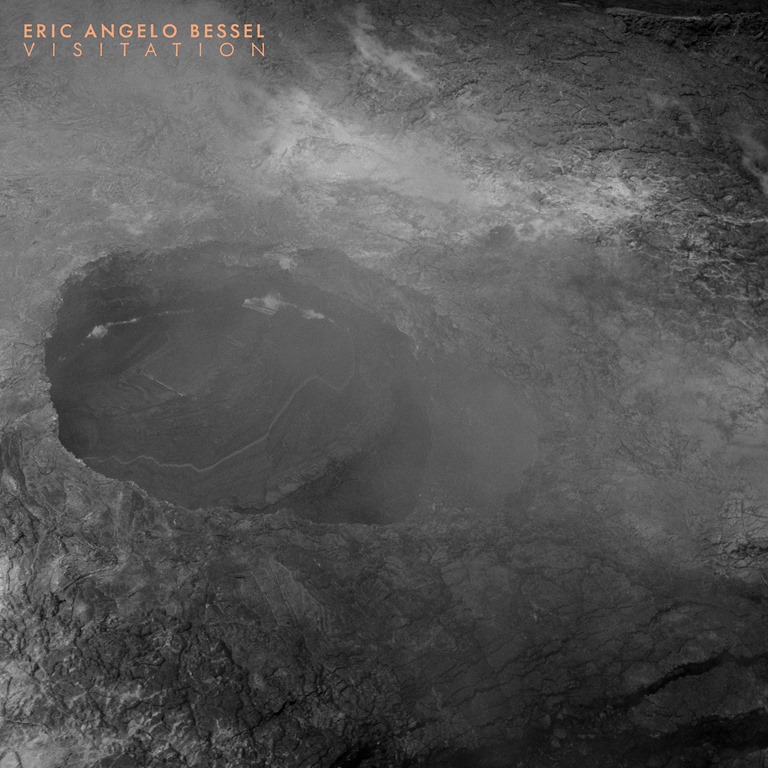
It’s been a while since I’ve seen it, but the title of Eric Angelo Bessel’s new single reminded me of the Jack Black ‘buddy comedy-drama’ (as Wikipedia would have it) from 2008, which reminds us that nostalgia for VHS and film rentals hit pretty swiftly after their demise, in real terms. In fact, here in the UK, Blockbuster creaked on with DVD rentals and secondhand sales into 2013. But as an article in The Independent in January 2013 reported, ‘While the North Finchley store had a poor selection of DVDs, the big surprise was that it was charging £5 to £8 for second-hand films to buy, so I bought brand new ones at HMV instead.’ As such, it was clear that times had changed and the world had moved on long before the last rental stores closed their doors.
But the idea of rewinding – something intrinsically connected to the age of the cassette, be it audio or video – is one which is an instant cut to nostalgia, and one which reminds us that thee one thing you can’t rewind is life: there is no rewind on time, and the past is past.
‘Kindly Rewind’ is a slow-swelling deep ambient piece that isn’t about nostalgia for the 80s or 90s, but instead drills deeper, venturing back to prehistoric oceans as its backward surges evoking images of slow evolution and microcosmic growth beneath the oceans. Sedate and supple, this is delicate and spacious and slightly disorientating. It’s also measured, musically articulate, and resonates unexpectedly. It’s a work of quality.
‘A Classic Dictionary of the Vulgar Tongue’ is the first video from Now That We Are All Ghosts, the second album from Milwaukee’s Resurrectionists.
The project was self-engineered, recorded and produced; it was mastered by Bob Weston at Chicago Mastering Service. The album features nine songs of Doom Chamber-Americana, all powerfully cinematic and ripe for video treatments, leading the group to take the unusual and ambitious step of commissioning videos for every one of them. Now That We Are All Ghosts, will be released on Seismic Wave Entertainment on 12” vinyl LP, CD and Digital formats.
Watch here:
AA
The new album sees a marked change in the band’s direction and stylistic range. Resurrectionists were originally formed by lyricist, guitarist and banjo picker Joe Cannon and bassist Jeff Brueggeman from the locally revered trio WORK with drummer Josh Barto and pedal steel player Gavin Hardy. On the group’s 2019 debut album What Comes In — a collection of everyman trouble tales delivered with dark wit and piquant Midwestern tang — Gavin’s mournful, swelling steel work helped steer songs into Gothic-country territory.
On Now That We Are All Ghosts, Hardy has been replaced by multi-instrumentalist Gian Pogliano. Gian’s penchant for more adventurous, wider-ranging sonic discourse inspires Resurrectionists to branch out into unexpected stylistic experimentation. The material here is informed equally by the meticulous melodic abstractions of pre-punk icons Television as the Old Weird American sounds of Dock Boggs and Bascom Lamar Lunsford. The album’s opener ‘A Classic Dictionary of the Vulgar Tongue,’ for instance begins as a mournful, banjo-driven meditation but ends as an apocalyptic howl, filled with shrieking banjo feedback – ideal support for Cannon’s writing and singing.
Joe’s lyrics on Now That We Are All Ghosts are both primal and poetic and he sings the hell out of them with a tent preacher’s conviction and a working-class punk’s urgency. Lines that seem to squarely address experiences of the COVID-19 pandemic were actually influenced by reading Thomas Mann’s Death in Venice and The Magic Mountain pre-2020, married to strange ruminations concerning Walt Whitman’s death mask.
It all adds up to a collection of life-or-death songs that are incredibly haunting, daunting and visceral.
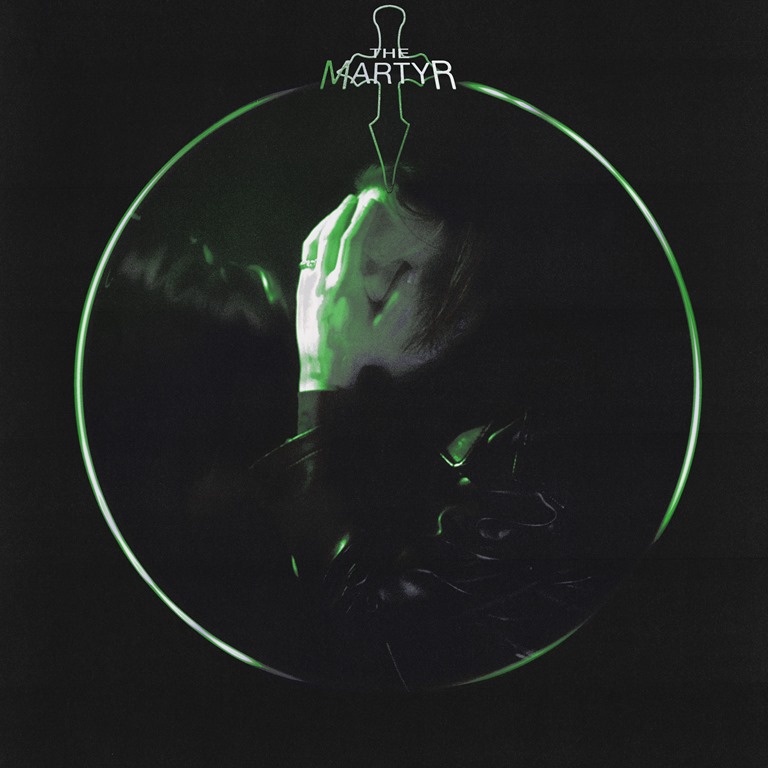
There’s some debate as to whether or not they really ‘get’ ‘goth’ Stateside, favouring more vampire / horror cliché stylings to anything that defined the disparate ‘movement’ as it emerged from the bleak urban sprawls of England in the early 80s as a darker strand of post-punk. Admittedly, the fans were always the ones with the greater shared affinity rather than the first wave of bands, none of whom recognised the ‘goth’ tag and the ones still going still don’t to this day, but still, quite how or when it morphed into genre let alone a stereotype is unclear.
The Martyr’s sound is certainly rooted more in the UK post-punk sound than anything else – brittle guitars and a thudding drum machine call to mind Alien Sex Fiend, and all crunched into just two minutes and thirty-eight seconds – but at the same draws on dark electropop and dance elements – a dash of Depeche Mode, a hint of dark disco – to create something that’s both spiky and danceable.
Lyrically, it’s serious but at the same time isn’t too serious, and it’s certainly not corny or cliché, and if ‘My Friends Look Funny’ employs a number of common stylistic trappings of the hi—NRG dance end of contemporary goth, it’s different enough to be worth a listen.
SWANS have announced details of their sixteenth studio album, The Beggar, due for release on Mute / Young God Records (N America) on 23 June 2023. In addition, Swans have announced further dates for a tour across the UK, Europe and North America – full details below. The Beggar will be released on double vinyl in a brown chipboard sleeve with a download card for accessing an additional 44 minutes of music (also included on the album’s CD version), as a double CD in a brown chipboard digi-pack, as well as digitally.
Listen to the first track from the album, ‘Paradise is Mine’:
SWANS LIVE DATES – 2023
20 May – Leipzig DE, UT Connewitz – SOLD OUT
21 May – Poznan PL, CK Zamek – SOLD OUT
23 May – Katowice PL, Kino Teatr Rialto – SOLD OUT
25 May – Zilina SK, New Synagogue
26 May – Ljubljana SL, Kino Siska
27 May – Innsbruck, AT, Heart of Noise Festival, Treibhaus
29 May – Bologna IT, Teatro Duse
31 May – Lyon FR, Transbordeur
2 June – Barcelona ES, Primavera Sound Festival
4 June – Lisbon PT, Culturgest – SOLD OUT
5 June – Lisbon PT, Culturgest
6 June – Faro PT, Teatro Das Figuras
9 June – Madrid ES, Primavera Sound Festival
11 June – Athens GR, Vraxon Theatre
13 June – Thessaloniki GR, Moni Lazariston
15 June – Antwerp BE, Bourlaschouwburg
16 June – Utrecht NL, Hertz Theatre – SOLD OUT
11 Aug – Brighton UK, St George’s
12 Aug – Manchester UK, Albert Hall
15 Aug – Newcastle UK, Boiler Shop
16 Aug – Glasgow UK, St Luke’s
18 Aug – Bristol UK, Arc Tangent Festival
19 Aug – Leeds UK, Belgrave Music Hall
21 Aug – Dublin IE, The Academy
23 Aug – Norwich UK, Waterfront
24 Aug – London UK, Troxy
26 Aug – La Tour-De-Peilz CH, Nox Orae Festival
2 Sep – Dallas TX, Granada Theater
3 Sep – Austin TX, Paramount Theatre
7 Sep – Phoenix AZ, Crescent Ballroom
8 Sep – Los Angeles CA, Lodge Room
9 Sep – Los Angeles CA, Lodge Room
12 Sep – San Francisco CA, Great American Music Hall
13 Sep – San Francisco CA, Great American Music Hall
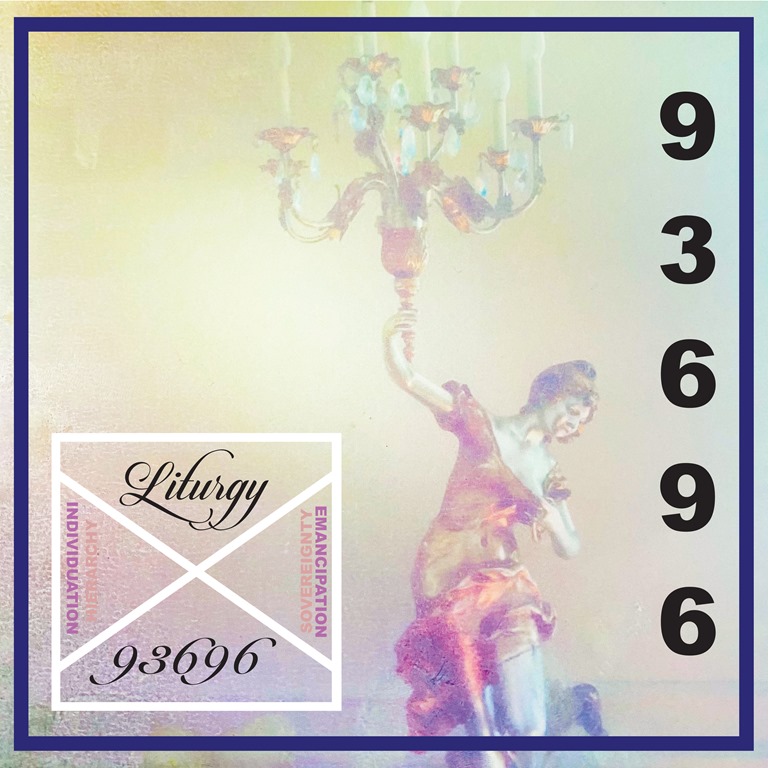
Wikipedia, and most other sources for that matter, will tell you that ‘Liturgy is an American black metal band from Brooklyn, New York’. The band’s own bio, which explains how their brand of ‘“transcendental black metal” exists in the space between metal, experimental, classical music and sacred ritual’ and that ‘The band is simultaneously a platform for fine art and theology’ is rather more illuminating in explaining how they have vastly expanded their horizons and those of the genre to create a form which is truly unique.
93696 is very much a concept-based work, which is best explained by quoting: ‘93696 is a number derived from the religions of Christianity and Thelema, a numerological representation of heaven, or a new eon for civilization. Hunt-Hendrix composed the album as an exploration of eschatological possibility divided by the four “laws” that govern her own interpretation of heaven, “Haelegen”: Sovereignty, Hierarchy, Emancipation, and Individuation. These laws constitute the four movements of 93696 which act as dramas all their own within the framework of the record.’
And what a record. ‘Epic’ barely touches it. It’s immense in every way, not least of all duration, with fifteen tracks spanning the best part of an hour and a half, this is expansive on a scale akin to SWANS (who they’ve previously supported). It’s also every bit as dynamically charged as latter-day SWANS albums, with tracks anything up to a quarter of an hour in length powering though a succession of crescendos, via sweeping choral soundscapes.
‘Djeennaration’ packs everything in early, presenting eight-and-a-half minutes of frenetic fretwork and thunderous percussion, over which vocals switch from angelic to demonic and back in the blast of a beat. It’s powerful, and quite bewildering in both its force and cinematic scope.
Done differently, this could feel overlong and pretentious, but the execution is so precise and the great ambition so focused on realisation that everything feels remarkably organic and despite making gigantic leaps between passages, changing tempo and tone here, there, an everywhere, it flows. Shuddering slabs of power chords that crunch like quartz while blasts off pure noise tear the air, but as ‘Haelegen II’ shows, with the incorporation of piano, there’s so much more texture and detail than plan fast-as-fuck fret attacks – then, from out of nowhere, things take a turn into folksy post-rock.
The savage squall of ‘Before I Knew the Truth’, released as a single a few weeks ago distils the potent force of the entire album into four and a half flooring minutes. There are some brief – and strange – moments of respite, such as the quavering woodwind tones of the brief interlude that is ‘Red Crown II’ and the delicate keys of ‘Angel of Emancipation’, and they’re most necessary, as the majority of 93696 is a force beyond nature.
The fifteen-minute title track is nothing short of an absolute monster, and as much as it’s n obliterative squally, it’s also a dynamic and wide-ranging sonic and cerebral experience, culminating in a vast orchestral sweep that’s nothing short of stunning.
This does feel very much like an absolute pinnacle and a definitive and exhaustive – and, it has to be said, exhausting – statement. Transcendental indeed.
Released at the end of 2022, the latest set from for all the emptiness is only now getting a major push. As the title suggests, this five-tracker is thematically centred around themes of use, abuse, pain and pleasure.
for all the emptiness describe themselves as exponents of ‘futurepop’, which is filtered with a range of other genres like 90s industrial rock to glitchcore, ebm, and more.
Musically, the title tracks is very much in the vein of early Nine Inch Nails – which in turn took cues from Depeche Mode when they started to explore fetishism circa 86 – but the songwriting style is more akin to PIG, and mines the catchy slogan-style hook favoured by Raymond Watts. But for all of the sweat and sleaze, there’s something curiously proper about this – specifically the enunciation of the lyrics. It’s particularly curious because Jonathan Kaplan – who records as for all the emptiness – hails from Ontario, but sings with preppy received pronunciation English. And so – my brain being prone to presenting images in response to sounds – envisages a Victorian gentleman with a handlebar moustache in a wrestling leotard as he sings of being ‘restrained and dominated’. Well, it’s well-known that for all of their straight-laced appearances, the Victorians were kinky buggers, and equally, it’s the public school types who are more likely to be into ‘alternative’ sexual proclivities in modern society.
It’s by far the most immediate track of the set, as the EP veers sharply in a more industrial dance / cybergoth direction.
‘dead inside’ is overtly dance-orientated, exploiting all of the classic breakdowns and drops, and goes all-out for the euphoric anthem, which contrasts with the hook ‘please forgive me as I die, I’ve always been dead inside’. ‘sell the sins’ is a proper bass-led technoindustrial stomper, while the last track, ‘at the brink’ is more 80s electropop and reveals a more sensitive aspect: it’s the most nuanced and probably the strongest of the collection.
While it does exist very much within the domain of the genres from which it draws inspiration, there’s some interesting stuff happening here, and not just Victorian wrestling.
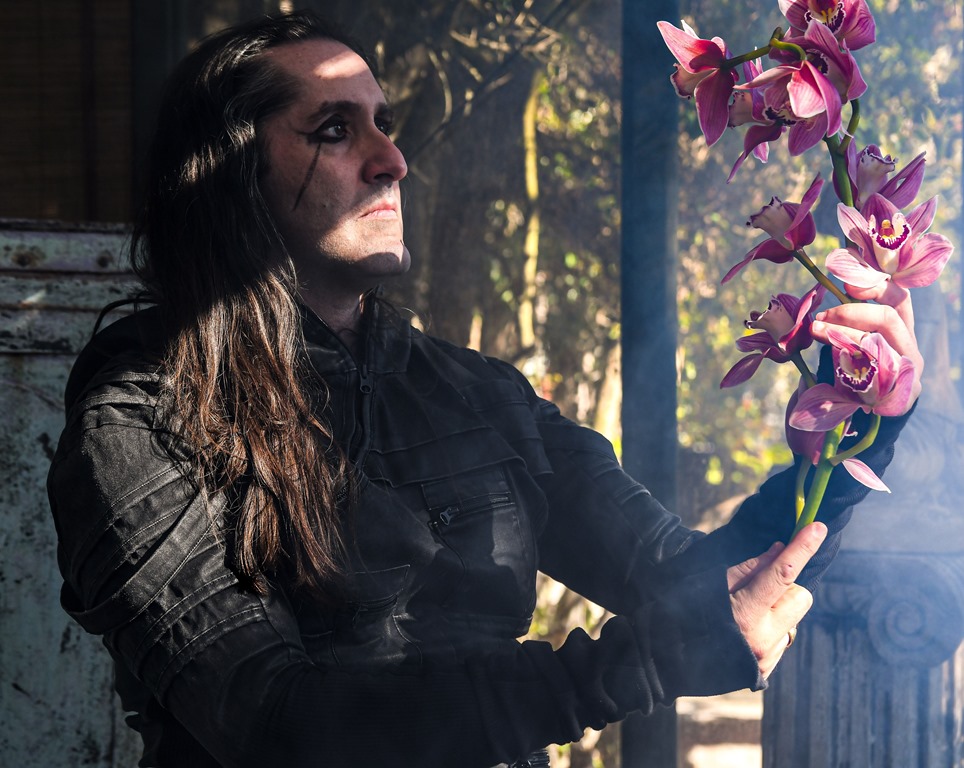
Plant-based metal avant-gardists BOTANIST have seeded the new track ‘Epidendrum Nocturnum’, which is named after a ‘nocturnal’ species of the orchid family (common to South Florida but also growing in the Caribbean and all the way down to Brasil), as the second single taken from their forthcoming album VIII: Selenotrope. The album is planted for blooming on May 19, 2023.
Listen here:
BOTANIST comment: “For VIII: Selenotrope, I wanted to limit myself to only dulcimers, drums, bass and voice”, mastermind Otrebor explains. “For the voice, I decided to have an album without any screams or harsh vocals whatsoever, and instead to rely on the whispers that speak to the listener as messages in a dreamlike state. As the album progresses, melodic choirs are increasingly introduced. These choirs, which have progressed in form and presence since I started Botanist, see their biggest role ever on VIII: Selenotrope. The song ‘Epidendrum Nocturnum’ is one of the album’s darker pieces. Its churning main section gives way to a cathartic landscape in which whispered elements underpin melodic choral paeans to flora that bloom in moonlight.”
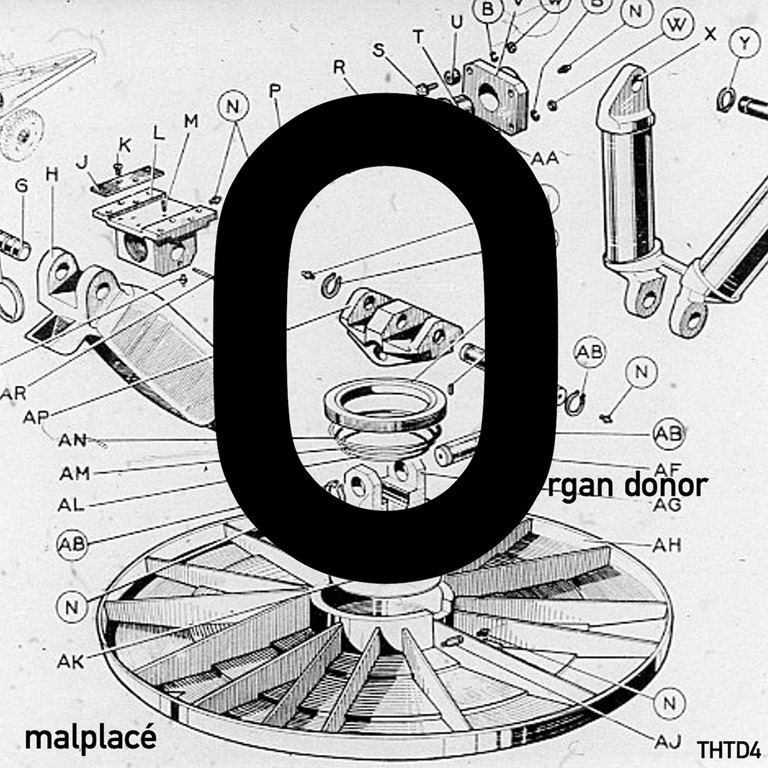
Having frothed with enthusiasm over Mammock not so long ago, I was particularly thrilled to discover Organ Donor, a Swedish/Greek outfit featuring members of Viagra Boys, Grismask, VÖ, Mammock, Angles, Fire! Orchestra, Aurora Ensemble, CBVB and the Mute. Admittedly, I’d expected something more guitar-driven and noisy in the rock sense, but expectations are best when confounded.
Malplacé evolved through improvisation, resulting in what they describe as ‘6 diverse yet coherent tracks, spanning from instrumental kraut, to mystic themes perhaps reminiscent of John Lurie or Loren Connors, to dark, minimal pulsating improv and punkish, full-on, noise outbursts.’ Diversity and coherence tend not to converge too commonly, and in truth tend to sit at opposite ends of the spectrum.
As the rippling vibes and subtly trilling horns of the abstract jazzy post-rock of the first track, ‘A Sleeping Beauty’ meander their way from the speakers, I’m struck by just how far a cry this is from Mammock and The Viagra Boys, and, on reflection, this is something to be pleased about. Why have a collaborative side project that sounds like your main project? It’s like having a hobby that’s the same as your dayjob. You can insert your own example here, because, well, I can’t help but feel that too labour the point with explicit examples would be crass.
‘Touch’ spills jazz juices across a chiming guitar that jangles over an insistent yet mellow groove, where post-rock meets psychedelia and krautrock. Sometimes, for a moment, I find myself wishing there was slightly less sax, but then, again, the overloading nature of the jazzery is what makes this what it is, and things get really scratchy and discordant on the ten-minute ‘Stemless’. This is one of those freeform pieces that hurts the brain. Everything jars and flits, and toots and parps, squeaks and squawks and twangs and pings, like rubber bands being stretched and plucked across pans and bin lids, bowed notes bend, drone and grind, and it sounds more like a scrap than a song. It groans and wheezes and stutters and heaves, to the point that it’s enough to induce motion sickness.
‘A Sleepwalking Beauty’ provides a welcome moment of rest and tranquillity, before ‘Power Tools’ goes all out on the avant-jazz noise frenzy trip. It’s noisy, noisy, and noisy, a wild chaotic and cacophonous blast and an instant headache which feels a lot longer than a minute and a half.
In contrast, ‘Sci Fi Marmots’ is slow and smoky, an odd yet sedative piece where everything melts away into a haze. I’m tired, and need sleep. I’m all the more tired after experiencing the bind-bending chaos of Malplacé, but have to hand it to the guys in Organ Donor for creating an album that has the capacity to both exhilarate and drain the very life through aural excess. It’s a significant achievement.
Matt Elliott, since breaking out from the Third Eye Blind moniker, has maintained a fairly steady flow of output, with an album every three years or so, with this being his ninth.
Farewell To All We Know (2020) and The Calm Before (2016) were just the most recent, with the former bring a dark, lugubrious affair: the title carried connotations of facing finality, something that doesn’t really sit comfortably in Western culture outside of the realms of art – and it seems that death has become an even greater taboo in recent years, with anything which references death, and particularly suicide – requiring a trigger warning.
Given that suicide is the single most common cause of death in males under the age of forty-five in the UK and a high on the tables in the US and many other countries, and that death is the sole inevitability in life, I feel it’s something to be faced up to, not shied away from. It may be a contentious view, but we don’t get to choose whether to leave the room in real life, so why in art? Perhaps bringing these subjects out into the open – in the same way as mental health has finally become accepted as being something we can discuss – would render them less triggering. Herein lies something of a contradiction, in that we now discuss mental health, but not the effects or consequences. And have we really broken the barrier on mental heath? I often hear or see people saying they’re not having a good day or week because ‘mental health’. It’s progress, in that historically people would have rather said they had the shits than were struggling – but there’s further to go, especially if we’re to be sure that ‘mental health’ doesn’t become the new ‘upset stomach’ that gets a pass from disclosing what’s really wrong. Not because prying is to be encouraged, but there’s talking and there’s talking, and if we’re really going to talk about mental health, then shutting a conversation down by using the phrase isn’t going to make that happen.
The press release suggests that Farewell To All We Know was ‘a harbinger of the collapsological crisis that was COVID 19. What can be built when everything is down, when everything has crumbled, ideals and beliefs, a sense of commonality and community?’ Of the new album, it poses further questions: ‘What is left when you are without words? What is left? Death, perhaps, but also life… What is left? A form of awe that dulls? An enthusiasm that dries up? A curiosity that no longer makes sense?’
As the title suggests, with The End Of Days, Elliott once again has his focus placed firmly on finality. And just fifteen minutes surveying the news suggests that we really are living at the end of days: plague, natural disasters… it’s not a question of if, but when, and how? Will climate change bring about the end of days for humanity, or will we wipe ourselves out with nuclear apocalypse before we reach that point?
‘All life’s wasted time’, he intimates on the title track which opens this delicate six-song suite – a sparse acoustic folk tune that has a lilting quality that’s easy on the ear. It sounds like he could be singing this sitting in a rocking chair by the fire, but brings a tear to the eye as he articulates the parental worries many of us – myself most acutely – feel.
And even all the smiles on children’s faces bring you pain
When you think of what they’ll face
And if they’ll even come of age
A world resigned to flame
Because we’ve burned it all away
You – I – feel so helpless. Turning down the heating, turning off the lights – you tell yourself you’re saving the environment, but you’re only making your life more difficult while industrial complexes around the globe churn out more pollution in a minute than any household will in a lifetime.
‘We need to wind time back to the eighteenth century before the industrial revolution and show them now’, my daughter told me over dinner this evening. She’s eleven, and she’s right, and I feel the anguish flow through me as the horns swell in a rising tide of warped brass atop the flamenco guitar in the closing minutes of this ten-minute epic.
It’s not the last, either. ‘Healing A Wound Will Often Begin with a Bruise’ is over eight minutes in length, and ‘Flowers for Bea’ is an immense twelve and a half. ‘Song of Consolation’ sits between folk and neoclassical and is achingly beautiful, but offers little consolation. Because what consolation is there?
Incorporating jazz and baroque, The End Of Days feels less darkly oppressive than its predecessor, sliding perhaps into bleak resignation to provide the soundtrack to the drinks in the basement bar on the last night on earth. Yes, tonight we’re going to party like it’s goodbye forever. This is the album to which to clink glasses and hug and cry and share final gratitude for those who have been there for us, made our lives worth living as we swallow hard and brace ourselves for the inevitable.



 Aural Aggravation