Archive for January, 2023

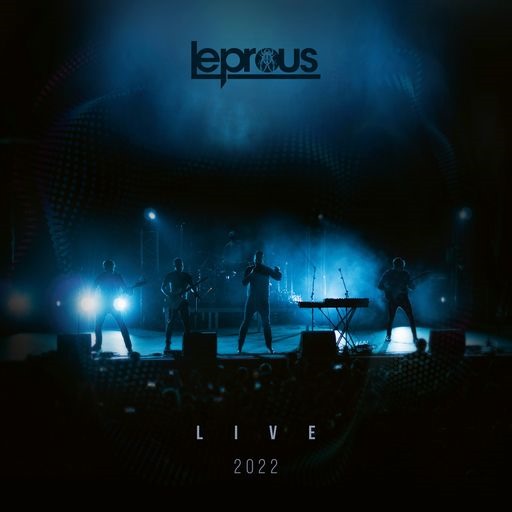
Norwegian Rock outfit LEPROUS have just launched a brand new “Live in Studio” video-clip for their song “On Hold”, taken from their current album “Aphelion”, in order to promote their upcoming European tour starting February 1st as well as the special ‘Tour Edition’ of “Aphelion”, to be released on February 3rd, 2023 via InsideOutMusic.

The audio for “On Hold (Live in Studio)” was recorded and mixed by Thomas Wang at Urban Sound Studios and the video clip was directed by Troll Toftenes.

LEPROUS commented as follows: “For the first time we chose to release a live recording/video from the studio. We decided to do this in order to capture and show a LEPROUS song in more detail and so allow the fans to get even more into our vibe. This footage was collected as a part of our latest rehearsals before our ambitious European tour taking place February 1st until March 18th. We are looking forward to seeing you all soon…”

The “Aphelion (Tour Edition)” release will be available both as limited 2CD Digipak and as Digital album (2CD) featuring the original “Aphelion” album, its two initial bonus-tracks as well as a separate, brand-new live bonus disc of 6 tracks/40 min. recorded this year during the first leg of the “Aphelion” touring campaign at Motocultor Festival in France and in Berlin, Germany. The new live tracks were recorded and mixed by Chris Edrich as well as mastered by Pierrick Noel at Atelier Mastering.

Watch the video here:

AA

zwmdURW1

10th December 2022

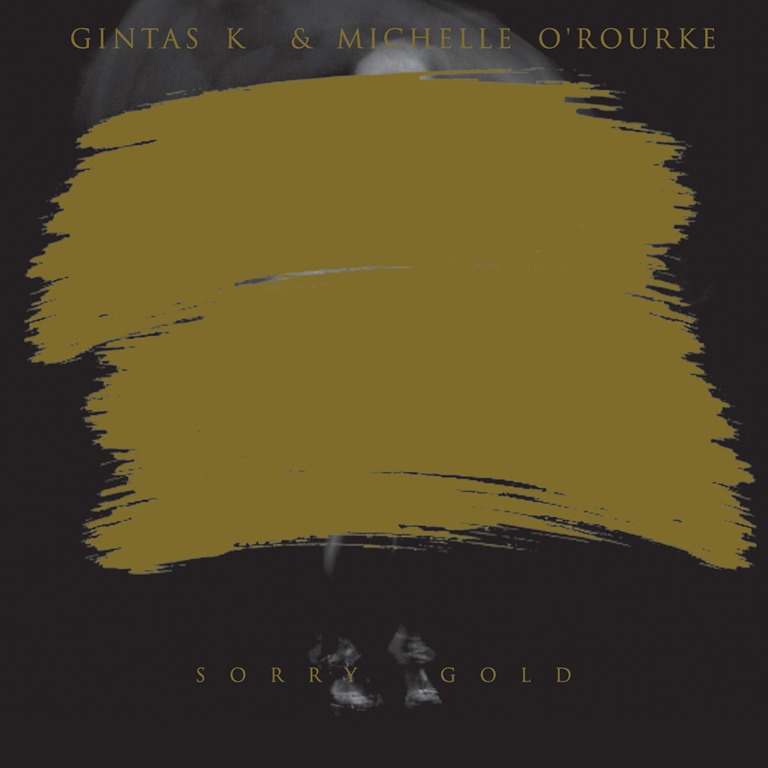
Gintas K wraps up a(nother) truly prodigious year with a collaboration – and an apology. The Lithuanian sound artist hasn’t strayed so far from his experimental electronic roots, at least fundamentally, but at the same time, Sorry Gold does mark something of a substantial and significant departure.

As the accompanying text explains, ‘this recording was made on stage at the Project Arts Center in Dublin, during the making of the film Sorry Gold Emily Aoibheann. The artists improvised to the visual landscape of the rehearsal space, stage design and dancers…’ it was funded by the Arts Council / An Chomhairle Ealaíon and Dublin City Council, supported by Dublin Fringe Festival, add the performances premiered as a part of Dublin Fringe Festival at Project Arts Centre in September 2019.’

With additional production and resigned from the original project, the album is only sort of a soundtrack, and the track numbering is both confusing and frustrating, with #1, #2, #4, #3, being followed by #4 #2, #2 #2, #4 #3 and #3 #2 before the more sequentially logical #5 and #6 conclude this most eclectic listening experience.

Replacing the glitching frenzy of bubbling, frothy digital frenzy that is Gintas K’s trademark is a much sparser, more minimal approach to composition, with single notes that sound like ersatz strings being plucked, atop quivering drones and low-rumbling organ sounds that fliker erratically like gas lights and resonating out into a spacious room. It has an almost orchestral feel, albeit distilled to absolute zero. The notes are a little fuzzy and ring out into emptiness, while the haunting vocals of Michelle O’Rourke are utterly mesmerising and border on transcendental. In combination, the atmosphere is deeply absorbing and heavily imbued with a spiritual, other-worldly element.

The first piece introduces us to a strange, haunting space beyond the familiar, and while it’s not by any means unpleasant, it is disconcerting, and sets the tone, ahead of ‘Sorry Gold #2’, which is melancholic, brooding, spaced-out notes hovering while O’Rourke ventures into almost operatic territories. It’s a not only a different atmosphere, but a different mood when placed alongside K’s other works: it feels a lot more serious, and has a different kind of energy, a different kind of intensity. I’m accustomed to feeling bewildered by the frenetic kineticism and abundant playfulness of his work. Sorry Gold isn’t entirely without joy, but it is much darker and much, much slower-paced, delivering a different kind of intensity.

It’s not until ‘Sorry Gold #4’ that things even hint at K’s more characteristic and overtly electronic noodling, and as the album progresses, we do encounter more of his feverish electronic tendencies, notably on the grinding ripples of ‘Sorry Gold #3’, but they’re much more restrained. ‘#4 #2’ brings a surging swampy wash of noise that’s a buzzing, grinding industrial blast of fizzing distortion. O’Rourke, barely audible in the sonic storm, sounds lost, detached.

Of the ten tracks, only two are under four minutes in length, and the pair use these extended formats to really push outwards: the ten-minute ‘Sorry Gold #4 #3’ brings helicoptering distortion that crashes in waves, at times low and rumbling, at others, crackling and fizzing with treble, and it creates a different kind of disturbance. Dissonance howls desolately on ‘#3 #2’, and so does , wracked with pain and spiritual anguish.

By the time we arrive at the brief and delicate bookend that is ‘Sorry Gold #6’, one feels inexplicably drained. The experience is somewhat akin to wandering ancient tunnels by flickering candlelight, observing ancient wall art while a subliminal mind-control experiment blasts random frequencies directly into your brain. You’re left feeling somehow detached, vaguely bewildered and bereft. And you feel deeply moved. Sorry Gold is special: Sorry Gold is bleak and harrowing, but it’s solid gold.

cover

HIBOU is back with new single ‘Night Fell’, along with the announcement of a new EP ‘Arc’ (due 13 January 2023).

Floating through a breezy blend of gossamer vocals, twinkling instrumentals and lush textured melodies, “Night Fell” is a delicate and jangling track that paves the way for Hibou’s new EP ‘Arc’.

Born in Seattle and now based in Paris, ‘Arc’ is Hibou’s first release since his 2019 full-length LP ‘Halve’ and the new body of work sees the artist emerge from his lengthy silence and reel listeners right back into the glistening whirlwind of his sound.

A delicate blend of lo-fi alt-pop, nostalgic shoegaze and diaphanous dream-pop, Peter Michel (aka Hibou) spent the summer writing the EP along the Canal de l’Ourcq, before recording in various apartments, bathrooms and rehearsal spaces in Paris. Engineered and produced by Michel himself, the multi-instrumentalist also performs vocals, guitar and bass on each track, with drums courtesy of Jase Ihler.

A dreamy and diverse project, ‘Arc’ melds together a rich amalgam of sounds: from the delicate and dazing “June”  to the buzzing and buoyant “Already Forgotten” and from the eerie twanging guitars on “Devilry” to the stormy, seesawing soundscapes on “Upon The Clouds You Weep”.

Taking its name from “an electric arc between things, or arc lightning”, ‘Arc’ is both sentimental and stylish with its carefully composed melodies seeming to tap into long-forgotten, hazy memories from the past just as easily as it does bolster hope for the future.

Inspired by shoegaze greats both past and present, Hibou’s elegant arrangements are hard to pin down, falling somewhere between the indie-rock tinted musings of Beach Fossils and DIIV, the folk-flecked intimacies of Alex G and the tenderly tormented sound of The Cure.

Listen to ‘Night fell’ here:

AA

thumbnail_unnamed-846

There is more than one way to listen to BEBORN BETON’s ninth album "Darkness Falls Again": it is possible to just dance and enjoy contemporary synth pop hymns that have a solid musical based in the golden 80s with a dash of cool 90s influences. Catchy tunes and mature songwriting combine to form a sonic joyride.

Yet there is another side to BEBORN BETON, which is mostly expressed in their lyrics. On "Darkness Falls Again", the Germans wade right into the political battles and culture wars of our times. BEBORN BETON speak out against the attempts to deny and deprive women of their rights. They take a strong stand against those who try to restrict love, the freedom to choose gender, and sexuality. The trio clearly call out racists, demagogues, preachers of hate and violence, and those who destroy our planet in order to enrich themselves. In short, BEBORN BETON put their finger right on the pulse of our time.

BEBORN BETON were founded by vocalist Stefan Netschio, keyboard player and drummer Stefan Tillmann, and keyboard player Michael Wagner in 1989. The trio set out with the declared aim to keep synth pop relevant and give it meaning. Their first signs of life were three self-released works, ‘Pyre’ (1989), ‘Scythe’ (1991, and ‘Die Stahlbetontour’ (1992) that came out on tape.

Following their first two regular albums "Tybalt" (1993) and "Concrete Ground" (1994), BEBORN BETON found a label-home where they joined renowned acts such as WOLFSHEIM and DE/VISION. Having conquered home, the three electro-musicians rapidly expanded abroad and the 1996 full-length "Nightfall", followed by "Truth" in 1997, and "Fake" (1999) gained the Germans strong acclaim by critics and fans around the globe.

By the time, "Rückkehr zum Eisplaneten" (‘Return to the Ice-Planet’) was released in 2000, BEBORN BETON had firmly positioned themselves as a headlining act within their scene and toured in all the strongholds of electronic music such as Canada and the US, the Netherlands, Norway and Sweden, Switzerland, Poland, and even Russia among other places. In the North of America, the Germans had scored a veritable club hit with the track ‘Another World’ in 1997. Across the Atlantic, the track’s ever-growing popularity finally led to the exclusive US release of a best-of double-album entitled "Tales from Another World" in 2002, which was followed by extensive touring in North America with APOPTYGMA BERZERK in the same year.

Yet the heavy touring and the creatively highly demanding output of so many excellent albums in quick succession started to take its toll. After the release of "Tales from Another World" (2002) and the associated touring, BEBORN BETON went on an extended hiatus.
It took 13 long years, until BEBORN BETON returned to the delight and surprise of their still huge following with a new album on Dependent Recordings. "A Worthy Compensation" (2015) was showered with accolades from the relevant magazines such as an "album tip of the month" in German Sonic Seducer and Orkus Magazine called the record an "undisputed masterpiece".

Having learned from previous experiences and not to fall back into a relentless production cycle, BEBORN BETON took their time to write another masterpiece. "Darkness Falls Again" has all the ingredients that make synth pop great. Catchy songs that make the legs twitch, a dash of melancholy, a pinch of irony, and a knife-tip of anger. Music with a meaning, welcome back BEBORN BETON!

Watch the video for ‘Dancer in the Dark’ here:

AA

lD868gSQ

Photo: Chris Ruiz

Loyal Blood Records – 9th December 2022

Christopher Nosnibor

When the shit builds to a tsunami, your laptop’s fucked and all you want to do is curl into a ball and forget absolutely everything, noise is the answer. It’s not a cry for help or even a public moan as such, but sometimes it all gets a bit much. The little thing accumulate to the point where they’re a big thing. You feel weak for letting it escalate like that, but it’s sudden. One minute, everything is ok, and ticking along nicely, the next, you’re suddenly overwhelmed.

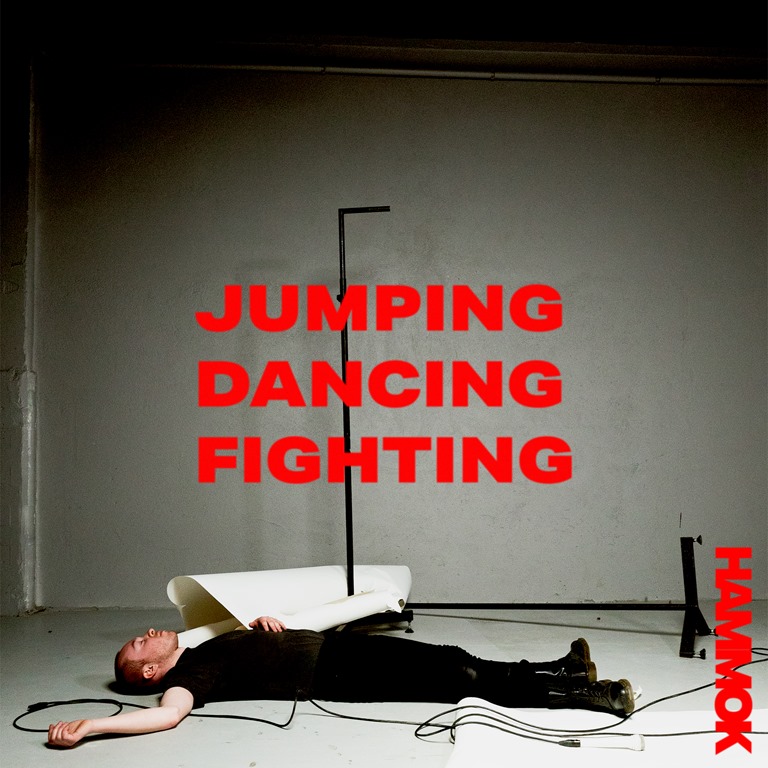
Having recently experienced a mammoth rush of excitement on discovering Mammock, I’m buzzing all over again having been introduced to another bunch of noisy fucks, namely Hammock. These guys really aren’t into slouching about, and their debut is tense, wired, and packs some furious energy.

The press release tells me that ‘They sound pissed, frustrated and rebellious, and play their instruments with a nasty intensity and nihilistic ferocity. Imagine a mix of Unsane, Chat Pile and Pissed Jeans and you’ll get a pretty good idea of how these youngsters sound like.’ Obviously, I’m sold before I hear a note, and have to say it’s a fair summary of their seven-song set (although the first and last, ‘Intro’ and ‘outro’ respectively are what their titles imply, bookending five back-to-back blasts of riotous racket, all of which clock in between two and a quarter and a fraction over three minutes. They really do keep it tight and punchy, and pack a lot of abrasive noise into those short sharp adrenaline shots.

The vocals are distorted, shouted, gritty, and are pithed against guitars that crash in from all angles – hefty slabs and thick chunks of distortion collide against scribbly, scratchy runs of broken math-rock noodles, while the bass snarls around and booms darkly and the drums roll like thunder, as exemplified on lead single ‘J.D.F.’

It’s jarring, fast-paced, and buzzes and roars, and it’s not just noise – there are some smart bits and pieces all bouncing about in the mix, often happening all at once. It is, at times, bewildering, but above all, it’s awe-inspiring.

There’s a moment around forty-five seconds into ‘Contrapoint’ where the bass and guitars both kick into a monster riff and it punches you right between the eyes as a ‘fucking yesssss!!’ moment that absolutely seals the EP as a bona fide belter.

AA

078376

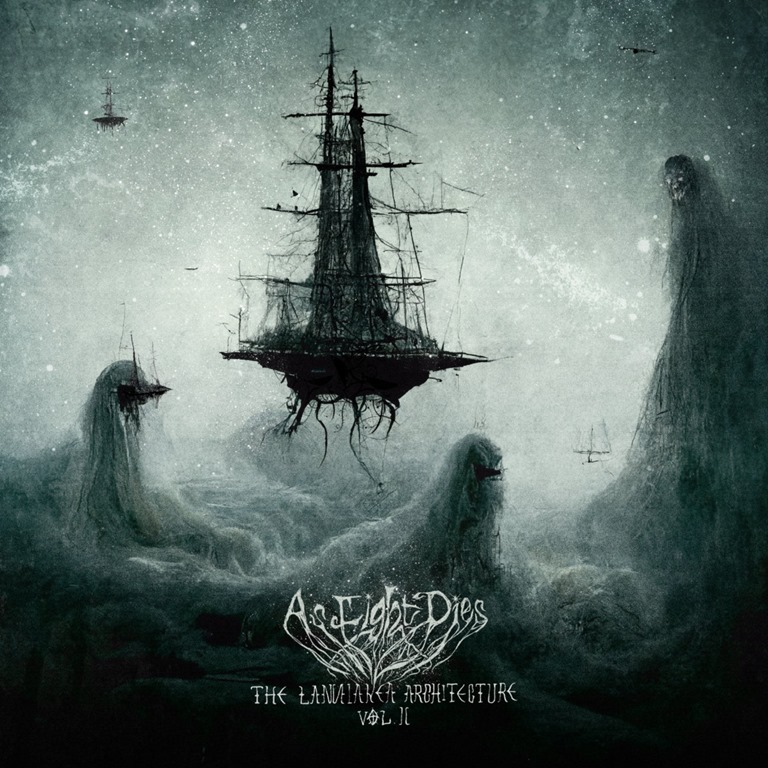
Almost ten years after their impressive and critically lauded third full-length The Love Album, Volume I, Spanish avantgarde black-metal armada As Light Dies now return with their most complex and multifaceted album in their whole career, The Laniakea Architecture, Volume II, due for release on March 9th via Darkwoods. 

Just recently, the Spanish group revealed the leading single titled ‘The Green’. Hear it here:

Produced by mastermind NHT aka Oscar Martin The Laniakea Architecture is an exceptionally ornamented compendium of intertwined extreme metal genres, with long and multidimensional songs containing a myriad of small elements that you will discover, little by little, as you dig deeper into the album…

a3530226159_10

18th November, 2022

James Wells

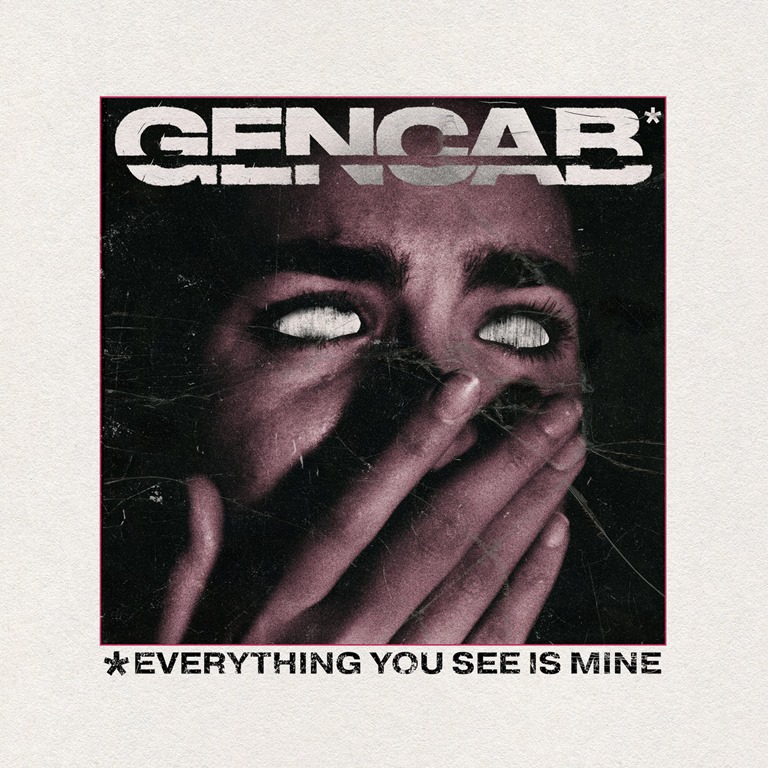
Perhaps I’m sensitive. Perhaps I’m just aware, attuned. But certain phrases trip me. And on reading ‘Everything You See Is Mine’ I feel my skin crawl a little. Something about it says power trip, something about it says control, something about it says manipulation, something about it says shades of wrong. It’s not something that explicitly makes its way through the music, but then, who do you trust?

This gnarly four-tracker is a furious frenzy of high-octane, uptempo industrial that draws many cues from early NIN with snarling electronica driving things hard from the get-go, with first song, ‘Soft’ being anything but as driving electronica slams home with the kind of abrasion that blasts the chest. It’s a strong start to a release that tapers off rather after that initial blast.

‘Wasp Factory’ – which I like to think tips a nod to Ian Banks’ debut – goes a bit emo and hints a bit awkwardly at Linkin Park and then the last song, ‘Only Skin’ brings a satisfying trudging crunch but also an unexpectedly accessible vibe, as it drives the EP home to its conclusion.

It’s not as dark or hard as all that and perhaps isn’t the dominant sneer the title suggests, but Everything You See Is Mine is certainly not an entirely accessible attack either. One to explore.

a1987592192_10

New Reality Records – 9th January 2023

Edward S. Robinson

Literature was the original rock ‘n’ roll. Throughout history, writers have not only been at the cutting edge of culture, but they also invented the rock ‘n’ roll lifestyle centuries before the concept of rock ‘n’ roll came to be.

Latterly, literature has become ‘establishment’, entrenched in a certain model based on agents and publishers and increasingly concerned with margins and the trappings of capitalism at the expense of placing art in the public domain.

Stewart Home has never been establishment, and never will be, which is precisely why his latest novel failed to land a deal with any publisher. Now, the establishment will likely scoff and say that no publisher would take it because it’s not what they were looking for, or it’s too niche, or it’s too risky or too risqué. But back in the 80s and 90s, those were all reasons why publishers would take on a title. Others may say, while looking down their noses, that it’s simply trash and therefore of no interest because it’s crap, but that argument doesn’t wash when major publishing houses put out shit like 50 Shades and continue to squander gallons of ink on populist toss like Dan Brown and Stephen Leather and while amateur ‘erotica’ is all the rage online. After all, the mainstream has a habit of observing emerging trends and then seeking to monetise them. Moreover, in the 80s and 90s, Home published a slew of books through anarchist publisher AK Press and the then-edgy Serpent’s Tail with his trashy politicised pulp rips on Richard Allen. He found a home with Scottish imprint Canongate for his audacious ‘Diana’ novel 69 Things to Do with a Dead Princess, before Virgin published Tainted Love in 2005. So it certainly isn’t that he hasn’t a well-established publishing record, or that potential controversy has been an obstacle to publication in the past, meaning that what we’re seeing the publishing industry narrowing its horizons while focusing on broadening margins.

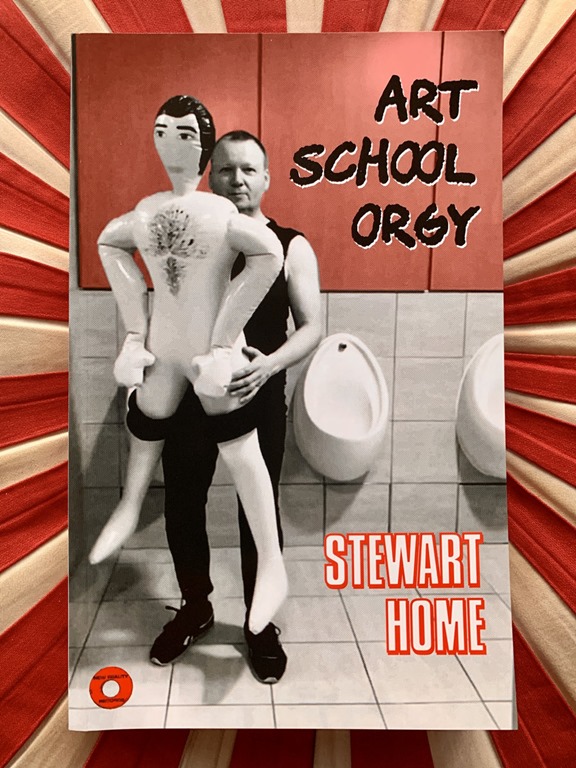
For all that, Home has always existed beyond the milieu of the conventional, emerging from the avant-garde art scene and xeroxed zine culture of the 80, and so it stands to reason that he would reject publishing convention and find a record label to publish Art School Orgy. The fact that it’s a fictionalised biography of sorts of a living artist, namely David Hockney, is perhaps one reason most publishers shied away from the book in a culture that’s evermore litigious, although there’s never any question that this, like many of Home’s previous works, is anything other than a huge, audacious exercise in taking the piss.

Home’s style has long been hard to pigeonhole, as it varies from book to book: while his earlier works were perversely trashy and bluntly anti-literary, he’s proven over the course of his now-lengthy career, to be remarkably adaptable: The Assault On Culture was overtly and quite explicitly academic, while Tainted Love, Down and Out in Shoreditch and Hoxton, and She’s My Witch all showcased a measured narrative form, and while the last of these three employed classic Home methods of repetition, much of the purpose seemed to be to grind the reader down with a text whereby very little happens, over and over again. But then, Home has long been an author who revels in the anti-climax. Equally, though, he is a master of the climax, and there are many of those in Art School Orgy, the pages splashed all over with vintage Home phrases referencing liquid genetics and hand jobs and a lengthy speech on anal sex.

In fact, so many elements common to Home’s oeuvre are present here, demonstrating his knack for recycling and willingness to continue to work a theme long beyond the point of exhaustion.

The lengthy extracts or even complete texts quoted within the text – including an exhaustive catalogue of methods for cock and ball torture, or CBT, which reads like an endless catalogue of kinks like Sade’s 120 Days of Sodom – are quintessential Home, and while none of these (fictitious) tomes conjure quite the awe of works like the seminal ‘Christ, Marx, and Satan United in Struggle’, they still bring a certain gravitas to the riotous spunkfest that is the main body of the text. As for the main body of the text, well: if Home initially traded parodically in sex and violence, Art School Orgy stitches it all together in a tale of sexual violence, and if previous works dropped in dirt every few pages to push the story along, on this outing, it’s fair to say that the dirt is the entire point of the story, and he stuffs page after page with perversion.

The dialogue is magnificently stilted and as corny and unconvincing as the best of his earlier works, too, but then again, E. L. James made her fortune pedalling worse dialogue minus the irony, and even worse sex scenes, too. And in its juxtaposition of more middlebrow fiction with the cheapest, smuttiest pulp, Art School Orgy occupies similar space to Come Before Christ and Murder Love. At times, the awkward stylistic crunches are frustrating, but this is classic Home: a wind-up merchant par excellence, his aim is to create works which are frustrating, and on many levels.

In the (throbbing) vein of Blood Rights of The Bourgeoise, the chapter titles are pithy phrases designed to shock (‘An Explosion of Spunk’; ‘Egyptian Mummy Porn’; ‘Desperate for Cock, Hungry for Fame’… and so on). You’d think after this length (and girth) of time, audiences would be numb to the tactic, and yet… no. ‘The Tip of David Hockney’s Waxed Manhood Lit Up Like Christmas Tree’ and ‘A Bottle of Bell’s Up the Backside is Rough Sex Heaven’ aren’t chapter titles one expects in a novel, literary or otherwise, and even the likes of James, for all the salacity of the Fifty Shades books, presents as infinitely more coy. There are no ‘inner goddesses’ in Art School Orgy, just endless depictions of throbbing gristle and wads of hot spunk. There’s nothing subtle about Home’s writing: there doesn’t have to be, and ultimately, that’s the point. With Art School Orgy, Home highlights just how conservative literature – even supposedly low-brow, populist kink fiction – really is. And when you consider the context, despite the supposed proliferation of perversion since the advent of the internet and the debate over the way shows like Game of Thrones has beamed rape And incest into living rooms across the globe, we live in dangerously conservative times, where ‘free the nipple’ is actually a thing. This was not the case in the 60s, when nipples simply were free, and by 1967, seven years after Hockney’s coming out as gay, homosexuality was finally decriminalised in Britain.

This is, one suspects, a key motive behind Home’s text; not to paint Hockney as an indefatigable BDSM fuckmachine – which it has to be said, seems the primary thrust – but to make the point that consensual Sadomasochism is the choice of those involved, and the fact that it was outlawed at the time the book is set is, well, as perverse as the acts depicted.

Repeatedly referring to Hockney as ‘our rapscallion’ every few pages becomes annoying and predictable within the first thirty pages, but Home has the stamina and the audacity to keep it going for the duration of the book’s two-hundred-and-ninety pages. Of course, he’d sight Bergson and the theory that repetition is the basis of humour, and I can’t deny that I’m chuckling while squirming uncomfortably – but not nearly as uncomfortably as the protagonist, who is subjected to page upon page of the most excruciating tortures imaginable. There is absolutely no let-up during Art School Orgy, and for this, it’s Home’s most outlandish and challenging novel to date. It makes you feel all kinds of discomfort all at once.

This is very much the response reading Home tends to elicit. You can’t help but laugh, but equally feel incredibly uncomfortable, for a range of reasons, not least of all a nerve-jangling sense that everything about this writing goes against what you’re taught literature should be. But first and foremost, it’s a rollocking read, because however hard Home pushes a point or sells an agenda, he never loses sight of the idea that a good book entertains. And Art School Orgy is a proper romp.
0030582657_10

Art School Orgy is available to order via New Reality Records’ Bandcamp.
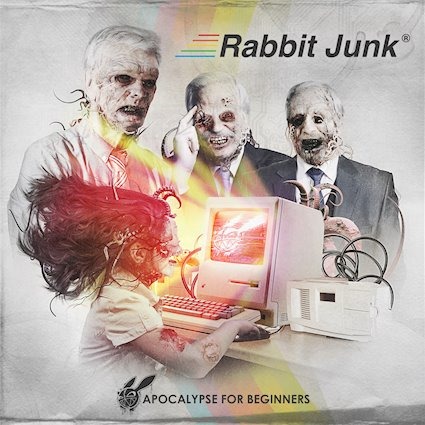
Taken from their album ‘Apocalypse For Beginners’, Rabbit Junk have released ‘Nostromo’ as a taster of their bold technoindustrial/electropop/metal crossover sound.

Rabbit Junk draws subtle parallels between the challenges facing our species as a whole and the challenges facing our own personal lives. These challenges are characterized as foreseeable and yet tragically unavoidable. As such, the album communicates the fatalism and frustration of modernity alongside the lack of control we often feel over our own lives.

The album’s lead track “Stone Cold" (Feat. Amelia Arsenic) exemplifies Rabbit Junk’s willingness to take risks and defy genre norms. “Stone Cold” is a gender-fluid and genre-mashing anthem with an infectious sing-a-long chorus. The song featuries lyrics in both German and English delivered by masculine and feminine vocal textures floating over a mélange of punk, drum & bass, metal, and hip hop.

Other standout tracks include “Nostromo”, a sci-fi influenced art-metal meets synthwave track which is quickly becoming a fan favorite, and “Love Is Hell”, a decidedly danceable and gritty homage to everyone’s broken hearts.

Check it here:

AA

470953