Archive for April, 2022

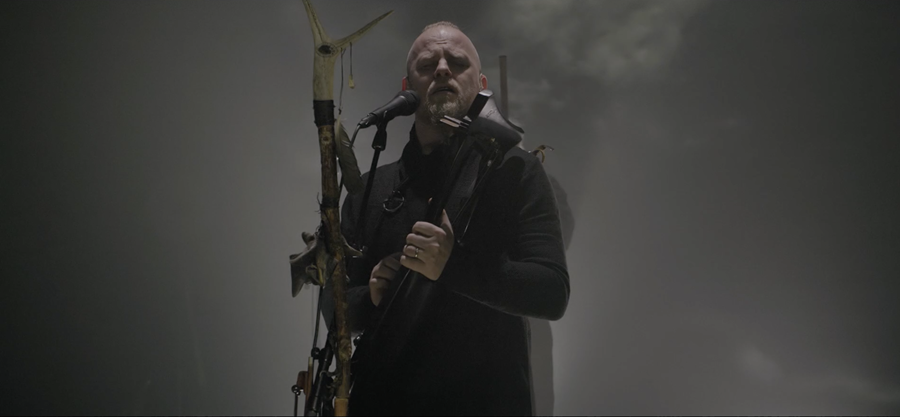
Wardruna are releasing an official music video for the streamed live performance of ‘Fehu’. Einar Selvik says, “Fehu is a song inspired by ancient runic poetry. The word itself refers to cattle/livestock and wealth and the song discusses the duality of wealthiness. "Fehu" was originally released on the album Runaljod – Yggdrasil in 2013. It has been a permanent song in our live-set ever since the release and thus, it feels great to finally release a live version of the song.”

The release date of Kvitravn: First Flight of the White Raven has been moved to 10th June. A statement from Einar is as follows; "Due to a very unfortunate production issue, we are forced to move the release date of First Flight Of The White Raven in all of its formats to June 10th. On a more positive note and due to popular demand, we will make the DVD available as a standalone item and offer the concert as VOD (Video-On-Demand) through our World and US online-shops." He continues, "the DVD presale starts April 22nd along with a new digital single and video from the upcoming release. We apologise for the inconvenience this may cause and we are grateful for your understanding."

Watch ‘Fehu’ here:

AA

STILLS5byM12Kultur-9900000000079e3c

Photo Credit: M12 Kultur

Plotting a rapid follow-up to their acclaimed 2021 debut album, the track arrives as the first insight of what the band confirm will be their upcoming second full studio release.

Whereas much of their debut album, ‘Deathretro’, was thrashed out during the band’s first incarnation almost 15 years ago, “Exit Point” stands as Deathretro’s first completely original composition in over a decade.

A frenzied post/punk thrill, it veers and swerves through surf-carved curvatures and barbed guitar prangs, as the band spout nihilistic lyrics for the end-of-days.

“In the bowels, the people scream. Humanity, it appeals to me. Dirty machine, a wretched beast, We give life to the old devil.” howl Deathretro here.

Touching on the darkest of themes with a white-hot intensity, “Exit Point” rages against religion and propaganda in a dystopian realm of vivid, Dantean imagination.

Having already aired the track live at a smattering of live fixtures, Adrian of Deathretro sums-up the response so far:

“This is the only second album track that we have played live and to great reception…It’s punky, urgent, does it’s job and f**ks off”

Listen to ‘Exit Point’ here:

Around the release Deathretro are lining up a run of Spring headline shows and Summer festival dates (including Bluedot and Kendal Calling) that will offer fans another opportunity to catch the band performing “Exit Point” live. Full dates are as follows:

DEATHRETRO – LIVE DATES

28th April – Oporto, Leeds
(w/ Deathretro / Neeta)

18th June – Gorilla, Manchester
(w/ Sea Fever / Riding the Low / Deathretro

+ DJ sets from Gillian Gilbert & Stephen Mortis (New Order) & Chris Hawkins (BBC6 Music))

24th July – Bluedot
30th July – Kendal Calling

Deathretro

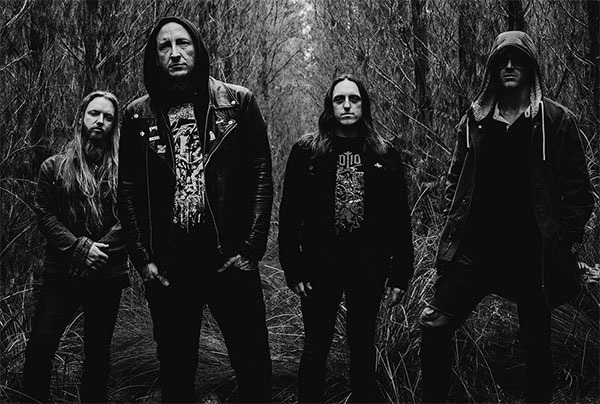
Sydney-based sludgy doom-metal merchants Mountain Wizard Death Cult have recently dropped a music video for a brand new song to be included in their yet-untitled debut album coming later this year via Blighttown Records.

The band comments: "Initiation" feels like a culmination of the journey we’ve been through together as a band… channeling our frustrations, influences and aggression to bring the listener into our World. The record is going to be one hell of a journey and this track is a great example of what’s to come.”

Watch the video here:

AA

bb4bf45b-9bb3-fbd6-4160-1fa9a5daf243

Limited Noise – 29th April 2022

Christopher Nosnibor

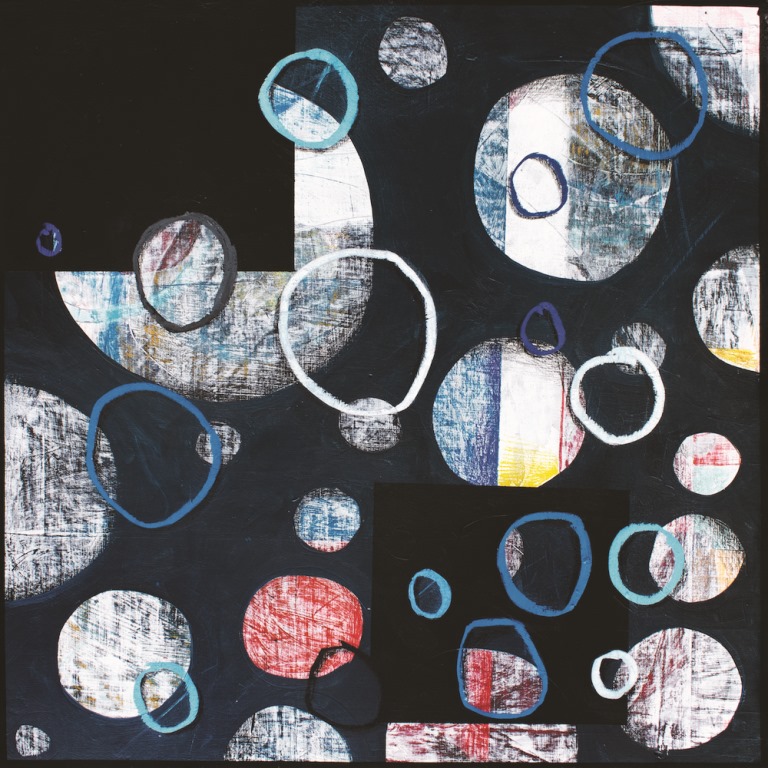
With a CV that lists near-multitudinous membership and participation in bands (notably his regular gigs with Snack Family and World Sanguine report, but also contributing to Sly ands the Family Drone and countless others), renowned experimentally-minded jazz drummer and percussionist Will Glaser has taken some time out to continue his solo album sequence with the fourth instalment of Climbing in Circles.

Over the course of three previous releases, Glaser has explored jazz, folk, and beyond, through an experimental prism and with a methodology that’s very much about improvisation. This outing features long-time collaborator, Matthew Herd, on saxophones and piano, alongside trumpeter, electronic artist and producer, Alex Bonney, and was assembled over the course of five day. While the album is loosely constructed around two overarching ‘acts’, they consist of eleven separate and distinct pieces, and bookended by ‘Beginnings’ and ‘Endings’, there’s a narrative arc of sorts, here.

It begins with crawing birds and a gentle piano playing what one could readily describe as a charming melody with a quite conventional structure, and ends with a genuinely pleasant lilting piano tune – and yes, I mean tune in that it has all the conventional features of one.

In between, there is slow decay and infinite space. Rumbling, echoes, notes reverberate off one another at distance. Sax and trumpet trill and drone, sometimes at one, at others as if duelling. The percussion rolls and crashes, but more often than not, at distance, and creating texture and atmosphere and colouring the pieces with expression rather than maintaining rhythm.

The combination of instruments is relatively conventional in jazz, and, similarly, there’s nothing particularly radical about the way they’re played and interact on here. But there’s considerable joy to be had in simply listening to the musicianship and the way the musicians themselves interplay on the pieces. ‘Spiral Dance’ is a hypnotic serpentine spin, while ‘Bad Dream Machines’ is a drifting mass of fragmentation, dissonant, discordant, and above all, a work that exists in the spaces between the notes and in the reverb and echoes as in the notes themselves.

There will be some – perhaps many – who are deterred by the very mention of jazz, and there is a perception of there being a certain elitism about jazz – the idea that random notes and borderline unlistenable chaos is somehow a superior art form, and anyone who doesn’t ‘get’ it is clearly a philistine. But Glaser is a remarkably positive showcase for jazz, with a focus on the listener rather than purely the musicianship. Climbing in Circles Pt 4 is about atmosphere, about vibe, rather than indulgent wanking: this is jazz you don’t need to be an aficionado to appreciate. It’s listenable, and it’s varied, too.

On ‘Dead Fly Disco’, he and his collaborators play completely straight, a song with structure and swing, something you could even dance to, or at least nod a long to its toe-tapping groove in a basement bar late at night. ‘Ballad in the Jazz Style’ almost feels like they’re playing with and working within the tropes as an example of discipline, and it’s highly restrained and wonderfully moody in that sad, smoky jazz melancholy way.

There’s plenty going on, and enough to maintain interest, but not so much as to be chaotic or to lose the listener. Whether these things make it a good access point to jazz, it’s hard to say, but what it does mean is that Climbing In Circles pt.4 is a jazz album that’s accessible and enjoyable simply as a musical work.

AA

Climbing In Circles cover 1000px CMYK

eMERGENCY heARTS – 6th May 2022

Christopher Nosnibor

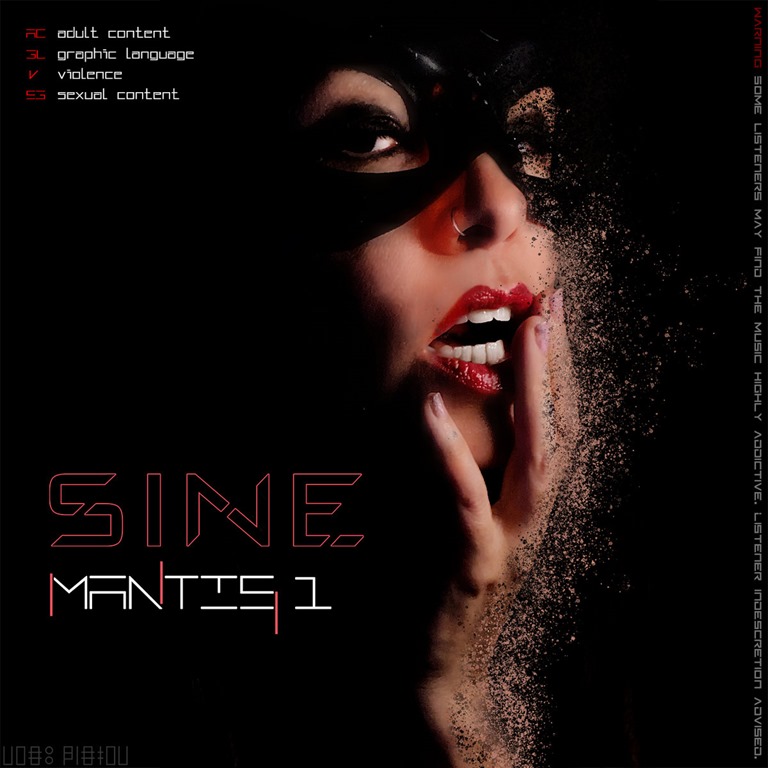
SINE’s new 5 song EP, Mantis 1, is the first in a trilogy of EPs, “Mantis 1, 2 & 3”. The hype for the release pulls a spotlight on the involvement of a name producer, with the EP being ‘produced by SINE founder, Rona Rougeheart in collaboration with esteemed audio engineer Charles Godfrey at Scary American Studio in Austin, TX. Godfrey, in his two decade plus career, has been engineer/producer on over 75 recordings, including the Yeah Yeah Yeahs’, It’s Blitz! and Mosquito, The Black Angels, Indigo Meadow, and notable work for…Trail of Dead, SWANS, among so many more’. No question: Godfrey’s resumé is impressive, and there’s similarly no question that a decent producer can make a huge, huge difference, with great production having the capacity to render a recording far more than the sum of its parts (Joy Division simply would not have been the same without Martin Hannett’s work, however unconventional and difficult his methods), while equally, poor production can be crippling. Then again, engineering is perhaps equally important: it’s worth noting that Steve Albini doesn’t consider himself to be a producer, but his engineering skills have brought the life to so many albums, and not just the ones he’s renowned for. Still, for all that, you can’t polish a turd: you still need songs and for them to be played in a way that does the material some kind of justice.

Everything comes together just so on this release, and one question I often consider is how close to the artistic ambition is the end result? I have a sense that Mantis I is everything Rougeheart had in her head at conception.

‘Attack’ certainly brings plenty, a combative, dark disco thud of a beat pitched against a relentless throb of synthesised bass. In contrast, ‘Until’ is more overtly pop, but it’s pop in the way Garbage are pop – eclectic, savvy, the production simultaneously crisp and grimy. ‘Future Whores’ is stark, and if there’s something of an early New Order vibe about it, there’s equally some early Pet Shop Boys, and that’s by no means a criticism. Then again, the expensive, yawning notes border on the mellow new age grooves of The Beloved, while the distorted vocals and thumping bass are more industrial… in combination, it crashes hard in the domain of industrial shoegaze, and if that’s not yet been recognised as a thing, now is the time because it’s here and it’s in your face.

Things get murkier and meaner on ‘Blurred’, where I’m reminded of The Human League’s ‘Being Boiled’, only with a harder technoindustrial edge, and the pulsing, bulbous bass is dominated by Rougeheart’s blank, robotic monotone vocal, that’s treated with a metallic edge and some grainy reverb.

Closer ‘Control’ burrows deeper into the darkness, a shuddering mass of slow velocity – yet for all the crushing grind and gnarly digital distortion, the dislocation and thunderous tribal drums, it still slides in a truly aching bridge with a magnificent vocal melody that evokes wistful summer scenes, before crushing them like ant underfoot in a driving death-disco slam.

It all adds up to a meaty and pretty powerful release, and if the idea of releasing three EPs instead of an album seems perverse, it will be interesting to see how SINE utilise the format after such a strong start.

AA

a2098796503_10

Black Nail Cabaret have released a video single for the new track ‘Orchid’. The Hungarian avant-garde synth pop duo that has added this stunning song to the bonus material, which is enhancing the reissue of their originally self-released and thus widely overlooked 2018 masterpiece Pseudopop. The album will first be re-released on Digipak CD and at a later date also on vinyl due to production shortages. Pseudopop will also include the previously hidden bonus track ‘The Worm’ and the Digipak CD has been slated to hit stores on April 29, 2022.

Watch the video for ‘Orchid’ here:

Black Nail Cabaret comment: “We wrote ‘Orchid’ towards the end of 2021, which means that this song is a completely new recording”, singer Emèse Árvai-Illes reveals. “We felt that the remastered Pseudopop needed a new track in addition to the previously hidden track, ‘The ‘Worm’. It was a means to distinguish the reissue from the original first release and and also adds value for those fans, who already own Pseudopop, but want to have the new version as well. ‘Orchid’ fits perfectly into the atmosphere and concept of the album. The song deals with intimacy and trust, but also obsession and vulnerability. The music video was created by Tamás Mesmer, who has previously captured the wonderful images for our songs ‘My Casual God’ and ‘Resonance’. He approached the clip from the perspective of obsession and intimacy. Tamás’ clip conveys the feeling of a 90s art film about a complex relationship.”

AA

w0WTVfzM

Pic by Zoran Varga

It may be safe for work / radio, but you certainly couldn’t accuse Benefits of selling out and you’re not going to be hearing this edit of the angry, snarling rant-fest of ‘Flag’ on R1 or Kiss FM or whatever anytime soon or ever.  Which is a shame, because everyone needs to hear these guys: Kingsley Hall and co tell it like it is.

No further preamble required: this gets out vote all the way, now get your lugs round it here:

AA

81675120_168450094539369_382539246562443264_n

Southern Lord – 23rd April 2022

Christopher Nosnibor

Covering multiple works in a single review feels like a major short-changing exercise, and I feel I should apologise to the artists involved in advance. It kind of depersonalises and maybe even cheapens the coverage, and I remember how I felt when the book version of my PhD thesis finally received a review, only to find that it was in an article alongside three other books. It may have been a paragraph of praise, but nevertheless, it was a solitary paragraph in a long article. Nine years of work, 90,000 words and 300 printed pages given a one-paragraph thumbs up… meh. But still, better than a thumbs-down or no paragraph.

A decade on, it’s still not settled with me, and I always try to do better. But sometimes, bundling makes sense and feels justified and this is one of those times.

Having spent many a virtual column inch in recent years bemoaning how Record Store day has made a deep descent from being an event that served to raise awareness of independent record shops to another cash-in for major labels cranking out shitty reissues on limited colour vinyl to wring yet more funds from completists while at the same time driving some of the most shameful scalping activity anywhere on line, it’s a relief to find something positive about RSD 2022.

That something comes of course from an independent label in the form of Southern Lord, who, as a sidenote, had commendably stuck to producing outstanding vinyl releases regardless of trends, fashions, popularity, or Record Store Day, and, admirably have continued to release whatever the hell they please, with a catalogue that’s an equal balance of cult hardcore punk re-releases and cutting-edge works of crushing weight that perpetually push the parameters of metal, with recent releases from Neon Christ and Big | Brave highlighting the polarities of the label’s interests.

This pair of RSD releases exemplify this span to perfection, and while admittedly one is a reissue, the other very much is not – and as such, they represent the label’s standard release scheduling. As the press releases outline, ‘The Catatonics were one of NYC and Syracuse’s pioneering hardcore punk bands…While the band’s seminal Hunted Down EP has remained one of the most highly sought-after releases of the genre, the heightening collector’s price made this 7” inaccessible to most people. Southern Lord has now elected to re-release this EP as a 12”, with bonus tracks.” And, meanwhile, Forest Nocturne is ‘the first full length solo venture of Greg Anderson, under the moniker of The Lord. Inspired by the great horror film composers of the 70s and 80s, Anderson turns his back on the riff worship of Goatsnake or SUNN O))) and instead creates a truly unsettling atmosphere heavy with tension, offset by 90s Scandinavian death metal’.

The Catatonics release certainly gives value for money: the original 1984 7” released on Anorexic Nympho Records featured five tracks: this reissue features a whopping eighteen. Following the bonus intro cut if ‘Descending in E’, the original EP accounts for tracks two to six, while the rest is an almost exhaustive gathering of compilation tracks, early demos and live recordings, all remastered from original tapes. Only two of the eighteen songs run beyond three minutes, with most clocking in under two, and this is rough and ready, ball-busting full-throttle, relentless fury, nonstop-pounding hardcore at its rawest and most furious, and the live cuts are particularly raw and brutal, making this a unique and comprehensive document of another underground band’s short but high-impact career.

LORD000_12inch Standard LP Jacket

The Lord’s debut is a very different proposition: it’s clearly contemporary for a start, although it’s steeped in vintage metal stylings, and driven by an understated and simple but gut-churning bass that digs tunnels beneath your ordinary lives. Forest Nocturne is an album that twists and turns, and more significantly, gnaws like rodents, and like woodworm, at the smooth, flat planes of sonic normal. I say ‘normal’, as if that’s a thing – but The Lord conjure vast aural expanses, broad vistas that invite the listener to bask in the rich density, before tearing it to pieces.

A slow, swelling church organ droned doomily on ‘Church of Hermann’, a piece which is truly awe-inspiring. This is an instrumental album that definitely marks a departure for Anderson and feels more like early Earth than Sunn O))). Then again, it’s doesn’t really sound or feel like either.

Thick swells of strings that build into brooding, megalithic waves, define the power of this instrumental work. ‘Forest Wake’ starts with the wail of a siren, and brings bulldozing bass and power chords wrapped in gut-punching clouds of distortion. Those clouds dissipate for a time, and the atmosphere looms large and heavy as things unfurl, but take a moment to breathe and there’s nothing to see here other than smoke and that absence… It grinds, and it absolutely fucking kills, going full Sunn O))) drone doom on ‘Old Growth’. Forest Nocturne is hard and harrowing, immense, epic, beautiful, and yet at the same time devastating. The last track, ‘Triumph of the Oak’ is a new shade of heavy, an angering mess of thrashing chords that crashes down so, so hard.

810538

Finally, thanks to Southern Lord, there are releases that are actually worth getting up and queuing for at the weekend.
‘Long Time Ago’ is the driving new single by ‘Woodooman’, Cardiff Multi-Instrumentalist and Artist, Iwan Ap Huw Morgan.

The second single to be taken from forthcoming Album ‘Y Nos’, which is due for release on 24th June; ‘Long Time Ago’ follows in the wake of the fantastic Welsh Language track ‘Y Nos Mewn Cariad’ that was released last month to a very warm reception including praise from BBC DJs Huw Stephens, Adam Walton, God Is In The TV Blog, Golwg Magazine, Lisa Gwilym and Rhys Mwyn.

‘Long Time Ago’ will be released on the 2nd of May via Recordiau Dewin Records

Listen here:

625dce426bbfaa05996d63b4d0dd6a0242f15e04d580138ec48b3fd45e5bbe0d79852790851adcc2de3596a0

Editions Mego – eMego016X

22nd April 2022

Christopher Nosnibor

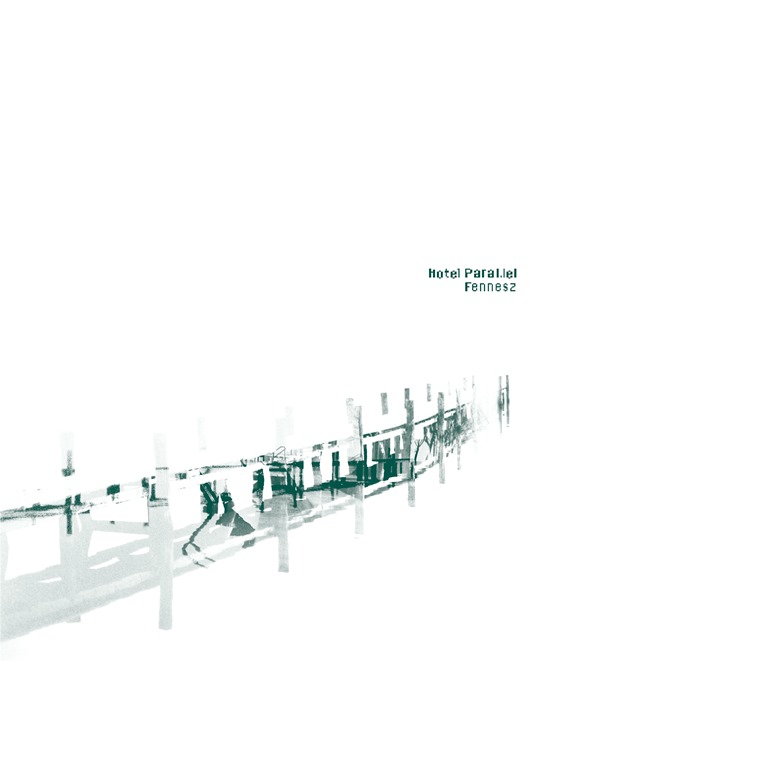
Context counts for a lot, particularly when evaluating works which represent the time in which they originated. This is no more true than when it comes to evaluating this reissue of Christian Fennesz’ Hotel Paral.lel, originally released in 1997.

For some of us – those of a certain age – 1997 seems recent. But then, there will be great swathes of the population who are actively listening to music -and who are fill-fledged adults, many with children of their own now – who weren’t even born in 1997. Stop and consider that for a moment. 1997 was twenty-five years ago. A quarter of a century.

Cast your mind back twenty-five years, if you can, and try to recall the musical landscape, what you were listening to, what was fresh and exciting, new and emerging. And cast your mind back, if you can, simply to life as it was back in 1997. Pre-millennium tension was beginning to slowly build around the end of days, and the millennium bug that would bring all technology to a halt. Nu-Metal was only just breaking, with the release of Limp Bizkit’s debut, Three Dollar Bill, Y’All. It was the year of The Prodigy’s The Fat of the Land and Portishead’s debut, as well as Radiohead’s OK Computer. It was also the year of Princess Diana’s death and here in the UK, there was a sense of hope as Labour won the election, deposing the Conservatives after eighteen years in power.

But it’s also worth remembering just how far technology has come in twenty-five years. As the liner notes remind us, Hotel Paral.lel was ‘recorded just before mobile computing devices became omnipresent’, and that ‘it was an investigation into the sonic possibilities residing in guitar based digital music. Sz launches the career with a constantly buzzing sound that resembles a fax machine encountering a G3 laptop for the first time, realising the game is up. ‘Nebenraum’ is the first foray into the style for which one would attribute to Fennesz. A glacial drone unexpectedly morphs into a gorgeous melody and microscopic groove. Adding pulse and melody was hearsay in the radical end of experimental music up until this point and with this single gesture, everything changed, for everyone.’

It seems hard to comprehend now, but Christian Fennesz’ debut full-length release really wasn’t so much ground-breaking as earth-shattering – only it wasn’t apparent at the time, and no-one was really paying attention anyway. There was a 2007 remaster to mark the album’s tenth anniversary, but this version isn’t only re-remastered buy boasts a bonus three tracks.

Listening to Hotel Paral.lel with the distance of time and the benefit of hindsight, it’s clear just how out of time it was. It’s a disturbing mess of static fizz, crackles, and hissing, clanks and rumbles, thuds and glitches. It’s an assemblage of dark ambient grating and griding, droning and grumbling., but then ‘Fa’ is more a gritty slab of bouncing heavyweight death disco: it’s got beats, it’s got groove, but it’s got some grainy bite to it.

If ‘industrial’ had become synonymous with Ministry and Nine Inch Nails, Hotel Paral.lel was a reminder – for those paying attention – of the roots of the genre, which lay with Throbbing Gristle and early adopters of emerging Technology like Cabaret Voltaire. And on Hotel Paral.lel, Fennesz exploits the latest emerging technologies to conjure alien soundscapes and strange forms.

There are moments, such as the closing couple of minutes of ‘Nebenraum’ which are surprisingly and incongruously mellow and melodic, in contrast to the warping, circuit-splintering dissonance of ‘Zeug’, one of a number of incredibly short experimental pieces.

Hotel Paral.lel also serves as a reminder that experimental is not a negative trait or a critical dismissal: without experimentation there is no progress, and in ‘97, Fennesz really was flying in the face not only of popular opinion, but, well everything. Now, of course, it doesn’t sound too radical, sonically or in terms of objectives. It does, however sound difficult, gnarly. It sounds dark. And it’s a beast.

AA

_ eMego016X_front