Archive for March, 2022

Cruel Nature Recordings –11th March 2022

Christopher Nosnibor

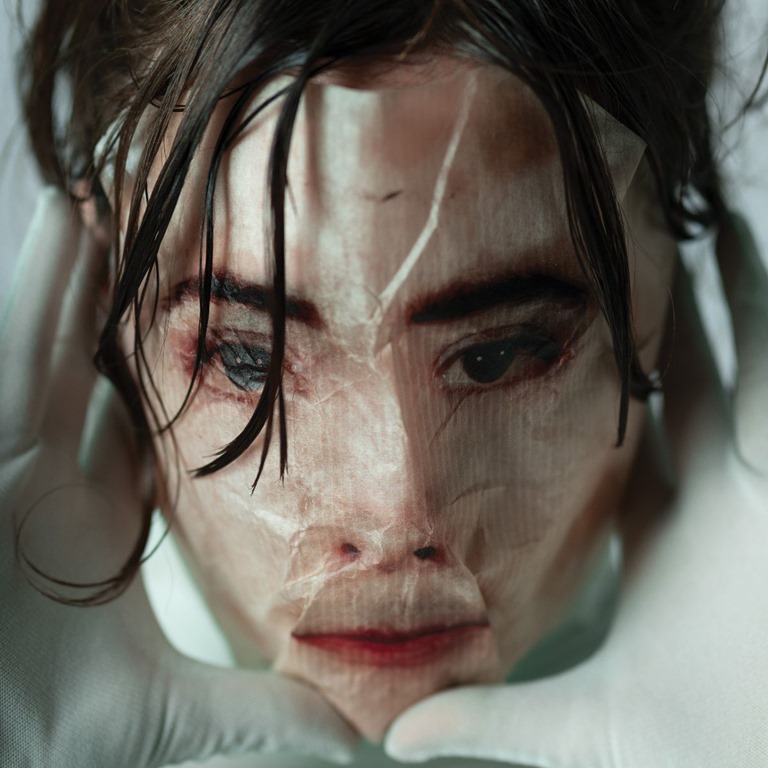
I’m not sure if it’s irony or simply appropriate that VHS¥DEATH should have their latest EP released on cassette, but then London-based Natalie Wardle is also a member of industrial/art-punk band Returning Videotapes, so there’s certainly a vintage media theme here. I write that as someone who remembers when the CD was the future which would render both vinyl and cassette formats obsolete at the end of an era where home taping was allegedly killing music. Who could have predicted that not even home downloading would have killed music, but that the instantly would have killed itself by slowly choking itself with greed and sputtering its death throes over streaming platforms raking in millions while paying artists fractions of a penny per hundred streams?

The relevance of this digression is that the six tracks on Corrupted Geisha – the follow up to ‘La Llorona (Love & All The Hate)’ released last year, sees Wardle incorporate – as the Accompanying notes observe – ‘breakbeats and hip-hop / UK garage stylings alongside spoken-word samples and dark synth-laden bass-heavy soundscapes’.

‘Space Bankers See You, the End is Near’ opens the EP in magnificent style, a near-perfect hybrid of hip-hop and experimental, samplist collaging, and there’s a lot of rants against capitalism in the mix here. It’s a layered piece where the samples dominate the musical backdrop that transitions from chunky hip-hop to minimal country. It’s like flicking through TV channels in the mid to late 90s, like stopping by your stoner uni mates’ house to find them whacked and listening to Wu-Tang.

The Dystropian mix of ‘Falsehood of Man’ works without any familiarity with the original mix: samples and rapid-fire drum ‘n’ bass percussion collide in what is ultimately a rather tensely-delivered list of psychological disorders, and ‘666 Pounds of Zedro Gravity’ follows this trajectory, a dark doom drone of synths providing the backdrop to tense samples.

‘Snakes in the Grass’ makes a sharp left turn into the domain of the weird with its rippling vocal effects and thick,, squelchy beats, not to mention downtuned, dolorous guitars. It’s intense and powerful: it’s not pleasant.

The lo-fi indie-goth of ‘What’s Your Worth, Vampire?’ is of such different sound and sound quality that it feels like a different band. It very much highlights the diversity and eclecticism of VHS¥DEATH, but it’s not a quick or easily assimilation in terms of stylistic mode.

The EP closes with a pretty faithful cover of Ministry’s ‘(Every Day Is’) Halloween – their first on Wax Trax!, but at the point they still hadn’t really evolved beyond Depeche Mode-y electropop. But then, faithful doesn’t account for the additional darkness, murk, and ethereal shades this version brings to the party, and it perhaps tells us more about VHS¥DEATH than is immediately apparent.

Corrupted Geisha isn’t an instantly digestible set by any means, and at times, its range is difficult to assimilate. But that shouldn’t be taken as a lack of focus or identity, so much as an indicator of an act whose sound and style is hard to pin down. And that alone deserves applause.

AA

cover

Wardruna release an official music video for their song ‘Skugge’ (meaning Shadow). The song is an eerie sonic journey, voicing a dialogue between man and shadow or as Einar Selvik puts it; “it is a song about shadows, echoes and the balance between seeking answers and wisdom internally and externally”. The video was filmed and produced in Norway by Ragnarok Film in January 2022.

To shorten the wait for their upcoming release Kvitravn – First Flight of the White Raven (out on April 22nd 2022), the live version of the song is also released on all digital platforms via Music For Nations/Sony Music/Columbia Germany/ByNorse. Watch the video here:

AA

Wardruna 2

Sacred Son return in 2022 with a new album, The Foul Deth of Engelond; a black metal chronicle of the 1381 Peasant’s Revolt. Weaving historical record with speculative inversion, the album recounts this fierce and tragic Great Uprising as a proto-revolutionary moment in English history that echoes loudly into our own toxic and fragmented present. The story is presented as inspiration and allegory, with principal songwriter, Dane Cross, describing it as his ode to righteous leftwing political violence.

The Foul Deth of Engelond marks a return to the expansive sound of their debut, whilst continuing the move away from the one-person insularity that began with the sophomore effort. The road-tested four-piece band was recorded in the cold dark winter of 2020 by tube-amp maestro Chris Fullard (Ulver, Sunn O)))), Boris) at the analogue-focused Holy Mountain Studios in London. These sessions were then mixed by Randall Dunn (Wolves in the Throne Room, Earth, Kayo Dot) at his Circular Ruin studio in NYC, resulting in a rich, physical, and enveloping sound of textural layered guitar, propulsive rhythms, caustic voices, and Dunn’s signature spirit-conjuring atmospheres.

Sacred Son have also shared first single, ‘Le Blakheth’ with Dane commenting, “‘Le Blakheth’ is the third track from Sacred Son’s new album The Foul Deth of Engelond. It chronicles the bloodiest and most violent chapter of the 1381 Great Rising; when corrupt and sycophantic ruling figures were beaten and beheaded whilst their obscenely lavish buildings burned around them.”

Listen now:

AA

SS

14th March 2022

James Wells

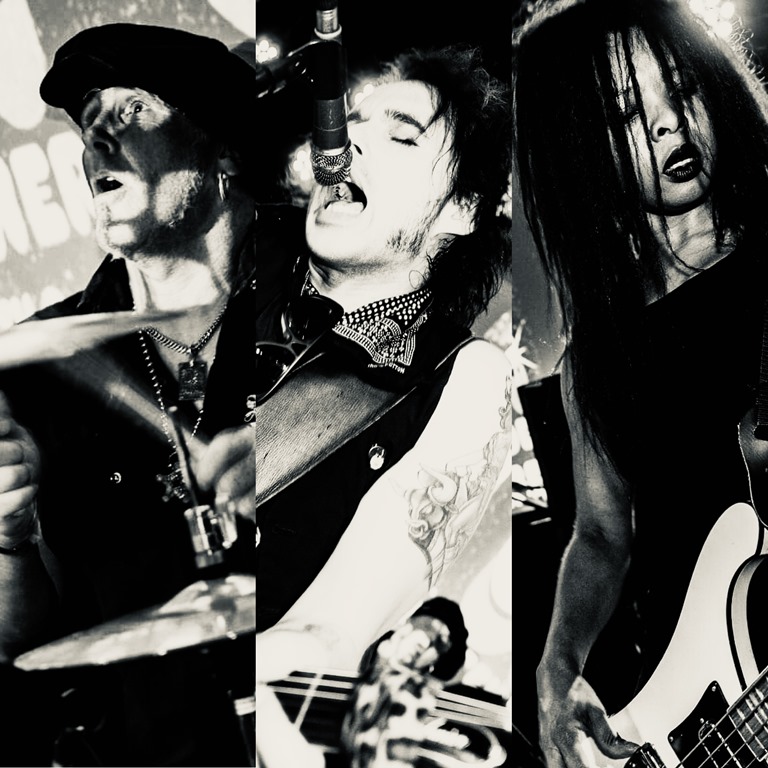
The first song off Continental Lovers’ forthcoming 10” vinyl E.P, ‘Pink Teeth’, which will be out in the Summer, is an old-school punk-rock blast of excitement. It’s not a blast of innovation, but then, I’m finding innovation increasingly weary. We need good tunes and energy, and that’s what Continental Lovers deliver here.

The London trio are bursting with energy and strong three-chord riffs played straight. There’s no pretence here, no production wizardry. Blink or nod and you’ll miss it, because it’s all over and done with inside two minutes and eight seconds, and that’s part of the appeal. They pack everything in – verses, chorus, guitar break, nifty hook – into that, and it’s a great tune played with real energy. It draws clear influence from vintage guitar pop in the vein of The Buzzcocks.

There’s a temptation to gush about how fresh it feels, the rush of something to immediate and direct, how it evokes memories and stirs a sense of nostalgia, but it wouldn’t exactly be in keeping with the spirit of the song. It’s in – out – clean, no messing. Perfection.

AA

Band image - Continental Lovers

Crease is the debut full-length album of deconstructed electroacoustic postpunk songcraft by Montréal guitarist and producer Kee Avil, whose touchstones range from Scott Walker and Coil to Fiona Apple; (early) PJ Harvey and (later) Juana Molina to Eartheater, Pan Daijing and Smerz—or like Grouper produced by Matmos.

Chiselled twitchy minimalist guitar, sinuous electronics, industrial and prepared-instrument micro-samples, furtive rhythmic propulsion, all galvanised by the anxious intimacy of finely wrought lyricism/vocals: Crease is one of those debut records that excites a wide range of peerless references precisely because it’s so compelling and convincing in its own idiosyncratic originality, vision, detail and execution.

To coincide with the album’s release comes the video for ‘HHHH’. Watch it here:

AA

e5b78732-9de6-90a0-c600-bb352c7f2845

Mille Plateaux – MP40 – 11th March 2022

Christopher Nosnibor

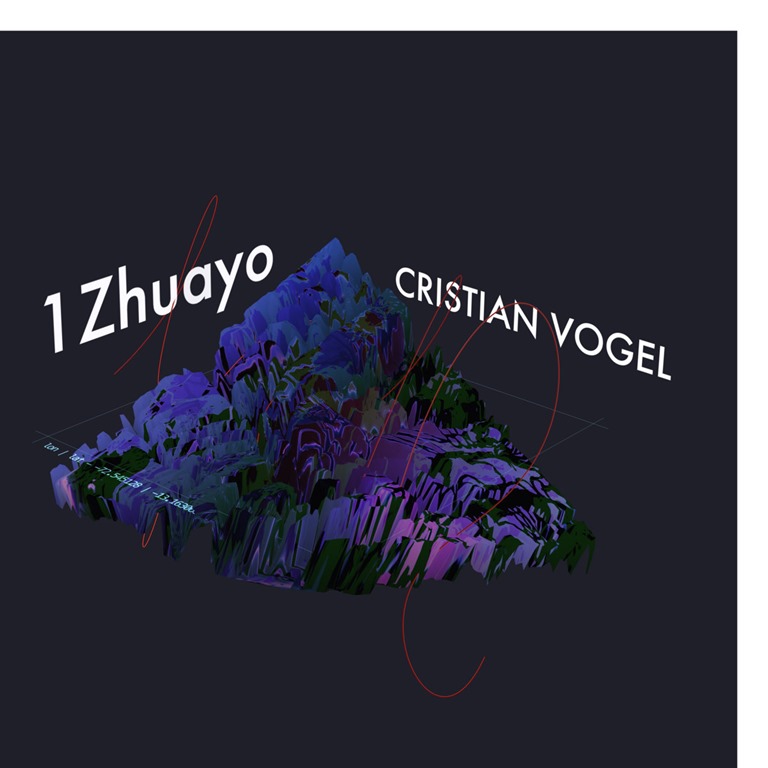
The last time I engaged with the work of Cristian Vogel was when his double-disc compilation, the archly-titled Classics in 2016. This retrospective covered his 90s output, and traced his evolution as an innovator in underground techno and electronica. His catalogue has doubled in size since then, and it’s apparent that Vogel isn’t only prolific, but an artist who doesn’t like to retread old ground, constantly questing and striving to develop and explore new directions. 1Zhuayo explores many new directions, all at once.

Penning notes to accompany the release of this album, Lain Iwakura and Achim Szepanski wrote that ‘The new Cristian Vogel album 1Zhuayo sounds as if non-musicology & ultra-blackness is not an end or a destination to be arrived at, but as if it is the point of departure, much like tomorrow relates to the day after tomorrow. As if we have left the space of certainties and are moving instead into one of manifold possibilities. They are anticipated in the micro-structures of sound, which is the process of playing with and against the software.’

But then I start to get lost when they continue to explain how Vogel ‘creates a rhythmight that is constructed from the anticausality of Rhythm as counter-counted, the tracing of the rhythmicity of Rhythm in the creation-in-Rhythm. Rhythm is foreclosed to hearing. Non-music radicalizes this notion by subtracting hearing from the framework of experimental music, which claims that everything is heard from Rhythm. The material of music is the continious flow itself. Cristian Vogels method for this way of creating sound is called Rhythmics.’

I feel as if I’m wandering through Deleuze and Guatarri’s A Thousand Plateaus while drunk and on drugs. Words lose meaning – as does sound. It’s bewildering, disorientating. 1Zhuayo is, on most levels, a dance album. But it’s not an easy one, and it’s pretty dark and dense in the main.

The album starts as a churning roar, scraping feedback and industrial machinery grinding away like a tumble drier full of broken bricks, before ‘Hyphadelity’ plunges into booming bass groove-orientated dance. But it’s not comfortable or commercial: the vocals are menacing, half-submerged as they are amidst the busy layerings and the surges of extraneous noise. ‘Astrocumbia’ sees things turn nasty: dance music you can’t dance to, a frenzy of distorted beats exploding all over amidst a gruelling churn or super-low, super-hectic bass that pounds at the pit of the stomach and crushes the cranium. ‘Emanations’ slows it down with an almost dubby vibe.

Things unfold differently on ‘S18’. Again, the dance tropes are prominent, but they’re fractured, pulled apart, before a tsunami of solid sound crashes through on ‘1Zhuayo Express’, which swells to immense proportions, like Godzilla rising from the deep, flexing its muscles as a wall of sound, gloopy bass and grating mid-range pulsating in a monstrous behemoth of power electronics.

The Strom Stadt remix of ‘Transferenz’ is a brutal exercise in monster hardfloor techno that makes The Prodigy’s later works sound like bouncy chart pop, while the Disintegration Mix of ‘Angle Phase Life’ is a brutal mesh of noise with mangled beats partially submerged by the successive detonations of low-end. It sounds like an erupting volcano and missiles launching in slow motion. And amidst it all, electronics pop and squelch like fireworks.

‘Cables’ isn’t a cover of the Big Black song: in fact, it’s quite the opposite being stark and minimal, stuttering glitchy, with a crunching bass drum thudding mercilessly throughout, before the last piece, ‘Serpent Acid’, a splattering blast of jamming percussion and nagging, repetitive, cyclical synth motifs.

Less is more, and this is largely minimal, but at the same time, builds up later from unexpected angles to create something different. It leaves you feeling somewhat dazed – in a good way.

AA

a1006963432_10

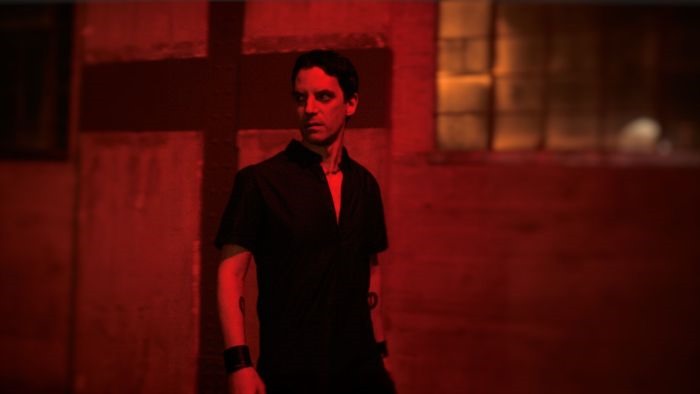
Musician and actor, Eric Oberto has just unveiled his new video and single release for the song, Closer Than Ever Before. The song appears in the forthcoming Hollywood theatrical film, Malibu Horror Story due out in late 2022.

‘Closer Than Ever Before’ paints the dark picture of a man running from himself and racing against his own mortality. While being stalked by “Death” himself, he encounters memories from his past and startling entities that chase him closer to that final closing door.

The music video for ‘Closer Than Ever Before’ will mark the second collaboration between Eric Oberto and Erik Gustafson of the band, Adoration Destroyed!

Both Eric and Erik co-directed the music video shoot. Eric Oberto also took on the role of Producer with the invaluable help of Video Shoot Production Manager, Micha Marie Stevens. Erik Gustafson Cinematography brilliantly handled all of the post-production and editing work. Watch the video here:

AA

88049dbf-b190-954b-417a-824332a6f485

Constellation – 11th March 2022

Christopher Nosnibor

Kee Avil isn’t an individual, and isn’t really a band, so much as a concept, a collective, a project, the brainchild of Montréal producer and guitarist Vicky Mettler. Debut album, Crease, is pitched as ‘a singular expression of fractured dream logic concretized in chiselled postpunk guitar, sinuous low-end electronics, a panoply of organic and digital micro-samples creating alternately twitchy and propulsive rhythm, and the anxious intimacy of her finely wrought lyricism and vocals’.

It all sounds pretty grand and sets expectations high. Thankfully, Crease doesn’t disappoint. To manage those high expectations, let’s get it established here and now that it’s not a conventional album, with easy songs with obvious or accessible verse/chorus structures.

‘See, my shadow’ starts out with hints of early PJ Harvey but swiftly spins into industrial post-punk with electro/hip-hop beats, more akin to Lydia Lunch fronting Coil remixed by Portishead. It’s a lot to happen in the space of under four minutes, but then, that’s par for the course here: Crease is as jam-packed with ideas as it is sonic strangeness. It’s not an easy album to get a grasp on, and Mettler comes across as quite otherly. Some may say crazy, unhinged, but it’s not that. It’s just apparent she exists on another plane, and Crease shuns conventional structures in favour of exploring avenues of songwriting that more closely reflect an alternative vision and concept of ‘songs’. I certainly don’t mean that as a criticism, but equally, don’t want to sound like a wanker by saying that this is art and therefor superior. I mean, it is superior, but not because of that. To unpack that a bit, Crease is clearly the product of a quite specific mindset, and a determination to find a means of articulating. And sometimes, to articulate is to go beyond language and beyond conventional musical structures. As such, what Crease articulates is a separation from the rest of the world, the turmoil of the mind, the duality of the internal monologue.

‘Drying’ is sparse, glitchy, a clicky clatter and pop of percussion providing an erratic framework for the incidental instrumentation and slowed-down, opiate-haze vocals that are at once sultry and threatening.

‘And I’ is a sparse, scratchy acoustic guitar-based song; the tense picking at times calls to mind early Leonard Cohen, and the atmosphere is muscle-tensingly taut. It’s a masterclass in how less is so much more, and as Mettler’s breathy vocal arcs over the spindly fretwork, a kind of magic happens in the way it draws you in with a hypnotic sensation. ‘Devil’s Sweet Tooth’ lunges and sways, violins teeter on the brink of a breakdown

It’s often difficult to make out the actual lyrics, so you lean in closer in an attempt to get your head and hands around them. You fail, but you’re drawn in closer to the dissonant strangeness that’s more than just music: it’s a world of disconnection and dislocation. It’s unnerving, alien, but likely better than this one right now.

AA

a2394473098_10

Ukrainian dark electro band, BlazerJacket is pleased to unleash their new video and single, ‘Get Out’.

The song addresses the ease of being drawn into Stockholm Syndrome and the severity of the consequences. You have to get out of the abusive and parasitic society. By just noticing the first signals, you will feel better.

BLAZERJACKET is a couple of crazy creators who are constantly experimenting with sound. The change in the vector of their art is as unpredictable as our lives. Danceable beats, powerful bass, and crazy synths are always part of any new BlazerJacket formula.
With ‘Get Out’, BlazerJacket plays in the arena of Dark Electro and EBM together with Dirty Bird 13; a band known for inhabiting this territory.

Watch the video here:

AA

ed8baa14-4a4e-f35b-7f93-4b5fae5ff8e2

Not Applicable – 4th March 2022

Christopher Nosnibor

Instant disorientation is the effect of hitting ‘play’ on Isambard Khroustaliov’s Shanzhai Acid. What the hell is this? Woozy drones and amorphous waves or warping wisps ripple and blur, and hums like a swarm of drunken bees weave precariously through an alien soundscape. I’m accustomed to experimental and sci-fi, but this… This, I was not fully prepared for. By fully, I mean at all.

It’s vaguely sci-fi in its strangeness, and I find myself blinking and bewildered in a lack of comprehension as to what it’s all about.

Welcome to the world of artificial intelligence, which may well be intelligent, but in a way that’s so artificial as to have taken leave of intuition. To unpack that, the liner notes explain that Shanzhai Acid is an album ‘produced through artificial intelligence design and interaction with modular synthesisers. Reminders of the complex, granular music of Autechre, Fennesz’s reimagined environments, the deconstructed dance music of Lorenzo Senni, and the expanse, gestures and sheer reach of Gerard Grisey’s spectral master-work: Les Espace Acoustiques, Shanzhai Acid exists in its own intersection of art, design, music and technology where process and function are transcended to produce an album of extraordinary auditory allusions’.

My initial reaction was, if I’m honest, ‘hell yeah!’ Because innovation in music seems to have slowed so badly over the last decade. No, that’s not my ageing and being stuck in the past. I’m not saying there’s been no good or exciting new music. But innovation stalled: I believe that to be pretty much fact. Because it’s pretty much all been done by now. Guitars have been taken to their limits and beyond, meaning most significant advances since the late 70s have been driven by the use and abuse of technology, and while hip hop and dance music have certainly exploited technology, we’ve not seen anything as radical as the advances made by Throbbing Gristle and the like in the last forty years.

There are points during Shanzhai Acid that both Throbbing Gristle and certain dance tropes are evoked, with crackles and fizzes and static shudders and glitches pop and hum and there is circuitry in interplay, whirring and wowing. It’s hard to tell how much meaning to attach to the titles of these pieces, or even how seriously to take it. But then serious music can have a playful element, and ‘Experts v. Shamans’ sounds like R2D2 in communication with a nightmarish fairground ride. It’s a journey – and a disorientating one at that – that leads to the seven-minute slow-grinding drone and stirring swirls and hums that build layer upon layer on ‘Meanwhile Cephalopods’. Meanwhile, cephalopods what? No, there is no what. It simply is.

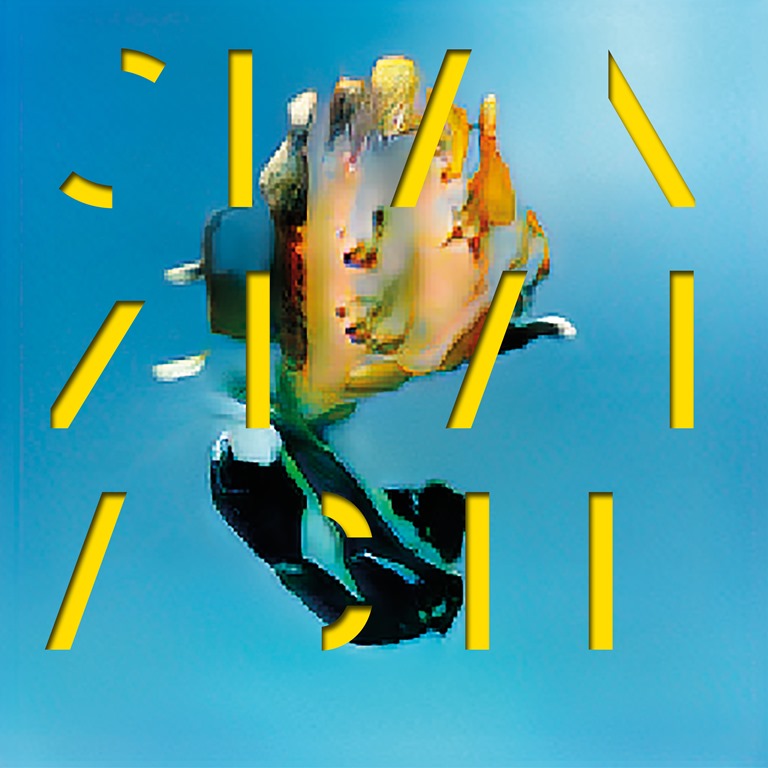
Shanzhai Acid is a remarkable abstract work that delves into microtonal and glitch territory, swerves wide into drone and ambience, and scratches at the shores of early industrial and vintage avant-garde. With such wide-ranging elements scrunched together, it’s a unique hybrid and a refreshing, if at times challenging listen. And while you should supposedly never judge a book (or album) by its cover, Shanzhai Acid sounds like the cover looks.

AA

Shanzhai Acid album cover 6000px RGB