Archive for February, 2022

Tartarus Records – 25 February 2022

James Wells

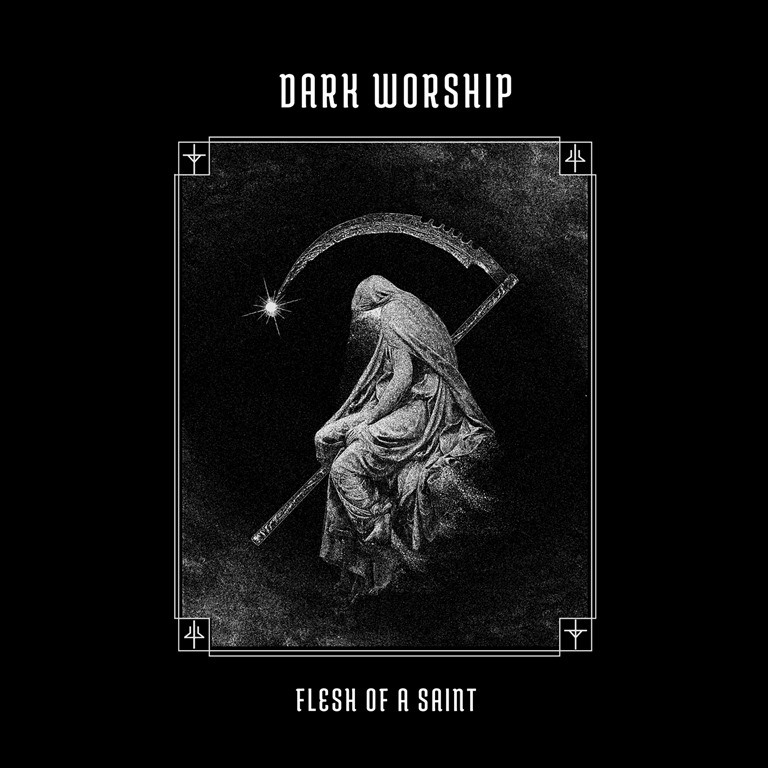
Dark Worship came together in what they describe as ‘the bleak and unsettling landscape of the post-industrial American Midwest’ and is less of a band and more of a collective of musicians from various bands, co-ordinated by J. Meyers (Axioma, Aureae Crucis). They pitch their sound as dark, and it is, but this is a different kind of dark: Flesh of a Saint has the murky lo-fi production values of black metal, which serves the bleak atmospherics well, but it’s not metal, and nor is it dark ambient or tethered to any specific or clear genre.

The two-and-a-half-minute shock of ‘We’ve Always Been Here’ begins as an ominous drone before erupting into swampy grunge spewed from Satan’s sphincter: there’s a nagging guitar riff half-submerged in the mix, and a thudding kick drum stammering out a beat that’s on the brink of a panic attack, and it only gets dingier from hereon in.

There may only be six tracks with a total running time of just over twenty minutes, but over its duration, Dark Worship live up to their name: punishing percussion hammers and clatters before giving way to doomy, funeral synth drones to provide the backing to harsh, shouted vocals on ‘Culling Song’, and it evokes the mangled noise of Prurient. It’s heavy listening. ‘Hollow Body’ brings a rasping vocal, the empty rasp of the walking dead, grating from a purgatorial pit shaped by a pulsating low-end throb.

If the final ‘Well of Light’ sounds redemptive, the light at the end of the tunnel, think again: it’s more like being sucked into the vortex after the last drops of energy have been sapped from your limbs and you hang, lifeless, waiting for the end. Oblivion can’t come too soon. Worship the dark.

AA

821847

Ipecac Recordings and contemporary American soul band King Garbage are pleased to present "Monster Truck," the latest single to be lifted from the band’s album Heavy Metal Greasy Love. The album will be released on April 1 and is available to pre-order now.. Digital pre-orders include downloads of pre-release singles ‘Busy On A Saturday Night,’ ‘Piper’ and ‘Peanut Butter Kisses.’

Bass-y piano revs up ‘Monster Truck,’ which the band’s Zach Cooper calls “somewhere between musical theatre and classic rock.” Vic Dimotsis notes, “This song is less ‘sea salt’ and more ‘salt of the earth’. It makes more sense 100 miles outside of any major city and may be one of the few songs ever written to use ‘truck nuts’ in the chorus.”

Vic adds, “Truck Nuts glisten off the back bumper, swinging low with challenging and poetic weight. In the American South, a truck is not just a truck, but an idea. Curiosity shakes its leathery wings in this Joel Seger Springsteen high test musical theatre redline onesie, with stars down the sleeves, blow your tailfeathers off type alpha Stevie Nicks with no intent on ever returning from said pyrotechnics.”

Stream ‘Monster Truck’ here:

AA

KG2

Photo Credit: Josh Finck

Lifted from their recent AA-approved Slowburn EP, Dissonance have released a lyric video to accompany the Smoke and Mirrors Mix courtesy of James Reyna, aka Melodywhore.

It’s a slowburn indeed, and you can watch it here:

http://a%20href=

AA

a3299441169_10

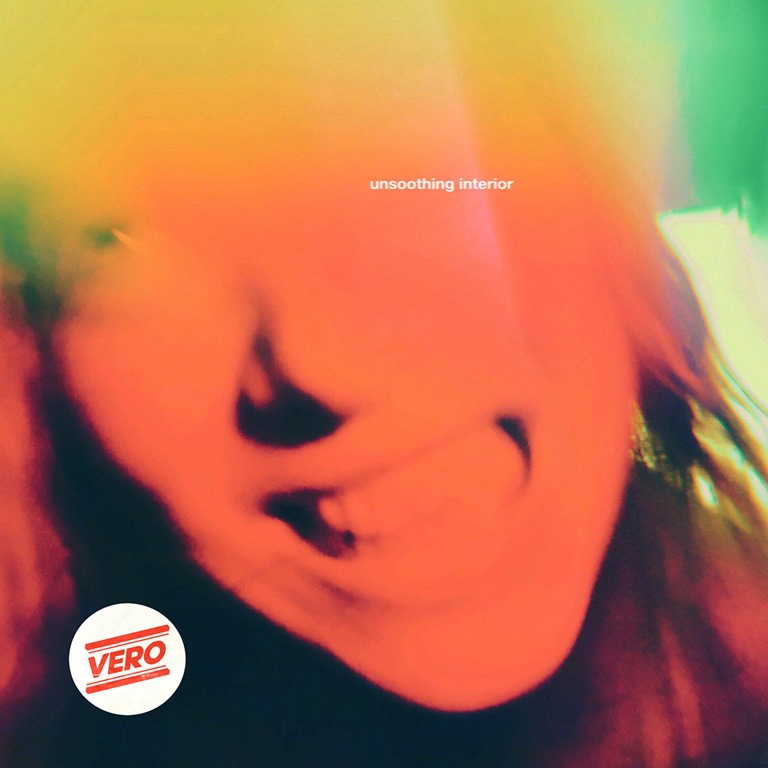
On their debut album Unsoothing Interior, Stockholm’s Vero reflect the nature of life itself. Their songs prioritise feeling over perfectionism – what feels, or sounds, best – creating a record that tumbles through its contents with a sense of unpredictability, excitement and curiosity. “We don’t want to be super musicians; we want to write the best fucking songs and just have the best energy and show people that we’re having fun,” explains singer and bassist Julia Boman. “We don’t want to be a perfect band, in that sense.”

Fun has always been at the heart of Vero’s story, which began when guitarist Clara Gyökeres walked up to Boman and asked if she wanted to start a club night together. With the bassist’s school friend Amanda Eddestål, also now on guitar, they started DJing as a trio before eventually deciding it would be more enjoyable to play their own music rather than other artists’ and formed the band. “We DJed old disco music, but all three of us were going to rock concerts and loved rock music,” Boman says. “We were like, ‘We’ve all made music in some way before so we should start playing together instead’.”

Voracious music lovers, at first they struggled to settle on one sound, purely because they wanted to try their hand at “every genre possible”. But during the making of their 2020 EP ‘Heaven On Earth’, they shifted from synthesised sounds to using guitars and real drums, and had an epiphany.

“Synthesisers are so controlled,” Boman explains. “You have to really be like, ‘Oh, that’s not the right tune’, but when you’re playing the guitar, it can sound pretty chaotic. When we write now, we don’t have much control. We’re not very picky about it.”

Ahead of the album, they’ve released the single ‘Cupid’. Listen to it here:

a2610634324_10

Earth and It’s Decay is one of the few releases Déhà is planning on releasing this year and this release sees the Brussels-based multi-instrumentalist collaborating with Polish dark ambient artist Marla Van Horn to craft a sound that is equally engaging and menacing, elegant and melancholic.

There is an overarching sense of hurt and decay that pervades throughout these six tracks, as the duo focuses on slow-moving rhythms, bleak ambiances, angelic voices, and anguished screams that result in a genuinely harrowing and gloomy atmosphere.

The duo has shared a music video for opening song ‘Purification Ritual’. Watch it here:

AA

090523d3-2802-f905-fa4c-c18066632df1

14th February 2022

Christopher Nosnibor

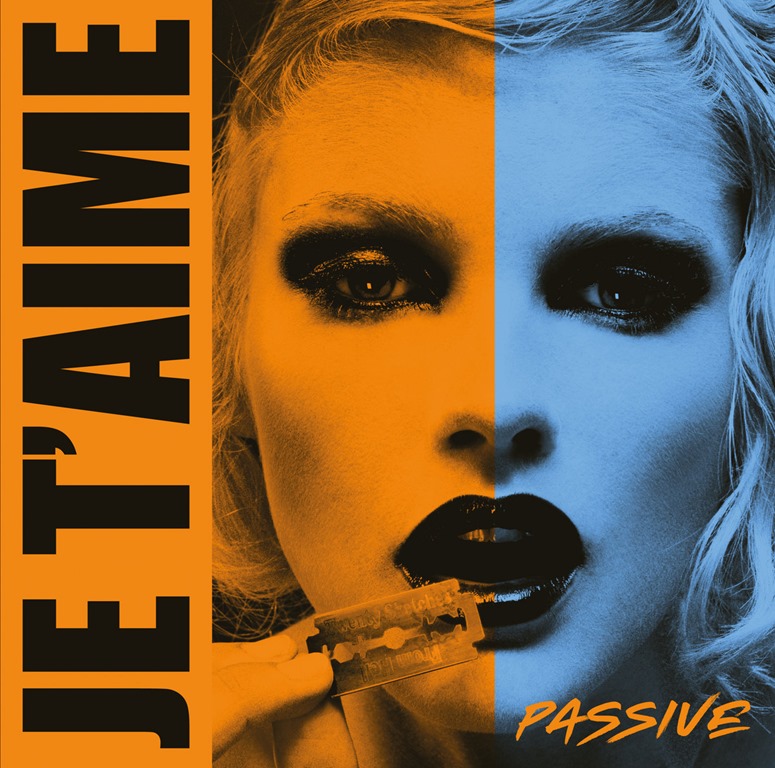
Passive is the second album from French post-punk band Je T’aime, and is the first of a two-part set, which will be completed with the release of Aggressive in the not-too distant future.

The album continues where its predecessor left off, and marks the development of a theme as part of an extended concept work, where we ‘follow the evolution of the same antihero; a common avatar of the three musicians. The tone hardens, the atmosphere becomes more melancholic, and the lyrics embrace bitterness and anger.’ The liner notes explain that Passive ‘continues the theme about the difficulty of growing up. Our main character is constantly caught up in the past, repeats the same mistakes and ends up not being able to move forward in his life. It is no mystery that the band’s music constantly looks for influences in the past 80’s for that reason’.

So many people do get hung up on the past, and seem to hit a point in their life – usually around their early 30s, in my experience – where they simply stop evolving and reach a stasis, a brick wall where they conclude that no good new music has been released since they were in their early 20s and nothing is as good as it used to be. It’s not all memberberries and memes, but there are many agents at play driving an immense nostalgia industry. And it’s easy money: no development required for new ideas when there’s a near-infinite well of past movies and music to plunder and rehash or at least lean on. Would Stranger Things have been the smash that it was if it was set in the present? However great the script, plots or acting, much of its appeal lies in its referencing and recreation of that intangible ‘golden age’. While that ‘golden age’ may depend on when an individual was born, the acceleration of nostalgic revivals and recycling means that kids who weren’t even born in the 80s or 90s are nostalgic for synth pop and grunge by proxy.

Passive is anything but. But what it is, is a dark, heavy slab of dark, bleak, brooding, a mix off sinewy guitars and icy synths with rolling bass and tribal drumming that lands in the domain of early Siouxsie, Pornography­era Cure and The Danse Society around the time of Seduction. The instruments blur into a dense sonic mesh. There’s a tripwire guitarline on ‘Another Day in Hell’, which kids off the album with a gloriously dark, stark, intensity that’s Rozz William’s era Christian Death as if played by X-Mal Deutschland. And if I’m wanking nostalgia over this, it’s less because I miss 1983 (I was 8) than the fact they capture the energy and production of that groundbreaking period with a rare authenticity.

‘Lonely Days’ is a bit more electro-poppy, but has a guitarline that trips along nicely and throws angles and shade. ‘Unleashed’ reminds me more of The Bravery and their take on 80s pop, but then again, The Cure’s influence looms large again, and elsewhere, ‘Stupid Songs’ goes altogether more New Order / Depeche Mode, but then again, more contemporaneously, it’s not a million miles off what Editors were doing on In This Light and On This Evening – and album I found disappointing at first because it felt like derivative 80s electro fare, before the quality of the songs seeped through to convince me.

One thing that’s often overlooked about 80s pop is that dark undercurrents ran through even the most buoyant of tunes from the most chart orientated acts; Duran Duran and Aha, even the music of Nick Kershaw, Howard Jones, A Flock of Seagulls, was cast with shadows flitting beneath that veneer of production. So when they go bouncy disco on ‘Givce Me More Kohl’, the parallels with The Cure’s ‘Let’s Go To Bed’ and ‘The Walk’ are apparent, with a lost and lonely aspect to the vocals, and they go full Disintegration on ‘Marble Heroes’. And that’s cool. It’s poignant, sad, wistful, an emotional cocktail. On Passive, Je T’aime revel in all of those elements of influence and pack them in tight, and they do it so well and with such discipline. They really know what they’re doing: the sound and production is class, and the songs and classic, and the sum of the parts is a truly outstanding album.

AA

a3347450970_10

Southern Lord – 25th February 2022

For many, the days of the longest, hardest lockdowns are, it would seem, behind us. And yet the shadow of the pandemic continues to hang long as dark; it’s hard to move on and truly put it behind us when life continues to be anything but normal; signage and masks and booster reminders are the new normal, and we face a new normal carrying scars of a personal nature, each and every one of us. Successive lockdowns, periods of isolation, have all affected us in different ways, and we’ve all suffered some form of trauma or psychological damage in living through conditions we’re simply not equipped for.

For many creative types, working through the experience has manifested in new artistic output. There’s something about channelling that anxiety into something, even if not direct or specific in addressing the issue, that helps to somehow minimise, contain, or otherwise manage it. Thurston Moore’s latest project, like so many was born out of a lockdown environment, and it’s an exploratory work, in so many ways. A series of instrumental guitar pieces recorded during the summer of 2020, it’s a document of, as the liner notes outline, a period where, ‘as the world confronted the pandemic shutdown and as the people of good conscious stood up against the oppression of racist police oppression and murder.’ It goes on to ask, ‘How much screen time does a parent allow a child? How much screen time does a child need to realise a world which has the means to coexist as a community in shared exchange?’

This feels like numerous issues, simultaneous but separate, have collided to inspire this album, and raises as many questions as answers. Moore is clearly placing his flag alongside Black Lives Matter, and it struck me – and surely many others – that the protests should have taken place when the world, pretty much, was in lockdown. How could this be? This was a moment in time when protest felt impossible. In fact, anything felt impossible. But the murder of George Floyd was a trigger and it marked a tipping point of something far, far bigger for so many. This was about centuries of oppression and division. The scenes aired over the news channels, globally, were electrifying. But how does this relate to monitoring the screen time parents should grant their children? Surely it’s less about the amount of time, but parental control, and the extent to which parents grant their children exposure to current affairs? That said, it’s something I’ve wrestled with myself. As a child, I had no interest in anything on the news; my own daughter, aged 10, is genuinely interested and has her views on our prime minister, our government, and the pandemic, and more. While I feel a duty to protect her from scenes of violence and endless report of rape, murder, abduction, and brutal crimes against women and children, I also feel that a certain degree of exposure to ‘the real world’ is beneficial, just as I’ve come to see that many computer games encourage problem-solving and eye-hand co-ordination. Screen time isn’t all bad if you can get over the generational differences. But.. but… no doubt, it’s a conundrum.

Screen Time offers no answers. As is often the case with instrumental works, there is little to be gleaned from them in and of themselves, and the titles offer little by way of interpretive guidance. The only thing that really struck me about the titles, in fact, is that several share their with cure songs: ‘The Walk’; ‘The Dream’. ‘The Upstairs’ feels like an allusion to ‘The Upstairs Room’ (the title of the 12” EP version of ‘The Walk’; but then again, all of the compositions are ‘the’ something: ‘The View’, ‘The Neighbour’, and these reflect the shrunken worlds we inhabited during this time: four walls, the view from the window, and the TV as the window to the world. There was nothing else but to look, and to ponder. Screen Time is a work of ponderance. It doesn’t have to be coherent, because coherent thought isn’t the state of the world right now. Show me someone who has a firm handle on everything that’s going on and I’ll show you a bullshitter. No-one knows anything, and we’re all just fumbling, stumbling through.

Many of the pieces on Screen Time are short, fragmentary, and sparse, only half-formed, but evocative and atmospheric: ‘The Walk’, a minimal piece consisting of a heavily chorused and echoed guitar trickling a cyclical motif for a minute and fifty-one seconds is exemplary. Elsewhere, ‘The Upstairs’ is a haunting piece led by disorientating, discordant piano that tumbles along.

At times reminiscent of Earth, or more specifically Dylan Carlson’s more recent solo work, Screen Time borders on ambience in its slow, soft unfurlings. The final piece, the nine-minute ‘The Realization’ is almost hypnotic; slow, with deep, resonant notes that reverberate and hover while harmonics chime and soar.

As a listening experience, Screen Time is pleasant, absorbing. I like it. But what does it say? It speaks for Thurston Moore alone, just as any such release can only speak for its composers and performers. That’s ok. When stitched together, in time, all the voices will combine to present the full picture. For now, what simply matters is that each voice keeps adding to the tapestry of documenting the present, a time unlike any other.

AA

LORD283_tp0001c_LPtipon_jacket_cover_rev011217 [Converted]

Dark alternative innovators GGGOLDDD have revealed an impactful new single from their upcoming release album This Shame Should Not Be Mine. Entitled ‘Invisible’, the track is about feeling alone and unseen after experiencing sexual assault. It’s about keeping it all to yourself. Which makes it impossible to process the trauma. This makes you feel isolated and alone – as is laid bare in the filming of the video, which features vocalist Milena Eva positioned in an isolated frame of nothing but black.

Milena elaborates: “I’ve struggled to say out loud that I was hurting. You can hear this vulnerability in the super intimate electronic parts. And you can hear the overwhelming effect of such trauma in the huge, bombastic choruses… The assault happened to me years ago and I kept it a secret out of shame and guilt. Every time I met somebody new or if I felt insecure I got really paranoid. I was so scared people could tell from my face I wasn’t doing alright. I tried to keep it all together. Faking my way through everything. Now I know that this was really toxic for my mind and body. It literally made me sick. The shame and the fear really take their toll. I think we should all take a good look at ourselves. How can we make sure that the assault doesn’t happen any more? But also how do we evolve into a world where people can live without shame?"

Watch ‘Invisible’ here:

http://a%20href=

The band’s most ambitious and masterful work to date, This Shame Should Not Be Mine was conceived in the silence of 2020’s pandemic lockdown, partly as a way for GGGOLDDD lead singer Milena Eva to confront parts of her past and partly in response to the Roadburn Festival’s invitation to propose a commissioned piece for its 2021 online edition.

This Shame Should Not Be Mine is out on April 1st via Artoffact Records.

GGGGold

Season of Mist – 8th February 2022

Christopher Nosnibor

Christian Death may have ridden a certain commercial crest in the late 80s and early 90s during a prolific spell with the run of albums from 1988’s Sex and Drugs and Jesus Christ, All The Love / All The Hate the following year, and 1991’s single’s collection Jesus Points the Bone at You?, but they’ve spent the majority of the their lengthy career running under the radar, both commercially and critically. Their most prolific spell was plagued by controversy, and would see many tour dates pulled and the band attract a slew of negative press. And that’s suited them just fine. Valor articulated it best on ‘Wretched Mankind’ on the aforementioned Sex and Drugs, ‘Fuck ‘em’. The point is, they’re still here, and while the output’s slowed, they’ve still released three albums since the turn of the millennium.

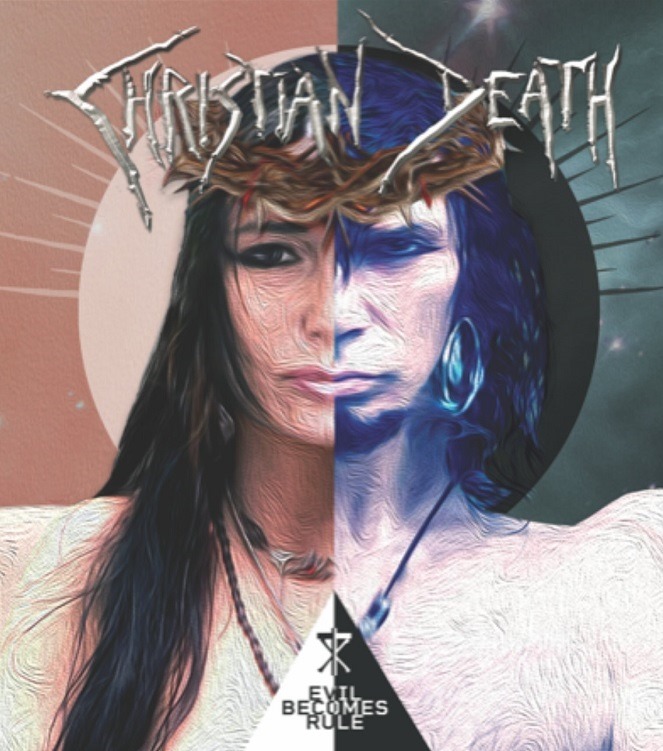
2022 has seen a sudden upturn in activity, starting with their online release of their cover of David Bowie’s ‘Quicksand’ to mark the fifth anniversary of his death and also his seventy-fifth birthday, swiftly followed by new single, ‘Blood Moon’, the lead single from forthcoming album Evil Becomes Rule.

‘Blood Moon’ is a stonker, too. Vintage Christian Death, it’s what you could reasonably call ‘quintessential goth’ for wont of a better summary. The bass and drums are stitched tight together in a solid four-square formation, and the bass is prominent, too. The guitar soars, heavy on the chorus and sustain, and Valor croons brooding and steely synths streak the sky and add depth to the epic chorus. Balancing dark with solid, rocking, and a catchy hook, it’s a remarkably accessible song that’s an obvious single. The chances are that if it was released by an up-and-coming new band, it’d be a breakthrough hit, but one suspects the band’s name and longevity will likely mean it’s unlikely here – but I’d like to be wrong. C’mon world, prove me wrong. For once.

AA

ChristianDeath-Evil-TourAdMat-2-1