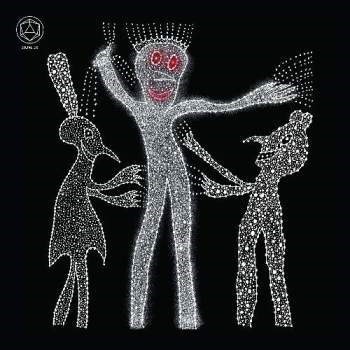
Archive for July, 2018

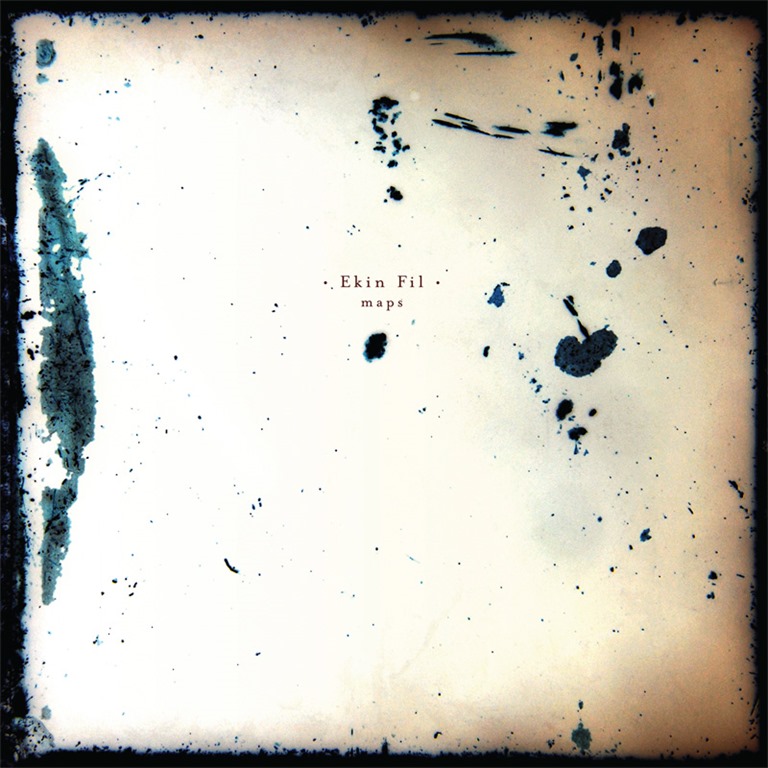
The Helen Scarsdale Agency – HMS048 – 17th August 2018

The pitch for Maps’ as ‘minor-key’ where ‘tear-stained notes of piano, organ, and guitar veer along elliptical orbits as a soft-whisper lilt of Ekin’s voice narrates more by emotive decree than by literary couplet’ is but a flavour.

The album is largely inspired by her first winter on an island in the Sea of Marmara, away from the hustle and bustle of Istanbul, Maps is a completive work that reflects on experiencing silence and isolation. It’s relatable, and as is so often the case, in the personal lies the universal.

Isolation is not necessarily geographic, and distance doesn’t need to be great (the Sea of Marmara lies within the greater metropolitan umbrella of Istanbul) to have an effect on the psyche. Distance also needn’t be geographic: there’s no distance more isolating than emotional distance. It’s immeasurable, impossible to quantify, but manifests as a relentless ache, a sense of emptiness that sits in the gut and echoes around the chamber of the chest cavity. Mere inches in physical terms count for nothing when there’s that separation, and it grows to a pulling desperation, a gap that can’t be bridged. So close, and yet so far… just out of reach. There’s no-one to turn to, nowhere to go. Because you’re alone. And there are no words. Maps charts a journey through inner space, its hesitant notes representing the hesitant steps into unknown territory, alone.

On Maps, there are no words: this is the language of sound which communicates the message in its entirety. The warm-tones and sparse arrangements define the atmosphere of Maps. Fuzzy-edged guitar notes hanging in rarefied air for an eternity allude to Fil’s delicate, understated approach. Her music is sparse yet warm, delicate yet rich.

It’s a remarkably quiet, soft, understated work. It isn’t that nothing happens, but that evens unfurl discreetly, subtly, solely, with a certain delicacy. Organ wheezes as feedback whines on ‘Away’, while on the majority of the compositions, it’s a soft, echo-soaked piano that provides the main focus for this hushed, sparse song sequence which drifts together to create a very natural flow.

Maps doesn’t offer a direct route from A to B. But it does remind that the map is not the territory, and that the geographical terrain is not the mental space.
hms_048_M2

Christopher Nosnibor

The 13th of July is a Friday. It seems like an appropriate date for a show hosted by The Trembling Hellish Infernal Nightmare Generator. And besides, an event that involves standing in a dark pub venue being aurally assaulted by four noisy bands in sweltering heat represents the perfectly antithetical alternative to the populism of a city swarming with racegoers.

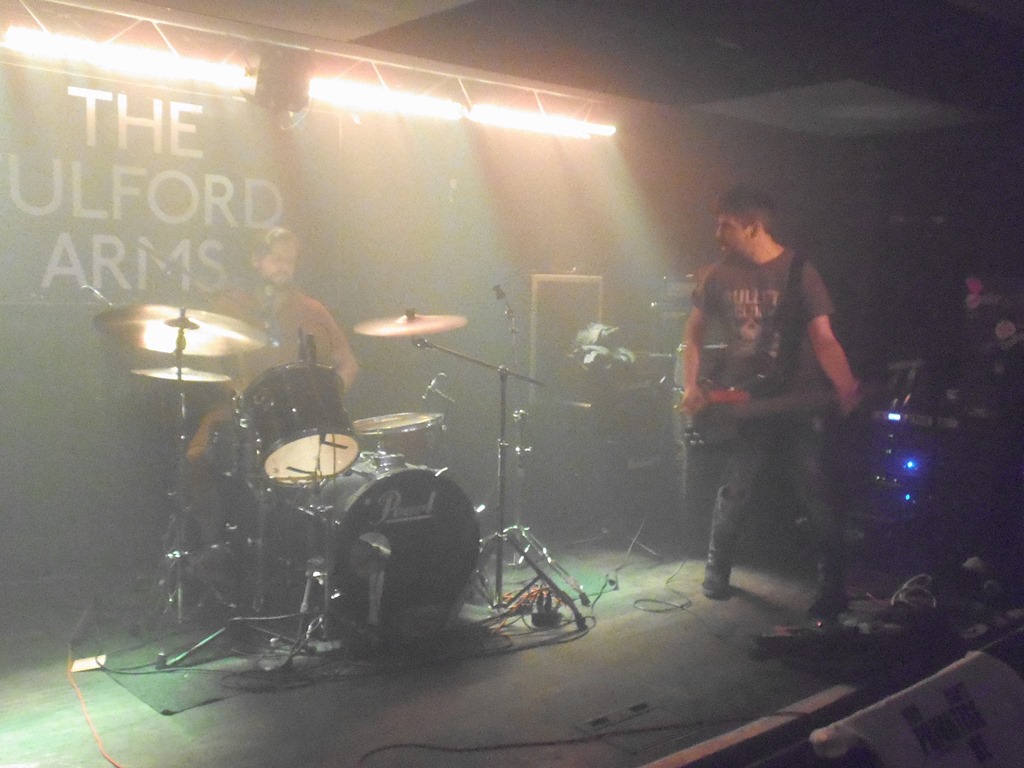
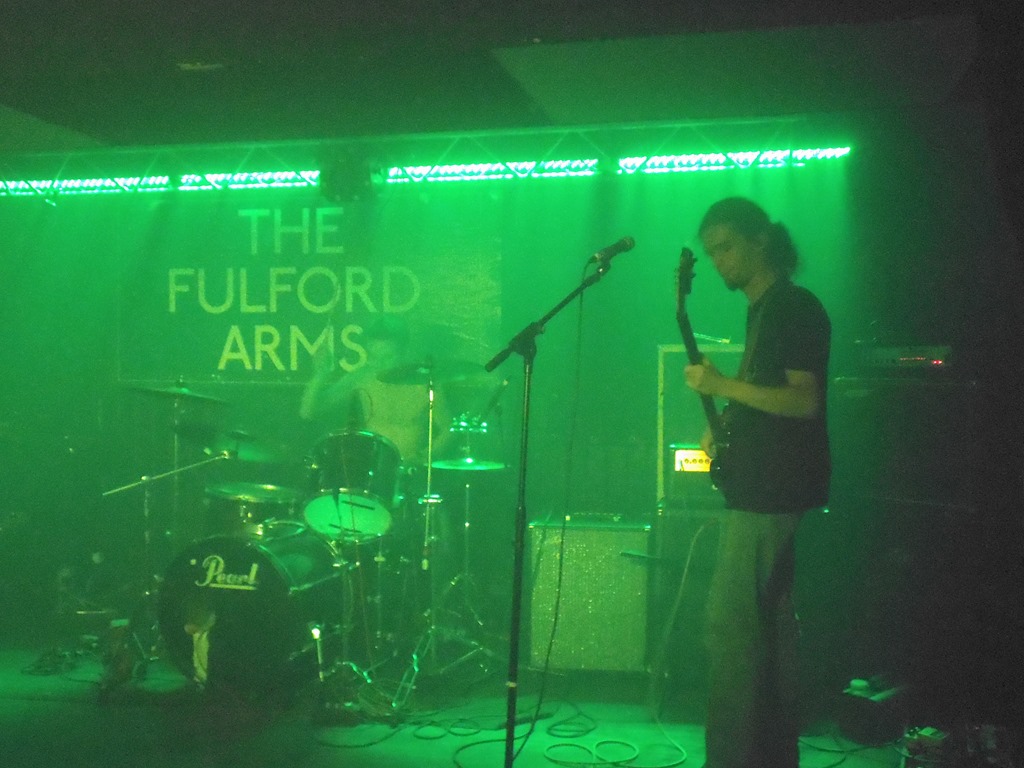
It might not exactly be packed for Pak40, who begin their set with a claxon and bass hum, before thumping in with some tom-heavy drumming and thunderous, super-low bass growl that comes on like early Earth, only with percussion. While the duo’s focus is firmly on the creation of maximum noise, the stylistic manifestations are varied, with classic rock elements churned through a cement mixer and a vocal style characterised by elongated vowels that range from pysch-tinged prog to something closer to Bong. The final track is sludgy as hell, but ups the pace considerably, inviting comparisons to Fudge Tunnel.

DSCF3816

Pak40

Saltwater Injection are another drum / bass combo. As last year’s debut single, ‘Vinegar / Cuntryfile Part 3’ revealed, they’re noisy, too, cranking out a mesh of grindcore noise interspersed and overlaid with trebly, distorted samples from films and whatnot. It’s not about innovation, but execution, and after a lengthy intro, the bass feedback howls and they go full-throttle to deliver a set of high-octane aggression. It’s stick-twirling drummer Paul Soames who provides the vocals – predominantly guttural barks to their frenetic attacks. There are flickers of pop, but they’re transmogrified into roaring slabs of rage that go off like a clusterbomb.

DSCF3832

Saltwater Injection

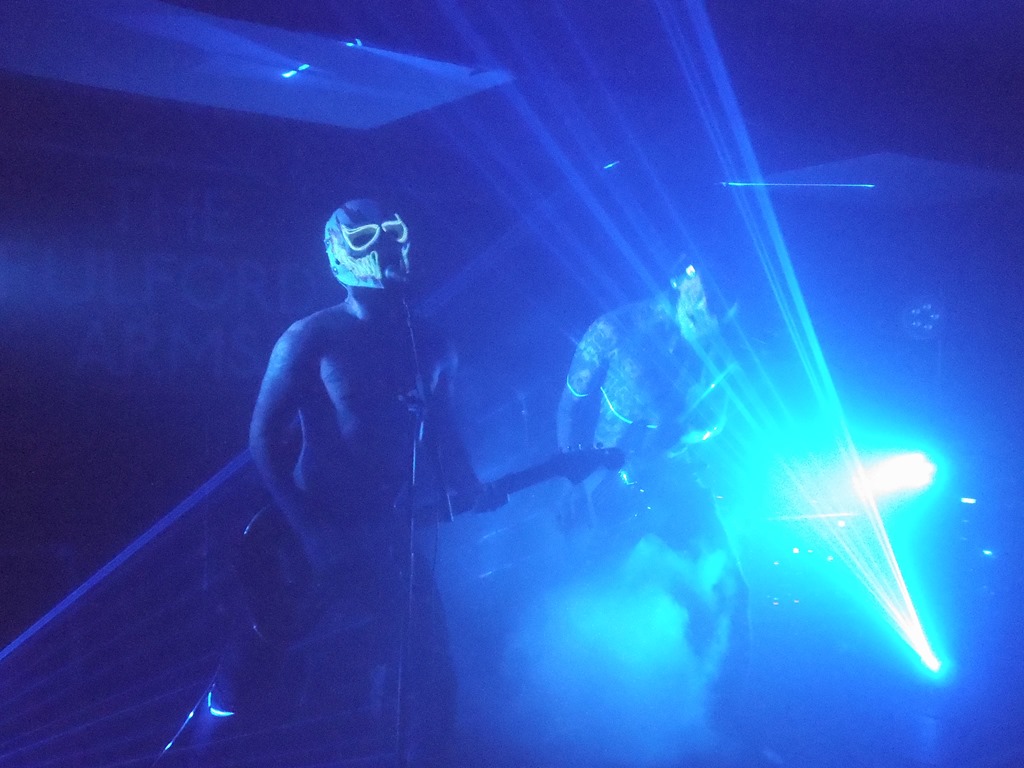
Nottingham’s Bone Cult have been on my radar for a while, and I’ve been quite taken with their brand of hard-edged technoindustrial crossover music. Visually, they’re on a whole other level: with dense smoke, neon skull-masks, a crisp, clinical sound, and laser lighting shooting every which way, they transform the 120-capacity pub venue with a stage a foot high into an academy-type gig experience. They’re so slick, so tight, so immense. For all the intensity and aggression, they do seem a shade lightweight in context, mining more the Pretty Hate Machine era sound of Nine Inch Nails and aping the electro end of the Wax Trax! roster circa 1988. Still, in terms of entertainment, they’re hard to fault.

DSCF3855

Bone Cult

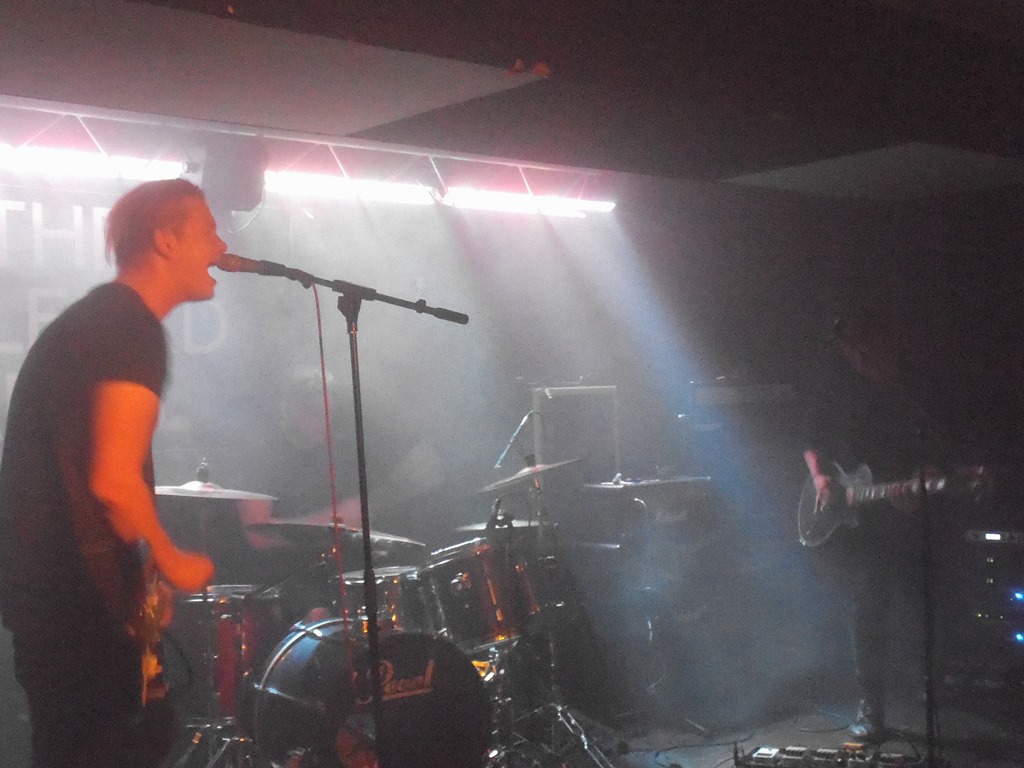
The same is true of headliners, London three-piece Little Death Machine. They neither look nor sound like a band on the lower rungs of the circuit. They’re mechanoid tight, and have a set packed with killer tunes, delivered with nuance, passion, emotion, and panache. A spot of research suggests that this is a new lineup, and while I lack the reference to compare to the old one, they seem to have gelled well. Yes, they do sound a lot like Placebo. A LOT like Placebo. But old Placebo, which is A Good Thing. It’s a punchy set, packed out with songs with massive drive and killer hooks and crackling energy. It’s also the perfect climax to an exciting night.

DSCF3965

Little Death Machine

Humpty Dumpty Records – 11th May 2018

Christopher Nosnibor

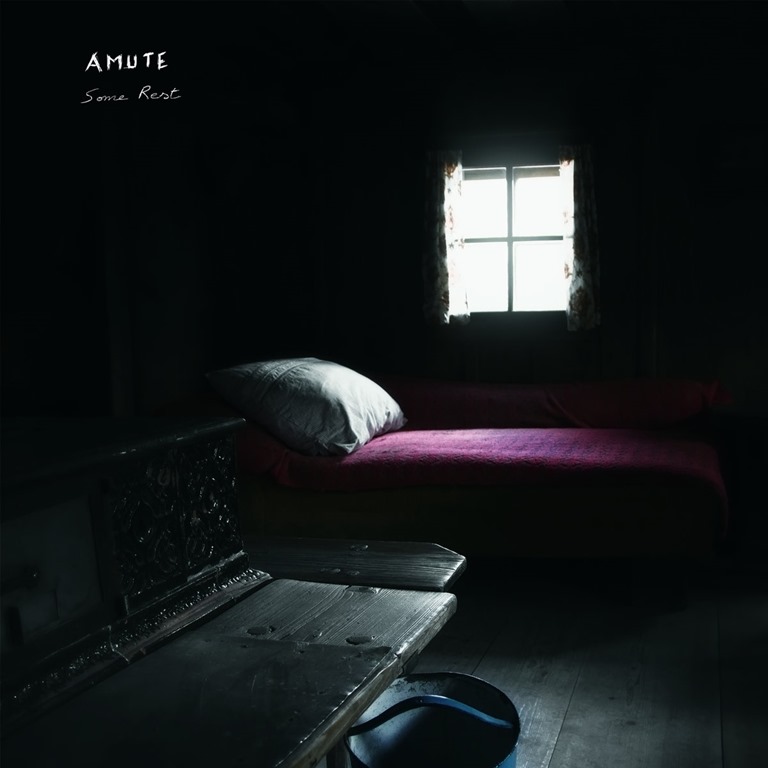
It’s quite the introduction: ‘Jérôme Deuson is an unstable musician’ is the opening sentence of the press release that accompanies his seventh album as aMute. But how many musicians are stable? And what even is stability? Is anyone entirely stable? Is it even a desirable state? So often, creativity emerges from a state of inner turmoil, or tempestuous emotional flux. There are, of course, infinite shades: this is just to peel back some of the layers of the initial and likely awkward response to the statement.

Some Rest is not the millpond calm the title may imply: it’s only some rest, not total rest, and in truth, the rest here is minimal, on an album that’s clearly the work of a restless soul.

The album’s structure and sequence is unusual, opening with the longest composition by far: the title track is almost eighteen minutes long, and transitions from a delicate swirl of strings through a vast, shoegazey post-rock vista to an expansive, driving rock workout. While there are strains of feedback amidst the humming melodic drifts and samples which echo, almost buried in the mix, and the whole thing builds to a sustained crescendo, it’s still a more sedate experience than its predecessor, the tempestuous 2016 album Bending Time in Waves.

Side two begins with the gloopy, bubbling ambience of ‘I’ve Seen it All’ before sliding into eerie dissonance on ‘Dead Cold’, which exploits ringing chimes which give way to softer, picked guitar and a more tranquil, melodic space, disturbed only be the vocal, processed and burred with distortion. It’s sort of melancholic, sort of trippy, sort of dislocated, sort of abstract, sort of shoegazey in a trilling organ swamped in echo sort of way. It’s all amplified into a fizzing digital funnel on ‘The Obsedian’, which features Christian Bailleau, emerging as a grand, slow-moving and mournful piece reminiscent in some respects of Dylan Carlson’s more recent work, exploring as it does the pitch, tone, and timbre of the guitar in near-granular detail. Closer ‘Maria’, with hints of early Pink Floyd, is similarly drifty, dreamy, trippy, echoey-warped, and it tapers away into vaporous clouds.

Because of its ever-shifting nature, and its sonic range, Some Rest provides only the briefest of respites for the listener to relax, creating as it does an atmosphere of flux and continual movement.

AA

aMute

15th July 2018

Recently named ‘artist of the month’ at The Great Frog, former Arrows of Love drummer, film and game soundtracker and artist in his own right, Mike Frank is on a bit of a roll.

He’s written and recorded two albums post-Arrows: ‘This is going to get weird… I’m going to make this weird’, which he describes as ‘a collection of orchestral and experimental film music songs’, and an album featuring Rufus Miller, Lyndsey Lupe and Artur Dyjecinski which is ‘full of dark sounds and Middle Eastern instruments’. Only the former has yet seen the light of day.

A taster of a forthcoming album, ‘All My Possessions’ has no connection with either project, and is infinitely more accessible – I’ll refrain from going so far as to say commercial – than anything we’ve heard from him so far. What’s more, this downtempo yet somehow simultaneously jaunty, jangly indie rock tune, which boasts a really rather catchy chorus, hints further at his songwriting range. With delicate, understated, picked guitar and a bleak croon, the opening resembles Leonard Cohen, and there’s a darkness which shadows the song as a whole.

Bukowski’s influence is rendered explicit in the lifted footage which accompanies the song, which is essentially about the vagabond life of a writer, but also, as he puts it ‘about feeling down and out, lonely or even desperate’ – and you wonder which voice or perspective lines like ‘she’s so good to me / I’m such an asshole’ and ‘I like to drink because I can / It makes me feel like I’m still with the band’ are really coming from.

It’s got a nice slow build that swells subtly to a full finish, and is, as a song, rounded and satisfying. And really very nice, if kinda sad.

AA

Mike Frank

Trace Elements Records – 3rd August 2018

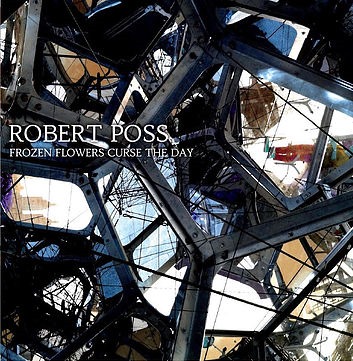
Frozen Flowers Curse The Day is the latest release from pioneering avant-guitarist Robert Poss, founding member of the legendary wall-of-guitars group Band Of Susans, who (in)famously started out with three members named Susan and usually maintained three guitarists in their ever-shifting lineup, which at one point featured a pre-Helmet Page Hamilton.

The development of the album Frozen Flowers Curse The Day was performed, recorded and mixed by Poss at Trace Elements Records studios in New York City with guest drummers including Dahm Majuri Cipolla (Torres, Lydia Lunch, Japan’s Mono) helping out on two tracks.

Being a solo release rather than a full-band effort, Frozen Flowers Curse The Day isn’t an overtly ‘rock’ album in terms of material or instrumentation and primarily features guitar and loops of strings, to sometimes woozy and disorientating effect. But Poss’ approach to guitar playing, lauded by none other than Steve Albini, is certainly distinctive.

Much of the material here is jangling drone, drifting, chiming indie shoegaze. It’s pleasant, easy on the ear, undemanding. In a good way. Frozen Flowers Curse The Day is an album which explores texture, tone, and mood, but above all, it follows the distinctive compositional template of Band of Susans in that the songs tend to bludgeon away at a simple three or four chord sequence while layers of droning chords or feedback build over the top as the song progresses.

This approach is very much to the fore on the album’s second track, ‘The Sixth Sense Betrayed’. Elsewhere, on ‘Partial Clearing’, Poss works the eddies and streams of swirling drone and exploits the basic mechanics of the instrument to create something quite compelling.

While much of the album is given to switch-flicking, string-tamping, knob-tweaking. It’s not so much about the simple chord motifs or notes which hang in the air, but more about their manipulation. But however much this an album shaped by technique you’d never call it a ‘technical’ album. Nores ripple and chime and collide against one another in washes of reverb in the most dreamy, immersive of fashions.

‘Time Frames Marking Time’ hints at ‘Elizabeth Stride’ from Band of Susans’ final album, 1995s Here Comes Success, and even echoes ‘Frere Jacques’, but these are fleeting moments, and that’s the whole point: this is really about transition ad ephemerality and the effects of the briefest of memory triggers from an artistic point of view. ‘I’ve got a Secret List’ is more up-front, a thunderous drum track thumping away beneath multiple layers of guitars, over which Poss strains over a repetitive lyric, while closer ‘I’ll Curse the Day’ comes on like Springsteen in a 4-track tape portastudio.  And yes, while battering away a single motif and simple chord structure, it does invite comparisons to BoS. Significantly, it holds up to those comparisons: Poss certainly hasn’t lost it.

Robert Poss

Radio Bongo

Christopher Nosnibor

The cover art – a photograph of the stump of a recently-felled tree – is one of those exercises in magnificent blandness. It’s the fact it’s clearly in an urban setting which perhaps gives the greatest clue to the music it accompanies; it’s the discarded trainer which actually makes the shot, however. The image really only makes sense in context of the liner notes, which begin ‘The spiral of a record. The routine of life. The growth rings of a tree. The rhythm of a drummer. The groove.’

Production credits go to a President Bongo, and Execution is listed as being the first volume in ‘Les Adventures de President Bongo’ – which, apparently, ‘is a unique work of art that will reveal itself over the next seven years, give or take, in the form of 24 LP’s.’ This is quite ambitious, and while I still have no real handle on the concept or direction after several listens to this album, ‘adventure’ seems to be an appropriate choice of word.

The album contains two tracks, ‘Drama’ and ‘Transmission’. ‘Drama’ certainly fulfils its promise, but in the most unexpected ways. It begins with gloopy electronic pulsations, a sort of semi-ambient dance vibe rippling, soft-edged and mellow. So far, so chillout-orientated, club-friendly mediocre. But then extraneous drones hover and scrape at oblique angles across it, at complete odds with the chilled waves. It takes a while to build, and before the beats kick in. ‘She can make it,’ croons Þormóður Dagsson, over and over again. It’s a cool groove, alright. His voice is so sweet, so smooth, so achingly soulful. He could probably sing a shopping list and still make you melt. But while the vocal sits with the mellow bubbling synth, it’s the discordant noise that swells to dominate the mix. The jarring incongruity of the clash forges less a dynamic tension than it serves as an apparent act of brutal sabotage. And then the drumming goes absolutely fucking berserk, and the whole thing whips into a brain-bending, bewildering mess of sound. The groove is buried in the tumult, from which eventually emerges a driving, bass-dominated jazz-rock groove. Where did that come from? Dagsson’s voice continues to float, untouched, surrounded by a halo of reverb, through the wild wig-out. It all goes jungle with added whistles and bleeps further down the line, and it’s fair to say you’re unlikely to experience a similar seventeen minutes of song anywhere else.

Well, apart from on side two, perhaps. ‘Transmission’ creeps in by stealth before taking a turn for the dubby. It strolls along, bouncing echoes hither and thither. The vocal performance is understated, low-key, yet all the more effective because of it. A note hangs in an echo as a kaleidoscopic spiral of synth notes swirls around the steady, toe-tapping beat. There’s none of the wild experimentalism of the previous track here, the focus instead being on building laid-back atmospherics and a smooching groove that shuffles on unassumingly.

Groove, then, comes in many shapes and forms, and some are less obvious than others. Tilbury take the groove and twist it, bend it, kick it around a bit, push it close to breaking point. The curious nature of the music indicates a curiosity about music on the part of the creators. The end result is pretty damn strange, but also strangely enjoyable. It’s all in the execution….

AA

Tilbury - Execution

Christopher Nosnibor

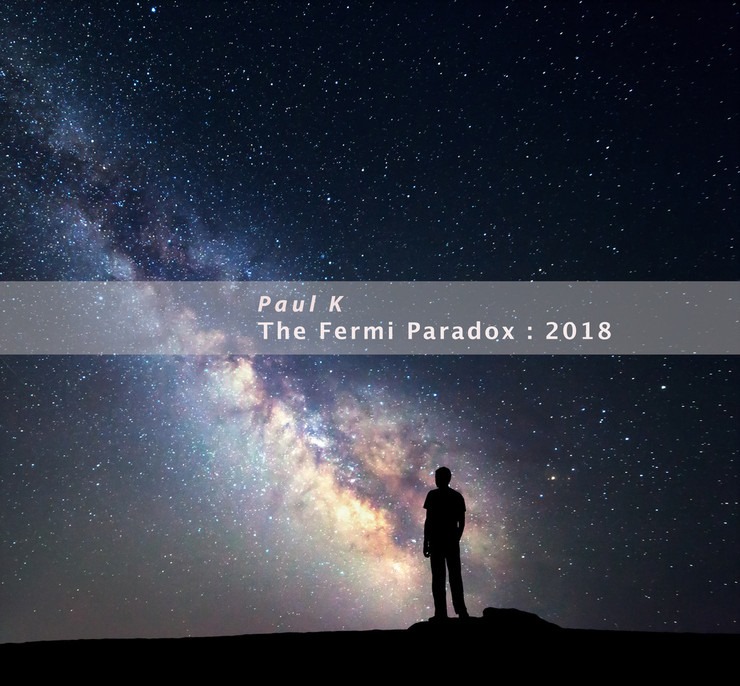
Paul K first came to my attention with the release of Glitch Code’s debut album, Gifted_Damaged, a real standout release for 2016 in the sphere of dark electronic pop. Omertà saw Paul venture out as a solo artist last year, and revealed a very different musical aspect: instrumental, dramatic, and in places a bit proggy, it found him explore some expansive sonic territories with impressive results.

The Fermi Paradox sees Kirkpatrick expand on this – immensely. And expand is the word: this is expansive both conceptually and sonically, and he explained that ‘the album is about the theme of isolation, exploring our place in the universe and questions “are we alone?” to the perspective of social isolation through social media… It looks at the space race and the billions spent on wondering if we are alone in the universe vs. the juxtaposition of so many lonely people on our own planet.’

As such, The Fermi Paradox ranges from the macro to the micro, casting an eye to the farthest reaches to the most inner of anxieties. So while in terms of what it delivers, The Fermi Paradox isn’t a million miles from its predecessor, in terms of intent and focus, it’s a very different beast from Omertà.

Such isolation is something that’s immensely relatable: I’ve found myself in discussions with a surprising number of people, many with anxiety issues, conflicted over social media. It’s a different kind of paradox from the question of alien lifeforms the title refers to, but nevertheless, it’s a paradox. The dependence on the endless stream of posts and comments is countered by the despondency the belief that your own life is no match for others’, the sense that other people breeze through life, happy and carefree while your own life is fucked. Any sense of connection feels flimsy, secondary to a sense of disconnection and inadequacy. And what happens when, just for five r ten minutes, your phone goes silent: no texts, no notifications? The silence you’ve been craving is a howling void of emptiness.

It’s with ponderous piano and soothing strings that ‘Anomaly’ opens the album, and it’s mellow but twistedly poignant. It’s clear that Kirkpatrick knows how to tug at the emotions without words. The motif that runs through ‘Sagan’ makes me think of ‘Forever Autumn’ from ‘The War of the Worlds’ – surely one of the most heartbreaking songs ever committed to tape. Or maybe I’m just a sap. Nevertheless, regardless of whether this is about the music itself or my response to it based on, its drift into lilting piano and achingly sad strings is simply beautiful.

It’s on ‘Ecce Homo’ that Paul reaches into expansive territory, a cinematic, layered progressive-style piece with soaring chorals and supple rhythms, it drives, but also meanders. At times, as on the opening of ‘Exegesis’, Kirkpatrick slides into near-ambient territory, but for the most part, it’s about sedate, spacious soundscapes, defined by rolling, soft-edged bass. As the album progresses, the song titles suggest a shift from the more inward-looking to gazing out into the cosmos.

Are we alone? Always. Intensely. But with The Fermi Paradox, Paul K has produced a magnificently-crafted soundtrack to play into the void.

513298210

Ipecac Recordings – 15th June 2018

Christopher Nosnibor

Having teased us with the Cure cover which accompanies four remixes from their Seismic LP and provides, in part, the EP’s title, Spotlights deliver the rest of the tracks.

There’s substantial range here: Kris Dirkson’s remix of ‘Hang us All’ (retitled ‘The Hanging’) hinges on cinematic shoegaze, ethereal but, whittled to half its original length, feels focused and tightly structured.

Mario Quintero’s remix of ‘Ghost of a Glowing Forest’ (‘Till Darkness Comes Out’) is quite the contrast: a sprawling, murky, dubby beast that transitions from near-ambience to slow industrial thud, it sits between NIN and Portishead.

‘The Size of a Planet’, here reworked by Void Mains and retitled ‘I’ve Giant’ accentuates the heavy, bass-led doom drone that lies beneath the graceful lead parts on the album version, and draws it out to almost seven minutes. It’s pretty hefty. In combination, they make for a strong release, and while standing well in their own right, serve to return the attention to the album that spawned them.

The rendition of ‘Faith’ is utterly breathtaking. They’ve not messed with the original in terms of form or structure, and it’s remarkably faithful (sorry) and respectful – but with the heavy guitar work and even heavier drumming, it amps up the intensity to epic levels.

AA

SpotlightsEPcoverlores1

London-based “Anti-Music Collective” Moderate Rebels release ‘Beyond Hidden Words’, streaming from 25th June, from their just-completed second album, due out in November on Everyday Life Recordings.

Describing it as an ‘un-song’, Moderate Rebels say, “We’re not sure what this music is exactly. It arrived with us as a feeling, then a defiant chant, a repeating half hallucination set to building noise, an invocation of strong communal power and hope, through the confronting of the uncomfortable, and the taking of some personal responsibility for being part of that conversation… The sound of a dream, set to the dream of a sound.”

Moderate Rebels follow their debut album ‘The Sound Of Security’ and ‘Proxy’ EP, both released in 2017. The collective’s previously stated approach to their songwriting is “to use as few words and chords as possible”.

Get your lugs round ‘Beyond Hidden Words’ here:

AA

Moderate Rebels Beyond Hidden Words front cover HR

House Of Mythology – 6th July 2018

Christopher Nosnibor

In expressing my lack of enthusiasm for David Tibet’s collaboration with Youth under the moniker of Hypnopazūzu, I seemingly gave rise to mirth with my reference to ‘pseudomystical bullshit’. Tibet can laugh it off, but after so long churning out material that veers between the indulgent and the vapidly whimsical, I’m not convinced it’s a laughing matter.

Now, I’ll admit, I’ve never really got to grips with Current 93 – their catalogue was beyond overwhelming long before I even discovered music beyond the mainstream, and their output exists s far beyond the mainstream that I had to pass through Throbbing Gristle, Whitehouse and a slew of others having spent my early teenage years mining the seam of goth and (what was then) contemporary industrial and real indie to even learn of their existence. Context counts, and however influential Tibet has been in ultraniche, cult circles, it doesn’t alter the fact that some of his art and affiliations over the course of his career have been questionable.

ZU93 is the effectively named new collaboration between David Tibet and the ever-changing Italian group Zu, centered around Massimo Pupillo and Luca Mai. Mirror Emperor operates around a concept or theme that’s never really rendered with any clarity. All of the song titles reference the titular Mirror Emperor, but they who, what, and wherefores are absent, and there’s little guidance in the lyrics, which are fragmentary, hallucinatory, abstract and non-linear. This in itself is no problem: life is fragmentary, hallucinatory, abstract and non-linear, and we’re all accustomed to postmodern art and its fragmentary, hallucinatory, abstract and non-linear representations of the life experience.

Musically, it’s sparse but powerful. In terms of composition and arrangement, Mirror Emperor is widely varied, but very much leans toward the dark and ominous. There are brooding strings that soar and sway, drift and drag. There are moments of deep resonance and thick sonic density. Far from being a skippy, trippy, easy ride, it’s often difficult and challenging. ‘Confirming the Mirror Emperor’ is built around a dense, murky bass that booms and surges over a slow, heavy beat, before layers creep over and lift it somewhere altogether different.

Tibet’s delivery is the stumbling block. Every word is delivered with the same sense of immense portent, as if each phrase is a revelation of cosmic proportions. Which it isn’t. ‘And quickly…. A knuckle cracks… into space… Opens up her… and feels…’ he gasps with breathless wonder. I’m more breathless with wonder as to how he can still pull this shit off.

Tibet’s despondency at the emptiness of contemporary culture is something to which I can relate: his wide-eyed mysticism, more of a throwback to 60s hippiedom than the escape routes available now, I can’t. It feels oddly disjointed and out of place. While his fans’ belief in his visionary prowess and the potency of his lyricism, convinces that posterity will see him aligned with Dylan and Cohen, I’m looking at the Mirror Emperor to check out his threads, and I’m seeing none.

It does get easier with exposure: Tibet slowly diminishes into the background as the music intensifies as the album progresses. ‘The Heart of the Mirror Emperor’ is forged from woozy electronic pulsations which glitch and glow. Ignore the breathy, triptastic babble about the sun and moon and it’s pretty good.

AA

ZU93 – Mirror Emperor