Posts Tagged ‘Weird’

‘The Preacher’ is the new single from Gothenburg’s Hollow Ship, recorded and produced together with tape wizard Don Alsterberg. Leaving the noisy compressed sound that defined their acclaimed debut LP Future Remains behind and entering a rich new sonic texture while unmistakably still the heavy hitting Hollow Ship.

‘The Preacher’ arrives after a summer during which the band found themselves topping Spotify’s viral charts in the US, UK, their native Sweden and many other territories with ‘Magic Mountain’ from the cult classic Future Remains. With the band set to head out on tour in Europe later this year ‘The Preacher’ also serves as a first taste of new music with their second full-length due next spring.

‘The Preacher’ arrives together with a video by Freddy Wallin and is out now digitally via PNKSLM Recordings.


AA

LIVE

Nov 7 – Berlin, DE – Neue Zukunft

Nov 8 – Brno, CZ – Metro Music Bar

Nov 9 – Prague, CZ – Café V Lese

Nov 10 – Vienna, AT – Arena

Nov 11 – Weimar, DE – C. Keller

Nov 12 – Amsterdam, NL – Nachbar

Dec 2 – Hannover, DE – Glocksee

Dec 3 – Hamburg, DE – MS Stubnitz

Dec 4 – Düsseldorf, DE – Ratinger Hof

Dec 5 – Rouen, FR – Le 3 Piéces

Dec 6 – Paris, FR – Le Mécanique-Ondulatoire

Dec 7 – Nijmegen, NL – De Onderbroek

AA

Hollow Ship

Dimple Discs – 22nd August 2025

Christopher Nosnibor

Weird shit is welcome here at Aural Aggravation. It was a part of the ethos of my starting this site back in 2015. Yes, it’s been that long since I decided that I wanted to strike out alone with a view to creating a platform devoted essentially to stuff that appealed to me and exploring them with more long-form, discursive essay-type writing. This of course completely went against the grain of where most media, in particular music media, is at now, and this has only become more pronounced over the last decade, in which time attention spans have largely been reduced to circa 120 characters or simply .GIFs and memes. But – presumably because my focus is on rather niche music which doesn’t always receive a wealth of coverage, rather than because of my propensity for divergence into the personal or the political – Aural Aggravation now attracts a respectable readership. I don’t feel any desire to celebrate 10 years of doing this: to do so would really be to celebrate a decade in a lifetime of stubbornness, a compulsion to write, and a musical obsession which I choose to inflict upon the world, but I do suppose, on reflection, that the rarity of the format, occasionally touching on theory, but – hopefully –without too much hypotactic wankery.

And so we arrive at XiX by Kev Hopper, who despite fourteen solo albums, and despite co-founding electronic act Ticklish in the late ‘90s, and was composer/bassist with Prescott in the 2010s, and working as a visual artist by the medium of painting for a good number of years, is still probably best known for being the bassist in Stump between 1983 and 1988. Despite only releasing one album proper, their output of singles and EPs was solid, they were all over the music press at the time, and they were championed by John Peel. This potted history throws into sharp relief just how times – and the face of the music industry, particularly outside the mainstream – have changed.

Hopper’s second album on Dimple Discs is a collection of quirky, whimsical electronic experiments. Skittery, light, and lively, there’s a playfulness which defines the pieces, even when sliding into low-end notes and minor chords. ‘Vector Prodder’ plunks and plonks, twangs and reverberates, and slides into spooky but fun territory, and in some respects it’s got 1960s Addams Family vibes. ‘Gruntian Forbes’ twists and spins strangeness into a sunny calypso groove, and this, in many ways, encapsulates Hoppers’ approach to composition on the twelve tracks on offer here – namely taking a comfortable form, and rendering it uncomfortable by warping, twisting, and distorting it in some way or another, tossing in some ethereal haze and a bucketload of l’aissez-faire oddball elements. And why not?

XiX fully embraces the spirit of experimentalism – the idea of simply trying things out and seeing what happens, and not even being hugely concerned if it’s only half-successful. That isn’t to say there are any semi-successes or borderline failures on XiX: what I’m driving at is the spirit of creative freedom which pervades. When cut free of the constraints of commercial concerns, when liberated from self-censorship, and simply creating for the sake of creating, for the joy that experimentation and making sound can bring, a work takes on a level of buoyancy. XiX is the sound of creative freedom. ‘Devils’ may be dolorous, with hints of Tom Waits, but ‘Lance The Prawn’ is an exercise in gurling synth and ridiculously OTT vocal processing (half-burying absurd couplets like ‘lance the prawn / on the lawn’) amidst bleeps and wiffles and space-age throbs and pulsations.

It’s sci-fi in its influences, but it’s Douglas Adams on the serious scale. While I’m no fan of Adams myself – I find the humour simply too cheesy, but worse than that, I find the fans of his works, who insist on referencing him relentlessly beyond irritating, I would like to think that this scaling works in context. The album’s material is not irritating or nerdy, but it is, at times, overtly strange, and nowhere more so than on ‘Brand Street Psychodrama’. It may be but a brief interlude, but it’s all the disorientation. ‘Window Seat’ brings all the chimes and gentle brass, evoking that mythological bygone age crossed with intimations of ‘made in China’, in the brittle 80s plastic sense.

Having just written about Eamon the Destroyer’s new release, it seems that this belongs in the same field, but represents an altogether different face of the experimental dice.

And this is a good thing, in that we are able to wander through very different corridors while stroking our chins and pondering the work emerging from the field of ‘experimental music’. Towards the end, there’s an urgency that builds to XiX. Or perhaps it’s just my anxiety rising as midnight draws closer.

Either way, this is a supple work, which ventures across a range of styles and forms, with the chiming, tinkling nine-minute closer, ‘The Cucurella Problem’, with its whimsical , warping lead lines and tentative, wandering bass being truly exemplary. It bends the brain, but slowly, gently, softly, and it’s kinda nice.

AA

a0361012740_10

Bearsuit Records – 5th September 2025

Christopher Nosnibor

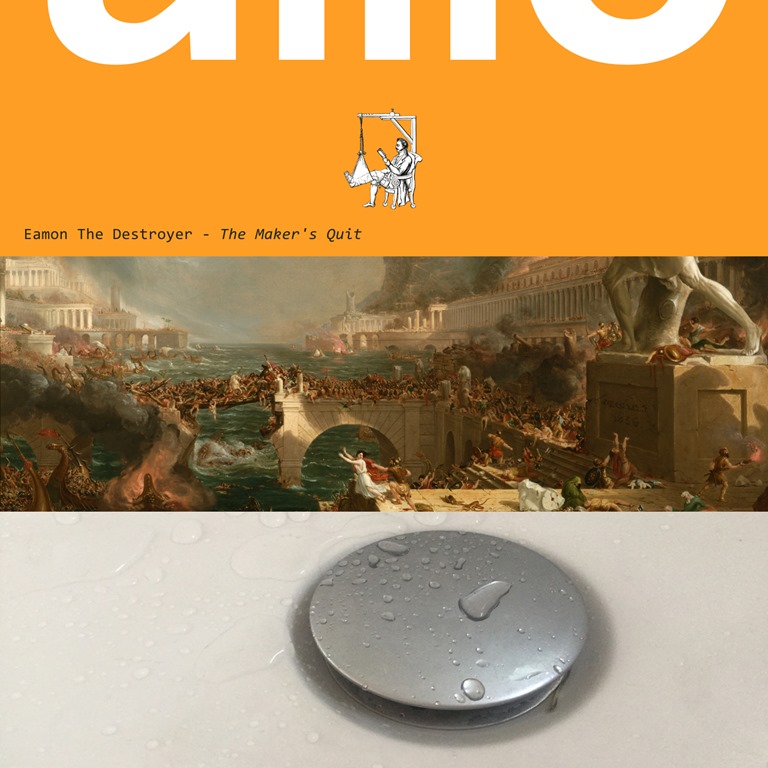
The thing with Eamon the Destroyer is that you never know what you’re going to get. The Maker’s Quit is different again from We’ll Be Piranhas, which in turn was quite unlike Small Blue Car (which remains a personal favourite, even if it does make me feel impossibly heavy on the inside). If We’ll be Piranhas marked a step forward in terms of experimentalism and optimism, The Maker’s Quit sees a greater emphasis on songwriting and structure – but don’t for a second think it’s in any way straightforward, and that the experimentalism has taken a back seat – it’s still very much a copilot here, and with the accent on the mentalism.

Here, the title track commences what is an incredibly varied set with a song that has the theatricality of Alex Harvey crossed with 1990s Leonard Cohen, before ‘Silverback’ confounds all expectation by bringing some shuffling funk-infused jazziness. In contrast to the fairly minimal arrangements common to previous ETD releases, this is pretty busy, then is settles into a mellow groove that’s almost loungey – bar the mid-section, which is rent with a protracted burst of extraneous sound. It’s almost as if he purposefully weaves around the line between genius and self-sabotage simply to tests us as listeners. There are some nice, light, poppy moments on here, and – albeit fleetingly – some captivating grooves. But it wouldn’t be Eamon the Destroyer without a huge helping of straight-up weird shit mashups, and The Maker’s Quit brings the lot, from frenzied jazz and post-grunge, wonky vaudeville waltzes and whistling, via electropop and slices of pan-culturally inspired melody.

More often than not, the verses and choruses are so contrasting as to seem to have been spliced from different songs – that’s when there are verses and choruses. ‘Three Wheels’ is a veritable patchwork, which compresses segments of what sounds like half a dozen songs into five minutes as it spins from grandiose heavy country dirgery by way of an intro, which even hints vaguely at recent Swans, before swerving into Europop with a hint of Sparks, through a off-kilter but gentle soundscaping that slides into laid-back salsa before winding up with a segment of jaunty indie rock. But rather than feel like an identity crisis, the effect is more that of a multi-faceted artist showing all his facets simultaneously. It’s hard to keep up, but one can only imagine what it must be like to live in his head.

The lyrics are equally fragmented, between stream of conscious and cut-ups, producing a Burroughsian, dream-like quality. This snippet from ‘The Maker’s Quit’ exemplary: ‘Saturn kid – spins and reels – in a city / Little Feet – lost in a wave – out to sea / A grandmother – nods – to a space in the crowd / Cap gun assassin – emerges – from a conjurers cloud…’ Beyond oceans and waves, it’s impossible to pin down any notion of themes or meanings. The images float up and fade out instantaneously.

‘The Ocean’ begins dramatically, a swelling, surging drone that halts abruptly, yielding to one of the most typically Eamon the Destroyer passages – lo-fi folktronica with a low croon reminiscent of Mark Lanegan, which slowly tilts its face upwards from scuffed boot-tips towards the sun…. and then all mayhem happens in a brief but explosive interlude, and your head’s suddenly spinning because wherethehellhasthiscomefrom? It’s this wild unpredictability and unapologetic perversity which is – strange to say – a substantial part of the appeal of Eamon the Destroyer.

When Eamon the Destroyer goes downtempo, as on the mournful, string-soaked introductory segment of ‘Captive’, you can actually feel your heart growing heavier by the bar, but then it twists onto some semi-ambient avant-jazz, and the sensation transitions to bewilderment.

The final track, ‘The Buffalo Sings’, is a twelve-minute behemoth is s slow, surging lo-fi electronic exploration. Face the strange? It embraces it, hard, then absorbs it by ghostly osmosis. If ever a song was less country, less ‘Buffalo’… maybe some of the western themed electrogoth songs by James Ray and the Performance are on a par on that score, but this wanders into a sonic desert without even a hat for protection from the punishing sun, and slowly, everything melts in the heat. Circuits bend and warp, and the weirdness rises like a heat haze… and it’s wonderful to be immersed in a work which celebrates creative freedom with no sense of constraint or obligation.

On reflection, with Eamon the Destroyer, you know exactly what you’re going to get: visionary hybridity, moments of aching sadness and fractured beauty, shards of melancholic memory , unbridled inventiveness and fevered creativity, and music like nothing anyone else is making. In a world where meaning seems to have all but evaporated and it’s increasingly difficult to make sense of any of it, The Maker’s Quit feels like a fitting soundtrack. It exists purely in its own space, and it’s the perfect space to escape to in these most dismal of times.

AA

Eamon-TD-3_Cover

Cruel Nature Records – 27 June 2025

Christopher Nosnibor

The cover within a cover artwork is only the first example of near infinite layers when it comes to this complex and inventive work from the truly demented experimentalist who records under the moniker of Cumsleg Borenail.

This latest effort promises ‘a collision of methods—part LLM-based sampling, part MPC assembly, part human lyrics—stitched together into something fluid and unpredictable. AI scavenges random prompts, returning garbled errors and fractured phrases, while voices and instruments drift in from nowhere, guided by no fixed direction. Each track begins as one idea and mutates into another, warping its original design into something unrecognizable yet strangely intentional.’

Oh, and it delivers on that promise, alright. This is truly a derangement of the senses, a collaged cut-up, an uncompromising mash-up, a smash-up, if you will, where absolutely nothing is off limit, and it all gets tossed, unceremoniously and indiscriminately, into the blender and churned up into a mess of the most mind-blowing chaos imaginable.

To provide a detailed analysis of this would be to unpick the threads in a way which would reduce the album to less than the sum of its parts. 10mg Citalopram works precisely because it’s an exercise in brain-pulping loop-heavy derangement.

‘You mean nothing me!’ a female voice repeats, and repeats, against a clattering, springing backdrop of twangs and poings throughout ‘You Mean Something To Me’. My head’s a shed by the time we’re midway through the second track, ‘Denizen Invocation Via Lunar Phase’ – because this is a work that goes off in all directions, all at once, and it’s really not pretty. It is, however, weird and frantic. It’s a mess of noise and samples and glitchy electronic samples and frantic breakbeats. Later in the album, there’s a companion piece of sorts, ‘Now I Know I Am Nothing Because You Said’.

AA

In some respects, I’m reminded of early Foetus, JG Thirlwell’s crazed tape loops and cacophonous noise bursts, and the way Cabaret Voltaire took the tape experiments conducted by William Burroughs and Brion Gysin and the ideas outlined in The Electronic Revolution as their starting point – but it’s also a bit Trout Mask Replica, in that it’s like listening to several songs being played at the same time, only it’s got bust-up techno beats exploding all over the shop and frankly, it’s impossible to know what the fuck’s going on most of the time. Too much, for sure. But that’s the point.

For context, Citalopram is a widely-prescribed antidepressant, described on the NHS website as ‘a medicine that can help treat depression and panic attacks’. This album, however, sounds more like a prolonged panic attack or all of the listed possible side-effects being experienced at once, while the numerous references to being ‘nothing’ appear to allude to the inner voice of low mood. Then again, there are other medical matters of an altogether different sort which provide the reference points for tracks like ‘Clostridium Difficile’ (a bacteria which causes diarrhoea) and ‘Snifflers, Nostril Pickers and Dribblers’. All of it is utterly batshit wonky and wildly arrhythmic, and certainly not for anyone who’s feeling tense or jittery or suffering from any kind of psychosis. For anyone else… proceed with caution. May have unwelcome and unpleasant side effects.

AA

a1363557647_10

Futura Resistenza – LP Mar 24, DL Feb 28

Christopher Nosnibor

Most blurbs which accompany releases are either factual, unspectacular in their biographical detail, or tedious in their technicality. Some are vaguely amusing or otherwise entertaining, but the words accompanying Jeugdbrand’s 3 × hullo, hullo, courtesy of  Lieven Martens are outright deranged. I mean, there’s a narrative there, but it’s more of a slab of gonzo fiction than anything. And that’s before we get to the whole mole thing….

‘Well, it went like this: I open the glass door to the garden, the early morning coming to its midday end. That everyday anxiety that overcomes late risers from time to time kicks in. “Fuck, almost half a day wasted!” But abruptly, this sentence in my head gets overdubbed by the Queen’s English: “That shit mole, that blimey shit cunt mole!” I see the expat owner of our Airbnb punching his bare fists on his green lawn. A spotless lawn, but with here and there a few molehills. His grass, like a billiard cloth in a smoked bar, serves as a contrasting pathway to the black volcanic rocks at the back of the house. Behind these rocks, the ocean foams and growls. “Luv, get the poison! I wanna finish the bugger now and for good. Bloody hell!” I watch this scene with amusement, until suddenly, when the landlord notices me, he cleans up his act. “Ooh, these are funny little creatures, eh, these furry moles. Cheeky peng. Eh, fancy a cuppa?” The landlord’s head and belly are so ridiculously red that I can almost hear a lobster scream in a pot of boiling water. He looks like a walking can of Spam, its contents cooked by countless days under the Indian Ocean’s sun. The Indian Ocean, where sharks migrate between Africa and Australia. And where the Hawaiian-shirt-wearing tourist bravely builds new islands of trash. Yes, the very true meaning of re-creation. Someone once told me that lobsters don’t really scream.’

I once caught some shrimps and prawns in a rockpool while on holiday in Devon. I was probably about twelve. We took them back to the cottage, and my dad cooked them up, tossing them into boiling water. I understand the sound of them being boiled alive was actually the air escaping their shells, but they did sound as if they were screaming, and I have referred to them as ‘squealy prawns’ ever since.

That I have digressed in response to an epic digression seems only fitting, and all of this seems appropriate when it comes to this album. 3 × hullo, hullo definitely falls into the category of ‘weird shit’. ‘Lonely, Sure, but It Is Getting Late and My Grandmother Is Calling’ flits between blasts of noise, stuttering percussion, jolting rumbles, whistling feedback, mumbling, grumbling, and demented yelling, yodelling and ululation. It’s a lot to pack in to less than six minutes, particularly when it’s six minutes spent scratching your head, looking around and wondering what the fuck is going on.

By the end of the album’s five tracks, I’m none the wiser. It makes me think of when I see a post on social media which is both seemingly cryptic and linguistically nonsensical, and yet it’s followed by a series of responses which bewilder not only in their equally coded babble, but in the realisation that people actually understand the initial post. It isn’t that I don’t get the way language evolves and how each generation develops its own spin, but… words. They mean what the mean, no? No. It seems I am wrong.

In fairness, I do understand the words and the narrative Jeugdbrand offer, it’s just that the narrative is crackers, and it’s fitting because the album is also crackers, a collage of craziness from beginning to end. ‘Tomorrow, Tomorrow? I’m Talking About Now, Forget about It!’ starts with a ticking clock and then goes haywire, making for a head-spinning eleven and a half minutes of tribal percussion, drones, discordant church organs, surges of sound add rapid depletions, hollers, yells, grunts, and yelps. Elongated notes quaver, quiver, and fade in and out, while there are twangs of guitar and the occasional, incidental thump and scrape. ‘There’s No Word for Ambient in Dutch’ is dark, haunting – at least after its strange, murky start, reminiscent of Throbbing Gristle’s noisy, oddball experimentalism.

‘Motorcycle Oil on Canvas’ is eleven and a half minutes of spooky, spaced-out woozy, warping drones and oddity, again with snippets of chants, record scratching, clicks, pops, crackles, toots and parps and, amidst the rumble of engines and the snarl of prehistoric reptiles, one finds oneself completely adrift and perplexed. It ends with anguished wailing atop a tempest of noise. There is a lot going on. Much of it is hard to process.

I’m accustomed to all shades of avant-garde and experimentalism, and I’m even more accustomed to my friends defining my musical tastes as ‘weird’, but this is far and away some of the weirdest shit I’ve heard – period.

AA

a2998600553_10

Human Worth – 18th October 2024

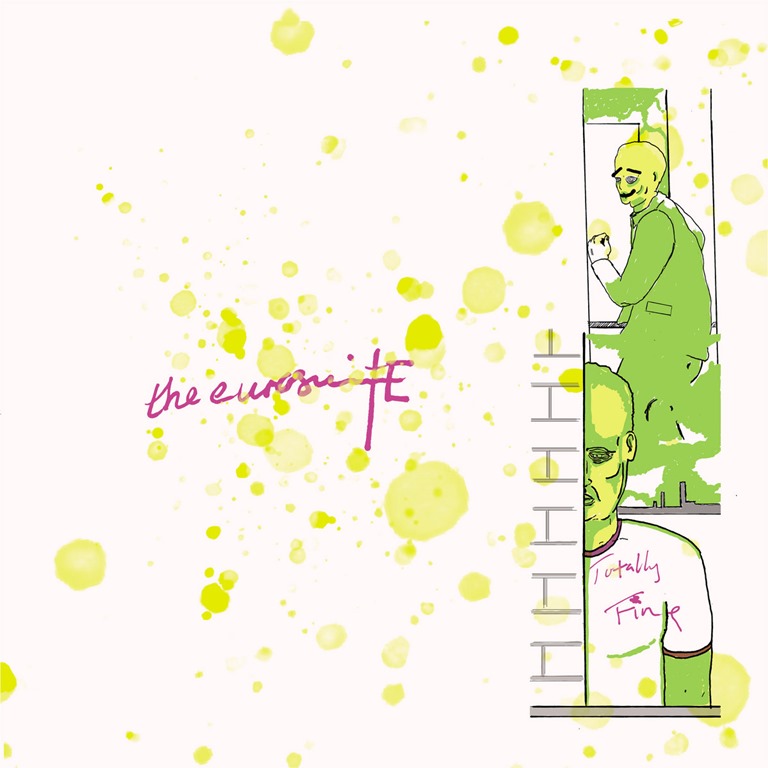
Sorry, not sorry, as they say. In the spring of 2023, off-the-wall supergeroup collaboration featuring members of USA Nails, Nitkowski and Screen Wives, The Eurosuite, released their third album, through Human Worth. They were so sorry, they’ve done another. Only this time, they promise, it’s different.

As the accompanying notes explain, ‘Produced by Wayne Adams (Petbrick / Big Lad) at Bear Bites Horse Studios, the band have taken a different approach from their maximalist output on their second LP Sorry – do less. Where the songs on Sorry were built from a variety of jams, band member ideas, traded demos and looped phone recordings, the 10 songs within Totally Fine were all built and mercilessly edited from a full band improvisations, with individualism, indulgence and egos set aside to better serve the songs… That spirit of minimalism is threaded through each track, which veer from sinewy post punk (‘Crustacean Blue’), throbbing death disco (‘Antimatter’) and something between driving krautrock, surf rock freakouts and an evil version of the B52s (‘12 Diphthongs’, ‘Houseplants’)’.

Sorry was a cracking album: that’s essentially a fact. It still is. But it was seeing them live that they really clicked for me: something about that manic energy in the room, the way each member of the band bounced off one another, if felt as if there was something happening in real-time that went beyond the recorded work.

Here, all of the same elements are present: fizzling synths, jerky guitars, sudden thundering bass runs, changes of tempo, blasts of noise, beats that flit from disco to industrial pounding, and vocals which swing from half-spoken to shouty – and that’s only in the first couple of songs, with a combined running time of less than five minutes. But there’s a newfound focus and intensity, and well as, perhaps a greater separation of instruments which lays the components elements more evident.

There seems to be an emerging subgenre of weird, quirky, jerky noisy shit that’s a bit mathy but with some fried electronics and simply prone to exploding in any direction without a moment’s notice, and it’s noteworthy that both The Eurosuite and Thank, prime exponents of this wide-eyed demented frenzied kind of racket have both found homes at Human Worth. The label’s always had its ear to the ground and its tendrils out for noisy stuff with something different about it, and this feels like an emergent form.

Somewhere in the recesses of my overcrowded memory, there’s a vague recollection of an interview with a band sometime in maybe the late eighties – it may have been a grebo act like Gaye Biker on Acid on how the future of music might be weird, like ‘people playing bits of toast or whatever’ (the quote is from memory, since I’m buggered if I can find it on the Internet and don’t have a month spare to look through books and press cuttings for the sake of fact-checking a detour in a review for an album due out next week). Anyone who’s seen Territorial Gobbing will likely agree we’ve reached that point. But with the likes of Thank and The Eurosuite, they may not be quite that far out, but they’re pretty damn far out in terms of the way their compositions leap and lurch all over, and are simply so far removed from more conventional song structures with verses, choruses, mid-sections, even bridges and pre-choruses or whatever that song forms are being pushed to new limits. And this is exciting and brain-bending in equal portions.

Perhaps this is the culmination of everything that’s preceded it. Perhaps it’s a reaction to the crazy, overstimulated world we live in. Perhaps it’s the soundtrack to emerging from the other side of postmodernism. After all, postmodernism was deemed a ‘schizophrenic’ culture by Deleuze and Guattari in their seminal work, Anti-Oedipus¸ suggesting that schizophrenia is the only sane response to a deranged world. And perhaps this is the proof.

Totally Fine as a title intimates a breeziness, but the kind of airy offhand response which often masks a darker truth. Not that Totally Fine is a showcase of frenetic flailing and pedalling in all directions, and as such has a groundlessness to it. It’s the sound of searching, of grappling with reality, and the very concept of reality.

Some of the songs are barely a minute long: ‘Crustacean Blue’ brings a stuttering blast of a riff that lasts for a mere fifty-five seconds, electronic squeals adding that all-essential eye-popping dimension, and only ‘Reflection Monster’ runs past three minutes. ‘Bellyache’ is one of the most ‘conventional’ songs on the album, and comes on a bit like Suicide and early Cabaret Voltaire with a hint of Throbbing Gristle.

Somehow, by stripping things back, they’ve cranked up the claustrophobia and amped the intensity. There are some dark, low, grinding grooves and some manic hollering vocals on display here, and they do define the album – but that defines it more is the audacious racket, the wild anti-structures, the sheer imagination.

Clawing my way through ‘Bagman’ ‘Earworm’ I can feel my blood pressure increasing as the manic noise amps up… and up. But I’m totally fine. Really, I am. Totally Fine.

AA

a0485217786_10

Cruel Nature Records – 11th September 2023

Christopher Nosnibor

For those unfamiliar with ShitNoise, their bio describes them as ‘a noise punk band hailing from Monte-Carlo (Monaco). Formed in February 2022, the band has undergone several lineup changes. Currently, it consists of Aleksejs Macions on vocals and guitar, Vova Dictor on guitar, and Paul Albouy on drums.’ What’s more, they reckon their third album, I Cocked My Gun And Shot My Best Friend, ‘showcases their most energetic and mature work to date… Departing from their previous noise-centric style, the band blends grungy guitar riffs, metal-influenced double-kick drums, and a more polished production. The album explores themes of confronting the harsh realities of society and the lasting psychological impact of traumatic events. Through gritty soundscapes and stream-of-consciousness lyrics, it paints a raw portrait of present-day existence and the enduring human spirit in the face of adversity.’

I’m often wary of bands and artists who claim to have matured: all too often it means they’ve gone boring, that they’ve lost their fire and whatever rawness, naivete, edge, that made them stand out, drove them to make music in the first place. But these things are relative, and ShitNoise isn’t just a gimmicky moniker, but a fair summary of what they do. Here, they’ve stepped up from no-fi racket to lo-fi racket and evolved from the trashy punk din with dancey and electronic elements that at times sounded like a Girls Against Boys rehearsal recorded on a Dictaphone, toward a more wide-ranging and experimental approach to noisemaking. As for the album’s title… well. Was the act an accident, one of stupidity, gross negligence, or intentional? Either way, as the adage goes, with friends like these… ShitNoise are certainly not the friend of sensitive sensibilities, or eardrums.

So sure, they’ve ‘matured’ inasmuch as they’ve broadened their palette, but in doing so, they’ve discovered new ways of creating sonic torture.

‘Ho-Ho! (No More)’ launches the album with shards of shrill feedback and distortion: it’s two and a quarter minutes of nails-down-a-blackboard tinnitus-inducing frequencies and deranged yelping that’s somewhat reminiscent of early Whitehouse, minus the S&M / serial killer shit. Not that I have a fucking clue what they are on about, and the noise is so mangled it’s impossible to differentiate any of the sound sources from one another – guitars sound like screaming synths, and there’s so much dirty mess in the mix everything sounds so broken you begin to wonder if your speakers are knackered.

Proving just how much they’ve ‘matured’, ‘Brown Morning’ barrels into churning noise driven by thunderous beats as the backdrop to a rappy / spoken word piece, after which the arrival of the fairly straightforward punk tune ‘Gum Opera’ feels like not only light relief, but somewhat incongruous. But then, in the world of ShitNoise, anything goes, as long as it’s noisy shit. And keeping on with the noisy shit, there’s the gnarly Jesus Lizard meets Melvins gone rockabilly slugging sludgepunkfest of the oxymoronic ‘Pleasant Guff’ to go at, and it’s abundantly clear that they’re absolutely revelling in following their curiosity in every direction when it comes to exploring any and all avenues of racketmongering. I Cocked My Gun is wild, and wildly divergent, stupid, chaotic, and fun.

If the off-kilter grunge of ‘X-Ray Phantom’, with its incidental piano tinkling along behind crunchy guitars hints at something approaching a kind of sensitivity – and a closet ability to write songs – ‘Endless Void’ demonstrates their capacity to step back from noise completely, and venture into near-ambient territories, and with remarkable dexterity.

But mostly, these deviances only serve to bolster the impact of the manic racketmaking which dominates the album, which brings us to the epic penultimate track, ‘Hashish (The Yelling Song)’ – a ball-busting seven-and-a-half-minute stoner-doom slammer that slaloms its way through some heavy drone and some explosive psychotic episodes… and we’re immensely proud to be able to present an exclusive premier of the video which accompanies this mammoth slab of sonic derangement right here:

Get it in your lugs. Let it permeate every cell. Bask in the insanity. With I Cocked My Gun And Shot My Best Friend, ShitNoise have really gone out on a limb, and while teetering on a precipice of madness, have proved that artistic fulfilment lies on the other side of mania. It’s a far more enjoyable place than the everyday in which we find ourselves of late, so why not dive on in?

AA

a2752328939_10

17th April 2022

Christopher Nosnibor

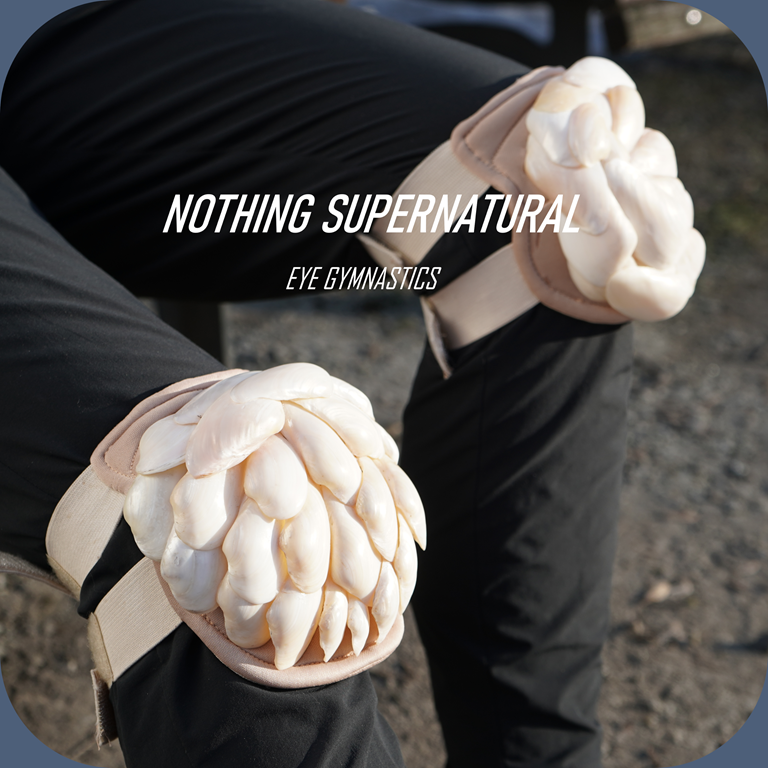
There’s something quite surreal about the imagery of ‘eye gymnastics’: it’s highly visual, yet at the same time, beyond physicality, and as such, it possesses a cartoon-like quality. This surrealism extends to the cover art, too: what exactly are we looking at here? It’s the debut album from a Lithuanian duo consisting of Viktorija Damerell and Gailė Griciūtė, who first came together in 2018.

And so it is that these clues are also representative of the music: the words are strange, fragmented, abstract – but also not, with improbable and incongruous images, and the album’s first piece, ‘Eye Gymnastics’ could be something of a signature tune for the pair. It’s sparse, the beats subtle, distant, subdued, yet insistent as they pulse through eddying swirls of semi-ambient synth drifts, through which a spaced-out, vocal dreamily intonates lyrical abstractions. If surrealism has a certain preoccupation with dreams and the subconscious, then on Nothing Supernatural, Eye Gymnastics plunder that inner realm for inspiration and render it in such a way as to remain to the vagueness, the indistinct focus of the fugue state, the disconnects and strangeness of dreams, and recreates the way those sensations and images echo, hauntingly, in the waking hours which follow those most vivid of nocturnal experiences.

The title feels vaguely ironic in the context of the disconcerting, dislocated vocal treatments of the ominous and eerie ‘Tree Tops’, where a glitchy, industrial beat clatters in thick and leaden. Then again, it’s dark pulsations feel as much the product of a troubled mind as of anything supernatural.

While there are some significant leanings towards ambience and hypnotic drifts imbued with an ‘otherly’ feel, elsewhere, snarling, growling electronics dominate a number of the tracks, with ‘Sadness and Joy’ being really quite heavy, with a gloopy bass that whips and whirs and fizzes. ‘You Destoy Me’ epitomises this industrial darkness: the murky drumming pumps away with the palpating tension of Nine Inch Nails’ ‘March of the Pigs’, while the multi-layered vocals whisper and echo dark thoughts, and the relentless pulse of ‘Let it In’ is harder and harsher still, the bass drum a booming throb, the snare – such as it is – a smash of distortion. You don’t want to let it in: no, you want to shut it out, make it go away. It’s not pleasant, it’s uncomfortable, claustrophobic, suffocating. Sparse and spooky, ‘Bitter Night’ bridges the territory between Young Marble Giants and Throbbing Gristle.

It’s unsettling, a creeping burrowing into the brain, as if overhearing someone’s internal monologue. This is not what you’d really call a ‘relatable’ experience, at least for the majority. It’s not full-on horror, but it is chilling, challenging, eerie, unsettling. But it’s also compelling, hypnotic, and a quite remarkable debut.

AA

Nothing Supernatural art

Human Worth – 4th February 2022

Christopher Nosnibor

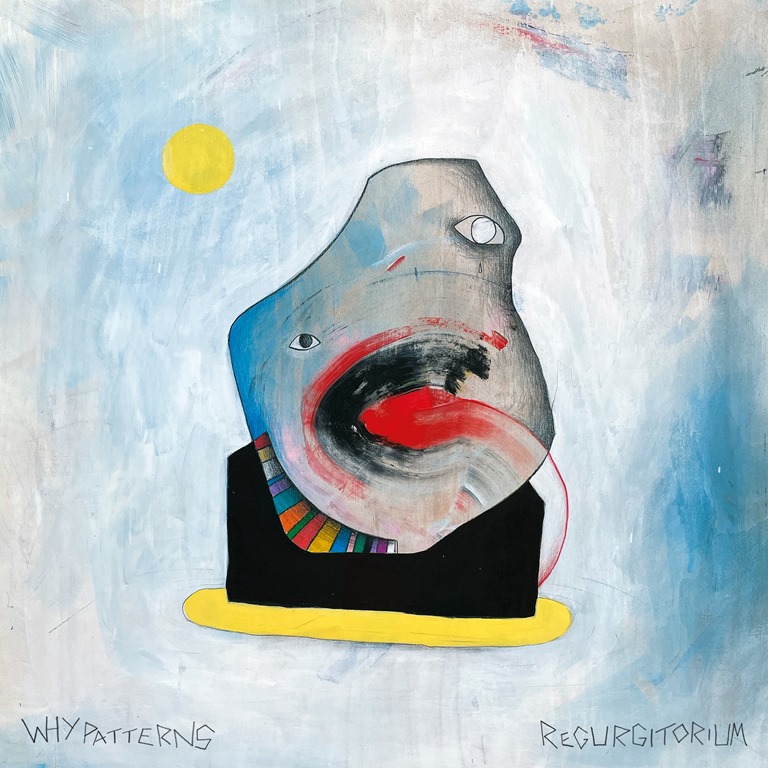
Pitched as being for fans of Primus, Lightning Bolt, Swans and Mudvayne, the accompanying text informs us that ‘Regurgitorium was haphazardly constructed with the sole goal of distressing and alienating their few remaining friends and family. Members of Warren Schoenbright, Wren and Deleted Narrative come together to deliver angular drums, discordant bass, and harrowing vocals accompanied by themes of existential paradoxes and day-to-day despair. The result being something best described as “Not Subtle”.’

If there was ever a strong and perfectly nihilistic reason to make music, that has to be it. It’s one of those hilarious band clichés that get wheeled out when they say they make music for themselves, and if anyone else likes it, then it’s a bonus. It’s almost impossible to not to be sceptical, because, well, fuck off. I mean, I believe Nirvana were sincere in not wanting international mega-stardom and that they wrote In Utero to get back to their roots and piss off casuals and their major label, but they still wrote songs to be heard by an audience – just a more select one. Of course, it depends on your ambitions as an artist, but I would say it’s better to have a small but devoted fanbase than one consisting of a larger but fleeting, fickle bunch of casuals whose interest will have cooled faster than their post-gig McDonald’s fries.

Regurgitation is not subtle, but it is high impact, and it’s a monster racket from the outset, with a clunging bass-rattling racket and squalling guitar mess of noise bursting forth with ‘Parapraxis’. It’s a minute and a half of total mayhem.

They hit optimal Big Black drilling grind on second track ‘Bachelor Machine’: the bass sounds like a chainsaw, while the guitar fires off tangential sprays of metallic feedback and harmonics, bringing together ‘Jordan, Minnesota’ and the intro to ‘Cables’. It’s a brutal squall of noise, and it goes beyond guitar: it’s sheering sparks off sheet metal that singe your skin as they fly, and it really makes a statement about both the band’s influences and intent. It’s messy, and it’s noisy. And it’s perfect.

Every track just gets nastier, more deranged. ‘Elective Affinities’ is all about wandering verses and choruses that sound like a seizure. Everything is overloading all the time: max distortion, max reverb, max treble, max crunch: the bass sounds like a saw, the guitar sounds like a drill, the drums sound like explosions: it’s intense, and it’s punishing, in the best possible way. It’s the sonic expression of a psychological spasm, and everything goes off all at once.

There’s no obvious sense of linearity or structure to the songs on Regurgitation. There’s a bass that sounds like a bulldozer grinding forward at the pulverising climax of ‘Bone Apple Teeth’. And then things go helium on ‘Wretched Makeshifts’: it’s like the Butthole Surfers gone avant-garde. And then there’s the stark spoken word of ‘Silentium’, which is tense, dark.

Listening to Regurgitation is like taking blows to the head in rapid succession. It’s not just the hits, but the dazing effect. Everything mists over, you don’t know where you are, and you’ve even less idea what the fuck this is. It’s bewildering, overwhelming. ‘Railways Spine’ is a nerve-shattering explosion of feedback-riven chaos and there is no coherent reaction. ‘Untismmung’ is the epitome of wordless anguish, this time articulated by means of experimental funk that yields to head-shredding noise. Noise, noise, noise: I keep typing it, and that’s because Regurgitation is relentless in its noise. It’s noisy. So many shades of noise. It’s fucked up. It’s deranged. It hurts. There is just so much noise, and no escape from it. Not that you should seek escape: bask in the brutality, the yawning bass grind and King Missile-like spoken-word segments that provide the brief passages between the blasts of noise, noise noise.

Closer ‘Vomitorium’ sounds like a collision between Shellac and Suicide, and the maniacal laughing at the fade sounds like the only sane reaction to all this madness.

AA

HUMANWORTH_WhyPatterns_CoverArtwork

Christopher Nosnibor

Over recent months – and more – we’ve unravelled the series of releases by experimental oddballs Kröter, via their affiliation with the king of quirk, Mr Vast, formerly of cack pop maestros Wevie Stonder, aka Wevie De Crepon. You can never have too many side-projects, offshoots, and affiliated acts, and so it is that Kröter-associated Hunger give us Wollufos. (Hunger is Christoph Rothmeier & Jörg Hochapfel; Rothmeier is the other half of Kröter along with Henry Sargeant, aka Mr Vast). This is their eighth self-distributed album, and their first on vinyl.

Have you managed to keep up so far? Good, because it’s only going to get more complex and convoluted, because these guys are a prolific, self-contained community cranking out endless oddities, and Wollufos is no exception. They pitch it as ‘mixing fake folk acoustic instrumentation like banjos and open tuning guitars with Harry Partch-style homemade devices’. Fake folk?

From the springy sproingy lo-fi shuffling synth whackout of the brief intro piece that is ‘Zwergenfieber’, it’s immediately apparent that this is going to be a substantial serving of quirky, off-the-wall music that doesn’t conform to any conventions, even their own. The Berlin-based duo work across time signatures and genres at the same time, with some woozy, warpy synths and picked guitars existing in the same space but seemingly playing different songs. Then there’s the leaning towards titling their quirky, heavily rhythm-orientated instrumental ditties in French.

‘Mambo Momie’ is an exercise in bleepy motoric minimalism, and the album is brimming with minimal beats and squelchy synths, as is nowhere more apparent than on the strolling ‘Sunset Sling’. When it comes to making music with all the bells and whistles, Hunger take this quite literally: download bonus cut ‘Schuhe aus Brot’ sees them pull out all the stops to create something that borders on the overwhelming, with additional droning horn sounds and blasts of noise on top of the stuttering, clamorous percussion, before winding down to trickling chimes.

There’s some kind of half-baked wonky country / space crossover on ‘Chariot de Pipi’, and the atonal, off-key pickings of ‘Macramée Cramée’ are truly brain-bending. And then there’s the twelve-minute ‘Hundenebel’, a quivering proggy space-rock workout that makes optimal use of space and distance and of Daniel Glatzel’s clarinet to forge a vast sonic vista. Great, yawning siren wails rub against bubbling synth swells, and there are so many contrasts, to may layers, so many juxtapositions.

Why do we find discord so difficult to process? Even while I enjoy it, I find that numerous things that are seemingly disconnected or otherwise independent create something of a sensory overload that isn’t always entirely pleasurable, and can at times prove quite disorientating and uncomfortable. It messes with our orientation and equilibrium, trips our sense of balance and spins us off centre. Wollufos will leave you dizzy. At times it’s quite bewildering, but it’s never dull or lacking in inspiration.

AA

a2004897443_10