Posts Tagged ‘Swans’

Artoffact Records – 22nd September 2023

Christopher Nosnibor

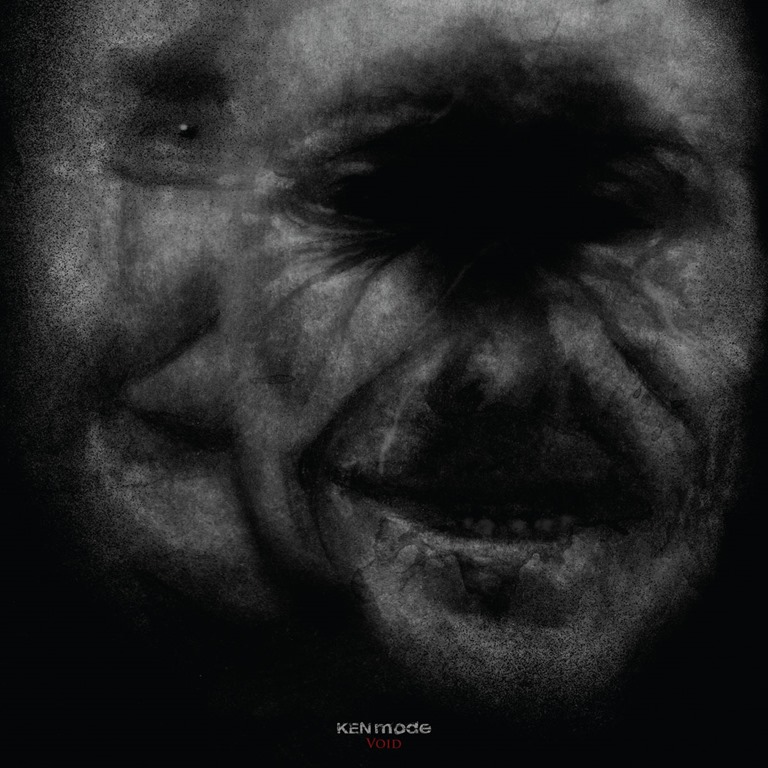
VOID always seems like the most appropriate title for a counterpart to a release called NULL: it was, indeed, the title for a brace of EPs released by Foetus in the early 00s as companions to the album Gash.

But with this, the title is more than simply an extension of a theme in terms of title. As the accompanying notes explain, ‘VOID, the companion piece to last year’s NULL LP, has a decidedly more melancholy and disappointed aesthetic than its predecessor. Featuring 8 new tracks recorded and produced throughout the fall and winter of 2021 by Andrew Schneider, mastered by Carl Saff, with artwork and layouts by the band’s longtime collaborator Randy Ortiz.’

Despite now marking twenty-four years of squalling noise, tenth full-length Loved (2018) found the band hitting new peaks of intensity and gaining newfound traction, and not just because of the vaguely disturbing cover. Combining weight and ferocity, their back catalogue straddles the abyss between The Jesus Lizard and Swans. It’s fair to say, then, that KEN mode are hardly celebrated as a party band, and writing in Decibel Magazine, Shane Mehling summarises the diptych of NULL and VOID as “It’s like the first record is you fighting, and this one is you losing”.

It’s a pretty accurate summary. That is to say, VOID is pretty fucking bleak, harrowing even. ‘The Shrike’ makes for a tense and tempestuous opening, where everything blasts out all at once before sinewy guitars twist and entwine like a contraction of the intestines with the pain of food poisoning before successive deluges of noise assail the senses. The tension draws the sinews so taut as to burn, and a mere four minutes in you feel the anguish rising through the gut and your throat tightening.

Single cut ‘These Wires’ is almost accessible, a sedate intro building the tension before the levee breaks on the lung-bursting anguish. It’s eight minutes of blank fury, raging nihilism that doesn’t necessarily make you feel better. The stab at catharsis feels blunted. Confined, entrapped. It’s tense, and you feel your heartrate well. VOID is so, so, dense, the music low and churning the

Comparisons are few and largely futile in the face of this, but it’s Kowloon Walled City’s bleak, desolate forms. The disappointment emanates from every chord, every pained syllable. Life… yes, it tears you up and it crushes you.

‘We’re Small Enough’ runs in ever-tightening circles around a repetitive bass groove motif, and become wound more tightly with every loop, and then ‘I Cannot’ crashes in and it’s like you can feel the band throwing themselves headline against lead-lined walls in desperate and futile attempts to escape. Escape what? Life… ‘A Reluctance of Being’ encapsulates that sense of struggle, the weight of simply existing some days. And yet just when you think you can’t do it, and don’t think you can even get up on a morning, you do, because you simply do, and then you get through another day, and then the next. It’s like wading through treacle, but what else are you going to do? I say ‘you’ in the hope that in redirecting the personal the universal it will take on a wider resonance. But for every ‘you’, I mean me. But you know that. And this track is the most gut-wrenching brutal.

Previous single ‘He Was a Good Man, He Was a Taxpayer’ is another slow, brutal slice of pain. Another shining example of what no-one would likely consider a single, it’s a crawling slogger spanning five monolithic minutes of bludgeoning noise, angry, grey, dark, dense, relentless. VOID is the soundtrack to staring into the void, while contemplating the practicalities and the future. Is there even a future? What if I step off here? What am I looking at, what am I facing? Is there really nothing? Probably not, and we need to accept that perhaps the end is the end.

VOID stands on the edge and looks down. Perhaps this is it. Perhaps there is more. VOID doesn’t offer hope, but it does provide a backdrop to your existential crisis while leaving you gasping for air.

AA

a2219072561_10

Cinema Cinema have unveiled a video for ‘Walk Into the Ocean,’ from their collaboration with polymath percussionist Thor Harris (Swans, Xiu Xiu, Shearwater), their seventh full length, Mjölnir. Recorded at historic BC Studio in Brooklyn, NY with legendary noise producer Martin Bisi (Sonic Youth, John Zorn, Boredoms). The album will be released on 14th July as a limited edition red 12” vinyl LP, digital download and via streaming platforms by Nefarious Industries.

Have a look at the video for  ‘Walk Into The Ocean’ here:

AA

CC and Thor pc Martin Bisi

Consouling Sounds – 26th May 2023

Christopher Nosnibor

Size matters. Or at least, scale does, if you’re measuring epic. You can’t do epic by halves, and that’s a fact. And when an album weighs in with just five tracks but has a running time of almost forty minutes, you know you’re in proper epic territory (and that it certainly isn’t an EP masquerading as an album). And this is one hell of an album, and it goes beyond epic.

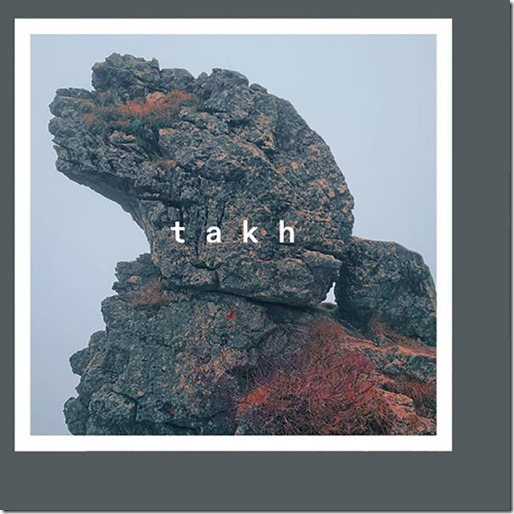
As the bio explains, TAKH emerged from ‘The fruitful collaboration between The Black Heart Rebellion and Echo Beatty’s Annelies Van Dinter on the People album was the beginning of a new musical story. After the end of TBHR Alexander, Annelies, Emeriek and Pieter went deeper in their quest to write music reflecting the true emotions of the musicians. After about one year of free improvisation, TAKH created something truly unique. The idea was very simple: to release the result of the collaboration without pre-orders and announcements…’

There is absolutely nothing out there on-line which provides a precursory listen to this album, and that in itself is beyond rare in an age when bands – and labels – hype releases to the nth degree. More common is that you’ll have heard every track weeks before the release, and this makes TAKH’s stealth approach all the more welcome. It takes us back to the days of before the Internet, when you’d read about a band in Melody Maker or hear about them from a mate or on the sixth form stereo – the means by which I introduced my friends to / tortured my friends with Swans and Godflesh during breaktime.

Swans are one of the bands listed as influencing TAKH, and it shows in the compositions, and to some extent, the musical arrangements, not least of all the way the final track echoes latter-day Swans in their hypnotic, immersive swells of sound.

‘Salomonne’ enters in a swathe of ancient Eastern mysticism, long, trilling vocal drones and esoteric spiritualism which sets the atmosphere before the arrival of the drums, bass, and rasping vocals. In combination, the tension builds as does the sense of vastness, and you feel an endless desert and sky spreading before you, extending infinitely to the vanishing point at which the two meet and fade in a haze. It slowly trudges, shimmering, simmering, and burning, to its weighty climax. It’s metal, but not in a particularly recognisable form.

The percussion dominates the droney ‘Unabashed and knowing’: if The Cure’s Pornography comes to mind, it’s a fair comparison, but this actually feels more like The Glitter Band paired with Joujouka and the triptastic done of a digeridoo. Around five minutes in, seemingly from nowhere, rising like a desert storm, the dual vocals rise up climactically to deliver something resembling an impassioned chorus, even bearing a semblance of a hook, before being drowned in a rising wave of sound: part shoegaze, part eddying panic and a sense of unfamiliarity, and all propelled by a relentless percussion., before ultimately fading to a heavy elongated drone.

The album’s shortest song is also perhaps its most conventional: a crawling bass and plodding beat pin ‘Drôme’ together, and the vocal passages are intersected with a chiming nagging guitar motif before the tension breaks – or more cracks a little – around four and a half minutes in. Perhaps it’s just me and I’m a little cracked, but the break into the light makes you want to cast your eyes to the skins and open our arms, not necessarily expecting a response but to simply absorb.

‘Azure Blue’ has a warped sea-shanty feel to it, amidst the crushing post-rock crescendos which surge and splash. Spread out over almost seven-and-a-half minutes, it’s a beast, albeit one that’s subdued and contemplative.

The album concludes in reflective style, with the ten-minute ‘Hair of a Horsetail’. Captivating vocals, at once ethereal and earthy, quaver over a slowly wavering drone. It’s a duet of sort, and one which delves into deep and ancient spirituality. The bass rolls in around the midpoint, from which the song builds, making for a climactic closure to an album that’s powerful, while often understated. It has so many levels, so many layers, so many depths; at once uplifting and exhausting.

TAKH - S T Cover

Young God Records – 23rd June 2023

Christopher Nosnibor

Swans are back – again. This is no surprise: they released – as has become standard form – a limited edition demos CD, Is There Really A Mind? through the website as a fundraiser to pay for the album’s recording and release. All ten of the songs which appeared there have made it to the finished album, but, more often than not, in aa rather different form. Unusually, though, the bare-bones demos didn’t all start life as brief acoustic sketches which expanded to twenty-minute sprawlers exploding with extended crescendos: the shapes of the songs were realised early on, and in several cases, the final versions are actually shorter than the drafts. And while Gira hinted at a seismic shift following the gargantuan blow-out of The Glowing Man, heralding the arrival of a new era with Leaving Meaning – and it’s true that the shape of the band has been very different, not least of all with mainstay Norman Westberg and Thor Harris both stepping back to being contributors rather than a core members, Kristof Hahn remains – Swans remains very much ultimately Gira’s vehicle. And so it is that for all of the changes, The Beggar is clearly very much a Swans album, and sits comfortably in the domain of their body of work.

There does very much seem to be an arc when it comes to Swans releases, rather than any rapid shifts, particularly since their 2010 comeback, My Father Will Guide Me up a Rope to the Sky, whereby the songs grew incrementally longer and more sprawling and the crescendos more drawn out, fewer, and further apart. And so it is that The Beggar follows the more minimal sound of Leaving Meaning, and, like its predecessor, it’s a comparatively succinct statement, at least by Swans standards in the last decade – at least, discounting ‘The Beggar Lover (Three)’, an album-length track which is absent from the album, and occupies the majority of disc two on the CD. This track is, in some ways, contentious: does it even belong on the album, or should it have been released as a standalone work? The album minus ‘The Beggar Lover (Three)’ is still an expansive work, but has a certain flow and sense of existing as a cohesive document. And so it feels like there are almost two different albums here:

As the album’s ‘taster’ tune, the twitchy, trippy, eternally-undulating ‘Paradise is Mine’ indicated, Gira’s compositions on The Beggar are constructed around heavy repetition. This is to be expected: it’s been Gira’s style since day one. The first song, ‘The Parasite’, strips right back to nothing around the mid-point to find Gira acappella, imploring ‘come to me, feed on me’ in a menacing low-throated rasp. And as Gira questions ‘is there really a mind?’ in the psychedelic droning loops of ‘Paradise is Mine’ the tension increases and you start to feel dizzy. and perhaps a little nauseous. This pit-of-the-stomach churn is something that Swans have long been masters of, although quite how it manifests has changed over time: back in the days of Filth, Cop, and Greed, it was sheer force. More recently, it was woozy, nagging repetitions that lurch like a boat on a bobbing tide.

‘Los Angeles: City of Death’ returns to the style and form of The Great Annihilator – a three-minutes hard-punching gloom folk song. After the previous incarnation’s ever-longer workouts, it’s an absolute revelation, and a joy to be reminded that despite the work of the last decade or so, Gira can still write tight songs that you can actually get a grip on and really get into. ‘Unforming’ is a soft country drone, which finds Gira crooning cavernously over slide guitar, and it’s reminiscent of some of the more tranquil moments of Children of God.

‘I’m a shithead unforgiven… I’m an insect in your bedclothes…’ Gira drones on the ten-minute title track. For all of the artistic progress and evolution over the decades, Gira is still chained to the tropes of self-loathing and the darkest, most self-destructive introspection, and this is dolorous, doomy, and bleak …and then about four minutes in, the drums crash in and the sound thickens and they plug into one of those nagging grooves that simply immerses you and carries you upwards on a surge of sound. ‘My love for you will never end’, Gira moans, ever the subjugate, before the vocals conclude with an anguished, wordless strangled gargle as the riff kicks back in and swells to a monumental scale seemingly from nowhere.

‘No More of This’ is mellow and almost uplifting, both sonically and in its message – at least until near the end, when Gira reels off a list of farewells, and as much as ‘Ebbing’ seems to be about drowning, it’s a sliver of sunny-sounding psychedelic folk. And then ‘The Memorious’ hits that dizzying swirl of repetition that feels like a kind of torture. It’s hard to really articulate just how there can be music that makes you want to puke because it’s so woozy, wibbly. It’s the sonic equivalent of watching Performance. You don’t need to take a trip to take a trip.

‘The Beggar Lover (Three)’ represents a massive detour that does and doesn’t sit within the flow of the album. It’s either the penultimate track, or an appendix, depending the format of your choice. However you approach it, this is drone on an epic scale. Five minutes into ‘The Beggar Lover (Three)’, which starts out a trickle, with a robotic female spoken word narrative, everything just goes off – mostly drums, but also noise. When this tapers away, we’re left with the sound of sirens, ominous drones, and then after some hypnotic droning, there’s another monster surge, a nagging guitar motif riding atop a thumping beat and heavy swell of drone. It soon crackles into a grand wheeze of electronica, And a detonating wall of noise, and at the end, it all collapses. Around the eighteen-minute mark it really hits a heavy groove and blows you away.

The Beggar is certainly not the kind of heavy of Swans early releases, but it’s still heavy. It may not possess the sledgehammer force of the original. It’s beyond strong.

Once again, Swans have produced an album that’s more than an album, more than anything.

AA

a3082583285_10

Sacred Bones – 19th May 2023

Christopher Nosnibor

It’s been fourteen years since there was new music from Khanate, the experimental doom outfit featuring members of Sunn O))), OLD, and Blind Idiot God. It’s perhaps not surprising that my social media feeds have been bursting with the news of the surprise arrival of their fifth album on digital platforms ahead of a physical release next month– and because it landed from nowhere overnight, you couldn’t say it was eagerly anticipated, but it’s got a lot of people excited.

As you would expect, given the members’ main projects, and the previous Khanate releases, To Be Cruel is an absolute monster, with just three tracks spanning a full hour. You don’t tune in to Khanate for snappy pop tunes.

The first chord hits like an atomic bomb, blasting from the speakers with such force it’s almost enough to floor you, and rising from the sustain, crackling synth notes, then another sonic detonation that’s so hard and loud it hurts. Many of the tones and tropes of To Be Cruel are heavily redolent of the crushing doom drone of Sunn O))), but as the first piece, ‘Like a Poisoned Dog’ abundantly evidences, Khanate are different. This difference may be less apparent to the casual listener, but the stop/start power chords and skewed, sinewy shards of feedback are cut from a different sonic cloth, and if Sunn O))) are renowned for their indebtedness to Earth, there are elements woven in here which seem to owe more to early Swans, and while I wouldn’t necessarily want to speculate on whether the album’s title is some kind of response to Swans’ 2014 album To Be Kind, there is some kind of contextual interface here, in that both acts are pushing parameters within a longform song format.

And then there are the vocals: it’s a good seven minutes before Alan Dubin makes his first contribution: the song takes another swerve, the blistering blast simmers down and as he howls and roars, the feel is a cross between the darkest of mangled metal and brutal hardcore. And his manic screams are powerful and affecting. He sounds troubled, but in a way that conveys the kind of tortured mental suffering that’s common to many: it’s a primal howl of rage ad anguish that we struggle to unleash, and so to hear this is to feel emotions channelled by proxy, and as much as it hurts, it’s a release.

‘It Wants to Fly’ takes it to the next level, presenting almost twenty-two minutes of pain. The guitar is slow, crushing, punishing. What can you say? It hurts. It’s also minimal in arrangement but maximal in volume: this is first-gear BPM, with decimating feedback between the crushing chords. At the same time, it’s doomy and ominous as well as raging, making for a powerful cocktail of weight and raw emotion. There is no question that Khanate bring both.

And so it is that the album’s third and final track, the twenty-minute title track, is twenty minutes of low drone and tortured screaming that sounds like a breakdown captured on tape as Dubin yelps and screams about spiders against a sparse backing of a distant rumble and clanging guitar. ‘Look! In the closet!’ he shrieks in what sounds like abject terror. You dare not look. You don’t even want to hide under the bed: you just want to leave the house. The composition takes its time, it hums and drones, and in time, it hits and it hurts, and in some way you wish you could be Dublin, you want this release to have a channel into the unhinged. But you’re stuck on the outside, an observer to what sounds like either the ultimate catharsis or mental disintegration.

Ground down to nothing beyond and anguished screams and squalling feedback, this is bare bones, the sound of desperation. It isn’t pleasant, and there is simply no room to breathe: this is dark, dense torturous, and it’s exactly what fans have been waiting fourteen years for.

AA

a3411741448_10

SWANS have announced details of their sixteenth studio album, The Beggar, due for release on Mute / Young God Records (N America) on 23 June 2023. In addition, Swans have announced further dates for a tour across the UK, Europe and North America – full details below. The Beggar will be released on double vinyl in a brown chipboard sleeve with a download card for accessing an additional 44 minutes of music (also included on the album’s CD version), as a double CD in a brown chipboard digi-pack, as well as digitally.

Listen to the first track from the album, ‘Paradise is Mine’:

SWANS LIVE DATES – 2023

20 May – Leipzig DE, UT Connewitz – SOLD OUT

21 May – Poznan PL, CK Zamek – SOLD OUT

23 May – Katowice PL, Kino Teatr Rialto – SOLD OUT

25 May – Zilina SK, New Synagogue

26 May – Ljubljana SL, Kino Siska

27 May – Innsbruck, AT, Heart of Noise Festival, Treibhaus

29 May – Bologna IT, Teatro Duse

31 May – Lyon FR, Transbordeur

2 June – Barcelona ES, Primavera Sound Festival

4 June – Lisbon PT, Culturgest – SOLD OUT

5 June – Lisbon PT, Culturgest

6 June – Faro PT, Teatro Das Figuras

9 June – Madrid ES, Primavera Sound Festival

11 June – Athens GR, Vraxon Theatre

13 June – Thessaloniki GR, Moni Lazariston

15 June – Antwerp BE, Bourlaschouwburg

16 June – Utrecht NL, Hertz Theatre – SOLD OUT

11 Aug – Brighton UK, St George’s

12 Aug – Manchester UK, Albert Hall

15 Aug – Newcastle UK, Boiler Shop

16 Aug – Glasgow UK, St Luke’s

18 Aug – Bristol UK, Arc Tangent Festival

19 Aug – Leeds UK, Belgrave Music Hall

21 Aug – Dublin IE, The Academy

23 Aug – Norwich UK, Waterfront

24 Aug – London UK, Troxy

26 Aug – La Tour-De-Peilz CH, Nox Orae Festival

2 Sep – Dallas TX, Granada Theater

3 Sep – Austin TX, Paramount Theatre

7 Sep – Phoenix AZ, Crescent Ballroom

8 Sep – Los Angeles CA, Lodge Room

9 Sep – Los Angeles CA, Lodge Room

12 Sep – San Francisco CA, Great American Music Hall

13 Sep – San Francisco CA, Great American Music Hall

15 Sep – Portland OR, Revolution Hall

16 Sep – Seattle WA, The Crocodile Showroom

19 Sep – Omaha NE, Waiting Room Showroom

20 Sep – Minneapolis MN, Fine Line Music Cafe

21 Sep – Chicago IL, Cabaret Metro

23 Sep – Detroit MI, Magic Bag

24 Sep – Cleveland OH, Beachland Ballroom

26 Sep – Toronto ON, Phoenix Concert Theater

27 Sep – Montreal QC, Theatre National

29 Sep – Brooklyn NY, Music Hall of Williamsburg

30 Sep – Brooklyn NY, Music Hall of Williamsburg

BeggarCoverDigital2_grande

Cruel Nature Records – 6th September 2022

Christopher Nosnibor

These are interesting times for Nadja, the ‘ambient / experimental / doom metal’ duo comprising Leah Buckareff and Aidan Baker. Luminous Rot was recorded during lockdown, and found a home on the legendary Southern Lord label. Released in the spring of 2021, it’s a veritable beast of a work, which combined metal with post-punk, cold-wave, shoegaze, and industrial.

Lockdown feels like something of not so much a distant memory as an unreality, and if by May 2021 it felt like life was returning to normal, the truth is that the wounds were still raw, and any attempt to move on as if life was back as it was before was simply a wilful act of delusion to stave off the effects of the trauma.

And with every trauma, there is some residual hangover, and you might say that Labyrinthine is the product of that. As the accompanying notes detail, the material was recorded during the pandemic and concurrently with Luminous Rot, and ‘explores themes of identity and loss, monstrosity and regret, extreme aesceticism, the differences between labyrinthes and mazes, taking inspiration from Haruki Murakami’s Killing Commendatore, Ursula K. LeGuin’s The Tombs of Atuan, and Victor Pelevin’s reinterpretation of the story of the minotaur and Ariadne, The Helmet of Horror.’

When a band chooses to self-release an album, it’s no longer an indication that it’s substandard or not worthy of a label release, and the case here is that Labyrinthine, which ‘this might be Nadja’s heaviest, doomiest album to date’, it’s clear that rather than consisting of session offcuts, it stands alone as a separate project from Luminous Rot, featuring as it does, a different guest vocalist on each track, and it’s worth listing them here:

Alan Dubin – legendary American vocalist from O.L.D. and Khanate and, currently, Gnaw

Rachel Davies – vocalist and bassist from the British band, Esben & The Witch

Lane Shi Otayanii – is a Chinese multi-media artist and vocalist in Elizabeth Colour Wheel

Dylan Walker – American vocalist from grindcore/noise band Full of Hell

With such a roll-call of contributors, it’s in no way possible to fee short-changed by the fact there are only four tracks, and ‘only’ is somewhat redundant when the shortest of these is almost thirteen minutes in duration. This is an album alright, and it’s an absolute fucking monster at that.

And while the CD release is on the band’s own label, Broken Spine, there are limited cassette versions by several different indie labels from around the world: Katuktu Collective (US), Cruel Nature Recordings (UK), Bad Moon Rising (Taiwan), Adagio830 (Germany), Muzan Editions (Japan), WV Sorcerer (France/China), Pale Ghoul (Australia), and UR Audio Visual (Canada) – and it’s perhaps noting that the running order differs between formats,  and I’m going by the Cruel Nature tape sequence here rather than the CD. It may be more intuitive from a listening perspective, but limitations off format and all…

This co-operative approach to releasing music is highly commendable, and seems to offer solutions to numerous problems, not least of all surrounding distribution in the post-pandemic, post-Brexit era where everything seems on the face of it to be fucked for any band not on a major label with global distribution and access to pressing plants and warehouses worldwide.

The title track is a lugubrious droning crawl: imagine Sunn O))) with drums crashing a beat every twenty seconds in time with each pulverising power chord that vibrates your very lungs. And those beats are muffled, murky, and everything hits with a rib-crushing density, that’s only intensified by the squawking, anguished vocals that shred a blasted treble in contrast to the thick billows of booming bass sludge, and it’s a truly purgatorial experience.

And then, here it comes, and it all comes crashing down hard over the course of the most punishing nineteen minutes in the shape of the brutal behemoth that is ‘Necroausterity’. In a sense, the title speaks for itself in context of a world in lockdown, and it’s sometimes easy to forget just what terrifying times we endured, watching news reports of bodies piling up in New York and elsewhere while governments and news agencies fed a constant stream of statistics around cases and deaths. It felt truly apocalyptic. And ‘Necroausterity’ is the sound of the apocalypse, tuned up to eleven and slowed to a crawl, the writhing torture of a slow, suffocating death soundtracked by guitar and drums do dense and dark as so feel like a bag over the head and a tightening grip on the throat. The recording is overloaded, distorting, and it’s a simply excruciating experience. And it simply goes on, chord after chord, bar after bar, slugging away… and on in a fashion that makes SWANS feel lightweight in comparison. It’s relentless, unforgiving, brutal, and punishing.

‘Rue’ broods hard with dark, thick strings and a heavy atmosphere, but it’s light in comparison. It’s dense, and weighty, but Rachel Davies’ ethereal vocal drifts gloriously within the claustrophobic confines and conjures another level of melody that transforms the thick, sluggish drones into something altogether more enchanting. It builds to a throbbing crescendo that is – perhaps not entirely surprisingly – reminiscent of Esben And the Witch or Big | Brave.

Wolves howl into the groaning drone of ‘Blurred’ and the guitars slowly simmer and burn: no notes, just an endless am-bleeding distortion before the power chords crash in and drive hard, so low and slow and heavy so as to shift tectonic plates and shatter mountains. Amidst the raging tempest, Lane Shi Otayanii brings an otherworldly aspect that transcends mere words, making for a listening experience with a different kind of intensity as it trudges and churns fir what feels like a magical eternity.

The sum total is the sound of hellish desperation, and while Labyrinthine may offer absolutely no solace in the bleakest pits of deathly despair, you’ll be hard-pressed to find an album that better articulates perpetual pain and anguish better than this.

AA

cover

Young God Records – February 2022

For a good many years now, Michael Gira has been releasing limited-edition, hand-decorated CDs as stop-gaps and fundraisers, and many of these have offered skeletal previews of works in progress as part of the evolution of the next Swans album: indeed, some of these ‘demo’ CDs have served to raise funds towards the recording of the next Swans album. These hand-numbered, signed releases have become integral to the connection between the artist and the fans: while Gira may have long cultivated a reputation for being ‘difficult’ and ‘standoffish’, it’s become apparent, particularly since the post-millennial return of Swans that Gira has mellowed somewhat, but, more than anything, that he is truly appreciative of the continued support of a dedicated fanbase, and the effort that goes into these is apparent.

One friend of mine said he had stopped buying them because he wasn’t sure he felt the need for any more Gira solo acoustic demo discs, and it’s true that format in itself has become something of a standard: songs recorded solo by Gira with just acoustic guitar and voice, house in some permutation of woodstamp and hand-painted envelope, accompanied by liner notes and lyric sheets. But these aren’t just crappy CD-R efforts in a photocopied sleeve, but proper, lovingly-crafted artefacts that are more than simply about the music they contain, which may well explain the high prices they fetch on the secondhand market. But purely considering the music herein, to hear these demos while the songs are being developed is to gain an insight into not only the creative process, butt a glimpse of the future – or not.

Oftentimes, demos and outtakes are released as deluxe release bonus tracks or B-asides and the like, and one can compare the final version and see how it’s evolved, if at all; but to hear the demo before the song is finished means that the grand reveal when the album is released is an altogether different experience. Moreover, whole many artists’ demos don’t sounds radically different apart from having more fleshed-out arrangements and proper production, having been thrown together in a studio, these are raw, ragged sketches that are subsequently subject to vast revisions.

What with one thing and another, it’s taken me a while to get around to listening to Is there Really a Mind? It’s perhaps a hangover from the last few Swans albums, that were so long that even putting the disc in the player felt like an evening’s commitment. You can’t just leave, say, The Seer or To Be Kind rolling along as background music while you’re working, or think ‘I’ll just play half an hour of this while I’m cooking dinner’. This is, perhaps, the dichotomy of the album experience and the listening span of the modern listener, but then, concentrating long enough to listen to an album that lasts maybe forty-five minutes versus \an album that runs for the best part of two hours is an altogether different matter.

The compositions on Is there Really a Mind? feel more evolved than those on many of the previous demo discs – and a fair few of them are already pretty damn long. The opening triptych of ‘Paradise is Mine’; ‘The Beggar’; and ‘The Parasite’ runs for the best part of half an hour, with the shortest being barely shy of seven minutes, and they find Gira in his most drawling, droning, ominously spiritual mode. Lyrically, perhaps any shift is less obvious, with many of Gira’s longstanding themes being explored.

Across the ten songs on Is there Really a Mind? there’s a real sense of Gira building long, throbbing sounds that aren’t really riffs or motifs, and the three-chord repetitions that are his trademark have faded to even less overtly structured forms as he batters away at a single, indistinct chord that’s more of a drone than a tune, for the duration. It’s hard and harrowing, and while full arrangements will make an immense difference to how the songs actually work, these versions are like the darkest, bleakest country tunes, hewn from the bowels of hell – as if the evangelical elements of Children of God had been distilled by demons.

It feels like I’ve been listening to this all night, and still it’s only the third song, and truth be told, it is a slog and without the textures and layers of proper arrangements, it’s hard to imagine slapping this on to fill some time and air, ever.

It’s a measure of an album’s cheer level when a song entitled ‘Los Angeles City of Death’ is one of the more uplifting tunes. ‘Why Can’t I Have What I Want When I want It?’ isn’t a song demolishing the instant gratification of consumer culture, but another exploration of suppliance, dominance, and devourment, and it’s fair to say that whatever the musical progressions, Gira’s words remain focused on blood and bone and pain and the stuff that hurts.

Is there Really a Mind? may just be acoustic demos, but it’s immense.

'Is_There_Really_a_Mind '_cover

Tartarus Records – 25 February 2022

James Wells

Dark Worship came together in what they describe as ‘the bleak and unsettling landscape of the post-industrial American Midwest’ and is less of a band and more of a collective of musicians from various bands, co-ordinated by J. Meyers (Axioma, Aureae Crucis). They pitch their sound as dark, and it is, but this is a different kind of dark: Flesh of a Saint has the murky lo-fi production values of black metal, which serves the bleak atmospherics well, but it’s not metal, and nor is it dark ambient or tethered to any specific or clear genre.

The two-and-a-half-minute shock of ‘We’ve Always Been Here’ begins as an ominous drone before erupting into swampy grunge spewed from Satan’s sphincter: there’s a nagging guitar riff half-submerged in the mix, and a thudding kick drum stammering out a beat that’s on the brink of a panic attack, and it only gets dingier from hereon in.

There may only be six tracks with a total running time of just over twenty minutes, but over its duration, Dark Worship live up to their name: punishing percussion hammers and clatters before giving way to doomy, funeral synth drones to provide the backing to harsh, shouted vocals on ‘Culling Song’, and it evokes the mangled noise of Prurient. It’s heavy listening. ‘Hollow Body’ brings a rasping vocal, the empty rasp of the walking dead, grating from a purgatorial pit shaped by a pulsating low-end throb.

If the final ‘Well of Light’ sounds redemptive, the light at the end of the tunnel, think again: it’s more like being sucked into the vortex after the last drops of energy have been sapped from your limbs and you hang, lifeless, waiting for the end. Oblivion can’t come too soon. Worship the dark.

AA

821847