Alternative rock artist The Quality of Mercury presents his sophomore album The Voyager, an adventurous journey that explores different terrains and sensations: exhilaration, anxiety, longing and introspection, highlighted by focus track ‘Radiate’. Nine years since his debut Transmission album, he is finally back with new music that is both anthemic and accessible, cinematic and catchy – a perfect blend of muscle and melody.
The Quality of Mercury is Pennsylvania-based artist Jeremiah Rouse, who handles everything from writing and performing to engineering. Previewed by the singles ‘Heaven’s Gate’ and ‘Ganymede’, this groovesome, graceful and grand music with space-rock atmospherics speaks to our deep need for connection. His ongoing search for meaning is woven into songs that range from bursts of excitement to moments of quiet reflection.
“The Voyager album is born from a deep place of longing — for connection, for meaning, for something beyond the surface of everyday life. It’s about the desperation we often feel when distance, whether emotional, spiritual, or physical, gets in the way of our need to connect truly,” says Jeremiah Rouse.
“At this point in my life, I’ve realized that relationships, both human and spiritual, are at the center of everything. These songs reflect that realization. They’re part confession, part exploration, part quiet hope. They come from nights of questioning, moments of stillness, and the constant ache for something more meaningful. I made this album in hopes that someone, somewhere, would feel a little less alone in their search for purpose, presence, and peace. If The Voyager helps you feel a little less alone in your search, then it’s done what I hope it would.”
Eric Quach has been making music – or perhaps more accurately sculpting sound on the fringes of music – as thisquietarmy for over twenty years, amassing a substantial body of work as a solo artist, with an expanded band lineup, and with various collaborations, the most recent being Cîme, his second with Tom Malmendier
We learn that Langue Hybride was written and arranged in less than 4 weeks during thisquietarmy’s music residency at Centre d’Expérimentation Musical (CEM) in the region of Saguenay—Lac-St-Jean, Québec.
The album consists of five longform tracks, which range from seven and a half to sixteen minutes in duration. It’s the shortest work, ‘Les Rayons Cosmiques’ which lifts the curtain the album, with droning, dolorous strings and distant, delicate percussion conjuring evocative atmospherics, coloured with both a simmering tension and an underlying sense of sadness, which, while hard to define, is palpable. Around the midpoint, that distant percussion builds to stand front and centre and a groove emergers, suddenly and unexpectedly, and the whole feel changes towards something that’s a cinematic hybrid of folk and space rock.
‘Respirer l’instabilité’ crashes into altogether darker territory, a gloomy, doomy trudge of slow, deliberate drumming and a low, grinding bass, over which discordant sonic mayhem plays out. After a lull of calm around the mid-point, a pulsating rhythm merges, and things evolve into a strolling wig-out with some strong jazz-funk leanings and already, a pattern is beginning to emerge in terms of compositional structure, in that around halfway, the trajectory shifts, and the piece ends in a completely different place from the one in which it started.
This is confirmed by the pivot which takes place around five minutes into the third track. Reminiscent of latter-day Swans, ‘Les radicaux libres’ is woozy and weird, expansive and haunting, and begins to pick up pace and volume six minutes in, building to a bursting sustained crescendo that’s both hypnotic and tense, and if ‘Organismes en aérobiose’ starts out soothing, the sound of dappled sun through leaves on a summer’s day, it transitions to a fist-waving stomper and concludes as a skyward-facing surge of sonic exultation, via the detour of a post-rock tidal wave, while fifteen-minute closer ‘Solastalgie impalpable’ rides a wave of thick riffage and strings reminiscent of the long play-out on ‘Layla’ – only this is arguably more successful, as it always felt like an epic and overlong anti-climax in the wake of that guitar-line. True to form, ‘Solastalgie impalpable’ does make a shift, tapering into some elongated swirling drones which reverberate and rattle the ribs and taunt the senses, before suddenly bursting into life with a driving rock riff by way of a climactic finale.
Langue Hybride is a wild ride, and while claims for acts producing ‘genre-defying’ works are not just tedious and predictable but usually completely spurious, there’s no neat way of categorising this schizophrenic hybrid, where each track is a work of two halves, presenting almost oppositional styles and characteristics .But this stylistic polarity makes for exciting – if challenging – listening: given that the only thing that’s predictable is that each piece will fly in a different direction at some point, there’s no way one could call this album predictable. The vision – and its execution – are superb, and with Langue Hybride, thisquietarmy offer something which is quite different, and rather special.
Richard Rouska is something of a cult legend in his own lifetime: back in the 80s he was pivotal in the Leeds zine scene, documenting the emerging post-punk movement Leeds remains so renowned for, in real-time, subsequently writing a number of books. Along the way, he’s made some music of his own, recently making Well Martin This is Different his primary focus, with some prolific results. Finding The Ai G-Spot is WMTID’s fifth since their inception in the mid-late eighties, and serves up a set of remixes, with proceeds from any donations going to the Throat Cancer Fund.
And yes, it certainly is different, and that’s clear from the get-go. WMTID’s music is essentially electronica, but draws on a host of elements which have their origins in different decades and different scenes. I will admit that I misread the title as Finding The Ali G-Spot initially. Ai-iit! But while this album draws on a huge array of influences, you won’t find any naff cultural appropriations.
‘The Prince is Dead (Again)’ is a twisted hybrid of lo-fi post-punk, 80s electronic industrial (think Wax Trax! stuff in the late 80s / early 90s), space rock, and Krautrock, a motorik groove stricken through with some wild orchestral strikes and multi-layered vocals – and this is to an extent the template: ‘03:33 Time’s Up’ is exactly the same duration as the original version (‘333’) which appeared on I Know What You Are But Who Am I? in the Autumn of 2024, tweaked to optimise the hypnotic rhythm and detached-sounding vocals. The result is somewhere between DAF and early Human League. ‘Deep Down Low II’ – again reworking a track from I Know What You Are goes full-on techno / cybergoth stomper, with industrial-strength beats pounding away relentlessly. It works so well because it doesn’t take from the original, instead simply rendering it… more. More. MORE! And I want MORE!
There are hints of both KMFDM and very early New Order about ‘It’s (Another) Lovely Day’, but then, it’s as much a work of buoyant lo-fo indie and bedroom pop, while ‘Little Bombshells’ comes on a bit Prodigy, but again, a bit technoindustrial, and a bit kinda oddball, bleepy, bloopy, twitchy, stuttery, the vocals quavering in a wash of reverb as crashes of distortion detonate unexpectedly. Elsewhere, ‘Waiting For The End…’ goes dark and low and robotic, and ‘Three O’Clock Killer’ is hyperactive and warped, and brings menacing lyrics atop a baggy 90s beat.
It really is all going on here, and the end result feels like a wonderfully eclectic celebration of music, articulated through some quite simple compositions, all of which have solid grooves providing the backbone of each.
My general opinion of remix albums is widely documented and not entirely enthusiastic, but Finding The Ai G-Spot is a rare exception, mostly because it doesn’t feel like a remix album an doesn’t offer three or four unnecessary and unrecognisable versions of each song, boring the arse off all but the most obsessive fan. In fact, if you’re not up to speed on WMTID’s output – and there’s a fair chance you may not be, to be fair – Finding The Ai G-Spot offers a neat entry point and summarises the last couple of albums nicely, too.
Huge Molasses Tank Explodes will release their new album III on 6th September via Tidal Wave Records.
They have now shared ‘Distant Glow’, a track that starts with a slow and soothing mood reminiscent of 60’s psychedelic pop, accompanied by layers of mellotron and Farfisa, and it later evolves into space-rock, where fuzzed-out guitar echoes and trippy synths take over. The song’s soundscape is simultaneously melancholic and colourful, creating a perfect canvas for its themes of isolation and distance.
Listen here:
AA
‘Distant Glows’ follows previous singles ‘Bow of Gold’, a track built upon contrasting kraut-derived sequenced synth lines, spacy textures, jangly guitars drenched in reverb and full psych fuzz-driven drone walls, and ‘Indeterminate’, a song driven by a motorik rhythm sustained by a stubborn synth bass sequence on top of layers of synths, spacey guitars and vocoder vocals.
An immersive psychedelic reverie. This is what Huge Molasses Tank Explodes has to offer: a liquid continuity of landscapes, as envisioned by the minds of Fabrizio De Felice (voice, guitar, synth), Giacomo Tota (guitar), Luca Umidi (bass) and Gabriele Arnolfo (drums, now played by Michele Schiavina). The Milan, Italy-based band offers us a kaleidoscopic experience, ranging from rugged and evocative beats to dreamy soundscapes, inspired by post-punk and psych-wave. With a hypnotic and almost serene sound in mind, transfiguring humanity with new electronic streaks and vocal blends, the brand-new album ‘III’ showcases ethereal, yet powerful, musical canvases that celebrate the band’s influences, taste and psychedelic vision.
Neil Mackay is perhaps best known for contributing to Loop: having joined after the recording – but before the release – of their 1987 debut, Heaven’s End, he provided the big, solid bass grooves to Fade Out and A Gilded Eternity before they split in 1991. Loop all too often get lumped in alongside Spacemen 3, or otherwise as progenitors of shoegaze, both of which do them an injustice and ‘underrated’ would perhaps be the most appropriate descriptor for their legacy.
Mackay went on to form The Hair and Skin Trading Company, which, too, incorporates elements of drone and psychedelic rock. As Trouser Press outline it, following Loop’s demise, ‘Neil Mackay and drummer John Wills (augmented by ex-Savage Opera guitarist Nigel Webb) cribbed this unsavory moniker from an old warehouse in London and persisted in their efforts to rephrase Metal Machine Music as power-rock.
Having released four albums since their formation in 1991, the most recent being I Don’t Know Where You Get Those Funny Ideas From (2019), as well as a bunch of singles, EPs, and compilations, The Hair and Skin Trading Company continue as a going concern.
John Wisniewski caught up with Neil to find out about what he’s been up to lately, and reflect on a few moments from his lengthy career.
Editor’s note: some interviews, it’s appropriate to proof and tweak interviews conducted by email for spelling and punctuation, as much for readability as what one might sell as ‘professional standards’. But for this one, any substantive ‘tidying’ would feel invasive, and to strip out so much of the essence of the replies. It’s important that artists are presented ‘in their own words’, without being subject to any mangled paraphrases. When an interview reads like jazz, you let it play like jazz. And so this interview is presented more or less unedited, immediate, warts ‘n’ all, as they say.
JW: What are you doing now, Neil?
NM: Silent Invisible Radiation (SIR)
The Hair and Skin Trading Company (HASTCO)
Solo project
I have new album projects on the boil with all of them….
I am jamming regularly with Damon from SIR
And hopefully receiving and swapping more files from John and Nigel from HASTCO
HASTCO last album: I don’t know where you get those funny ideas from: released Sept 2019
SIR last album: Ventifacts : released July 2023 ….check that one out …2.5 hours long !!!
Occasionally I jam at the Vitaim S night at the Wine Cellar in Auckland central Monday nights ….( haven’t been for a while though ) ….Check that night out for some awesome improv / jazz / avant noodlings …. I want to and are planning to do much more live work …gigs etc ……
When and how did you join Loop?
I joined Loop in 1987 just before the release of their 1st album:Heavens End …For some reason the Bass player who played on that 1st album couldn’t be in the band anymore so I was one of only to people to apply for the job from an advertisement in Melody Maker …. The other guy apparently got really drunk when they met at the pub and threw up everywhere …..so I got the job lol….
Do you have any favourite bands?
too long a list
Can Stooges MC5, Moondog Sun Ra Peter Brotzmann , Faust , Einsturzende Neubaten, THe Pretty Things (UK ) , Steve Reich , Alice Coltrane , Arvo Part , Manuel Gottsching , Xenakis , Lee Perry , Dub Syndicate ,The Scientst ,Mad Proffesor, Wire , Sex Pistols, Joy Division , New Order, Aphex twin , Velvet UNderground , THe Doors , THe stranglers , the pop group, The Raincoats , Daniel Johnston , Butthole Surfers , The Clash , Dead Kennedys , Black Flag , Hunters and Collectors , Dplit Enz , Ths Stones (NZ) , The Rolling Stones ( US ) , THe Clean , The Chills , Talking Heads , Favid Bowie , Bjork , Captain Beefheart, The Residents , Sonic Youth, Brian Eno , Roxy Music , John Coltrane , Neil Young , Laurie Anderson , The Pixies , Public Image Limited , Devo , Pere ubu , Luigi Russolo , Boredoms , THe Beatles , Psychic TV , Throbbing Gristle , My Bloody Valentine , Nick Drake ,William Basinski, Beach boys , Elvis , Kraftwek , Swans , Neu ! Massive Attack , King Tubby , Mikey Dread ,Suicide , Alpha and Omega , John Zorn ,,,,,
I like any music really as long as its good !
It’s up to you what defines good
What was the concept for how Loop should sound?
Robert’s baby you should ask him …
Personally – live anyways I was trying to blast people through the back door …
Ridiculous we were too loud (sometimes )
I have really bad tinnitus now ha whatever ….
Why did Loop break up?
Burnt out I reckon …. I have read other band members give their reasons ….all good
i was gutted when we split ….but relieved in a way as well because it wasnt fun on tour at all any more ….
I remember when Loop came back from touring for 9 or so months …. I just wanted to chill out and reax at home …. But 9 o’clock came along and I got a huge energy rush of adrenalin and HAD to go out to a gig ……
When and how did you join up with The Hair and Skin Trading Company?
John the drummer from Loop and I wanted to keep doing music together I immediately contacted my old mate Nigel Webb ,,,, I had been in a band with him called Savage Opera …. We could never get a drummer to stay in the band ….. anyways Nigel is an awesome guitar player …. so walking down turnpike land one Saturday afternoon we saw a decrepid old factory that had a sign that said : The Hair and Skin Trading Company : so we thought that would be a great name for a band … that was it
Do you like jazz and avant-garde music?
Yes big fan ….. I worked at The Rough Trade shops in London for 17 years and used to hang out and buy records from Rays Jazz shop …..European and US jazz/ experimental music … I also love :world : music and have a large collection of Gamelan and African vinyl from labels such as Occora …Also like Dada (1920;s) environmental ,,,I was collecting Peter Brotzmanns label FMP …. Jazz wise IM more into the avant garde type weirdo jazz …..
Any future plans and projects, Neil?
I answered that in Question 1 ….
yes …..maybe thinking about coming to the UK for one more music blast ….
Getting older now at 60 ….
The tour with the loop re union was kinda fun great to see old fans / friends….
….
Could you tell us Neil, about your collaboration with Godflesh called Loopflesh?
And the double header tour in 2014 with Godflesh?
super cool tour ,,, we went into house in the woods and did the cover for the excellent label clawfist ……We were all freinds it was a great time ,,,,, that was a great tour apart from that ….thats it ……
The Shoegaze and psychedelia movement was much maligned, but seems to be experiencing a Renaissance. How do you feel about this?
At the time shoegaze wasn’t a expression we used ….. it was used by the press to get >something? going ….Psychedelia is a better expression ….but yeah all good ….. Im not up on new bands but Im up for new bands / music …always ….who are good in this field now ,,,( answering a question with a question )
PNKSLM Recordings proudly presents Stockholm garage punk quintet Kerosene Kream and their PNKSLM debut EP Buying Time, which is due out on August 30th on limited edition vinyl and digitally. Today the band is sharing live favourite "Psychedelic Ranger", a long time stable of the band’s raucous live sets, which follows lead single ‘Mindkiller’ which was released in June as the band was opening for the legendary The Gories.
Having shared the stage with the likes of Dungen, Illuminati Hotties, Holograms and Powerplant, Kerosene Kream is the latest group to step out from the Stockholm underground that gave birth to the likes of Viagra Boys and Holograms and the band have grown a reputation as a ferious live acts with shows around northern Europe.
Following the new EP the band is set to head out on dates including an appearance at the Left of the Dial Festival in Rotterdam, Netherlands as well as making their UK live debut in September at PNKSLM’s The Slime Ball at The Shacklewell Arms in London alongside Scandinavian shows.
Listen to ‘Psychedelic Ranger’ here:
AA
Live
August 28 – Stockholm, Sweden – AG29 w/ Erik Nervous + Citric Dummies
September 7 – London, UK – PNKSLM’s The Slime Ball @ The Shacklewell Arms
October 17-19 – Rotterdam, Netherlands – Left of the Dial Festival
Huge Molasses Tank Explodes will release their new album III on 6th September via Tidal Wave Records.
Having recently shared ‘Bow of Gold’, a track built upon contrasting kraut-derived sequenced synth lines, spacy textures, jangly guitars drenched in reverb and full psych fuzz-driven drone walls, the band has now shared new single ‘Indeterminate’.
The track is driven by a motorik rhythm sustained by a stubborn synth bass sequence on top of which layers of synths, spacey guitars and vocoder vocals complete the soundscape. It explores one of the main elements of Huge Molasses Tank Explodes’ third album: the merging of late 70’s “kosmische” synths with space rock and a full-fledged wall of sound where all the sonic elements collide and balance out simultaneously.
Listen to ‘Indeterminate’ here:
AA
An immersive psychedelic reverie. This is what Huge Molasses Tank Explodes has to offer: a liquid continuity of landscapes, as envisioned by the minds of Fabrizio De Felice (voice, guitar, synth), Giacomo Tota (guitar), Luca Umidi (bass) and Gabriele Arnolfo (drums, now played by Michele Schiavina). The Milan, Italy-based band offers us a kaleidoscopic experience, ranging from rugged and evocative beats to dreamy soundscapes, inspired by post-punk and psych-wave. With a hypnotic and almost serene sound in mind, transfiguring humanity with new electronic streaks and vocal blends, the brand-new album ‘III’ showcases ethereal, yet powerful, musical canvases that celebrate the band’s influences, taste and psychedelic vision.
343 Collective / Broken Soundtracks / Jam Recordings –15th October 2023
The arrived of this album piqued my curiosity for a number of reasons, and one of the first things I felt compelled to do was unravel, or at least understand, the context of the title, since it seems to connote being the music which accompanies a movies. On my journey, I discovered that in film, a score is, at least according to Masterclass.com, ‘the specific musical piece or incidental music that accompanies a scene or moment in the film, and a soundtrack is the compilation of songs and sounds that comprise all of the film’s music. Scores are usually created by one or more composers, while soundtracks typically feature songs by different bands, artists, or musicians.’
But equally, a score is notation, usually in manuscript or printed form, of a musical work, believed to derived from the vertical scoring lines that connect successive related staves.
This album is neither notation nor featured as part of any movie – at least, not one that’s been produced yet.
The ensemble founded by Jon Dawson, and John Bundrick as a side project to Third of Never has expanded considerably, now standing as a six-piece, with this outing features additional contributions from Rabbit (The Who), Steve Kilbey (The Church) and Doug McMillan (The Connells), and was recorded alongside the forthcoming Third of Never album.
They describe the album as ‘a lysergic mood journey of epic proportions’, and advise that it be listened to ‘all at once, in the dark, accompanied by someone you trust, and a lava lamp.’ Well, it being a wet night at the end of September, it’s been dark since before 8pm. I’m alone in my office, and in the absence of a lava lamp, I have a couple of candles lit, and as such, my listening experience and ultimately my review are in the spirit of the album and its intentions – penned in a single sitting, straight through, no pauses, no rewinds, no munching popcorn. Just the quiet sipping of an Islay single malt.
To describe it as ‘epic’ isn’t hyperbole, but a statement of fact: the scope and impact of Original Score is vast. There’s no delicate, slow-building introduction: ‘Attention’ says a voice urgently but dryly, before a sound-collage begins to layer up before our very ears, and that rapidly evolves into a space-age jazz workout with rolling piano and hectic drums driving through fluttering cut-ins and cut-outs, and everything’s happening at once, for a time pinned together by a crunking, choppy bass before ethereal voices float in a chorus of reverb to carry it all away. Done differently, it could be a chaotic disaster, but it’s more Burroughs than Beefheart, and in filmic terms feels like the accompaniment to a three-way-split screen with rapid intersections and scene changes across all three.
Perhaps it’s the power of suggestion, or the potency of the whisky, but Original Score does feels like a very visual audio.
Because of the fact the eleven pieces are segued to form one continuous work, if you’re not actually looking at the CD display, there’s no way of really knowing when one ends and the next begins: because the individual tracks aren’t linear or overtly structured, the transitions between them are seamless.
There are some uplifting, light-hearted passages, and some incredibly dark, almost spooky ones, as haunting voices float hither and thither over wailing guitar feedback, undulating organ notes, and ponderous bass, fractured, treated vocals adding to the unsettling disorientation.
There’s a strongly proggy space-rock vibe, and the quavering keys and strolling bass segments lean heavily towards that seventies sound. I’m not well enough versed to differentiate Yes from King Crimson, but these are the touchstones that spring to mind, melted into Hawkwind wigouts. At times, the images it conjures are of spinning through space, hurtling headlong into the void; others, simply of a band on a massive stage with a drummer and three percussionists, multiple keyboardists with tassled sleeves delivering fifteen-minute solos to a Woodstock-sized crowd, with bearded guys in flares utterly losing their shit. It may be all of this and more, or none of these things when it comes to your own experience.
And this is, undoubtedly, the beauty – and artistic success – of Original Score. It’s the real-time unravelling soundtrack to the movie that you picture in your mind’s eye.
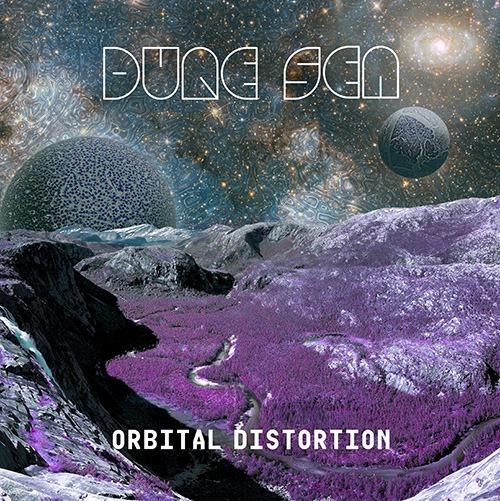
Norwegian psych/stoner rockers Dune Sea have recently shared a new song off their third album Orbital Distortion, which is set for release on November 11th via All Good Clean Records.
Titled ‘Hubro’, this song is the first taster of what’s to expect from Orbital Distortion and sees the Norwegian trio delving further into space rock, taking off for a grand musical journey into outer space. Check it out here:
Since their self-titled debut album in 2019, Dune Sea have establish themselves as a solid part of the Norwegian psych-scene. Their psych-space rock universe has expanded for every release and with their upcoming 3rd album “Orbital Distortion” it seems like they have left the Earth for good cruising though the cosmos.
Steve Kendra has probably received as many words praising his work as anyone to have been covered here at Aural Aggravation, but the chances are, it’s gone unnoticed, since he’s rarely, if ever mentioned directly or by name. As the rhythm guitarist in York’s premier purveyors of psychedelic drone, Soma Crew, his contribution is something I’ve long admired. Like drummer Nick Clambake, Kendra’s brilliance lies in his humbleness, and his appreciation that the sum is always greater than the parts. A great rhythm section sticks to rhythm and keeps it together. Sounds simple, but it’s much harder in reality. It requires great concentration for a start. And it takes humility too not want to step into the spotlight in one way or another. But this is precisely why he’s the perfect player for Soma Crew, content to keep his head down, face obscured by the peak of his cap, and bludgeon away at two or three chords for six or seven minutes.
Just as he’s the quiet one of the band – not that they’re really big talkers most of the time – he’s quietly been working on his own material as Kendroid. It’s essentially a solo vehicle, but with input from as handful of people well known in York music circles, not least of all instrumental and production assistance from Dave Keegan, and to date he’s recorded and released two full-length albums, The Last Love Song on Earth (2019) and Poetry Love & Romance (2021) – so while these aren’t- hot-off-the-press new releases, it’s never too late to catch up. In fact, the whole promo build-up of a clutch of singles and videos in the run-up to an album’s release and then the explosion of reviews in the weeks and months around it, I get, but it does create a false sense of there being a certain window for new releases. The reality is that albums have a slow diffusion, and more often than not, people discover albums and artists months, years, even decades, after their emergence.
Kendra’s route to being a musician has been far from conventional: the man didn’t even pick up a guitar till he turned 40, and is by no means a muso. I have a lot of respect for that, and have found that oftentimes, technical education is a limiter to creativity. Steve can’t read tab and doesn’t know music theory – and consequently, isn’t hampered by conventions.
The chronology of the material is chewy: most of the songs on the second album were written before those on the first, and the second album is more of a lockdown exercise to document/ purge the journey that preceded The Last Love Song.
The Last Love Song on Earth presents a pretty eclectic set, spanning low-key blues and reminiscent of Mark Wynn before he went punky/shouty and went off to support Sleaford Mods (Married to the Rain’), to Soma Crew-esque space rock workouts that toss in dashes of Stereolab and Pulp (‘Mexican Heart’), and songs that incorporate elements of both, along with an experimental twist, with the swampy ‘Incel’ and brooding grind of ‘Deam Lover’ that has hints of Suicide in the mix contributing to the diversity that draws in The Doors to Mark Lanegan.
Poetry Love & Romance is quite a different animal, and while recorded in lockdown, it’s not – unusually – a lockdown album, packed with the anxieties of forced captivity or separation. But it is, in another way, a definitive lockdown album, in that its recording is one whereby the sound and production is determined by limitations, being largely acoustic – although Dave Keegan again features in a musical capacity, as well as engineering, mixing, and mastering.
We’re straight in with an easy country swing, with acoustic guitar and simple drum machine for the title track, and it sets the style for the album as a whole, which is mellow, sparse laid back, and pretty country. These are songs that paint pictures, sketches of scenes, some faded and tinged with the distance of time and reflection, and it’s quite touching at times.
Poetry Love & Romance does feel like something of a stopgap, but who wasn’t waiting for life to restart in some way the last couple odd years?
It’ll be interesting to see what Steve does next, but what he’s done thus far is interesting, and a clear step away from his guitaring day-job, and a such, it’s a bold move that’s yielded some great results.



 Aural Aggravation